
Every year, South by Southwest (SXSW) brings together an eclectic mix of technologists, designers, entrepreneurs, and storytellers. This year was different, with the Austin convention center torn down, and the event shrunk from three weeks to one, no one seemed to know what to expect going into it (including me). Similar to the market we find ourselves in, the ones who made the trip showed up hopeful but a bit in the dark, and thankfully the week did not disappoint.
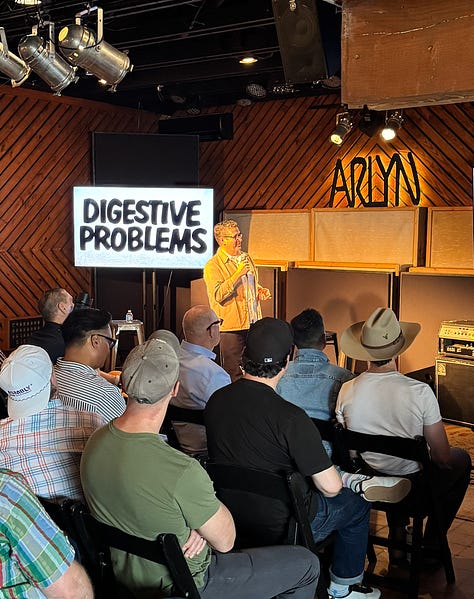
I was there primarily to host year two of our community event “Americana First,” held at the iconic Arlyn Studios and led by our partners at COLLINS as well as the brilliant team at Framer. Still, I found some time to attend a range of side events, and left inspired with lessons learned and relationships formed.
Across discussions—from legacy brands and design to emerging digital tools, shifting media landscapes and the search for human storytelling—a few lessons stood out.
This first one is a trend that seems to be building, in every conference I attend and in every room I find myself in with creative people. In an era defined by automation and generative tools, where the focus is tilted toward efficiency over performance, human connection feels increasingly scarce - and as a result - valuable.
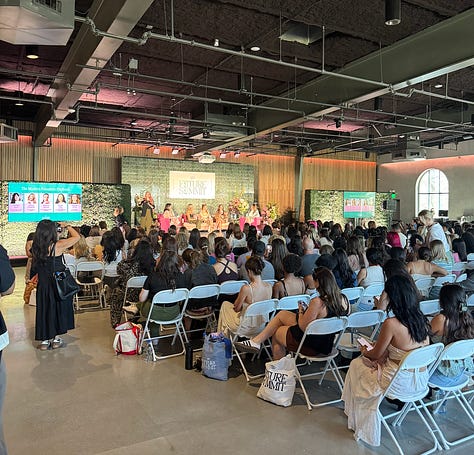
One silver lining of this reality is the return of creative communities. Our day at Arlyn Studios was marked with insightful conversations from people building outside of the expected “design industry.” We had photographers, podcasters, authors, set designers, and more packed in a room for six hours sharing ideas. Most people stayed the entire time, and were happy to.
Someone remarked to me how beautiful the “randomness” of the talks was - of course, nothing is random, but it is true that trust and connection was the intended “ROI.” It’s how I imagine creative gatherings happened before the internet, before every moment had to be a “touch point” with traceable impact. I’ll stop short of saying “the good old days,” because our industry has evolved for the better through technology as well. But it’s still nice when people who don’t obviously overlap can come together and share their wisdom.
We had renowned photographer Ivan McClellan, who built a following sharing a lens into black cowboy culture (and now building a well-established rodeo - the origin of which was the most fascinating story of the show). We also had a panel featuring podcaster and producer Jason Hoch, writer Wes Ferguson, and author James Wade who reflected on why audiences respond to modern creative work. Perhaps unsurprisingly, in a highly polished digital world, they believe people are craving something more human.
“We’re drawn to an aesthetic that feels grounded,” Wade said. “[We’ve got to] tell the terrible stories and tell the beautiful stories. They all matter.”
—
One of the most inspiring moments of the trip for me came at the Hatch Lounge, where I had the chance to speak alongside a room full of people working to shape the future (shout out to Lisa Gralnek for inviting me). My talk centered on protecting creativity and (you guessed it) the modern Renaissance.
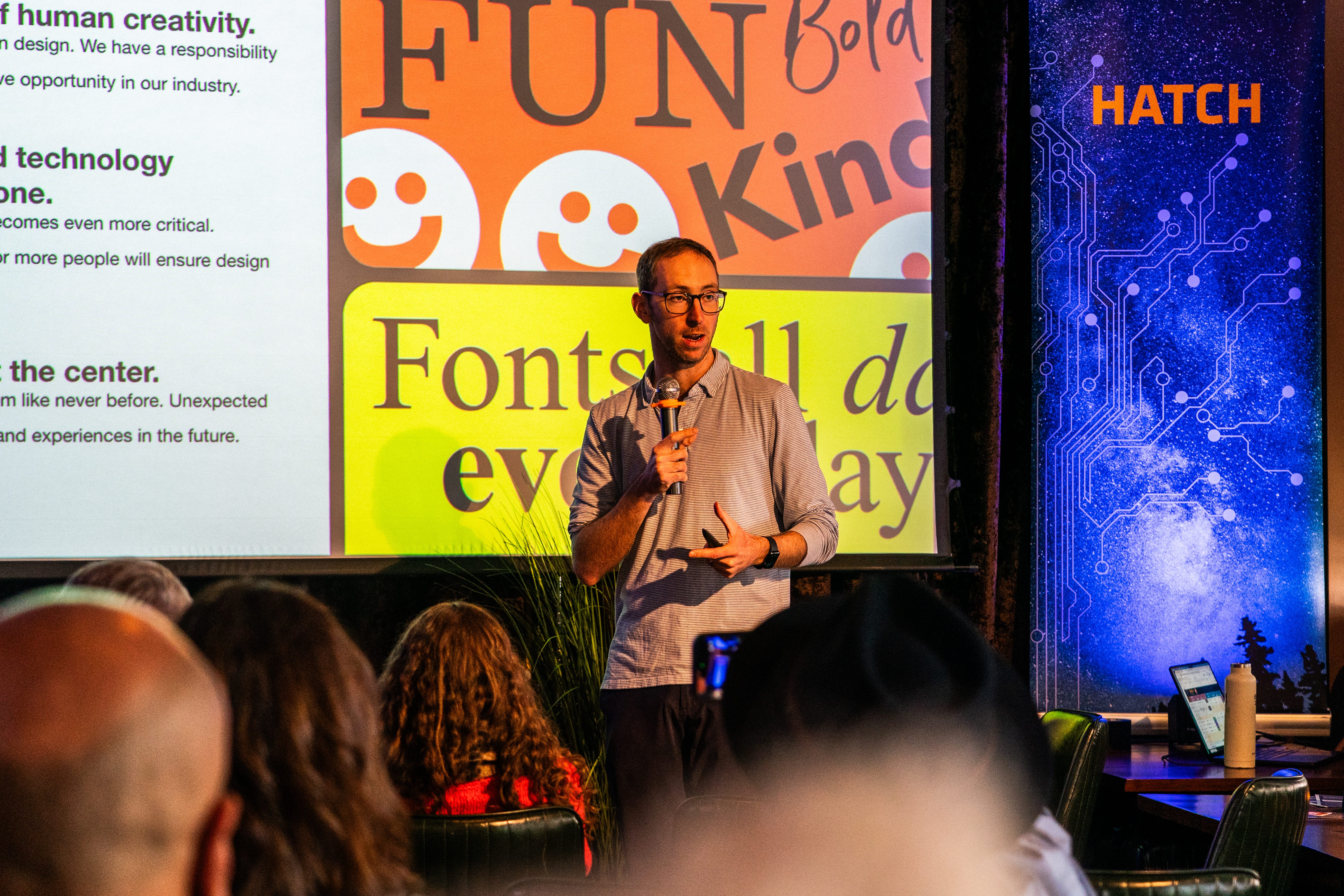
The day opened with a reminder from Hatch founder Yarrow Kraner that felt especially relevant in this moment:
“Change happens at the speed of relationships.”
In an era obsessed with scale, algorithms, and automation, that idea felt refreshingly human. Maybe it’s a warning. Either way, it may be the defining insight of this technological moment.
It would be easy to wake up every day, doom scroll our phones and come to the conclusion that we are in peril. That everything is bad, there is no hope, and there is no reason to make way for optimism. I’m certainly guilty of it. But it’s worth remembering that there has never been a better time on Earth to be alive, and while our problems are still aplenty, last week brought me some peace as I was exposed to just a few of the brilliant minds working on solving the most pressing challenges we face.
Truly, amidst headlines that often highlight disruption or risk, the people shaping the future felt remarkably grounded. The evening before the Hatch event, some of my fellow speakers and the broader Hatch community gathered at the home of Nancy Giordano, a futurist and the founder of Play Big, who has hosted these gatherings as part of SXSW for 15 years. Included were folks like Phnam Bagley, a Partner at Nonfiction who is working on developing the first “space hospital.” Or Rachele Didero, PhD, founder of Cap_able, who is merging technology and fashion design to power an eco-friendly future. Or Aimee Yang, a founder and strategy director who brought a new experience to SXSW called “FuturePIXEL House” making intelligence playable. Or Chris Down, Chief Design & Innovation Officer at Mattel, an organization blending retail and entertainment in unprecedented ways. On and on and on.
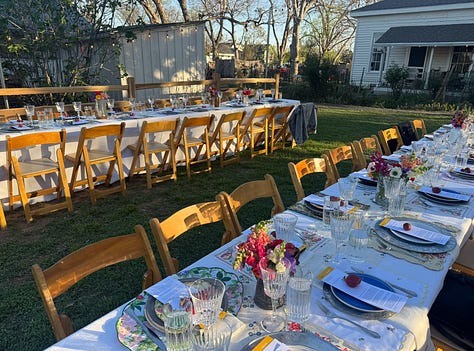
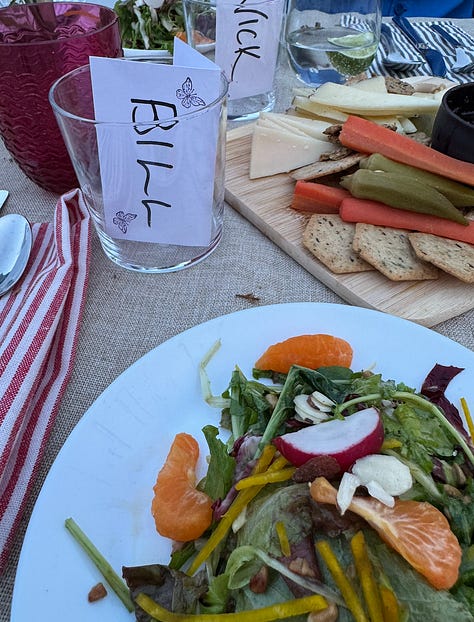
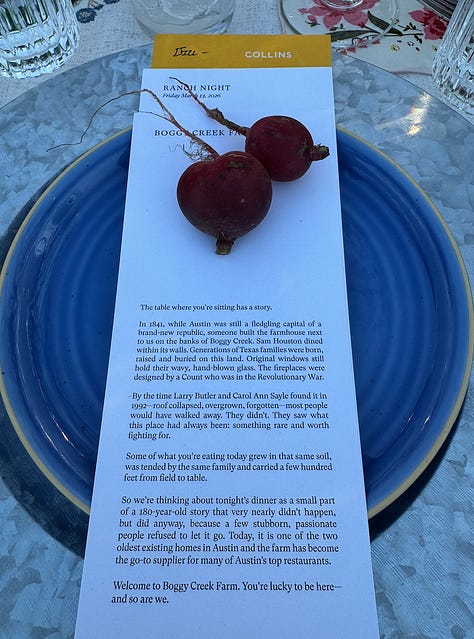
Conversation at this dinner, and in all of the rooms that I snuck into in Austin, was not about what ails us. It was about the unprecedented opportunities that lie ahead. And while I’m often surrounded by “futurists” (and never pretend to be one myself), I realized that I am focused more on the past. Or rather, how our shared past drives my certainty in our collective opportunity.
Regardless of the surrounding environment, a few things are absolute truths:
People crave connection.
People are resilient.
People will fight for a better future.
Of course, beyond the big, heady life lessons which I admittedly romanticize at events like this, there was more practical knowledge being distributed at SXSW.
One of the highlights of our event at Arlyn Studios was the return of legendary brand photographer Norm Classen, who is best known as the man behind the camera for the iconic Marlboro Man campaign.
He noted that he likes to talk about the campaign because many of the folks who worked on it are no longer here, and because the brand will never be legally allowed to advertise again, it’s a true piece of marketing history.
The campaign lasted for decades (until legislation that marked the end of cigarette ads). When asked “how did the Marlboro Man stay relevant for so long?” Classen thought and replied, “No one knew who he was.”
It was never about an individual. It was about an ethos. Today, with brands being centered on celebrity or influencer endorsements, or quite literally an extension of these individuals, it is hard to separate the product from the person.
Competing in the attention economy.
Still, a big name is a good tool, and without leaning on one, how can brands compete in the “attention” economy? At the Create & Cultivate Future Summit, brand leaders shared their perspectives.
Mallory Blair, CEO of Small Girls PR, noted : everything is media now. She used the example of staying in a hotel - it’s not just a service, when done well, it’s a curated brand ecosystem, from the soaps in the bathroom to the drinks in the minibar to the local partnerships offered to guests.
We’ve talked before about the importance of brand in a digitally-optimized world. Gary Vaynerchuk and others have suggested brand is the only moat left.
Allison Ellsworth, co-founder and Chief Brand Officer of Poppi, echoed brand’s importance during her company’s growth: “having a great product wasn’t enough.”
Poppi exited to Pepsico for nearly $2 billion because it had developed a great brand as well.
Creating a brand vs. stewarding one.
Not everyone in today’s market is working on building a brand from scratch.
Back at Arlyn Studios, Todd Simmons, Global Brand Director at Ford Motor Company, spoke candidly about the challenge of evolving a legacy brand that has lasted more than 100 years, surviving wars, depressions, and decades of cultural change. So, how do you stay relevant and fresh while retaining the history that got you to where you are?
To put the scale in perspective, the Ford F-150 alone would rank as a Fortune 100–sized business if it stood on its own. Sustaining something that massive requires more than operational excellence, it requires narrative stewardship.
When he joined the company recently, Simmons said one guiding principle from Ford’s leadership: every product must embody “thrill, build, and adventure.” It’s a framework designed to keep innovation aligned with the company’s DNA.
But transformation inside an institution that storied can be difficult. Simmons emphasized that collaboration has been key to evolution, citing partnerships—even with unexpected players like Zara—as ways to push thinking forward.
As Leland Maschmeyer, co-founder of COLLINS, who moderated the talk, put it:
“Being a steward of a legacy brand is challenging. Todd is a curator of the Ford brand.”
Like the curator of a museum, that theme of stewardship echoed in conversations about design and storytelling throughout the day.
My colleague Charles Nix spoke about the evolution of American design and typography more broadly. His lesson: intentional design helps us cut through the noise of today’s digital landscape. In a world where platforms encourage visual sameness, design becomes one of the few tools capable of restoring meaning and distinction.
Rules matter, he argued—but only because they give creators something to break.
This is a timeless reminder for all of us regardless of what kind of brand we’re hoping to build.
The final takeaway from the week may be the most important.
Innovation alone isn’t enough. What matters is who gets access to it.
AI tools, design platforms, and media distribution channels are lowering barriers across industries. But as these tools spread, the opportunity is not just to build faster—it’s to enable more people to participate.
It can be easy to forget how small the sample size is at a place like SXSW, while surrounded by folks with the budgets, time, and security to travel and be part of the dialogue. Fortunately, many of the builders I met are actively thinking about distributing access to tools and opportunities beyond the communities that traditionally receive them. But as one person reminded me, we assumed social media and the internet would create equal opportunity for everyone, but those gains still consolidated at the top of the pyramid. We’d be naive to think something different will happen in the age of AI, unless we’re intentional about doing things differently.
When we hear the term “renaissance,” we all likely think of the same period. And as I spoke about in the short talk I gave, this period was powered by breakthroughs in art and science. Today, we’re living through a similar paradigm shift, but we need to ensure this time, we achieve a breakthrough in access—to tools, to ideas, and to one another.
Because in the end, progress isn’t just about what we build.
It’s about who gets to build it.
Thank you to everyone who made my week in Austin so impactful. Looking forward to continuing the conversations.
Comments
Nothing yet. Say the first thing.
Sign in to join the conversation.