
Bad weather = good birds.
When I saw the forecast for Friday, January 23rd called for a low of 1 degree, I reckoned it was time to schedule my second annual Allegheny Duck Crawl (ADC), a day dedicated to defying Jack Frost and hitting as many of the birding hotspots along the Allegheny River as possible. The fewer degrees on the thermometer, the more ducks seem to appear in droves. One measly degree was sure to mean a bounty of mergansers, scaups, teals, maybe even a scoter or two.
I had so much fun during my inaugural ADC last year, I decided to invite some friends for this year’s iteration. Unfortunately, Holly Hilliard and Elizabeth Pagel-Hogan (whose birding Substacks you should subscribe to!) were out of town on the appointed day.
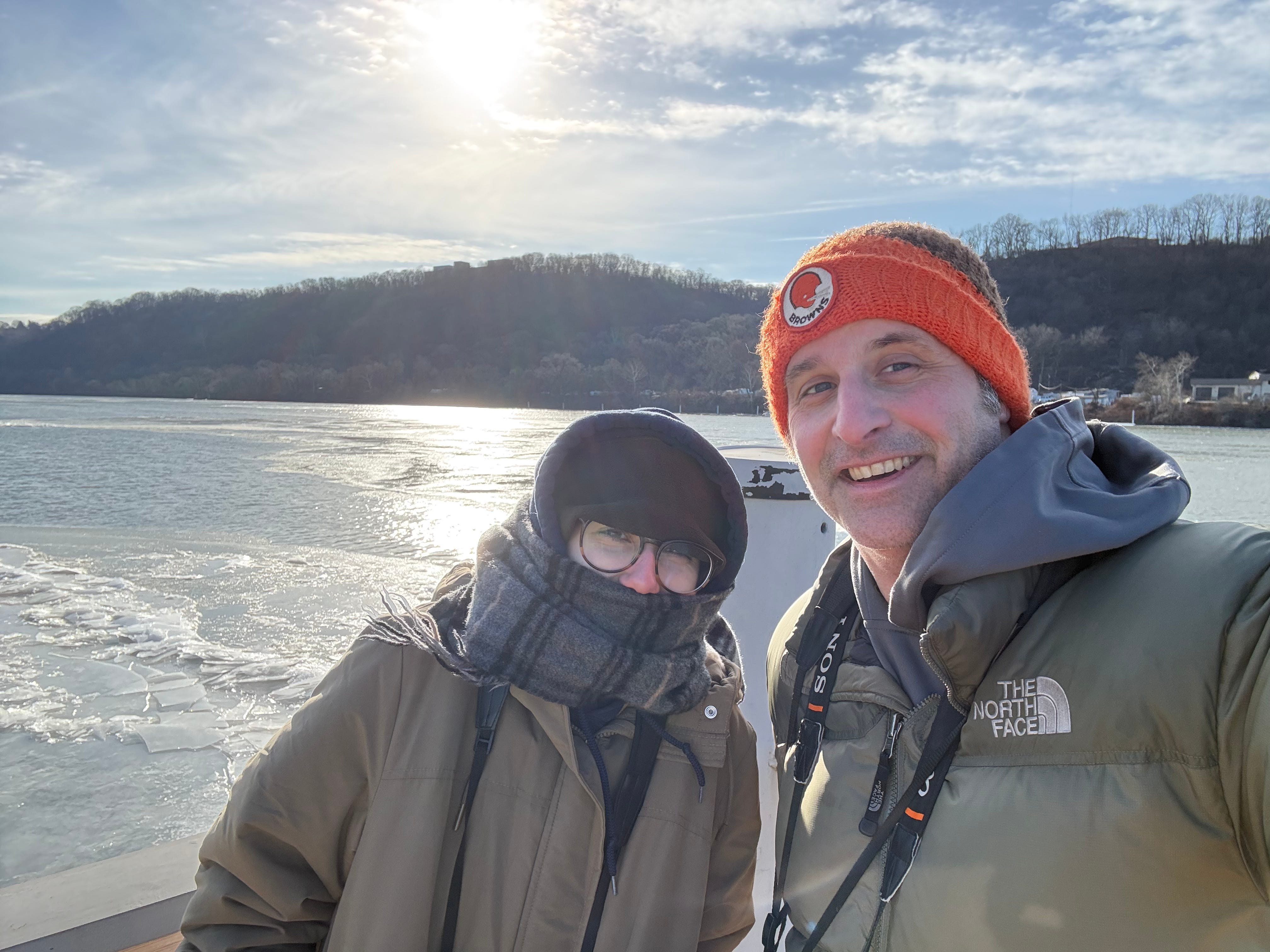
Holly, Elizabeth, and Nate comprise 3/4 of a birding quartet I affectionately nicknamed the H.E.N.S (get it?). Happily, the S part of the equation was free, so after receiving reassurances that she was up for birding in single-degree temperatures, I picked up Sofia and we headed to our first destination. We were brimming with excitement and fearing no cold. And boy was it cold!
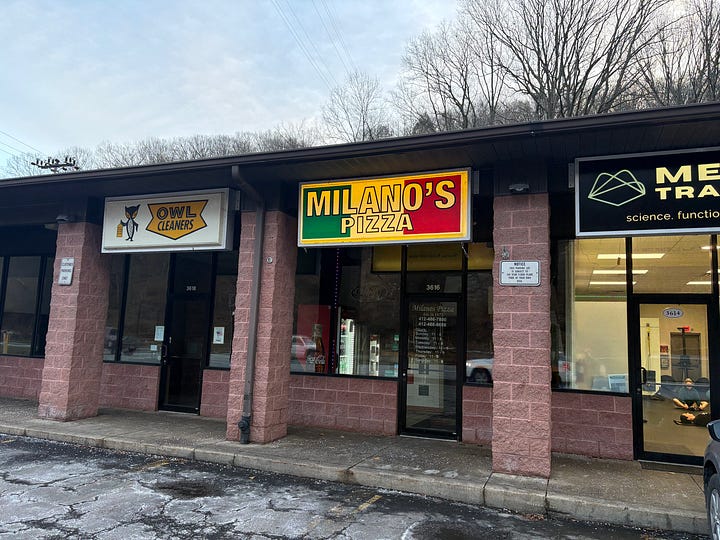
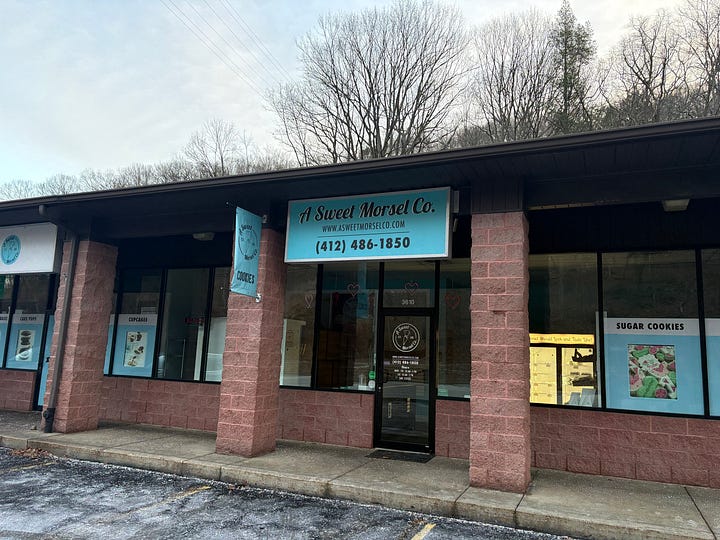
Stop 1/9—Pine Creek behind Milano’s and A Sweet Morsel Co.
Pine Creek, a tributary that flows south behind our house en route to the Allegheny River, can get pretty ducky. Not a deep waterway, I’ve nonetheless found diving ducks there on multiple occasions, though dabbling ducks (ducks that feed at the water’s surface instead of fully submerging) are the regulars—namely Mallards, Black Ducks, and Wood Ducks. I’ve noticed ducks behind the small plaza that houses our go-to pizza joint and bakery often enough that it’s become one of my regular birding spots.
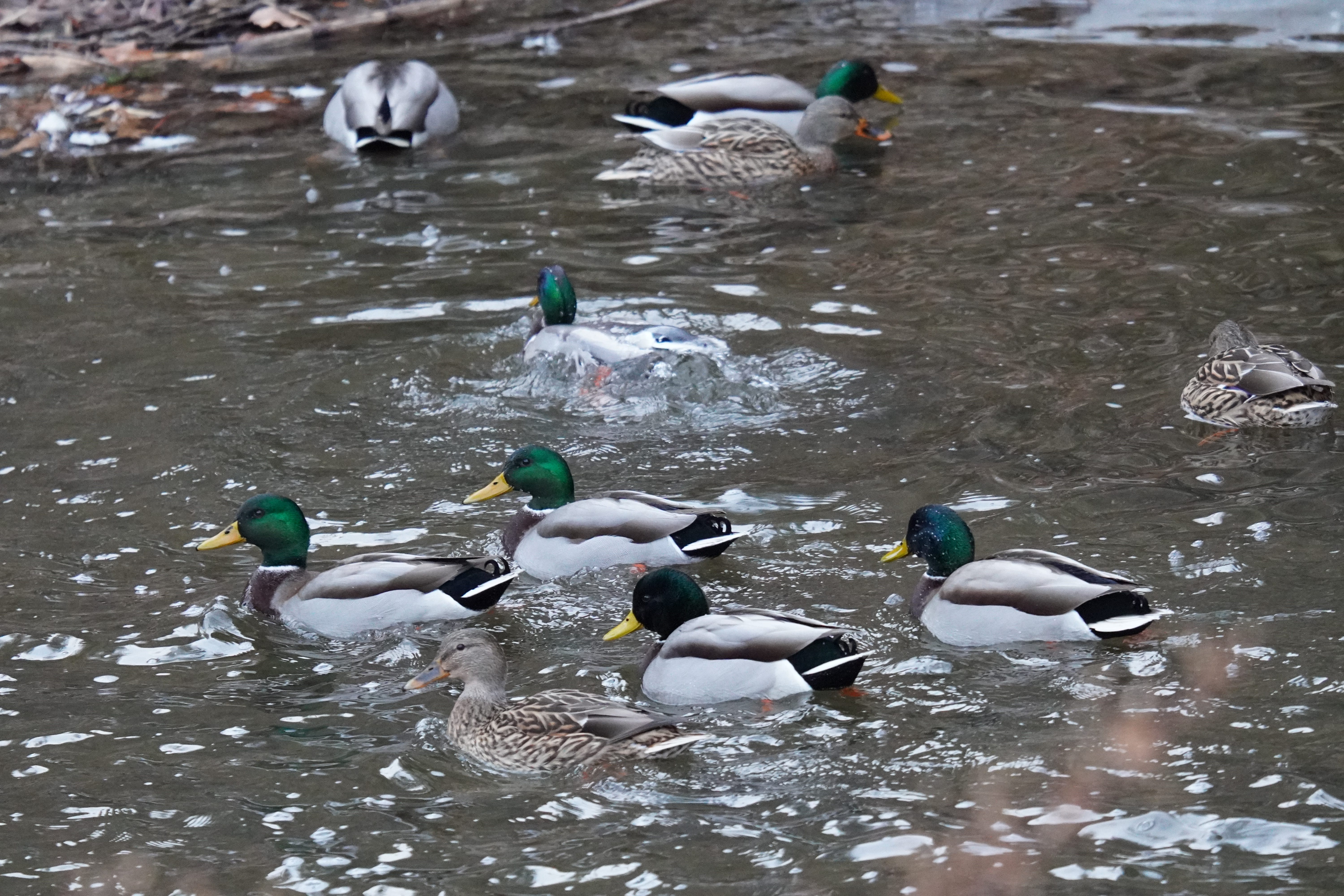
Almost as though they’d been tipped off that Friday was ADC Day, we found a sizeable flock of Mallards waiting for us, including a beautiful oddball. Note the white bib and reddish sides that distinguish him from the standard wild Mallards as a domestic type.
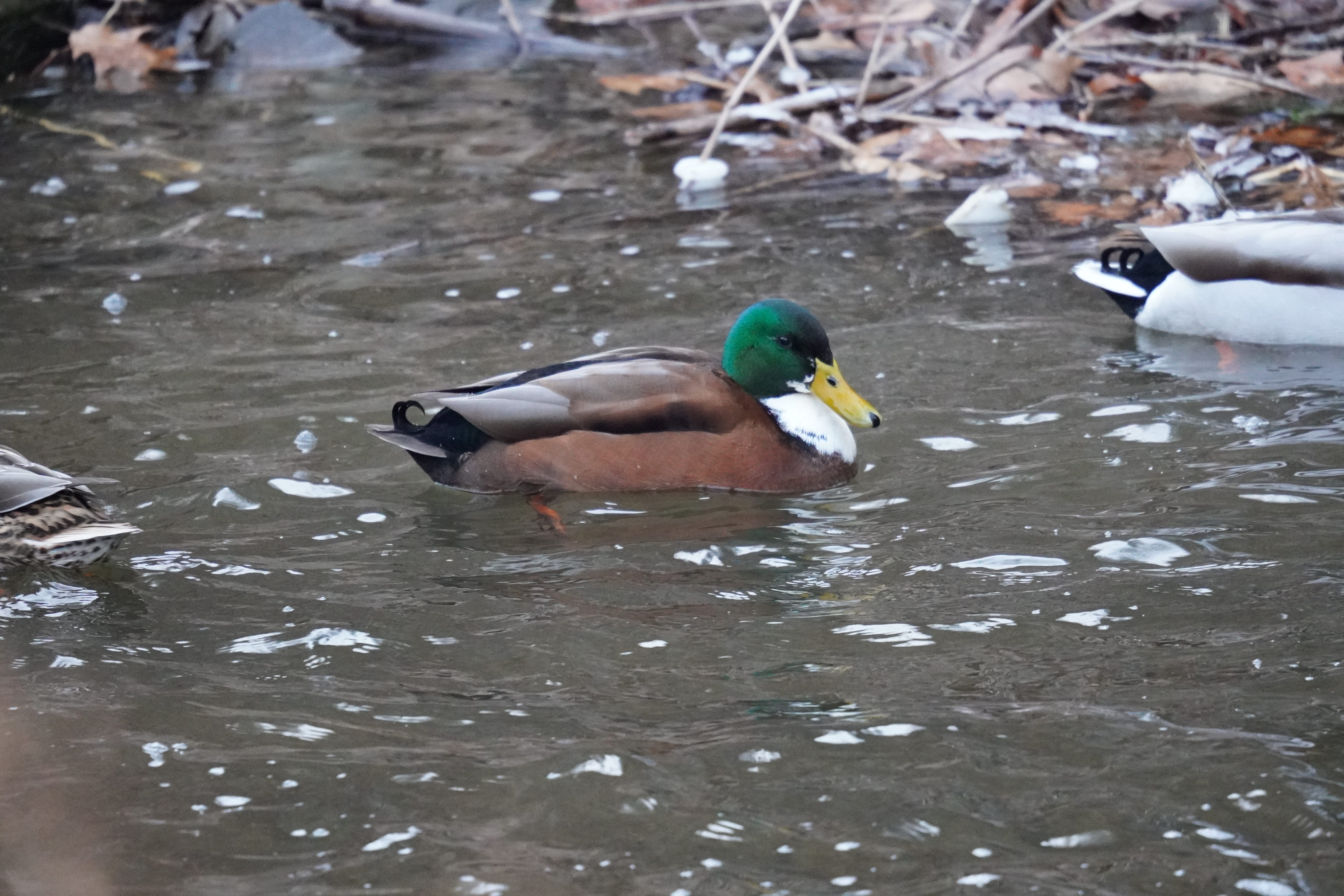
Sofia remarked that she was familiar with this type of domestic Mallard. I answered that I thought I’d seen this exact duck before at a different location. Could he be the same fellow I found a year earlier at Sharpsburg Marina during my 2025 ADC? Maybe!
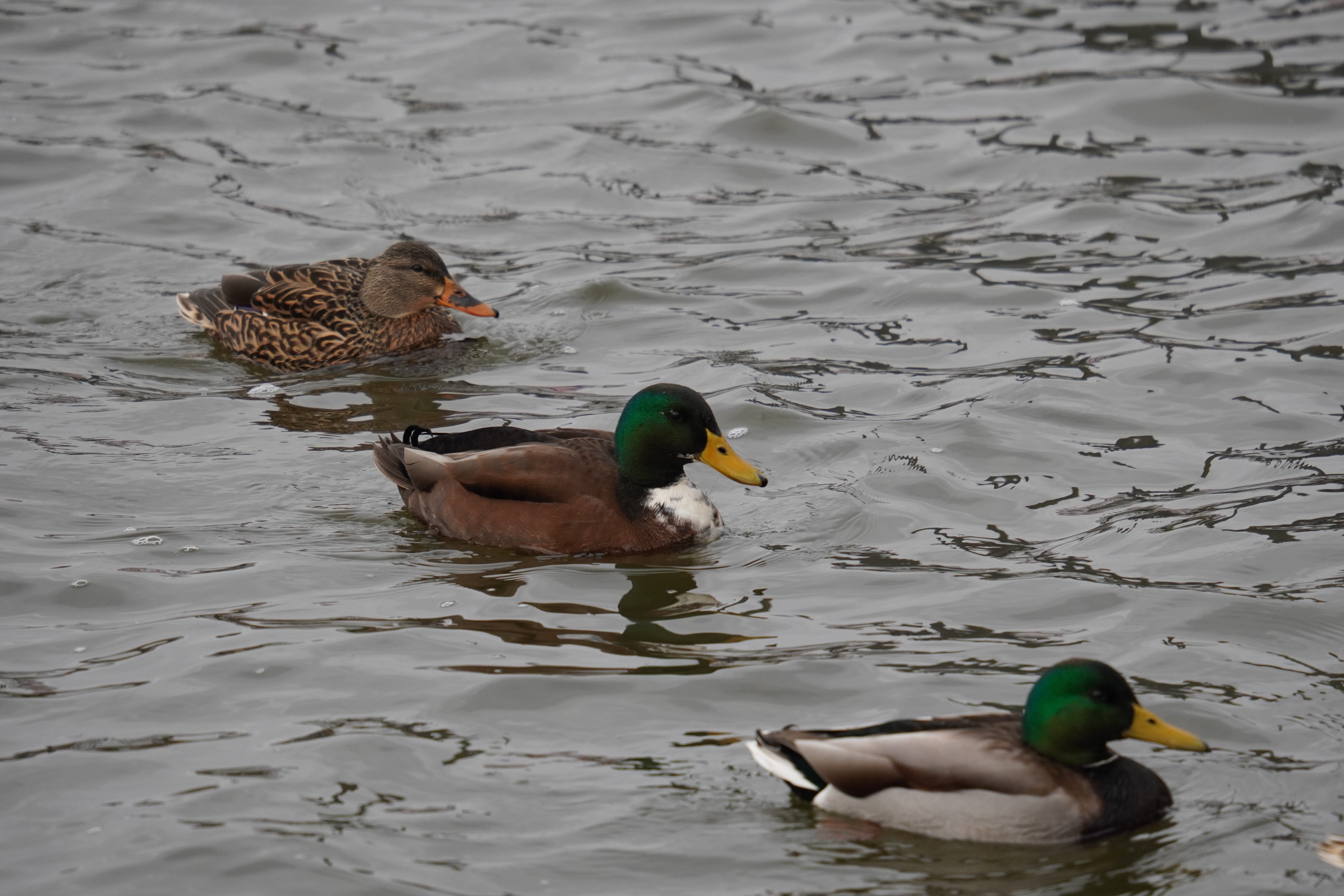
Either way, it was a promising start. Add in a particularly raucous Chickadee flock, and a stoic Great Blue Heron, and we were off and running!
Stop 1 Verdict:👌
Stop 2/9—Pine Creek behind the Burger King and Dunkin’ Donuts
If ducks like our locally owned businesses, they LOVE the national chains. I often find large flocks of waterfowl, mainly Mallards and Canada Geese, behind the Burger King and Dunkin’ Donuts, but on Friday this portion of Pine Creek was frozen over, and not even the hope of a stray French fry or a crumb of apple fritter could tempt them.
We were just preparing to move down to our first stop on the Allegheny when a grizzled gent, like some sort of bearded snow wizard, appeared out of nowhere and came trudging toward us with some intel—the ducks were upstream behind the gas station. So Sofia and I backtracked to…
Stop 2.1/9—Pine Creek behind the Sheetz
Plenty of open water behind the Sheetz service station. Plenty of Mallards. Plenty of lots of stuff, to be honest. Some of it avain.
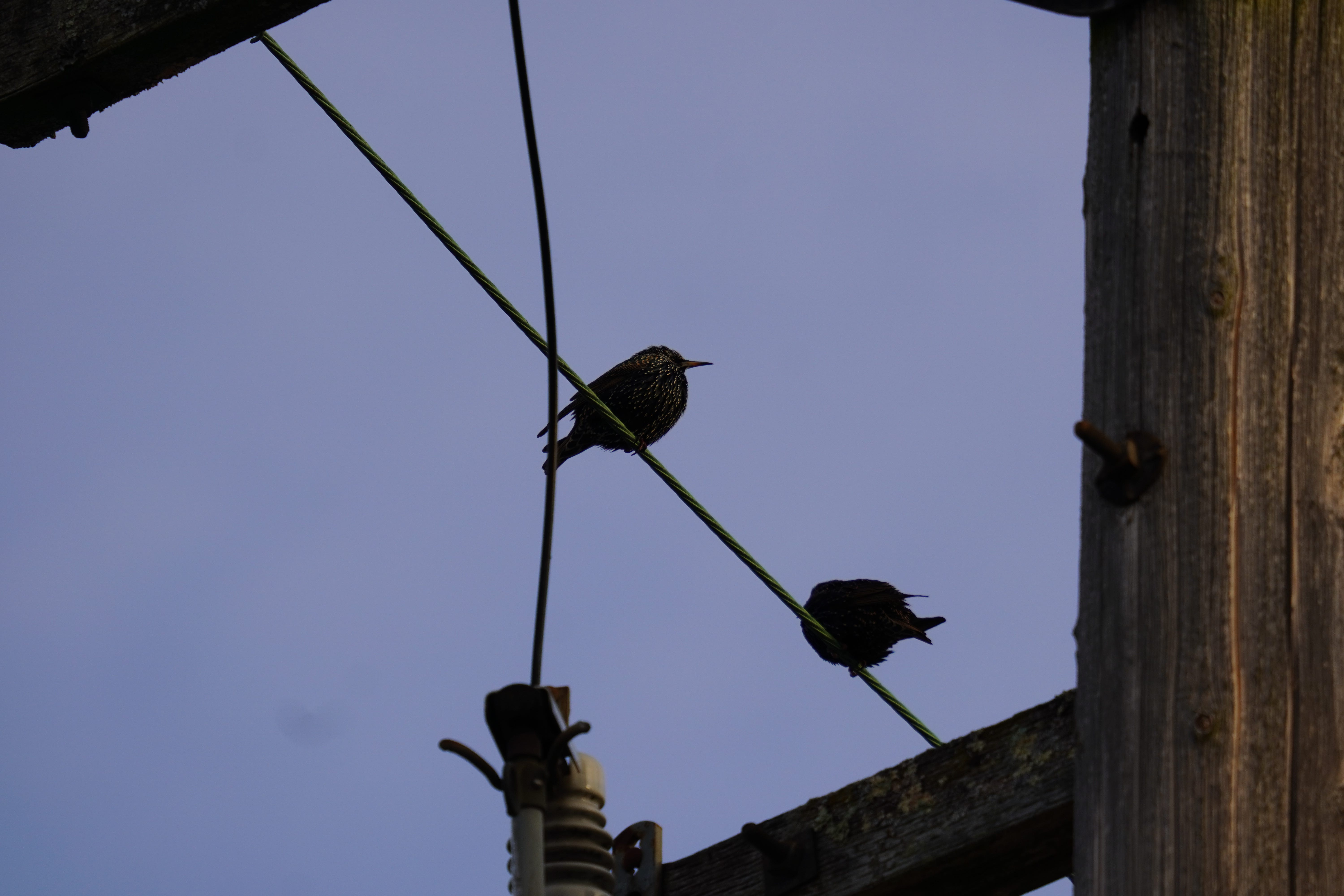
Some not.
Mostly we were just happy to see the Mallards, though I am curious about what the purpose of that structure was, a vestige from an age when Pine Creek was much more industrial.
Stop 2 Verdict: 👌🗑️
Stop 3/9—Sharpsburg Marina
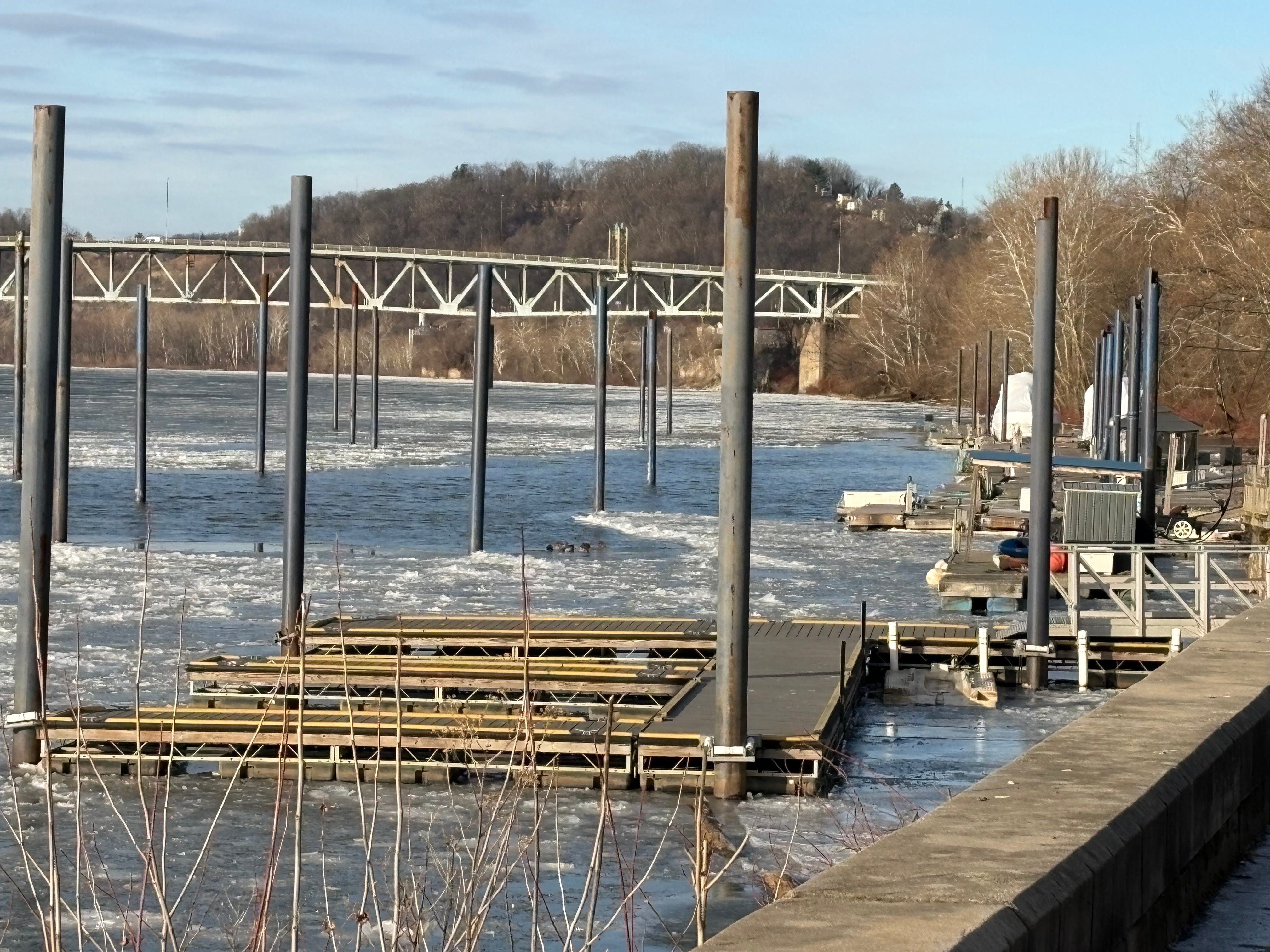
We drove south down Route 8 and then made our way east, going against the flow of the west-flowing river. Sharpsburg Marina is located in the borough of Sharpsburg, which sits on the Allegheny some five miles northeast of Pittsburgh. It was in Sharpsburg that Henry J. Heinz lived and co-founded Heinz Noble & Company in 1869 to manufacture, no, not ketchup. Bricks! That same year in his kitchen, brick and condiment enthusiast Heinz began concocting his first commercial food product. No, not ketchup. Horseradish! Not until 1876 did Heinz begin production of the world’s most famous tomato ketchup, or catsup, as it was originally spelled. Happy 150th birthday, Heinz Tomato Ketchup!
What any of this has to do with ducks I cannot say, but Sharpsburg’s marina is one of several hotspots on the Allegheny where migrating ducks like to gather each winter. Here is where the ADC was gonna really get going. My partner and I were ready, but were the ducks? Not yet! There were no migrating ducks around the marina. Only a small handful of Mallards. Good old reliable Mallards.
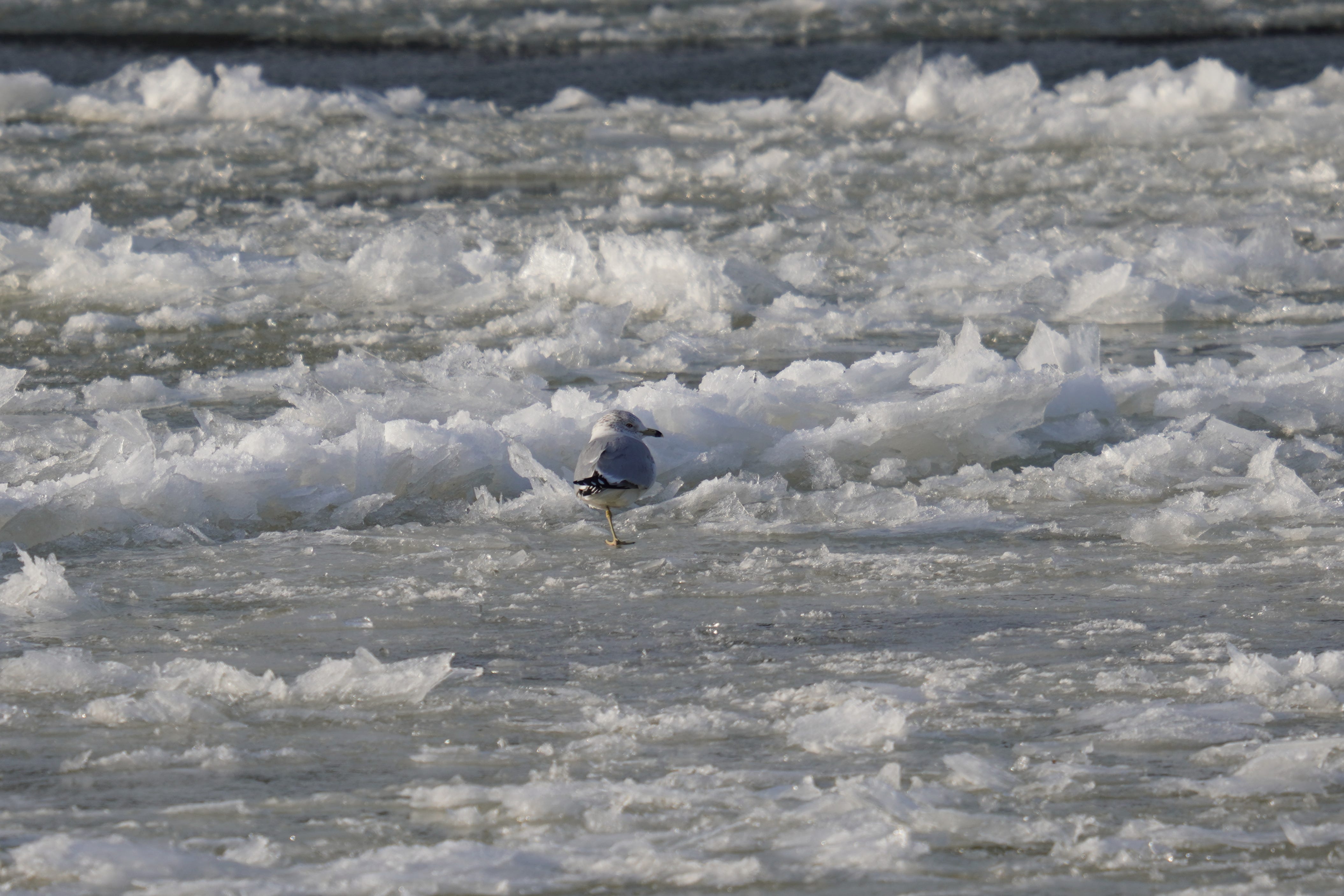
And a lone Ring-billed Gull (2nd cycle, according to The Gull Guide) doing an impressive one-legged balancing act on the ice.
We were joined briefly at the marina by our birding friend John (of Prothonotary Warbler fame). That seemed like good luck—John always finds great birds at Sharpsburg, and we had yet to check on Sharpsburg’s duckiest area.
The three of us hiked down to the point that looks out toward Six Mile Island, and further, the Highland Park Dam. Lots of open water, not many ducks, aside from a decent-sized flock that was too far off to ID. Here we parted ways with John, whose good luck must have felt like sleeping in that day. We knew we’d get more advantageous views of the flock at our next stop, so we packed up and made the short drive to our second Sharpsburg destination, but not before a flyover Common Merganser volunteered as our first migrating duck species.
Sharpsburg Marina Verdict: 🫤 (for “meh”)
Stop 4/9—Six Mile Island
The marina at Six Mile Island offers a more elevated view of where the duck flock was located, and when I made an initial scan of what was mostly Mallards, I picked out a Gadwall and what I thought was a smaller duck, likely a teal. After a more careful look through my spotting scope, I wondered aloud if I had hallucinated the Gad and the teal. Neither were to be found.
Sofia confirmed my hallucination when she pronounced that there were only Mallards to be seen. Here some doubt began to creep in. Had I chosen the wrong day? Had I dragged my friend out here for nothing? Was the cold already causing my already dubious identification skills to malfunction? Was life in general nothing more than a desperate search for meaning within a morass of randomness and uncertainty?
No. We were having fun, we reassured ourselves.
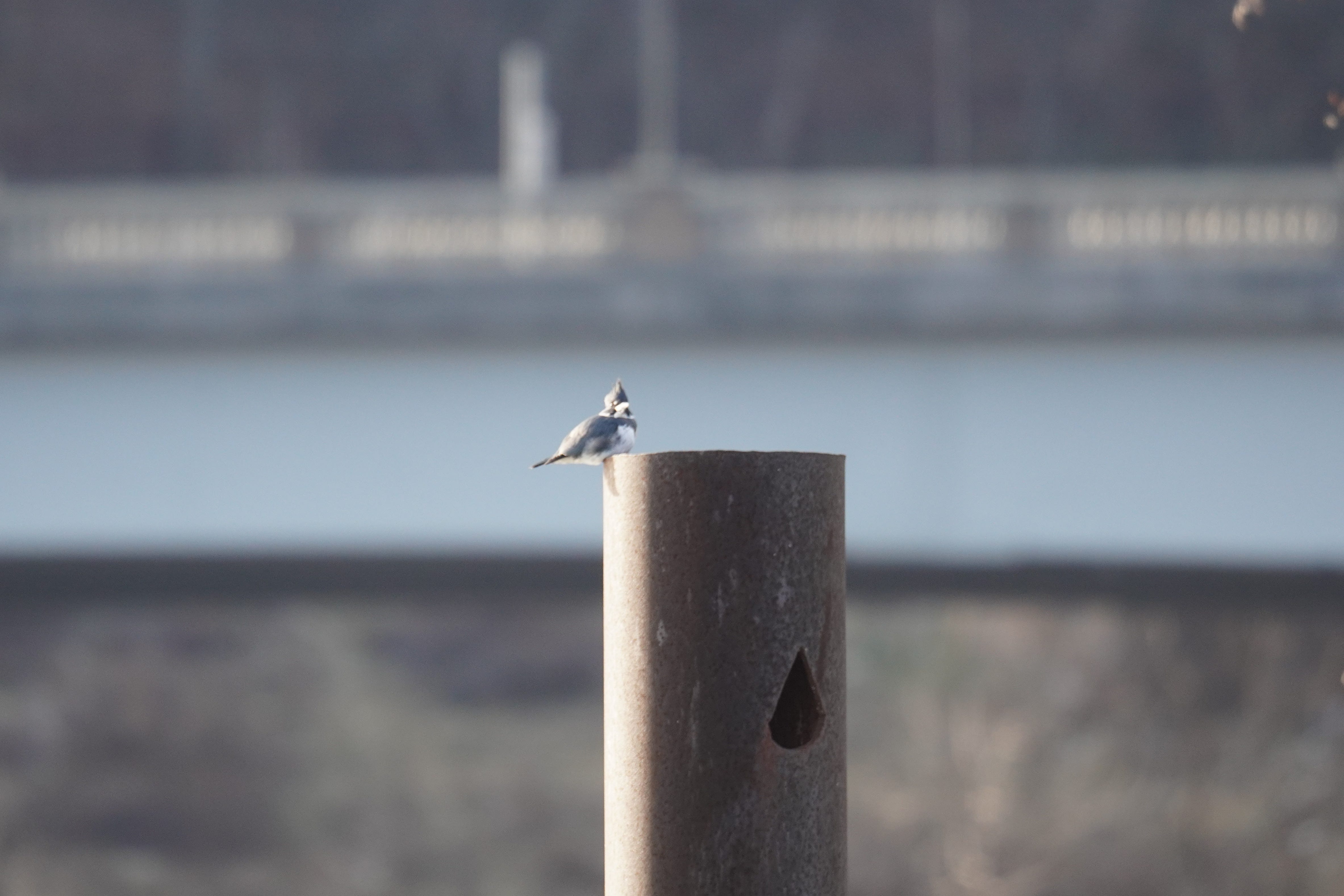
What I didn’t cook up in my brain was a male Belted Kingfisher who scolded us briefly before alighting on this pylon.
Best of all was an in-flight Merlin with a freshly captured rodent dangling from its talons.
These were good birds. Really good. But not ducks.
Six Mile Verdict: 🦆 🤷
Stop 5/9—Aspinwall Riverfront Park
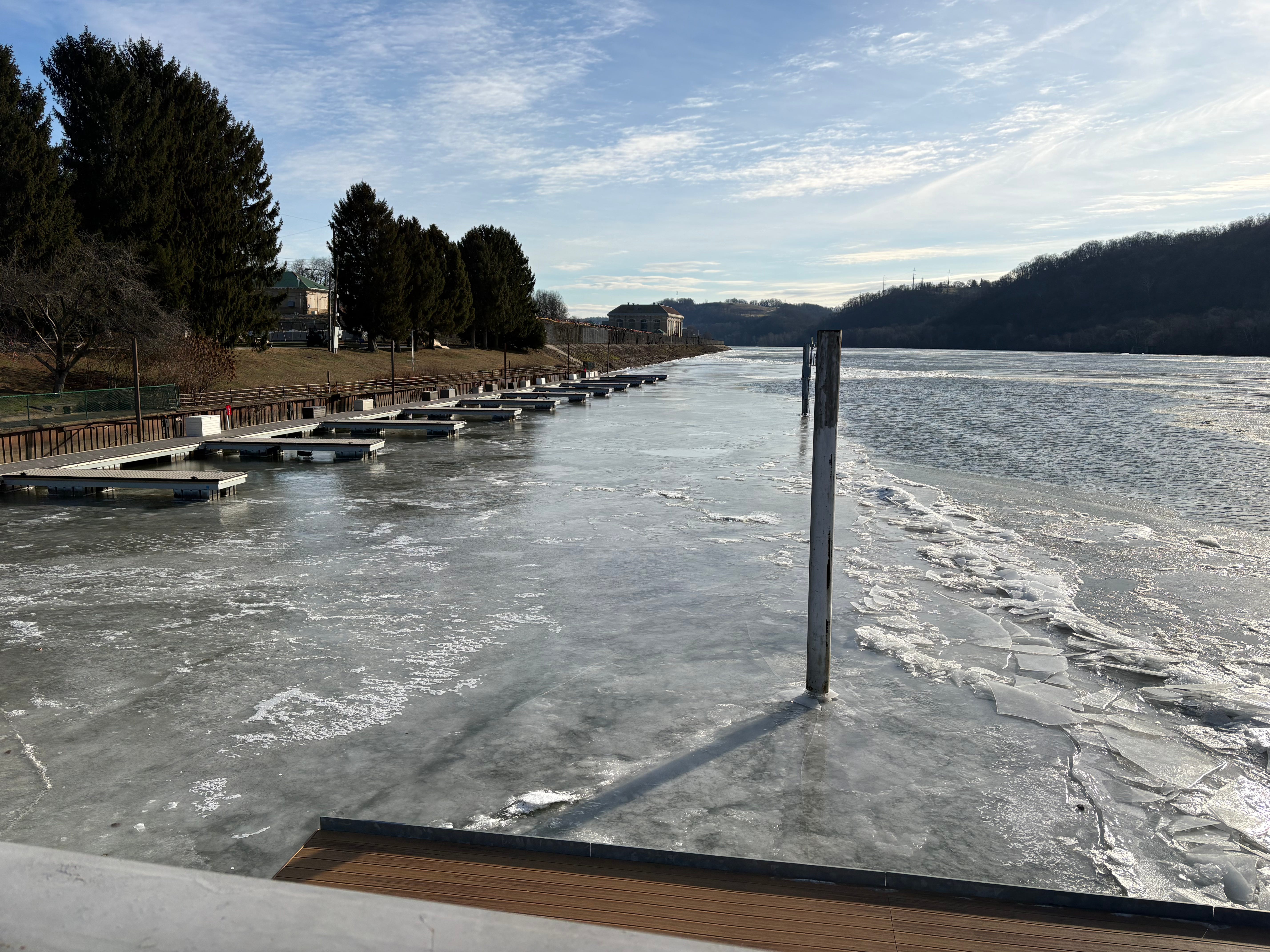
Further east is the quaint residential borough of Aspinwall. Aspinwall was the brainchild of Henry Warner, who was superintendent of the Allegheny County Workhouse and Inebriate Asylum (sounds like a rabbit hole unto itself). Warner wanted to build up a residential area for Pittsburgh’s wealthier middle class, and thus purchased 155 acres from Annie Aspinwall in 1890. Warner formed the Aspinwall Land Company, made 60 plots available for purchase, and the rest is history. Today Aspinwall remains largely residential and is home to Aspinwall Riverfront Park, a non-industrial sanctuary where families can recreate and birders have ample room to survey a good stretch of the Allegheny. The only problem—I rarely find ducks at Aspinwall. Skipping the stop would ensure some incredible rarity was hanging out, so we made what proved to be a pointless gesture. No ducks. Nothing but distant gulls and Canada Geese.
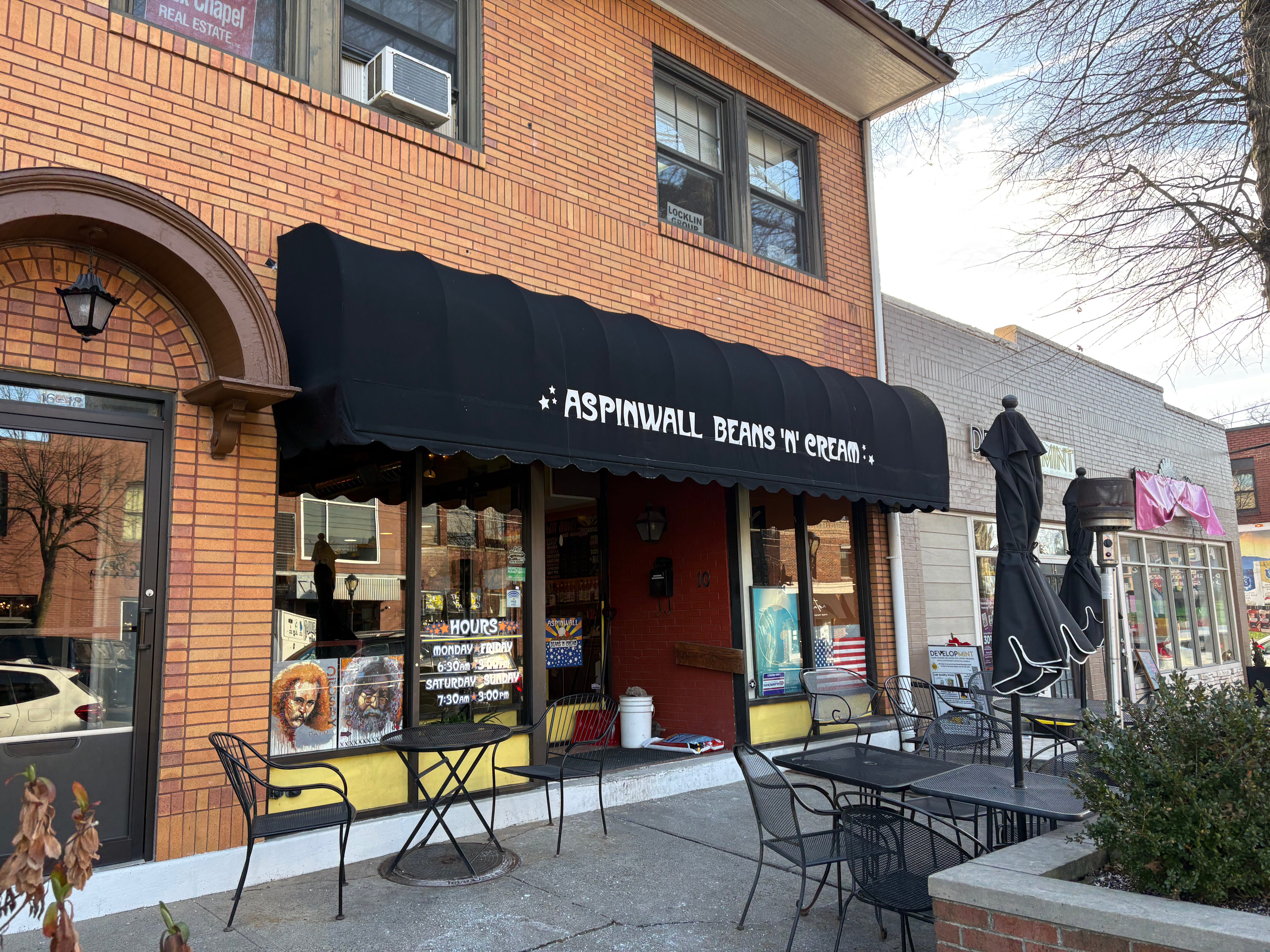
On to the next stop, but not before taking 20 minutes to drink a hot beverage, get warm, and psych ourselves up in an Aspinwall café. The coffee was good, though I could have found comfort in a hot mug of Allegheny River water at this point.
Aspinwall Verdict:🖕
Stop 6/9—Chapel Harbor
Chapel Harbor, also mostly residential, features a small inlet that often attracts diving ducks. Rarely do I visit Chapel Harbor in winter and not find one or more of the merganser species, and sometimes all three. Unsurprisingly, the inlet was frozen over. Somewhat surprisingly, there was nary a duck to be found, whether the dabbling, diving, or decoy variety. Even the Mallards were forsaking us now.
Things were getting grim, and if our duck count was seeming a bit sad, behold the saddest rock snake in the history of rock snakes. One rock. Not painted.
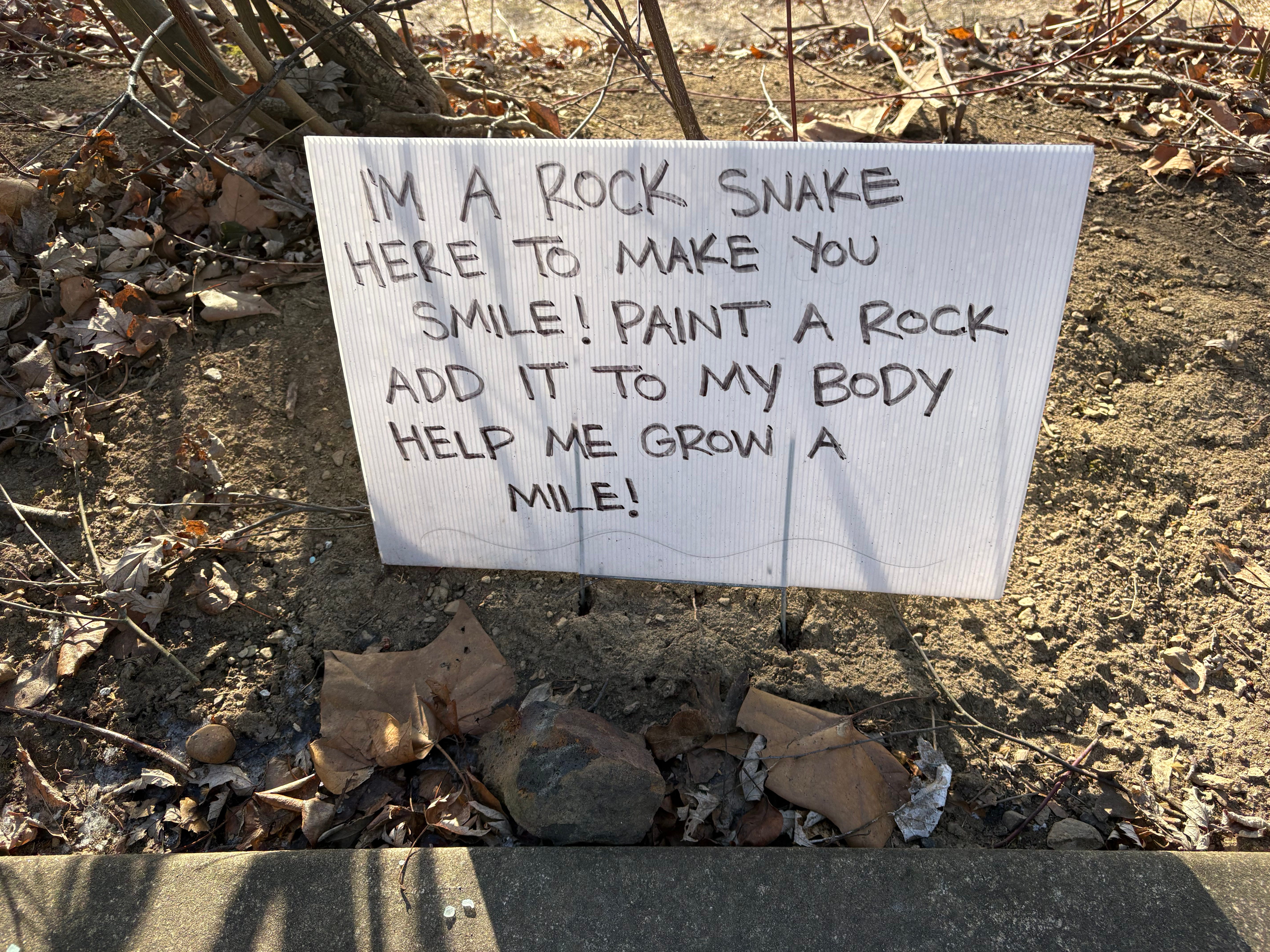
The single, soaring Bald Eagle Sofia spotted was the top bird highlight of this stop. I doubt even that eagle was spying much in the way of waterfowl.
Chapel Harbor Verdict: 🪨 🐍 😔
Stop 7/9—Bell Harbor
Birding of any kind requires a healthy tolerance for frustration, and winter birding in particular demands a certain fortitude in the face of harsh conditions. We took a cruel blow at Chapel Harbor, but we were still feeling hardy, and the lack of ducks wasn’t going to get us down. We knew they were hiding somewhere on the Allegheny, and we were just the ones to find them.
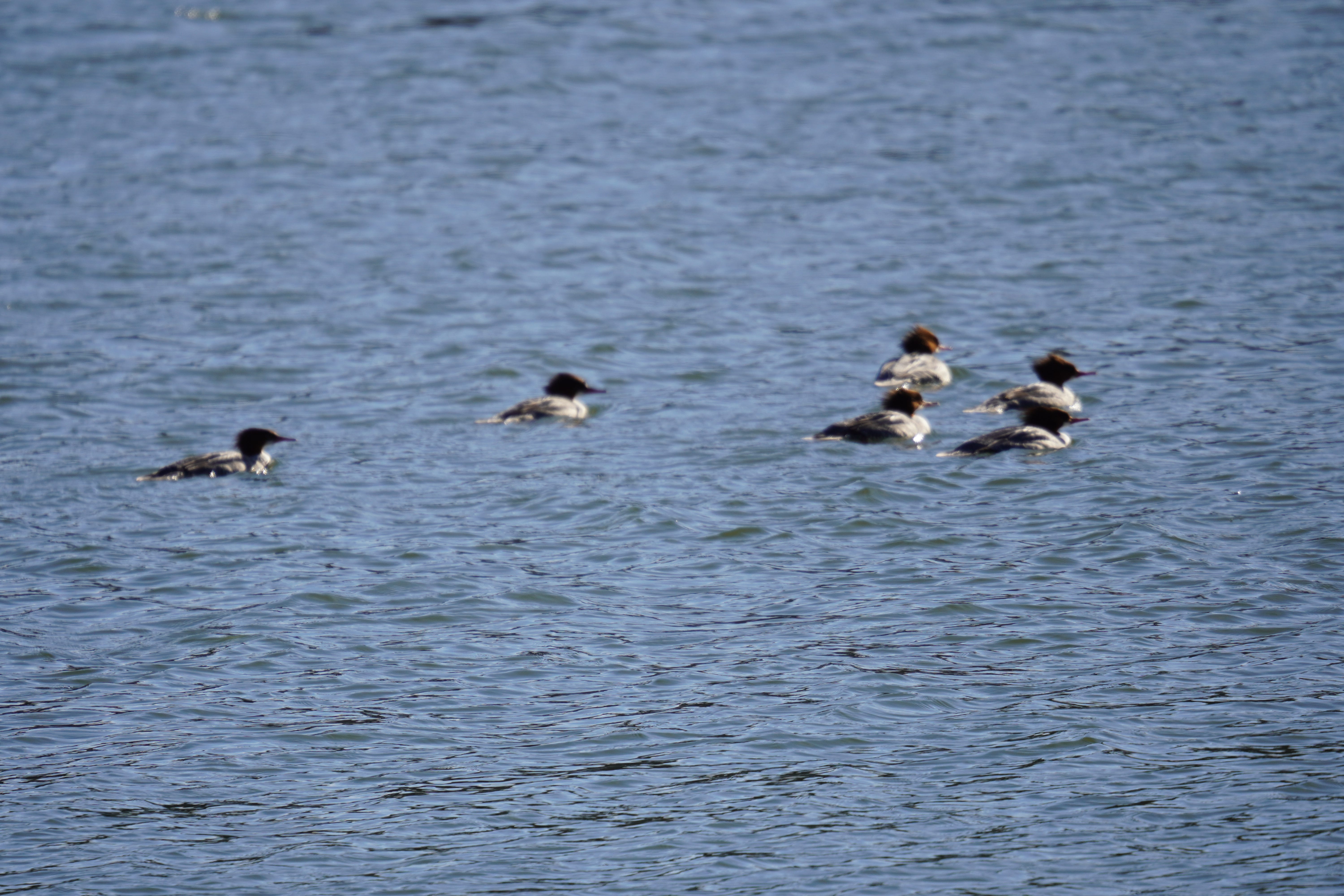
Turns out they were at Bell Harbor, where there is yet another marina and a large condo complex overlooking the river. From the complex’s boardwalk we spotted a flotilla of female Common Mergansers. This sextet represents just a few of the 35, male and female, we saw scattered around the river.
Halle-freaking-luyah.
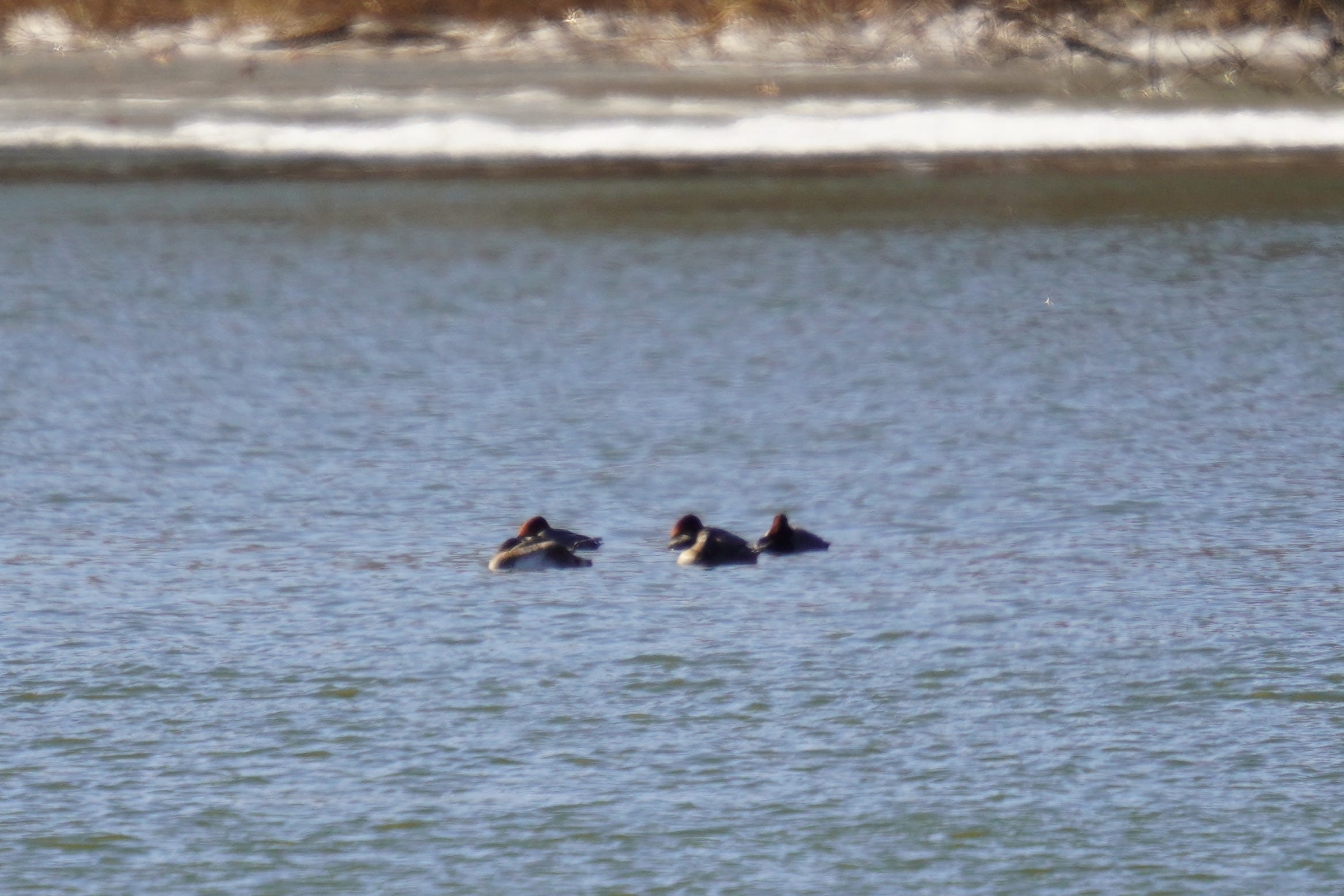
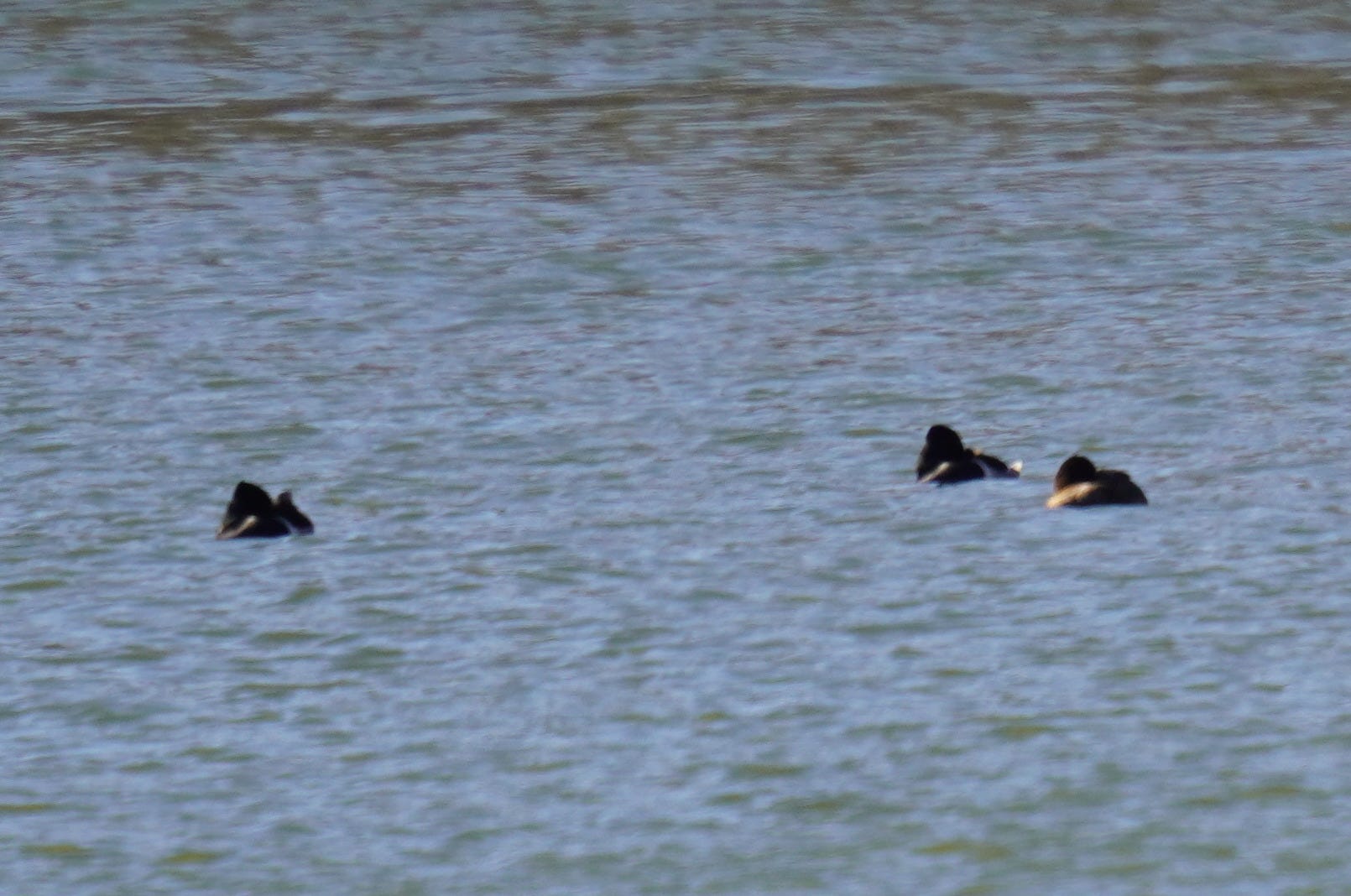
Be prepared to be blown away by exactly none of these photographs.
A female Common Goldeneye, aloof to the point of snobbishness, was actively diving apart from the others.
One of the challenges of duckwatching is that the birds are often distant, or diving, or stubbornly refusing to show their faces. These five Redheads, thoroughly over the cold, were hunkered down together, heads tucked. The bright sun was on our side this time, illuminating the gorgeous red for which these ducks are named.
Same with the Ring-necked Ducks. Here are definitely two males (left and center) and possibly one female. Ring-necked ducks have comically pointed crowns they were unable to hide from us.
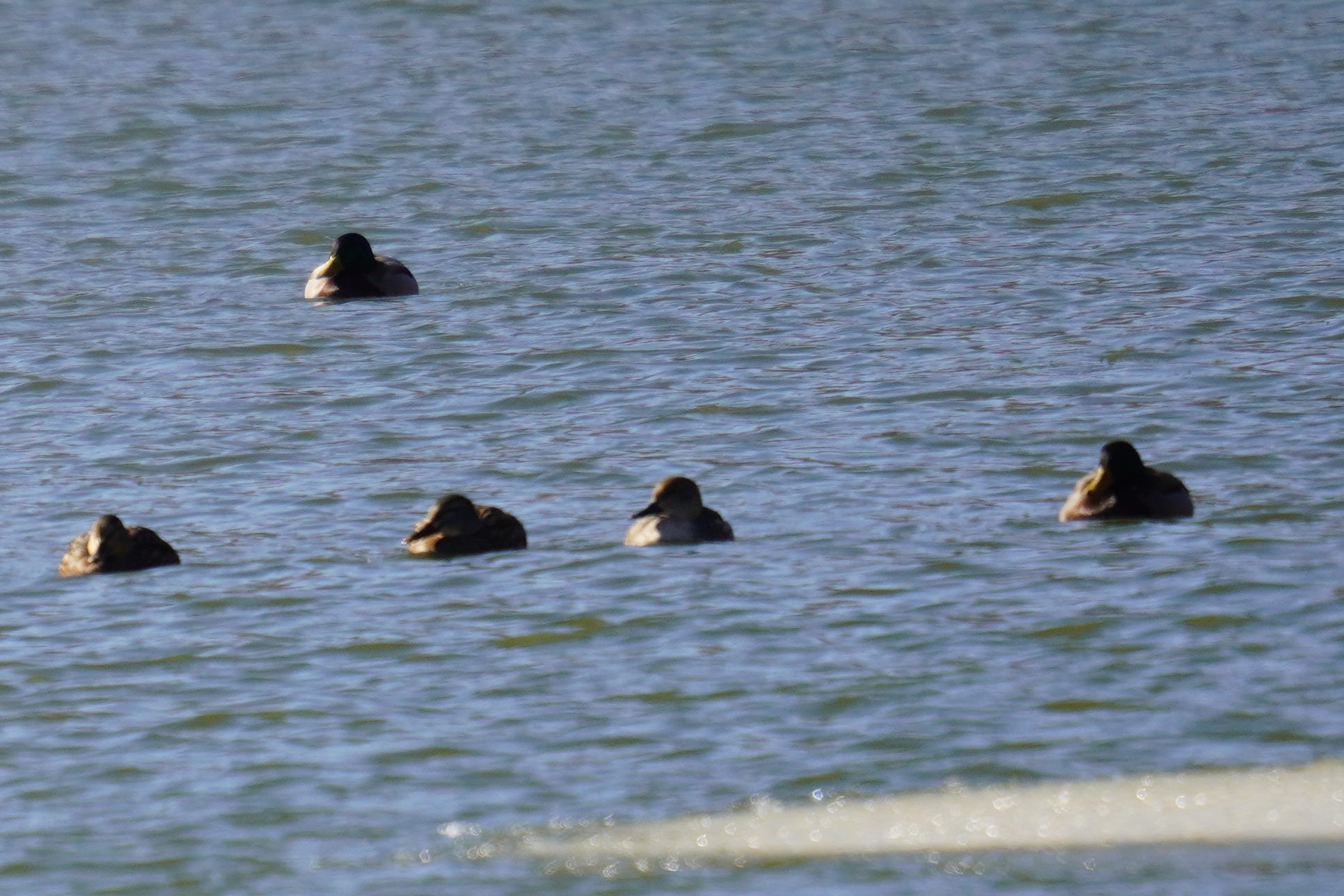
Gadwalls are perhaps the most understated and dignified of all duck species. Here the male Gadwall at center (note the black bill) attempts to lend a touch of refinement to the scene, an almost impossible task amid a gathering of Mallards. Female Mallards, similar in appearance to Gadwalls, may look understated and dignified, but I’ve seen enough of them swimming at our local sewage treatment plant to know better.
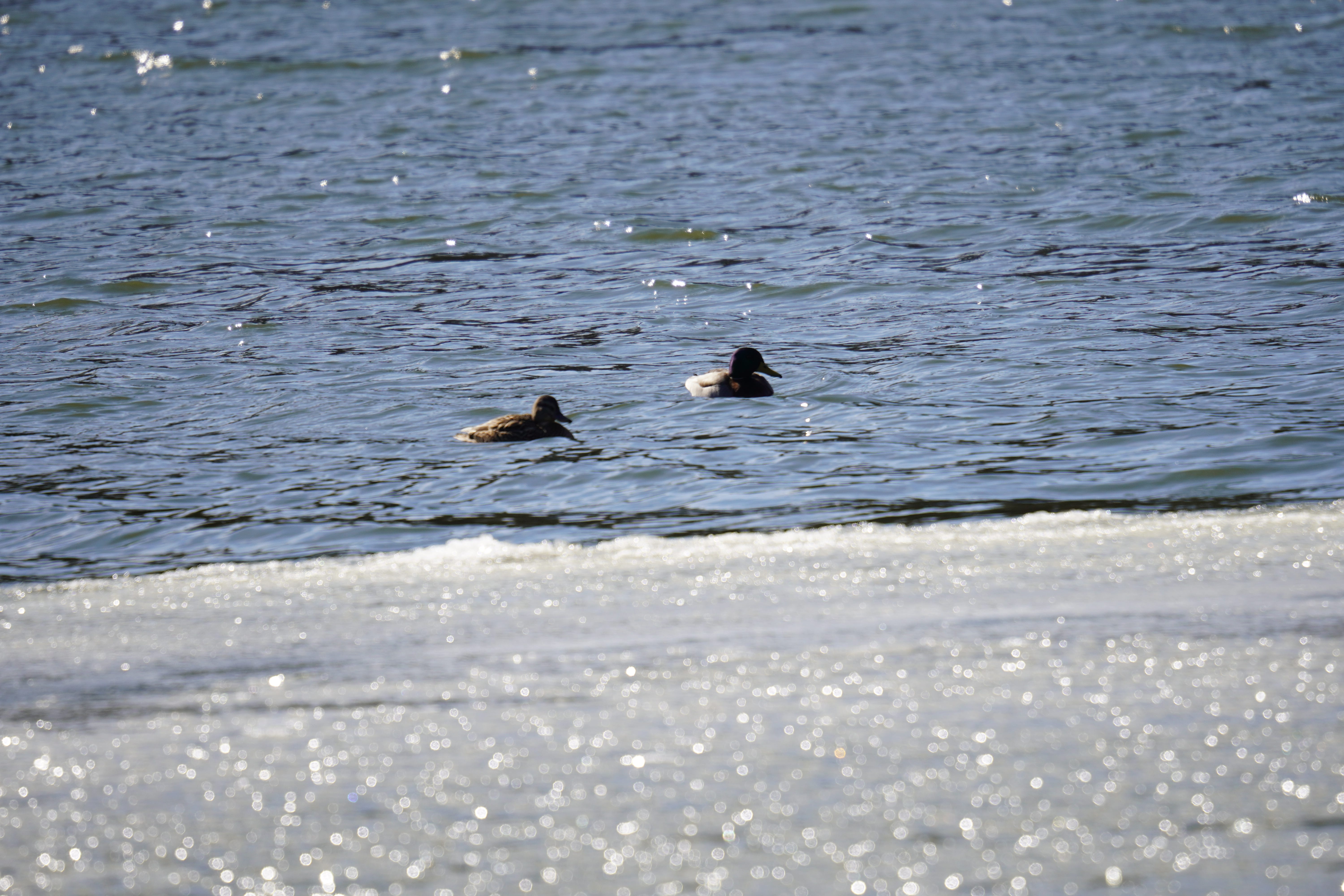
Finally, a pair of Mallards. Because in spite of this relative cornucopia of migrating ducks, it was after all a day of Mallards.
Sofia spotted a second Bald Eagle at Bell Harbor, this one immature. A wealth of Dark-eyed Juncos, Song Sparrows, Northern Cardinals, and another Belted Kingfisher made this stop easily the birdiest of all.
Bell Harbor Verdict: 👌👌👍👍
Stop 8/9—Oakmont
I’ve never birded the Allegheny where it flows through the borough of Oakmont, named for a famed black oak tree that once grew on the banks of the river. Since a Common Loon had been seen there for several days, we thought it worth our time. Think again. Distant Mallards and Canada Geese were the only willing parties, as was a wind so biting we were forced to quickly seek refuge in the car.
Oakmont Verdict: 🖕🥶
Stop 9/9—Highland Park Bridge
Gulls watching, fishing, and I suspect weed smoking are the main forms of recreation at the Highland Park Bridge, where there’s a narrow ledge trying with all its might to be a park. I’ve seen Northern Pintails and Northern Shovelers there, so our final stop was not without a glint of hope. Alas, all we found was a lot of Northern Bupkis.
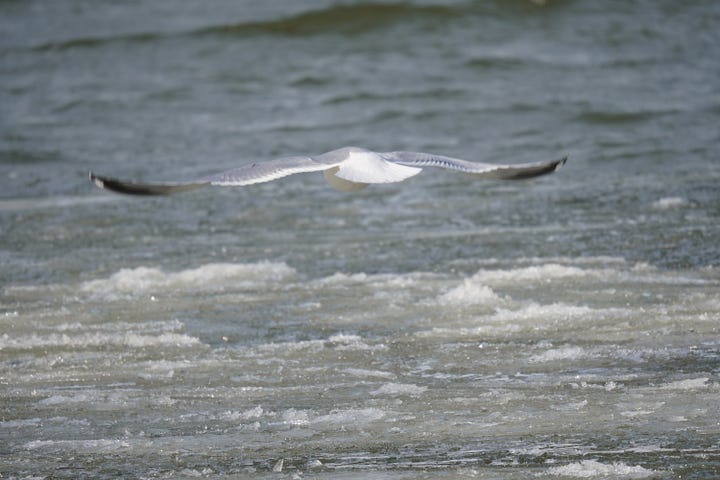
Plenty of gulls though, like this American Herring Gull, who was the answer to last week’s mystery gull challenge. At first glance, this bird may appear to be a Ring-billed gull, but the red spot on the bill and the pink legs are Herring Gull giveaways.

Highland Park Verdict: A big fat🖕
Final Thoughts
After six hours, six duck species, and more than enough time in the bone-shattering cold, we were ready to pull the plug on our duck crawl. Far from disappointed, perhaps we came away a bit wiser. We are birders, after all. We know that no matter the hype of the ADC, no matter the anticipation of myriad duck species in the dead of winter, we are at the mercy of unknowable forces. All we could do is laugh when a rare White-winged Scoter showed up at Six Mile Island the very next day (as reported by John on eBird), along with a host of other migrating ducks. The birds did as birds do—defied us. Eluded us. Perhaps even mocked us. Was our day a bad day? Nah. There’s really no such thing as bad birding, especially in the company of friends. For her part, Sofia gave the experience a generous 10/10. I agree. Still, based on the great variety of ducks that have shown up in the days after our expedition, I believe I’ll push the date of the 2027 ADC back a week or two. Here’s hoping the H.E.N.S. will be fully represented next time in pursuit of actual hens. And drakes. Really any waterfowl who deign to visit Pittsburgh’s mighty waterway.
Overall verdict: Mallard
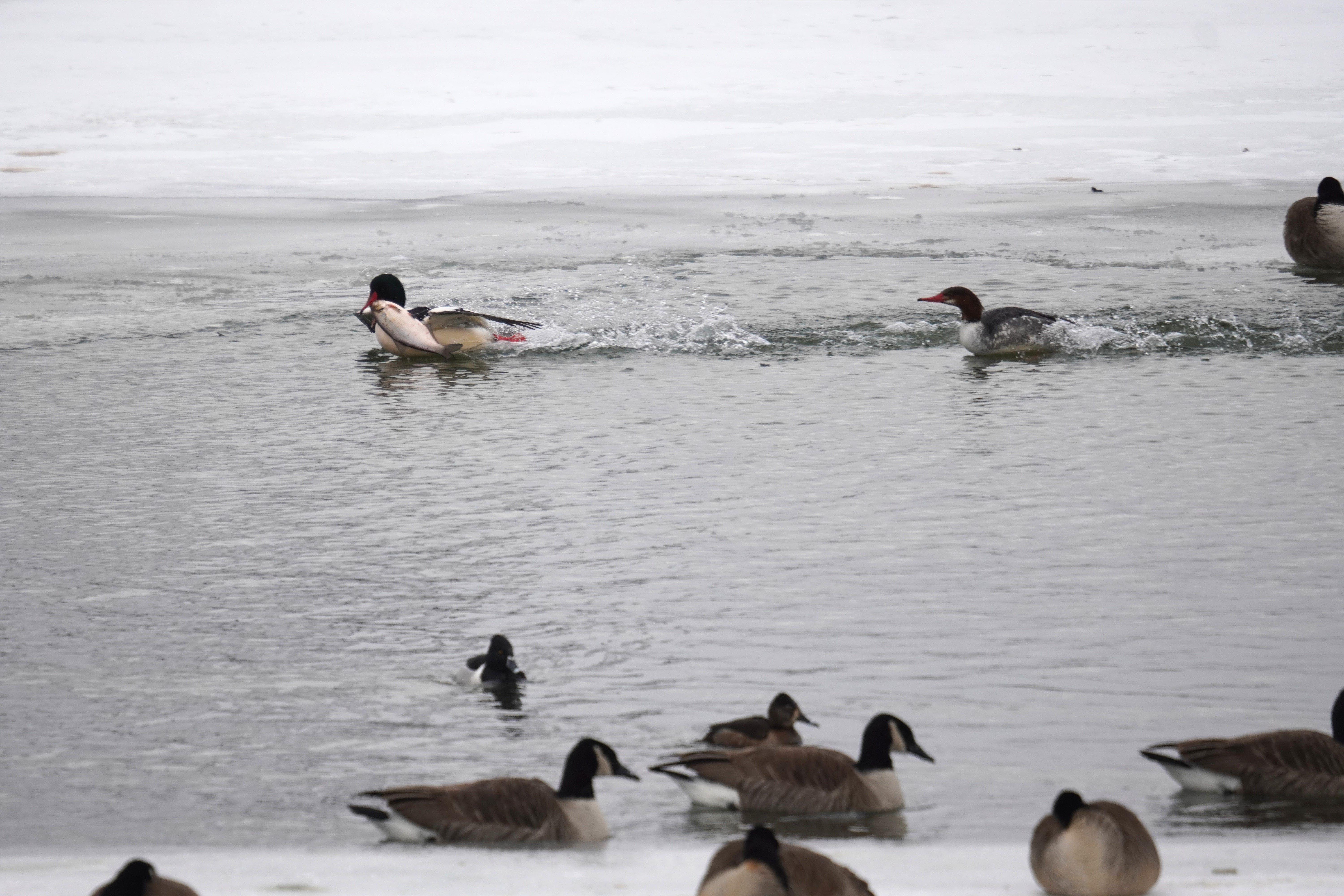
In last year’s ADC post, I remarked how hard you have to work to get ducks in Allegheny County. Well, sometimes you don’t. Last Thursday, when I was in McKee’s Rocks buying some pierogies, I decided to make the quick drive over to Brunot Island on the Ohio River. Smart move. There I found a nice mix of eight duck species, including these Common Mergansers, one fleeing with a large fish, the other in mad pursuit of the large fish. Also note the indifferent male and female Ring-necked Ducks in the foreground. There were also Canvasbacks, Redheads, Buffleheads, Greater Scaup, Red-breasted Mergansers, and of course that ubiquitous dabbling duck. The one who is here year round in every weather and at nearly every location. The king of all ducks. I don’t need to say its name, do I? 🦆
Never mind that the bird who figures prominently in Hamnet is not a duck and would never have been found in 16th century England. The Harris’s Hawk is magnificent, and so is the movie, which features one of the most electrifying performances I’ve seen in all my moviegoing days. Give Jessie Buckley every award for her turn as Agnes Hathaway. Buckley summons all of her impressive emotive power in portraying this witchy, woodsy version of Shakespeare’s wife. As for the bird, just squint and pretend the hawk is a Hen Harrier or some other native raptor. And while you’re at it, take a moment to watch my wife Alex’s YouTube video about Hamnet.
We’ve made a home in Pittsburgh, but as a native northeast Ohioan, Cleveland has my heart forever. I’ll always root for Cleveland sports, for one thing. I’ve had that Browns hat since attending a game at Cleveland Municipal Stadium sometime in the mid 1980s. Pittsburgh is a ketchup town, and that’s cool, but no matter how much Heinz outsells its Cleveland counterpart, mustard will always be the superior condiment, imo. And nothing beats a hot dog slathered in Cleveland Stadium Mustard, even if the stadium for which it’s named is long gone 🌭
That’s all for this week. Are you seeing a lot of winter ducks this year? What are some of your favorite sightings? Do you enjoy birding in frigid climes? How do you deal with birding frustration? Do you prefer ketchup or mustard? The comments are open for duck (and condiment) talk!👇
nwb ♎︎
Enjoying my writing? My weekly posts and monthly podcasts will always be free, but you can help support my work, and birds!, by upgrading to a paid subscription. As always, 5% of earnings donated to the American Birding Association.
Or buy me a hot cup of tea! I’m doing a dry February, so I’ll be sipping on lots of herbal tea over the next 28 days.
Paid or not, thank you for reading! I’m so glad you’re here. Please consider sharing this post, a wonderfully free way to support my work.
This post was human generated. All media by Nathaniel Bowler.
Developmental edits by Alexandra Hidalgo.
No posts
Comments
Nothing yet. Say the first thing.
Sign in to join the conversation.