
Your business name is more than just a label. It’s the first impression, the foundation of your brand identity, and one of the most important decisions you’ll make as an entrepreneur. A great name can open doors, build trust, and make your business unforgettable. A poor one can quietly hold you back for years.
The good news? You don’t have to leave naming to chance. In this guide, we’ll walk you through everything: from brainstorming frameworks and naming strategies used by world-class brands, to practical tools (including AI) that can generate hundreds of ideas in seconds.
Before we dive into how to name your business, let’s understand why the name deserves serious thought.
First impressions are lasting. When a potential customer hears your business name for the first time, they form an immediate impression about your professionalism, your values, and your offer. You rarely get a second chance at a first impression.
Brand recognition compounds over time. Think about names like Microsoft, Amazon, or Tesla. These names weren’t chosen at random. Microsoft blends “microcomputer” and “software.” Amazon invoked the world’s largest river, suggesting vast selection. Tesla honors Nikola Tesla, positioning the brand as an innovative force. Each name was chosen with intention, and that intention pays dividends for decades.
Your name travels everywhere. It appears on your website, business cards, invoices, product packaging, social profiles, email signatures, and word-of-mouth conversations. A name that’s easy to say, spell, and remember will spread organically. One that’s confusing or forgettable won’t.
A bad name is expensive to fix. Rebranding costs money, time, SEO authority, and customer goodwill. It’s far better to get it right from the start.
The 7 Qualities of a Great Business Name
Before you start generating ideas, understand what you’re aiming for. The best business names share these characteristics:
1. Memorable
A name should stick in someone’s head after hearing it just once or twice. Short words, interesting sounds, and unique combinations all make names more memorable. Think of “Zoom,” “Slack,” or “Stripe” - each is instantly sticky.
2. Easy to Spell and Pronounce
If customers can’t spell your name, they can’t find you online. If they can’t pronounce it, they won’t recommend you in conversation. Test your name by saying it out loud and asking someone to spell it after hearing it.
3. Reflective of Your Brand
Your name should give some hint of what you do, the values you hold, or the feeling you want customers to have. It doesn’t need to be literal, but it should feel right for your brand’s personality, whether that’s playful, professional, luxurious, or approachable.
4. Unique and Distinctive
A name that blends into the crowd won’t be remembered. Research your competitors and make sure your name stands apart in both sound and meaning.
5. Scalable
Avoid names that are too narrow or hyper-specific. If you name your business “Chicago Cupcakes” and later expand across the country or pivot to cakes and cookies, you’re stuck. Choose a name with room to grow.
6. Available Across Domain, Trademark, and Social Handles
A brilliant name is useless if it’s already taken. Before you fall in love with a name, check that the .com domain is available, no one has trademarked it, and the social media handles are free.
7. Positive Across Cultures
If you plan to operate internationally, research your name’s meaning in other languages. There are famous examples of brands whose names had embarrassing or negative meanings in foreign markets. Avoid this trap early.
Step 1: Clarify Your Brand Foundation
The naming process begins long before you write down a single word. You need to have clarity on what your business is and who it’s for.
Ask yourself these foundational questions:
What do you do? Describe your product or service in one or two sentences.
Who is your customer? Think about their age, lifestyle, values, and what they care about.
What problem do you solve? What pain point does your business address?
What feeling should your brand evoke? Reliability? Excitement? Calm? Luxury? Fun?
What values does your brand represent? Innovation, sustainability, community, affordability?
Who are your competitors? How do their names position them, and how can you be different?
The answers to these questions become the raw material for your brainstorming sessions. The clearer your business vision, the easier it is to arrive at a name that truly fits.
Step 2: Choose a Naming Style
There are several distinct styles of business names. Understanding these categories helps you decide which direction to explore:
Descriptive Names
These tell customers exactly what you do. Examples: The Container Store, General Electric, Burger King. They’re clear and immediately communicative, but can be hard to trademark and may limit your growth.
Evocative Names
These suggest a feeling, idea, or metaphor rather than describing the business literally. Examples: Amazon (vast), Apple (simple, human), Patagonia (adventure). They’re powerful for branding but require more marketing to build recognition.
Abstract Names
Invented or meaningless words that become associated entirely with the brand through reputation. Examples: Kodak, Xerox, Google. They’re highly distinctive and trademarkable, but start with zero inherent meaning.
Founder Names
Named after a person, often the founder. Examples: Ford, McDonald’s, Chanel. These work well for service-based businesses and add a personal touch.
Acronyms
Shortening a longer name into initials. Examples: IBM, UPS, H&M. These tend to feel corporate and work best once a brand is already well-established.
Compound or Portmanteau Names
Blending two words into one. Examples: Pinterest (pin + interest), Instagram (instant + telegram), Facebook (face + book). These are creative, compact, and highly brandable.
Location-Based Names
Anchoring the name in a place. Examples: Brooklyn Brewery, Seattle’s Best Coffee, Kentucky Fried Chicken. These build community connection but can feel limiting if you plan to expand.
Step 3: Brainstorm Systematically
Now it’s time to generate ideas. Don’t edit yourself during brainstorming; just get everything on paper.
The Word List Method
Start by listing every word associated with your business. Include what you do (verbs: connect, build, create, grow, deliver), what you offer (nouns: solutions, space, tools, light, energy), how customers feel (adjectives: fresh, bold, calm, clear, bright), and your industry terms and synonyms. Then look for unexpected combinations, compound words, or portmanteaus. Play with synonyms, alternate spellings, and foreign translations of interesting words.
The Rhyme and Alliteration Method
Names that rhyme or use alliteration are easier to remember, thanks to a cognitive phenomenon called fluency. Our brains process and trust things that flow easily. Examples: Coca-Cola, PayPal, Krispy Kreme, Dunkin’ Donuts. Try pairing words that start with the same sound or follow a rhyming pattern.
The Metaphor Method
Think about concepts that represent your brand values without being literal. If your business is about speed, what animals, vehicles, or natural phenomena symbolize speed? If it’s about clarity, what images come to mind: lenses, light, water? Use metaphors as a jumping-off point for creative names.
The Mash-Up Method
Combine two unrelated words that together create something interesting. Color + animal, adjective + place, verb + noun — the combinations are nearly endless. Many iconic brands were born from unexpected word pairings.
The Thesaurus Method
Take your most important keyword and look up every synonym, related word, and concept. A word like “grow” might lead you to: bloom, flourish, rise, ascend, expand, sprout, cultivate. Any of these might be the spark for a perfect name.
Step 4: Use an AI Business Name Generator
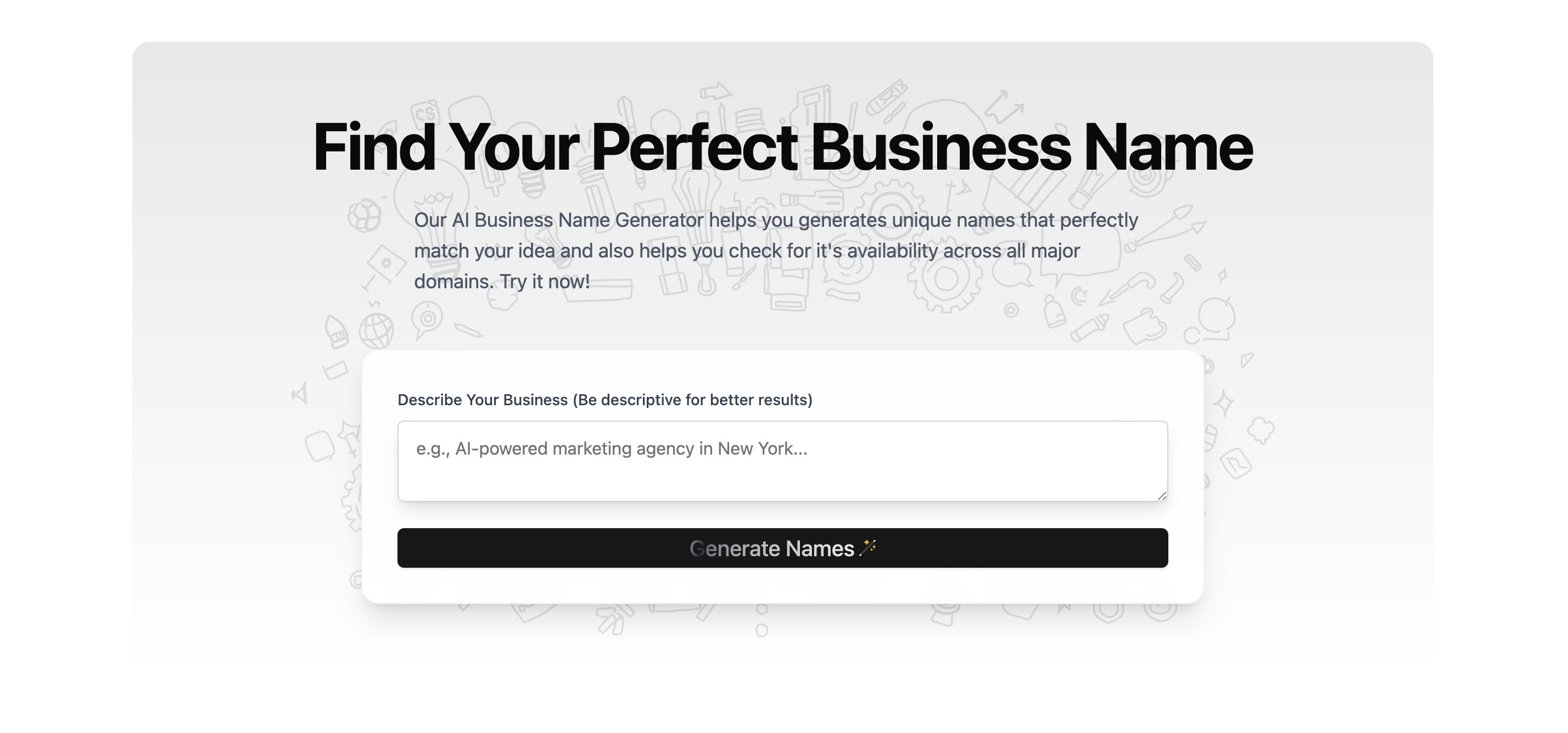
Once you’ve done some manual brainstorming, AI tools can dramatically expand your list of possibilities. They’re especially good at combining words, checking for stylistic patterns, and generating names at scale.
Bilgu’s AI Business Name Generator is one of the fastest and most intuitive tools available. You simply describe your business, enter a few keywords, and the AI generates a wide variety of creative, brandable name options in seconds, saving you hours of manual effort.
Here’s why AI name generators are worth using:
Speed: Instead of spending days brainstorming, get hundreds of ideas in minutes.
Creativity: AI can combine words and concepts in ways humans rarely think of.
Volume: The more ideas you have, the better your chances of finding the one that truly fits.
Inspiration: Even if none of the generated names are perfect, they spark ideas that lead to your ideal name.
The best approach is to use the AI generator alongside your manual brainstorming, not instead of it. Your human intuition about your brand is irreplaceable; AI expands the raw material you have to work with.
Try it now: bilgu.com/tools/ai-generated-names
Step 5: Apply Naming Techniques Used by the Pros
Use Cognitive Fluency to Your Advantage
Research shows that names which are easy to process are perceived as more trustworthy and credible. This is called cognitive fluency. Names that rhyme, use alliteration, or have a pleasing rhythm benefit from this effect. When choosing between two names, lean toward the one that rolls off the tongue more naturally.
Keep It Short
The most powerful brand names in the world are often one or two syllables: Apple, Nike, Zoom, Slack, Lyft. Shorter names are easier to remember, easier to say, and more versatile across different media and branding contexts. Aim for two syllables if you can.
Avoid Numbers and Special Characters
Numbers and hyphens create confusion, especially verbally. If someone hears your business name spoken aloud, they should be able to find you online without guessing whether the “2” is a number or the word “to” or “too.”
Be Suggestive, Not Literal
The most iconic names hint at what a brand stands for without spelling it out. A purely descriptive name like “John’s Plumbing Services” is hard to trademark and difficult to build a strong brand around. A suggestive name like “FlowPro” hints at expertise and results without boxing you in.
Don’t Paint Yourself Into a Corner
Avoid names that are so specific they limit your future growth. “Mike’s Chicago Pizza” is charming for a local restaurant but becomes problematic if you franchise nationally. Think about where your business might be in 10 years and choose a name that can travel with you.
Step 6: Narrow Down Your List
After brainstorming and generating ideas, you’ll have a long list. Now it’s time to filter. Use these criteria to narrow it down:
The Gut Check: Which names make you feel something? Excitement, pride, confidence? Trust your instincts.
The Say-It-Out-Loud Test: Say each name out loud five times. Does it flow? Is it easy to say? Does it sound professional or playful, whichever fits your brand?
The Spelling Test: Ask someone to spell it after hearing it said once. If they struggle, your customers will too.
The Crowded Room Test: Imagine introducing yourself at a networking event: “Hi, I’m from [business name].” Does it roll off the tongue? Does it invite a follow-up question?
The 10-Year Test: Can you see this name on a billboard, a Fortune 500 list, or an international storefront? Does it have the gravitas or charm to scale?
Step 7: Gather Feedback
Before making a final decision, pressure-test your shortlist with real people.
Ask friends and family for their honest first impressions. Don’t lead them; just share the name and ask what comes to mind.
Survey potential customers using a simple Google Form or Typeform poll. Show them your top three options and ask which feels most professional, most memorable, or most appealing.
Run a social media poll if you have an existing audience. This gives you real data and also creates early buzz about your brand.
Test for cultural and language meanings. If you plan to serve international markets, research what your name means in other languages. Run it through a translator and ask native speakers for their impressions.
Check for negative or unintended associations. Does the name sound like anything offensive or awkward? Could it be misread or misheard in a problematic way? Fresh eyes often catch things that tunnel vision misses.
Step 8: Check Availability
You’ve found a name you love. Now comes the critical step of making sure you can actually use it.
Check the Domain Name
Ideally, you want the exact .com domain for your business name. A .com signals credibility and is what customers instinctively type. Check availability using domain registrars like GoDaddy, Namecheap, or Google Domains. If the exact .com is taken, consider adding a small modifier like “get[name].com” or “[name]hq.com”, using an alternative extension like .co or .io, or purchasing the domain from its current owner if it’s available for resale.
Check Social Media Handles
Search for your name on Instagram, Facebook, X (Twitter), LinkedIn, TikTok, and any platform relevant to your industry. Consistent handles across all platforms make it easier for customers to find and tag you. Use a tool like Namechk to check multiple platforms simultaneously.
Search for Existing Businesses
Google your name idea in quotes for an exact match, then check your local and national business registries. You want to make sure no one in your industry is already operating under the same or a very similar name.
Check for Trademarks
In the US, search the USPTO (United States Patent and Trademark Office) database at tmsearch.uspto.gov. In other countries, check your national trademark office. A name that’s trademarked in your industry is off the table; using it could result in legal action. This step is non-negotiable. Consult an intellectual property attorney if you’re unsure.
Step 9: Register and Protect Your Name
Once you’ve confirmed availability, move quickly to lock it in.
Register your domain name as soon as possible.
Secure your social media handles across all major platforms, even ones you’re not actively using yet.
Register your business with your local or state government to officially claim the name.
Apply for a trademark to protect your name from competitors. This is a longer process but worth it for long-term brand protection.
Speed matters here. If you’ve found a great name, others may be thinking along the same lines.
Common Naming Mistakes to Avoid
Even with the best intentions, entrepreneurs fall into these traps:
Choosing a name you love but your customers don’t. Your customers’ opinions matter more than your own. Test early and test often.
Going too clever. Puns and wordplay can be fun, but they can also confuse or alienate. Make sure any cleverness is immediately accessible, not something people only get after it’s explained.
Following trends. Adding “-ly,” “-ify,” or “-io” to everything might feel contemporary today, but trends fade. Choose a name with staying power.
Ignoring the domain. Falling in love with a name that doesn’t have a viable domain is a recipe for frustration. Factor domain availability into your decision-making from the beginning.
Choosing something too generic. A name like “Quality Services” or “Best Solutions” says nothing and is impossible to brand. Stand for something specific, even if it’s just a feeling or metaphor.
Neglecting trademark checks. Using a trademarked name, even accidentally, can result in costly legal disputes and forced rebranding. Always check.
Industry-Specific Naming Tips
Tech and Startup Companies
Lean toward abstract, invented, or portmanteau names that feel modern and scalable. Think about names that convey speed, intelligence, connection, or innovation. Keep it short; two syllables is ideal.
Service Businesses
Founder names work well here, as they convey personal accountability. Otherwise, choose names that communicate your specialty and the result or feeling customers can expect. “ClearPath Financial” tells you both what they do and what outcome they deliver.
Retail and E-Commerce
Go for names that are highly memorable, fun to say, and easy to search. Since customers will be finding you online, searchability matters. Avoid names that are too similar to established retailers.
Food and Hospitality
This is a category where personality and warmth matter enormously. Playful names, founder names, and location-inspired names all work well. Don’t be afraid to be a little charming or even quirky; it signals authenticity.
Health and Wellness
Names that evoke calm, clarity, vitality, and trust resonate in this space. Avoid anything that sounds overly clinical unless you’re specifically targeting a medical or professional audience.
Creative and Consulting Businesses
These businesses often succeed with evocative or abstract names that suggest insight, creativity, or transformation. Avoid purely descriptive names; they limit your perceived expertise.
Let AI Do the Heavy Lifting
Coming up with the perfect name is hard work. It requires creativity, strategy, and a little luck. But you don’t have to do it alone.
Bilgu’s AI Business Name Generator takes the guesswork out of the brainstorming phase. Enter a few keywords describing your business, choose your industry and vibe, and get a curated list of AI-generated name ideas almost instantly.
Whether you’re launching a tech startup, opening a boutique, or starting a consulting practice, the generator gives you a strong foundation to build from. It’s fast, free, and surprisingly creative.
The best part? You can run as many searches as you want, experimenting with different keywords, tones, and styles, until something clicks. Think of it as a tireless brainstorming partner that never runs out of ideas.
Start generating your perfect business name: bilgu.com/tools/ai-generated-names
Quick Checklist: Is Your Business Name Ready?
Before you commit, run through this final checklist:
[ ] The name is easy to say and spell
[ ] It’s two to three syllables (ideally)
[ ] It reflects the personality and values of my brand
[ ] It stands out from my competitors
[ ] It passes the crowded-room test
[ ] Friends and potential customers responded positively
[ ] The .com domain is available (or a strong alternative exists)
[ ] Social media handles are available
[ ] No existing businesses in my industry use the same name
[ ] No trademarks conflict with my name
[ ] It has room to grow with my business
If you can check every box, you’ve found your name. If not, keep refining. It’s worth the extra effort.
Final Thoughts
Naming your business is one of the most exciting and challenging parts of the entrepreneurial journey. It’s a creative act with real strategic consequences. A great name won’t guarantee success, but it gives you a head start and a foundation you’ll be proud to build on.
The key is to approach it with both creativity and rigor. Brainstorm widely, filter ruthlessly, validate with real people, and always check availability before you fall too hard for any one option.
And when you’re ready to generate ideas fast, let AI accelerate the process. Bilgu’s AI Business Name Generator is one of the best tools available for quickly generating creative, brandable business name ideas tailored to your industry and vision.
Your perfect name is out there. Go find it.
Ready to find your business name? Try Bilgu’s AI Business Name Generator and get inspired in seconds.
Comments
Nothing yet. Say the first thing.
Sign in to join the conversation.