
0:00
-18:40
The Three National Days
· Republic Day (January 26)
o Marks the day India’s constitution came into force in 1950.
o Main celebration happens at Kartavya Path in New Delhi with a grand military and cultural parade.
o The President of India hoists the national flag.
· Independence Day (August 15)
o Commemorates India’s freedom from British rule in 1947.
o The Prime Minister hoists the national flag at the historic Red Fort in New Delhi and addresses the nation.
o Citizens fly kites and participate in flag-hoisting ceremonies.
· Gandhi Jayanti (October 2)
o Celebrates the birthday of Mahatma Gandhi, the “Father of the Nation”.
o Marked by prayer services at Raj Ghat (his memorial in New Delhi), patriotic songs, and nationwide clean-up campaigns (Swachh Bharat initiatives).
India is home to some of the most vibrant, culturally rich, and widely celebrated festivals in the world. The ten most famous festivals include Diwali, Holi, Durga Puja, Navratri, Dussehra, Onam, Pongal,
Ganesh Chaturthi, the Kumbh Mela, and the Rath Yatra.
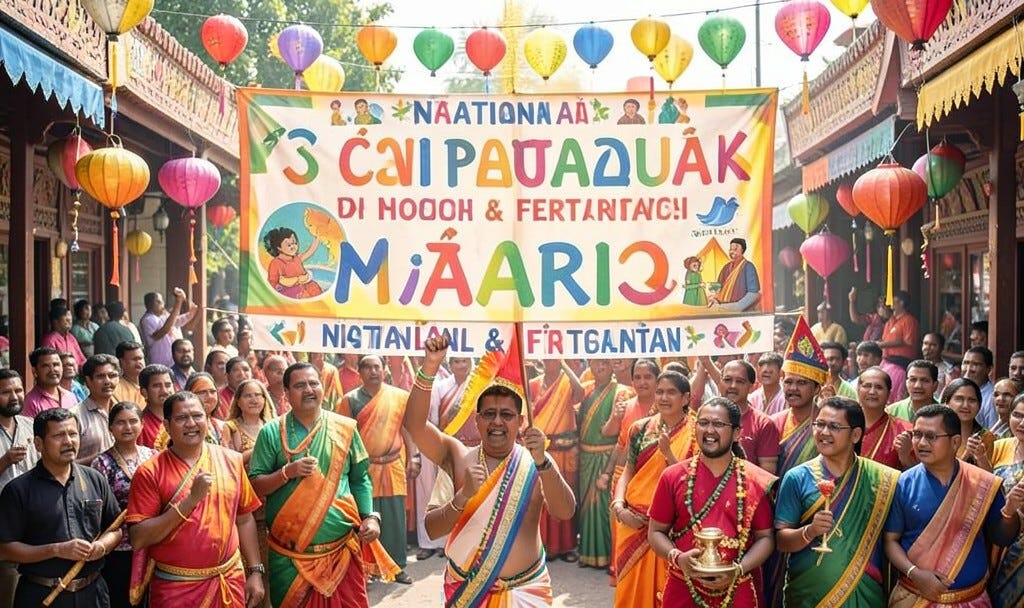
India is known as the land of festivals, and each festival has its own special meaning and charm. These celebrations reflect the beauty of India’s rich culture and traditions. Even though people follow different religions, festivals bring everyone together in joy and unity. Popular festivals like Diwali are celebrated across the country with equal enthusiasm. Let’s explore more about the Festivals of India.
Major Cultural and Religious Festivals
· Diwali (Deepavali): The grand festival of lights marks the triumph of light over darkness and good over evil, featuring oil lamps, fireworks, and sweets.
· Holi: The chaotic and joyful festival of colours celebrates the arrival of spring and love by playfully smearing coloured powders and splashing water.
· Durga Puja: A massive, artistic celebration honouring Goddess Durga, celebrated with immense fervor, elaborate temporary pandals, and music, especially in West Bengal.
· Ganesh Chaturthi: A ten-day vibrant event celebrating the birth of Lord Ganesha, highlighted by giant clay idols and grand street processions.
· Navratri: Nine nights of intense devotion, fasting, and energetic traditional folk dances like Garba and Dandiya dedicated to the divine feminine.
· Dussehra (Vijayadashami): Marks the victory of Lord Rama over Ravana, celebrated with stage reenactments (Ramlila) and the burning of giant effigies.
Harvest and Regional Mega-Festivals
· Onam: Kerala’s prominent harvest festival featuring vibrant floral carpets (Pookkalam), snake boat races, and the traditional Sadya feast.
· Pongal: A multi-day Tamil harvest festival thanking nature, the sun god, and farm animals, centred about cooking sweet rice dishes.
· Rath Yatra: The historic chariot festival in Puri, Odisha, where massive wooden carts carrying Lord Jagannath are pulled by millions of devotees.
· Kumbh Mela: The largest peaceful religious gathering on Earth, where tens of millions gather to bathe in sacred rivers on a rotating multi-year cycle.
Public holidays in India
Public Holidays in India, also known as Government Holidays, consist of a variety of cultural, nationalistic, and religious holidays that are legislated in India at the union or state levels.
Being a culturally diverse country, there are many festivals celebrated in various regions across the country. There are only three national holidays declared by the Government of India: Republic Day, (26 January), Independence Day, (15 August) and Gandhi Jayanthi, (2 October). Apart from this, certain holidays which are celebrated nationally are declared centrally by the Union Government. Additionally, various state governments and union territories designate additional holidays on local festivals or days of importance as holidays as per section 25 of the Negotiable Instruments Act, 1881.
In addition to the three fixed national holidays, the Union Government of India declares additional days as holidays which are largely followed by central government offices and affiliates. In addition to designated fixed holidays, few other days are designated optional from which select number of days can be chosen according to individual convenience.
The biggest festivals in the world by attendance and scale include massive cultural carnivals, religious celebrations, and music gatherings. The top 20 largest scale events draw crowds ranging from hundreds of thousands to over a billion participants globally.
Cultural and Traditional Mega-Festivals
· Holi (India & Global): Over 1 billion participants celebrate this vibrant spring festival of colours with powder and water.
· Chinese / Lunar New Year (Global): Triggers the world’s largest annual human migration with billions of trips.
· Rio Carnival (Brazil): Draws around 5 million people over five days of iconic street parades and samba
· Diwali (India & Global): Over 1 billion people light lamps and celebrate the festival of lights.
· Song kran Water Festival (Thailand): Attracts 5 million+ people for the world’s largest massive nationwide water fight.
· Oktoberfest (Munich, Germany): Welcomes roughly 6 million visitors annually for the world’s premier beer and folk festival.
· Mardi Gras (New Orleans, USA): Attracts about 1.4 million attendees for elaborate parades,
· Notting Hill Carnival (London, UK): Attracts roughly 2.5 million people to Europe’s biggest street party.
· Harbin International Ice and Snow Festival (China): Millions visit the world’s largest winter snow and ice sculpture showcase.
· Día de los Muertos (Mexico): Millions gather nationwide to honour deceased loved ones with elaborate altars and parades.
Arts, Performance, and Music Festivals
· Edinburgh Festival Fringe (Scotland, UK): Draws over 2.5 million attendees to the world’s largest performing arts festival.
· Coachella Valley Music and Arts Festival (California, USA): Draws nearly 600,000 festival-goers across its expanded multi-weekend format.
· Sziget Festival (Budapest, Hungary): Hosts over 500,000 partygoers on an island celebration of music and culture.
· Lollapalooza (Chicago, USA): Brings in roughly 400,000 fans to Grant Park for multi-genre rock and pop.
· Electric Daisy Carnival (Las Vegas, USA): Draws over 345,000 electronic music lovers.
· Ultra Music Festival (Miami, USA): Attracts more than 330,000 electronic dance music fans.
· Glastonbury Festival (Somerset, UK): Welcomes around 210,000 people, temporarily becoming a small city.
· Burning Man (Nevada, USA): Gather over 70,000 participants who build and dismantle temporary Black Rock City.
· La Tomatina (Buñol, Spain): Around 20,000+ people participate in the world’s biggest tomato food fight.
· Tomorrow land (Boom, Belgium): Gathers 400,000+ global electronic music attendees.
Five famous international festivals from around the world celebrate unique cultures, traditions, and arts through massive public gatherings, music, and colourful parades.
Rio Carnival
· Location: Rio de Janeiro, Brazil
· About: A massive annual celebration known for grand parades, energetic samba music, and bright, elaborate costumes.
Oktoberfest
· Location: Munich, Germany
· About: The world’s largest Volks fest featuring traditional Bavarian food, music, and a celebration of German beer culture.
Diwali (Festival of Lights)
· Location: Celebrated globally, major hubs in India
· About: A major Hindu festival symbolizing the victory of light over darkness, marked by oil lamps, fireworks, and sweets.
Harbin Ice and Snow Festival
· Location: Harbin, China
· About: An annual winter festival featuring gigantic, illuminated ice sculptures carved by artists from around the world.
Mardi Gras
· Location: New Orleans, USA
· About: A vibrant carnival celebration featuring festive parades, elaborate masks, bead-throwing, and lively street parties.
India is widely known as the country with the most festivals. Because of its rich mix of religions, cultures, and traditions, people across India celebrate thousands of large and small regional, seasonal, and religious events all year round.
Other Festival-Rich Countries
Spain: Famous for street parties, historical parades, and unique events like LaTomatina.
Japan: Known for seasonal changing-of-the-season celebrations and local shrine fairs called matsuri.
Mexico: Celebrated for vibrant cultural events like Día de los Muertos (Day of the Dead).
Comments
Nothing yet. Say the first thing.
Sign in to join the conversation.