
Note: the voiceover above is more of a ramble, me reading an earlier, messier, partial draft of this post. Really sincerely only for people who tolerate this newsletter on a regular basis.
Last Friday my girlfriend Marie had a wisdom tooth hammered into quadrants and torn from her head at what was frankly, by her own estimation, a very reasonable price. Afterward I went to fill her antibiotic prescription and when the pharmacist looked at the sheet he smiled and said, “She’s Puerto Rican.”
I said yes how did you know.
He said, “She’s like my best friend.”
I said oh. Ha ha. I didn’t know she…that she had a friend at the pharmacy.
He popped the sheet from its corners: “The surgeon. Not your girlfriend.”
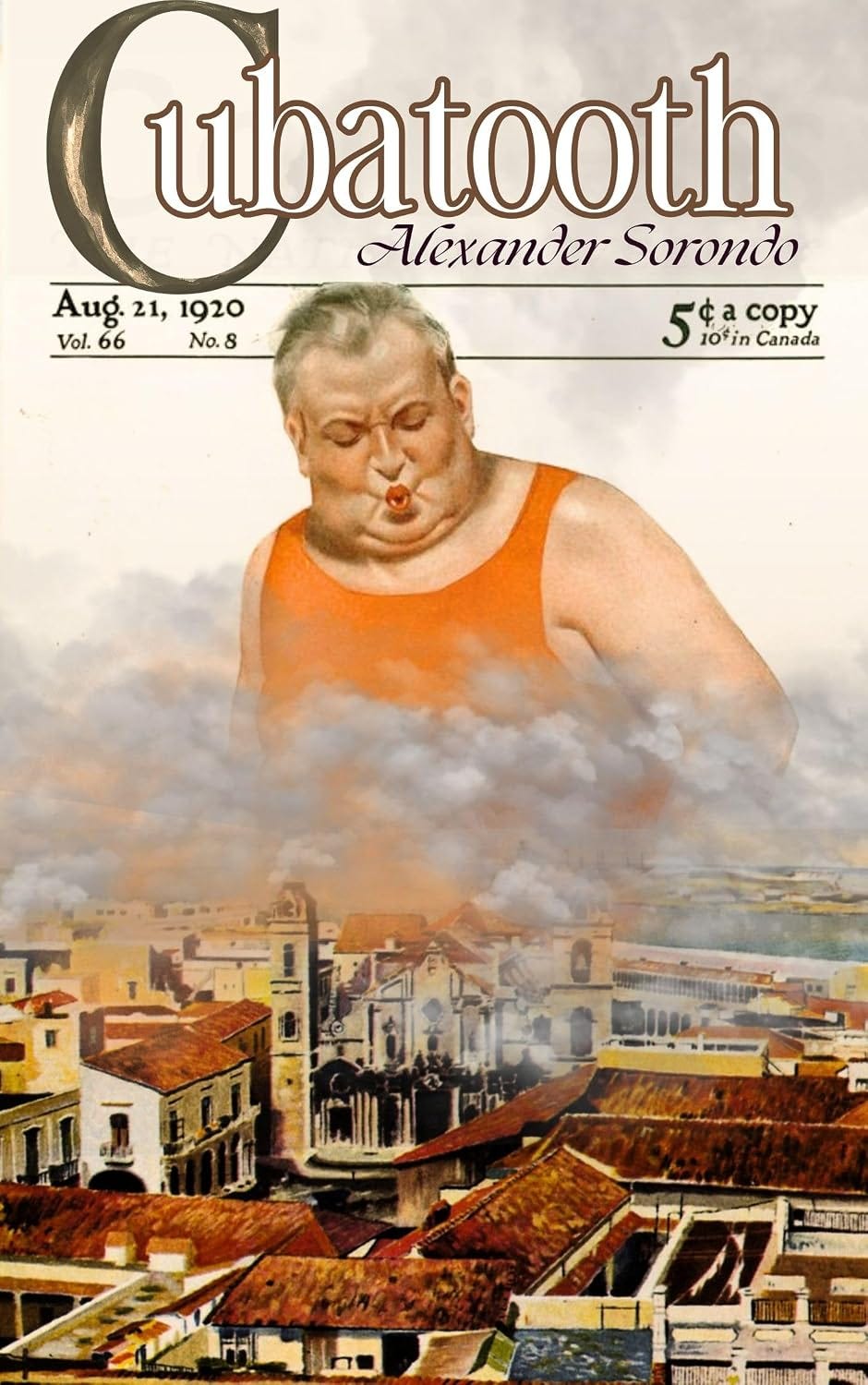
This was at Walgreens. I spent a long time reading about Walgreens a couple years ago while writing a book about Prohibition which oh by the way is called Cubatooth. It comes out August 11 and you can pre-order it on Amazon for $4.99.
There were only a couple dozen Walgreens locations when Prohibition started and then when it was over there were about 600. Charles Walgreen claims this happened because he invented the milkshake which is a hard thing to verify and also something a criminal would say. He was also selling prescription whisky. Ordering more of it than other pharmacies and getting a reputation for never running out.
Many doctors insisted there was no legitimate use for “medicinal whisky” but fortunately the buzzkill was not catching. It was more often the case that you went to your physician and paid $3 and told him that it hurts whenever you wake up and he would write you a prescription of no more than one pint of whisky per week. The whisky itself cost roughly another $3 at the pharmacy.
That was about $50 today.
$100 between doc and pharmacist.
I asked the pharmacist if he visits Puerto Rico and he said yes but less frequently now that he goes every other week to the Cayman Islands because his boyfriend lives there, “as of recently.”
Rolling his eyes about it.
His boyfriend’s older. 50. Like a 12-year age gap. And he didn’t just move to the Cayman Islands, he retired to the Cayman Islands. Dreamed about it his whole career.
The pharmacist said, “OK I love you and you need to do your thing but my career is in Miami and so that’s where I’m staying.”
They’ve made it work.
He said it’s inconvenient but that he is merely waiting it out. And look: just over a year into this tropic splendor, his boyfriend is getting shifty. Says he wants to move back to Miami: live six months here, six months there.
“Which six months?”
He rolled his eyes. “Summer. He wants to live here, in Miami, during the summer. I said, ‘Wow. Beautiful. You know when’s a great time to tell me that? The end of summer. I love it.’”
He gave me drugs and we said goodbye and then Marie was on the phone saying please bring soup.
Back in 1920 we got the Volstead Act banning alcohol sales except there was a footnote saying that you could still purchase wine if God said that you have to.
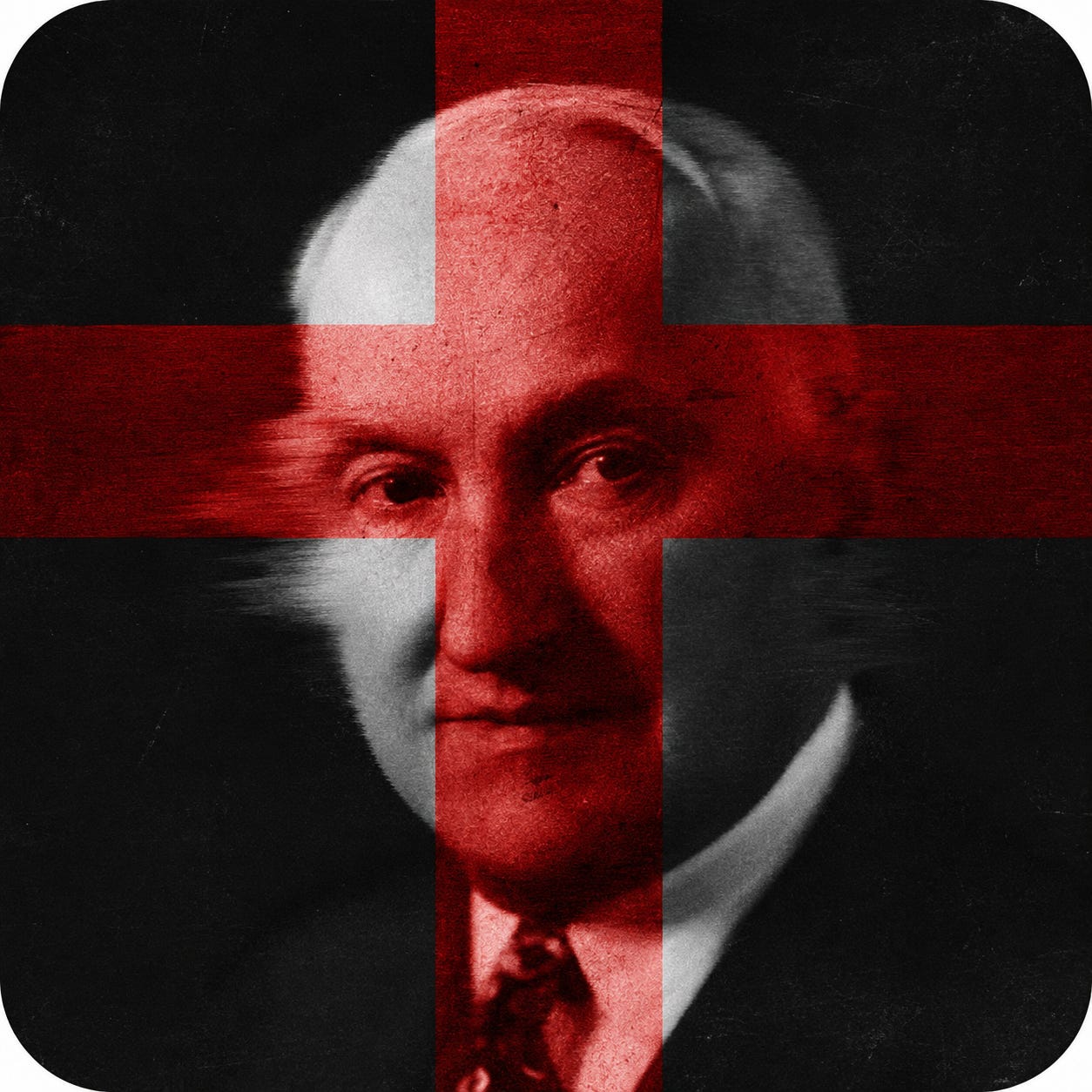
Communion wine comes from special Catholic vineyards. There was a small powerful group of Catholic vineyard families that basically owned this market. It would not be inaccurate to describe their collective as a “Catholic wine cartel” however you must say it with affection.
Their vineyards got “ecclesiastical approbation,” which (to quote Daniel Okrent’s masterpiece on the era, Last Call) was “the formal nod from a bishop indicating to parish priests that a vinter’s vines were acceptable for communion.”
A guy named Georges de Latour owned more vineyards than anyone. He sent sales material to churches. The pamphlets featured blurbs from religious authorities praising the exceptionally good taste of de Latour’s communion wine, a beverage referred to colloquially as “the blood of Jesus Christ who was tortured because of your thoughts.” de Latour’s pamphlets also encouraged priests to get their communion wine in large quantities such as half- and full barrels.
As de Latour points out to a Prohibition agent at the time: barrel-size orders aren’t easily stolen by hijackers in a quick road heist.
As Okrent points out, on the other hand: barrel-size orders, while more difficult to steal, were much easier (after delivery) to dump into a bathtub, fluff with Welch’s grape juice (157 years old), and then flip that barrel of Christblood into one hundred bottles of party.
Eucharist, ordered by the barrel, was good at preventing crime en route to its perpetuation.
de Latour’s pamphlets were written so that they spoke directly to the needs of priests and often concluded with a reminder that the vineyard also offered “Chablis, Riesling, cabernet sauvignon, Tokay, sherry, Angelica, burgundy, port, and muscatel.”
Welch’s grape juice was invented by Thomas Bramwell Welch.
A dentist.
He invented it for the sole purpose of being used as a non-alcoholic Eucharist.
Amen.
On Monday she called me over from the living room looking nervous in front of the mirror and handed me a flashlight.
“Does my gum look like it’s healing?”
She opened her mouth to show me the injury. I am squeamish and ill-suited to these things. It has been 25 years since I gave blood in the upright position. But strangely I cannot think of a better metaphor for love than this: “join me in the bathroom, shine this at my wound, tell me how bad it is.”
I took the flashlight. My hand was shaking, but professionally. I looked at the wound from one angle. “Mhm.” Then I craned my neck and looked from another. “Yes I see.” Finally I clicked off the flashlight and handed it back to her. I walked to where the air conditioner breathes hardest and sat down and touched my face and gulped hard and when the ringing stopped I noticed she was asking how it looked.
“I think it looks good,” I said. “You always look good.”
If you’re interested in an early copy of Cubatooth, in exchange for an honest review, send me a DM and I can get you a PDF or EPUB!
Comments
Nothing yet. Say the first thing.
Sign in to join the conversation.