
A Great Service Culture Is Built on Purpose
Or, said differently: It is created through specific attributes highlighted, repeated and celebrated with intention.
Last month, we established an important distinction: in retail and service businesses, there is a meaningful difference between service that is Exceptional and service that is Cultural. The former is admirable and useful—but by its very definition, it is also infrequent. The latter is transformational—in part, because it is dependable and predictable.
This distinction matters. A lot. After all, the supreme currency of trust is banked when a customer – or a marketplace – comes to believe, “This is just who they are. This is what they do.”
This perception is also the irrefutable evidence of a service culture.
Which brings us to the natural question and our assignment for this month:
How Does a Business Actually Create a Great Service Culture?
Contrary to what some leaders may espouse, it is not initially or mostly created through mission statements, core values, breakroom posters, or social media.
A great service culture is built when a business identifies the specific attributes their customers will value most—and then hires, trains, reinforces, rewards and ensures accountability for those attributes so consistently they become the everyday experience of its constituents. The easy truth in this very hard work is that the starting point is not elusive. With clarity and certainty, those we serve (and wish to serve) tell us what they desire from us. No focus groups or blind taste tests are required. Keen observation and disciplined listening will do just fine.
Customers Rarely Describe Great Service in Abstract Terms
If you ask someone whether they received “good service,” they usually answer quickly.
And if you ask why they feel that way, their answers are plenty revealing.
They will say things like:
“They were so friendly.”
“You could tell they genuinely cared.”
“They seemed excited to help me.”
“They really listened.”
“I never felt rushed.”
Notice what is not happening in these responses. Our customers are not evaluating service through corporate lexicon. When was the last time someone described an admirable customer experience along these lines? “The organization signified strong service alignment and favorable engagement mechanics.”
I’ll answer for you… Never.
Instead, with obvious satisfaction and appreciation, they are describing attributes recalled easily.
And very human-ingrained attributes at that. Friendliness. Care. Excitement.
It is SO important to be mindful of this. Plenty of businesses bravely claim to care deeply about service… BUT way too few define the traits that customers should feel OR that associates should exhibit every time they engage or represent the enterprise.
When There Is No Definition, There Can Be No Consistency
The service attributes desired by leaders must be specified, repeated and exhibited to those in their care. This includes both customers and colleagues. Make no mistake: without specificity and organization-wide accountability, consistency with these attributes is doomed. And when there is no consistency, there can be no service culture. By its very nature, Culture is firstly the existence of recurrent, recognizable traits.
In my own service-first efforts, I am aided by our Service Quotient. Unsurprisingly, this is a means to evaluate the degree of a well-defined attribute relating to the service an organization provides. And like the far more widely known Intelligenzquotient, in its original German—and what we know as “IQ”—it evaluates a person’s mastery of the designated attributes. In essence, we have swapped the pursuit of determining human intelligence with determining suitability for a service-oriented role in a specific organization. It is a cultural litmus test. And it ensures that foundational service characteristics are evidenced in every customer interaction.
As an example, let’s use the 2 characteristics we’ve chosen to sit atop the service proposition at Big Peach:
Friendliness
Enthusiasm
For sure, these attributes may be surprising to you. But give them a chance. They may also sound elementary. And they are. But in service, we know that elementary does not mean ineffectual. In fact, I have witnessed these attributes generate enormous impact.
Of course, there is rarely a shortage of attributes leaders wish to integrate into their customer experience… But we are wise to begin AND end with a manageable load. Specific attributes produce myriad avails, as the concept of a “keystone” takes hold. More descriptively, the attributes placed at the service apex lock the other favorable intentions into place and bear the heavy load of customer expectations. In my business, Friendliness and Enthusiasm bring about attentiveness, hospitality and compassion, as beneficial byproducts.
To even further illustrate, let’s consider each of our specified attributes individually. This will help us see how they punch above their weight and why they produce beyond the obvious.
By design, Friendliness even outpaces product insight at Big Peach.
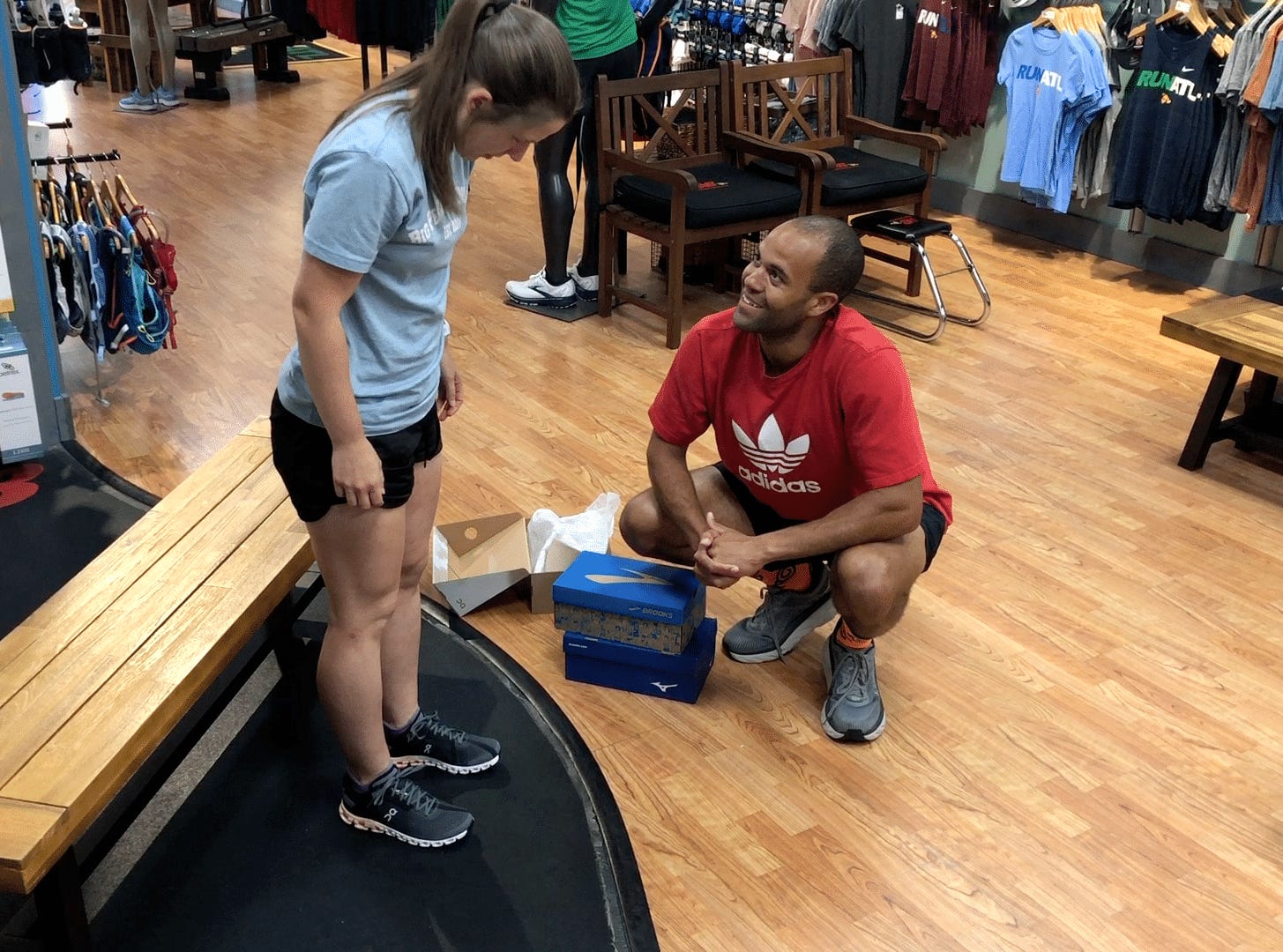
Friendliness: The Gateway Attribute
Friendliness can be easily underestimated because it is so basic. To some degree (and with much disappointment), its authority is found in a lack of its common prevalence. Regardless, it is an immediate signal to every customer they are welcome, seen, and safe in our environment.
And Friendliness is not fluff. Nor is it cosmetic. We believe it is the social and emotional super-highway on which every service opportunity and transaction should travel. If a customer does not feel embraced, they are less likely to be receptive to our expertise, our intentions or our recommendations. Our Friendliness is, indeed, to be appreciated when a Guest leaves… But even more so, we want it to be expected when they arrive. After all, it can only be deemed “Cultural” when it is both admired AND anticipated.
Enthusiasm: The Evidence We Care
To a fault, perhaps, I love to use definitions in my writing and speaking. I believe they do more than set the stage for a message. When properly cast, well-considered definitions are the supporting performer! And one of my all-time favorites to pair with content on service is for Enthusiasm. My preferred definition is concise, but compelling: “Eager enjoyment.”
Everyone likes being nearly unrestrainable enjoyment to others. If only for a second, picture someone who is enthusiastic to be of service to you… Wow. Dreamy, eh?!? And Customers can feel the difference between someone who is merely present and someone who is cheerfully engaged.
Yes, the differentiator is Enthusiasm. And especially for service providers connected to offerings that will not be easy or effortless enjoyment for the purchaser (fitness, insurance, medical, etc.), I believe it is even more crucial. Over 70% of our business at Big Peach is the resale of footwear, technically classified and unapologetically engineered for running. The categorical term is “Performance Running Footwear.” Nonetheless, I am acutely aware of how many people find “going for a run” an activity that is barely tolerable. And it is well-documented there are legions of others who loath it entirely…
In addition to our stores and featured products, we believe it is our responsibility to elevate the enjoyment of a fitness routine that includes walking or running. I see other retailers spending irretrievable resources on product assortments, facilities, technology, and marketing while neglecting one of the most persuasive differentiators available to them: the credibility and affection for a Team that joyfully implies it cares and wants to help. Our genuine enthusiasm for others AND the lifestyle we embrace does salient work other investments cannot. If we get Enthusiasm dialed, I know we’ll have plenty of opportunities to show off how much we know about the products we stock. Without hesitation or reservation, we convey through our enthusiasm that, “We are with you… We are just like you… And we are for you.”
Beyond Identification and Elevation
Identifying and elevating Friendliness or Enthusiasm—or any other attribute of your own choosing—are the logical places to start. But much more importantly is the implementation of efforts to reflect the confidence in and dependence on these attributes.
____________________________________________________________________________________
Although I provide a primer on the Service Quotient here, you can uncover the full curriculum and scoring system in Chapter 6 of my book, It’s Not the Bricks, It’s the Mortar: Optimize Your Retail Business for Lasting Success.
____________________________________________________________________________________
Suffice to say, the best leaders do not build a service culture by solely suggesting or vocalizing good ideas. They build that desired culture by operationalizing them. The foundational traits of an admired service proposition are embedded in the following places. And though I’ll continue to use my experience in my business of Big Peach to properly demonstrate, I hope you will freely substitute your own desired attributes into the counsel provided.
1. Hiring
If we want a friendly culture, we must hire friendly people.
The same is true for empathy, compassion, helpfulness, or fun. Or anything else. If you want it, you better screen, interview and compensate for it. Equally so, if we want enthusiasm, we cannot settle for indifference. It is no different for impatience, disinterest or laziness. Here’s the truth: technical skills can be taught, while it is infinitely more difficult for academics to assist with a desired disposition.
2. Training
With the above in mind, do not assume your Team naturally knows how your brand should “feel” to a customer. Create and train the tactics that bring your desired attributes to life.
What does friendliness sound like on the phone? What does enthusiasm look like when a customer is encouraged by a recent outcome?
Each declared attribute should have expectations and enablers that bring it to life and reinforce its prominence in the culture. When someone from our Team gives someone a magnet that says “13.1” (as in the distance of a half-marathon), it is not their generosity on display… It is staff training and resources dedicated to to Enthusiasm.
3. Coaching and Accountability
What gets reinforced gets repeated. And what gets repeated is what becomes cultural. Leaders must coach to these attributes in real time. Standards are built when Team Members understand that service attributes are an expectation of the role (and not optional preferences).
4. Recognition
Just as critically, always be on the lookout for people exemplifying the attributes. You should use normal routines or daily occasions to broadcast each attribute publicly and often. Whether a 3-person huddle or a high-powered Board meeting, miss not an opportunity to cite the observations and outcomes associated with the manifestation of a cultural attribute! When you celebrate what matters, people learn what matters. When you promote what matters, people learn what matters.
Leaders, I hope you won’t settle for exceptional service… Service matters too much for it to be an exception. And fairly so, the biggest gains and the most satisfaction exist only for those who make it cultural.
Build it strong, y’all.
For easy access to past installments of The Monthly Mortar, please use this link.

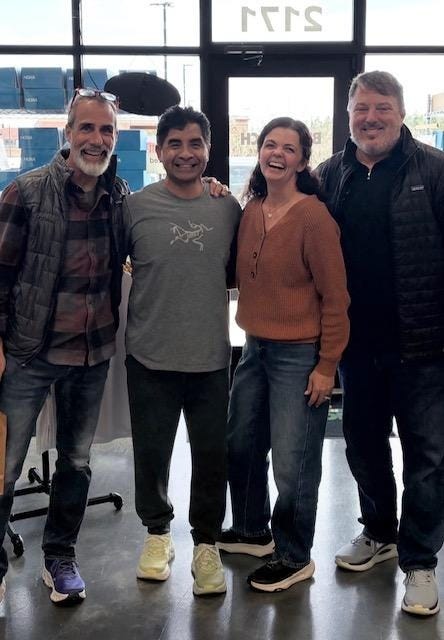

With intent, the author takes Enthusiasm to every service-first endeavor.
Comments
Nothing yet. Say the first thing.
Sign in to join the conversation.