
In 1989, the Berlin Wall came down. The USSR was collapsing. It was a time of such starry-eyed euphroria for Western capitalist democracies that Francis Fukuyama declared it “the end of history.”
Look at us now.
There have been plenty of stories about how we got to our era of populist politics, decaying institutions, and economic gloom. But I’ve never heard a better story than Ian Shapiro’s After the Fall. Shapiro argues that the end of the Cold War created a rare opportunity for Western leaders to remake the world’s institutions. But time and again, our leaders made the wrong choices, setting us up for a rerun of the Cold War and fundamentally threatening the legitimacy of our economic and political systems. After the Fall is a bracing critique. It’s also a clarion call for learning from the past, facing our own “amnesia and myopia,” and remaking our institutions so that they benefit ordinary people—before they decide they’d rather tear it all down and put in a dictator.
Last week I got to interview Prof. Shapiro, who explains:
Why so much philosophy is useless for understanding politics
What George H.W. Bush got right about international aggression
How the US blew two chances to reset relations with Russia—and how Richard Nixon, of all people, saw it coming
How George W. Bush created the enemy he thought he was fighting
Why the Bush/Obama bailouts were “Keynesianism for the elites, austerity for everybody else”
Why judicial review is overrated, wealth taxes won’t cut it, and Nozick > Rawls when it comes to the nature of power
The transcript below has been lightly edited for concision. You can also watch our unedited conversation here:
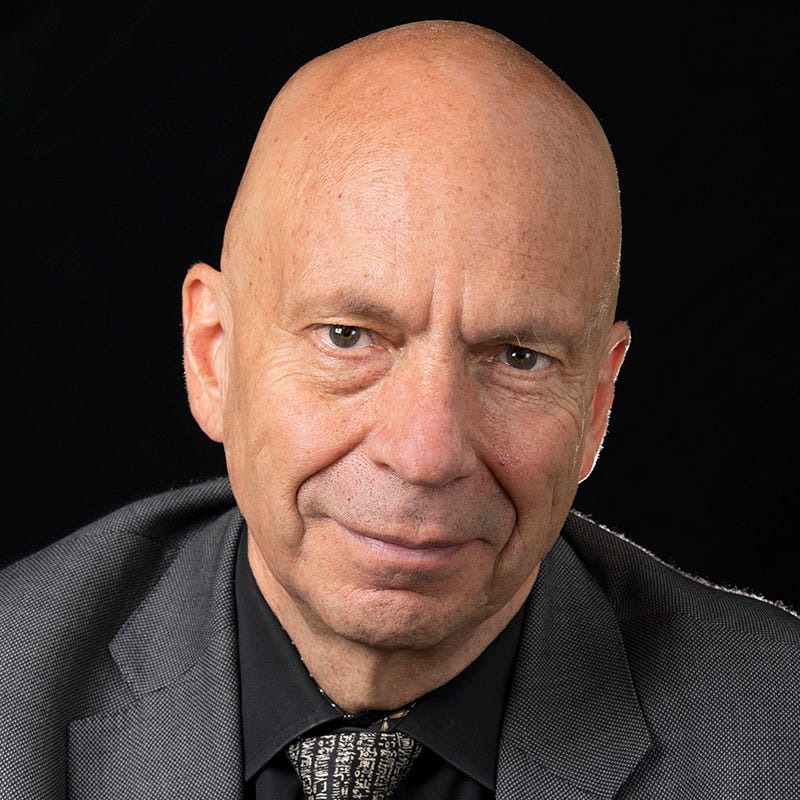
Daniel Muñoz: My guest today is Ian Shapiro, Sterling Professor of Political Science and Global Affairs at Yale University. Ian, I’m delighted to be talking with you about After the Fall.
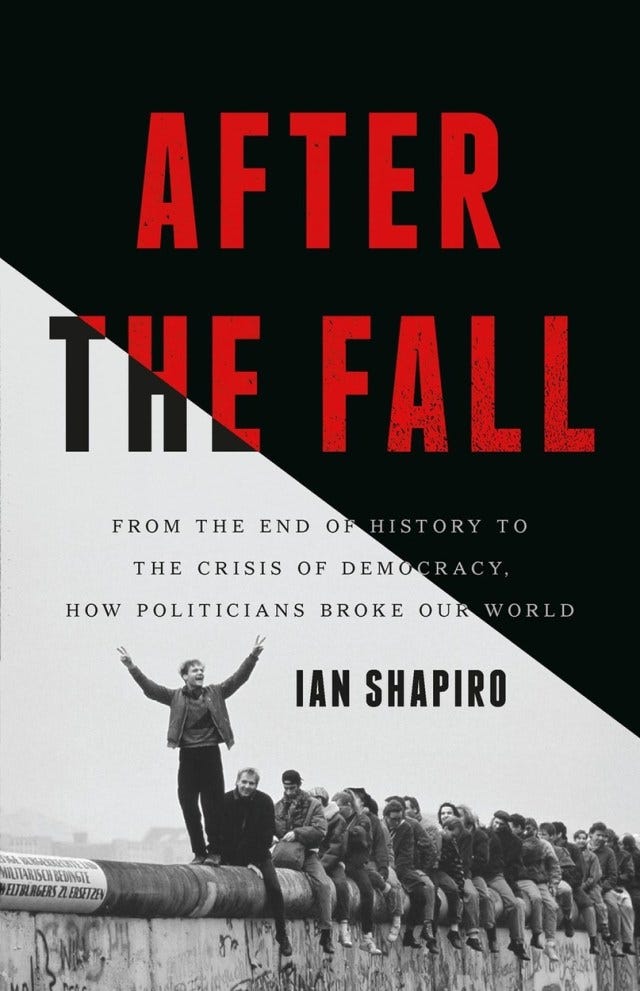
To start off: you’re a political theorist, but After the Fall is quite light on theory. It’s not like you have some overarching theory of foreign affairs and the economy, such as utilitarianism, and then you derive particular policies. The book is thick with facts, dates, stats, and history, and it’s set up so that by the end, the conclusions are meant to strike the reader as “obvious common sense,” to quote FDR. Was that a conscious approach? Do you think that facts and social science are maybe underrated, or theory is overrated in political theory?
I wouldn’t put it that way exactly. I have a particular view of the relationship between political theory and political science that I’ve been writing about for decades, which is going on underneath this book, so I could elaborate a little bit, if you like.
DM: I’d love to hear more.
The book has two motivations. One is a political motivation, and one is a theoretical motivation.
The political motivation is: How did we get from the widespread euphoria and optimism that prevailed when the Berlin Wall came down in 1989 to the baleful circumstances we’re living in today, both in geopolitics and international relations, in almost all of the older democracies, and many of the new ones as well? And the focus is on paths not taken, choices that were made or foregone by political leaders that, if they didn’t make the current circumstances inevitable, certainly made them much more likely.
And it’s not a 20/20 hindsight book. I spend a lot of time focused on the debates at the time, inside government and close to government (principally, but not exclusively, the U.S.), making an empirical case that there really were alternatives available, paths not taken, and they at least held out a fighting chance of getting to different kinds of politics. So that’s the political motivation.
The theoretical motivation, I would say, is basically the agent-structure problem. The so-called “Great Man” theory of history is very much out of favor with historians, and most social sciences are really interested in predictive patterns of behavior, so zeroing in on particular decisions made by political leaders might seem like a quaint throwback to another era—that was going on one level when I was thinking about writing this book. But on the other hand, it did seem like there really were some consequential choices.
If you go to the literature—which is mostly in sociology, philosophy, anthropology, linguistics—on the structure-agent problem, which I spent quite a lot of time with, I really found it almost all completely useless. You have structuralists, whether it’s Parsons or Althusser, saying everything’s structurally determined, and you have the Alasdair MacIntyres of this world saying, “Oh, now people have free will, and therefore we’ll never have social science.” And then you have various middle ground [theories]—you know, Giddens says, “Well, let’s put in 2 dollops of structure, 3 dollops of agency, shake and stir,” and Bob’s your uncle: you get structuration theory. And the difficulty with all of this theorizing is that it is completely atemporal. There’s no dynamic dimension to it. And I think anyone who studies politics in an empirical way over time will start to see that there’s huge variation.
The main structures that shape agency and politics are three. There are institutions, there are ideologies, and there are interests, constellations of interests. And much of the time, they’re hugely constraining on the capacity for agency. But sometimes they loosen up, or they collapse, and then there’s great scope for agency.
So there’s no philosophical answer to the question, “Is it structures or is it agents?” Much of the time, things are heavily overdetermined by structures, but not all the time. And then, you have to think about agency. You know, I’m an epistemological realist.
The phrase that Roy Bhaskar came up with for talking about structures is that they’re “relatively enduring,” which I think is a good way of putting it. They are constraining, but they’re not constraining for all time, and so then the interesting questions become, “Well, what are the conditions under which these structures do and don’t loosen up?” And I don’t think there’s a theoretical answer to that question. I think that is a historical, empirical question. And so that is why this particular book is heavy on making the empirical case that at the end of the Cold War, the institutions, ideologies, and constellations of interests that had really locked agents in for decades became much looser.
So, elsewhere in the book, when I talk about Macron’s missed opportunities in 2017, I have to make the case that in 2017, because of the way in which he was elected and what happened with the collapse of the other parties and so on, he had an unusually wide scope for agency. This is an empirical case, and if you don’t make a convincing empirical case that actually these relatively enduring structures had become relatively less enduring in this moment, you’re not going to make a convincing argument. So that is the burden you have to carry with the empirical dimension of this.
That’s maybe a long-winded, roundabout answer to your question, but that’s how I think about it.
DM: In the beginning of the book, when you talk about George H.W. Bush’s restraint [in the Gulf War], that story instantly gave me a sense of what I was in for. So I have to ask: how should we think about H.W. Bush’s decisions when Iraq invades Kuwait?
It was a mixed bag.
The historical background for this: this is the first time after the Cold War that one country attacks another and invades it. Saddam Hussein goes in August of 1990 into Kuwait, declares it to be Iraq’s 19th province, and ignores all demands from the UN and everybody else that he leave. And so the question was, “What’s the response to this?”
And the good thing that Bush did was he tried to lead a coalition to intervene in a way that would start reinforcing a kind of rules-based response to international aggression by working with the Security Council, getting a a resolution authorizing a force to go in, and then putting together a large multinational force that included many regional players—all of the Arab countries except Jordan participated—and they kicked Saddam out of Kuwait. And most importantly, they resisted the calls of the neoconservatives and others to topple the Iraqi regime and start trying to install democracy across the Middle East and all of that. They took a lot of criticism for that, but this held out the possibility as a principle which I label, “stop the bully without yourself becoming a bully.” And if that had become the template for the future, that could have opened up very different possibilities for dealing with international aggression. I detail in the book why that didn’t happen.

So that was the good side of what Bush did. The bad side: I think he was criminally negligent in encouraging the Shiite rebellion in the South and then not supporting it. If he was committed to not toppling the regime, then he’s sending those people to virtual certain death, and Saddam Hussein eventually, you know, came down like a hammer, and tens of thousands of people were killed. And the way in which the no-fly zones were subsequently implemented have drawn a lot of criticism, and there was a lot of corruption.
So it’s not that Bush did everything right, but from the point of view of a new international regime governing international aggression, I’d make the case that it had potential. That was then destroyed by his son, by the Clinton administration, by the Obama administration, and so forth.
DM: I was also struck by this theme of mixed bags in the book. You know, in one chapter, Bush will make a grave mistake, but then possibly start a beneficial New World Order. And even between different chapters: Larry Summers might be on the wrong side of one issue, but on the right side of another.
I was reminded of something George R.R. Martin said about storytelling. He said Tolkien and older fantasy writers would imagine stories as the knights in white, shining armor versus the orcs in all black—as opposed to Martin’s approach of thinking that people are gray inside, and the fight between the two sides takes place within people. And that seems to be what’s going on in your book.
Do you find it difficult to write stories when there’s no hero? (One of the “heroes” early on in the book is Richard Nixon, who writes a farsighted memo after the collapse of the Soviet Union.) If there’s no hero, how do you have a sympathetic story?
That’s a really interesting question. It came up in another podcast I did, where the person I was talking to said, “So is what you’re calling for a kind of return to the ancient conception of statesmen, you know, as these remarkable, farsighted leaders who are different from the rest of us?” And that, emphatically, is not what I’m arguing in the book.
I’ve written elsewhere about remarkable leaders who took the kinds of risks that almost nobody’s willing to take. Particularly, I’ve written about the negotiations between Mandela and F.W. de Klerk to get a peaceful end to apartheid, where they both took enormous personal risks, and if it hadn’t worked out, it would have been disastrous for them. That is a level of leadership you almost never see in politics. But that is not the argument in this book.
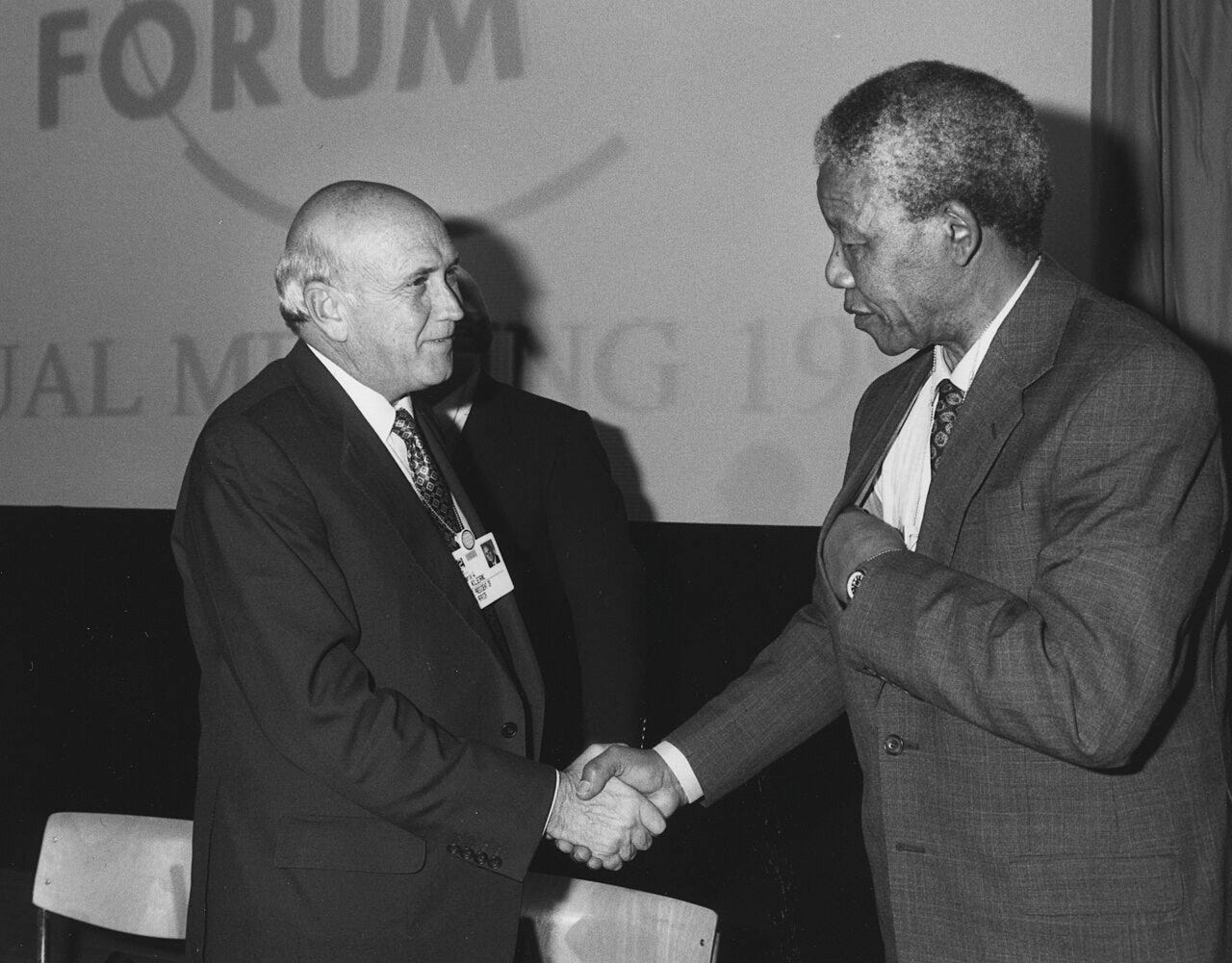
The leaders that I have called out and criticized, it’s not for failing to engage in acts of supererogation. Within the standard assumptions we make about politicians—that they’re mostly very risk-averse people who are trying to get re-elected and so forth—they were within that realm of political behavior. There was scope for doing things differently. We’re not looking for “Who are the heroes here?”—we’re just looking at “What were the decisions?”
So, why I discussed Nixon. At the end of the Cold War, there was this real dilemma as to what would happen with NATO. The basic dilemma was whether to expand NATO into East and Central Europe, which we did starting in 1990 with the reunification of Germany, but really getting going in ’99, when the Clinton administration adds Poland, Czech Republic, and Hungary, and then in ’04, when George W. Bush adds 7 more countries. And then it’s off to the races. That’s what we actually did, excluding Russia, versus focusing at the end of the Cold War centrally on the new Russia. And Nixon came out and gave an analysis of the situation that was spot on. He said the big issue here is Russia, and we should be thinking about Russia in the same way that the Allies thought about Germany in 1946—you know, the Marshall Plan. Or as Churchill had put it, “In victory, magnanimity.” And Nixon was not alone, by the way. Others made this argument as well at the time.
Why did we get the Marshall Plan after World War II? Because Marshall and Truman were determined not to repeat the mistakes after World War I, when the defeated Germany, was left floundering and had punitive reparations imposed on it that were widely considered—and by the way, predicted by John Maynard Keynes—to produce what we got in the ’30s. And so the Marshall–Truman Doctrine was: “We’re not going to make that mistake again.” And so they made massive investments in post-war Germany and Japan folded them into the new post-war security architecture. And Nixon and others were saying this is what we should be doing with Russia in the ’90s. This is actually where George Herbert Walker Bush completely failed. He blew that off, and then so did the Clinton administration.
Now, does this mean Nixon was a great man? No. But he was an astute analyst, and on this particular matter, he was right. And they would have been much smarter to listen to Nixon on this point than to the people that they, in fact, listened to.
DM: I found that part of the book really convincing and eye-opening—and, honestly, upsetting. The argument there is that the U.S. mishandled the post-Cold War relation with Russia, allowing a rerun of the Cold War rather than setting them up economically.
More than once.
The Clinton administration was the tail end of the George Herbert Walker Bush administration, but, you know, Bush was the one who refused to make significant investments in Russia when they most needed it. But then the Clinton administration came in and did the same thing, and that had the consequence that the Russian economy just staggered from crisis to crisis throughout the ’90s until finally in ’98 they defaulted on their debt and had to go to the IMF and so forth.
And second, it threw Yeltsin into the arms of the oligarchs, because the only way he could beat back the resurgence of the communists in the ’96 elections in Russia, he needed money, and [the oligarchs] bailed him out. We didn’t. And that massively increased his dependence on them, which he never escaped, and that relationship didn’t change until after Putin came.
So U.S. relationship with the Yeltsin administration just deteriorated over the whole of the 1990s. But then in 2000, actually, when Putin comes in, for the first time for years, he’s looking for a reset, and he’s pushing, you know, that Russia should join NATO, that Russia should join the EU, and again, the George W. Bush administration is as obtuse as the Clinton administration had been in dealing with Yeltsin. And it’s really not until after 2004 that things really start going south with Putin. Now, of course, he may have become an authoritarian dictator anyway. We can’t actually run the counterfactual. But even after the Clinton people had blown it, there was actually a second opportunity, which we blew as well.
DM: Do you think that means that the Ukraine War—and the conflict with Putin more generally—is the West’s fault?
I don’t know. If you think about how we reacted in 1962 when the Russians were trying to install missiles in Cuba…
You know, we expanded NATO. There are now six NATO countries on Russia’s doorstep. [NATO] even rejected things like saying, “Well, we won’t put nuclear weapons in the front line.” Even things like that, they refused to do. Even in 2004, when Bush Jr. added 7 countries, it was a quid pro quo. It was a bribe, basically, for having supported his “coalition of the willing” to go into Iraq the previous year. He said, “All right, we’ll let you in NATO.” That included the Baltics, by the way, the first countries that had been part of the old Soviet Union, but they’d kind of controversially been part of it. But after that, they start talking about Georgia and Ukraine, which had been integral to the old Soviet Union, and Ukraine, by then, already had a 20-year agreement with the Russians about access to Sevastopol and the Black Sea. And Putin came out, in his famous speech in Munich, and said, “This is an absolute non-starter with us.” And Bush just blew him off, and they announced that they were welcoming the negotiations to bring Georgia and Ukraine into NATO, and they went public with it, and Putin went into Georgia that fall. That was his response.
So, is it our fault that he did that? I think it’s hard to say “fault.” It was an incredibly stupid thing to do. Imagine how any American administration would react, not just to Cuba, but if the Russians made an agreement with Mexico and said, “We’re going to put weapons in Mexico.” It’s just not remotely credible to think any administration would have accepted that.
DM: Let’s transition to George W. Bush. There was a poll earlier this year by YouGov that found that just over 50% of Americans think of George W. Bush as at least “average” in terms of presidents. What opportunities do you think George W. Bush had, and do you think he rose to the occasion?
No, I think he was an incomparably foolish leader. He did more damage to the possibilities for a better future than anybody who came along, even including, I would say, the first Trump administration. I think what’s going on with Trump now is of a different order.
Bush completely obliterated the possibilities for anything other than a revival of the Cold War, and he massively worsened the situation in dealing with militant Islamic fundamentalism. The two instruments of this were how he responded in Afghanistan, and then the regime change invasion of Iraq in 2003. In both of these efforts, his ambitions were equaled only by the extent to which he under-resourced them. They planned for short wars with light footprints, but then they wanted massively to remake the institutional architecture that they were dealing with.
The path not taken in Afghanistan was to go after al-Qaeda and ignore the regime in Kabul, and there were commanders on the ground making the case to do that, who were ignored, and instead they toppled the regime. Predictably—and as predicted—it would produce a civil war. And indeed we had effectively an 18-year insurgency, which finally produced the result we have today.
Similarly, in Iraq, they were just the gang that couldn’t shoot straight. First of all, there was no reason to invade Iraq, as was evident at the time, and there was a huge amount of misinformation created to legitimate that by the neoconservatives who wanted to do it in the administration. And then they destroyed the civil service, the civilian infrastructure, and produced a failed state.
So I think Bush made just catastrophically bad decisions on all of these questions. And I go through them chapter and verse, and look at the people who are saying, “Don’t do this, do something different,” and how they were completely ignored.
DM: Speaking of chapter and verse, let me recommend one passage of the book: the description of the Battle of Tora Bora, and of the unwillingness to commit troops to stop bin Laden from potentially escaping—that seems like a colossal failure brought about by the aim of regime change.
Because the Bush administration wanted regime change in Afghanistan, they had to side with the Northern Alliance. And in order to give the Northern Alliance some legitimacy, they didn’t want to have American troops on the ground at that time. And they wanted to do it all on a shoestring budget [as part of neoliberal privatization]. I thought this was a fascinating interweaving of the two themes of the book, the domestic policy on the one hand and the foreign policy on the other. Right before 9/11, you have Donald Rumsfeld saying, “We’re gonna slim down the military.” And you go through jaw-dropping statistics about how much more committed George H.W. Bush was to getting the job done than George W. Bush, who sent, you know, a pittance of troops.
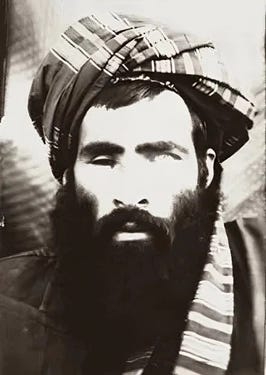
It was even worse than that, because they were just so unbelievably ignorant. For example, after 9/11, it’s a kind of “ready, shoot, aim” strategy. They start demanding that the Taliban turn over bin Laden. And if they had done 10 minutes of research, they would have learned that the Taliban was really incapable of turning over bin Laden, because they couldn’t control him. Mullah Omar had been trying to get bin Laden to stop running terrorist operations out of Afghanistan for years, and he refused to do it: he’d been demanding that he leave Afghanistan, and bin Laden had just ignored him. And they just didn’t have the police power to do it. The reason Mullah Omar was doing it was, you know, he was trying to consolidate a regime. He was still trying to defeat the Northern Alliance, which was the last holdout, people we eventually got behind in the Civil War. He was trying to build a regime and get international legitimacy for it, and the only three countries had recognized the legitimacy of his regime, one of which was Saudi Arabia, which was the arch-nemesis of bin Laden: bin Laden’s big project was to topple the Saudi regime. This was a huge problem for Mullah Omar. So that was the situation at 9/11. And then, what eventually happens, the Bush administration is so determined to topple the Taliban regime that, when they do topple them, the remnants go into Pakistan and start reconstituting, and then in the failed Battle of Tora Bora, the al-Qaeda remnants also go into Pakistan and start reconstituting. And that’s when you then get an alliance between al-Qaeda and the Taliban, which hadn’t previously existed, and that is part of what makes it possible for the insurgency to get off the ground starting in 2003, that finally surges into 2006 and is never vanquished.
You can’t make up the degree of ignorance and ineptitude—they’re creating the problem that they think they’re responding to.
DM: I saw a panel discussion a couple of months ago about the Iran war, and there was a moment that I’ll never forget. A student in the audience asked the Iran Hawk, who had been in the first Trump administration…
John Bolton, right?
DM: No, it was Joel Rayburn.
Okay, anyway.
DM: Joel was asked, “What about the war crime of bombing this girls’ school? You know, what are we supposed to think about this?” Joel’s response was quite indignant. He said, “You have to have some trust in your countrymen. You think that was intentional? I’ve been in those rooms in CENTCOM. That wouldn’t be intentional. Americans wouldn’t do that.” And the audience laughed. Almost a sort of disbelief. And he said, “No, no, you have to have some faith.” And to some extent, I get it. Like, I don’t see any reason to think this was intentional. But this idea that we should trust the national security experts, and that they wouldn’t be so ignorant, they wouldn’t be so negligent as to make a big mistake—maybe it’s because I’ve been in After the Fall Mode, but I found that hard to believe.
Well, I think it’s kind of the wrong question anyway, in that in most things in politics, I’m much more of a consequentialist. I’m Kantian about personal ethics, but I tend to be a consequentialist about politics. And the point is, regardless of what you intend, if you’re going to wage a war, especially with drones and bombing from a great distance, you’re going to kill a lot of civilians.
This happened in Afghanistan as well. It didn’t take long to produce regime change. The Taliban initially collapsed very quickly. The one person that they could find, for a variety of reasons, was Hamid Karzai, the only leader who was acceptable enough to all sides to have a fighting chance of putting together a viable regime. And so he becomes the interim president, and actually wins the first election by a landslide. But Karzai, who was a very shrewd guy, said, “We have to include the Taliban in what we’re doing, or we’re going to get an insurgency. Because of the level of support they have in the South among the Pashtun and so on, it’s just not credible to think we can govern the country otherwise.” And the Americans all tell him to shut up and do what he’s told, pretty much. And so then, starting in 2003, predictably, the insurgency starts accelerating, and the Americans respond with the same sort of tactics that you’re referring to with the school bombing in Iran, and what happens is you get more and more civilian deaths, and it makes it less and less possible for the Karzai regime to have legitimacy, because he’s being supported by the Americans who are killing civilians.
Actually, something very comparable: the day of the 2008 U.S. elections, when Obama comes in, the Americans bomb a wedding party by mistake, and kill dozens of people, lots of them women and children, and so forth. And so it makes it impossible for Karzai to have legitimacy, and he becomes completely embedded, and so on. So, you know, did they intend to kill a wedding party? No. But if you engage in that kind of warfare, are you going to kill a lot of civilians? Yes. And it’s not whether we think you have a pure heart or not. You have to think about what effect this is going to have on the conflict. You know, it’s much more important what the Iranians think of that than what anybody in the U.S. thinks of it, and it’s very predictable how it’s going to play in Iran.
DM: It’s interesting you say that you’re more of a consequentialist when it comes to foreign affairs.
Politics, all politics. In my personal life, I’m a Kantian. I believe in treating people as ends, but I think in politics, you really have to be a consequentialist.
DM: In some cases, I think you go even further, and you often appeal to “self-interest rightly understood,” to use the Tocqueville phrase.
In your book Containment, a critique of the Bush Doctrine, you make a lot of appeals to American national self-interest. You say, “If you want your country to be powerful and secure, here’s the policy you should use.” And over and over again in After the Fall, both with the domestic politics and the foreign policy, you say, “You’re not gonna survive long if you don’t smart up and give people what they want, so they don’t tear the whole thing down.” This is, I think, what makes your stuff more grounded.
What makes a lot of political philosophy, frankly, useless is that political philosophers like to show that they have subtle normative judgments. So they’ll draw on and develop these highly elaborate apparatuses for doing theory, but if you actually want to convince somebody, you need to have the absolute minimum apparatus. You know, consequentialism or, like, rational self-interest, I think, are going to be the two things that speak most loudly in persuasion.
As I said, when talking about political leaders in this book, I’m not talking about unusual people who act in ways that we might find morally very highly admirable, but run-of-the-mill people who are basically responding to the incentives in front of them, which is how almost everybody in politics actually is.
Political philosophers whose training is exclusively in philosophy tend to think that political philosophy is just ethics for many people. You know, ethics is about, “What should I do?” Political philosophy is, “What should we do?” And it’s not mediated through an understanding of power, the way institutions work, the way issues actually arise in politics. Because I think the subject matter of political philosophy is not ethics for many people. I mean, I think it is normative. You know, my work is normative. But you’re constrained by the fact that power is a natural monopoly, that governments wield it, that there are certain facts about the subject matter you’re dealing with that make it qualitatively different. And so the political philosophers who come up in political science—not always—but I think they at least are more attuned to some of these questions than people who have just come up being trained to think of political philosophy as, like, a subdivision of ethics, or something like that.
DM: How do you see somebody like Rawls or Nozick?
I see the two of them very differently, because I would put Rawls in the camp that I just talked about. I think, you know, he’s a pure philosopher. I’ve written elsewhere about this, but I think the only coherent formulation of A Theory of Justice is the so-called Kantian interpretation of his principles—he had a passage in Theory of Justice where he talks about them as “procedural expressions of the categorical imperative.” And I don’t think anything else makes his theory hang together on its own terms. That’s how I see him.
I think Nozick is very misunderstood, because what is remarkable about Anarchy, State, and Utopia is that, first and foremost, it’s a book about power. It is a book about how to think about politics given that power is a natural monopoly. I mean, I have profound disagreements with the way in which he goes about it, but I still teach it today! Because I think it’s one of the few books of political philosophy by a philosopher that starts in the right place. I think he was a brilliant, brilliant guy. Many philosophers’ examples are often very contrived, and they put people off philosophy. But his are not. There’s always something really important at stake in his philosophical examples. So I think he was a genius, and I think that’s truly a remarkable book.
DM: What do you mean when you say power is a natural monopoly? What does that mean, and why is that so important?
It’s a natural monopoly for the reason that Hobbes said it was a natural monopoly. It cannot be exercised as a public good unless it’s exercised as a monopoly, because otherwise, you get failed states. I mean, he lived in a failed state, that’s why it got his attention. If you have contending forces who think they should be getting control of the monopoly, you’re gonna get conflict—whether it’s gang warfare in Chicago or militias clashing in Yemen, you’re gonna have fighting until somebody wins.
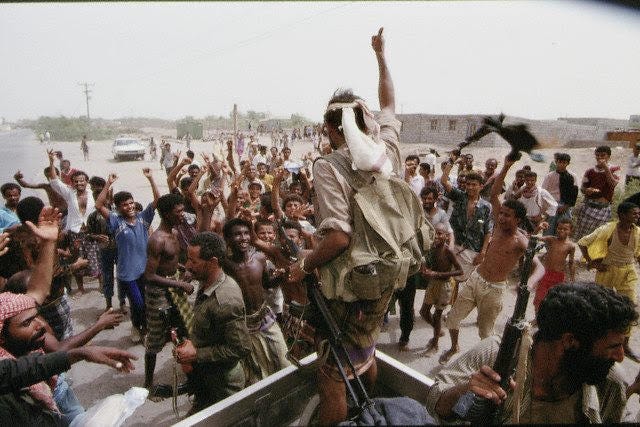
The big debates in democratic theory, after all, are between the “Republicans,” who say the way you have democratic control of the monopoly is to have separation of powers, divide up control, versus the “Democrats,” who follow more the kind of Westminster idea that you’re going to have serial control of the monopoly. You’re going to have temporary control of the monopoly, and then somebody else gets it, right? But neither side disputes the proposition that power is as Weber said it: a monopoly of the legitimate use of coercive force. And Nozick got that right.
DM: I imagine one of the places you really disagree with Nozick is that Nozick thinks natural rights make a welfare state illegitimate, which is the philosophical foundation for the economic approach known as neoliberalism.
I disagree with him about all of that stuff, and I’ve written at length about why. And I think his arguments about the difference between compensation and redistribution are all quicksand, and so on and so forth. So, yeah, I don’t agree with his conclusions about anything. But I think he was analyzing the right question, and that’s what I’m saying here.
DM: Let’s pivot to neoliberalism. I found this part of After the Fall really challenging, because there’s a lot of economic research, finding all sorts of issues with what you might call “pre-distributive” policies. So, like a minimum wage, where the poor get some benefit, like a higher wage, rather than the poor getting a low amount of money up front and then the government compensating them with a welfare state afterwards. So, redistribution is compensating the economic losers, pre-distribution is making them winners in the first place. And the neoliberal approach—I should let you explain what neoliberalism is—but is much more in favor of redistribution than predistribution. But you argue that neoliberalism was just thoroughly discredited during the financial crisis, and that Obama and center-left leaders around the world—actually including socialist leaders around the world—were way too slow to wake up.
So, could you tell me a bit about what is neoliberalism, and why are people so slow to let it go?
Well, I would take issue with the way you characterize it in the first place. There’s a debate about whether predistribution or redistribution are better policies for governments. I think the neoliberals wanted neither.
The defining features of neoliberalism were three: (1) deregulation, (2) privatization, and (3) free trade, globalization. They were called neoliberalism within countries, and they came to be called the Washington Consensus when exported—you know, the IMF, the World Bank, make it conditional for loans, and so on. It was basically the same three ideas. They have been around for decades in right-wing think tanks, Mont Pelerin Society, Heritage, AEI, all of these places. Virginia Tech, James Buchanan’s thing, George Mason. And so, they had never been that influential in government until the 1980s, when two things happened. One, it appeared that Keynesian ideas and policies had been impotent to deal with the stagflation of the ’70s. And second, Reagan and Thatcher brought them into the corridors of power. That was their opening. So the ideological opening was that Keynesianism was on the back foot, and the institutional political opening was the Reagan and Thatcher administrations. And, you know, Reagan’s famous slogan, “Government is the problem.” So as I said, they were no more in favor of redistribution than predistribution.
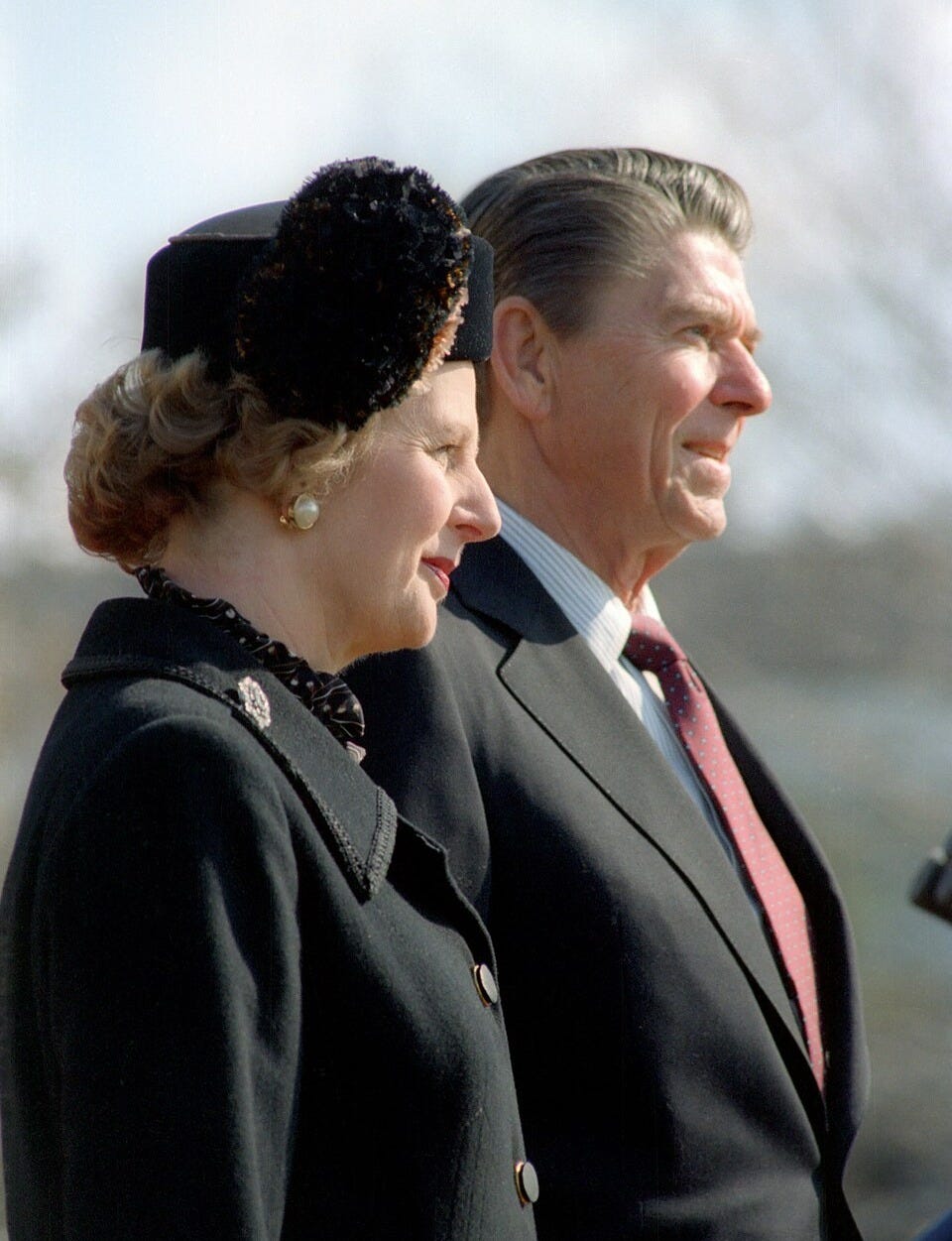
The argument in the book is that the center-left parties in all of these countries basically make the same analysis, and they’re very much on the back foot about Keynesianism in the ’80s, and conclude the only way to get elected is to say, “We are more competent neoliberal technocratic managers than the center-right parties,” and so you get the New Democrats, you get New Labour, you get Mitterrand’s about-turn in the 1980s, and they all basically adopt the same policies, and this is what gets labeled “triangulation,” this idea of just basically moving towards the same policies that the new right is pursuing. And it’s not just the U.S. and the UK. As I said, Mitterrand does it. Look at Germany, you know, who puts in the Hartz Reforms, which are the same thing. It’s a coalition of the Greens and the Social Democrats in the first decades of the century. And you can look at Italy, you can look at Spain—many of these other countries all go down this path.
And then this goes into overdrive with the collapse of communism, because there’s no alternative out there, competing for hearts and minds, and indeed that becomes Thatcher’s famous line, TINA: there is no alternative.
The big problem with this growth model is that almost all of the benefits flow to the top. If you look at the gains from productivity, which are huge, that come out of these economies in these decades, almost all of them go to the top, and the vast majority of people, their real wages stagnate or even decline, and they become downwardly mobile. We’re entering this era partly because of globalization, partly because of technology—increasingly because of the technology, in fact. People no longer have long-term employment security. They have to keep changing jobs, which is a huge problem especially if your health insurance is at stake, and you’re servicing a mortgage, and so forth. So more and more precarity, more and more job insecurity, downward mobility. Your kids have less good prospects than you had for the first time, and so on.
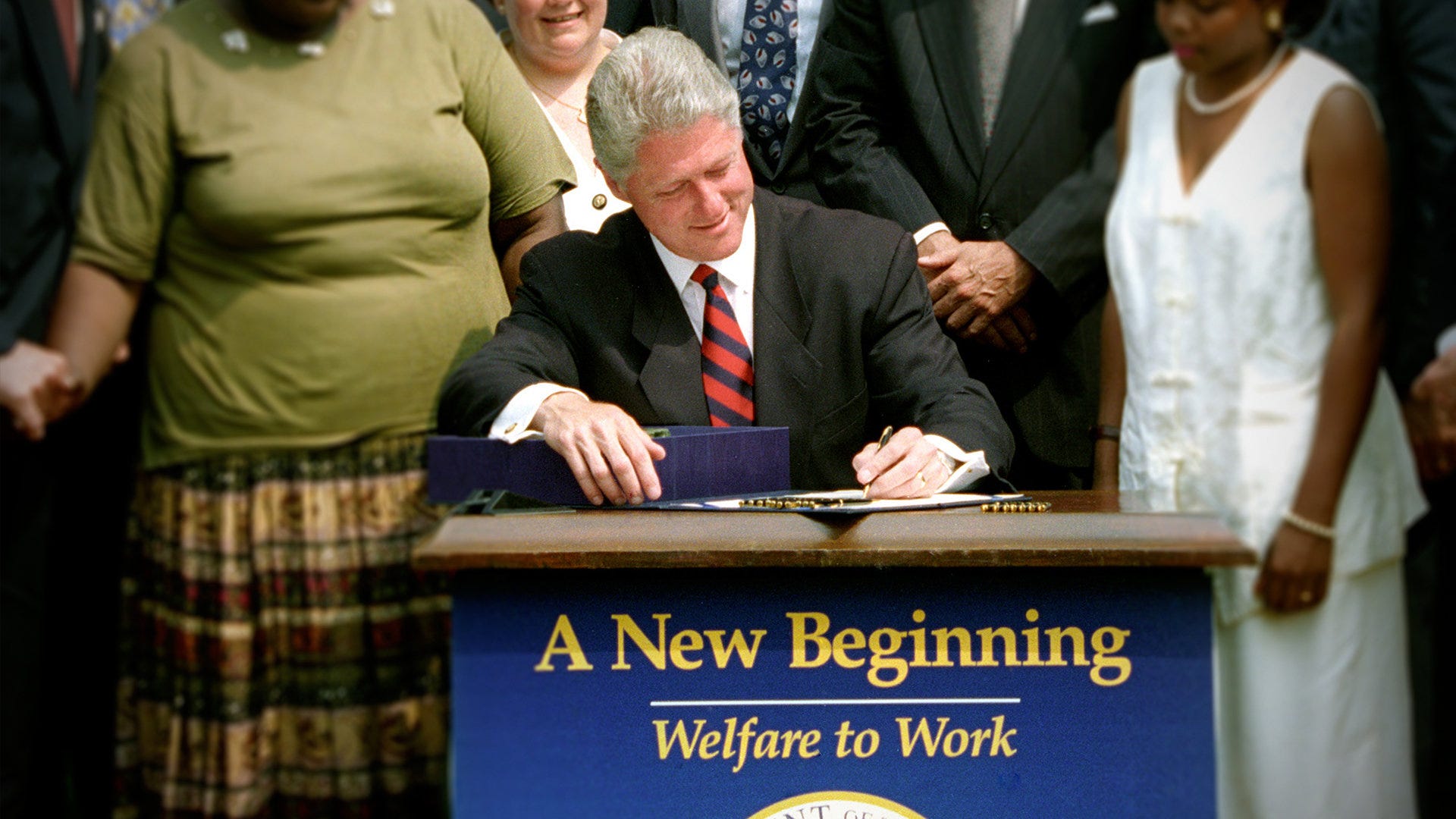
So you have this world, and the basic message to voters, since all the mainstream parties have converged on these policies, is, “Suck it up. There’s no alternative. You’re just gonna have to get with the program.” And, as I said, this is just not redistribution. You know, Clinton’s 1996 welfare reform is an incredibly punitive piece of legislation. You look at what’s done in Germany, with social democratic chancellors. It’s a big cutting back of the welfare state, shrinking government. “Government is the problem,” you know.
And it seems unassailable, because no parties that are likely to get anywhere near power say anything different. And we know how to do it. We know what we’re doing. Look at the incredible growth we’re getting. Look at the way in which the systems are operating. And then, boom. It all just comes crashing down in 2008. And they, first of all, are completely blindsided. Two months before the crisis, people like Greenspan are still saying the economy’s in fine shape, there’s no problems here. So they’re completely blindsided, and then they panic, and they reach for all the Keynesian instruments they’ve been decrying for decades—to recapitalize the banks, bail out the system, ensure that the inevitable recession we’re going to get isn’t going to be another Great Depression. They save the world economy. They do all of those things. But they do it in a completely hypocritical way, in that they do it for themselves and their allies, and they don’t realize that the tectonic plates of the political legitimacy of this order have completely shifted, because the whole thing was held together by their reputation for competence, and that is now shot. And so then they engage in this hypocritical way in “Keynesianism for the elites and austerity for everybody else.” Within 2–3 years, the stock market is back, they’re all fine. They’ve used, you know, hundreds of millions of taxpayer money to pay bonuses to all these executives who drove the crisis. And it’s only a matter of time before populist entrepreneurs are going to see the opening as a path to power, to attack these elites. And so you get the Trumps, the Farages, the Erdoğans, the Viktor Orbáns, the Marine Le Pens, Geert Wilders. And some mainstream politicians get what’s happening, and they reinvent themselves. I think that’s the Boris Johnson story—and, you know, Michael Gove. In this country, I suppose, Ted Cruz.
But most of these people—the Obamas of this world, the Macrons of this world, the Starmers of this world—they just don’t see it. They don’t understand that they cannot get away anymore with behaving in the way that they have before. And those people all get their heads handed to them.
DM: There’s a great way you put it in the book. The neoliberal line is that the government shouldn’t pick winners. And your reply is that economic losers can turn around and pick their government.
Exactly, and they do.
DM: Okay, here’s one place I want to try to push back on the book. I was totally convinced by the detailed arguments that Obama had more room to maneuver, and he could have tried harder to bail out Main Street. You mentioned that the bank executives that went into the meetings with him, they were stunned that talked a big talk but didn’t really twist their arms. So I’m convinced that back then, there should have been more of a push for something like FDR—inclusive growth.
But now, the fiscal environment is tougher. There’s a huge national debt, and there’s a lot of inflation. So how do you see your call for more inclusive growth policies, not just neoliberalism, not just economic growth that goes to the top? How do we fund these programs that let everybody share in the growth when money’s so tight?
Well, “Money’s so tight”—it’s not a fact that drops out of the sky. It’s a result of decades of choices about taxation and spending and debt. We have lived now for almost 40 years in a world in which, despite shrieking about deficits and debt, the basic story since Reagan has been that Republicans run up debts, and Democrats, pay them off. And Republicans scream about debts when they’re in opposition. And indeed, Reagan ran up big debts, and Clinton paid them off. George W. Bush ran up huge debts with his pro-cyclical tax cuts and his wars and Medicare Part D and so forth. And Obama, once the financial crisis is over, starts paying down debt. Then, even before COVID, Trump adds, like, $3.5 trillion to the debt. And the Biden administration reined that in. Then, the first year of Trump II, the Big Beautiful Bill adds $4.1 trillion to the debt.
So the center-left parties have been backed into this situation, and in Europe, it’s done through the fiscal compact that Merkel and Trichet imposed on the EU countries, and I go through that in the book as well.
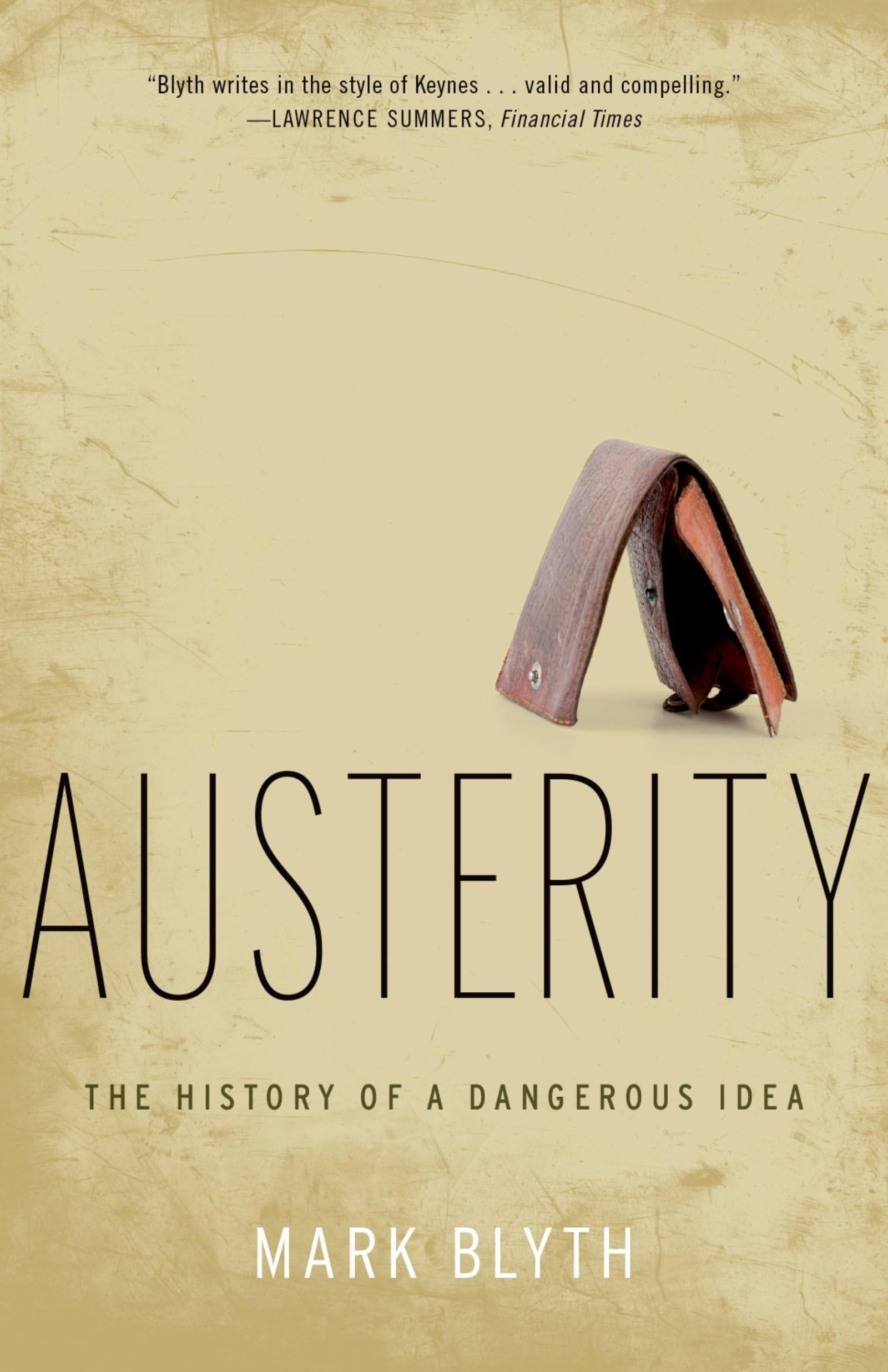
And Mark Blyth and others have done a really good job of showing how it’s a very similar dynamic, because essentially the only way that they got out of the Eurozone crisis was to socialize a lot of banking debt, put it on the books, and then say, “Oh, all these spendthrift governments have run up these huge debts now, and we have to have austerity.”
So, what is to be done about it?
I think it depends a lot on the country, because, for instance, the U.S. can run structural deficits that can’t be done in most other countries, and we do it. But, you know, one of the things I fought Obama for was allowing the Bush tax cuts to become permanent. They were going to sunset. Hugely regressive tax cuts. So, to some extent, part of the answer would be higher levels of taxation. We tax per capita now about 25%. People get distracted by how progressive the tax system is. You know, the Nordic countries have less progressive tax systems than we do, but their taxation rate per capita is much higher.
So, for instance, Denmark taxes 43% per capita, which is higher than the OECD, which is about 34%. The U.S, it’s 25%. So we tax very low per capita. And how you raise the taxes—whether it’s with a VAT, or with a progressive income tax, or with tariffs—that’s a separate question.
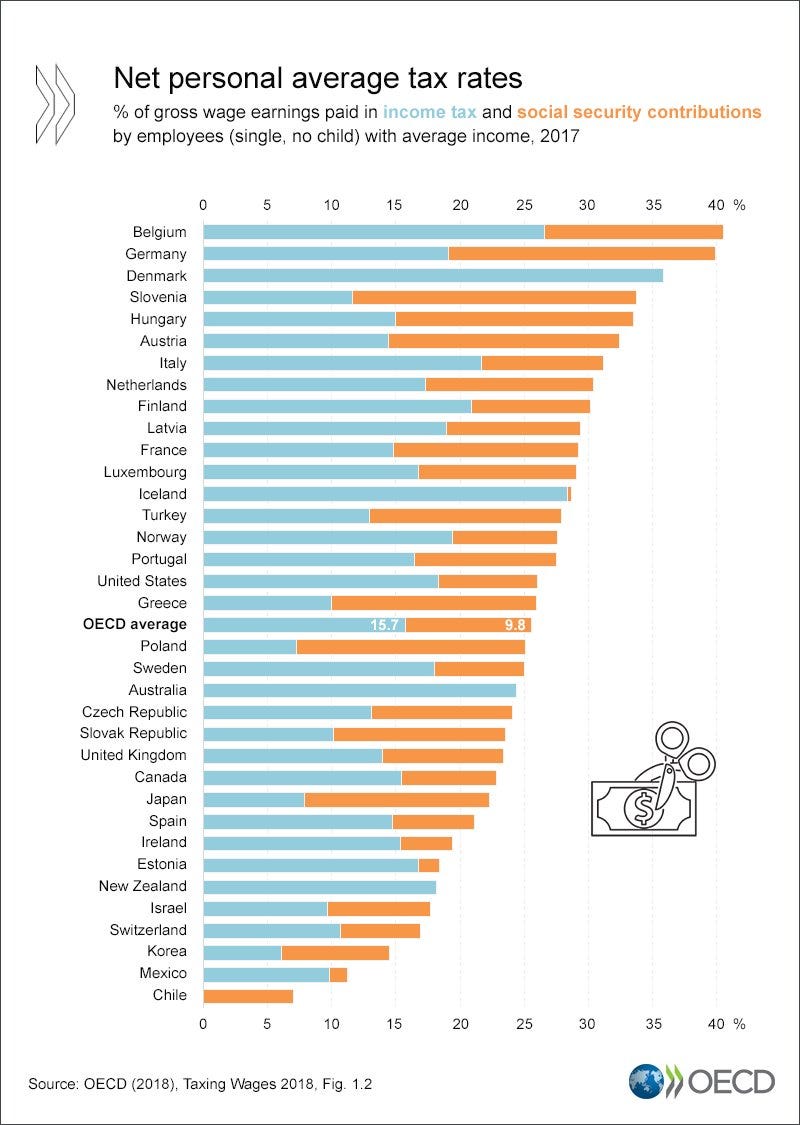
The Nordic countries have high per capita taxation rates, but they also deliver a lot. So, for instance, Denmark spends 20 times as much as the U.S. spends per capita on workforce retraining, which is really important in the economy we’re going into, where people change jobs 15 times.
So where does the money come from? The U.S. has greater freedom than a lot of countries, but look at Europe. In a kind of “Nixon to China” moment, when Merz got elected, he announced not only were they going to get rid of their debt brake for military spending, which has been prompted by what the U.S. is doing about NATO, but he’s going to spend half a trillion euros on infrastructure. I mean, America must be seething. You know, that’s a big number. That’s like $2.3 trillion in the U.S. economy. And, you know, if the Germans are going to say, “To hell with the debt brake,” I’m very skeptical that the other European countries are going to stick with it, because it was the Germans who were ramming it down their throat. And indeed, even Macron—who almost always is a dollar short and a day late on all matters—even Macron now, probably because he wants to be president of the European Commission next, is saying we should have Euro bonds for infrastructure in Europe. The ECB should be issuing Eurobonds for development. And the Spanish are pushing this as well. And, you know, the Germans, they’ll squabble about it, the Germans are not going to want it, because the Germans can do it on their own, and so forth.
But it’s not inconceivable to me that we’re on the verge of a giant splurge of Keynesian spending in Europe, that’ll be done through the ECB and through development bonds. So there are ways to do it: shifting priorities, taking on more debt in countries that can afford to do it. You know, even Rachel Reeves now is an incredibly risk-averse Chancellor in the UK, in her most recent budget, is starting to move in these directions. Life has more imagination than us.
DM: Speaking of options for taxing, one big issue in the U.S. right now is the wealth tax, which Californians are thinking of instituting as a one-time tax, the rationale being, in part, anti-billionaire politics.
It doesn’t generate enough money to do anything. I mean, I’m a consequentialist, and the political costs of doing it are so [great], you know, especially in a country like this, where you just get the race-to-the-bottom problems. I mean, Mamdani’s running into this in New York now. What is he gonna really get out of his millionaire tax? It’s gonna be chickenshits. There are other ways to do these things.
DM: What are the best ways, in your view?
I think the trouble with the politics of tax is people tend to not think about the taxing side and the spending side together. So, you know, people jump up and down that we should have more progressive taxation. Well, progressive taxation is often a very costly way to raise taxes. And the cheapest ways to raise taxes are actually the more regressive ways, like a VAT, which is pretty regressive. But if you have progressivity on the spending side, it doesn’t really matter if it’s regressive on the taxing side.
So I’ve argued that the best way to tax is just to raise taxes in the most efficient way possible and then worry about the distributive dimensions on the spending side. Especially in a country like this, where exit costs are very low for billionaires. They can relocate from California to Texas, or from [New York to Florida]. So what’s Mamdani really going to net out of his billionaire’s tax? It’s not going to be enough to do anything with. So I think it’s the wrong way to think about tax policy.
DM: A subscriber submitted this question: do you see the role of the Supreme Court these days—with judicial review—as an important bulwark against infringements of individual rights?
I never have. I’ve argued for decades that judicial review is vastly overrated. I mean, Robert Dahl showed this in the 1950s. If you’re talking about protection of individual rights, all the heavy lifting is done by getting democracy, and adding judicial review on top of that gets you nothing.
I think in the case of the U.S, it’s even worse. I think Larry Tribe, Ronald Dworkin—you know, the earlier generation—got a wildly distorted view of the court, because they happened to come of age during the Warren Court, which was this giant historical outlier. The Burger Court, the Rehnquist Court, the Roberts Court are all much more like all the other courts in American history. And in the case of the U.S, I think the courts have been very subversive of democratic rights.
Exhibit A is Buckley v. Valeo. You know, everybody jumps up and down about Citizens United. It was all over in 1976. Once you say money is speech, you’re basically off to the races. And, you know, I think this was the single most destructive decision for democratic politics that the court has ever made.
The evidence is overwhelming that, despite the degree to which they’re hyped up, courts and judicial review add nothing on top of democracy from the point of view of defending individual rights, and often they are pushing the other direction, as happened with FDR. But the generation that came of age in the Warren Court just got such a distorted view of this, because they thought, “We’re in a new normal here, and constitutionalizing a lot of the welfare state is going to make it more secure,” and, you know, it all turned out to be crap.
DM: Ian, I really can’t thank you enough for your time and for this fascinating book. My last question for you: do you have any books or articles that you’d recommend, perhaps books that you think started with the right account of politics, or books that you find inspiring?
Mostly I read history books. Well, for books that I think political theorists should read that they don’t tend to read—I would mention two that I think are hugely important.
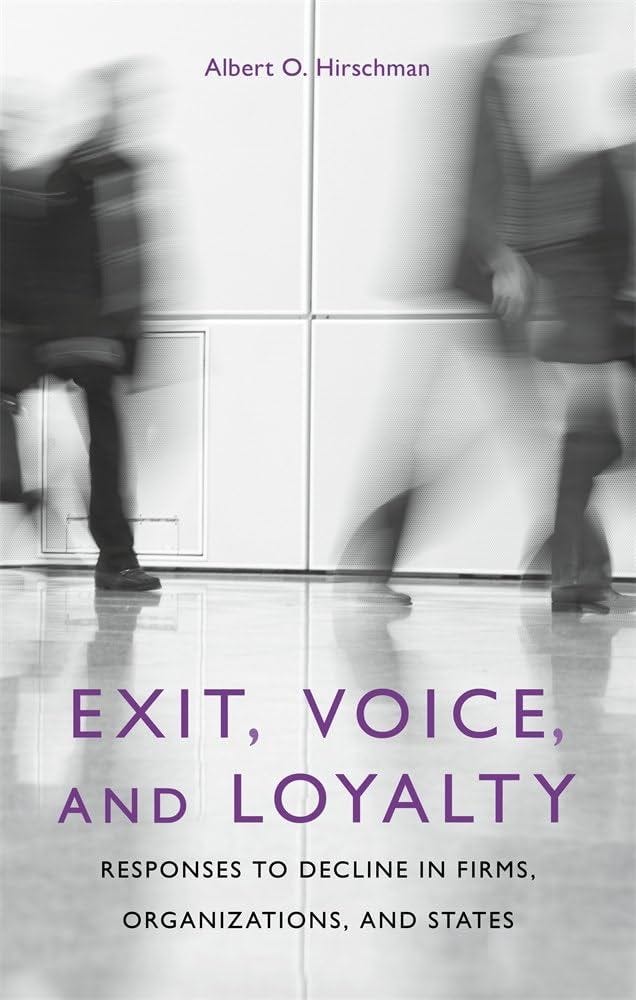
One is Hirschman’s Exit, Voice, and Loyalty, which, even though it’s written by an economist, and it’s not billed as being about power, I think really is a political theory of power. And it has a lot more to say about power than the so-called power literature in political science. So I think that’s a hugely important book for people to read.
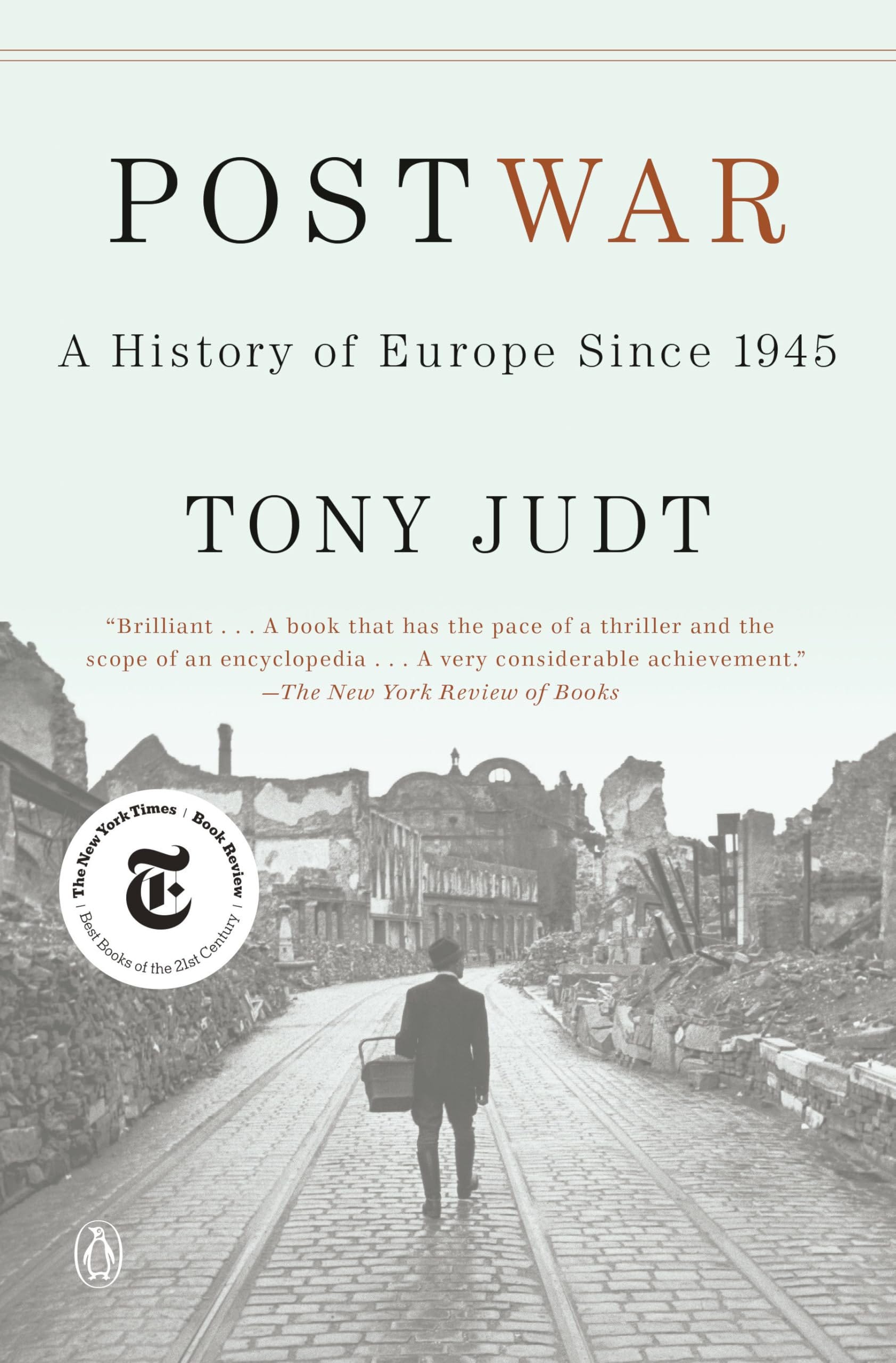
I think Tony Judt’s book, Postwar, was his best book, and is a hugely interesting account of how the EU became an elite organization that, as he predicted in 2006, was going to get into deep trouble as soon as it got in a crisis.
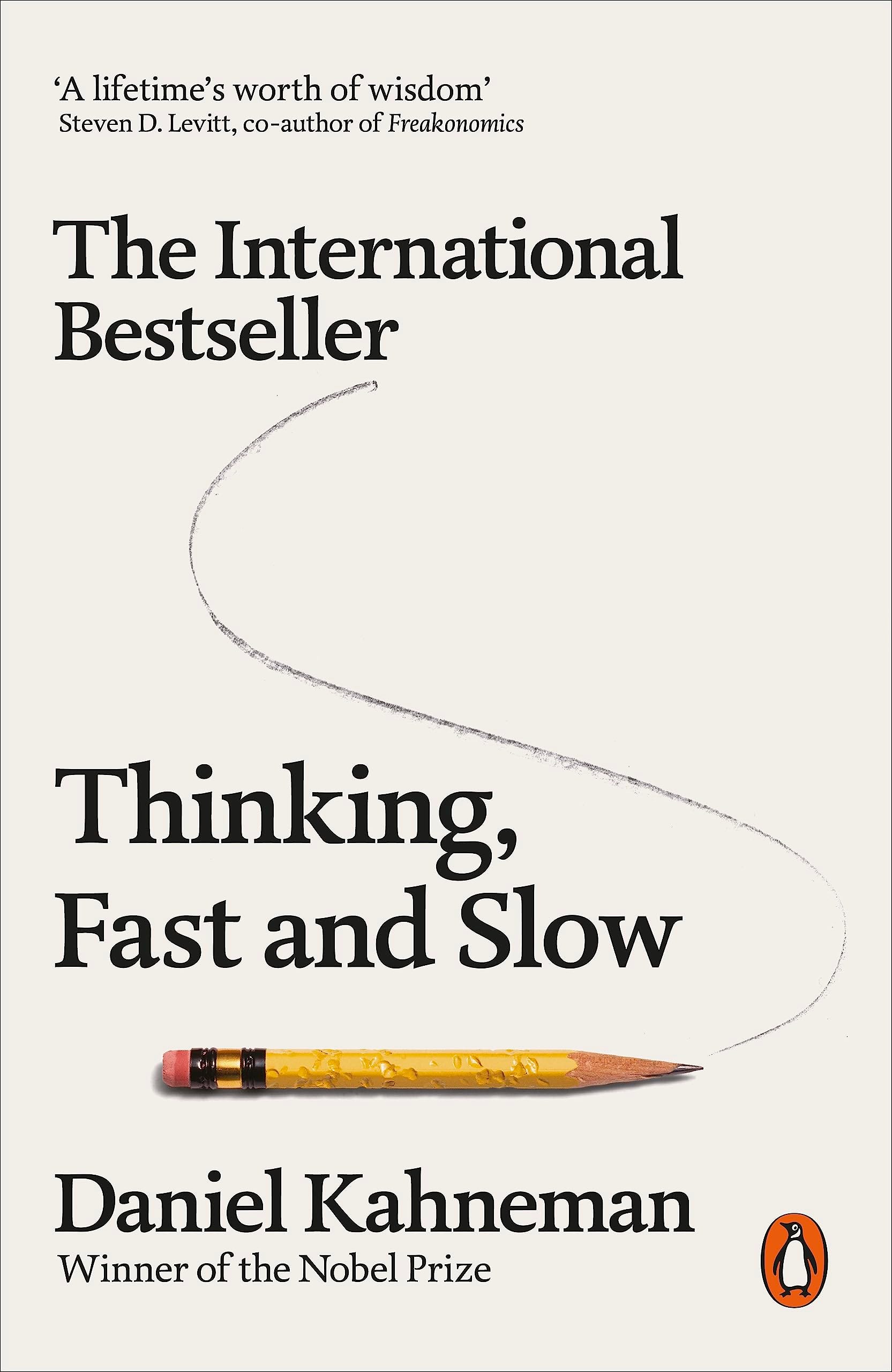
Kahneman’s Thinking, Fast and Slow is also a very good corrective to economists’ ways of thinking about how people respond to risks and loss and things like that. I’d say those three.
DM: Ian, thanks so much.
No posts
Comments
Nothing yet. Say the first thing.
Sign in to join the conversation.