
Way back when I wrote an article that was published in the Spring 1987 edition of Missouri Life Magazine. A PDF scan of the piece can be downloaded at bottom of this piece.
In 1987 I was a 29-year-old fiddler trying to explain the old-time fiddler's art to a general audience. Nearly forty years later, I'd like to hear from you. What has changed? What has been lost? What has endured? And what do you think our old-time music world will look like forty years from now? Comment below or email me bigfiddleshow@gmail.com.
The old-time art of fiddling is still very much alive in Missouri
Story by Charles Walden
The music of the fiddle has been and continues to be an important feature in the lives of many Missourians. Hundreds of different old-time melodies are still heard throughout the rural areas and small towns of this state. Immigrants to our metropolitan centers from out-of-state have carried their music with them into the cities, where it still thrives.
The violin (or fiddle — they are one and the same) was developed in its present form in Italy in the late 1500s. The instrument has since found its way into every conceivable kind of music. It is used for playing academic, popular, and traditional music.
“Classical” music is, for the most part, perpetuated in the realm of academic culture. It is considered a “fine” art which is mainly taught in a formal setting at universities and conservatories of music. This type of music has been performed on the violin by such well-known artists as Fritz Kreisler, Jascha Heifetz, and Itzhak Perlman.
In popular culture, the fiddle is played by people like Charlie Daniels and Merle Haggard as “country” music and Jean Luc Ponty as a “jazz/rock” musician. Popular music is motivated and controlled primarily by commercial interests and the popular media.
The word “traditional” can be used to describe anything that has been handed down orally from generation to generation and includes such things as stories, crafts, dances, and music.
Traditional music is music of and by the people of a given region or group. By this definition, “fiddling,” in one form or another, is a tradition in many parts of the world.
“Old-time fiddling” as played in the United States has its origin in the traditional dance music of England, Scotland and Ireland, as performed on the bagpipe or the fiddle.
Anyone comparing modern recordings, combined with the ease of travel, have tended to blur this diversity. Fortunately, there is considerable interest now in some circles in preserving and reviving these traditions.
Old-time fiddling is first and foremost dance music. The types of tunes correspond to the old-time rural dances which are still practiced on a regular basis around the state.
For instance, hoedowns, breakdowns, reels and hornpipes, as played in Missouri, are music intended for square dancing and a form of solo fancy footwork known as “jig-dancing.” (Modern “clogging,” as done by clogging groups and western-style square dance clubs, may have its origin in traditional jig dancing, sometimes called “flatfoot” or “buck” dancing in the Eastern United States).
It follows, of course, that the waltz is for waltzing, the schottische for schottisching, and so forth. In addition to dances, fiddles are played at numerous private “jam sessions” around the state.
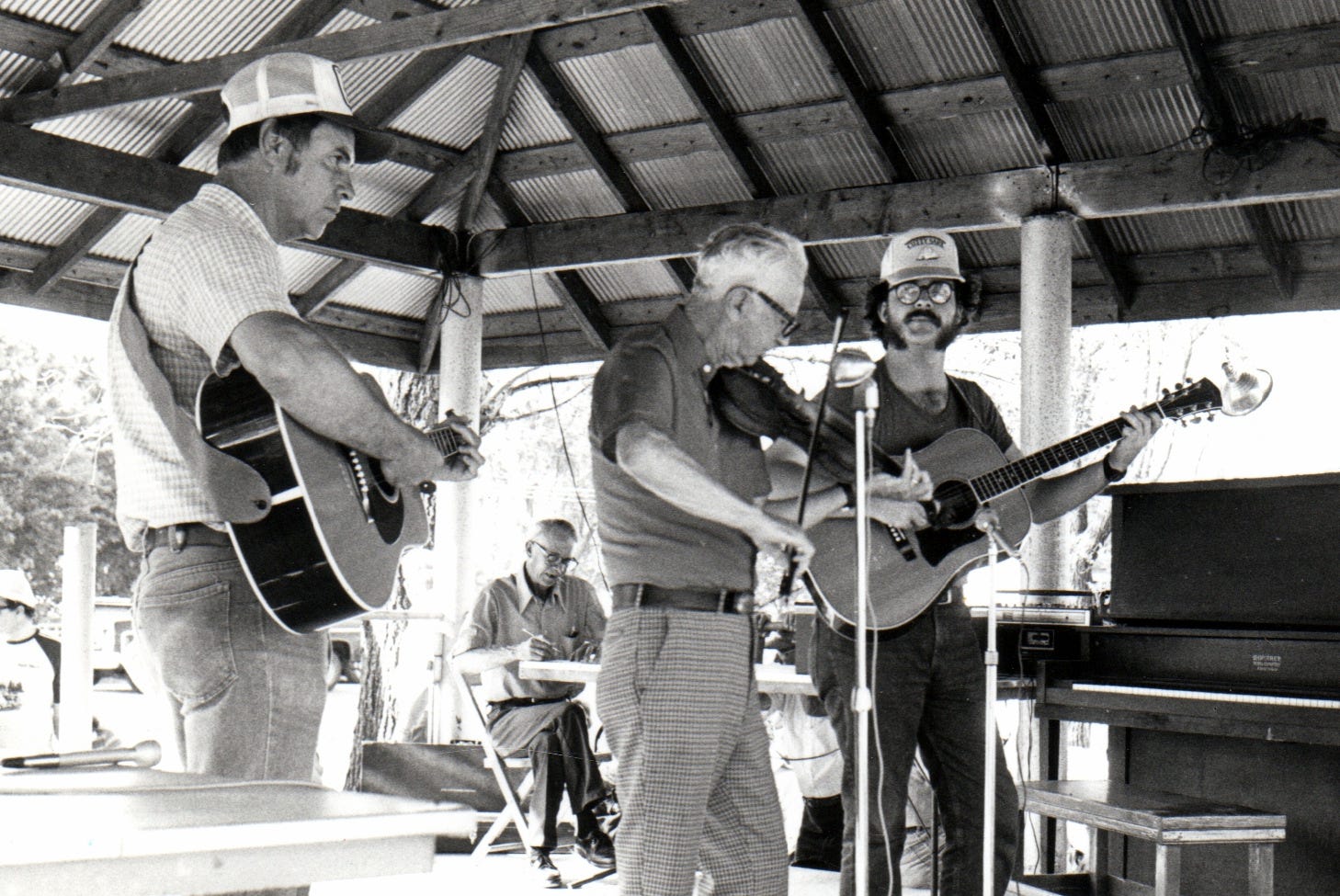
The predominant public outlet for fiddling in recent times has been the fiddler’s contest. The year 1986 saw over 50 such events held in Missouri either as the sole attraction or in conjunction with community celebrations and fairs. No doubt thousands of Missourians hear the traditional music of the state for the first time at these contests.
While fiddlers contests have probably been around as long as the music itself, their popularity has fluctuated. A fiddling contest boom occurred in the mid-1920s with the advent of radio.
Numerous large, nationally-touted fiddle championships were held for broadcast with the new medium. The automobile tycoon Henry Ford sponsored many such competitions.
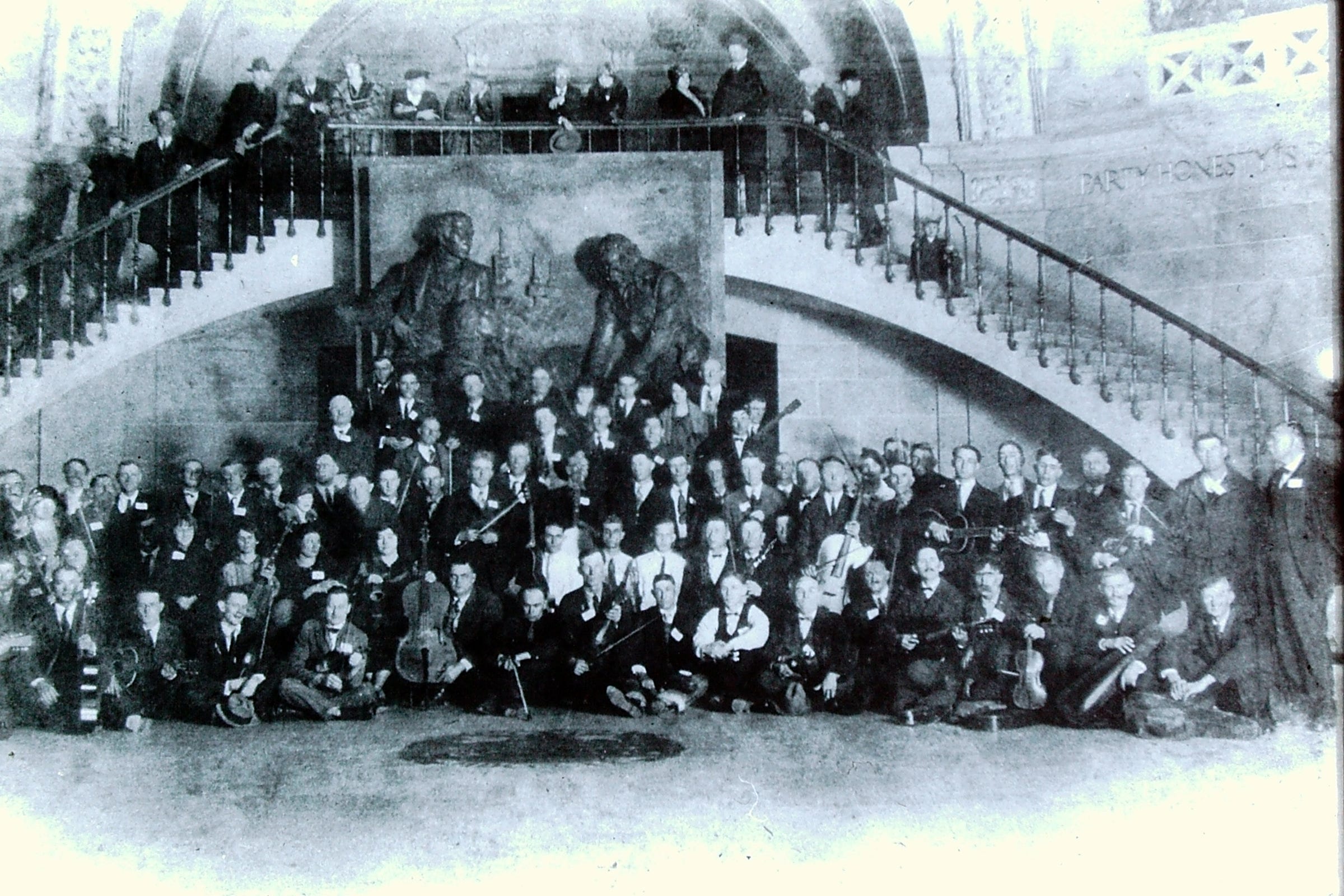
Under the auspices of the Missouri State Marketing Bureau, several State Fiddling Contests and an Interstate Fiddling Contest were held in Jefferson City and aired live from the State Capitol Dome over station WOS. The uncluttered airwaves permitted these programs to be heard from coast to coast.
Currently, the Missouri Cultural Heritage Center at the University of Missouri-Columbia has identified nearly 200 fiddlers and accompanists in Missouri who participate in fiddlers contests on a regular or occasional basis. Men and women from all walks of life and from diverse regions of the state compete. Few consider themselves professionals.
Most fiddlers seldom win — their reward comes in the form of fellowship with other fiddlers, a chance to exchange tunes, the applause of an appreciative audience, and the pride that comes from being a bearer of a generations-old tradition.
Fiddlers find out about contests in a variety of ways. Word-of-mouth and handbills are still important means of communication. Also, the Missouri State Old Time Fiddlers Association’s Contest Calendar lists most of the contests held in the state and is sent to fiddlers, accompanists, and MSOTFA members each spring.
Fiddlers generally arrive in plenty of time before a contest begins in order to register, check out the competition, and just “mess around.” Immediately prior to contest time, the contestants draw numbers from a hat or box to determine order of play.
The fiddlers are usually required to play three tunes: a hoedown, a waltz and a tune of choice.
“Trick tunes” such as Orange Blossom Special and Listen to the Mockingbird along with modern songs are not generally permitted. This policy is consistent with the desire of many fiddlers to maintain the older tradition. Many a heated discussion has occurred concerning whether a tune is actually “old-time.”
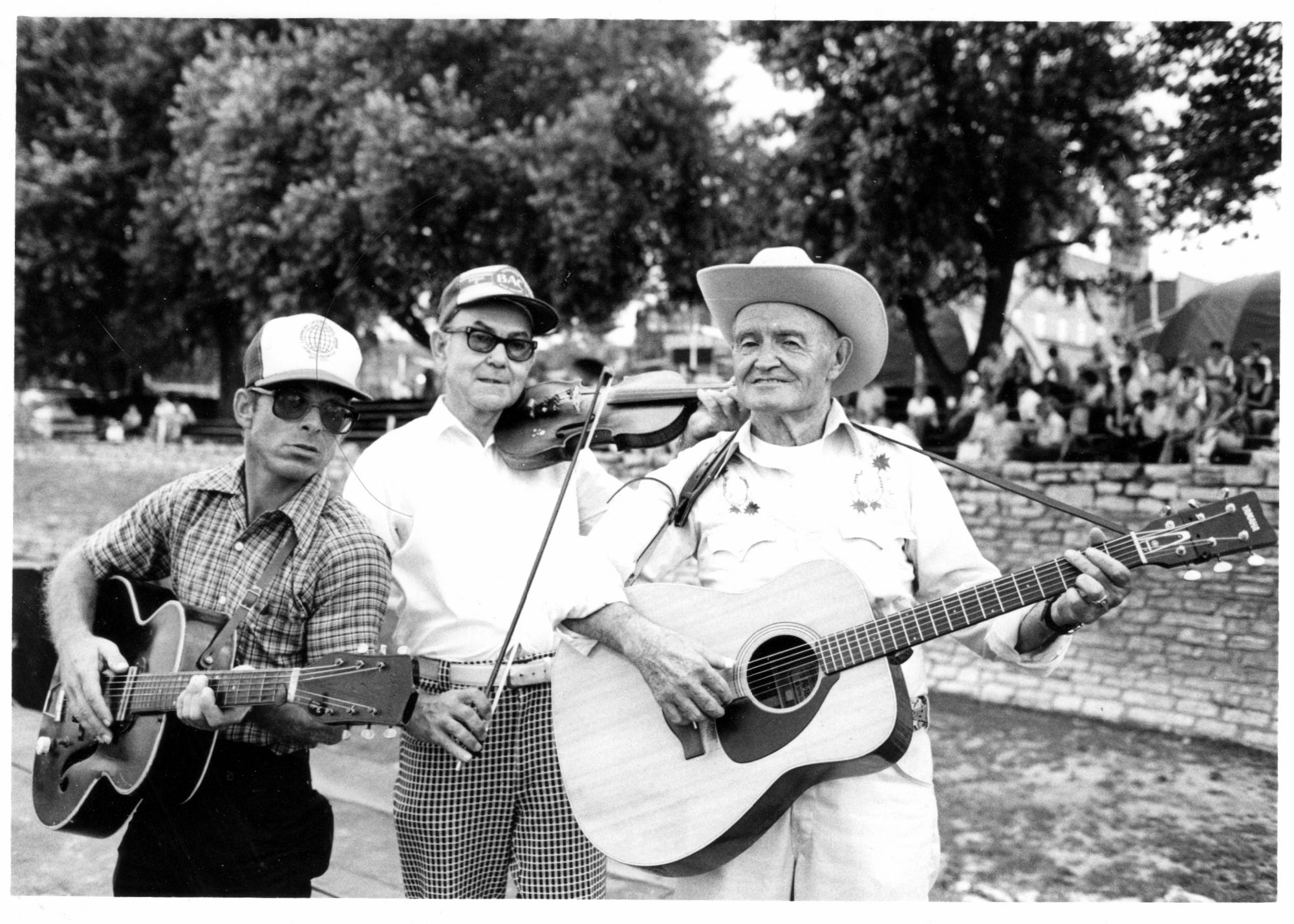
Contestants bring their own “second” with them to the contest or “pick up” an accompanist when they arrive. Today the guitar is the most popular instrument for accompaniment at contests primarily because of its portability. However, many veteran fiddlers can remember a time when the piano or reed organ was the main back-up instrument, and these are still heard occasionally at contests today. The once common practice of using a bowed cello to accompany the old fiddle tunes has virtually disappeared. But now, banjos, mandolins, tenor guitars and even accordions are sometimes used. However, the fiddler is usually limited to only two accompanists. This helps keep the emphasis of the contest on the fiddle.
Most contests employ a panel of three judges who listen carefully to each contestant and score the performance on a scoresheet provided by the contest promoter.
As with the controversy over what is “old-time,” there is considerable difference of opinion with regard to fiddle contest judging. Some contests are judged strictly old-time while others permit or even favor more modern styles of fiddling such as bluegrass and “progressive.”
Generally speaking, in old-time fiddling contests there is emphasis on timing and rhythm suitable for dancing, and on what could be called “the old-time sound.” Borrowing techniques or tunes from other types of music (jazz, classical or blues, for example) is generally frowned upon and will usually result in point penalties from the judges or even outright disqualification.
The average contest will have from 10 to 20 fiddlers. After all the contestants have played, the scores are tabulated, the winners announced, and the prizes and trophies awarded.
Here are a few suggestions to keep in mind when you attend fiddlers contests that if followed will increase your enjoyment of the event and help the fiddlers as well.
Nearly all the performers will appreciate your sincere applause. However, it is not considered appropriate to clap in time with the fiddler while he or she is trying to play.
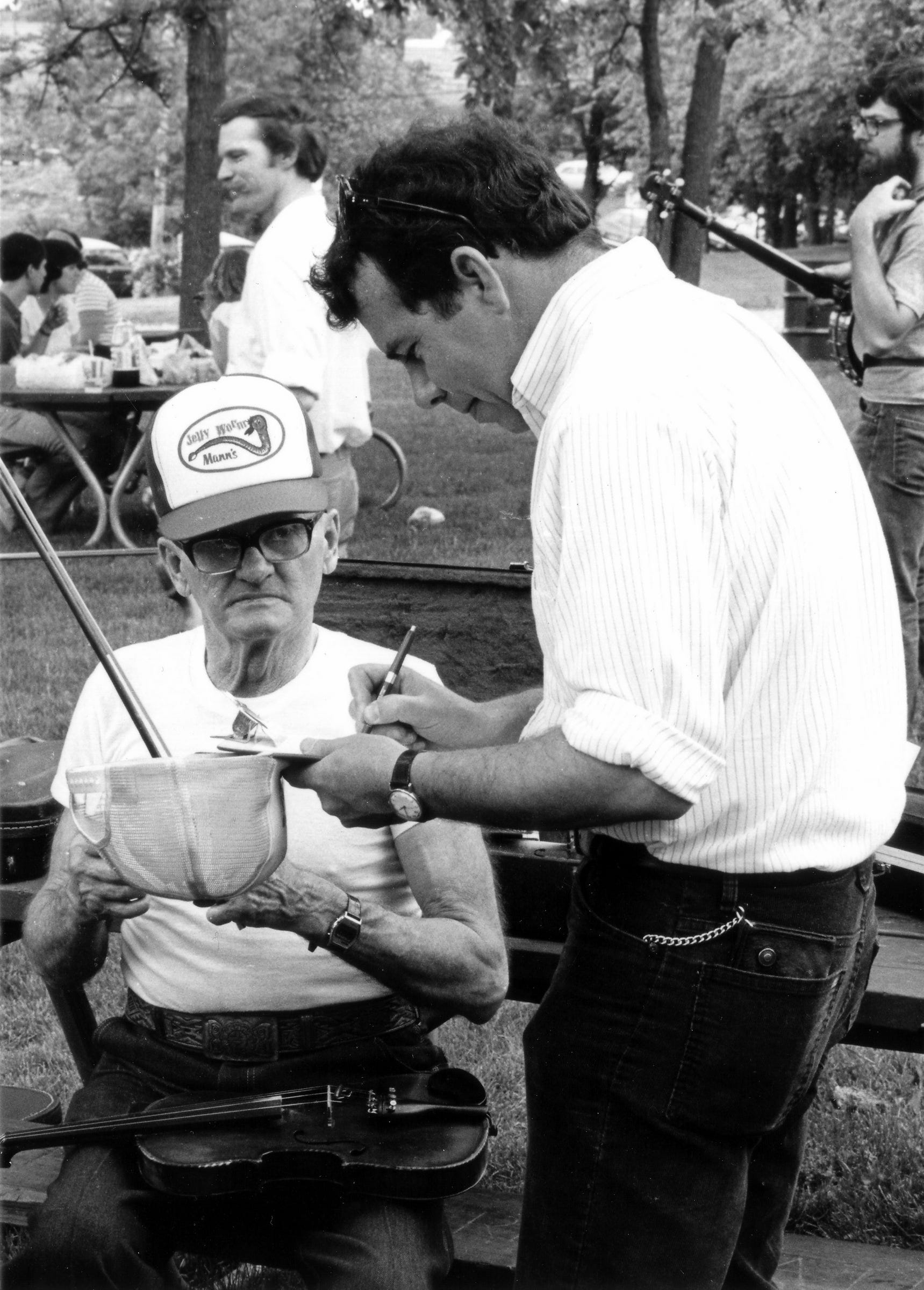
This can be very distracting to the fiddler and the accompanist, causing them to lose time and affect the overall quality of their performance. It is best to listen quietly while the contestant is playing and then “bring the house down” when they are finished.
Unless the contest sponsors prohibit it, you might enjoy going backstage for a few minutes to hear the fiddlers warm-up before the contest.
If you enjoy a contest express your pleasure to the contest sponsors in writing. Organizing a fiddling contest is a big job. A few words of appreciation will be well received.
While other traditional practices and customs disappear from our cultural landscape, the old-time fiddler’s art will no doubt see us in good stead into the 21st century.
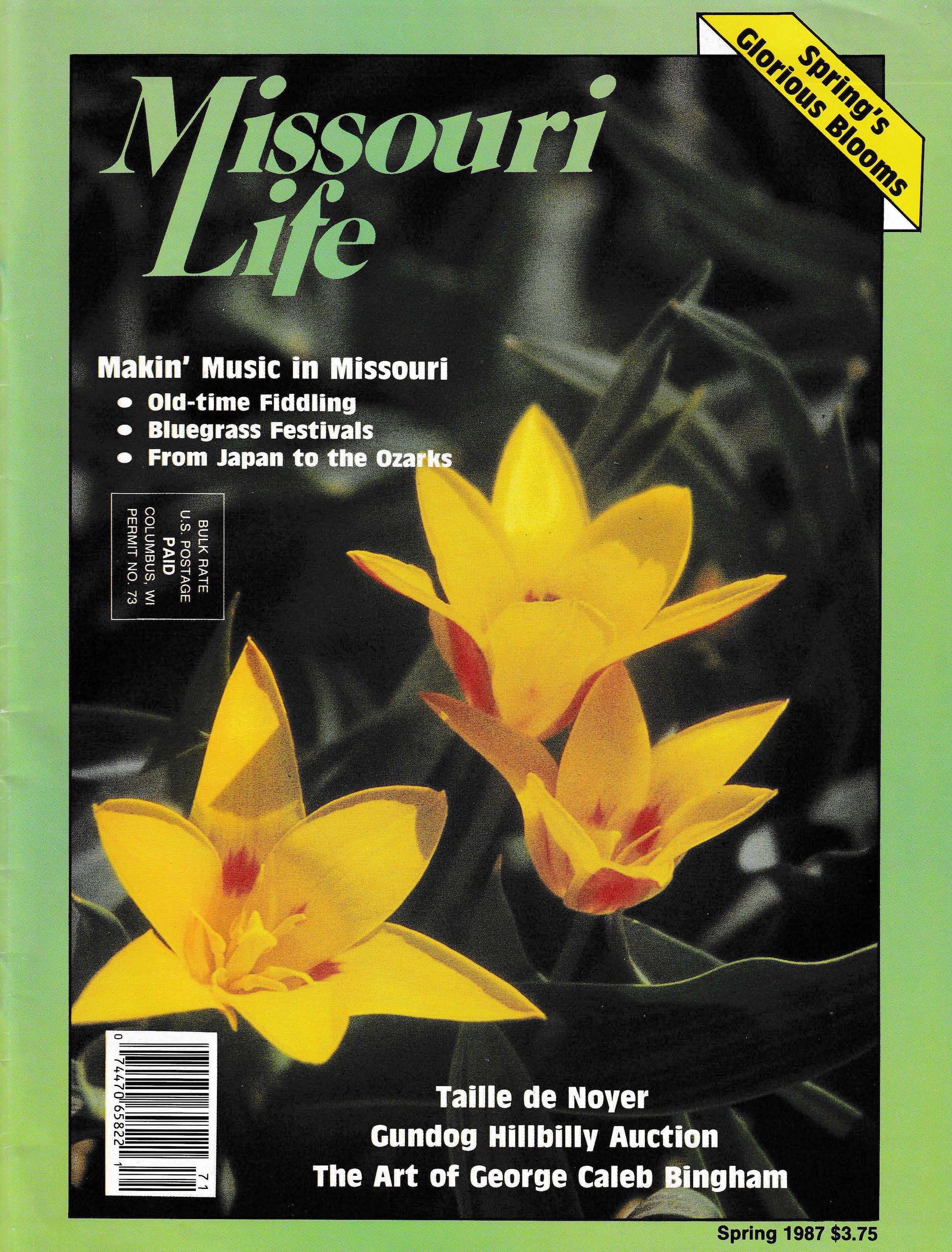
Download the original article here.
Annoucements & Goings On
You find Patt & Possum at the following upcoming events:
July Appalachian Stringband Festival (aka Clifftop). For those interested we’ll be having some AM jams during the week at our campsite. I’ll notify everyone on my Patreon and Substack. We’re also hoping to have a massive midwestern jam like last year’s on the final night, weather permitting. I might put up a few posters for that one.
Illinois State Fair Fiddle & Banjo Contest. Happens on Saturday, August 15th. Download the flyer and rules here. Advance registration encouraged. You don’t have to be an Illinois resident to participate.
Pembroke (ONT) Fiddle & Stepdance Festival. Our favorite festival where we get to play tunes with our Northern friends from the vast repertoire of Canadian Old-Time, Maritime and Quebecois traditions. It features unbeatable campground jam sessions, a contest with some of Canada’s finest fiddlers competing and incredible Ottawa Valley stepdancing.
Elkins Barn Dance Collective. Patt & I will be playing for the Elkins (WV) square dance on Friday, September 18. Mike “Wichita” Miller will be calling the figures. We’re planning to do the Paul Jones again so don’t miss it! More details to follow.
The Virtual Trophy Case (You don’t have to dust these!)
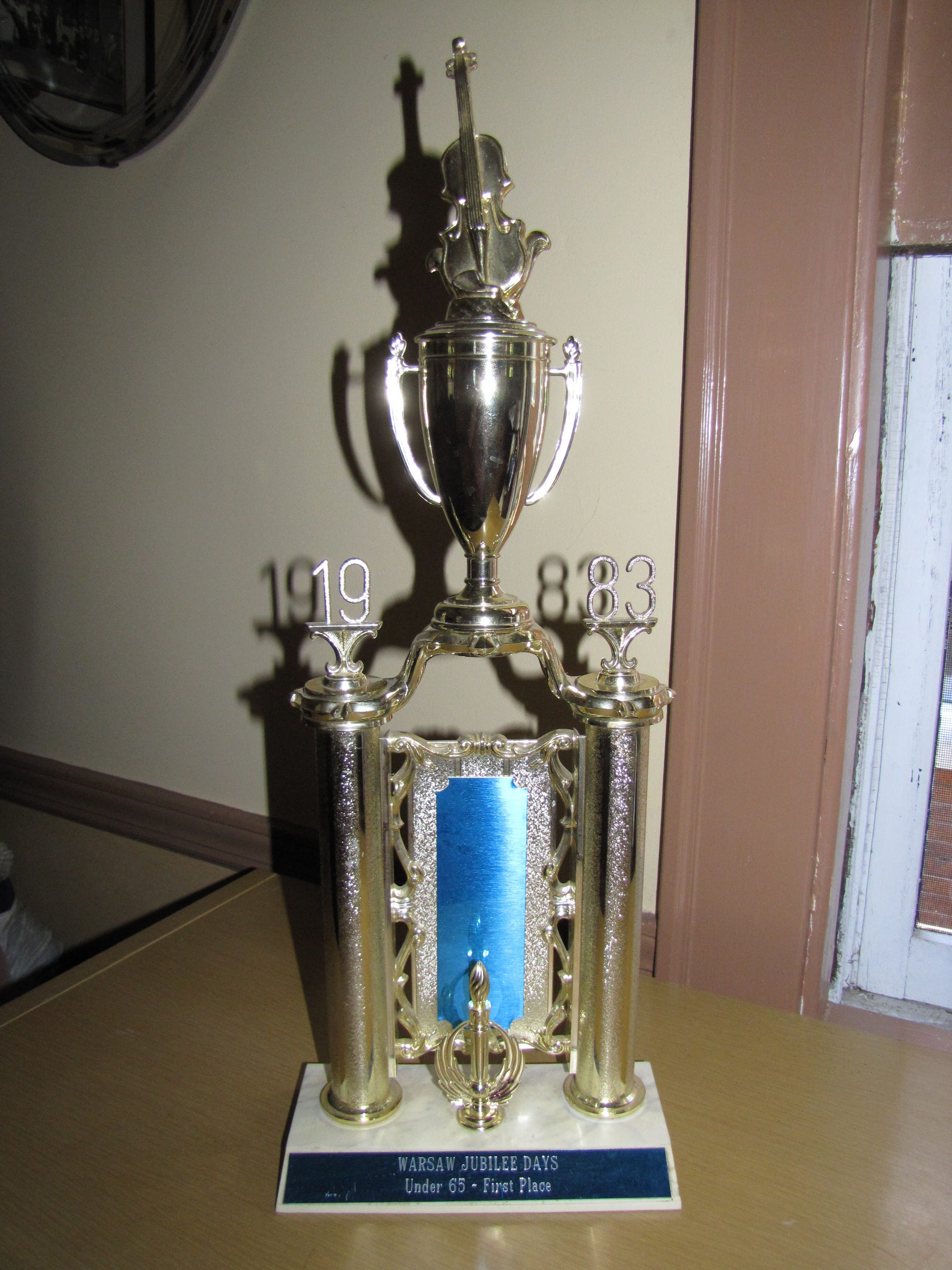
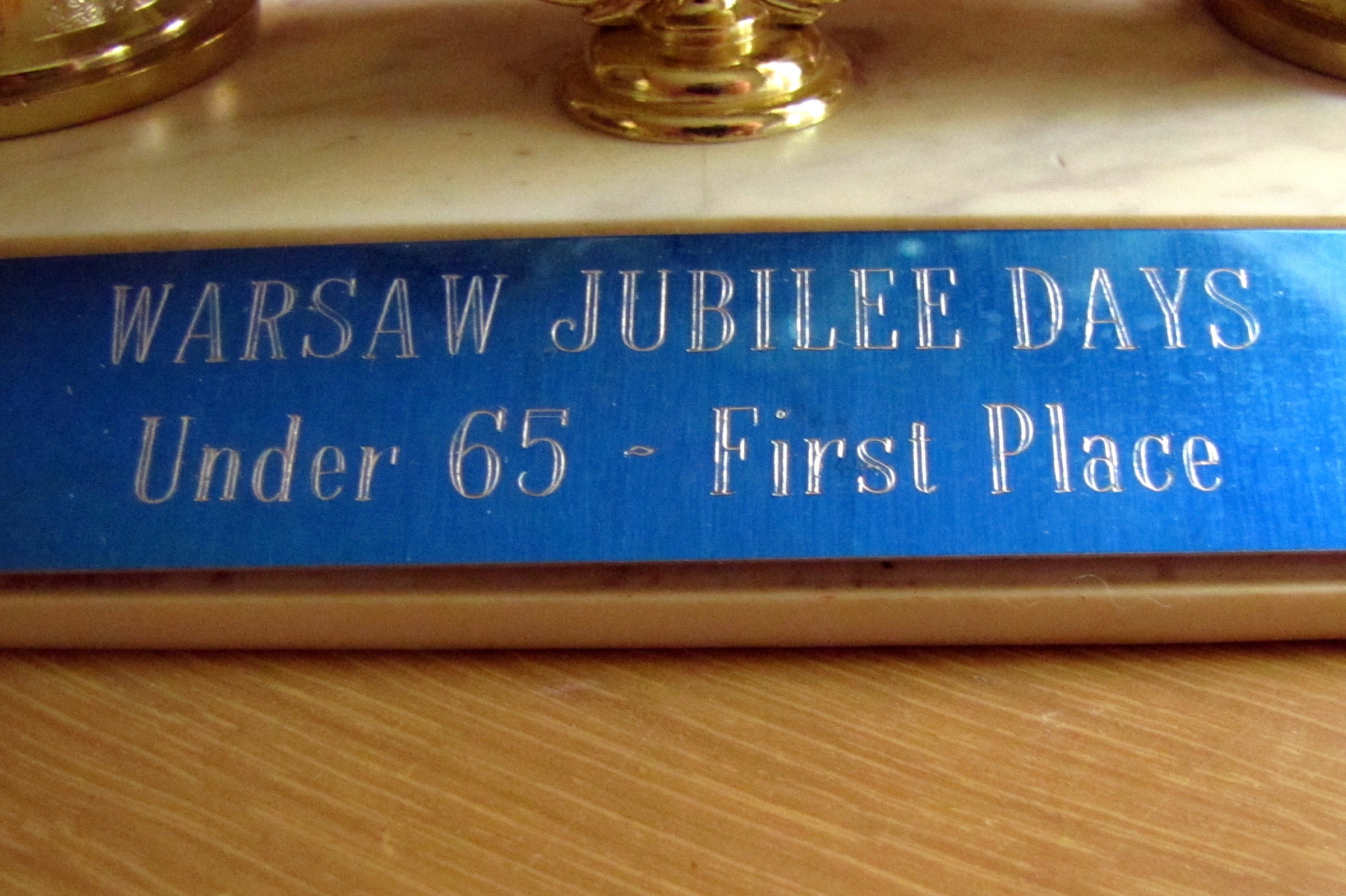
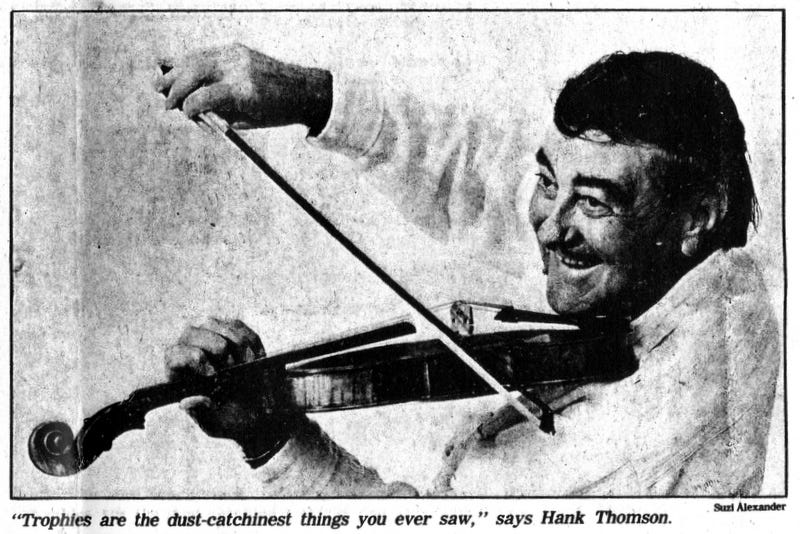
I’ve been slowly getting rid of my old dust collectors and decided to share them with you as many represent some fond memories. Here’s another one from the dusty shelf. It’s from the Warsaw Jubilee Days in 1983. Given Warsaw’s location and access from many parts of the state the contest was well attended by top-flight fiddlers. Among these my fiddling heroes from Mid-Missouri such as Taylor McBaine, Pete McMahan and Jake Hockemeyer, and also some extraordinary players from the Ozarks including Fred Stoneking, Gary Johnston and Lonnie Robertson.

Standing Offers…
Join My Patreon for Free
Free members at patreon.com/charliewalden get invited to Zoom jams and have access to numerous video lessons - all for free. Of course paid subscribers have access to over 300 fiddle, mandolin and guitar back-up lessons plus an incredible online resource folder with over 700 tune transcriptions and more. New lessons posted fortnightly.
Sign up for a free two-month trial membership with the link below.
Fiddle, Mandolin & Guitar Lessons via Zoom
A place has been reserved especially for you in Possum’s Zoom-Zoom Room. Give me a shout to bigfiddleshow@gmail.com and let’s get together.
Become a paid subscriber to my Substack and get some extra perks.
$5 per month ($50 per year) - You’ll have access to all posts to enjoy, share and comment. You’ll also receive a curated PDF mini-tunebook delivered twice per year via paid-sub only post.
$80 per year - Join the Catgut Confederacy - You’ll get all the bennies of free and basic paid subscriptions plus you’ll receive a curated PDF tunebook with MP3 files delivered to your personal email when you join at this level.
Consider becoming a free or paid subscriber.
Share and Share Alike
How about sharing this post with a pal? Use the button below. Sooo EZ!
Comments
Nothing yet. Say the first thing.
Sign in to join the conversation.