
Flaccus has been holding this line for an hour. His Triarii — the oldest men in the army, men who have seen everything — are fighting on two fronts. Mago is still out there. The battle hangs in the balance.
And Mago attacks again.
Narrative evolved from the AAR on BigBoardgaming.com
212 BC. Apulia. The Wheat Fields.
BigBoard Gaming is a reader-supported publication. To receive new posts and support my work, consider becoming a free or paid subscriber.
Gnaeus Fulvius Flaccus adjusted himself in the saddle for the hundredth time that morning. The bear-skin padding had not helped. The extra silks had not helped. His body ached in ways a man of his station should not acknowledge, and his expression stayed stone, because he was a Praetor and Praetors did not wince.
He had been riding for weeks. Across the sprawling wheat fields and dry farms of Apulia, chasing the shadows of an army that refused to stand and fight. Eight legions in the region, and Hannibal had kept them all off-balance — lightning raids, constant pressure, never the decisive engagement Rome needed. Somewhere to the south of Herdonia, in a landscape of dust, long-stemmed grain and heat haze, he was doing it again.
Flaccus thought about his brothers. Quintus Fulvius Flaccus held the consulship. Marcus held a command in Spain. And here was Gnaeus — the third brother, the one in the saddle in the backwater wheat fields, handed two legions and an instruction to suppress what the Senate called a revolt and what Hannibal called a campaign.
He wanted a Triumph. He needed one. Not for Rome. For himself.
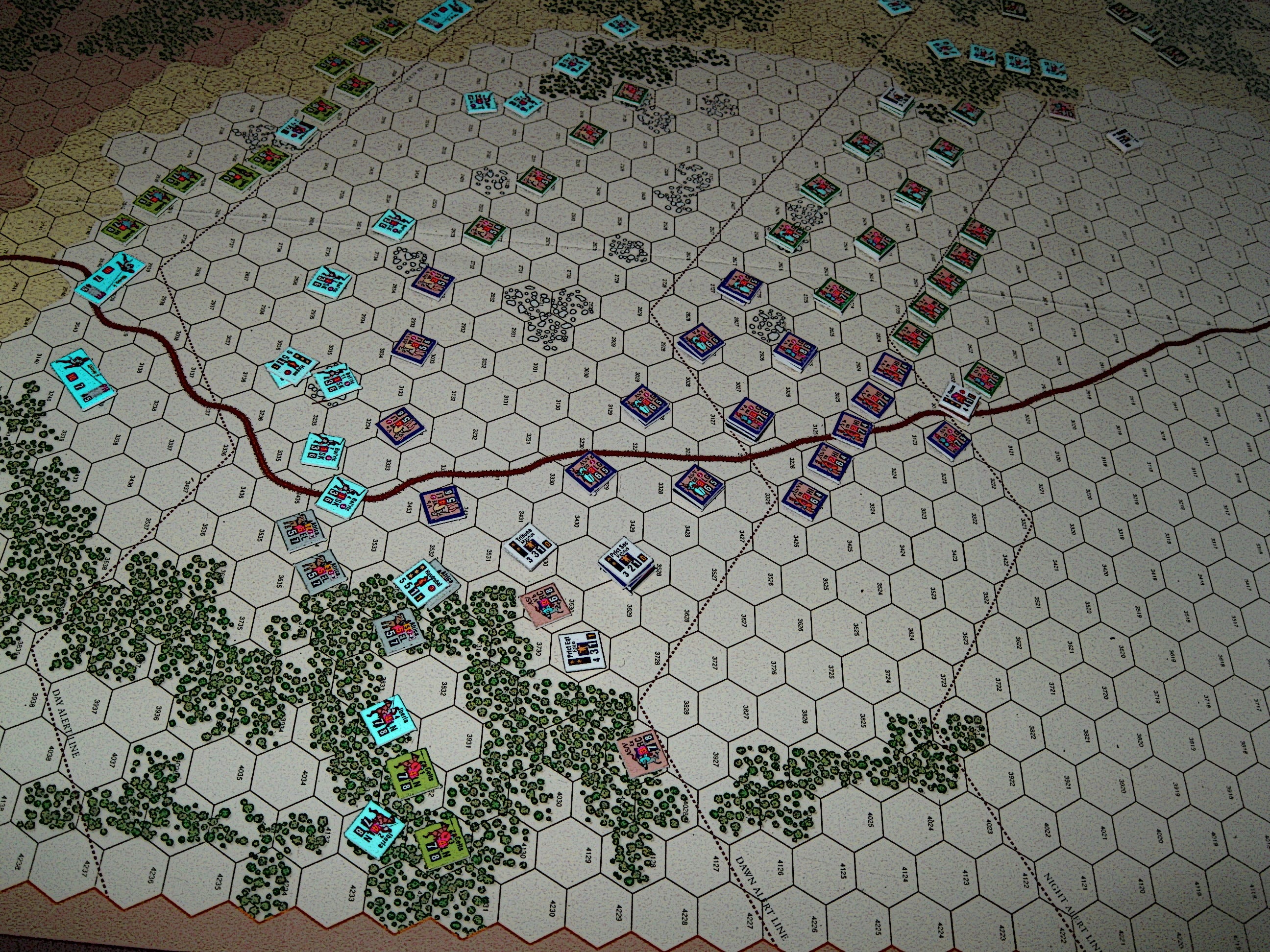
The X and V Legions were behind him, and they were the one thing he had no cause to doubt. Five years of Sicily had made them. The kind of campaigning that does not produce heroes but produces soldiers — men who know how to form up under pressure, how to hold a line, how to kill efficiently and then stand ready to do it again. The finest soldiers Rome put in the field. They held their commander in no high regard. He knew it. He accepted it. He ruled them with the one thing he had: rank.
When the scouts returned at a hard gallop, Flaccus already knew what they would say. The dust cloud was too large and too purposeful.
‘Hannibal’s entire army, Praetor. It is approaching from the south.’ Came the breathless report.
Even the politically constrained, considered, careful Flaccus could not suppress a grin. He looked at the ground around him — two wooded flanks, a compressed corridor between them, a field that narrowed the deeper you pushed. Hannibal’s heavy formations needed space. This field denied it. Here is where he would secure glory. He had chosen well, or he thought he had.
‘Those woods are unscouted, sire —’
‘Make it so.’
Dusk. The Night Before.
Hannibal had not arrived at dawn. He had arrived at dusk, with the light failing and the shadows long, and he had used the darkness to arrange what he intended.
Mago — his most capable field commander, the man he trusted in the dark — took his cavalry and disappeared into the woods behind the Roman position. Not beside it. Behind it. The road home. The road out. Blocked.
On the right flank of what would become the Roman line, Hannibal placed his lancers in the tree line — nimble horses on broken ground, trained to thread through timber without noise. On the left, the Balearic slingers. His heavy formations he set in the corridor’s mouth, facing the Roman line. They would grind. They would pin. And Mago would close the door. They would march to the Romans, feeding their confidence with the small size of Hanibals force.
He was concerned about the field however — the corridor was too narrow for the sweeping momentum his formations needed. He said so. He decided it did not matter. Mago would be in the rear before Rome realised it.
He waited for morning.

Mid Morning. The Compressed Valley.
Carthage moved first.
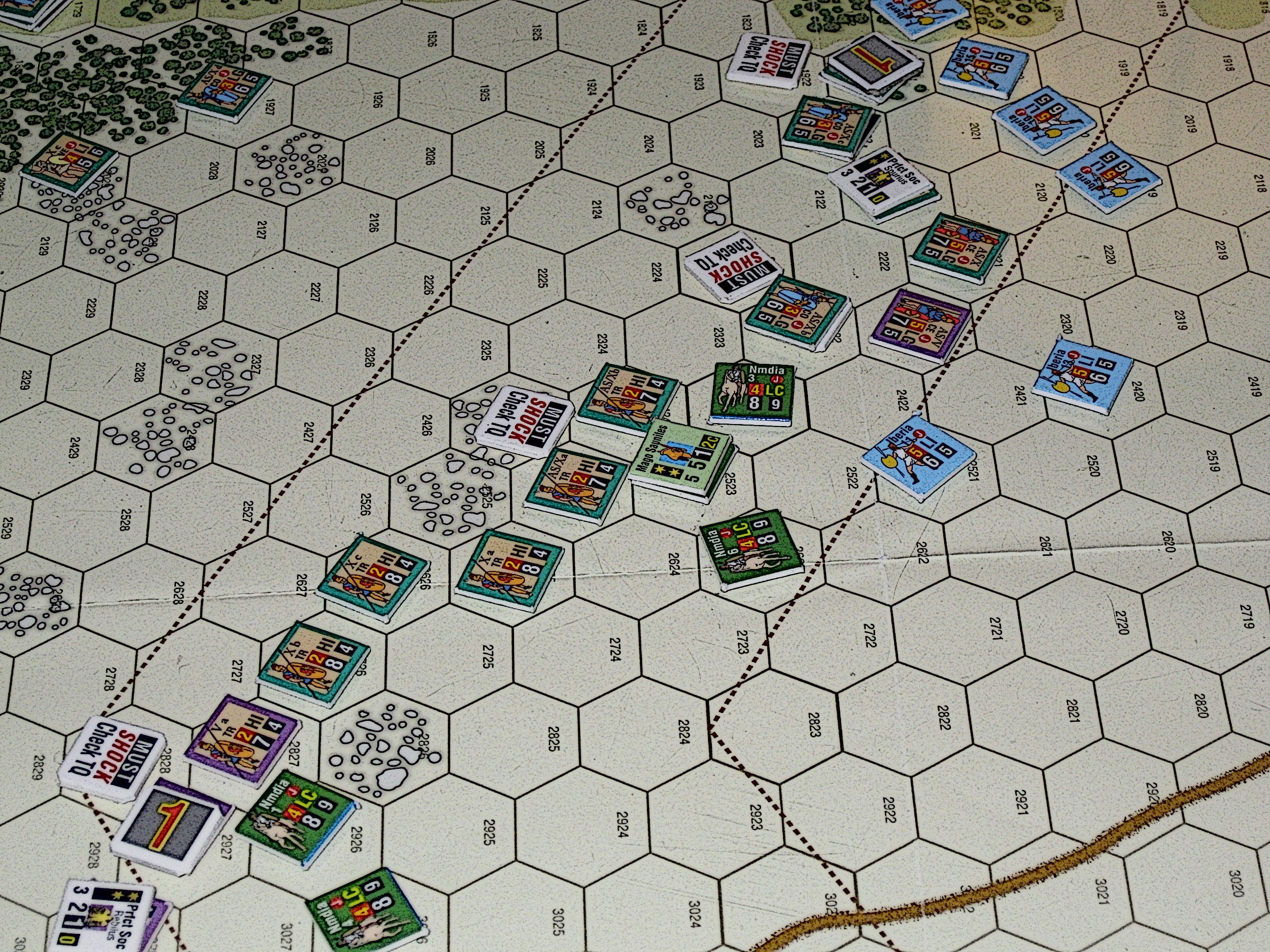
The lancer cavalry emerged from the trees on the Roman right — controlled, picking through timber at a walk, then building speed, relying on surprise more than formation. The Roman light infantry read them correctly: push forward into the gap between the wooded flanks, trade ground for time, buy the heavy line a moment to set.
Then the elephants came through. They scattered the screen. The light infantry absorbed it — this is the price of being the shield between cavalry and the men behind you.
The Balearic slingers levelled their weapons. They had range, numbers, and angle. They fired. Their slings cracked and sang across the valley.
Few found their mark, unsettled as they were from the compund pressure of surprise and the Elephants shaking the very ground.
Fortune had chosen a side. The heavy legions stepped forward, braced for the impact.
Then from the rear.
Trumpets.
Mago’s men came out of the trees in their thousands and hit the Roman right with the full weight of a planned ambush executed perfectly. Men who had been fighting forward suddenly had to think backward. The line flexed. The noise changed.
Flaccus heard it. He felt it before he heard it.
He did not freeze.
‘About face the Triarii. Now.’
The oldest men in the army turned. They had done harder things. They raised their shields and faced the wood line and the horsemen coming out of it, long spears levelled, unmovable. They did not break, because they were the Triarii and breaking was not in their experience.
Mago hit them with everything he had. The Triarii held. The Romans pressed forward onto the Carthaginian line.

The Grind. Neither Side Yields.
What followed was forty minutes of managed catastrophe.
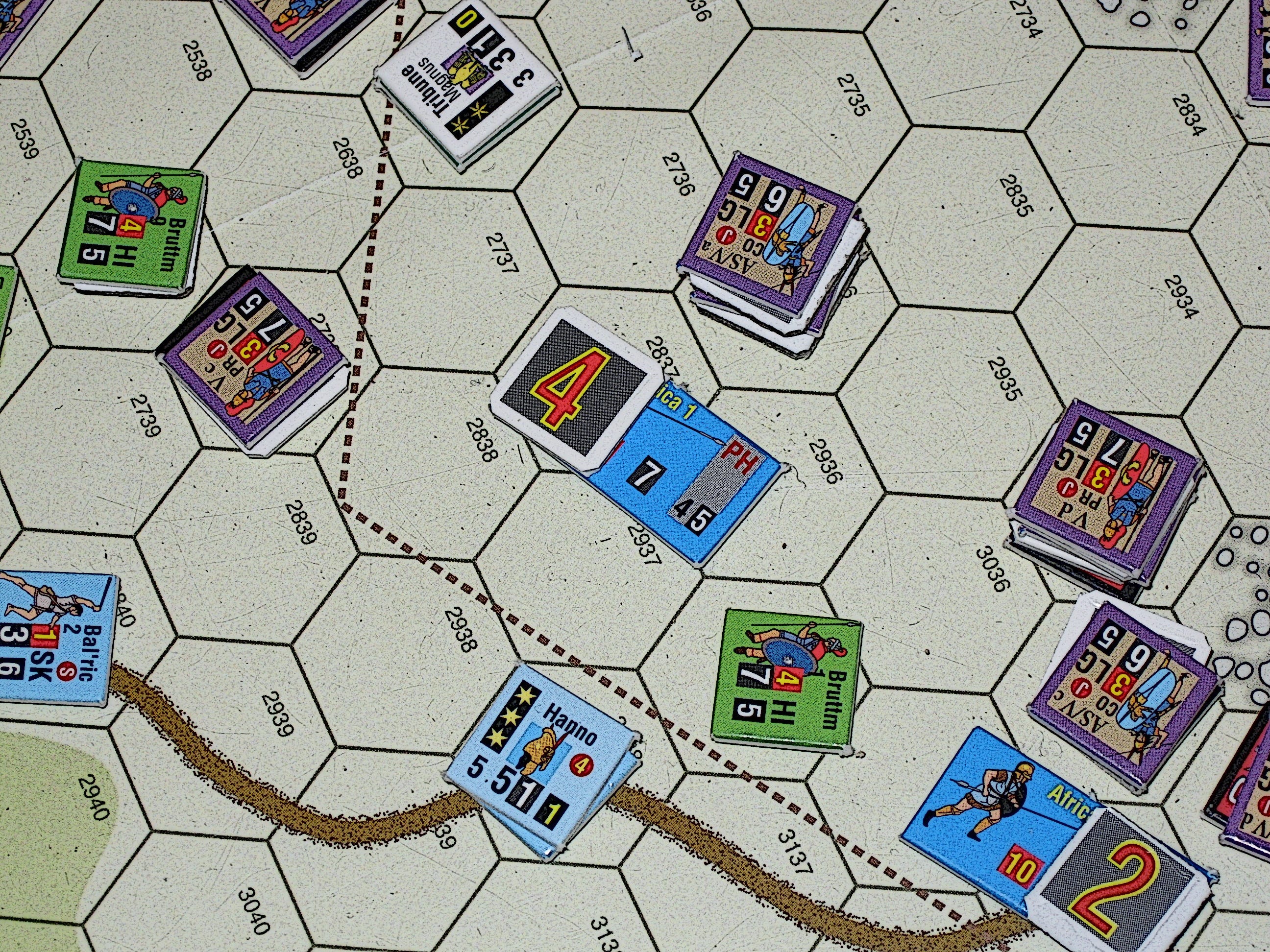
The centre held, but the edges bled. Hasdrubal — Hannibal’s cavalry commander — came out of the trees now and drove into the Roman flank. The Triarii fought two battles at once, holding Mago to the rear by sheer obstinacy while the line behind them held ground against Hannibal’s formations. Flaccus could feel it slipping.
Then the Principes came through — the best men of the X, fearless, ferocious, the kind of soldiers who had earned the right to opinions about what constituted a real fight. They hit the Carthaginian line like a Gladius through a clay tablet. Hannibal’s centre broke open, broken bodies like shards of clay splatter. His heavy formations were pinned — the narrow field doing exactly what he had feared at deployment.
Hannibal answered. He ordered the line forward, coordinated, relentless — the response of a commander who has broken Roman armies before and knows the precise mechanics of doing it again. The Principes had cracked the centre. The flanks were still paying. Hannibal could feel victory, but not yet see the final result.
One of Hannibal’s heavy formations failed. Then another. His infantry drifted upslope — not routing, but searching for better ground, away from the pressure of the X Legions shield and sword. The line that had held across the peninsula for three years was developing a shape that pointed toward defeat.
Mago attacked again. He found isolated men — separated from their formation, cut off in the chaos of a two-front battle — and he killed them. The Triarii were exhausted. The Numidians would not stop.
The Edge.
Rome was moments from breaking.
Rome was also winning.
Both things were true at the same time. Hannibal had no reserves. His centre was sundered, his heavy formations wavering, his cavalry hemmed in a corridor too narrow to use. He still had Mago, and Mago had been attacking for nearly two hours. The Triarii were still standing.
Flaccus rode the line. That same saddle, that same grinding ache — now a kind of grace, because it forced him forward, man to man, cohort to cohort, pushing his veterans into one final assault. Five cohorts attacked. The first three broke Hannibal’s will to hold.
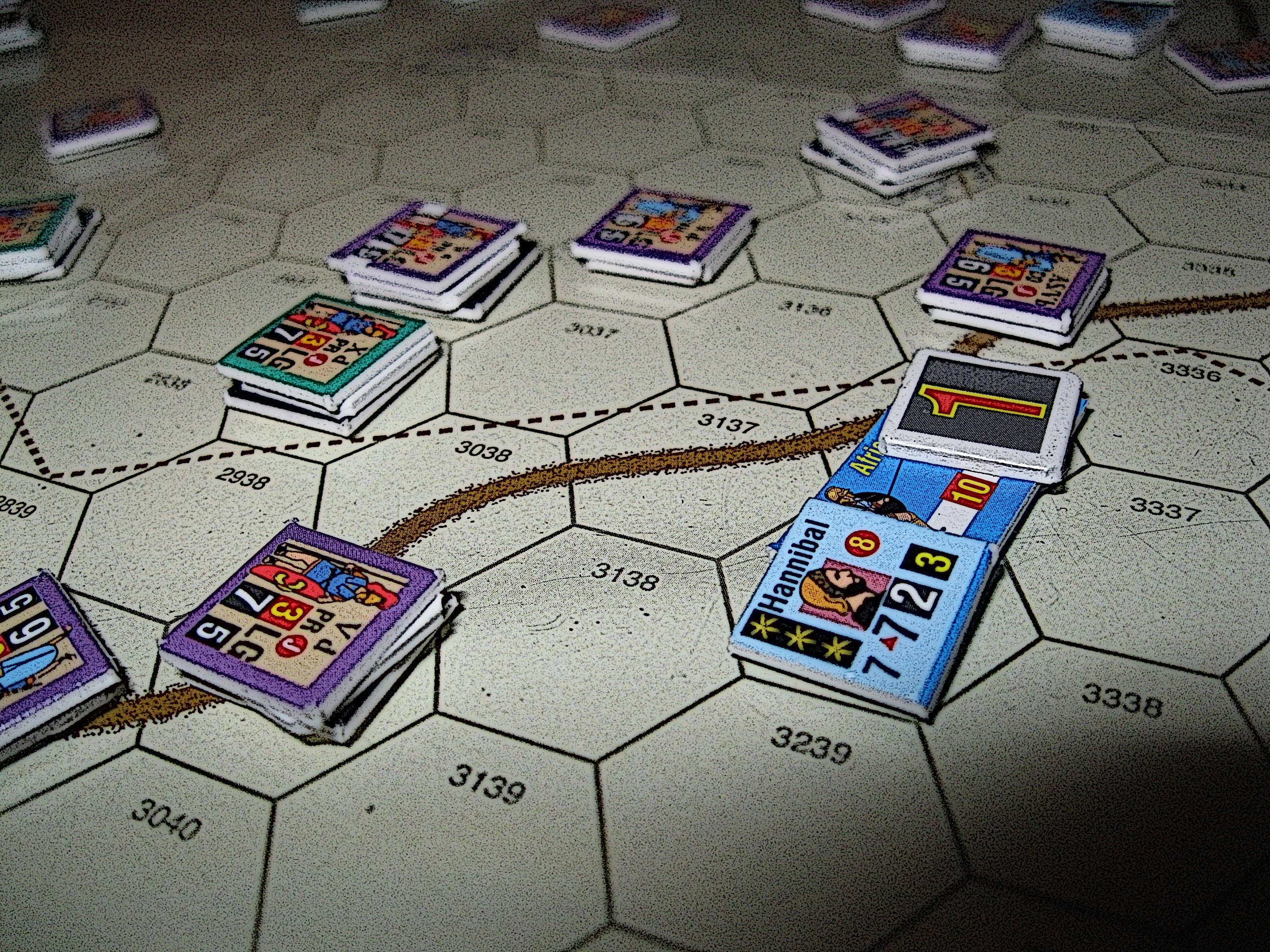
The retreat was sounded.
— — —
Flaccus holds the field.
Hannibal retires.
It was not the victory that was planned — a clean advance, a decisive engagement, a Triumph with his brothers watching. It was the victory that was earned: by the X and V Legions who had seen worse, by the Triarii who turned and held, by a man who made one good decision under pressure and enough adequate ones afterward to keep the army breathing.
Flaccus dismounted. His legs barely held him. An attendant moved to take the horse. The Praetor stood in the quiet that follows a battle and looked at the dead across the field — his men, Hannibal’s men, the ground between them.
He had wanted a Triumph. He would have one now.
It did not feel like he had imagined. He thanked Mars quietly, because the outcome had not felt like his.
He was not wrong about that.
The full game report — unit breakdowns, the rout point ledger, and solo-play methodology — is on BigBoard Gaming.
Flaccus holds Herdonia. Capua is alone — Hannibal has chosen the army over the city, and the city will have to make its own peace with what that means. It is Rome’s first significant victory on the peninsula. It will matter. It will not be enough.
Hannibal is still in Italy. He still has the army. He has retreated, not broken. The difference is everything.
And somewhere beyond the peninsula, in the desert kingdom of Numidia, a king named Syphax is watching. He has elephants. He has cavalry. He has a battlefield already chosen.
The Lion of the Desert is waiting at Siga.
BigBoard Gaming is a reader-supported publication. To receive new posts and support my work, consider becoming a free or paid subscriber.
Comments
Nothing yet. Say the first thing.
Sign in to join the conversation.