
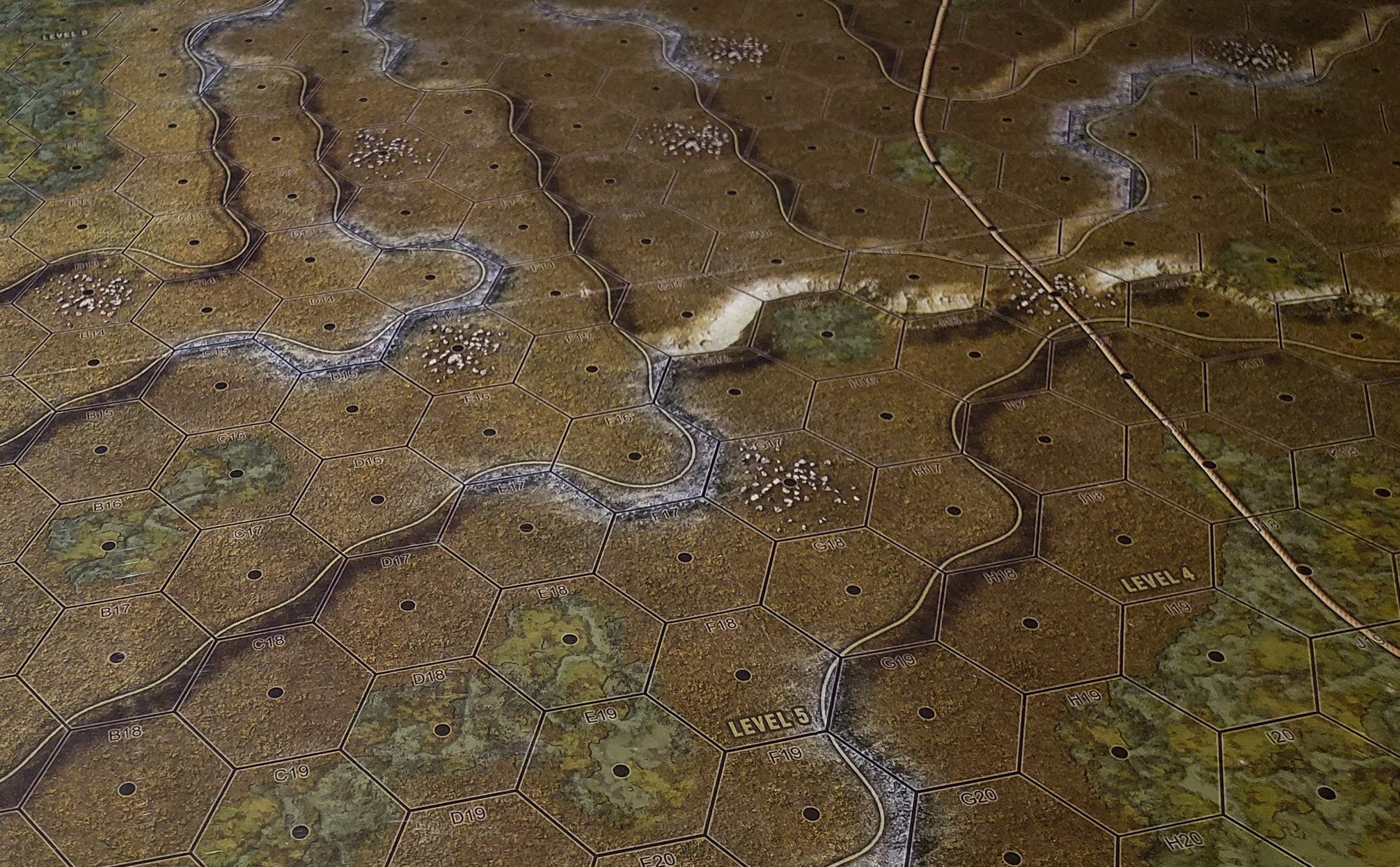
The shells hit the ridgeline and did nothing to the enemy.
Tall watched the detonations walk across the summit through his field glasses, columns of black earth and snow lifting against the grey sky, and when the smoke thinned the muzzle flashes started again from the same positions. Same foxholes. Same emplacements. Same disciplined Japanese fire reaching down the slope like fingers probing for something soft and yielding. He lowered the glasses. The artillery wasn’t going to crack this one.
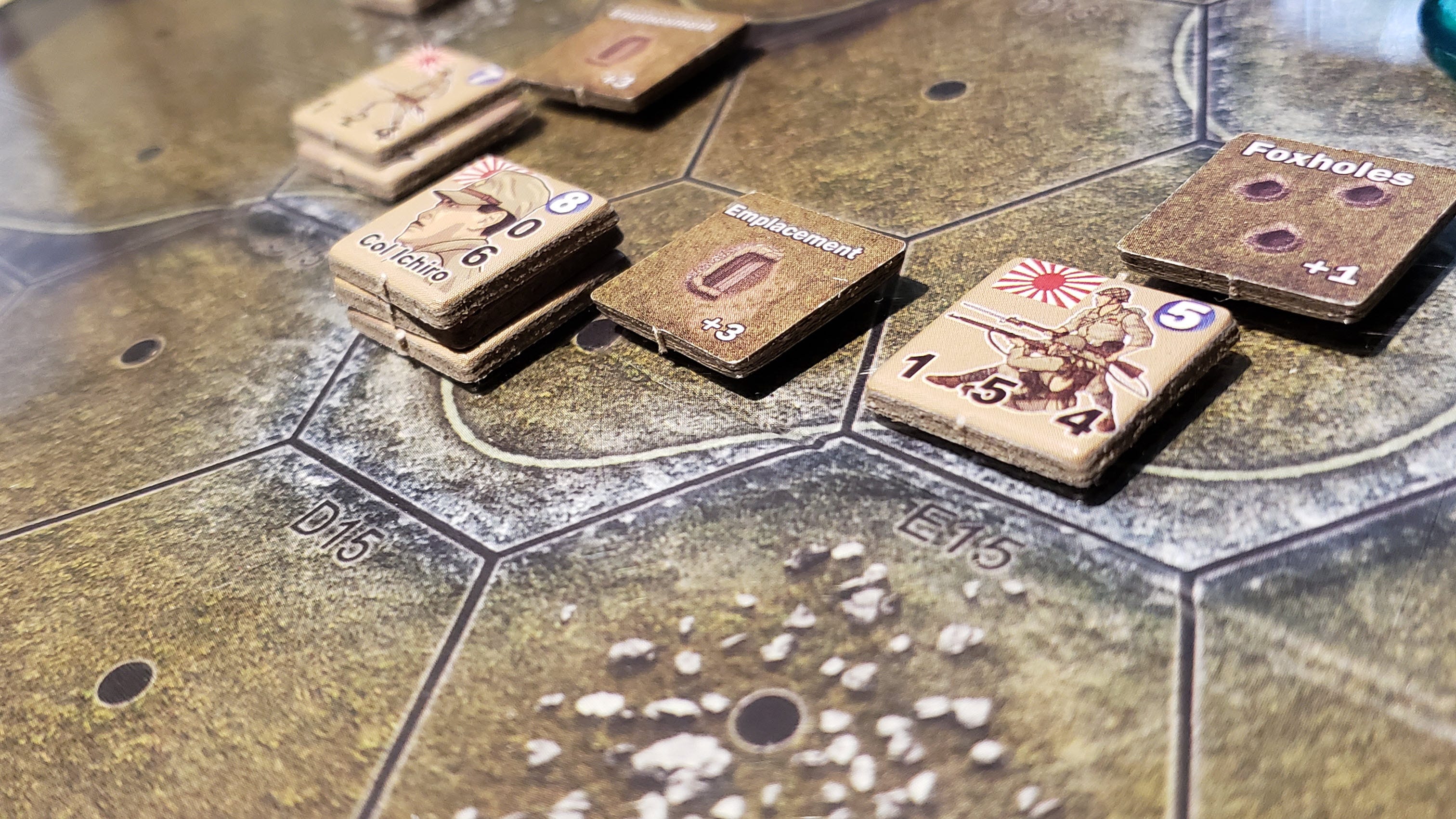
“Bring it in tighter,” he said into the handset. “Closer. Drop fifty and fire for effect.”
The radioman relayed it. Tall didn’t wait for the acknowledgment. He was already moving, crouched low in the muskeg grass that grabbed and sucked at his boots with every step, the wet volcanic soil underneath clawing at him like it wanted to keep him there. Keep him down. The whole island wanted to keep you down. Three thousand miles from the nearest thing that looked like a real country and the ground itself was fighting you.
Cold Mountain rose ahead — not a mountain in any real sense, just a treeless ridge of frozen volcanic rock climbing a few thousand feet above Clevesy Pass. From the bottom it looked like nothing. From the bottom a man could convince himself the assault would be straightforward. Tall had stopped being that man about forty minutes ago, when the first squad hit the cliff face and the Japanese opened up from positions so well concealed that the naval gunfire hadn’t touched them.
https://buymeacoffee.com/bigboard don’t subscribe click link and buy me a beer!
He heard the BAR before he saw the shooter. Somewhere above and to his right, one of his boys had found a rock and was hammering rounds at the ridgeline in short, controlled bursts. Good fire discipline. The bark of it echoed off the cliff face and came back flat and hollow, the sound bouncing between rock walls until it lost all direction. Tall moved toward it, keeping his head.
The fog came in waves, idling with the cold wind. One moment the summit was visible — emplacements cut into the rock, the dark slots of firing positions, the silhouettes of men who didn’t move unless they were shooting — and the next moment it was gone, swallowed by a wall of white grey that rolled down the slope and turned the world into a space about fifteen yards wide. The fog was supposed to help. In theory. In practice it just meant you couldn’t see where the fire was coming from and the Japanese, who had been sitting up there for months memorizing every approach, didn’t need to see you at all. They had the ranges dialed. They fired into the fog and they hit things.
Tall found the BAR team behind a shelf of rock. Two men. One shooting, one feeding ammo and trying not to look at the third man who was lying face down in the muskeg about ten feet behind them, his helmet gone and the back of his field jacket dark and wet.
“Who’s that?” Tall asked.
The feeder glanced back. “Lil’ Jack, sir.”
Tall nodded. He didn’t know a Lil’ Jack. He didn’t know half the men in the company by name and that was a failure he’d rectify later, if there was a later. Right now, the math was simple. The Japanese held the high ground. They were dug in behind emplacements that shrugged off 105mm rounds and even the bigger naval guns. His company was strung out across the base of a cliff in terrain that offered cover about as effectively as a bedsheet stops a bullet. And the fog — the goddamn fog — kept rolling in and out like a curtain that only opened when you were standing in the wrong place.
He keyed the handset again. “Migliore. Status.”
Static. Then Migliore’s voice, tight and too fast: “Pinned. Whole squad’s down flat. They’ve got a machine gun on us from the right and we can’t get an angle on it. I need smoke or I need arty or I need Jesus Christ himself, sir, because we are not moving.”
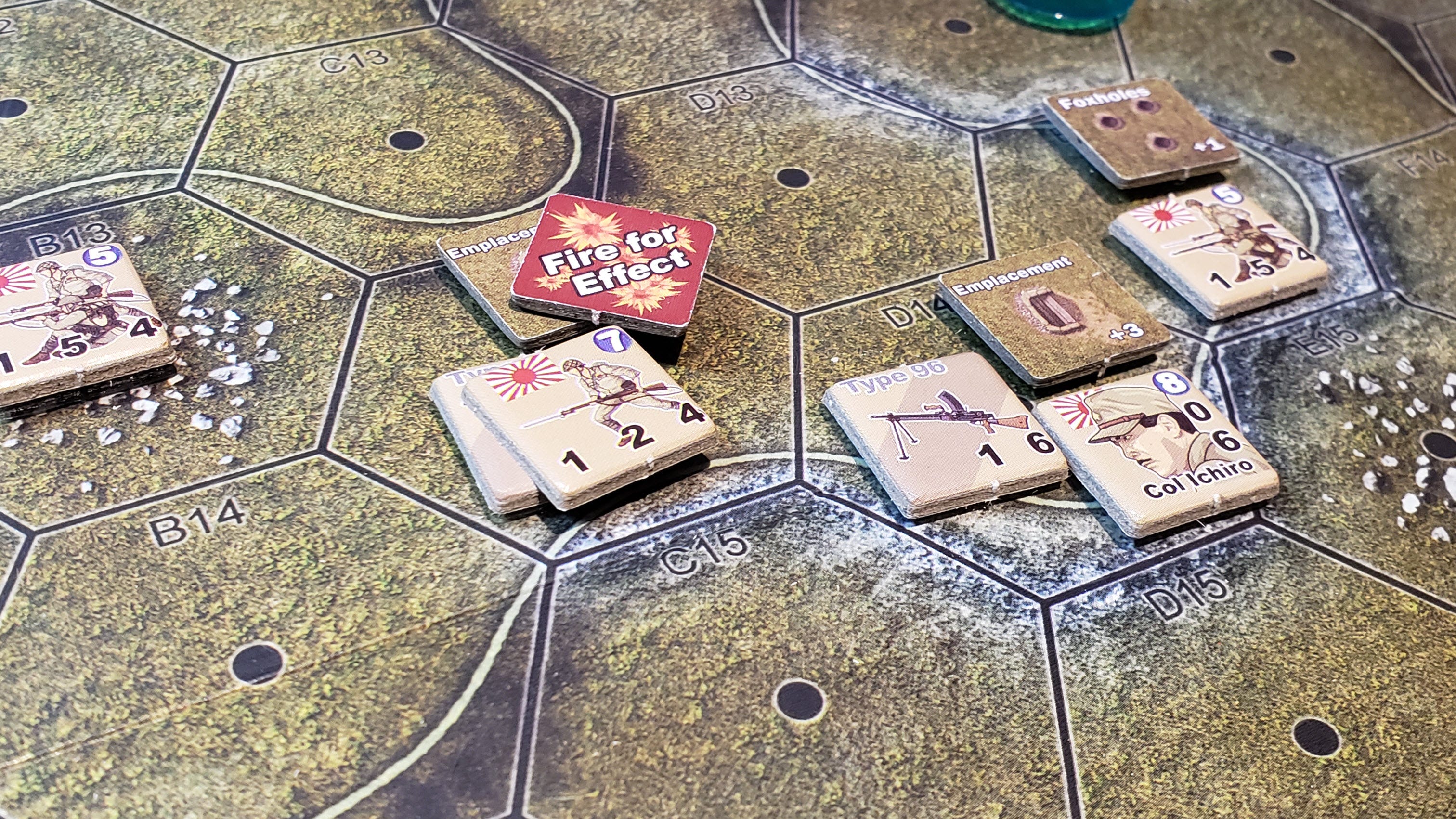
Tall looked up at the ridgeline. The fog had rolled past again, and he could see the emplacements keeping Miglore down clearly, more dark narrow rectangular cuts in the rock face, sandbagged and reinforced, the barrels of Nambu machine guns just visible in the shadows. A Type 96 light machine gun was firing from a position further right, its distinctive popping cadence different from the heavier weapons. That was the one eating Migliore’s squad.
“Hold position,” Tall said. “I’m bringing the guns around left.”
He said it like it was a plan. It wasn’t a plan. It was the only idea left, there was nowhere else to go.
--- https://buymeacoffee.com/bigboard
The wind picked up at 1430 and the temperature dropped to something that made men’s hands stop working. Tall had watched it happen since the division came ashore at Massacre Bay — the cold accumulated, crept into fingers and joints and core, until a man couldn’t rack a bolt without thinking about it. Thinking about it got you killed.
The 7th Division had trained at Fort Ord. California. Desert country. Half these boys expected North Africa. They got the Aleutians instead — came ashore in the same boots and field jackets they’d worn on the rifle range in Monterey. No winter gear. No understanding of muskeg, which wasn’t soil but a mat of rotting vegetation floating on waterlogged ground, spongy and treacherous, thigh-deep in the hollows. A man couldn’t run on it. Couldn’t dig into it without the hole filling with black water. The island was a fortress without walls.
And Col. Ichiro had built his positions to exploit every foot of it. The intelligence brief said five hundred Japanese, maybe fewer. A garrison force. The reality on Cold Mountain was dug-in infantry with interlocking fields of fire, heavy machine guns in log-and-earth emplacements, every approach pre-registered. Ichiro had turned the ridgeline into a kill box.
The shells came again. The summit disappeared behind detonations. When it cleared, the Type 96 opened up immediately. Same position. Same calm, methodical killing.
“Shulte.” Tall grabbed the sergeant as he came around a rock outcrop, bent double, blood on his sleeve but moving well enough. “Take whoever you’ve got and push left. Get around that emplacement. I don’t care if you climb the back side of the mountain, just get above that gun.”
Shulte looked at the ridgeline. Looked at Tall. Nodded.
He was gone into the fog with four men — all that was left of his squad. They disappeared into the muskeg grass like men walking into deep water, and then there was just the sound of the guns.
Tall checked his Tommy gun. Full magazine. Two more in his jacket and eight rounds in the pistol. Contrary to his name he was squat, broad-shouldered, nimble on broken ground. The men called him lucky. He wasn’t lucky. He was just hard to hit — short and fast and aware of the geometry of cover in a way that couldn’t be taught. College football, nimble feet, finding the gap. Making the downs.
He’d need every bit of it now.
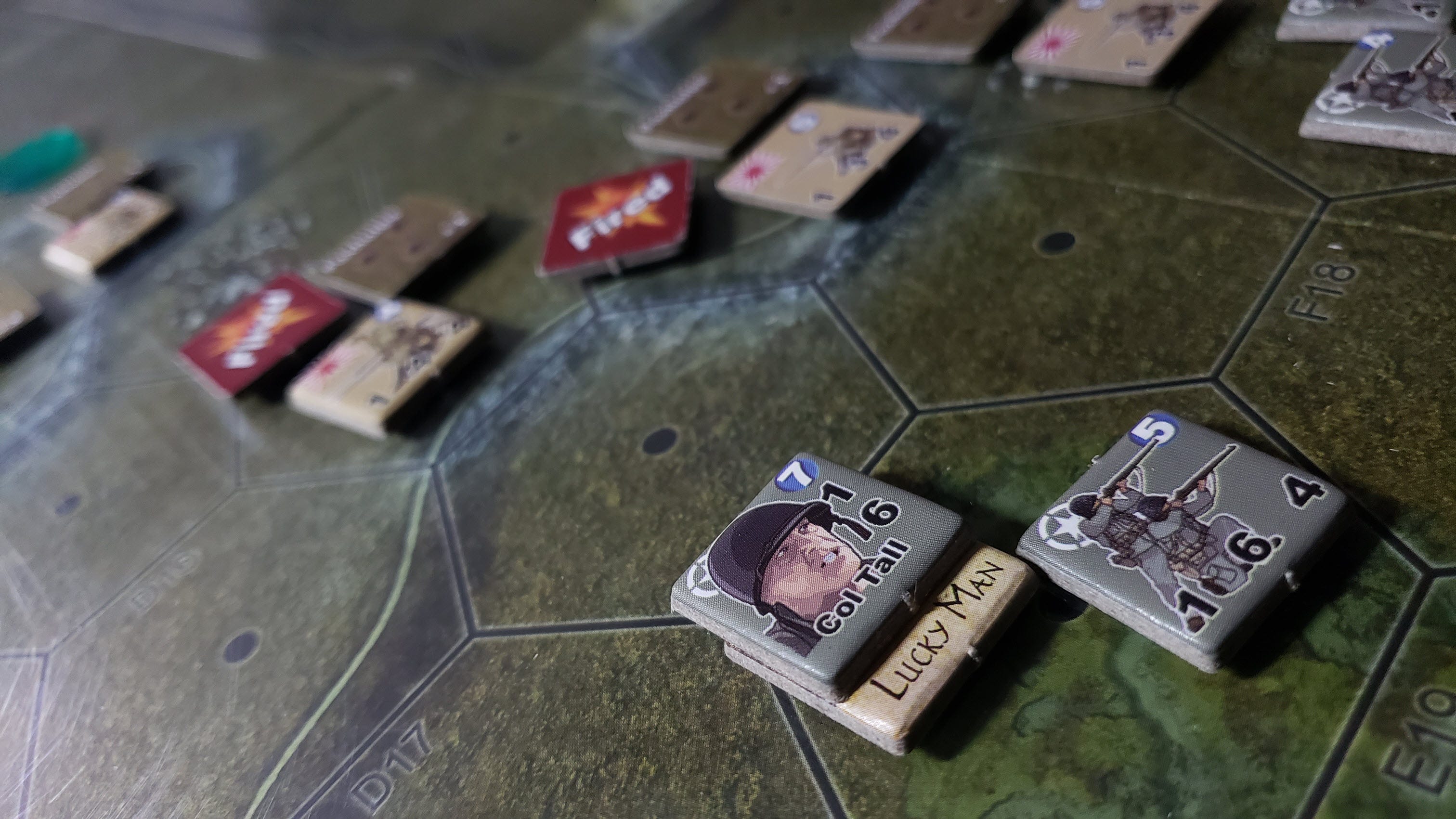
“On me,” he said to the four men huddled behind the rock shelf. “Stay low. Move fast. Stop when I stop. Keep that BAR singing boys, we need the help.”
They went. Tall first, scrambling across open muskeg toward the next outcrop, the wet grass slapping at his legs, his boots sliding on the volcanic rock underneath. Rounds snapped past. One hit the rock he was heading for and threw chips tearing into his face. He made the cover, pressed flat, waved the next man forward.
The second man made it. The third didn’t.
Tall heard the hit. A sound like a hand slapping a side of beef; and the man went down without a word, folding into the muskeg as if the ground had simply opened and taken him. The fourth man froze. Tall could see his face across fifteen feet of open ground, white and rigid, the calculations running behind his eyes: *How fast. How far. How likely.
“Move!” Tall roared over the wind. “Move or you die where you stand!”
The man moved. He made the rocks.
Above them, through a gap in the fog, Tall saw Shulte’s team emerge on the left flank of the emplacement. They were close — thirty yards, maybe less. He saw muzzle flashes from Shulte’s position. Saw the Type 96 swing toward the new threat. Saw a Japanese soldier rise from a foxhole and crumple sideways as Shulte’s fire caught him.
This was the moment. The gun had shifted. The lane was open.
Tall came off the rock running, the Tommy gun up, firing from the hip into the fog toward the emplacement. The recoil climbed his arms. Brass arced past his peripheral vision. He saw a shape ahead of him, spindly and moving, and swung the gun like a club when the bolt locked back on empty. The heavy wooden stock connected. The shape went down. No time to reload.
He drew the service pistol. Fired twice. One round hit center mass. The other went wide into the fog. Behind him his men were up and moving, rifles cracking, the momentum of the assault finally catching like a fire in dry grass.
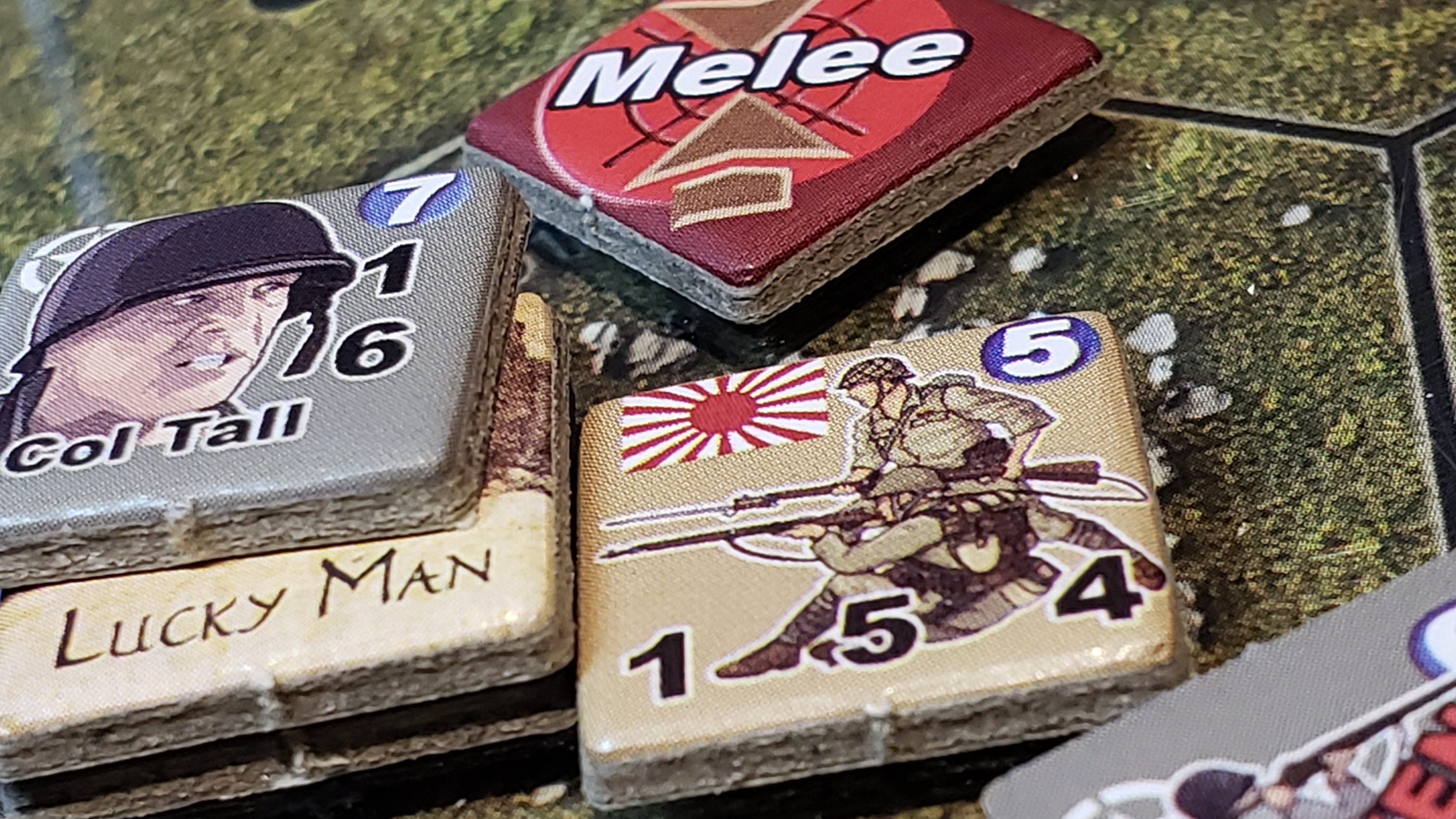
Then the ground betrayed him. A jagged rock caught his ankle and he staggered forward, dropping to one knee, the pistol still up but his balance gone. It was then he saw the foxhole. Saw the stubby man in it. Saw the arm come back, saw the dark oval shape leaving the hand in a lazy arc that seemed impossibly slow.
The grenade landed at his feet.
‘Fourth and inches.’ he thought.
---
They found what was left of Tall’s squad at dusk. Shulte’s team had taken the emplacement — the Type 96 silenced, its crew dead, brass casings ankle-deep around the gun. But the cost was counted in bodies across the muskeg below the cliff.
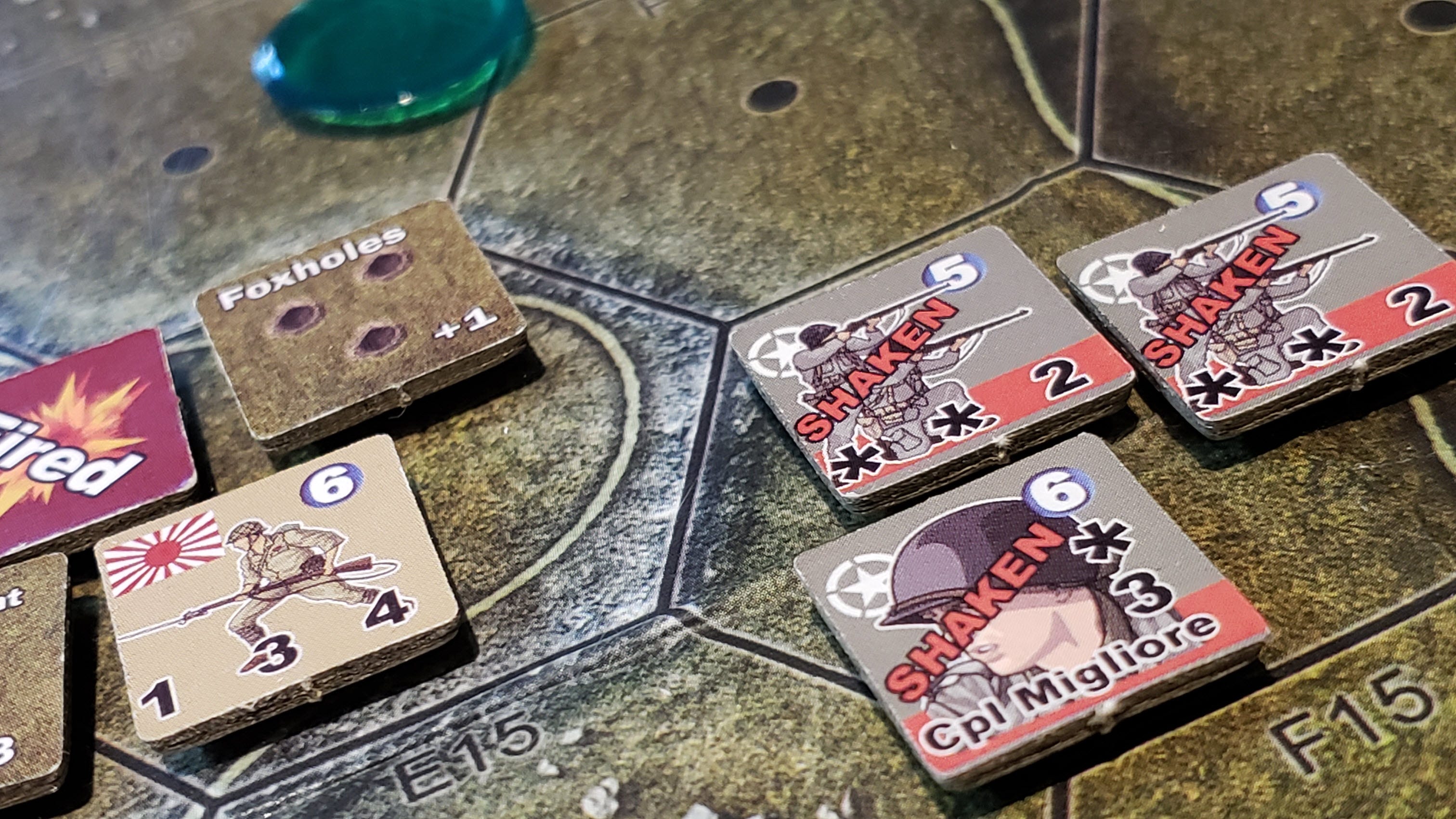
Migliore was alive. Shaken, his squad wrecked, but alive. Six men out of twelve. The rest were somewhere on the slope.
The fog closed in and the wind dropped and the island settled into the silence that comes after violence — not peaceful, just empty. The kind of silence with weight. The air clung to the living. It soaked the dead, seeking to pushing them deeper into the muskeg.
The brave fought on leaderless. The cliffs still held. Tomorrow, Cold Mountain would demand another man willing to spend everything to take another fifty yards of frozen rock that nobody back home had ever heard of, on an island at the edge of the world.
Maybe a new leader could take the cliffs. Tomorrow.
---
Hell Frozen Over — Lock ‘n Load Tactical. Scenario: Advance on Cold Mountain. Attu Island, Alaska Territory, May 19, 1943.
· Company F, 17th Infantry Regiment, 7th Infantry Division vs. Col. Ichiro’s IJA garrison. The cliff face assault on Cold Mountain, securing Clevesy Pass for the American advance toward Chichagof Harbor.
· The 7th Infantry Division lost 550 killed and 1,500 wounded taking Attu. Another 1,200 were casualties of the island itself — frostbite, trench foot, exposure. Of the Japanese garrison of 2,500, only 29 survived.
· This was the only battle of the Pacific War fought in snow.
Comments
Nothing yet. Say the first thing.
Sign in to join the conversation.