
I have been thinking a lot about local species lately, the importance of being able to identify them, in particular. So while on a walk earlier this week, I used the iNaturalist app to identify a few of the plant species I didn’t recognize. Of the five plants I identified only one, southern arrowwood (Viburnum dentatum) was native to Ohio, where I live. Red clover (Trifolium pratense) is listed as non-native species, while multiflora rose (Rosa multiflora), amur honeysuckle (Lonicera maackii), and Dame’s rocket (Hesperis matronalis) are all classified as invasive species.
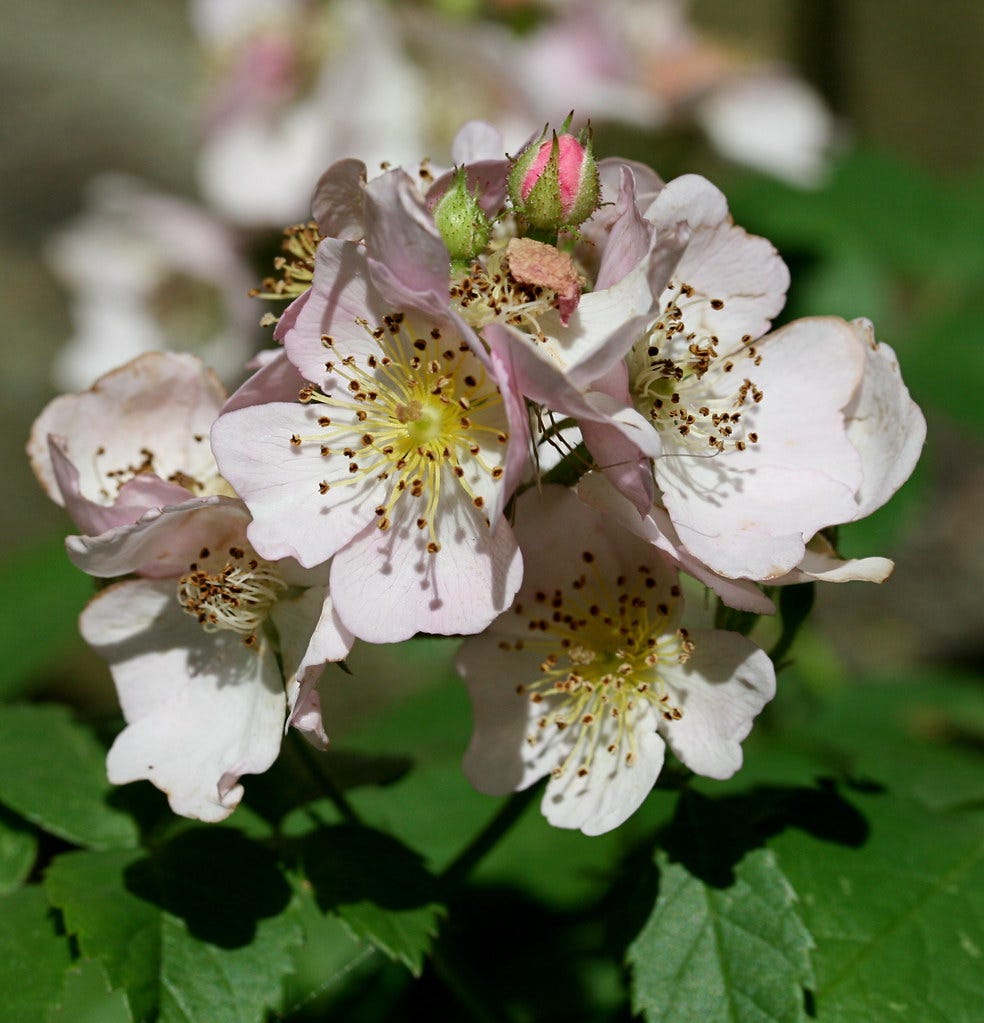
This knowledge was unsettling. I had paused to identify each of these species because I found them beautiful, yet it turned out that most of this beauty wasn’t native to my home. My unease only grew as I continued encountering thickets of these invasive species along the trail. What native species were they displacing? How many of the other surrounding plants were fellow invaders?
This podcast is listener-supported. To receive new posts and support our producer and interns, consider becoming a paid subscriber.
As I finished the walk, my unease slightly abated by the sighting of a native green heron and scarlet tanager. A deeper, more philosophical question came to mind: in a rapidly changing world, what constitutes an invasive species? As humans continue to move species across the globe, as invasive species become more common, and as species increasingly shift their ranges on their own in response to climate change, how should we think about invasive species?
The U.S. government offers one perspective, legally defining an invasive species under Executive Order 13112 as a species that is “non-native (or alien) to the ecosystem under consideration and…whose introduction causes or is likely to cause economic harm, environmental harm, or harm to human health.” While it is certainly true that invasive species can cause harm to the economy, environment, and human health, this definition provides a largely anthropocentric and necessarily negative view of invasive species without acknowledging the fact that human activity is the dominant driver of invasive species’ global spread.
Dr. Daniel Simberloff, our most recent guest on Big Biology and one of the founders of the field of invasion biology, uses a simpler, more ecological definition. In the textbook Conservation Biology for All, Simberloff defines an invasive species as a species “that arrives (often with human assistance) in a habitat it had not previously occupied, then establishes a population and spreads autonomously” (131). Importantly, this definition acknowledges that humans play a central role in the spread of invasive species, helping shift the responsibility for any negative consequences from the species themselves to the human activity that led them to be introduced to a new place. Additionally, from this perspective, a species becomes invasive not by any harm it causes, but rather by its ability to persist in a new habitat without human intervention. In this sense, invasive species aren’t necessarily inherently harmful—though their ability to establish and spread without assistance often increases the likelihood that they will significantly alter the ecosystems they enter.

Further complicating the simple dichotomy between ‘native’ and ‘invasive’ is that native species can themselves become invasive if they spread to previously unoccupied habitats, even if these habitats are close to their native range. Simberloff highlights two major ways in which native species can become invasive. The first is when humans introduce a new genotype of a native species from a different region and either the new genotypes or recombinants involving the new genotypes become invasive. The second is when humans modify the environment in such a way that a particular native species can rapidly spread and become dominant—for example, fire suppression and increased grazing by livestock have allowed Douglas fir and other tree species to invade grasslands in the western U.S. (Box 7.1, p. 131).
But though invasive species may not be inherently harmful, it is undeniable that many invasive species have had significant—and often devastating—ecological impacts. Species invasions are a major driver of biodiversity loss and extinction worldwide, second only to habitat loss. Invasive species can directly compete with, consume, or infect native species, but “the greatest impacts of invasive species entail modifying entire ecosystems, because such modifications are likely to affect most of the originally resident species,” writes Simberloff in Conservation Biology for All (133).
While some of these impacts are obvious, Simberloff points out that many invasive species that appear harmless may be having impacts that are difficult to observe. “The great majority of introduced species, we don’t know anything about,” he says in the Big Biology episode. “We know they’re there. We often say, ‘Oh, they’re not doing anything.’ But we really haven’t studied them. We don’t know, because many impacts are very subtle, even some very consequential ones, we don’t realize until much later that they are” doing something.
This subtlety of impact and initial benignity of many invasive species inspired the title of Simberloff’s new book, Ecological Explosions: The History of Biological Invasions and Invasion Science. Coined by Charles Elton, the term “ecological explosions” refers to the idea that “the effects of the invasion ripple beyond the very immediate, obvious impact” and can lead to “waves of explosions,” explains Simberloff.
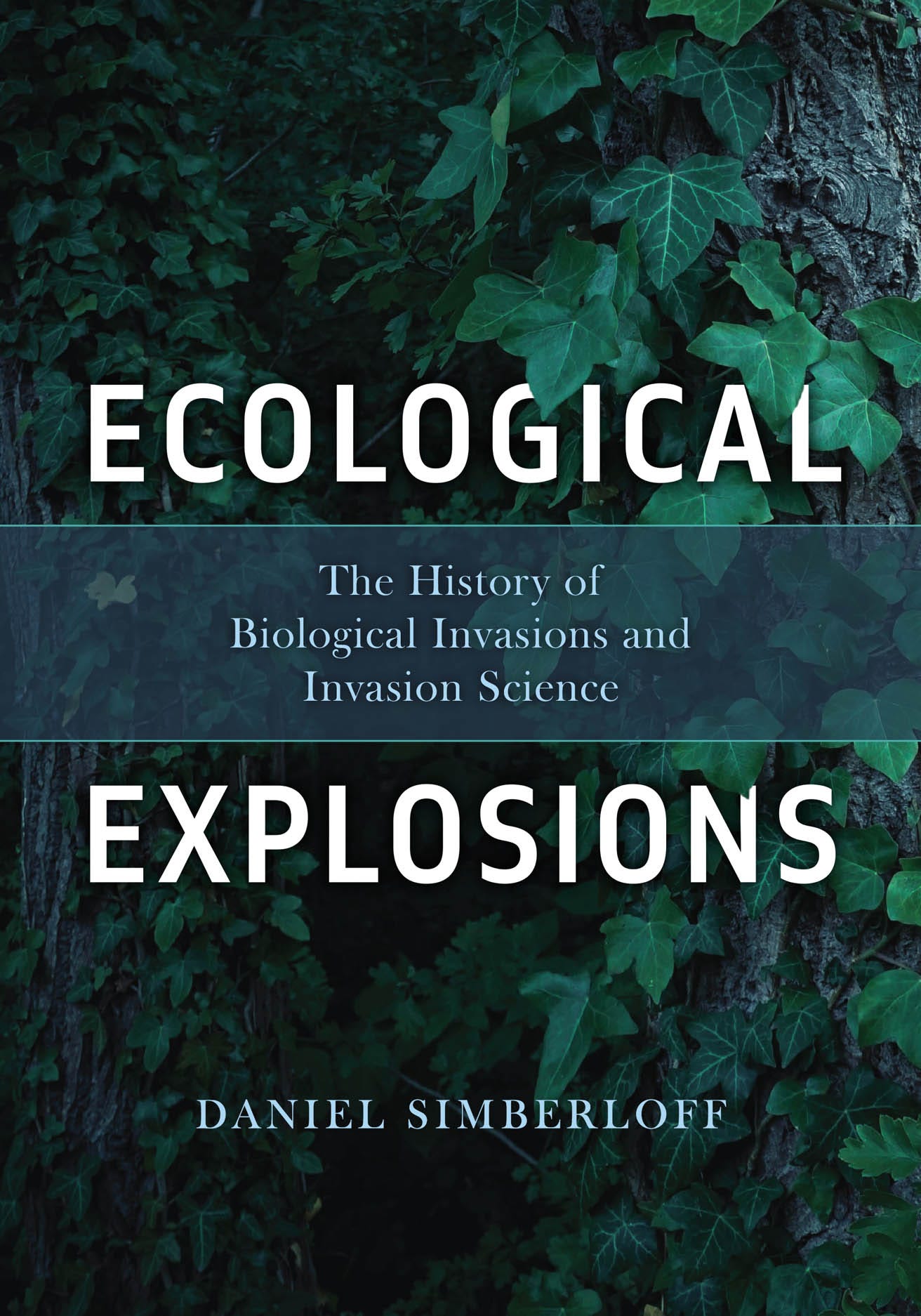
The term also acknowledges that many invasive species fly under the radar for a period of time before “exploding” and becoming harmful. In a testimony submitted to congress in 2003, Simberloff elaborated that “introduced species sometimes remain innocuous for decades, then suddenly explode to become serious pests. Thus, some fraction of currently harmless introduced species will become plagues.”
For example, in south Florida, “fig trees were common for at least a century, restricted to residential settings because they could not reproduce without specific fig wasps,” explained Simberloff. However, once the exact species of fig wasp required for pollination was also introduced to the region, the fig trees suddenly began reproducing rapidly and are now actively spreading through natural ecosystems.
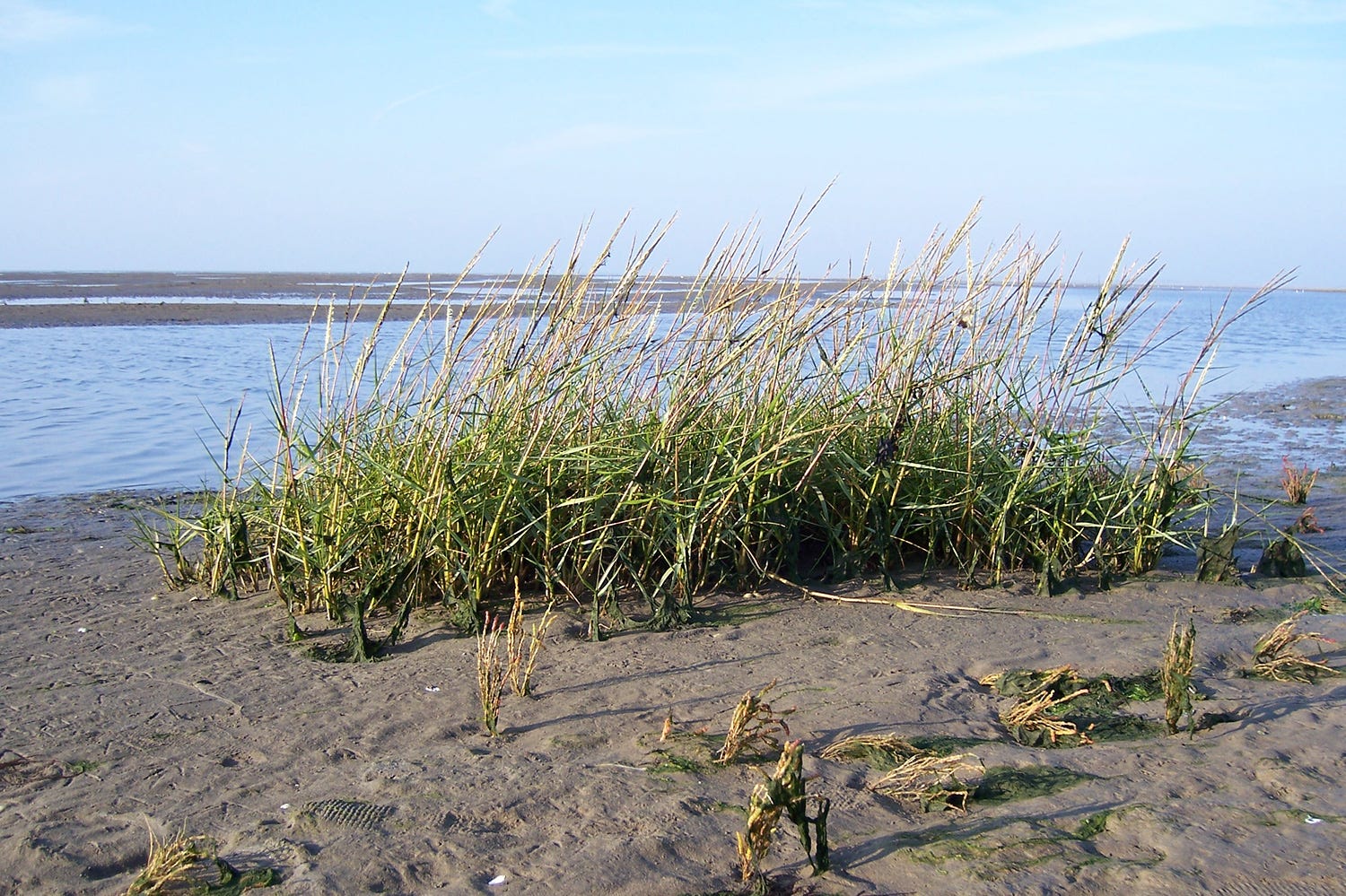
Hybridization between native and invasive species can also trigger such ecological explosions. In the mid-19th century, cordgrass from eastern North America was introduced to England where “it was a harmless, uncommon exotic there,” testified Simberloff. This introduced cordgrass would sometimes hybridize with the native Spartina maritima, only to produce sterile hybrids. But then, circa 1890, “one such hybrid individual underwent a spontaneous chromosomal mutation (doubling its number of chromosomes) to become a fertile new invasive weed, S. anglica. It has more recently invaded northern Puget Sound, where it is the target of a so far futile control effort because it is destroying the habitat of large intertidal areas.” These examples highlight the profound unpredictability of biological invasions and the difficulty of determining which introduced species may eventually become ecologically destructive.
So yes, invasive species, though perhaps not inherently bad, do pose a major threat to ecosystems and biodiversity worldwide. And this threat, given the magnitude and potential irreversibility of any consequences, must be taken seriously. In a 2001 paper, Simberloff advocates for “a shift from blacklists of prohibited species and a presumption of harmlessness to combinations of white and blacklists and a presumption that any species may be damaging.” This “presumption of harm” approach may at times seem overly cautious, but it reflects the reality that ecological consequences are extremely difficult to predict—and often even harder to reverse.
At the same time, not everyone agrees on how invasive species should be understood or managed. In her book Rambunctious Garden, environmental writer Emma Marris argues that ecosystems are not static entities frozen at some ideal historical baseline. Species distributions have always shifted, ecosystems have always changed, and humans have been reshaping landscapes for thousands of years. Similarly, Fred Pearce argues in his book The New Wild that many non-native species are capable of integrating into ecosystems and, in some cases, may even provide ecological benefits in heavily altered environments.
These perspectives complicate the simple narrative of invasive species as purely ecological villains. In many urban or disturbed ecosystems, it may no longer be feasible—or even desirable—to attempt to restore some historical baseline. Climate change further complicates matters, as many species are now shifting their ranges in response to changing temperature and precipitation patterns. If a species expands into a new region on its own and can survive given changing climate conditions, should it be considered invasive?
While these perspectives are worth contemplating, acknowledging this complexity does not require dismissing the dangers invasive species can pose. An important aim we can focus on is preserving biodiversity and maintaining healthy, functioning ecosystems—something we can all play a role in.
Apps like iNaturalist and features like Google’s search-with-a-picture function have made identifying the species around us easier and more accessible than ever before. Pausing for a few minutes to identify some of the species we encounter not only increases our knowledge of our local ecosystems, but adds observations to an immense database that researchers are using to, among other things, track the spread of invasive species. “Combined with some more serious effort in in rapid response approaches,” says Simberloff, citizen science approaches like iNaturalist, along with the use of eDNA, could “transform the entire management part…to a much better situation than we have now, but it would take resources in the response part, not just the detection part.”
For my part, I’m still not quite sure how to manage my feelings about seeing the Dame’s rocket, multiflora rose, and amur honeysuckle. Though I’m glad to have learned that they are considered invasive, I don’t quite know how to act around them: can I still enjoy their beauty? Or should I ignore them? Avert my gaze? Rip them up?
For now, I think I’ll stick to recording them on iNaturalist whenever I see them to give researchers as many data points as possible. I’ll also continue to identify the many other plant species I still don’t know by name, both to become more familiar with native species in my area and to flag any other invasive species I might come across. In a world full of changing ecosystems increasingly populated by invasive species, the first, and perhaps most important, step any of us can take is to simply learn about the species with whom we share this world.
Learn more by listening to our episode with Dan Simberloff:
This podcast is listener-supported. To receive new posts and support our producer and interns, consider becoming a paid subscriber.
Comments
Nothing yet. Say the first thing.
Sign in to join the conversation.