
PODCAST:
Listen here or wherever you listen to podcasts.
TRANSCRIPT:
Disclaimer: This conversation is for educational and informational purposes only and does not constitute financial advice. Readers should consider their own circumstances and seek advice from a qualified financial adviser where appropriate.
With everything going on in the world, and with so many people feeling the weight of mounting financial pressure, I felt it would be helpful to focus today’s Substack post on financial literacy. More specifically, I wanted to explore our relationship with money and value, and how that relationship affects our financial wellbeing.
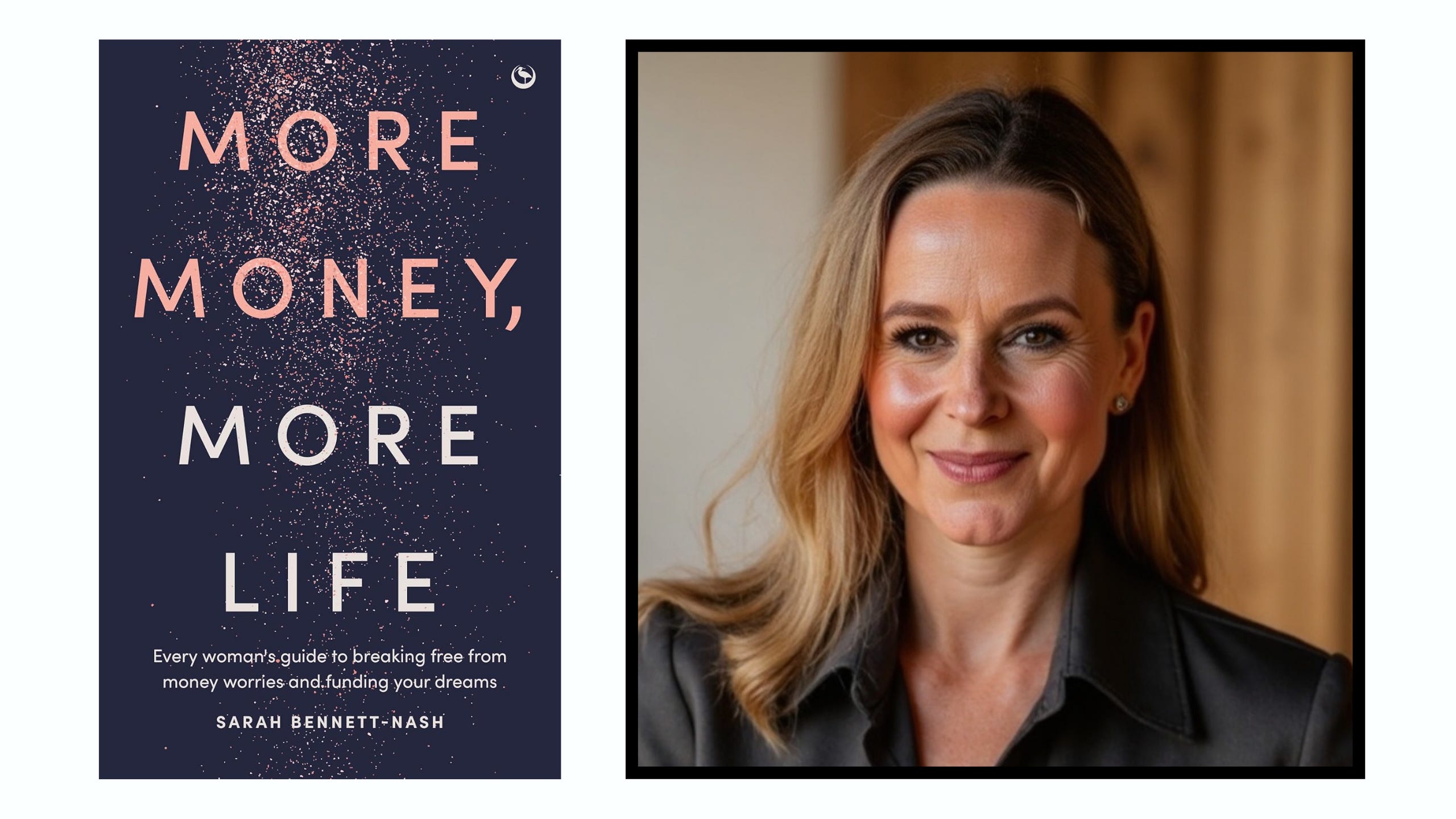
And I am excited to share a conversation with author and financial expert, Sarah Bennett-Nash and the lessons from her debut book, More Money, More Life. Sarah’s book discusses that the way we think about money often shapes the choices, confidence, and sense of security we carry through life.
After nearly two decades in financial services and global capital markets, including time at Goldman Sachs, Sarah began exploring why even smart, successful people can feel anxious, avoidant or stuck around money. She made the bold decision to leave the corporate world behind, to write a book, and start a different kind of conversation about money. She found that most conversations about money focus on tactics: budgeting, saving, investing and earning more. But beneath every financial decision sits something deeper. A family history, fear, ambition, identity and the stories we inherited long before we earned our first pay check.
We sat down to talk about her remarkable journey, the AAA framework at the heart of her new book, and the practical steps anyone can take to begin building real financial freedom. I hope you enjoy our conversation below!
Bijal: You’ve had quite the journey Sarah, from a law conversion to Goldman Sachs to author. Can you take us back to the beginning?
Sarah: It really is a story of transformation. I did a business studies degree and then went into sales, which didn’t suit me at all. From there, I landed a job in branding, working for Green & Black’s, the chocolate company, while also completing a law conversion, which was probably the hardest thing I’ve ever done academically. More difficult, honestly, than my US broker-dealer exams.
Around that time, I met someone who was moving to New York and I went with him. Within six months of arriving, I realised it wasn’t the right relationship, so I had to disentangle myself from this whole world we’d built together while also figuring out my next step professionally. I was in a quasi-legal role that wasn’t quite right either. It was just an odd time.
But that’s when I knuckled down and used my network. Most of my connections in New York were in banking, and that’s how I ended up at Goldman. On my very first day, I was on the 50th floor just off Wall Street, watching the sun set over the Statue of Liberty, thinking: how does a girl from Yorkshire end up here?
Bijal: What brought you back to the UK after six years in New York?
Sarah: My sister became quite unwell, and that prompted me to think about going home. As it turned out, it was completely serendipitous, because I got to spend a whole year reconnecting with my dad, who we sadly lost that year. I’d been gallivanting around the world through my twenties and hadn’t spent nearly enough time with him. Getting that year back with him was everything.
He was a huge influence on me. He started out working class, trained as a plumber, then built up his own construction business at exactly the right moment in the housing market in the nineties. He went on to invest in all sorts of different ventures. Watching that evolution growing up, that sense of innovation, of doing things differently always stayed with me. He’s very much present in the DNA of this book.
Bijal: You climbed to a senior executive level at Goldman, which is an incredible achievement. What made you leave?
Sarah: I had what most people would call my dream job. I’d worked incredibly hard to get there. And yet something still wasn’t quite working. I’d always been the person coming up with innovative ideas for how to fix things, and in a large corporate structure, that creates friction, sometimes healthy friction, but friction nonetheless.
I started doing what I now call the awareness piece, really mapping out who I was, what I valued, where I wanted to go. And during that process, I realised I had a book in me. I started sketching it out, doing draft after draft of the structure. The deeper I got into it, the more my desire to keep climbing the corporate ladder began to wane.
Everyone told me I was completely bonkers to leave. “You’ve got this safe job you’ve spent twenty years building.” But I think when the time is right, you just know. You stop asking other people’s opinions and you trust yourself.
Bijal: What were you observing in banking that inspired the book?
Sarah: Working in investment banking, I was surrounded by people who were natural risk takers when it came to money. But I was also meeting a lot of people who were brilliant at their jobs, had climbed the ladder, and were still living paycheck to paycheck, stuck on a kind of hamster wheel. That juxtaposition was really striking.
And then looking at my own family history, my grandparents struggled post-war, my father’s building business was subject to the economic cycle, the poll tax hit particularly hard, I started to see how those patterns ripple down through generations without us even realising. Money shapes families in ways that aren’t always visible in the moment but become very clear in retrospect.
Bijal: You mention in the book that you went through your own serious financial difficulty. Can you share that story?
Sarah: Yes and it was a hard one. I was pregnant with my daughter Chloe, still working intensively, and we were in the middle of a major renovation on our flat. We brought in a builder who turned out to be a complete cowboy. He took my entire renovation savings, stripped the back off the house, dug half the footings, and then we discovered he hadn’t paid any of the suppliers he’d supposedly settled up with.
So we had half a house hanging open, a baby on the way, and months of legal processes ahead of us to try to recover the money. That’s when I set up my first business and every entrepreneur will tell you: never start a business because you need money. That’s the worst possible reason. But necessity took over.
As hard as it was, I learned something crucial: I didn’t have to rely solely on my corporate income. I could generate my own. It took time, but we paid off the debt, got the house back in order, and I came out the other side with a much deeper understanding of money, risk, and resilience.
Bijal: Your book is built around what you call the AAA framework: “Awareness, Alignment, Action“. Can you walk us through it?
Sarah: The framework grew out of my own experience and from everything I observed around me. It starts with Awareness, bringing your money beliefs and programming to the surface. So much of how we relate to money is inherited: from our parents, our grandparents, the economic climate we grew up in. Once you surface those beliefs, you can examine what still serves you and what you are ready to leave behind.
The second pillar is Alignment. Alignment is about connecting your financial choices to the life you actually want, not the one you inherited or feel pressured to perform. What does freedom mean to you today? Is it time flexibility, your children’s education, a career change, or simply feeling calmer around money?
The third pillar, and the one where most people get stuck is Action. People journal, they do the exercises, they get great clarity... and then nothing happens. Procrastination is often just fear in disguise. But action doesn’t have to mean a huge leap. Putting away £10 or £20 a month into a separate savings pot is action. Starting a conversation with a financial adviser is action. Saving a small amount each month, reviewing your debts, opening a separate account, or speaking to a qualified adviser can all be meaningful first steps. The momentum builds from there.
Bijal: For someone reading this who wants to start building wealth, what are the three most important things they can do right now?
Sarah: First, get honest about where you are. Write it out. Look at your income, your debts, your savings. Debt isn’t necessarily a bad thing, it just needs to be managed consciously. You can’t map a route if you don’t know your starting point.
Second - map your money to your values. Ask yourself what the big things are that you’re working towards, in the next year, the next five years. Then look at whether the way you’re managing money actually reflects those priorities. When there’s harmony there, the stress begins to ease.
Thirdly, start small, but start.One of the most powerful shifts is learning the difference between saving, investing and allowing money to grow over time. For some people, that might mean exploring diversified long-term investments, such as index funds, after doing proper research or speaking to a qualified financial adviser. The key is not to take reckless risks, but to understand how compounding, consistency and time can work in your favour.
Bijal: What book changed your own relationship with money?
Sarah: The Psychology of Money by Morgan Housel. I remember spotting someone reading it in a local café and it stopped me in my tracks. That was the book that helped me understand that this really isn’t just about the technicalities of managing money, it goes so much deeper. It’s about behaviour, about the stories we tell ourselves, about the emotional weight we carry around financial decisions. I’d also recommend Money Talks as a brilliant, accessible primer on the practical side.
Bijal: Finally, where can people find the book?
Sarah: The book launched on the 17th of March 2026 and is available wherever you get books or here. If any of this conversation has resonated, if you’ve ever felt like money is a source of stress rather than a source of freedom, or if you’ve wondered why some people seem to build wealth with relative ease while others stay stuck, this book was written for you.
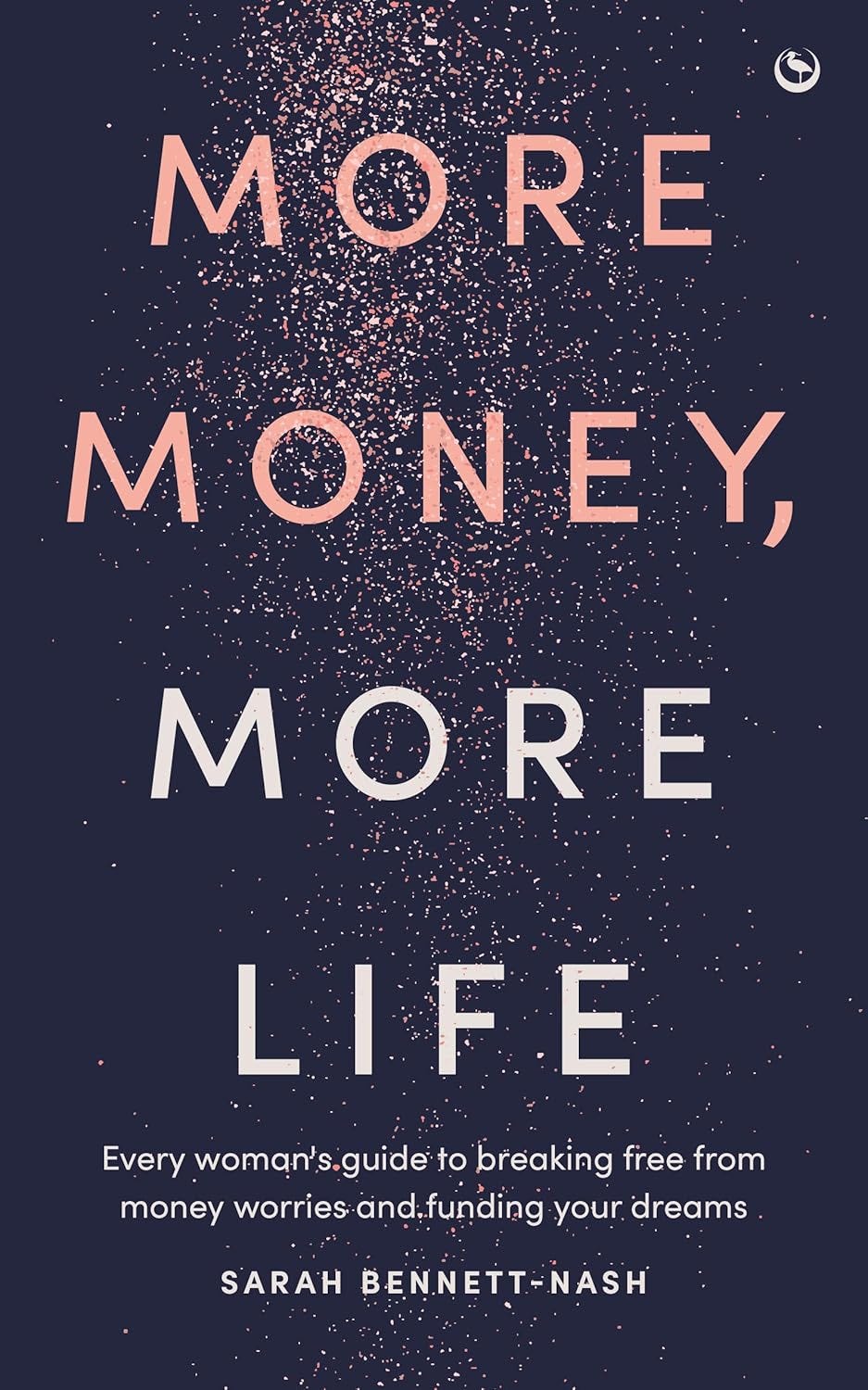
Follow Sarah for updates on the book launch and her work on money mindset and financial freedom on Instagram or her website: https://www.sarahbennettnash.com/
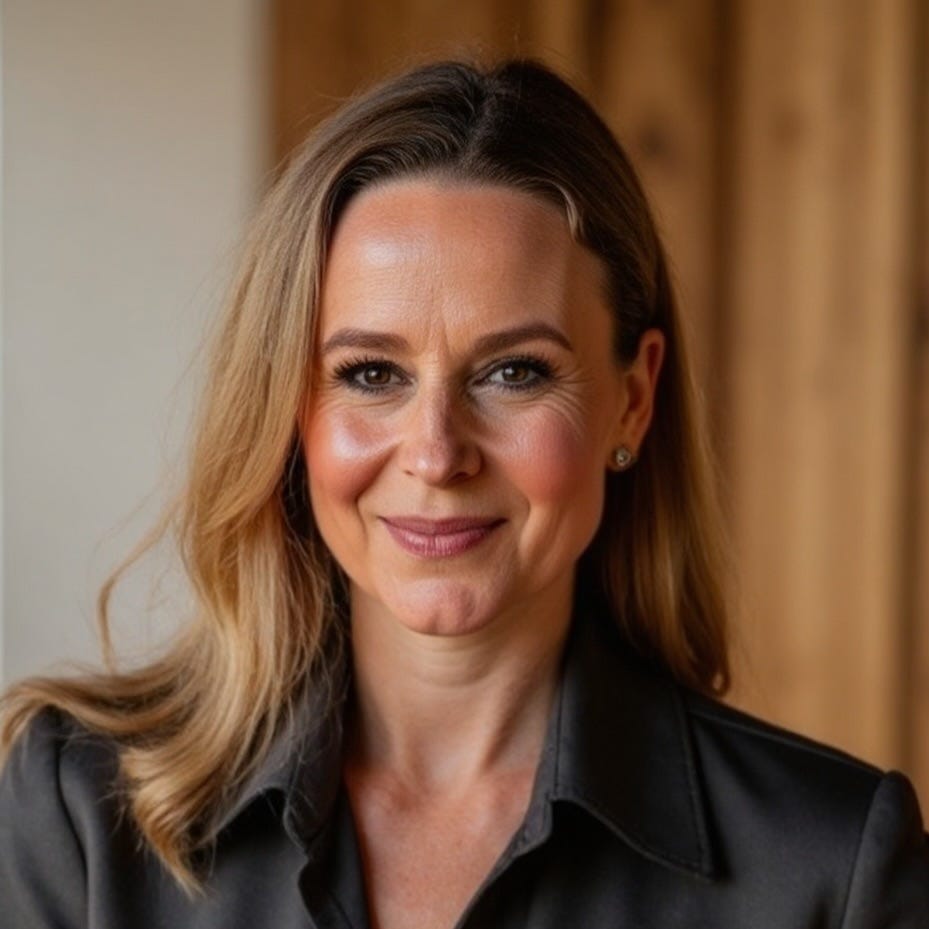
Sarah Bennett‑Nash spent two decades in the rooms where global capital moves, watching the loudest voices win while the most competent people stayed invisible. Today she is the founder of Ikonology and host of the Ikon Lounge podcast, where she helps “dangerously qualified” women swap expensive silence for strategic authority. Her upcoming book More Money, More Life shows women how to dismantle the unseen rules of money and visibility to build a life that feels as sovereign on the inside as it looks successful to the world.
No posts
Comments
Nothing yet. Say the first thing.
Sign in to join the conversation.