
Note: For this series on the history of classical music, my primary reference and guide is David Ewen’s The Complete Book of Classical Music (New Jersey: Prentice Hall, 1965), along with online references. Some months I will focus on several composers, and some—particularly beloved, influential, and/or prolific ones—will have a whole month dedicated to listening.
“The thirty-year period during which the madrigal prospered in England was one of the richest eras in that country’s musical history. The year of 1588 may be regarded as the year of decision for the English madrigal. It was then that William Byrd wrote the first such piece by an Englishman…”
~David Ewen, The Complete Book of Classical Music
Friends, this autodidact learning project resumes just in time for the school year, and we are sending best wishes out to all families doing back-to-school shopping, whether for public school, private, or homeschooling endeavors. And if, like yours truly, you are no longer a student but are perpetually trying to teach yourself, I say, three cheers for lifelong learning!
With our next three composers we leave Italy and come to that “green and pleasant land,” England. I suppose you might say that I have had the Gilbert and Sullivan tune from The Mikado in my head (with its “sing a merry madrigal”), as we have a profusion of madrigals this month…
Note: Friends, let me know if, in future, it would be helpful for me to make a YouTube playlist for the works of our monthly composers, and I’ll be happy to do that! For now, I have individual links to the pieces so that you can pick and choose.
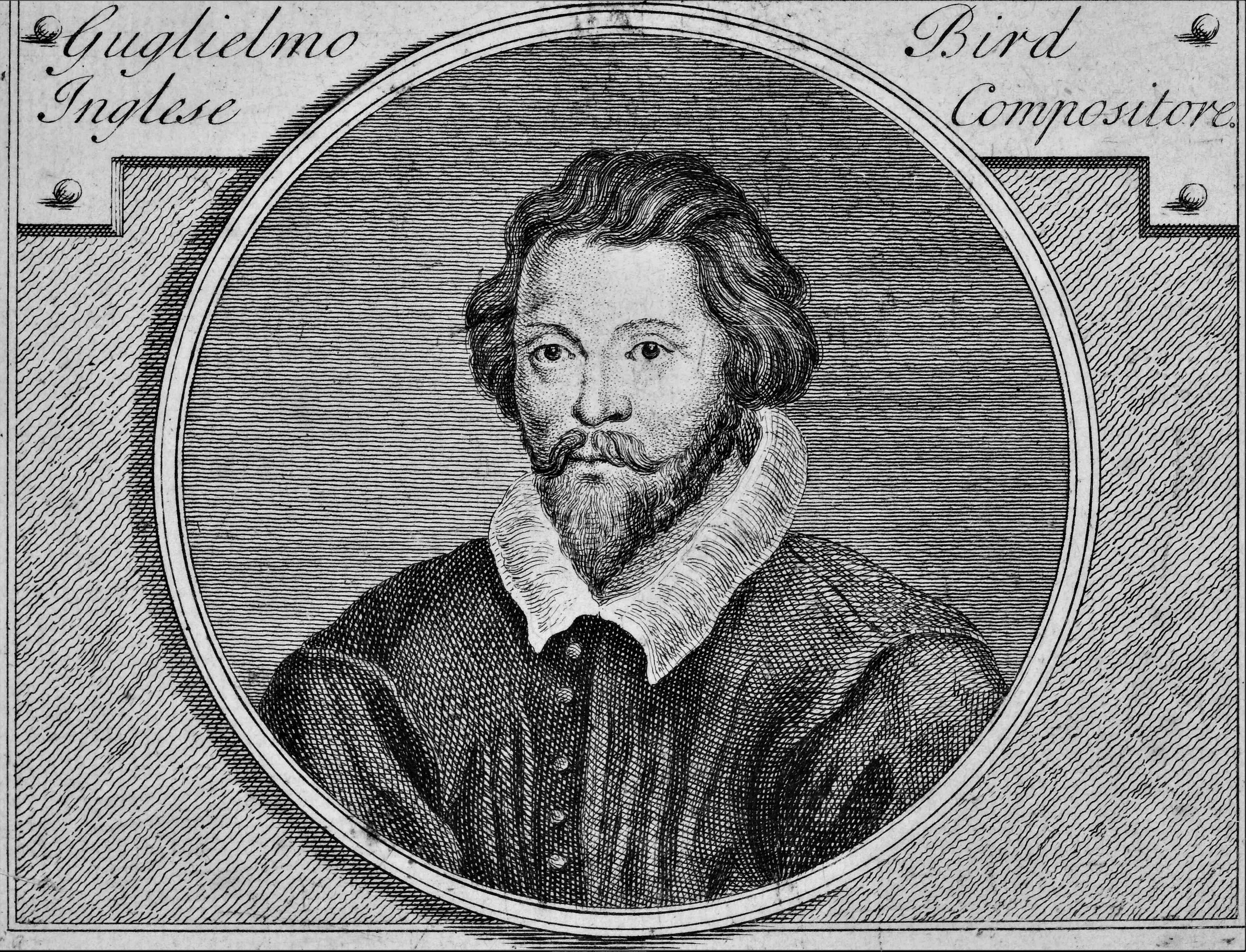
William Byrd was, according to David Ewen, one of England’s greatest composers, and “a pioneer, often creating his own forms, styles, traditions.”1 Likely born in Lincolnshire, he was organist at the Lincoln Cathedral and later at the Chapel Royal in London—a post shared with Thomas Tallis until Tallis’ death. Byrd worked in both sacred and secular forms, and “received musical instruction from Thomas Tallis.”2 Both Tallis and Byrd contributed to the publication Cantiones sacrae in 1575.
He is also known—perhaps moreso—for his madrigals. Ewen recommends the following, and I have linked to versions of them that are well worth listening to:
Check out the last one especially! I also enjoyed “The Sweet and Merry Month of May.”
David Ewen also recommends a number of his works composed for the “virginal”—and I had to look this up. The virginal is “a smaller and simpler version of the harpsichord, with a rectangular or polygonal shape. It has only one string per key, in contrast to the several strings per key for a harpsichord. The strings run more or less parallel to the keyboard, on the long side of the case. Many, if not most, of the instruments were constructed without legs, and would be placed on a table for playing. Later models were built with their own stands.”3
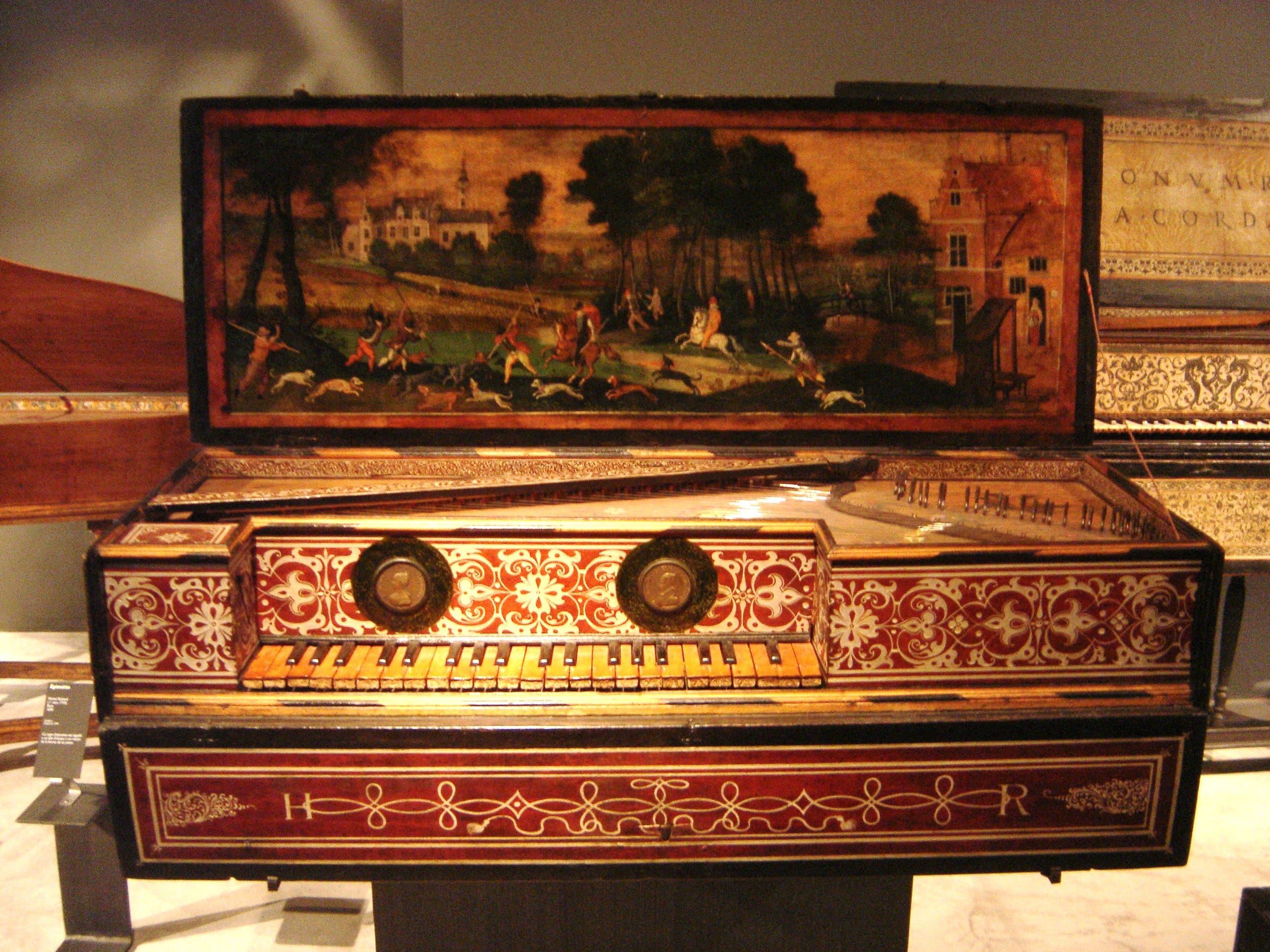
Here are some examples of compositions for the virginal from William Byrd, recommended by Ewen:
I really loved “Come to Me Grief, Forever” and “Who Made Thee, Hob, Foresake the Plough?” among the madrigals. Even more, however, I loved the sound of the virginal, which I was delighted to learn about.
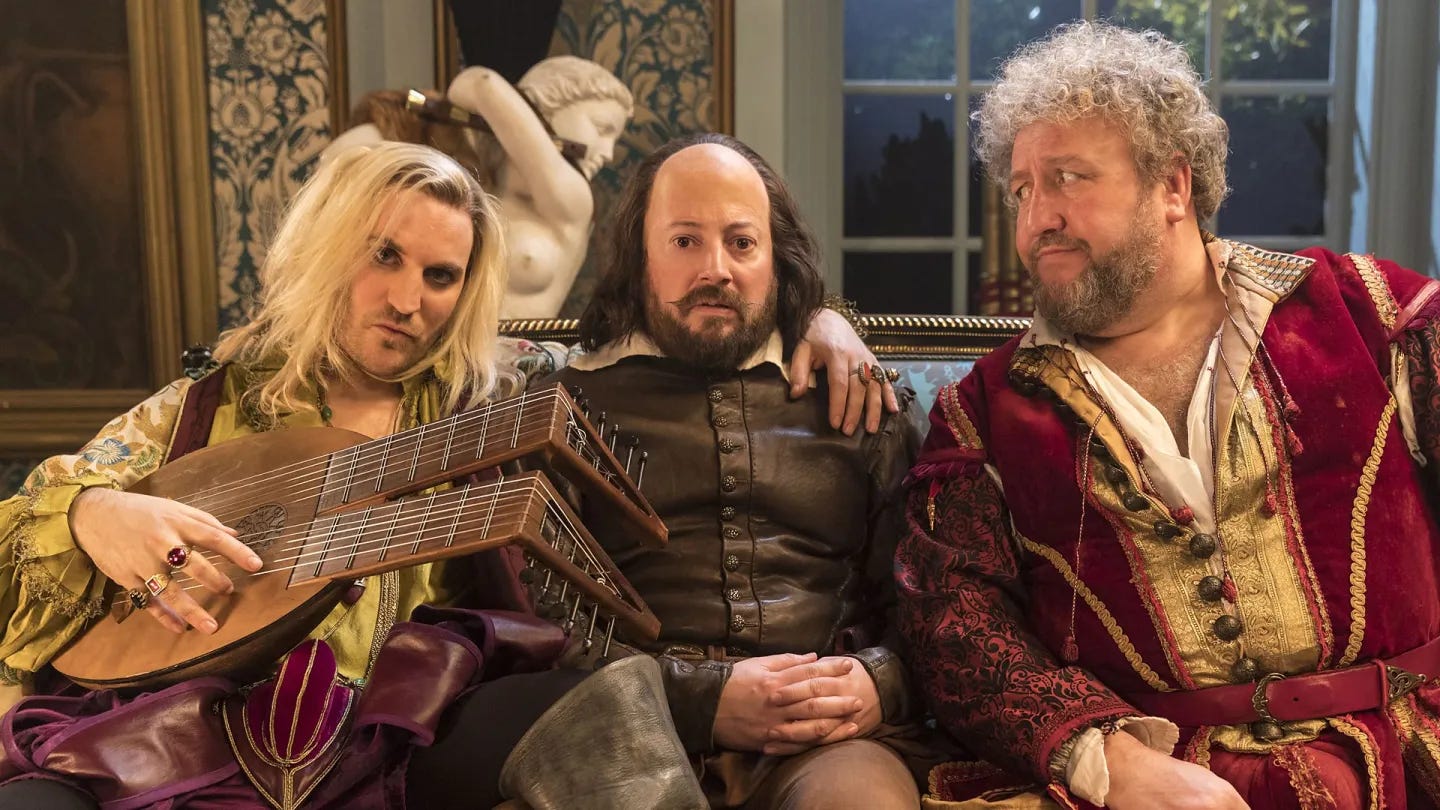
It is funny that we should be studying Thomas Morley this month, as Boze and I have just watched “The Food of Love” episode from Season 2 of the brilliantly wacky Shakespearean sitcom—did I just write “Shakespearean sitcom?”—Upstart Crow, where the Elizabethan teens are all swooning over the rockstar Thomas Morley and his madrigals.
After the popularity of Byrd’s madrigals, Morley swept onto the scene under Byrd’s influence. “In 1593,” writes Ewen, “he published a volume of three-voice canzonets, in which a madrigal style was suggested. One year later, he emerged as one of the foremost English madrigal composers of his age with the issue of his first book of madrigals, for four voices.”
Comments
Nothing yet. Say the first thing.
Sign in to join the conversation.