
“That day was the beginning of my friendship with Sebastian, and thus it came about, that morning in June, that I was lying beside him in the shade of the high elms watching the smoke from his lips drift up into the branches.”
~Evelyn Waugh, Brideshead Revisited
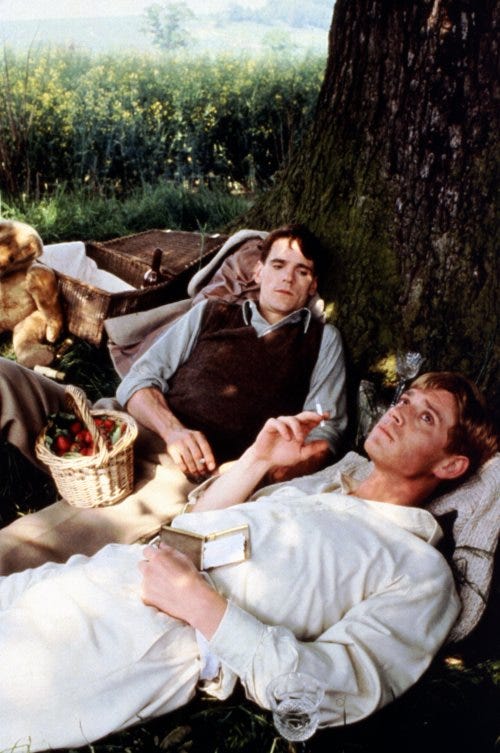
Happy June, friends of Biblioll College! While some of us are more autumnal or wintry souls, there are moments when we feel with Lord Sebastian Flyte that “if it could only be like this always—always summer, always alone, the fruit always ripe and Aloysius in a good temper.”
May was our fourteenth full month of Dispatches from Biblioll College, and we want to express our heartfelt thanks to all of you, our fellow literature nerds and autodidacts…everyone who has been following, liking, commenting, or sharing our posts. Your support and comments are always enlightening, encouraging, and just so fun to read. Thank you for reading along with us.
This month, it might be said that we tackled the issue of the literacy crisis, and the challenges that authors, or aspiring authors, must meet in the face of it. Whether it is writing for children or adults, the prevalence of screen culture, diminishing attention spans, and the use of AI in and out of educational systems, we are facing a choice: Do we allow our individuality and creativity to be handed over to artificial intelligence and dissolution, or do we reclaim our ability to learn, write, compose, and create with all the humanity we’ve been given?
As part of fighting the good fight, we have been reveling in words and in real-life adventures, pondering on books we have yet to read, and began a twelve-week journey in reclaiming that creativity which has too often been relegated to last place in the midst of the daily grind.
We were thrilled to have our brilliant friend, Deborah Furchtgott, write a gorgeous piece on Stephen King’s Hansel and Gretel, written to illustrations by Maurice Sendak. She thoughtfully analyses whether it succeeds in its efforts, comparing it to the opera that inspired it. And check out more work from Deborah over at The Children’s Bookroom!
Cultural Literacy Quiz 02: How Culturally Literate Are You? (Boze)
Forty-Five Classic Books I Haven’t Yet Read, But Must (Boze)
Hansel & Gretel and the Unexpected Difficulties of Writing for Children (Guest Post: Deborah Furchtgott)
The Anguish of the Aspiring Author in an Illiterate World (Boze)
Friendly reminder that, in August, we will resume our Great Books Challenge (with a wrap-up of Herodotus’s Histories before beginning Aristophanes’s The Clouds); Dispatches from Dickens with a thirteenth post in the series, focusing on Dickens in 1841 and concluding Volume II of The Letters of Charles Dickens; and the Classical Music History with six English and Irish composers: William Byrd, Thomas Morley, John Wilbye, Orlando Gibbons, John Bull, and John Dowland.
Of course, the Shadow Canon, Arts & Culture, and Dreaming Spires posts will continue this month and beyond, as we share what we are reading and learning.
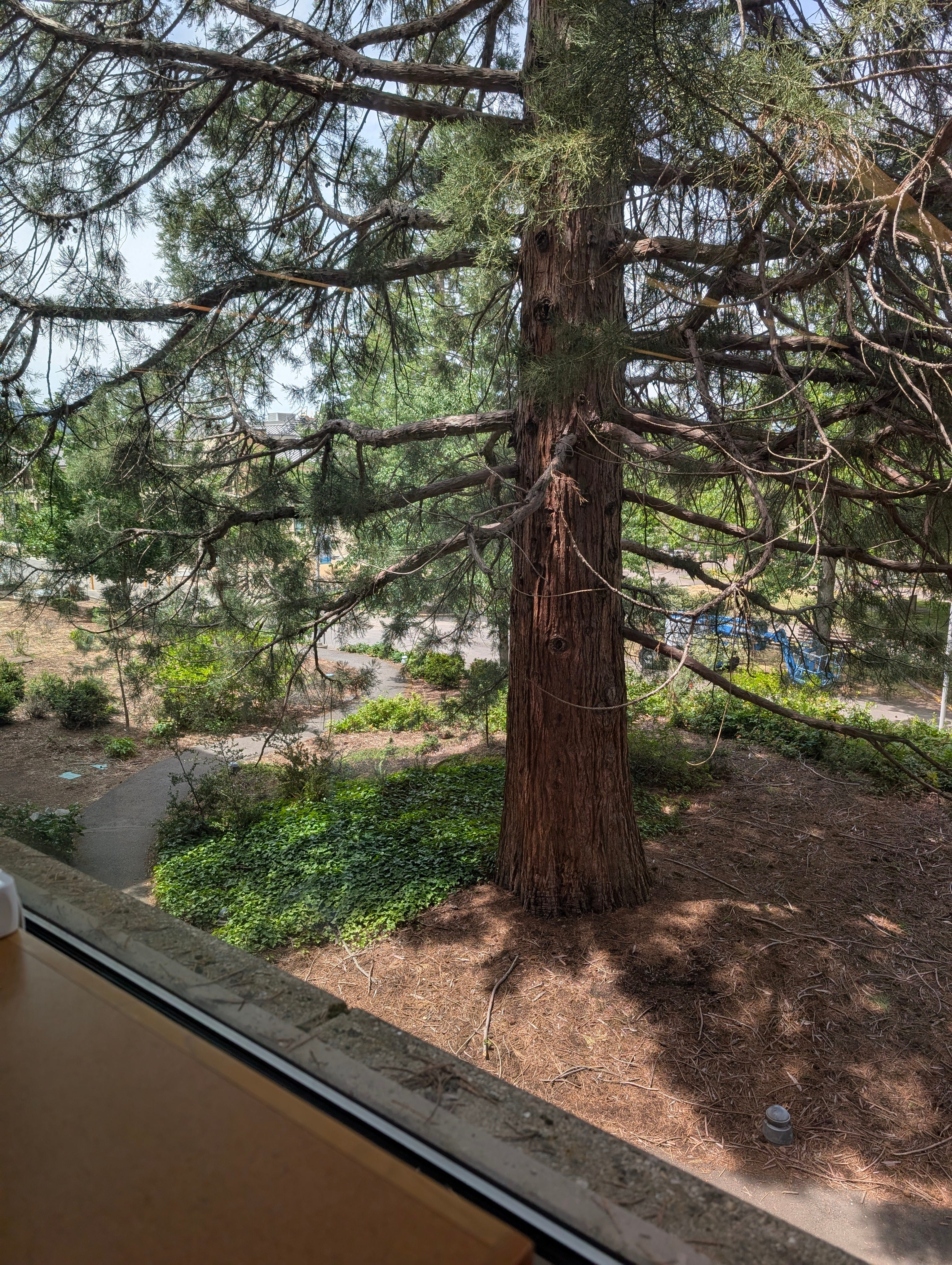
Dana has been spending a lot of time at our local university’s (lovely, quiet) library pulling together resources and ideas for what she’s calling her “2026 Oxford Project”, a series of posts for Biblioll about three of her most beloved Oxford-educated thinkers and writers and the threads that link their otherwise disparate works. She will be focusing on that WIP during her and Daniel’s month in Oxford this fall, and will soon be posting an ever-evolving Summer Syllabus to prepare for the trip and the project.
Have you been intrigued by something the majority of your life?
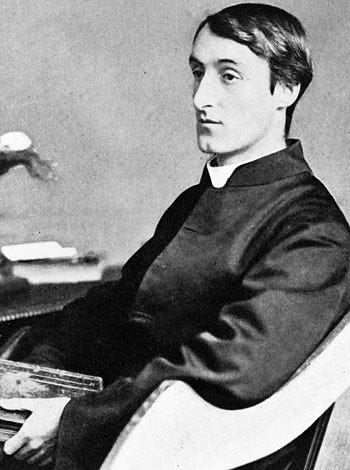
My “intrigue” seized me as an undergraduate student, when I first read the poetry of Victorian poet-priest, Gerard Manley Hopkins.
I was in a coffee shop, where I opened a book of Hopkins poems (first published by Robert Bridges in 1918, thirty years after the poet’s early death). I read “God’s Grandeur.”
It was a moment of what cognitive psychology research calls “flow”—when time and space recede, and an experience is almost otherworldly. The strangeness of Hopkins’ phrases, the unusual meter of the poem, the successive images of the worn-downness of earthly realities in the first portion of the sonnet (“Generations have trod, have trod, have trod”) and the arresting “Oh, morning, at the brown brink eastward, springs”: “God’s Grandeur,” it seems, conspired to awaken my perception to the truest, deep-down nature of things.
Now, fifty-odd years later, I’m engaging with my beloved poet-sage on another level: exploring his “double discovery” in the years 1866-68, during the process of converting from Anglicanism to Roman Catholic Christianity under the tutelage of (St.) John Henry Newman. Hopkins encountered the “thisness” philosophy of Blessed John Duns Scotus. Scotus’ “haecceitas” notion posits the unique essence of thing, with its divinely imbued life-force, which we can perceive if we have the eyes to see, the ears to hear, the heart to sense. Hopkins’ discovery was two-fold: Scotus’ philosophical originality that captured this reality (haecceitas), and the philosophical grounding of his innovative poetics.
Dana, my wife, and I are returning to Oxford for a third month-long sojourn this October. This round, we are seeking to acquire a “Reader Card” that will give us access to the vast holdings of the stellar Bodleian Library system—including the lectures and letters of Scotus (from 1290 to 1301), and the correspondence between Robert Bridges and Gerard Manley Hopkins.
The propitious nexus between Hopkins’ poetic intuition and Scotus’ philosophical naming of the haecceitas—the essential individuality of things—by Scotus will be my inquiry and quest. What exactly did Hopkins read in Scotus? Is there a record of Hopkins’ moment of recognition in reading him? If so, what does the record convey? Did Hopkins write about this milestone ah-ha moment to his friend Bridges?
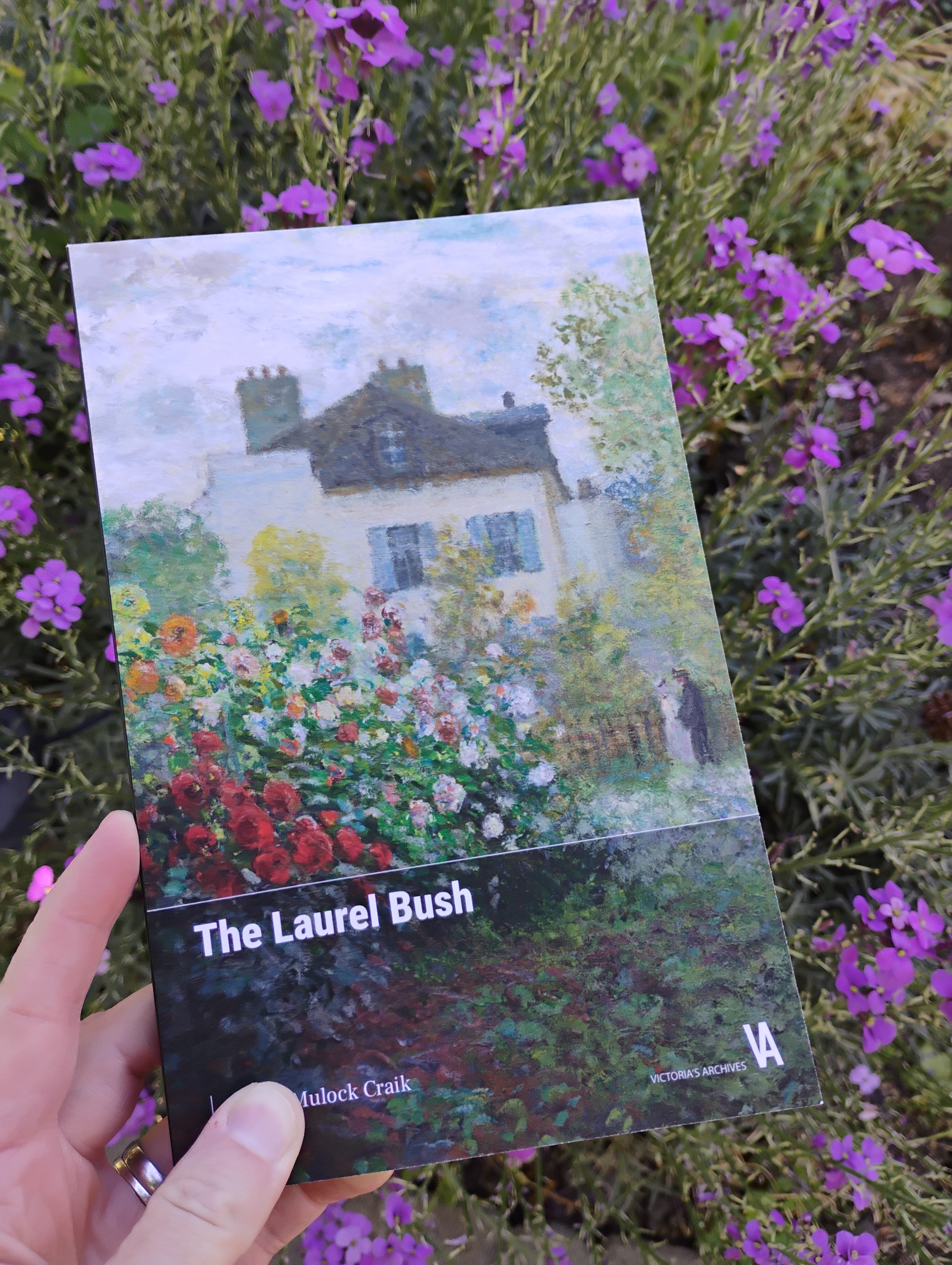
May was the busiest month Rach has had in a while, as she burned the candle at both ends for several deadlines: making pet products for her work partner’s upcoming summer market in San Francisco; and—very exciting—resuming liturgical vestment work with an assignment to finish eight priest stoles for an Episcopalian friend. All this, and the day job! For a while, her only adherence to her Artist’s Way work was fidelity to the “morning pages,” and all else more or less went out the window. Boze and Rach celebrated the sendoff of the final package on June 1st by a jaunt to a delightful local coffeeshop in order to write. Thankfully, in the midst of May’s chaos, Rach did have a chance to listen to quite a few audiobooks in the sewing room, from Trollope’s The Duke’s Children, to Hardy’s deeply depressing Jude the Obscure, to Tana French’s latest, The Keeper. She loved receiving her first Victoria’s Archives book—and read it instantly: The Laurel Bush, by Dinah Murlock Craik.
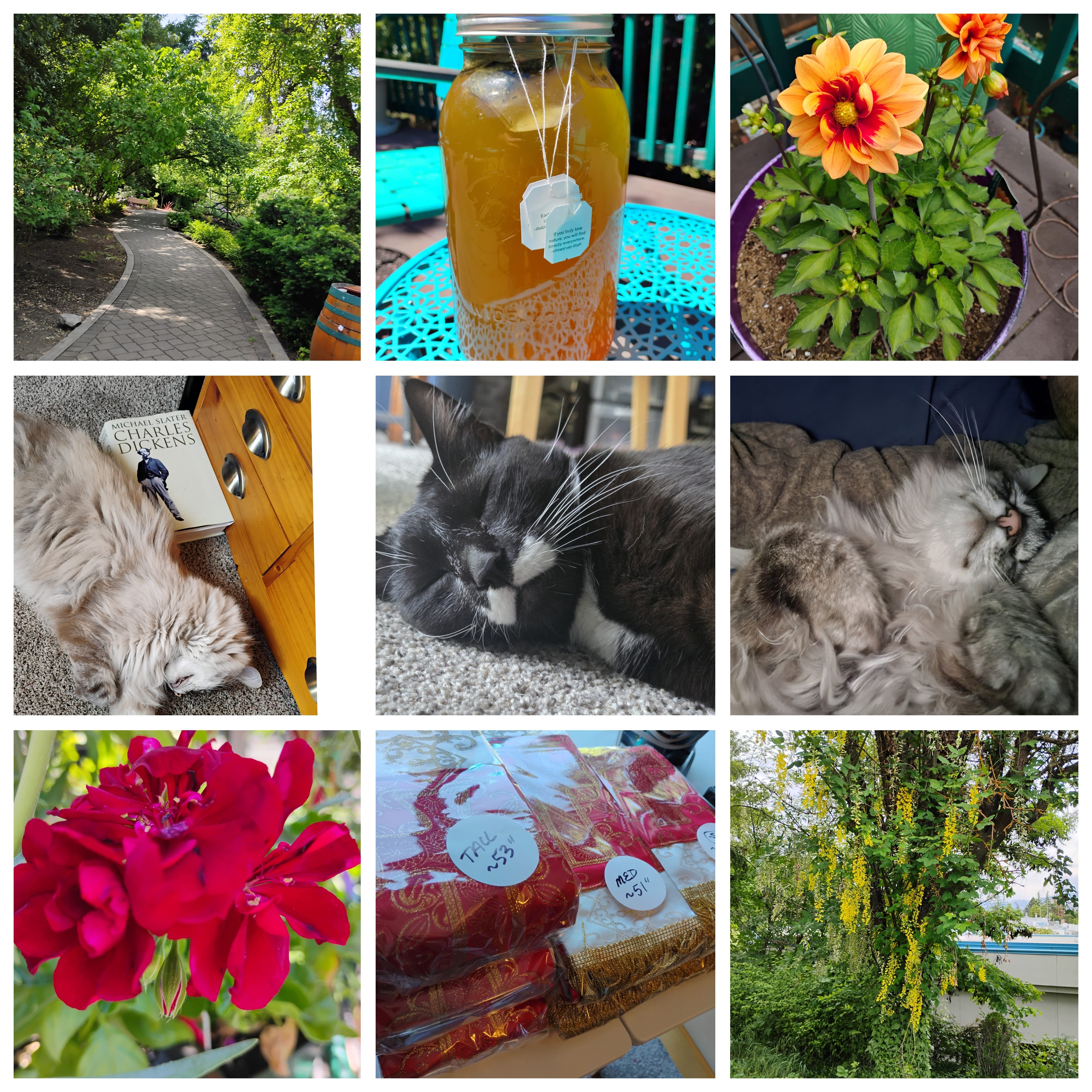
This was quite a busy month for Boze as well. He recently received a promotion from Kirkus, which has meant more assignments (nine reviews in May for them, and two for U. S. Review). He’s been reading between 100 and 200 pages a day in an effort to keep up (only to then be told by folk on Twitter, “You don’t seem to read any books!”). He’s had correspondingly less time for the study and research that animates the various books he’s writing. But he reached 50,000 words in his mystery novel, bringing him nearly to the halfway point. He’s been compiling lists of imagery, motifs and mythical creatures for his long-gestating fantasy project. He’s keen to write a work of popular fiction that will increase cultural literacy. He has been studying herbs and the lore of the moon. He would like to visit the Welsh Dark Ages, which legend paints (perhaps not entirely accurately) as a time of saints and song and poetry and bards and “wine and fine meats.” He has been reading the Divine Comedy, Kristin Lavransdatter and the Poems of Taliesin. He and the family have been enjoying weekly installments of The Other Bennet Sister on Britbox. They’ve eaten omelettes, salmon Caesar salad, slow-cooked cabbage, fresh mozzarella and a number of other wonderful things. No matter how ordinary your life is, you can find magic and mystery in it.
Thank you again for journeying with us, friends. We are so grateful for all of our subscribers and would love to hear your thoughts about what you are reading, watching, and learning, and what kind of content you would love to see here. Keep reading, learning, and creating. Happy June, keep Aloysius in a good temper, and stay cool in the shade...with a book, of course.

Comments
Nothing yet. Say the first thing.
Sign in to join the conversation.