
In 20+ years of studying and teaching the Bible, these are 7 of the most profound moments I have come across. And they all involve a kind of reversal—moments when people intended one thing, often even something evil, only to discover that God was accomplishing something far greater through the very events they thought were working against Him.
There are moments in Scripture that become ASTONISHING when you DIG DEEPER and uncover what’s hidden beneath the surface.
A betrayal becomes deliverance. A death sentence becomes prophecy. An instrument of execution becomes salvation.
Joseph explains the pattern perfectly:
“You meant evil against me; but God meant it for good.” —Genesis 50:20
The same event. Two intentions—man’s and God’s.
They meant one thing. God meant another.
And once you uncover this pattern, it will completely transform the way you see Scripture—and reveal just how deeply God has been weaving His purposes through the story all along

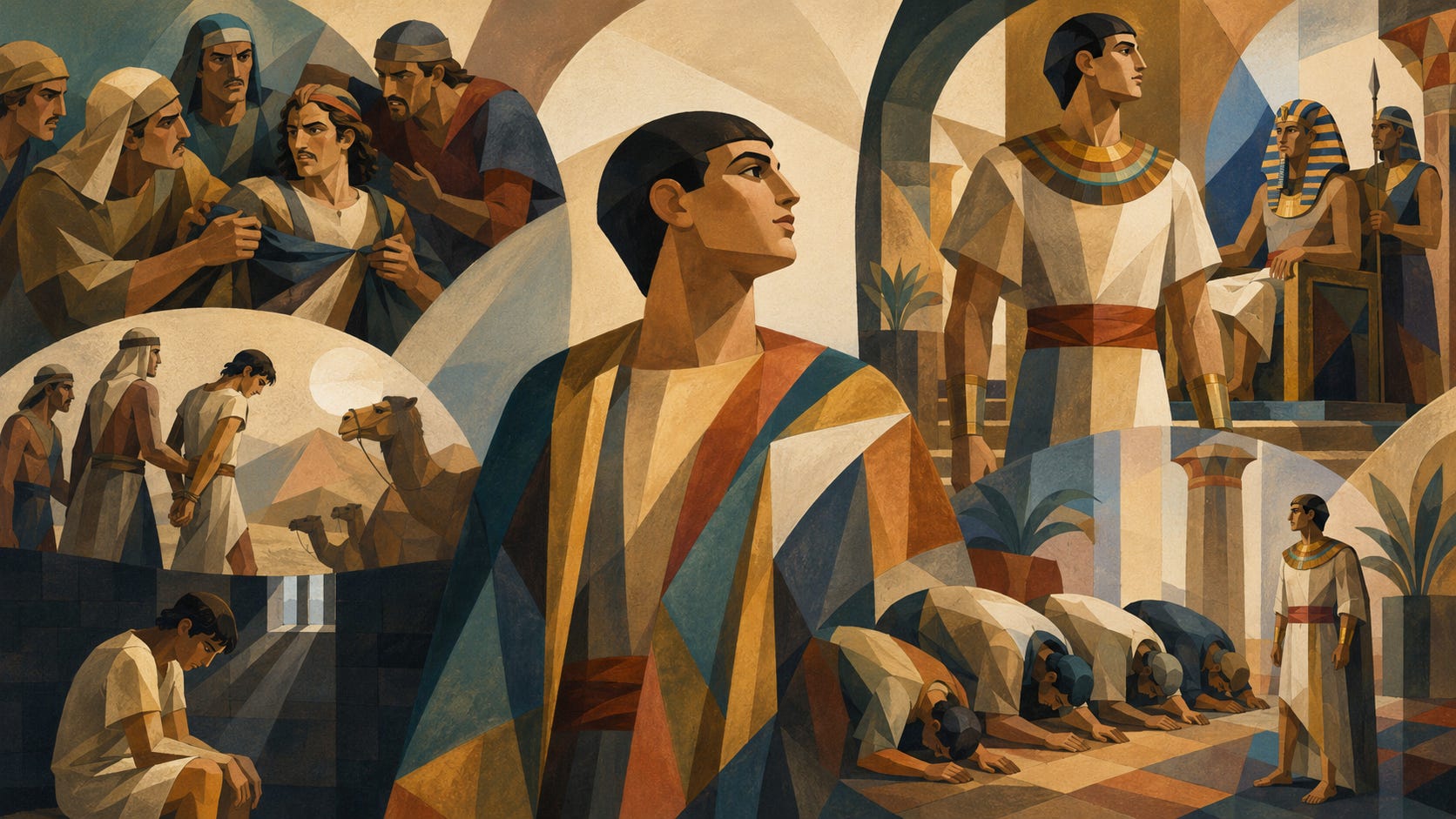
Joseph’s brothers hated his dreams.
Joseph had seen his brothers bowing before him, and they wanted to make absolutely certain that would never happen.
When they saw him approaching, they said:
“Look, this dreamer is coming! Come therefore, let us now kill him… We shall see what will become of his dreams!” —Genesis 37:19–20
That last sentence is almost chilling when you know how the story ends: “We shall see what will become of his dreams.”
They don’t kill Joseph, but they sell him, and that act sets the entire chain in motion. Joseph is taken to Egypt. Through betrayal, slavery, false accusation, imprisonment, and finally exaltation, he eventually becomes second only to Pharaoh.
Then famine comes, and one day his brothers travel to Egypt looking for food.
“Now Joseph was governor over the land… And Joseph’s brothers came and bowed down before him with their faces to the earth.” —Genesis 42:6
Think about that.
The brothers who wanted to prevent Joseph’s dream from coming true helped send him to the very place where it would be fulfilled.
Their attempt to make sure they would never bow before Joseph helped put Joseph in the position before which they eventually bowed.
That’s more than a clever plot twist.
That’s providence.
Then there’s Haman.
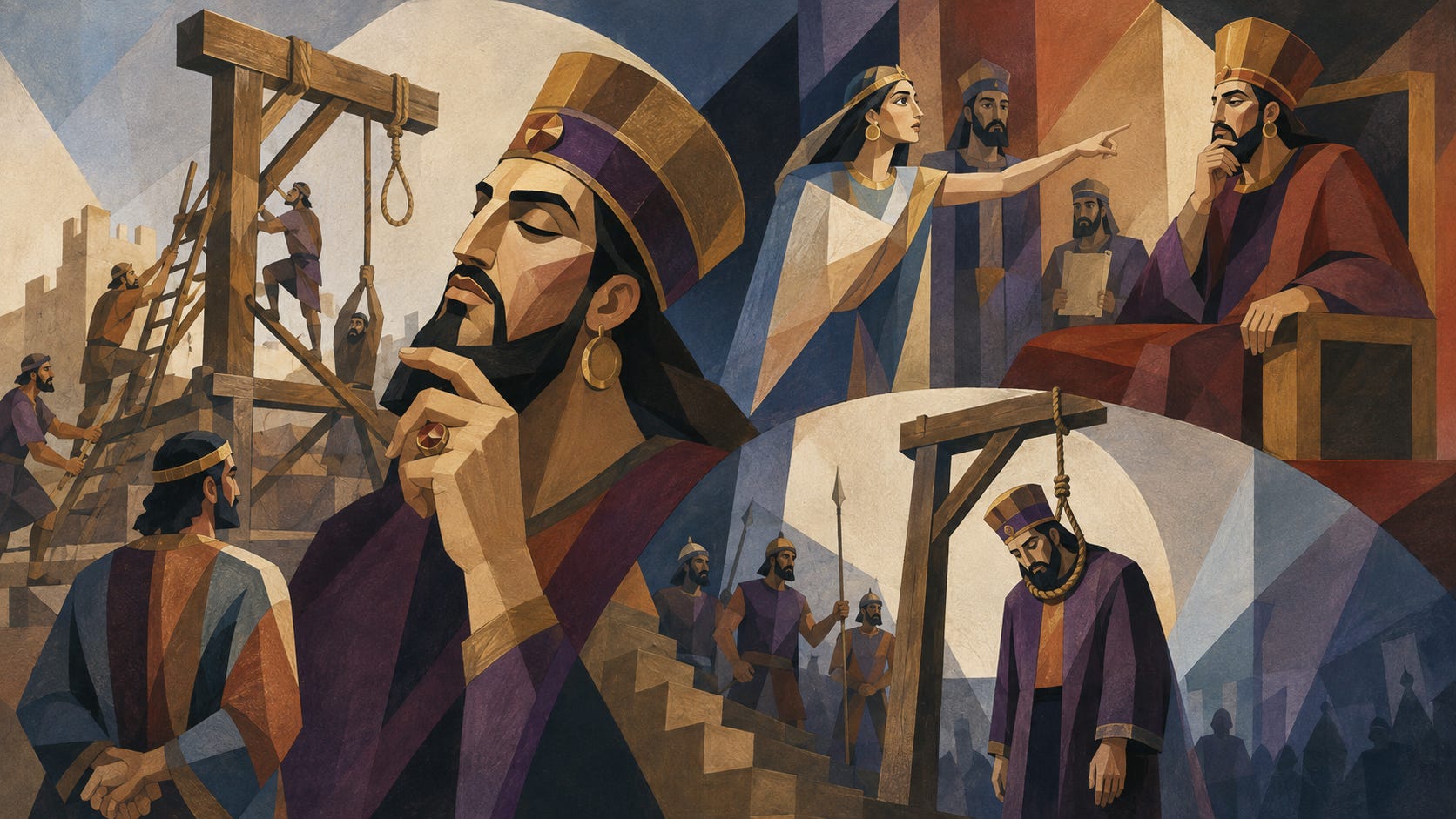
He despises Mordecai so deeply that he has an enormous gallows constructed specifically for him.
“Let a gallows be made, fifty cubits high, and in the morning suggest to the king that Mordecai be hanged on it.” —Esther 5:14
Haman knows exactly what he intends to accomplish. The structure is built, the victim has been chosen, and in Haman’s mind the ending is already written.
Except God isn’t finished with the story.
Esther exposes Haman’s plot before the king, and suddenly everything reverses. The man Haman intended to destroy is spared, while Haman himself faces judgment.
“So they hanged Haman on the gallows that he had prepared for Mordecai.” —Esther 7:10
There’s something almost terrifying about the precision of the reversal.
Haman wasn’t merely defeated.
The very instrument he prepared for someone else’s destruction became the instrument of his own.
He knew exactly what he was building.
He just didn’t know who he was building it for.
This one absolutely amazes me.
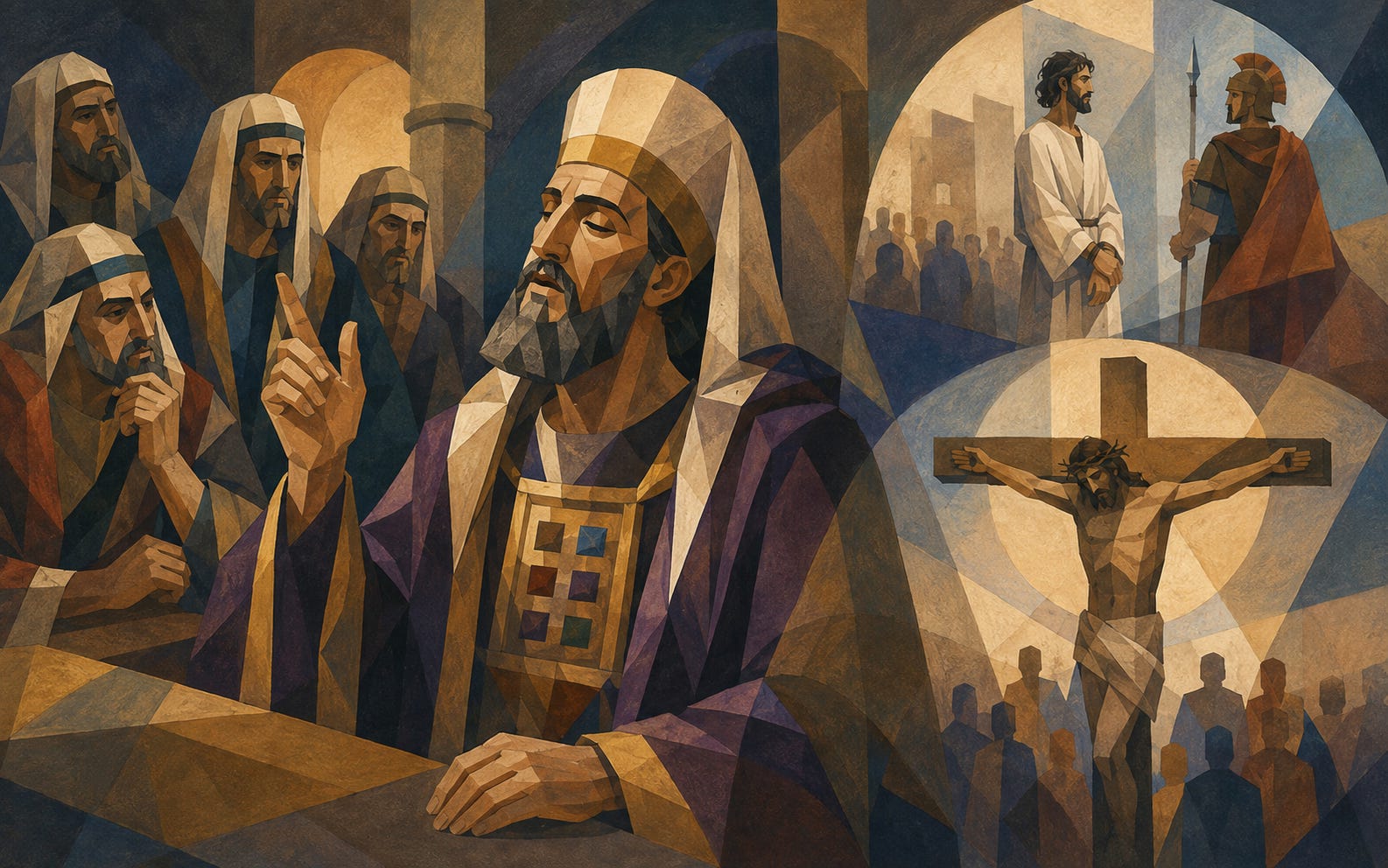
The religious leaders are worried about Jesus. His influence is growing, and they fear what Rome might do if the movement continues.
Then Caiaphas, the high priest, proposes a solution:
“It is expedient for us that one man should die for the people, and not that the whole nation should perish.” —John 11:50
Caiaphas means something political. In his mind, Jesus should die so the nation can survive.
But then John does something remarkable. He stops the story and tells us that Caiaphas has just said far more than Caiaphas himself understands:
“Now this he did not say on his own authority; but being high priest that year he prophesied that Jesus would die for the nation, and not for that nation only, but also that He would gather together in one the children of God who were scattered abroad.” —John 11:51–52
Caiaphas thinks he’s recommending an execution. John tells us that, without realizing it, the high priest has spoken prophetically about the saving death of Christ.
“One man should die for the people.”
Caiaphas meant one thing.
God meant another.
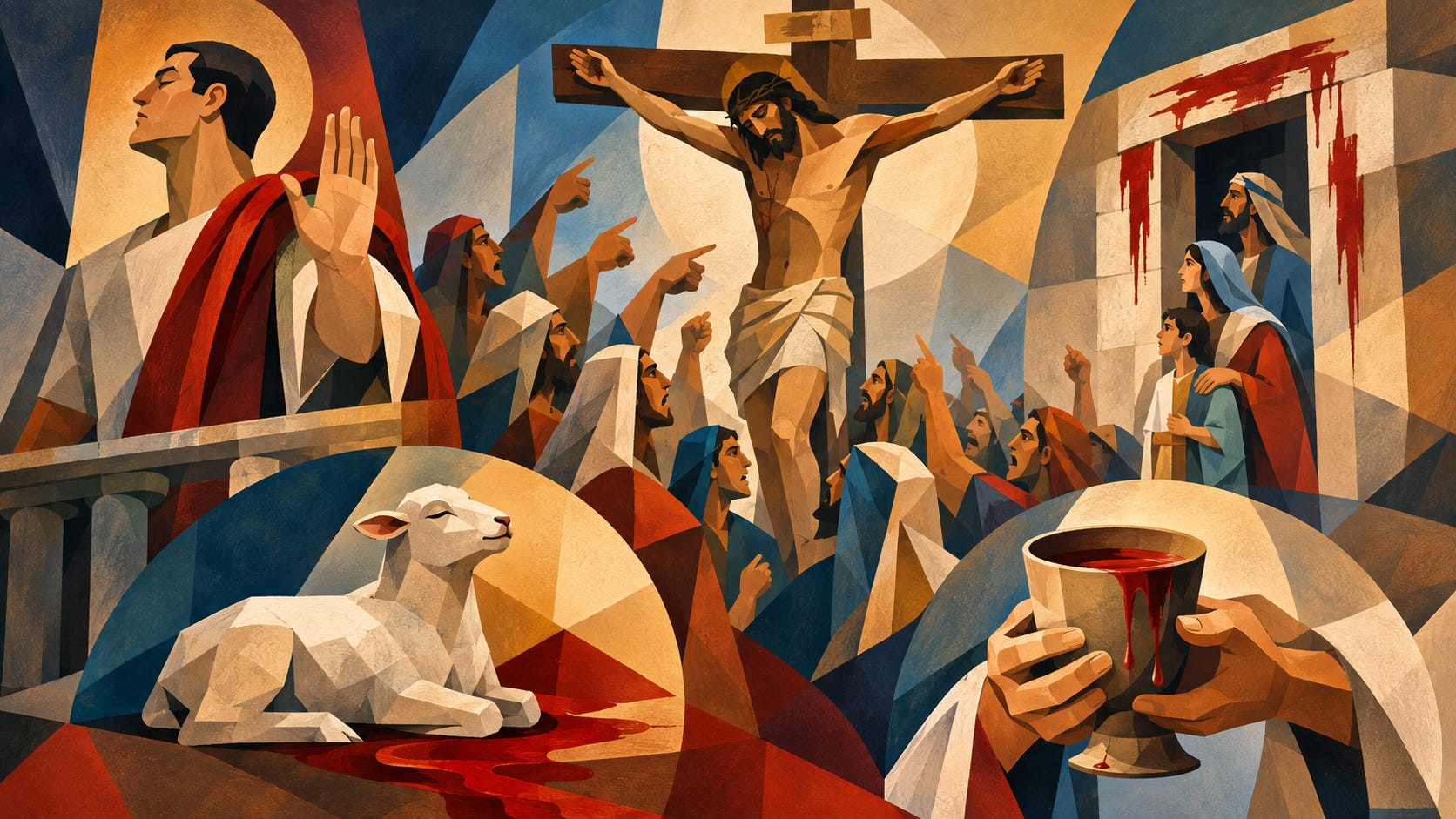
Then comes one of the darkest statements surrounding the crucifixion.
As Pilate attempts to distance himself from Jesus’ death, the crowd cries:
“His blood be on us and on our children.” —Matthew 27:25
In context, they are accepting responsibility for Jesus’ death. But from this side of the gospel, those words carry a haunting irony, because the very thing humanity desperately needs is the blood of Christ—not as condemnation, but as cleansing.
And for a Jewish audience, blood bringing deliverance from judgment was already written into their story.
At the first Passover, God instructed Israel to sacrifice a lamb and place its blood on the doorposts of their homes:
“When I see the blood, I will pass over you; and the plague shall not be on you to destroy you.” —Exodus 12:13
Inside those homes were their families—their sons and daughters—protected under the blood of the lamb.
Now, at Passover, another Lamb is about to be slain.
Jesus had already said:
“This is My blood of the new covenant, which is shed for many for the remission of sins.” —Matthew 26:28
And Paul would later explicitly connect Jesus to Passover:
“For indeed Christ, our Passover, was sacrificed for us.” —1 Corinthians 5:7
Then Peter writes:
“…you were not redeemed with corruptible things, like silver or gold… but with the precious blood of Christ, as of a lamb without blemish and without spot.” —1 Peter 1:18–19
Now hear the crowd’s words again:
“His blood be on us and on our children.”
Matthew isn’t telling us they were secretly asking for salvation. They weren’t. Their words were spoken in rejection.
But that is exactly what makes the irony so powerful.
At Passover, the blood of a lamb marked a household for deliverance. Now, as Christ our Passover Lamb is about to shed His blood, the crowd unknowingly cries out for His blood to be upon them and their children.
They meant responsibility for His death.
The gospel offers His blood for their redemption.
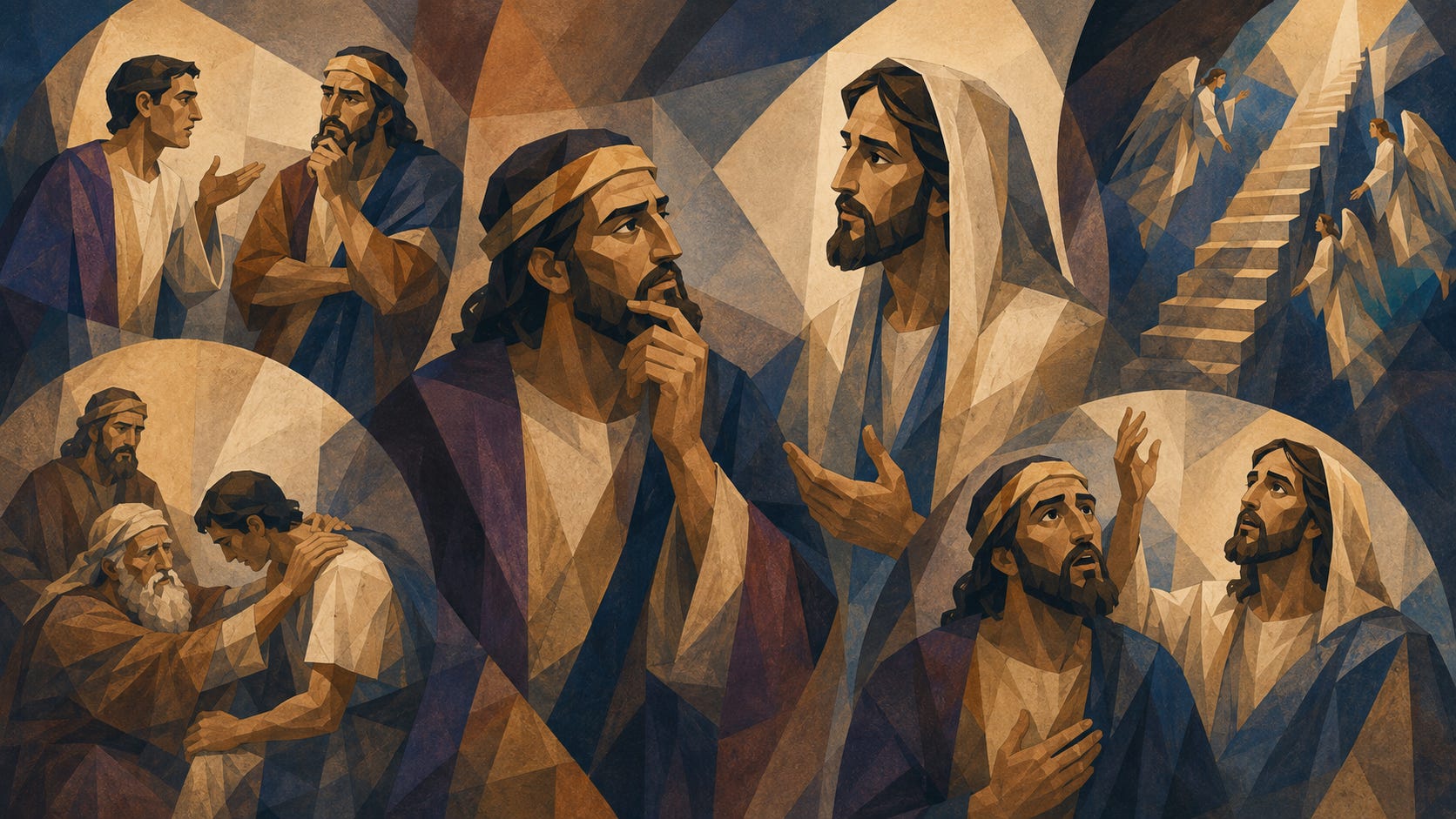
Then there’s Nathanael.
Philip excitedly tells him:
“We have found Him of whom Moses in the law, and also the prophets, wrote—Jesus of Nazareth…” —John 1:45
Nathanael responds:
“Can anything good come out of Nazareth?” —John 1:46
And then he meets Jesus.
There is wonderful irony in that sequence. Nathanael dismisses Nazareth, only to encounter the One Philip believes Moses and the prophets were pointing toward.
But Jesus’ response contains another fascinating detail:
“Behold, an Israelite indeed, in whom is no deceit!” —John 1:47
That language is especially interesting because Israel was the name God gave to Jacob, whose earlier story was deeply entangled with deception.
Jacob deceived his father Isaac to receive the blessing. He was later deceived by Laban. Deception seems to follow Jacob’s story until the man called Jacob is given a new name:
Israel.
So when Jesus looks at Nathanael and calls him “an Israelite indeed, in whom is no deceit,” the wording is fascinating.
Look at the progression:
JACOB (deceit) → ISRAEL (a new identity)
NAZARETH → JESUS → KING OF ISRAEL (the Son of God)
Nathanael begins with a dismissive statement about Nazareth, but Jesus answers him with a statement about Israel. Then, only moments later, Nathanael himself brings the whole exchange together:
“Rabbi, You are the Son of God! You are the King of Israel!” —John 1:49
But here’s where it gets even deeper.
Jesus isn’t finished talking about Jacob.
Just two verses after calling Nathanael an “Israelite indeed,” Jesus says:
“Most assuredly, I say to you, hereafter you shall see heaven open, and the angels of God ascending and descending upon the Son of Man.” —John 1:51
That language should sound familiar.
In Genesis 28, Jacob has a dream in which he sees a stairway between heaven and earth:
“And behold, a ladder was set up on the earth, and its top reached to heaven; and there the angels of God were ascending and descending on it.” —Genesis 28:12
Now the connection becomes much harder to miss.
Jesus calls Nathanael a true Israelite. Then He immediately reaches back to Jacob, the man who became Israel, and invokes the imagery of Jacob’s dream.
But there is one enormous difference.
In Jacob’s dream, the angels ascend and descend upon the stairway.
In Jesus’ words, the angels ascend and descend upon the Son of Man.
The connection between heaven and earth is no longer presented as a place Jacob stumbled upon.
It is a Person.
And that Person is the very man from Nazareth Nathanael had just questioned.
Nathanael asked:
“Can anything good come out of Nazareth?”
Within moments, he is standing before the King of Israel, and Jesus is revealing Himself with imagery drawn directly from the story of the man who first received the name Israel.
Nathanael meant one thing when he dismissed Nazareth.
He had no idea who was standing in front of him.
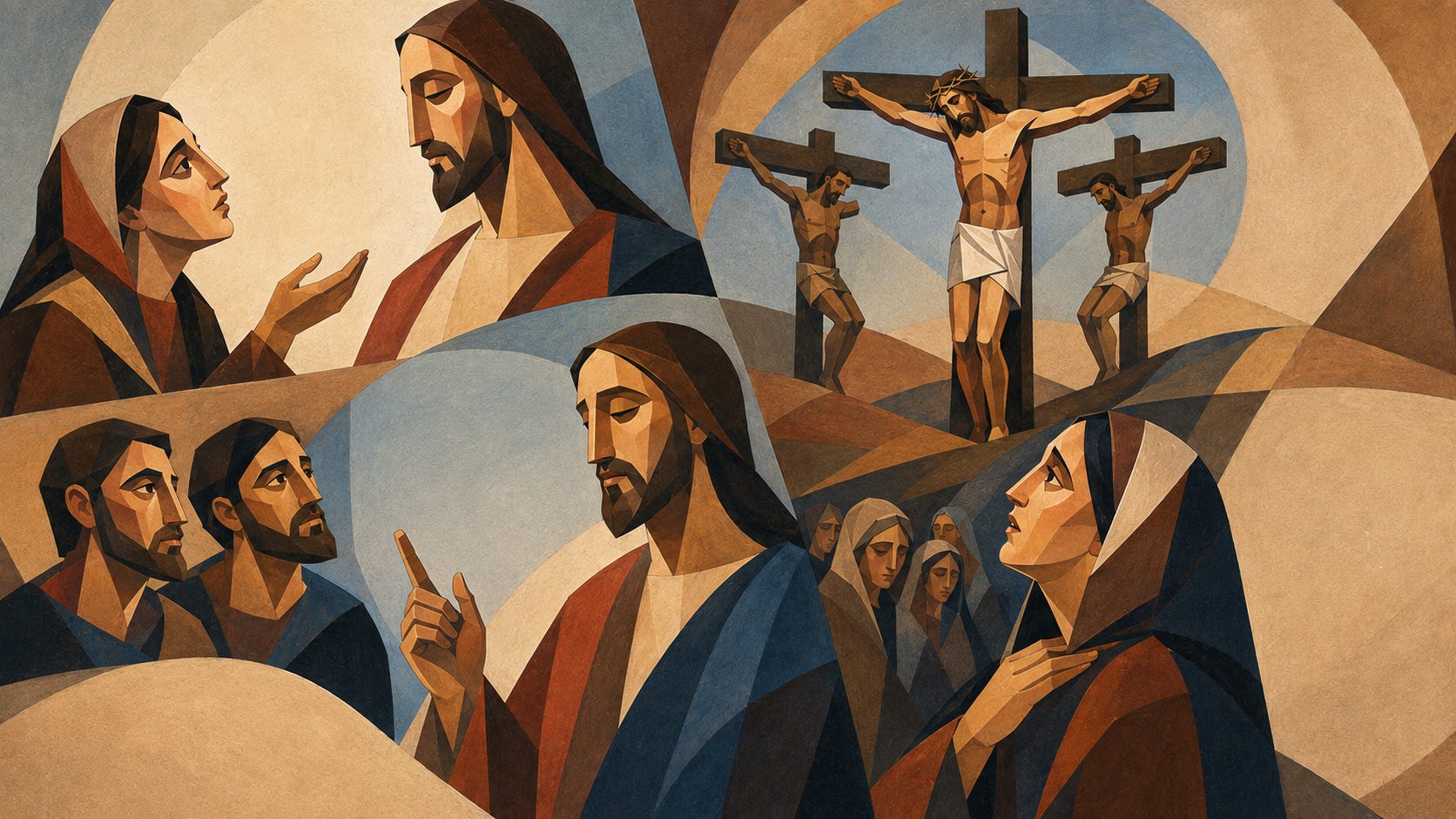
Then the mother of James and John approaches Jesus with an ambitious request:
“Grant that these two sons of mine may sit, one on Your right hand and the other on the left, in Your kingdom.” —Matthew 20:21
It sounds glorious: right beside the King, one on His right and one on His left.
But Jesus responds:
“You do not know what you ask.” —Matthew 20:22
Those words become haunting when we see where Jesus’ road leads.
Eight chapters later, Matthew writes:
“Then two robbers were crucified with Him, one on the right and another on the left.” —Matthew 27:38
Suddenly Jesus’ words carry even more weight:
“You do not know what you ask.” —Matthew 20:22
They wanted the places beside the King before they understood what kind of throne He was walking toward.
And then Matthew gives us one more detail.
Among those standing at the crucifixion, watching from a distance, was the very woman who had made the request:
“And many women who followed Jesus from Galilee, ministering to Him, were there looking on from afar, among whom were Mary Magdalene, Mary the mother of James and Joses, and the mother of Zebedee’s sons.” —Matthew 27:55–56
She was there.
The mother who had asked for her sons to be placed on Jesus’ right and left was now looking at Jesus on the cross—with one man on His right and another on His left.
She had asked for her sons to stand beside Jesus in His kingdom.
At the cross, she saw what “beside Jesus” could cost.
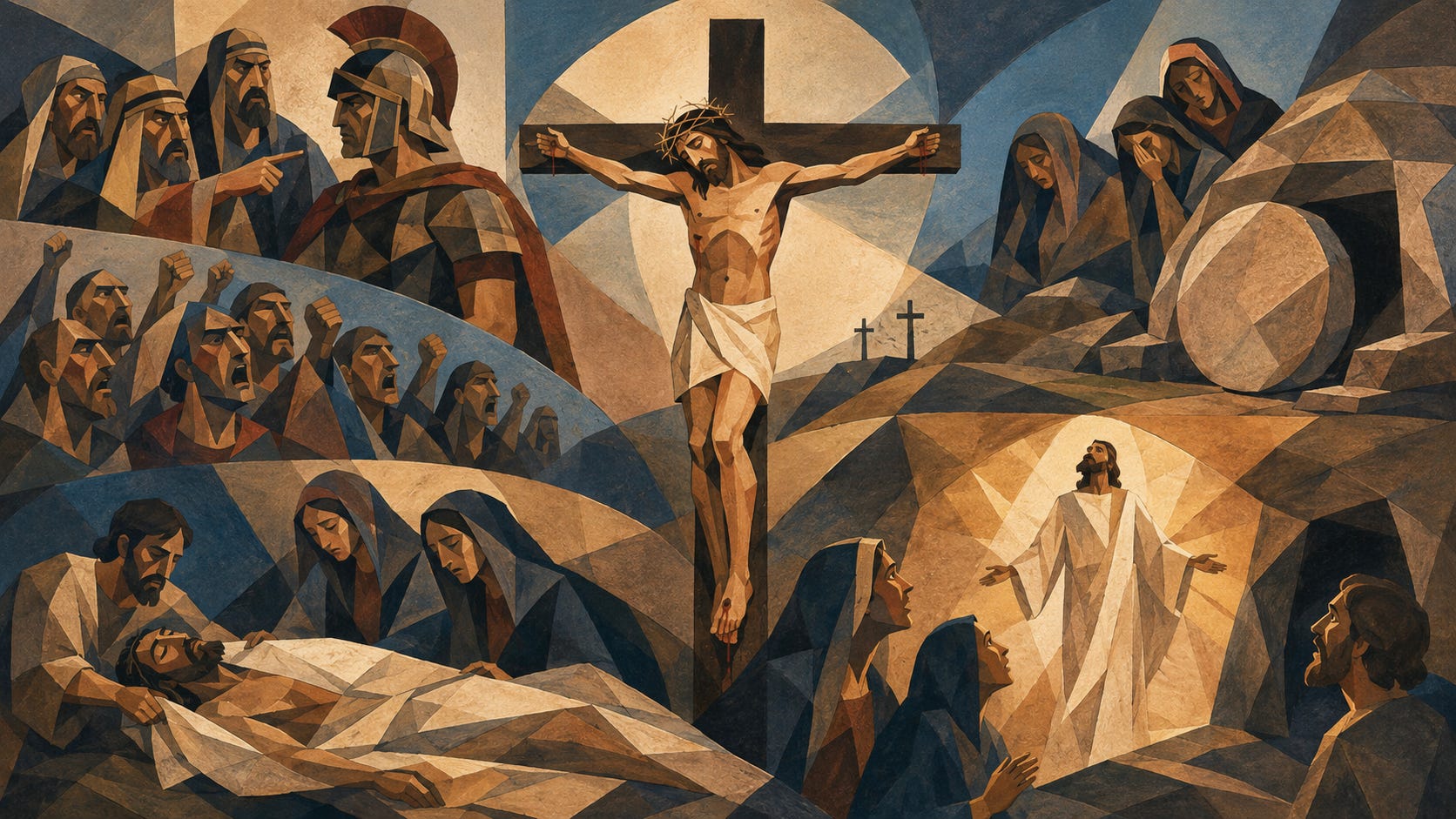
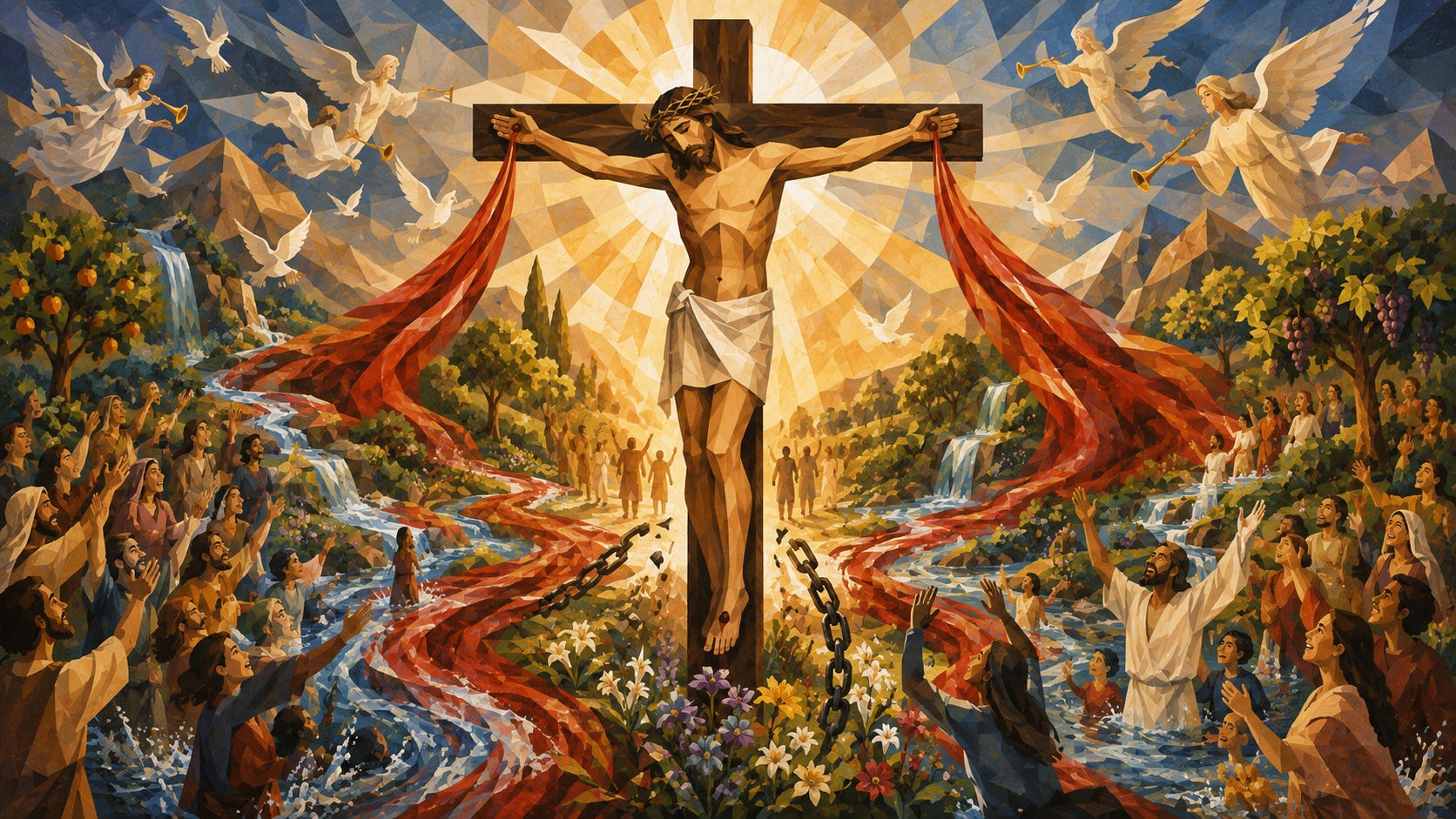
Eventually, all these smaller reversals lead us to the greatest one.
The cross.
Jesus’ enemies believe they are finally getting rid of Him. The religious authorities condemn Him, Rome crucifies Him, the crowds mock Him, and His body is placed in a tomb.
From the human perspective, it looks like the movement has been crushed.
But the very thing meant to destroy Jesus becomes the means through which God brings salvation. The instrument of execution becomes the symbol of redemption. The death intended to silence Him becomes the death proclaimed throughout the world.
And here is the deepest irony of all:
God uses death’s own sting to defeat death itself.
Paul writes:
“O Death, where is your sting? O Hades, where is your victory?” —1 Corinthians 15:55
Death did what death does: it struck, it killed, and for a moment it appeared to win. But in taking Christ into the grave, death took hold of the One it could not keep.
Peter later says:
“Whom God raised up, having loosed the pains of death, because it was not possible that He should be held by it.” —Acts 2:24
Death used its greatest weapon against Jesus—and in doing so became the very battlefield on which Jesus defeated it.
The writer of Hebrews puts it even more directly:
“Through death He might destroy him who had the power of death, that is, the devil.” —Hebrews 2:14
Through death, Christ defeated the power of death itself.
Peter describes the crucifixion in a way that holds human responsibility and divine sovereignty together:
“Him, being delivered by the determined purpose and foreknowledge of God, you have taken by lawless hands, have crucified, and put to death.” —Acts 2:23
Peter does not excuse the evil. He calls their hands lawless.
Human beings acted wickedly, and God’s purpose was still being accomplished.
This is Genesis 50:20 on the grandest possible scale. Joseph could say, “You meant evil against me; but God meant it for good.”
At Calvary, humanity commits its greatest act of rejection against the Son of God, and God makes that very cross the place where redemption is accomplished.
The apparent defeat becomes the victory.
The grave becomes the doorway out.
Death strikes—and loses its sting.
They meant one thing. God meant another.
And now listen again to Jesus from the cross:
“Father, forgive them, for they do not know what they do.” —Luke 23:34
Those words almost summarize this entire pattern.
They know not what they do.
Joseph’s brothers couldn’t see where their betrayal would lead. Haman couldn’t see where his gallows would lead. Caiaphas didn’t realize he was prophesying. Those calling for Jesus’ death had no idea what His blood would accomplish.
They could see the moment.
God could see the whole story.
And that’s where this becomes personal.
There are times when we see only the pit, the betrayal, or what looks like the end. We cannot yet see what God may be doing through it.
That does not make evil good. Joseph still said:
“You meant evil against me; but God meant it for good.” —Genesis 50:20
The evil was real.
But it did not get the final word.
That is the deeper truth running through all these stories: God is able to take what appears to oppose His purpose and weave it into something no one in the moment could yet see.
The cross is the ultimate picture.
What looked like the end became the beginning.
They knew not what they did. But God knew exactly what He was doing.
Father in Heaven,
Thank You that Your purposes are greater than anything I can see in the moment. When I cannot understand what You are doing, keep me from assuming that the part of the story I can see is the whole story.
When I see the pit, remind me of Joseph. When I see the gallows, remind me of Mordecai. And when I see the cross, remind me of the empty tomb.
Give me the humility to admit that sometimes I simply do not know what You are doing. When others intend something against me, guard my heart from bitterness. Help me trust that no human plan, betrayal, opposition, or circumstance is greater than Your ability to redeem.
And Father, never let this truth make me careless about evil or suffering. Instead, let it make me confident in You. What others intend for evil is still evil—but evil does not have authority over Your final purpose.
When I know not what You are doing, teach me to trust You. When I cannot see the ending, remind me that You can.
And when I finally look back and see the threads You were weaving all along, let my response be worship.
You are God. You see the end from the beginning. And even when we know not what we do, You are never confused, never surprised, and never without a purpose.
In the powerful name of Jesus,
Amen.
To help us keep creating content like this,
please consider supporting Bible Secrets Revealed.
Your subscription helps fund the articles, videos, Bible studies, and resources we create—and helps us reach more people with God’s Word.
Paid Subscribers also receive Full Access to the Bible Secrets Revealed archive, including past articles and resources no longer available to free subscribers.
SUBSCRIBE • GIFT A SUBSCRIPTION • BECOME A KINGDOM PARTNER
If this BLESSED you, share it with a friend and BLESS them too!
No posts
Comments
Nothing yet. Say the first thing.
Sign in to join the conversation.