
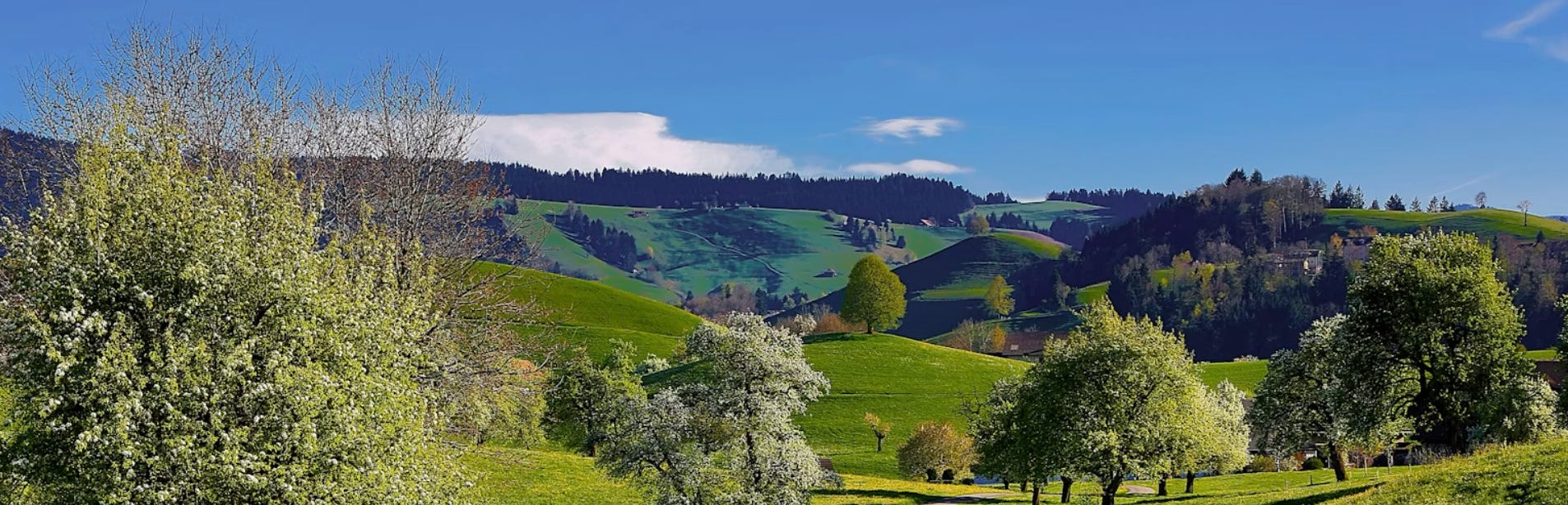
So now give me this hill country of which the Lord spoke on that day, for you heard on that day how the Anakim were there, with great fortified cities. It may be that the Lord will be with me, and I shall drive them out just as the Lord said. — Joshua 14:12
Most of us, given the choice, would ask for the easy land.
The fertile valley. The well-watered plain. The territory already cleared of enemies, already safe, already ready to be settled. We would take what was given and be grateful. We would not go looking for the hardest place on the map and ask for that.
Caleb did.
He was eighty-five years old. Forty-five years had passed since he had stood at Kadesh-barnea and told Moses what he believed: that God was able, that the land could be taken, that the giants were not the final word. Ten other spies had come back with a different report. They had seen the same land, the same giants, the same fortified cities, and had concluded that the people were like grasshoppers before them. Their fear became the nation’s fear. And an entire generation died in the wilderness because of it.
But not Caleb. And not Joshua.
Now the land was being divided. The conquest was largely complete. Most of the tribes were receiving their portions, good land, productive land, land that was ready to be inhabited. Caleb stepped forward.
He did not ask for the easy portion. He asked for Hebron.
Hebron was the last holdout. The place that had not yet been taken. The reason it had not been taken was the same reason it had frightened the spies forty-five years earlier: the Anakim were still there. The descendants of the giants. The ones who had made ten trained men feel like grasshoppers.
Caleb knew this. He said it plainly: you heard on that day how the Anakim were there, with great fortified cities (Josh. 14:12). He was not pretending the difficulty did not exist. He was not minimizing what he was asking for. He saw the giants clearly. He saw the fortified cities clearly.
And he asked for that land anyway.
This is not recklessness. This is not the bravado of a young man with nothing to lose. This is an eighty-five year old man who has spent forty-five years watching God keep His word, and has concluded that the size of the obstacle is irrelevant when God has spoken.
It may be that the Lord will be with me, and I shall drive them out just as the Lord said (Josh. 14:12).
“It may be that the Lord will be with me.” This is not uncertainty. This is the language of a man who has learned to rest his entire weight on the character of God. He is not saying “maybe God will show up.” He is saying “I am going to walk into that mountain country on the basis of what God has already said, and I trust Him to do what He promised.”
There is a detail in this passage that should stop us.
Caleb says: the Lord has kept me alive, just as he said, these forty-five years (Josh. 14:10). And then he says: my strength today is as my strength was then (Josh. 14:11).
Forty-five years of wilderness. Forty-five years of watching the generation of unbelief die around him. Forty-five years of waiting for a promise that had not yet been fulfilled. Most of us would have grown bitter. Most of us would have grown tired. Most of us would have arrived at the moment of land distribution quietly, taken whatever we were given, and gone home grateful to finally be done with the waiting.
What those forty-five years did to Caleb was not diminish him. They deepened him.
The waiting did not wear out his faith. It refined it. The delay did not shrink his vision. It clarified it. He came out of four and a half decades of wilderness the same man who had gone in, only more certain, more settled, more ready for the hardest thing.
This is what faithful waiting produces. Not resignation. Not bitterness. Not a smaller version of the self that entered the wilderness. A person whose confidence in God has been tested so many times that it no longer wobbles.
Caleb received Hebron.
The Hebrew root behind the name Hebron (ḥāḇar, חָבַר) means to join, to unite, to bind together. Hebron is fellowship. Hebron is the place of covenant relationship, of people bound to one another and to God.
It was not a coincidence that this was the land Caleb received. The man who had refused to break faith with God received as his inheritance the land whose very name means covenant faithfulness. He had stood firm when ten others fell away. He had waited forty-five years without losing heart.
What we hold onto in the wilderness becomes what we inherit on the other side.
Hebron was also where the patriarchs were buried. Abraham and Sarah, Isaac and Rebekah, Jacob and Leah, all laid to rest in the cave of Machpelah, in this city (Gen. 49:31). It was the ground of the fathers. The land of the oldest promises. And it became David's first royal capital before Jerusalem, the place from which the kingdom that would culminate in Christ was first established.
The hardest land, taken by the oldest soldier, became the foundation of the greatest story.
We all stand before our own map of Canaan. There are easy portions and hard portions. There are places that look manageable and places that still have giants in them.
The question Caleb’s life presses into us is not whether we see the giants. He saw them. The question is what we do with what we see.
Do we let the size of the obstacle become the limit of our faith? Or do we say, as Caleb said: the Lord spoke about this place. He has kept me alive to come to this moment. And if He is with me, what the giants built cannot stand against what He has promised.
Caleb did not ask for the easy land because he understood something most people never learn: the size of the challenge is not the measure of the risk. The measure of the risk is whether God has spoken. If He has, the giants are already defeated. If He hasn’t, even the easy land is unsafe.
Give me this hill country. It is the prayer of a person who has stopped measuring their strength against the obstacle and started measuring the obstacle against the faithfulness of God.
We began by saying that the most dangerous prayer you can pray is the one that asks for the hardest thing. Caleb prayed it at eighty-five. He had been waiting forty-five years to say those words. And when the moment came, he did not ask for relief. He did not ask for something manageable. He asked for the mountain where the giants still lived.
Most of us, after forty-five years of waiting, would have asked for less. We would have taken the quiet valley, the uncontested land, the portion that required nothing more of us. We would have called it wisdom. Caleb called it unfinished business.
The land of the giants became Hebron. The hardest thing became the foundation of the kingdom. And the man who wholeheartedly followed the Lord received the inheritance that no one else had the faith to claim.
Give me this hill country. Not because it is easy. Because God said so. The giants were still there. The promise was still there.
And for Caleb, the promise was always louder than the giants.
© 2026 Bible Portal. Share freely. Please keep the source and a link to Bible Portal intact. For other uses, contact us.
No posts
Comments
Nothing yet. Say the first thing.
Sign in to join the conversation.