
In the dusty villages around India’s mines, clean water and basic health care remain luxuries. Yet nearly ₹1 lakh crore collected to help these very communities is sitting in government coffers, unspent and seemingly forgotten.
This colossal fund, accrued under the District Mineral Foundation (DMF) since 2015, is meant to fight the “resource curse” that leaves mineral-rich regions among the poorest.
Instead, more than half of this money lies idle, even as mining-affected families continue to live with polluted water, broken roads, and grinding poverty.
The paradox is stark and inexcusable.
This newsletter is a part of Zero1 Writers Network, made possible with much support from Zerodha.
The DMF was created as a transformative idea: mining companies must contribute a percentage of their royalties to a local trust for the welfare of people impacted by mining.
Over the past decade, this idea has translated into over ₹1.03 lakh crore being deposited across DMFs in India’s mining districts.
But shockingly, only about 40% of these funds have actually been utilised on the ground.
In other words, tens of thousands of crores meant for the upliftment of displaced tribal communities and villagers near mines have not been spent at all.
For instance, as of early 2025, roughly ₹41k crore had been spent out of ₹1.03 lakh crore collected, leaving around ₹60k+ crore languishing unused.
This isn’t due to a lack of urgent needs - it’s due to a failure of governance and political will. Why is such a vast corpus unutilised?
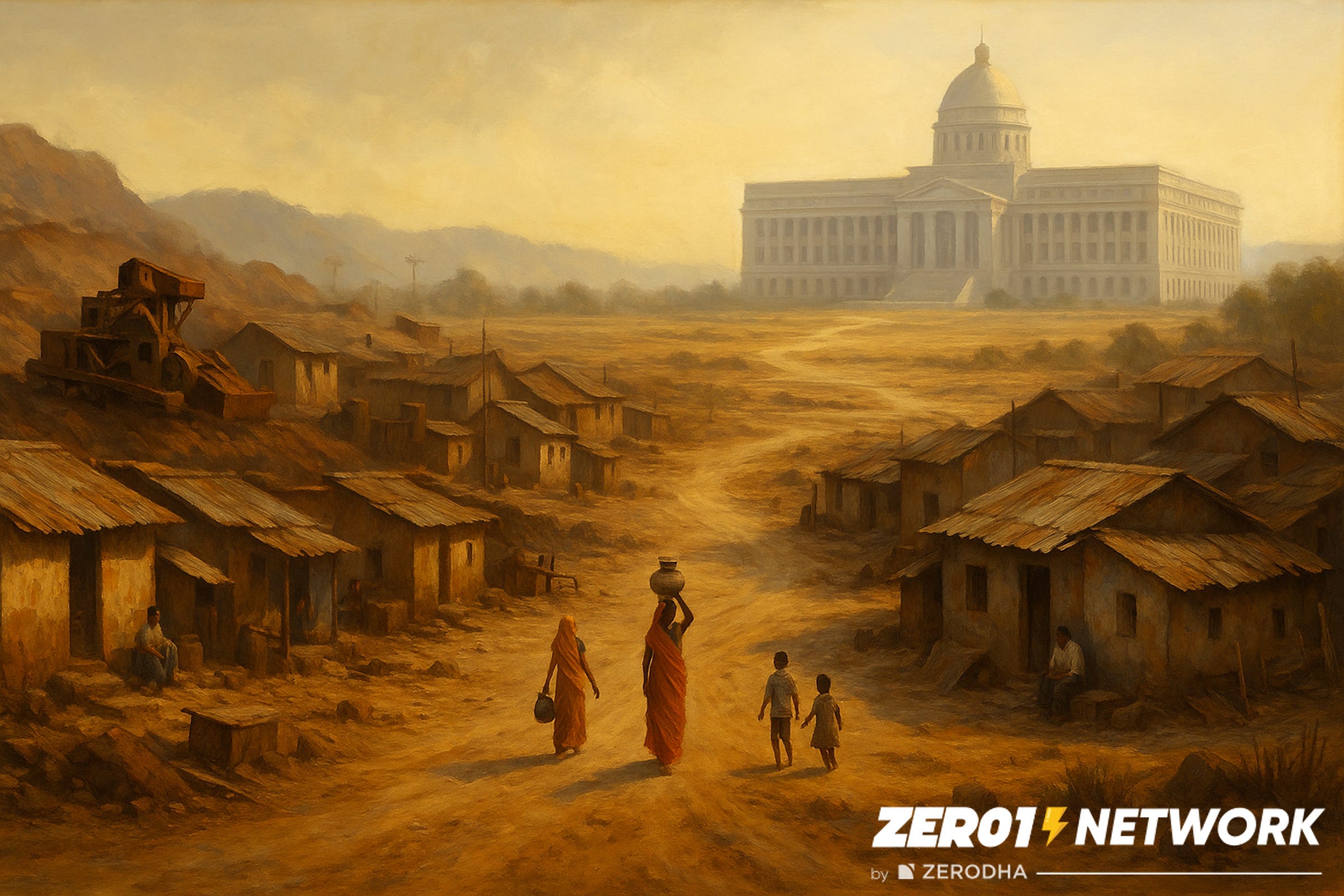
The first culprit is poor governance and planning.
Every mining district is supposed to have a DMF trust, but in practice, these trusts function as extensions of the district administration.
District Collectors head the DMF governing councils in all districts, wielding tight control. There is minimal representation of actual mining-affected people in these bodies, despite the law’s intent to involve local communities.
In fact, not a single DMF in the country has identified its beneficiaries by name, as mandated by the law.
With affected villagers largely excluded from decisions, funds end up allocated by bureaucrats with little grassroots input.
Crucially, no DMF has prepared the required five-year or even annual development plans involving Gram Sabha consultations.
Instead, most DMF projects get approved in an ad-hoc, top-down manner, without a systematic needs assessment.
This bureaucratic, plan-as-you-go approach virtually guarantees that money doesn’t flow to the most pressing local priorities. The second big problem is misdirected spending of the money that does get used.
Because there are no clear plans and community voices, a large chunk of DMF funds has been spent on projects that officials deem convenient - usually construction projects.
About 30% of all DMF expenditure so far has gone into physical infrastructure: roads, bridges, and government buildings.
Basic sectors like education and drinking water have received some attention (about 20% and 16% of funds, respectively), but healthcare received less than 9% of the spending.
Even more telling, livelihood generation and skill development initiatives, which could truly empower people, accounted for less than 5% of DMF funding.
This lopsided pattern shows that DMF money is being treated as a general development purse for capital projects, instead of tackling the specific hardships of mining-affected families.
Much of what DMFs bankroll - highways, urban infrastructure, big piped water schemes - are things that should be funded by regular state or central budgets.
As a result, the unique needs of mining communities (health clinics, nutrition, sustainable jobs, environmental rehabilitation) are starved of resources.
The DMF’s core mandate of fighting poverty and improving quality of life is getting lost amid ribbon-cutting for roads and buildings.
Worse, in several instances, the funds have been misused or diverted outright.
A recent parliamentary committee raised alarms about DMF money being siphoned into state treasuries, Chief Minister’s relief funds and other unrelated schemes in multiple states.
Such transfers blatantly violate the letter and spirit of the DMF law (the Mines and Minerals Act, 2015) and defeat the very purpose of the fund.
In Odisha - the state with the largest DMF corpus - authorities infamously spent DMF funds on an international hockey stadium in the city of Rourkela, far from the mining-affected villages it was meant to help.
The Sundargarh district administration even bought 25 luxury cars with DMF money for police patrols in Rourkela, a non-mining area, and built city infrastructure like integrated traffic systems and circuit house walls using DMF grants.
Meanwhile, genuine needs in the remote mining villages of Sundargarh continued to go unmet. Similar misuse has been flagged in other states as well.
In Karnataka’s mineral-rich Ballari district, a veteran activist revealed that DMF funds were diverted to urban projects while over 140 affected villages received no funds.
He pointed out that ₹250k crore was allocated for a drinking water scheme in Ballari city and over ₹100k crore for a new hospital there, even as mining-hit rural communities lacked basic drinking water, schools, and roads.
This violates guidelines that DMF funds must benefit mining areas first, and he is leading a campaign to challenge such brazen diversion.
From Odisha to Karnataka, these cases illustrate how DMF monies have been treated like a slush fund for pet projects, robbed from the poorest for the sake of the powerful.
The human cost of this dysfunction is borne by those for whom the DMF was ostensibly created. India’s mining belt spans some of the most underdeveloped pockets of the country.
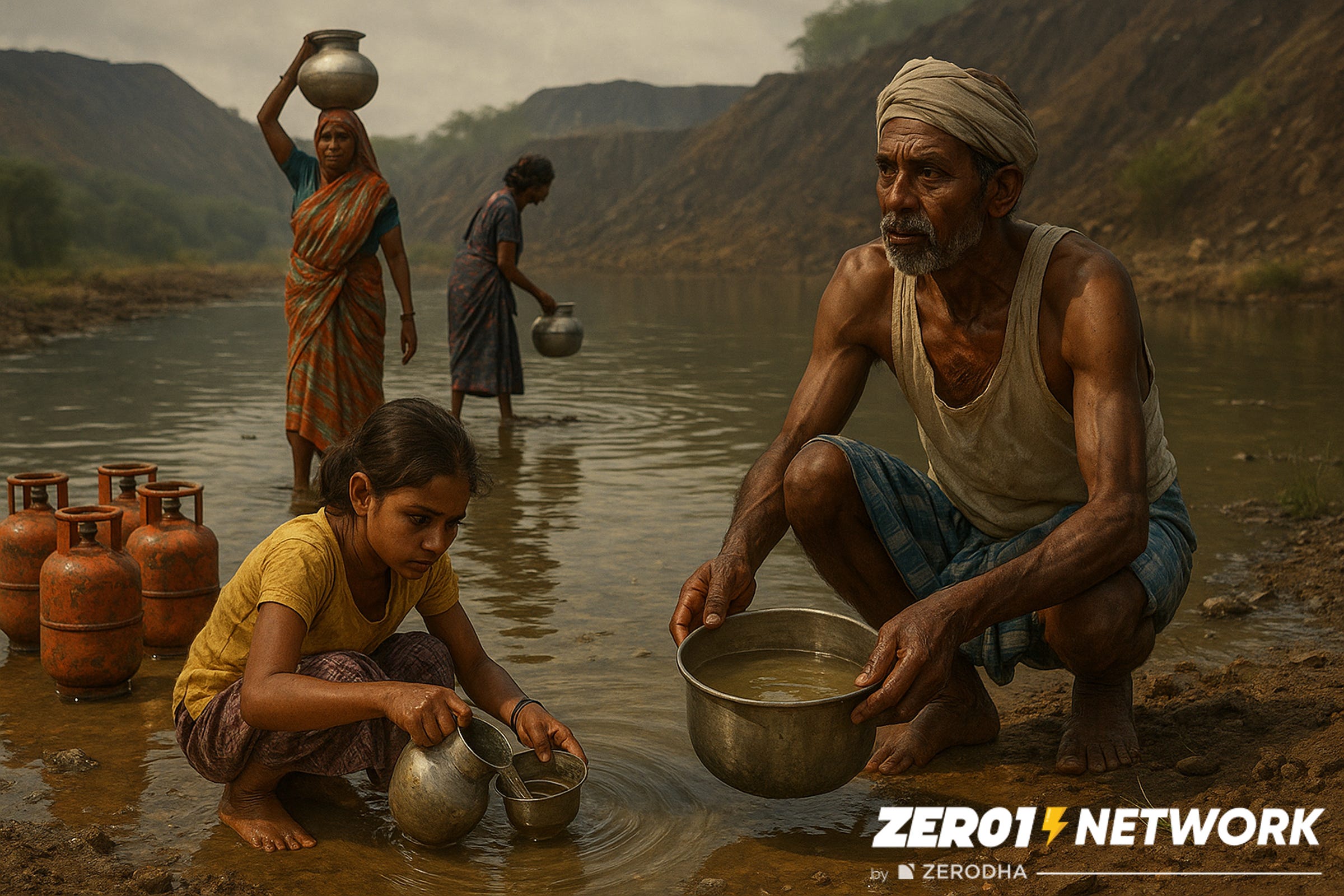
It is a tragic irony that the districts which produce immense mineral wealth are home to some of India’s poorest, mostly tribal communities.
In fact, just 21 resource-rich districts account for nearly two-thirds of all DMF collections, yet these same districts rank high in multi-dimensional poverty.
They suffer rampant unemployment, disease from mining pollution, denuded land and scarce public services.
The unspent DMF billions represented a chance to finally bring roads, clean drinking water, quality healthcare, schools, and sustainable livelihoods to these long-neglected areas.
But on the ground, change has been agonisingly slow.
In major mining states such as Jharkhand, Odisha, and Rajasthan, less than half of the DMF funds collected have actually been spent on local development.
So even where money is available, it is not translating into fully functional clinics or scholarships or skill centres at the scale needed.
Every year that huge sums lie unused is a year lost in the fight against extreme poverty and pollution in these communities.
Grassroots voices are growing more frustrated - and rightly so - seeing little improvement in their lives despite the swelling DMF bank balances.
To be fair, both the central government and some state authorities have begun to acknowledge these problems and take steps - but so far the measures are too limited.
In 2023, the Union Mines Ministry revised the DMF guidelines to force a sharper focus on welfare: now at least 70% of DMF funds must be spent on “high priority” sectors like drinking water, health, education, sanitation and livelihoods (up from 60% earlier).
This is intended to curb the splurging on general infrastructure. A few states have responded well to this mandate.
Jharkhand, Gujarat, and Goa have now earmarked 70% or more of their DMF budgets for these priority needs, with Odisha close behind at about 69.7%.
Additionally, the central government has tightened oversight of DMFs: it warned that it will halt fund disbursal to states that don’t comply with the rules, and it can even order investigations into mismanagement of DMF money.
The Mines Ministry has issued directives to all states to stop the illicit diversion of DMF funds and uphold the law’s intent.
Today, there is also greater scrutiny - the Comptroller and Auditor General (CAG) is conducting audits of DMF operations nationwide to assess their effectiveness.
These efforts, coupled with public pressure, have started to yield some improvement.
For example, Gujarat and Chhattisgarh have managed to utilise about two-thirds of their DMF accumulations - the highest spending efficiency in the country so far.
Such examples show that better performance is possible with active monitoring.
But even in these “best case” states, one-third of the funds remain unused, and merely meeting the expenditure quotas on paper doesn’t ensure the money is reaching the truly vulnerable.
Jharkhand may formally allocate 70% of its DMF to crucial sectors, but if projects are stalled or poorly executed, the communities in Jharia or Dhanbad will still be waiting for clean water or jobs.
The recent reforms are steps in the right direction, yet they haven’t struck at the core governance flaws that made DMFs ineffective in the first place.
What, then, is urgently needed to unlock the DMF’s potential?
Experts and activists are calling for a fundamental restructuring of how these funds are governed and used.
At the heart of it, the people affected by mining must be given a voice and decision-making power.
This could mean overhauling DMF governing councils so that at least one-third of the members are local community representatives, not just officials.
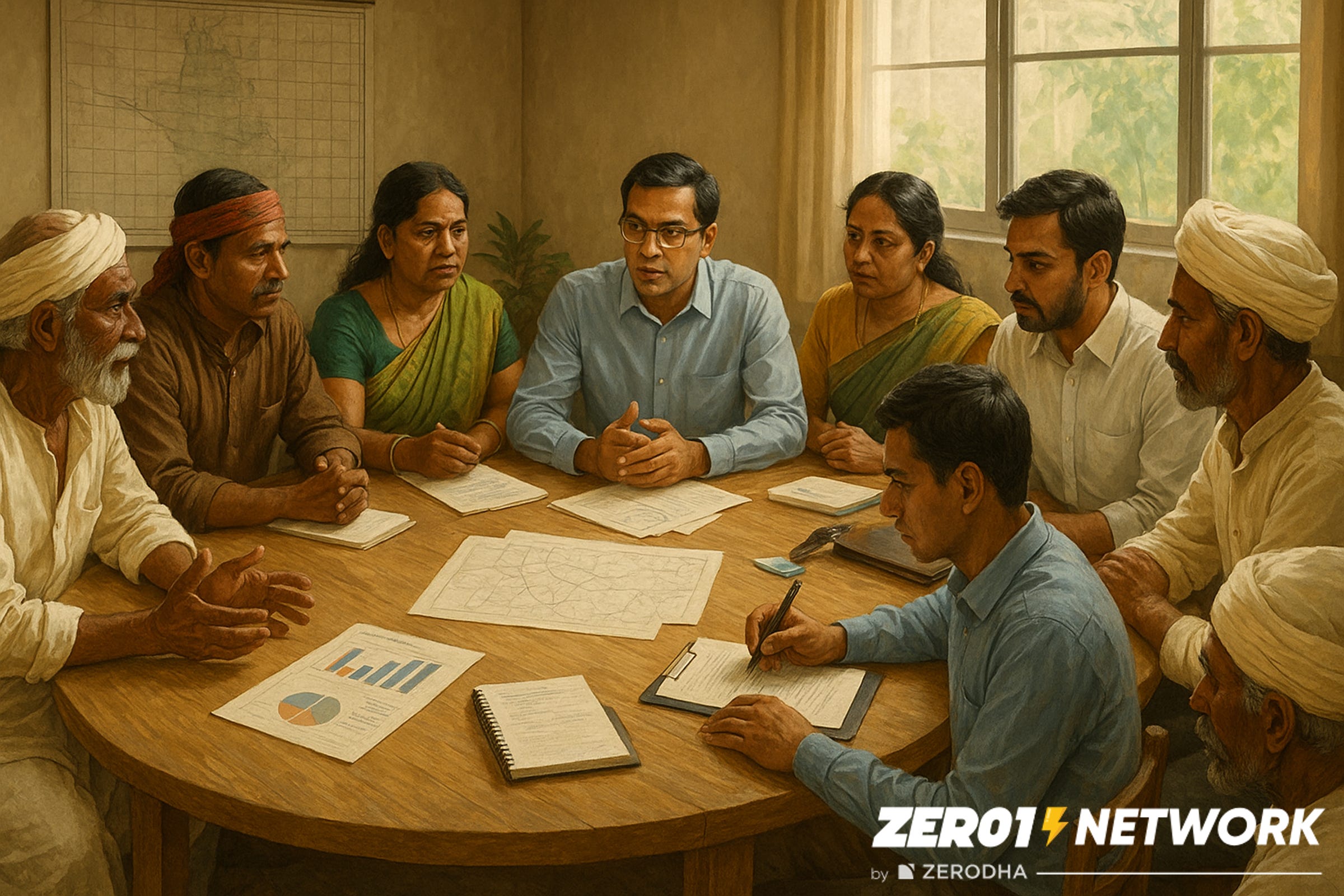
It also means transparency and planning: every district should identify its mining-impacted families and draw up five-year plans (with annual targets) detailing how DMF money will improve their lives.
Affected villagers and civil society groups should participate in identifying projects - whether it’s building a health clinic, providing scholarships, or regenerating degraded land - so that DMF investments match real needs.
Robust social audits and public disclosure of DMF spending are essential to keep authorities accountable.
Furthermore, the spending focus must shift decisively towards people-centric development.
Instead of pouring most funds into highways or stadia, the priority should be health camps, hospitals, nutrition programmes, clean drinking water facilities, quality schools, skill training centres, and livelihoods for displaced workers.
These are the investments that directly tackle poverty and build human capital.
They may not always be as visible as a new road, but they change lives - which is the whole point of the DMF.
Finally, where infrastructure is needed, it should be the kind that benefits villagers (like rural roads, solar lighting, small irrigation), not grandiose projects in distant towns.
In short, the DMF needs to evolve into a truly participatory, pro-poor institution rather than a bureaucratic fund with good intentions gone awry.
Time is of the essence.
India’s mineral output and mining revenues are only increasing, which means the DMF corpus is projected to balloon to ₹2.5-3 lakh crore in the coming decade.
That’s an additional ₹20k-30k crore flowing in every year - a massive opportunity to transform some of the country’s most backwards areas.
But if the status quo persists, this money will continue to pile up unused or be frittered away on misdirected projects, while mining-affected families remain as marginalised as before.
Let’s be clear: leaving ₹1 lakh crore meant for the poorest of the poor idle is not just an administrative failure, it is a profound social injustice.
These funds carry the hopes of communities that have borne the costs of India’s economic growth with their land, water, and health.
Much thanks to the support from good folks at Zero1 by Zerodha, making the research for this newsletter possible.
It is their money.
Ensuring it actually reaches them is not an act of charity by the state - it is a long-overdue debt of justice.
Until every rupee of the DMF is put to work uplifting mining regions, India’s much-touted economic progress will ring hollow.
The government must act with urgency to tear down the bureaucratic barriers and power imbalances that have reduced a noble initiative to a tragic missed opportunity.
With genuine reforms and community-led action, the DMF can still deliver the development renaissance it promised - turning mining wealth into shared prosperity, and finally giving India’s forgotten mining communities their fair share of hope.
Best,
Jayant Mundhra
LinkedIn | Twitter | Instagram | YouTube
And, check out my other newsletters here with:
5.5k+ others at Decoding The Dragon (https://t.ly/chnwj)
4.7k+ at BharatNama (https://t.ly/bwj)
3.7k+ at Deepdives with Jay (https://t.ly/dwj)
..
References
A missed opportunity for social justice in mining regions - Opinion News | The Financial Express
https://iforest.global/wp-content/uploads/2025/03/DMF-Press-Release.pdf
Odisha diverts DMF funds to urban areas as mining-affected communities suffer - Mongabay India
Mining funds misused in Karnataka: Activist | Hubballi News - Times of India
Comments
Nothing yet. Say the first thing.
Sign in to join the conversation.