
Basil: Sweet
Celery
Garlic
Head Lettuce: Romaine
Peppers: Sweet (see descriptions in 8/5 newsletter)
Potatoes: Kennebec
Tomatoes: slicers, one final taste
and at least one of the following: (please see **NOTE after “A Little Detail...” below)
Bean Mix: Fortex, Provider and Gold Rush
Cucumbers: Lemon, Marketmore or Sashimi
Eggplant: Shinkasen (Asian, dark purple) or Listada De Gandia (striped)
Okra (Red): Burgundy & Candle Fire
🌿Herb It! option: Cardinal basil, orange thyme, oregano
Few foods are as versatile—or as comforting—as the humble potato. Mashed, roasted, fried, boiled, or tucked into soups and stews, they’re the ultimate kitchen chameleon. Potatoes are also nutrient-rich, offering fiber, vitamin C, and potassium, making them a filling and nourishing staple.
On our farm, we grow several varieties, each with its own personality:
Carola – a golden-fleshed, creamy potato perfect for roasting or mashing.
Kennebec – the classic all-purpose potato, excellent for frying or baking.
Yukon Gold – buttery and tender, these are a favorite for mashed potatoes.
Adirondack Blue – striking blue skin and flesh, great for roasting or potato salad with a colorful twist.
Adirondack Red – rosy skin and pink flesh, mildly sweet and eye-catching on the plate.
🍽️ Simple Recipe: Perfect Roasted Potatoes
🍽️ Bonus Recipe: Garlic Parmesan Potato Wedges
Roast peels with oil and salt for crispy “chips.”
Mash leftover potatoes and freeze for easy sides.
Here’s our downloadable one-page guide to storing all things produce!
Keep potatoes away from onions, which can make them sprout faster and they may pick up some of the onion flavor.
By now, you know the drill—I have to start with the weather. Around here, it shapes everything: the work, the crops, the rhythm of our days. Last week we had flannel mornings and popsicle afternoons, and it looks like that rollercoaster will continue for a while yet.
Those swings have the crops a little dizzy. One day it’s cool, then suddenly hot; one week wet, the next dry. By this point in the season, our warm-weather crops are basically senior citizens—uncertain whether to push out new growth, ripen their last fruits, or simply call it quits.
As a result, the lineup is shifting. The peppers are slowing down, though the plants still look strong (you’ll notice a few green peppers sneaking into your boxes now). The traditional cucumbers have given their all—we’ll be pulling those plants this week—while the lemon cukes are still trickling in. Beans are on the “maybe” list, and the tomatoes…well, they’re technically done. Hundreds of plants, but only a handful of fruit. I can’t quite bring myself to pull them yet, so we’ll share what little they give us. On the brighter side, last week’s rain perked up the fall greens, and we’re hopeful they’ll find their way into boxes before season’s end.
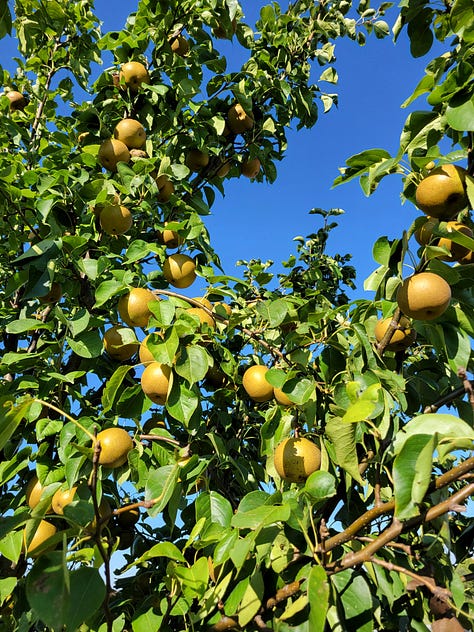
Fruit-wise, we wrapped up the final peaches last week and are moving into apples and Asian pears. Unfortunately, there aren’t enough to go around for the whole membership, so most will find their way into jam jars instead of boxes.
It’s been a busy week otherwise—finishing the last details on our high tunnel recovering project and preparing for the Knoxville Hospital’s Girls Night Out event. It’s one of our favorite community gatherings, focused on women’s health and wellness, and we’re always grateful for the chance to connect and share what we do.
In between all that, we kept up with cultivating, harvesting, and shooing deer away from the new head lettuce plantings. Never a dull moment.


Here are a few upcoming events and milestones to keep on your radar:
Oct. 11–12 – Pierce’s Pumpkin Festival
Oct. 14 – Final CSA delivery (Week #20!)
Oct. 25 – Final Saturday VegEmail delivery
Nov. 4 – Fall VegEmail schedule begins (delivery every other Tuesday, 4–6pm)
Got big plans this week? Whether you’re feeding a crowd, craving salsa, or stocking up on potatoes for the pantry, we’ve got you covered.
Our VegEmail program is your go-to source for ordering extra farm-fresh produce beyond your Bounty Box. Use it to stock up on your favorites or snag more of what you loved this week.
👉 Click here to place your VegEmail order (by Thursday at noon)
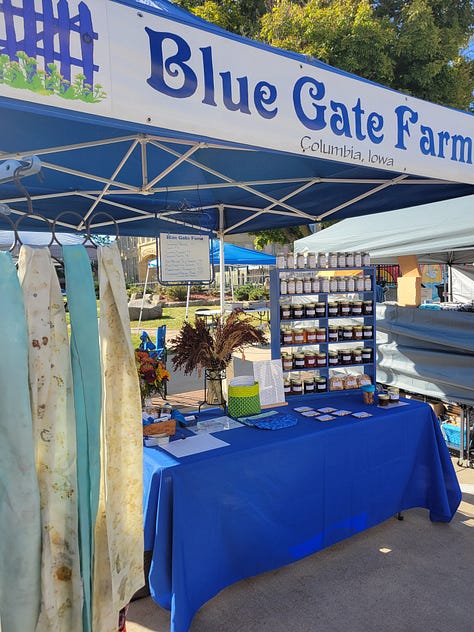
Pick-up is Saturday from 10am–noon at Singlespeed Brewing (downtown Des Moines), Mayalu Coffee (southside Des Moines), the Grand Theater in Knoxville or on the farm.
It’s one more way we’re making it easier for you to eat seasonally, locally, and deliciously—on your schedule.
You’ve seen our photos, we’d love to see yours! Share photos of your Bounty Box haul or how you’re using your weekly produce. We’d LOVE to see them! You can email or text them to us or post them on the BGF Community Page. Every week we’ll feature photos from the membership on our social media outlets.
BASIL hates the cold and will turn black with exposure. Keep long stemmed basil in a glass/vase of water on your counter top (out of direct sunlight). Stems that are too short (trimmings/tops) should be placed in a glass or plastic container with a dry paper towel. Then put inside of a paper bag (for insulation) and put in the warmest part of your refrigerator (usually the door) or on the top shelf towards the front.
BEANS: Fresh beans are an easy “store.” Just leave them in their plastic bag and keep them in the produce drawer. Can last up to 2 weeks.
CELERY: Separate leaves and stems for best storage. Leaves (with thin stems) can be stored like herbs in a glass of water in your refrigerator or in a zip-top plastic bag. Main stems keep best wrapped in aluminum foil and placed in your crisper drawer.
CUCUMBER: Store unwashed cucumbers wrapped in a cloth or paper towel then sealed in a plastic bag in the vegetable crisper bin for about a week. Keep cucumbers tucked far away from tomatoes, apples, and citrus—these give off ethylene gas that accelerates cucumber deterioration. You can do a lot of fancy things to the skin of a cucumber, but when it is young, fresh (and unwaxed), it really only needs to be thoroughly washed. However, if the skin seems tough or bitter you can remove it; if the seeds are bulky, slice the cucumber lengthwise and scoop them out.
EGGPLANT: Eggplant prefers to be kept at about 50° F, which is warmer than most refrigerators and cooler than most kitchen counters. Wrap unwashed eggplant in a towel (not in plastic) to absorb any moisture and keep it in the vegetable bin of your refrigerator. Used within a week, it should still be fresh and mild. Many people like to peel, salt, and drain their eggplant to draw out any bitter flavor; however, bitterness develops only in eggplant that has been stored for a while, so with farm-fresh specimens this is generally not necessary. Many recipes call for salting in order to make the vegetable less watery and more absorbent—much like draining tofu. Salting is not an essential step, but it can greatly enhance the taste and texture of your dish and is well worth the extra effort. The shape of an eggplant determines how it is best prepared. Slice a straight, narrow eggplant into rounds or halves for grilling or broiling, and cut a rounded, bulbous eggplant into cubes for stews and stir-fries.
All of your GREENS will keep best if stored in a plastic bag, with the top folded over and placed in the produce drawer of your refrigerator. If there is extra moisture in the bag, just tuck in a cotton or paper towel.
HERBS: Generally, except for basil, set unwashed bunches of fresh herbs (with stems) upright into small jars filled with 1 to 2 inches of water, cover loosely with plastic wrap, and refrigerate for up to two weeks. Rinse fresh herbs right before use. To release their scents and flavors, rub them between your hands before mincing or chopping. If you have no idea what to do with fresh herbs, there is one great default answer “compound butter.” Finely mince leaves and knead them into a stick of room temperature butter. Roll the butter into a log in plastic wrap and store in the freezer. Then simply slice off the amount you need to add delicious, ready-to-use flavor to vegetables, bread or meats.
OKRA: These lovely, horn-shaped vegetables are a warm weather treat. Extremely cold sensitive, wrap with a dishcloth or paper towel and store in their plastic bag in the warmest part of your fridge, or place the plastic bag in a small paper sack and store in the fridge door and use within the week. Traditional southerners will cut into rounds, bread in cornmeal and fry, but our favorite version is our dear friend Annie’s method, “All I do is rinse off the pods and lay them in a saucepan with a little water in the bottom. Ten to fifteen minutes is all it takes...twenty if the pods are really big and “woody” feeling. I put salt on them and eat as finger food. It reminds me of young sweet corn.”’
PEPPERS: Place whole, unwashed peppers in a plastic bag, seal, and refrigerate for a week or more. Rinse peppers just before use. For sweet peppers, cut around the stem with a small knife and lift out the core. Slice down the side to open it up and then cut out the inner membranes. Store unused portions in a sealed bag or container in the refrigerator.
POTATOES: Keep unwashed potatoes in a cool, dark, dry place, such as a loosely closed paper bag in a cupboard. They will keep for weeks at room temperature, longer if you can provide their ideal temperature of 40 to 50 degrees. Beware: the low temperature of your refrigerator will convert the starch to sugars. So refrigerated potatoes should be brought to room temperature for at least 24 hours before using. Moisture causes potatoes to spoil, light turns them green, and proximity to onions causes them to sprout. (You can still use a potato that has sprouted, however; simply cut off the “eyes” before use.) Scrub potatoes well and cut off any sprouts or green skin. (Clean delicate new potatoes gently.) Peeling is a matter of preference. Cut potatoes according to your recipe. If baking a whole potato, be sure to prick the skin in at least a few places to allow steam to escape.
TOMATOES: always store whole tomatoes at room temperature, out of direct sunlight. Once cut, store in a sealed container in the refrigerator.
** NOTE: You will notice over the course of the season that some box contents listed above say “Perhaps one of the following...” These are items that we can’t harvest in sufficient quantities for the whole CSA to receive at one time. We do track who gets what and we will do our best to ensure that everyone eventually receives each item. On some items this may take several weeks, so please be patient.
Follow us on Instagram: bluegatefarmfresh
Follow us on Facebook: Blue Gate Farm and/or share your recipes, experiences, photos and questions with other BGF members at Blue Gate Farm Community.
Find us on the web: Blue Gate Farm
📧 Questions? Email us: bluegatefarmIA@gmail.com
What would make this newsletter more useful or enjoyable for you? Anything we can do to make your Bounty Box experience even better?
Just hit reply or click the comment button below and let us know — we really appreciate your input!
Thank you for being part of the farm this season. We’re glad you’re here!
Best from the farm,
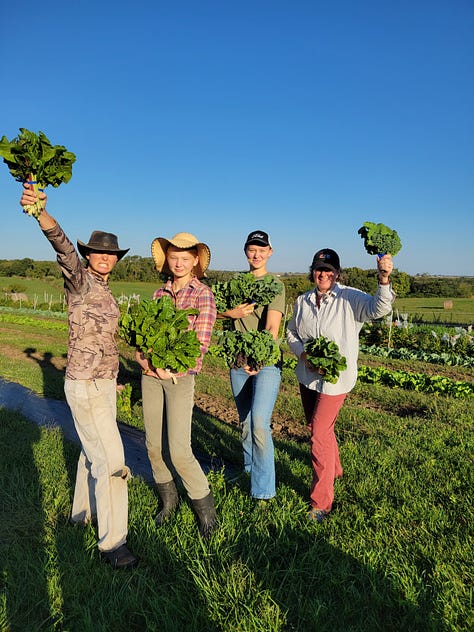
— Jill and Sean & the whole BGF Crew
No posts
Comments
Nothing yet. Say the first thing.
Sign in to join the conversation.