
Basil
Bean Mix: Fortex, Provider and Gold Rush
Beets: Cylindra
Cucumbers: Lemon, Marketmore or Sashimi
Head Lettuce: Romaine
Jubilee Cherry Tomato Mix
Onions, Sweet: Cipollini or Candy
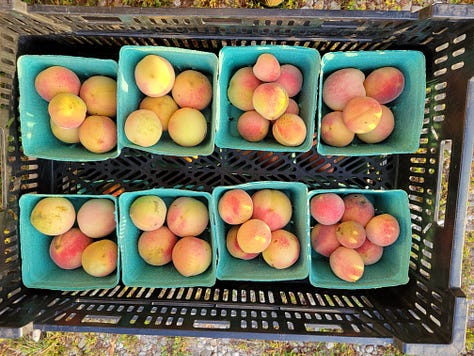
Peaches: Native Iowa White
Peppers: Sweet (see descriptions in 8/5 newsletter)
Tomatoes: slicers (see descriptions in 8/5 newsletter)
and perhaps one of the following: (please see **NOTE after "A Little Detail..." below)
Eggplant: Shinkasen (Asian, dark purple) or Listada De Gandia (striped)
Okra (Red): Burgundy & Candle Fire
🌿Herb It! option: Purple Basil, Sage, Garlic Chives
This week’s stars are our sweet onions—both the little, squat Cipollinis and the big, golden Candy variety. Unlike storage onions, sweet onions are known for their mild, juicy flavor and higher sugar content, which makes them perfect for enjoying raw or cooked. Slice them into salads and sandwiches, caramelize them into silky onion jam, or roast them whole until they’re golden and sweet. The Cipollinis are especially tasty roasted or glazed, while the Candy onions shine on the grill or anywhere you want mellow onion flavor without the sharp bite.
🍽️ Simple Recipe: Caramelized Onion Pasta
🍽️ Bonus Recipe: Green Beans with Caramelized Onions
🍽️ Bonus Recipe II: Mediterranean Baked Feta with Tomatoes (BGF Favorite!)
Freeze excess chopped onions for quick prep later in the season. If you store them in a plastic freezer bag it’s easy to break off just the amount you need.
Basil season is nearly over, now’s the time to stock up on pesto and freeze for winter use!
Here’s our downloadable one-page guide to storing all things produce!
Unlike storage onions, the thin skins of Cipollini onions can be a bit tricky to peel, but a quick dip in boiling water makes the job much easier.
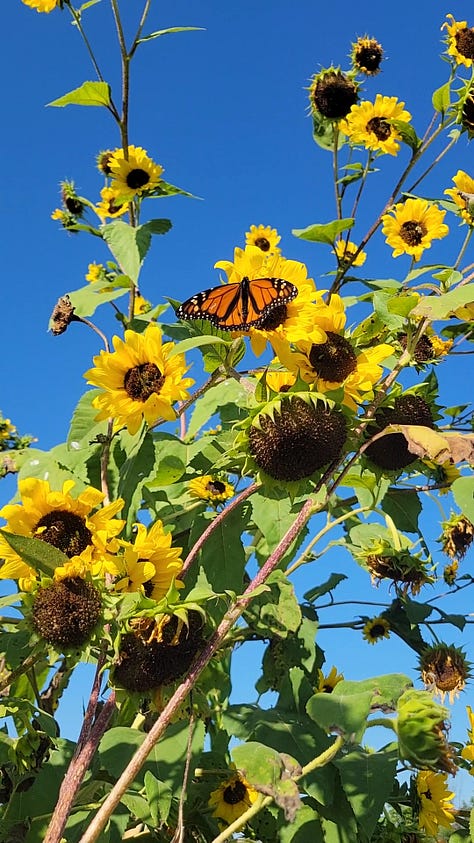
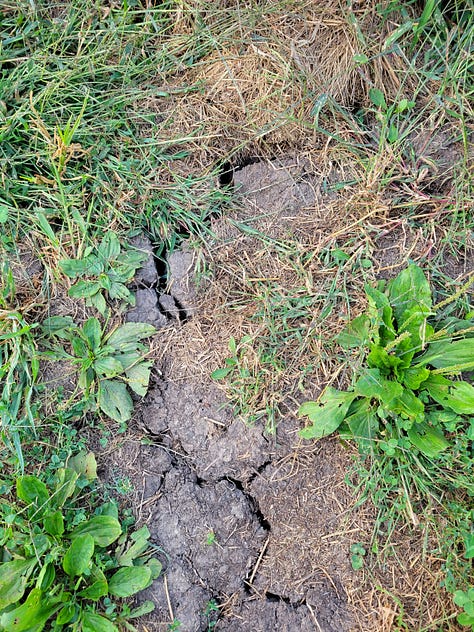
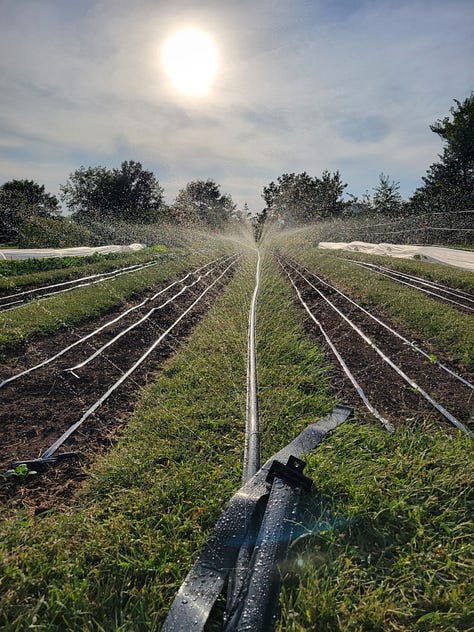
Well, we all seem to have survived that heat wave! The irrigation has been running daily as we try to keep our fall crops happy. Still, germinating direct-seeded crops in this weather has been tough. We’ve switched to using a fine misting sprinkler, which helps, but until we get some real rain, it’s going to remain a bit of a struggle.
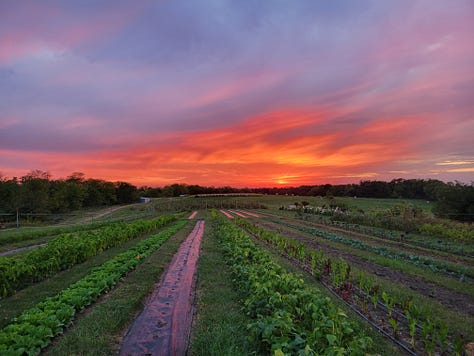
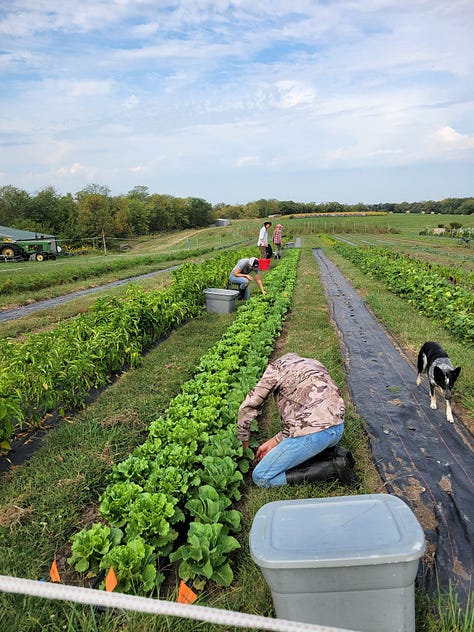
As I mentioned last week, the summer crops are winding down much earlier than usual—especially the tomatoes. At the same time, many of the fall crops are running behind. That leaves us in a September situation we’ve never experienced before: trying to figure out exactly what to put in your boxes. Normally this time of year we’re buried in vegetables, but mid-season losses from excessive rain left a big hole in our crop rotation. The fields are full of plants, but most are either wrapping up or not quite ready—and there’s no hurrying Mother Nature. Just know that we’re doing everything we can to bring you a Bounty each week, and there’s still more to come.
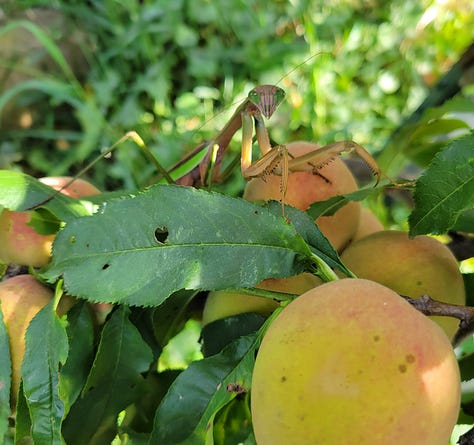
One bright spot? The peaches! I wish you could experience the farm on a sunny afternoon when the nearly ripe fruit warms in the sun. The trees practically glow (and groan) under their load, and the air is filled with that unmistakable peachy perfume—it’s one of my very favorite farm experiences. This week we’re harvesting the final tree, and it’s generous enough to send you one last taste of late summer.
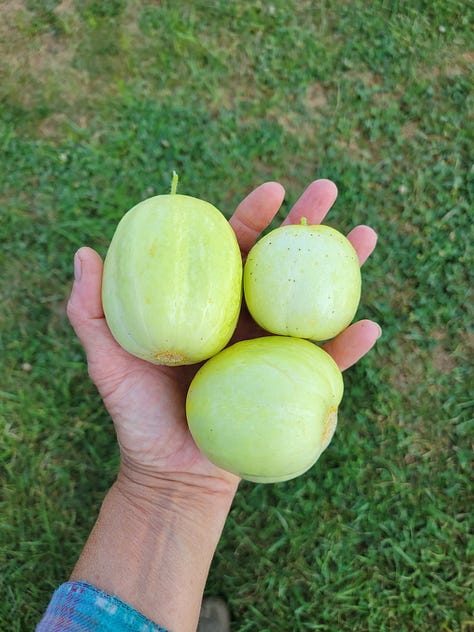
We’re also sending out something new in many of the boxes: lemon cucumbers! These cheerful, lemon-yellow fruits are about the size of a lemon, too. They’re crisp, refreshing, and just right for single servings. Don’t let their color surprise you—we think you’ll find them a delightful addition.
And for the first time (maybe ever!) the entire membership is getting the same lettuce. We’re trialing some new Romaine varieties, and the first one was ready this week. We’re still deciding what we think about it—and would love to hear your opinion. (You’ll probably see another new variety next week!)
Finally, a quick note on timing. This is week #16 out of 20. Our final delivery is scheduled for October 14. There’s still plenty happening in the next month, so we’ve added an “Important Dates” section below to help keep you in the loop.
Here are a few upcoming events and milestones to keep on your radar:
Sept. 25 – Ladies Night Out, Knoxville
Oct. 11–12 – Pierce’s Pumpkin Festival
Oct. 14 – Final CSA delivery (Week #20!)
Oct. 25 – Final Saturday VegEmail delivery
Nov. 4 – Fall VegEmail schedule begins (delivery every other Tuesday, 4–6pm)
Got big plans this week? Whether you’re feeding a crowd, craving salsa, or stocking up on potatoes for the pantry, we’ve got you covered.
Our VegEmail program is your go-to source for ordering extra farm-fresh produce beyond your Bounty Box. Use it to stock up on your favorites or snag more of what you loved this week.
👉 Click here to place your VegEmail order (by Thursday at noon)
Pick-up is Saturday from 10am–noon at Singlespeed Brewing (downtown Des Moines), Mayalu Coffee (southside Des Moines), the Grand Theater in Knoxville or on the farm.
It’s one more way we’re making it easier for you to eat seasonally, locally, and deliciously—on your schedule.
You’ve seen our photos, we’d love to see yours! Share photos of your Bounty Box haul or how you’re using your weekly produce. We’d LOVE to see them! You can email or text them to us or post them on the BGF Community Page. Every week we’ll feature photos from the membership on our social media outlets.
BASIL hates the cold and will turn black with exposure. Keep long stemmed basil in a glass/vase of water on your counter top (out of direct sunlight). Stems that are too short (trimmings/tops) should be placed in a glass or plastic container with a dry paper towel. Then put inside of a paper bag (for insulation) and put in the warmest part of your refrigerator (usually the door) or on the top shelf towards the front.
BEANS: Fresh beans are an easy "store." Just leave them in their plastic bag and keep them in the produce drawer. Can last up to 2 weeks.
CUCUMBER: Store unwashed cucumbers wrapped in a cloth or paper towel then sealed in a plastic bag in the vegetable crisper bin for about a week. Keep cucumbers tucked far away from tomatoes, apples, and citrus—these give off ethylene gas that accelerates cucumber deterioration. You can do a lot of fancy things to the skin of a cucumber, but when it is young, fresh (and unwaxed), it really only needs to be thoroughly washed. However, if the skin seems tough or bitter you can remove it; if the seeds are bulky, slice the cucumber lengthwise and scoop them out.
EGGPLANT: Eggplant prefers to be kept at about 50° F, which is warmer than most refrigerators and cooler than most kitchen counters. Wrap unwashed eggplant in a towel (not in plastic) to absorb any moisture and keep it in the vegetable bin of your refrigerator. Used within a week, it should still be fresh and mild. Many people like to peel, salt, and drain their eggplant to draw out any bitter flavor; however, bitterness develops only in eggplant that has been stored for a while, so with farm-fresh specimens this is generally not necessary. Many recipes call for salting in order to make the vegetable less watery and more absorbent—much like draining tofu. Salting is not an essential step, but it can greatly enhance the taste and texture of your dish and is well worth the extra effort. The shape of an eggplant determines how it is best prepared. Slice a straight, narrow eggplant into rounds or halves for grilling or broiling, and cut a rounded, bulbous eggplant into cubes for stews and stir-fries.
GARLIC, ONIONS & SHALLOTS: Fully cured bulbs don't require refrigeration. For longest storage, keep in a dark place with good airflow. Once cut, store in the refrigerator in a sealed container.
All of your GREENS will keep best if stored in a plastic bag, with the top folded over and placed in the produce drawer of your refrigerator. If there is extra moisture in the bag, just tuck in a cotton or paper towel.
HERBS: Generally, except for basil, set unwashed bunches of fresh herbs (with stems) upright into small jars filled with 1 to 2 inches of water, cover loosely with plastic wrap, and refrigerate for up to two weeks. Rinse fresh herbs right before use. To release their scents and flavors, rub them between your hands before mincing or chopping. If you have no idea what to do with fresh herbs, there is one great default answer "compound butter." Finely mince leaves and knead them into a stick of room temperature butter. Roll the butter into a log in plastic wrap and store in the freezer. Then simply slice off the amount you need to add delicious, ready-to-use flavor to vegetables, bread or meats.
OKRA: These lovely, horn-shaped vegetables are a warm weather treat. Extremely cold sensitive, wrap with a dishcloth or paper towel and store in their plastic bag in the warmest part of your fridge, or place the plastic bag in a small paper sack and store in the fridge door and use within the week. Traditional southerners will cut into rounds, bread in cornmeal and fry, but our favorite version is our dear friend Annie's method, "All I do is rinse off the pods and lay them in a saucepan with a little water in the bottom. Ten to fifteen minutes is all it takes...twenty if the pods are really big and "woody" feeling. I put salt on them and eat as finger food. It reminds me of young sweet corn."'
PEACHES: these little beauties are very fragile and will go from not-quite-ripe to over-ripe in a heartbeat. You can speed ripening on the countertop or slow it in the refrigerator. Their flavor is best at room temp or slightly cool, but not cold.
PEPPERS: Place whole, unwashed peppers in a plastic bag, seal, and refrigerate for a week or more. Rinse peppers just before use. For sweet peppers, cut around the stem with a small knife and lift out the core. Slice down the side to open it up and then cut out the inner membranes. Store unused portions in a sealed bag or container in the refrigerator.
TOMATOES: always store whole tomatoes at room temperature, out of direct sunlight. Once cut, store in a sealed container in the refrigerator.
** NOTE: You will notice over the course of the season that some box contents listed above say "Perhaps one of the following..." These are items that we can’t harvest in sufficient quantities for the whole CSA to receive at one time. We do track who gets what and we will do our best to ensure that everyone eventually receives each item. On some items this may take several weeks, so please be patient.
Follow us on Instagram: bluegatefarmfresh
Follow us on Facebook: Blue Gate Farm and/or share your recipes, experiences, photos and questions with other BGF members at Blue Gate Farm Community.
Find us on the web: Blue Gate Farm
📧 Questions? Email us: bluegatefarmIA@gmail.com
What would make this newsletter more useful or enjoyable for you? Anything we can do to make your Bounty Box experience even better?
Just hit reply or click the comment button below and let us know — we really appreciate your input!
Thank you for being part of the farm this season. We’re glad you’re here!
Best from the farm,
— Jill and Sean & the whole BGF Crew
No posts
Comments
Nothing yet. Say the first thing.
Sign in to join the conversation.