
Beets: Cylindra
Fennel
Garlic Scapes
Head Lettuce: Assorted Varieties
Napa Cabbage
and perhaps one of the following: (Please see the note after "🥕 Storage & Handling Notes" below.)
Broccoli: Mini Heads
Japanese Cauliflower: Mini Heads
Sugar Snap Peas
Summer Squash: Assorted varieties
💙 Farmer Favorite: Fennel (Don’t forget the fronds - they make great pesto!)
🥬 Something New to Try: Cylindra Beets (Don’t toss your tops!)
🎉 Coming Soon: Summer Squash (a sneak peek in a few boxes this week)
📅 Notable Event: Storms/Hail ⛈️
It’s been an adrenaline-filled week on the farm, once again scrambling to get field work done ahead of the storms. There’s nothing like seeing the dark clouds building in the west and hearing the thunder grumbling across the land to help you kick it into high gear while trying to hill the potatoes and cultivate as many crops as you can ahead of the impending rain. The whole crew pushed as hard as possible, until the rain poured us out of the field and into the high tunnels for some work under the protection of the plastic.
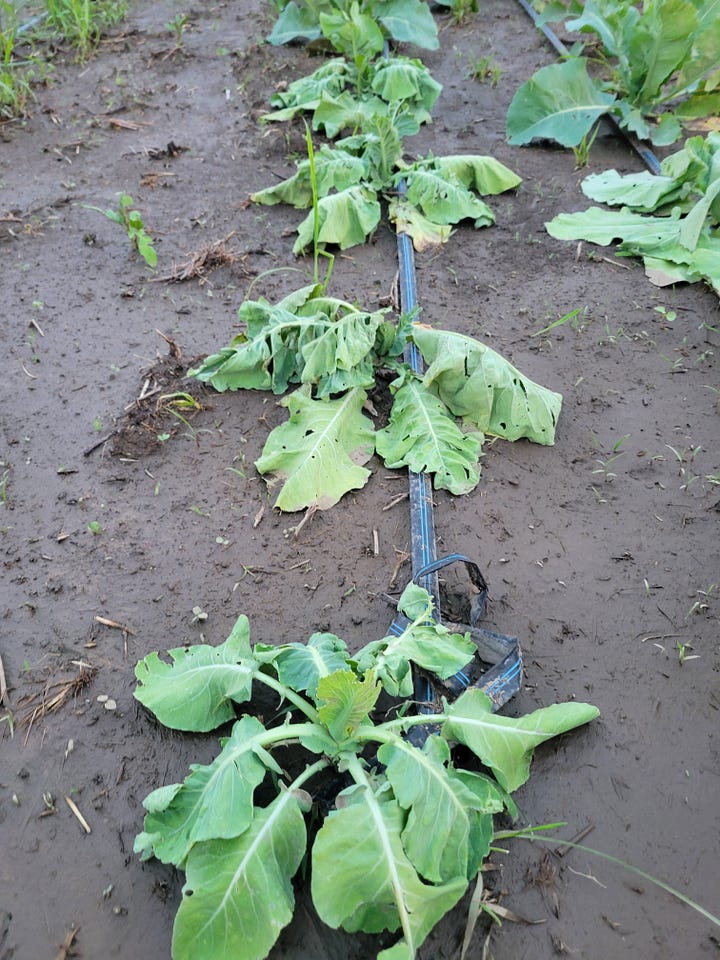
We were really hoping to miss the rains last week. The soil was already saturated and the crops aren’t willing to put up with multiple weeks of wet feet. But while we missed the worst of the storms, just north and south of us, we still got far too much rain and two more rounds of hail. We’ve had 5.80 inches of rain just in the past two weeks (9.1” in the past month). It isn’t a catastrophe, but the crops are definitely struggling. Last week we had beautiful, pristine heads of lettuce and now we have big, mostly beautiful lettuce with some tattered edges. The pea vines were likewise a bit battered, so you may notice some blemishes on your peas this week. They are still delicious, but use them sooner than later (probably not a problem for most of us) as they may not store as long as they usually do.
Many of our crops are showing signs of the recent weather, but if things settle down, most should recover just fine. Some of our summer squash, broccoli, and cauliflower in the lower parts of the fields have been less resilient and have already succumbed to roots rotting in the saturated soil. But never fear—it isn't all gloom and doom. There are still lots of delicious things to come. Some crops may arrive a little later than we'd planned, but that's farming.
As we mentioned in our earlier emails, this year we’re celebrating not only our 20th Bounty Box season, but also the people who made it possible: YOU.
Each week we’re drawing a name from our membership list to receive a surprise from the farm. It might be one of our favorite kitchen tools, a product from the BGF Pantry, or another fun farm-inspired treat.
This week’s winner is: Cheryl W.!
Cheryl's gift is another one of our favorite eco-friendly kitchen items: beeswax food wraps. We LOVE these for wrapping around sandwiches, cheese or a partial bell pepper and for covering bowls in the refrigerator. They’re also a great way to reduce single-use plastic wrap in the kitchen.
Congratulations, Cheryl! And good luck to everyone in next week’s drawing. There’s lots more fun to come!
Twenty years ago, during our very first Bounty Box season, we had one part-time employee and were scrambling to keep up with the weeds, the harvests, and the endless list of farm tasks.
Today we have a wonderful crew working with us—and somehow we’re still scrambling to keep up! Some things change. Some things don’t.
Most beets are round, but Cylindra beets are exactly what they sound like—long and cylindrical. Their unusual shape makes them easier to slice into uniform rounds and gives you more usable beet and less peeling waste, if you peel them at all.
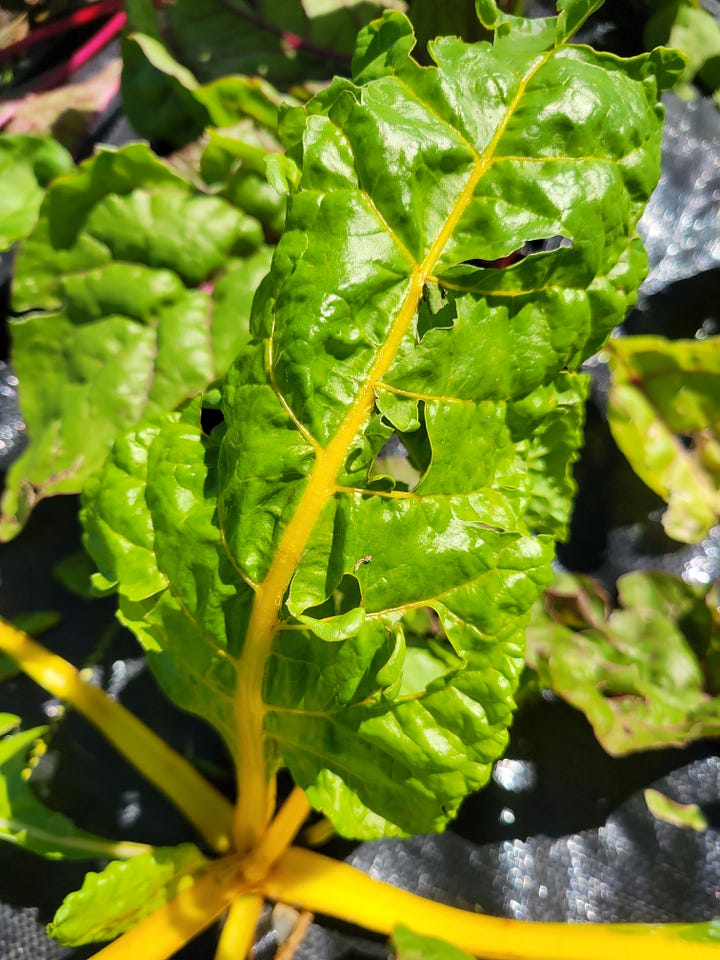
Beets are one of the few vegetables that truly give you two crops in one. The roots are sweet, earthy, and delicious roasted, while the greens can be used just like chard or spinach. If you’re new to beets, roasting is a great place to start, as it brings out their natural sweetness.
Beets are also packed with nutrients, including folate, potassium, and natural compounds that give them their deep color. Not bad for a vegetable that often gets overlooked.
💡 Pro Tip: Don’t throw away the greens! They’re closely related to Swiss chard and make a delicious addition to sautés, soups, and egg dishes.
🍽️ Simple Recipe: Maple and Balsamic Glazed Beets
🍽️ Bonus Recipe: Beet Fennel Salad
🍽️ Bonus Recipe 2: Fennel Frond Pesto
A few of this week’s vegetables may show a little cosmetic storm damage from recent hail and heavy rains. Don’t let a few blemishes fool you! A torn lettuce leaf or scuffed pea pod is usually only skin deep.
When in doubt, trim away any damaged spots and enjoy the rest. Sometimes the prettiest vegetables aren’t the tastiest—and sometimes the tastiest vegetables aren’t the prettiest.
Here’s our downloadable one-page guide to storing all things produce!
This section contains the crop-specific storage information, handling suggestions, and preparation tips for everything in this week’s box.
BEETS: Cut off greens, leaving an inch of stem. Refrigerate the unwashed greens in a closed plastic bag and use as you would chard or spinach. Store the beet roots, unwashed, with the rootlets (or “tails”) attached, in a plastic bag in the crisper bin of your refrigerator. They will keep for several weeks, but their sweetness diminishes with time. Just before cooking, scrub beets well and remove any scraggly leaves and rootlets. If your recipe calls for raw beets, peel them with a knife or vegetable peeler, then grate or cut according to your needs baby/young beets usually don't need to be peeled.
BROCCOLI/CAULIFLOWER: Wrap loosely in a plastic bag and keep it in the vegetable bin of your refrigerator for up to a week. Immediately before cooking, soak head down, in cold, salted water (1 teaspoon salt to a 8 cups of water) for 5 minutes. Any [organic] critters will float to the top where you can rescue them or allow them to suffer a salty death. (Note: If soaked in salt water before storing, it will become too rubbery and wilted to enjoy.) Slice the juicy, edible stems and use them wherever florets are called for. Peel particularly thick skin before using.
CUCUMBERS: Store unwashed cucumbers wrapped in a cotton towel in a sealed plastic bag in the vegetable crisper bin for about a week. Keep cucumbers tucked far away from tomatoes, apples, and citrus—these give off ethylene gas that accelerates cucumber deterioration. You can do a lot of fancy things to the skin of a cucumber, but when it is young, fresh (and unwaxed), it really only needs to be thoroughly washed. However, if the skin seems tough or bitter you can remove it; if the seeds are bulky, slice the cucumber lengthwise and scoop them out.
FENNEL: Cut off the stalks where they emerge from the bulb. To use the feathery foliage as an herb, place the stalks upright in a glass filled with two inches of water, cover the glass loosely with a plastic bag, and store in the refrigerator for up to five days. The unwashed bulb will keep in a plastic bag in the refrigerator for at least a week. To use, remove any damaged spots or layers. Cut the bulb in half lengthwise and check the inner core. If it’s tough, remove it with a paring knife. Fennel should be washed carefully, because dirt can lodge between the layers of the bulb. Chop or mince the leaves.
GARLIC SCAPES: One of our favorite crops of the year. These curly green things are the emerging flower stalk from a hardneck garlic plant. We remove them to redirect more of the plant’s energy into the bulb, but it also provides us with a delightful fresh garlic treat. These keep very well in a plastic bag in your produce drawer and can be used in any recipe calling for garlic. They make a great pesto and can be minced and added to room-temperature butter, which is then stored in log shape, in the freezer for a last minute dollop of goodness for vegetables, breads or meat. We also enjoyed them tossed whole in olive oil and grilled as a side dish.
All of your GREENS will keep best if stored in a plastic bag, with the top folded over and placed in the produce drawer of your refrigerator. We find the longest storage is achieved by having a layer of cotton or paper towel between the greens and the plastic. If leaves become limp, retrim the ends and a quick soak in cold water will often restore their crispness.
HERBS: Generally, except for basil, set unwashed bunches of fresh herbs (with stems) upright into small jars filled with 1 to 2 inches of water, cover loosely with plastic wrap, and refrigerate for up to two weeks. Rinse fresh herbs right before use. To release their scents and flavors, rub them between your hands before mincing or chopping. If you have no idea what to do with fresh herbs, there is one great default answer “compound butter.” Finely mince leaves and knead them into a stick of room temperature butter. Roll the butter into a log in plastic wrap and store in the freezer. Then simply slice off the amount you need to add delicious, ready-to-use flavor to vegetables, bread or meats.
NAPA CABBAGE: Store Napa cabbage whole in a plastic bag in the refrigerator for up to 2 weeks. To prepare the entire head at once, cut it in half lengthwise, remove the core, and chop as desired. Or, separate and wash individual leaves as needed.
PEAS: We grow snow peas (flat pod with little bumps showing immature peas inside) and sugar snap peas (rounded pods with mature peas inside).Both have edible pods and can be used interchangeably in recipes. They are particularly good in stir-fries and salads, though we tend to eat them fresh as a snack. Peas keep best in their plastic container in the produce drawer of your refrigerator.
SUMMER SQUASH/ZUCCHINI: Refrigerate unwashed zucchini and summer squash for up to a week and a half in a perforated plastic bag or in a sealed plastic container lined with a kitchen towel. These do not need to be peeled to use, just slice them up and go!
** NOTE: You will notice over the course of the season that some box contents listed above say “Perhaps one of the following...” These are items that we can’t harvest in sufficient quantities for the whole CSA to receive at one time. We do track who gets what and we will do our best to ensure that everyone eventually receives each item. On some items this may take several weeks, so please be patient.
Here are a few upcoming events and milestones to keep on your radar:
Need extra produce this week?
Our VegEmail program makes it easy to order additional vegetables, pantry items, flowers, eggs, cheese, baked goods, and more from Blue Gate Farm and our partner producers.
Place your order here by Thursday at noon and pick up Saturday at:
SingleSpeed Brewing (Downtown Des Moines)
Grand Theater (Knoxville)
It’s one more way we’re helping make local food easy.
You’ve seen our photos—now we’d love to see yours.
Share pictures of your Bounty Box haul, your favorite recipe, your 20th Delight gift, your garden-inspired dinner, or even your kids (or pets!) helping unpack the box. Email, text, or post them in the Blue Gate Farm Community group.
We’ll feature member photos throughout the season.
Facebook: Blue Gate Farm
Community Group: Blue Gate Farm Community
Instagram: @bluegatefarmfresh
Questions? Just hit reply or click the comment button below
Thank you for being part of the farm this season. We’re glad you’re here!
Best from the farm,
— Jill and Sean & the whole BGF Crew
No posts
Comments
Nothing yet. Say the first thing.
Sign in to join the conversation.