
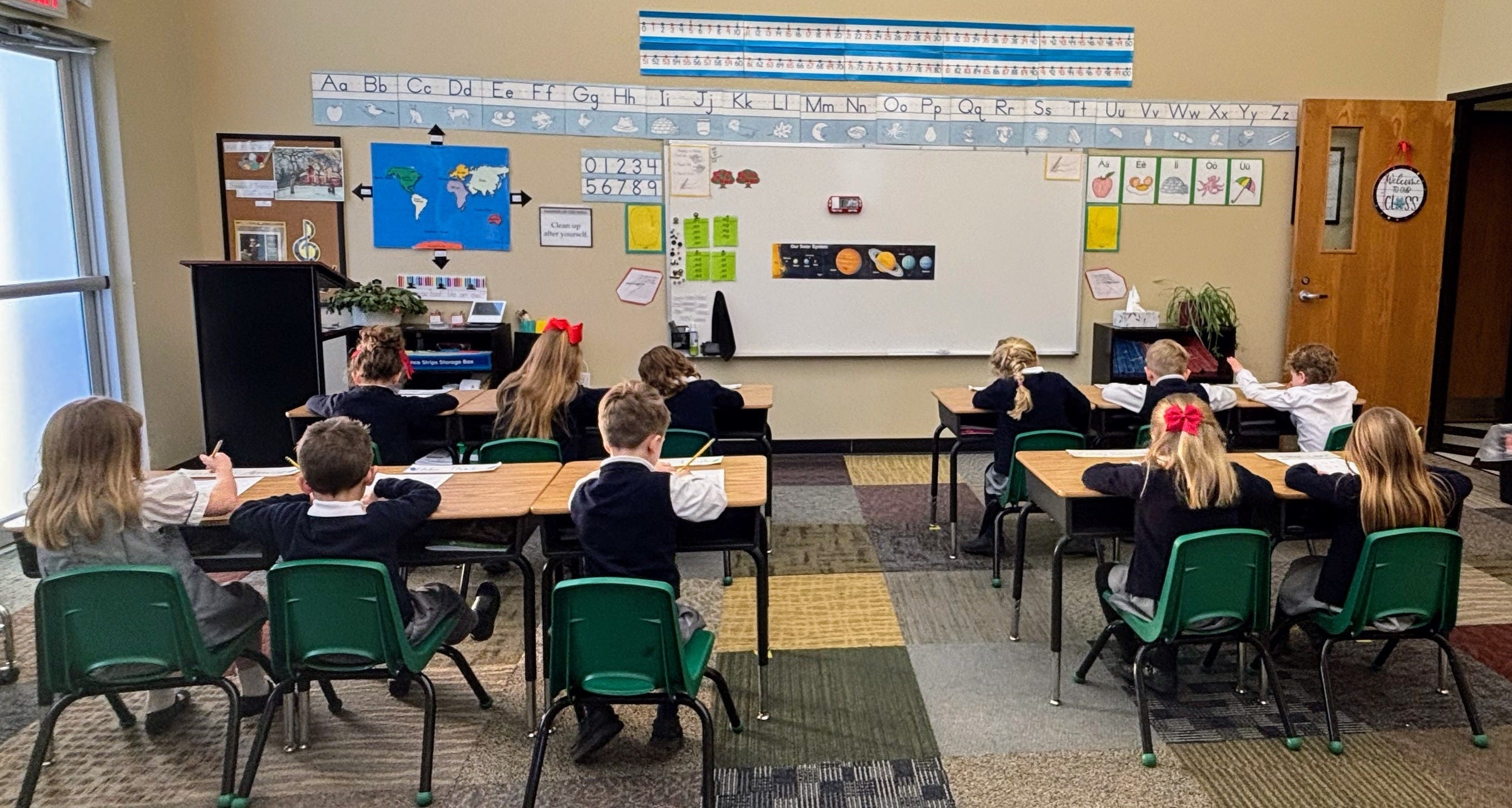
I drive by the campus several times a week. I know families who sent their children there. I am familiar with and have even used some of the curriculum materials created by the founders. I’m even friends with one of the co-founders and have learned a great deal from him in our conversations and through his writing. It wasn’t until recently, though, that I had the opportunity to spend a morning at the beautiful classical school in my community. I went into it with high expectations. What I observed met and far exceeded those expectations.
I arrived on campus just as the students were being dropped off in the carpool and getting ready for the day. As I was ushered into the first building, the youngest students were lined up in the hall outside the three kindergarten classrooms. Before they even entered their classrooms, one of the teachers gave a brief lesson on the “Manner of the Week”.
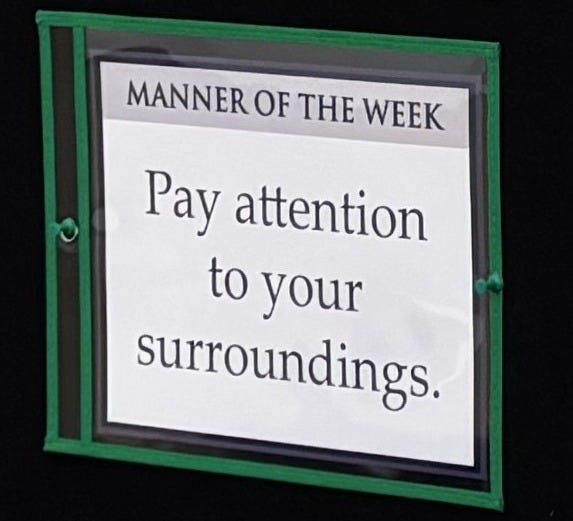
First, she asked the students to recap last week’s manner and share a time when they had put it into practice. Several students raised their hands and recalled times when they had to practice patience. One student didn’t have a past time to recall, but knew that when he traveled to Arizona soon, he would have to be patient as he waited in lines at the airport and on the long flight. I was already impressed by their ability to listen to their teacher and peers, wait their turn, and articulate their thoughts so clearly, even before we entered the classroom. It only got better.
After the students recited the morning prayer and Pledge of Allegiance, they quietly dispersed to their classrooms, where they put their backpacks and coats away and placed their homework in the appropriate spots. Although kindergarten students only attend two days a week, the routines have clearly been taught and established, creating a calm, orderly environment. Once their belongings were put away, they sat at their desks and got started in their workbooks. Again, everyone knew the expectations and routine.
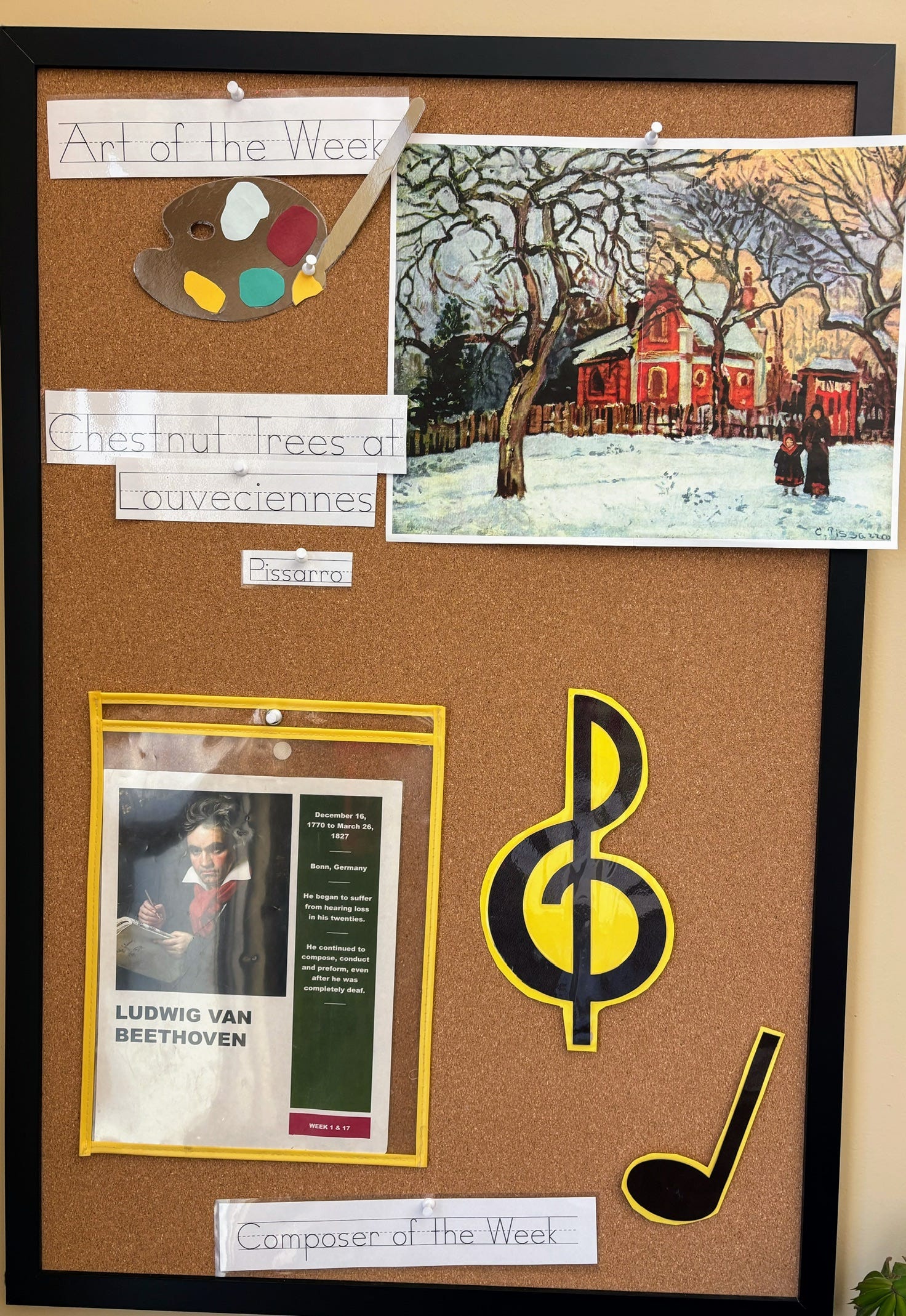
As the students worked and settled in for the day, I took the opportunity to look around the classroom. What I first noticed was how simply decorated it was and that everything displayed had a purpose. The alphabet, a number line, a map of the United States, and reminders about proper writing posture, with a few other items, were in constant view of the students. A small bulletin board displaying the “Art of the Week” and the “Composer of the Week” was just off to the side.
The bulletin board where they held “Calendar Time” had a bit more on it, but everything served a purpose and was used as the students moved from their desks to the carpet for that portion of the day. What they did during “Calendar Time” was also directly connected to what they did at their desks.
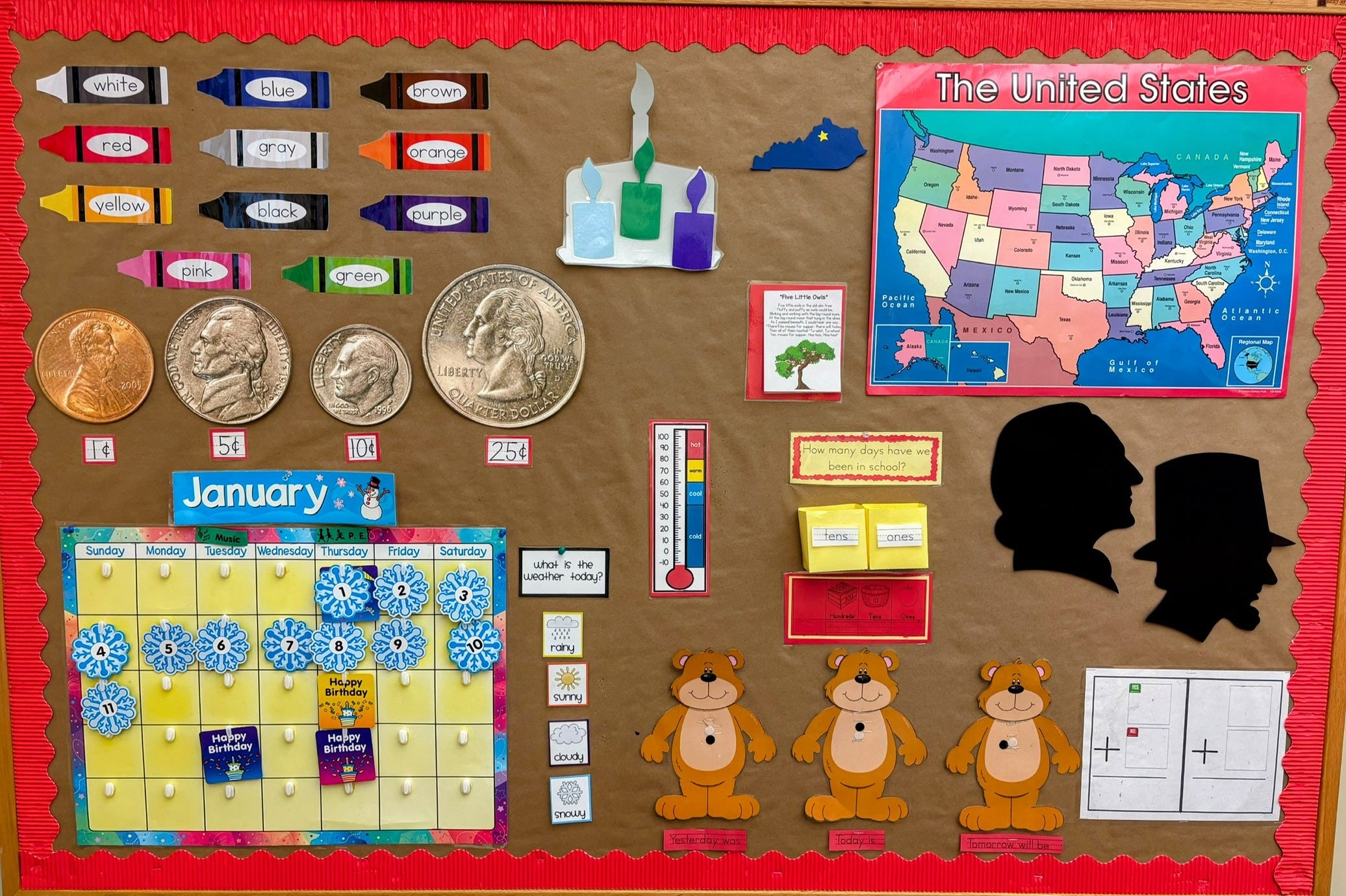
After the students finished their workbook assignment, it was time for their “Recitation”. It was fascinating to watch kindergarteners answer questions about which continent they live on, how many continents there are, and then name them all. Sadly, there are probably some high school students who can’t do that. There were other questions that surprised me as well, but the students were ready and eager to answer whatever was thrown at them.
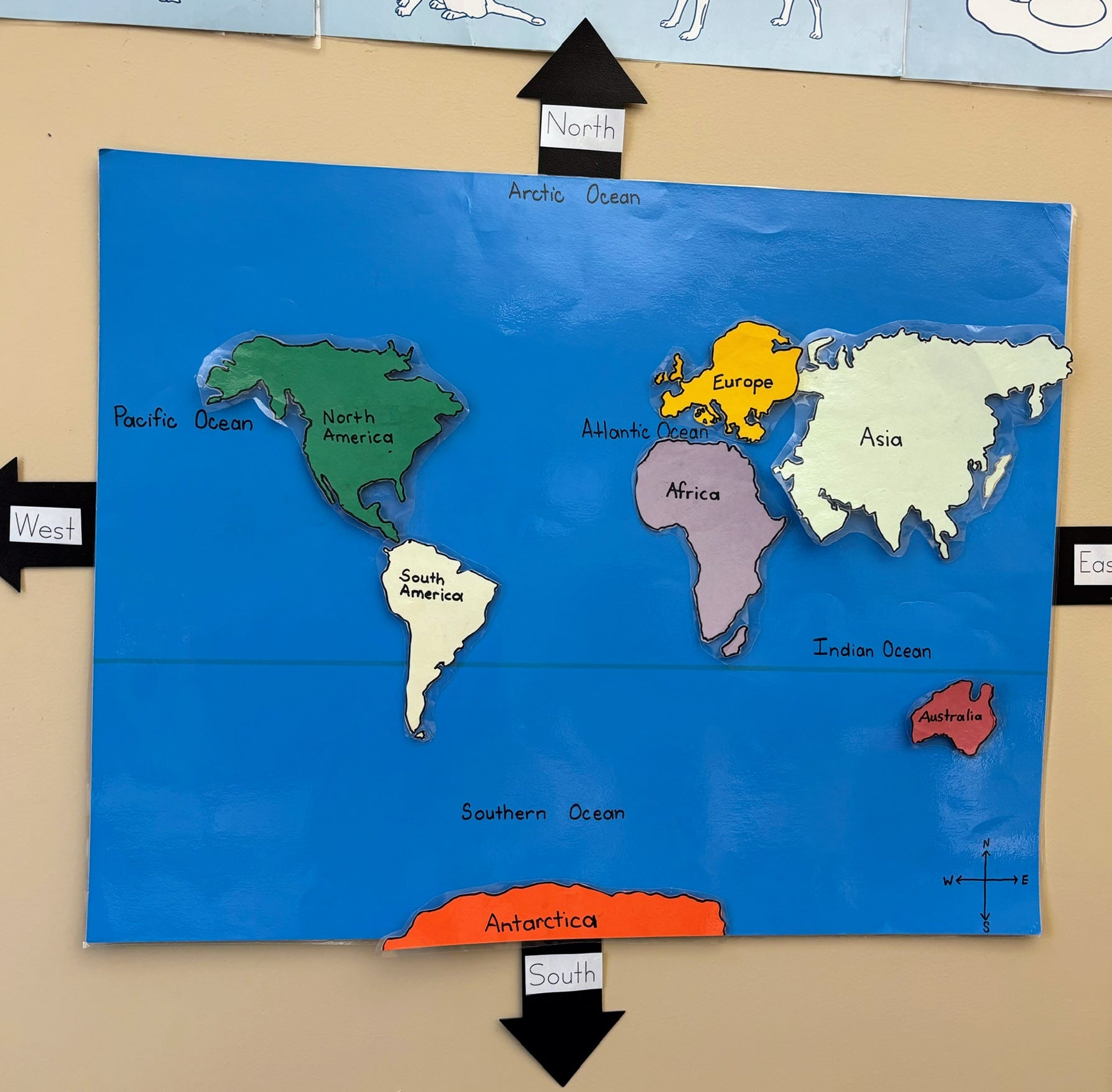
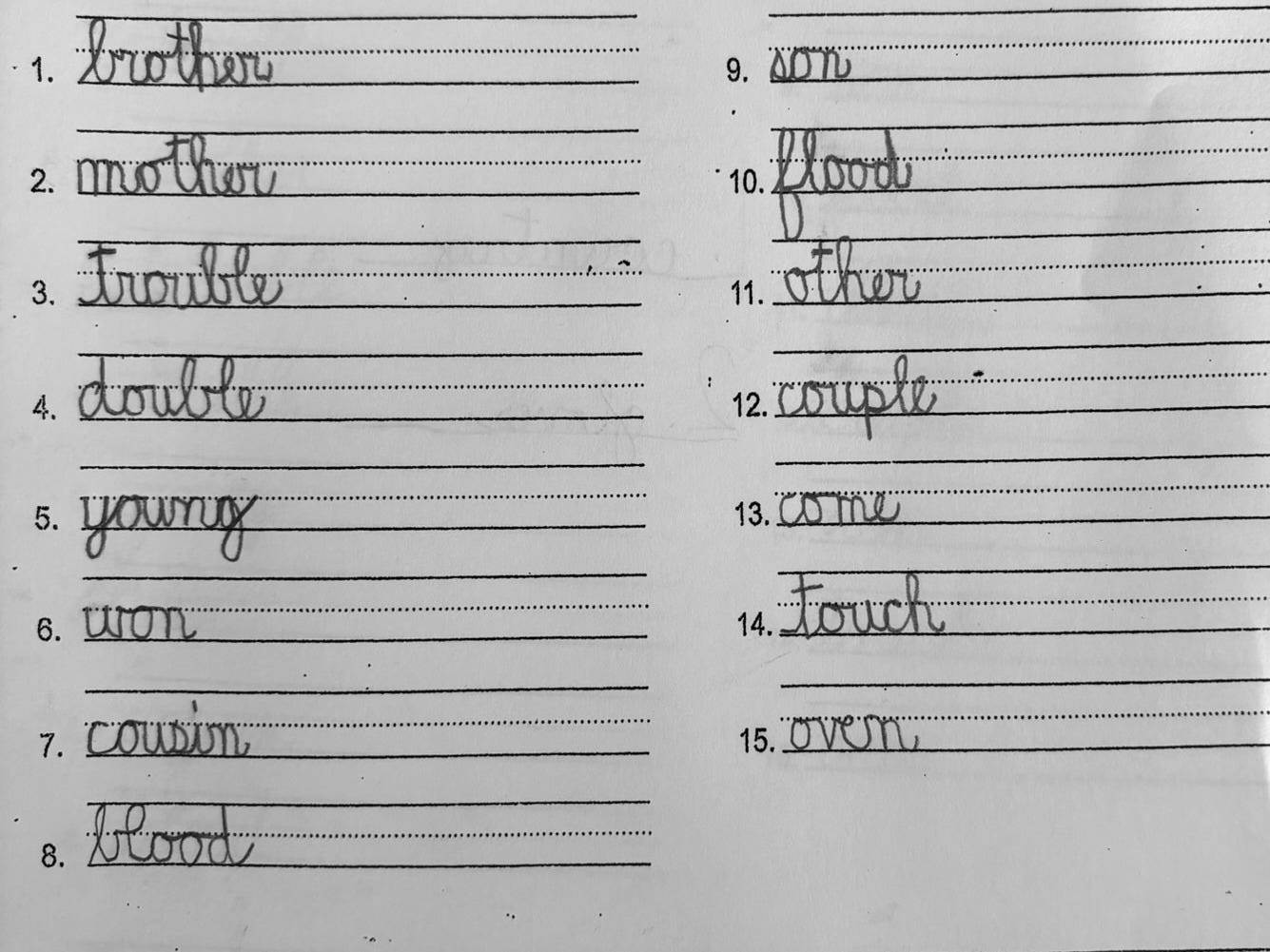
I could have spent all day in that classroom, but I wanted to see what amazing things were happening in the other grades. What I witnessed in the first-, second-, and third-grade classrooms was no less remarkable. First graders were writing spelling words in the most beautiful cursive; second graders were grouping their spelling words by vowel sound and breaking them into syllables; and third graders were working multiplication and division problems and learning Roman numerals. All of this was taking place in the most calm, orderly fashion, and no time was wasted searching for materials or transitioning from one activity to another.
As I marveled at the rigor and depth of learning taking place, I kept wondering why on earth we ever stopped teaching this way. I also struggled with the reality that this kind of education isn’t available to all parents who want it for their children. That needs to change. States need to make it less complicated and less painful to open classical charter schools. Colleges and universities need to create programs that train teachers in the classical model. Public school districts across the country need to research ways to create this model within their districts.
I am already planning my next visit to this amazing school to witness the excellent teaching and robust learning happening in the upper grades. I suspect I will leave with an even greater appreciation for classical education and probably a bit of knowledge I wish I’d been taught in school.
Classically educated individuals are largely responsible for our country’s founding and the creation of our government. I believe that classically educated individuals will be credited with restoring the ideals our founding fathers held. It’s a shame we ever stopped teaching according to the classical model, but as C.S. Lewis wrote, “If you are on the wrong road, progress means doing an about-turn and walking back to the right road…”. It’s time to do an about-turn in K-12 education.
No posts
Comments
Nothing yet. Say the first thing.
Sign in to join the conversation.