
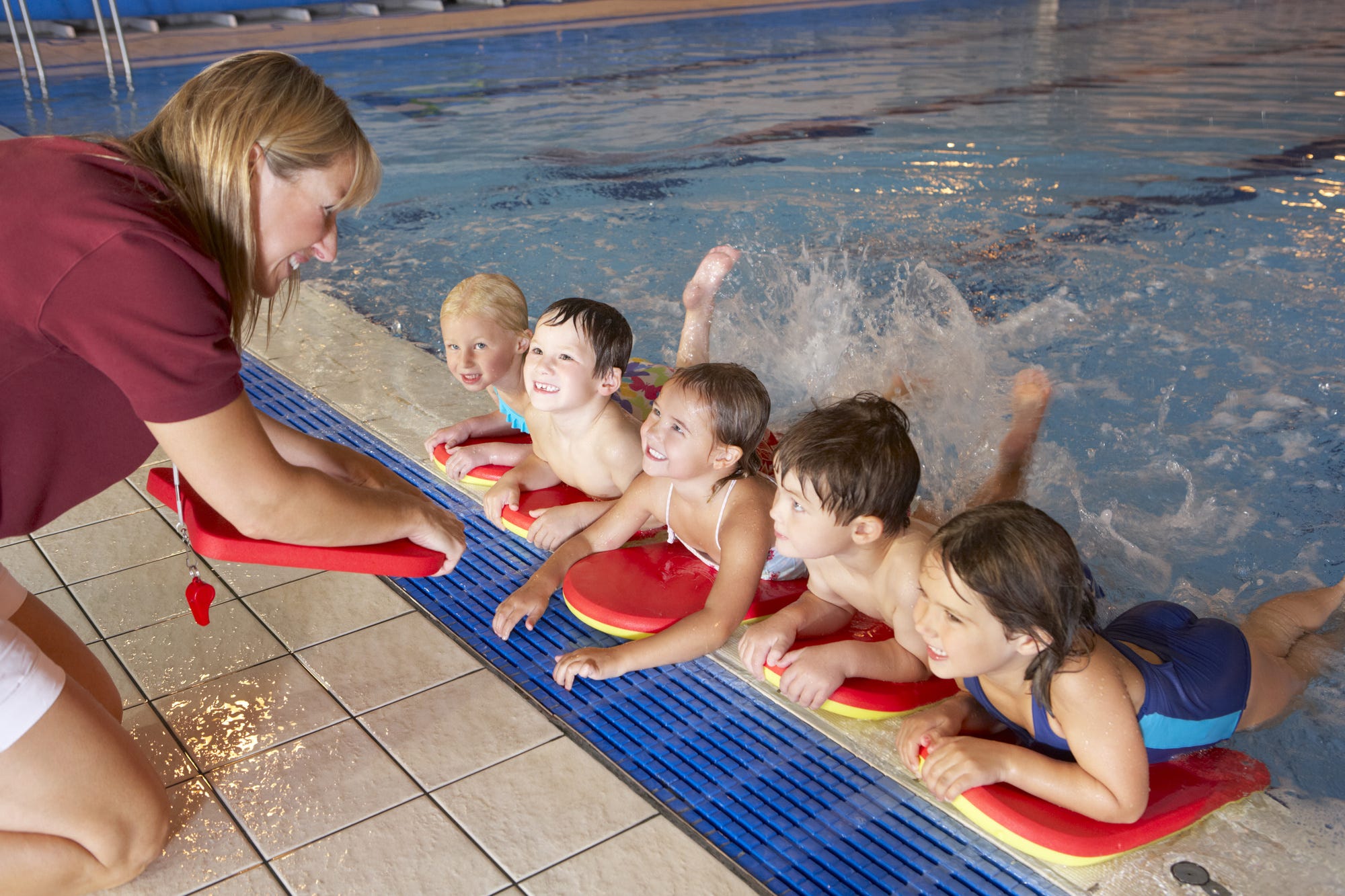
I spent nearly every day of my childhood summers at the neighborhood pool. We took many family vacations to the ocean. And, I still vividly recall the giant metal slide in the lake at the campground where we would stay with my grandparents for a week or two each summer. I grew up around water and swimming. That doesn’t mean I am a good swimmer.
I’m not afraid of water, and I can tread water and get from point A to point B, but I wouldn’t call myself a good swimmer. You see, even though I grew up around water and swimming, nobody ever explicitly taught me how to swim. The mechanics of the strokes, how to breathe properly, and how to use my kicks and strokes to increase speed and efficiency are specifics I never really learned.
Everything I know, I picked up by observing others and by trial and error. Because of this, my exercise/activity of choice is running or walking, not swimming. Running is easy and automatic. Swimming is difficult, cognitively taxing, and a chore.
When I think about the decline in reading for pleasure, I can’t help but wonder if there are people who have similar feelings about reading as I do about swimming. They might have grown up in a house full of books, and they likely spent at least 13 years in school surrounded by books and other printed texts. They grew up around reading, but that doesn’t mean they are good readers.
When asked, most people will say that they like stories, can get through the latest bestseller, and consider themselves literate, but they likely wouldn’t consider themselves good enough readers to tackle some of the more challenging contemporary works or the classics.
You see, even though just about every adult grew up around books, written text, and reading, many were never explicitly taught how to read. Far too many adults never learned the mechanics of literacy that make reading easy and automatic. For most, it’s easier to watch a movie (or short-form videos) in their leisure than it is to dig into Dickens or Twain.
I know there are many other factors at play when looking at the decline in reading for pleasure, but if my theory is at least partially correct, we can change things going forward. As more schools throw off the false notion that immersing students in the written word is enough to ensure literacy and begin explicitly teaching students how to read (throughout the entirety of their K-12 experience), we can have hope that reading might become a pleasurable activity enjoyed by most once again.
No posts
Comments
Nothing yet. Say the first thing.
Sign in to join the conversation.