
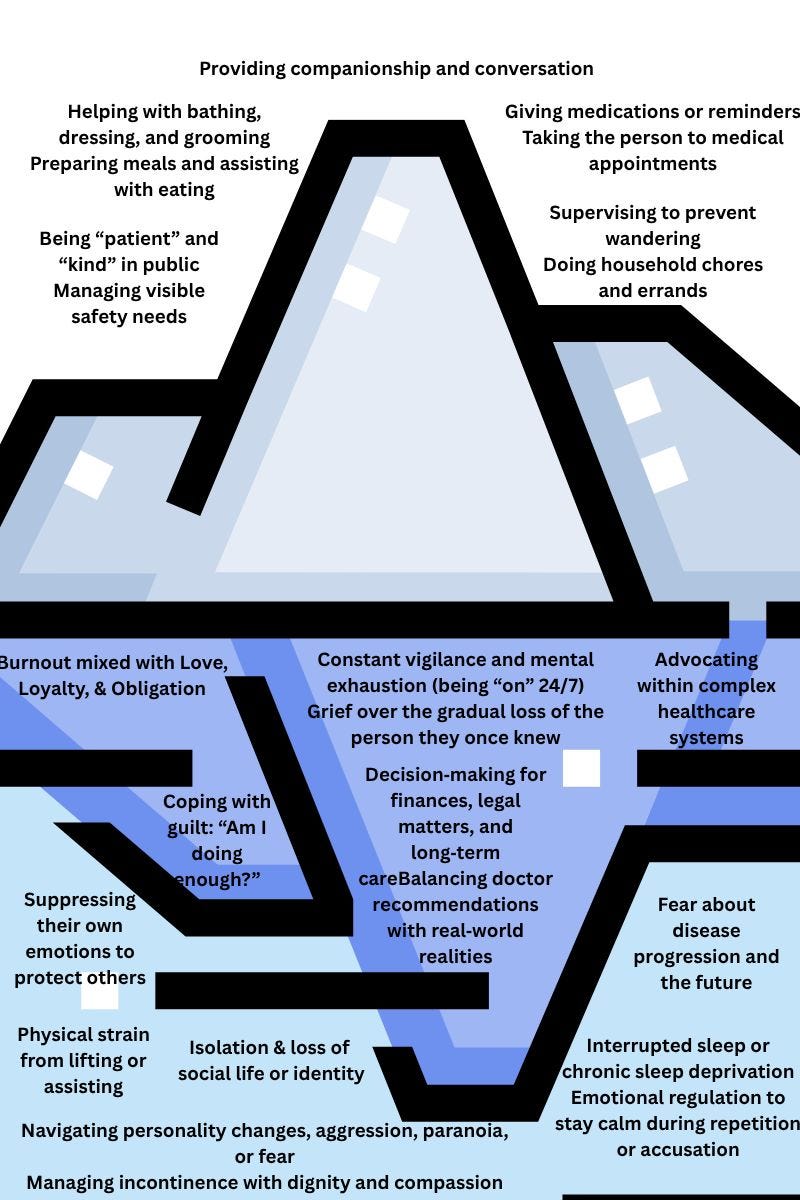
I read this article by Samantha B on LinkedIn, but more importantly, I downloaded the associated graphic. And I’ve been sitting with it for a few weeks now.
Occasionally, I’ll look at the aspects of a caring partnership she calls out—both those above the waterline, but mostly those below.
Frankly, it makes me feel better and reminds me of the depth and breadth of caregiving. It’s something that few who haven’t been a care partner can fully understand. It helps to explain why I feel so overwhelmed most of the time.
A layer she puts on top of it is dementia caregiving. And again, I connect with that idea because my care partner has PD and LBD.
In support of this theme, I thought I’d share a series of posts related to burnout, recovery, and sustainability—
Carepartner invisibility
Signs of Carepartner Burnout
BTW: I’ve got 8-9 of the 10 in play ☹
Burnout
The Margin is Gone!
Diminishing Love - Trauma Response
Gender Gap in Caregiving (more burden!)
https://www.cnn.com/2026/03/18/health/caregiver-gender-gap-wellness
Allowing others to help
Silence Breaks Caregivers
Holly Larson’s comment on naming
When caregivers can name what they’re feeling, they can start to see those emotions not as something to hide, but as data—pointing to where support, boundaries, or a different care approach might be needed. That’s often the moment care becomes more sustainable.
I hope these posts spurred hope, ideas, and resilience in your caring journeys.
Take care of yourselves,
Bob.
Comments
Nothing yet. Say the first thing.
Sign in to join the conversation.