
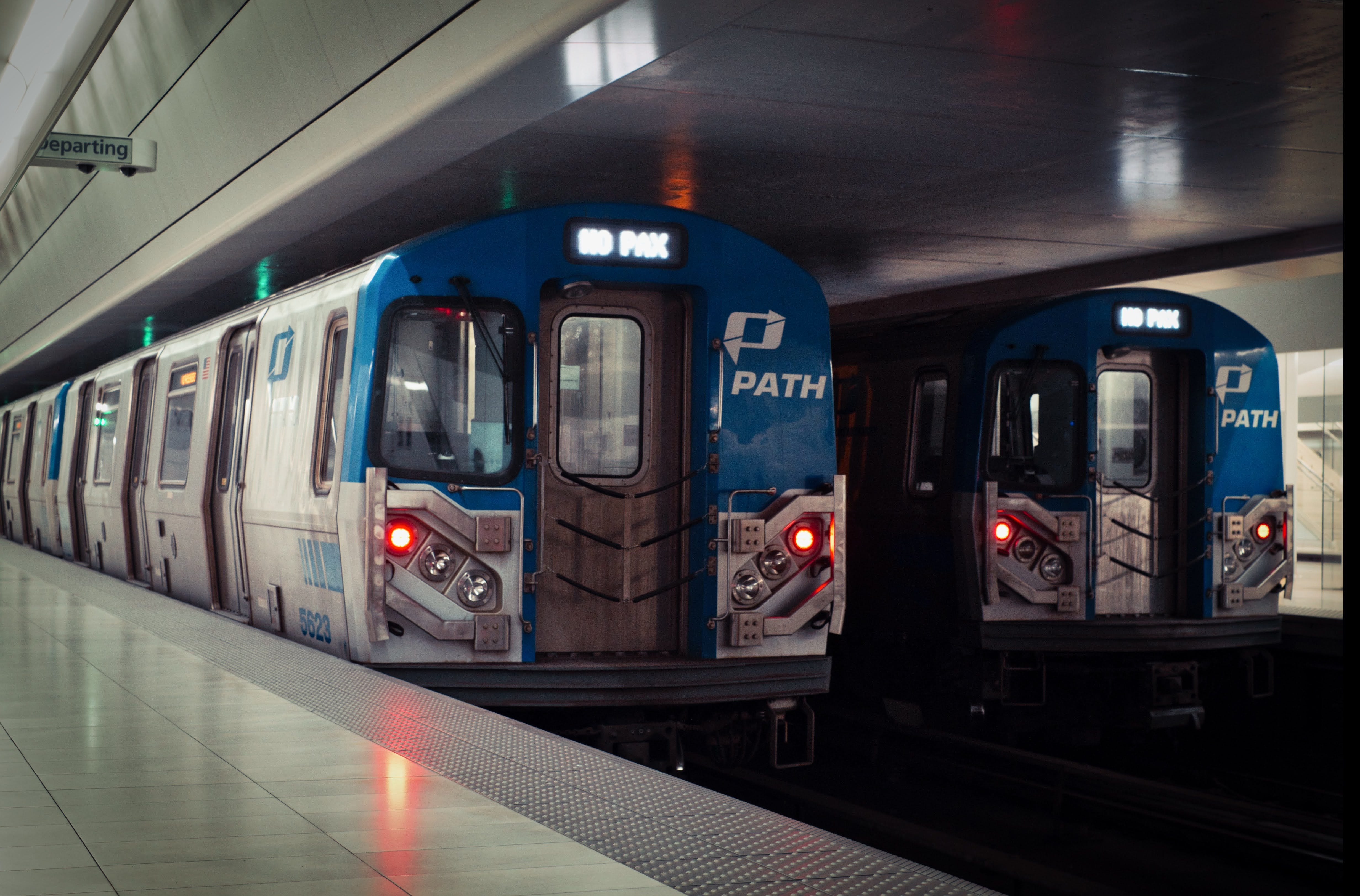
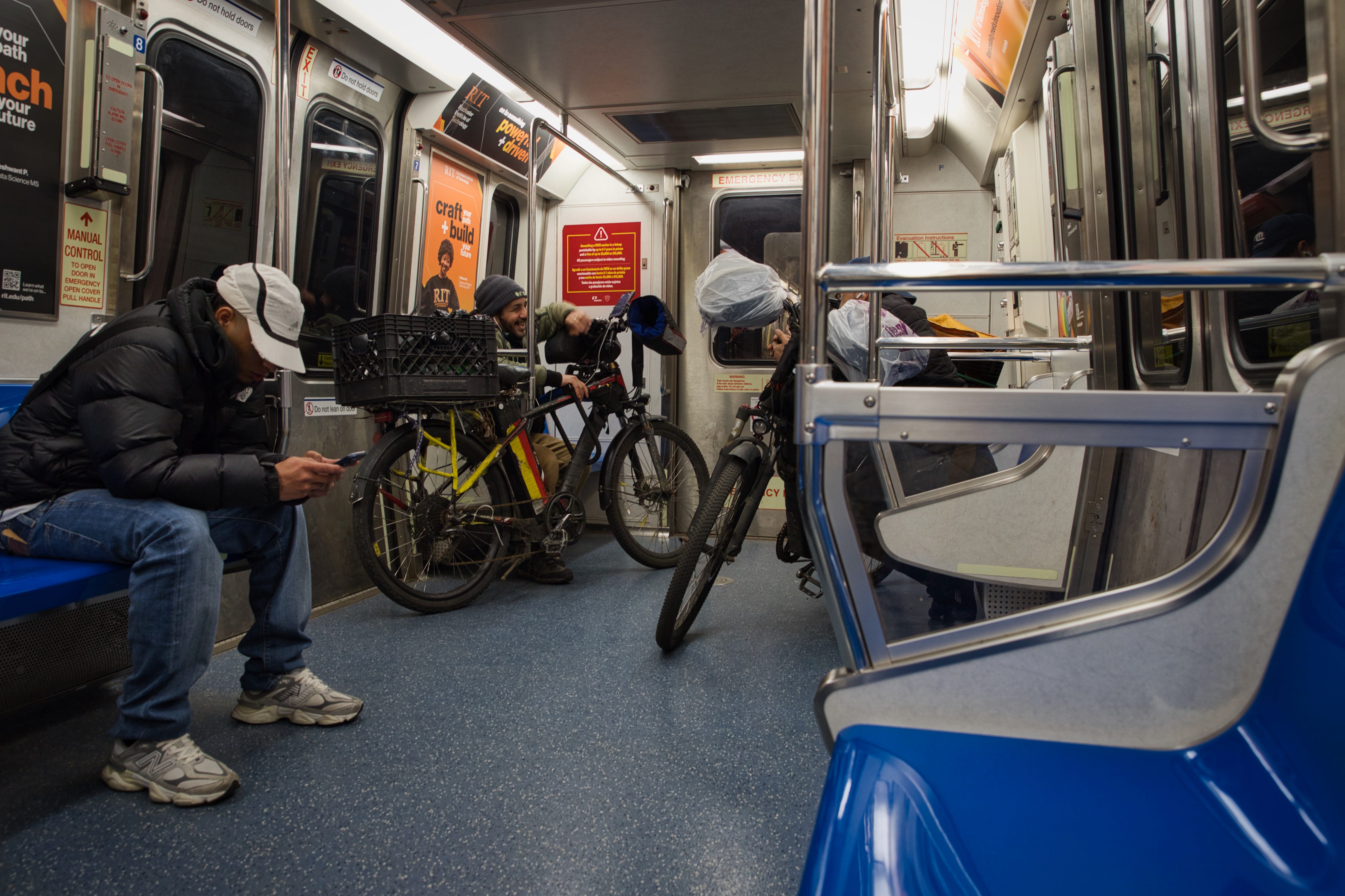
After clocking 25,000 steps in Manhattan, I descend into an old, but well-lit and spacious concourse under 33rd Street and Broadway. It’s almost 10 o’clock on a Sunday night, and I know I need to hurry if I want to catch my PATH train to New Jersey. I see the train is already at the platform, with three minutes before departure. To my surprise, it’s busy: almost no seats are available. A lot of the space is taken up by heavy e-bikes used to deliver food to New Yorkers. Their riders can finally sit, relax, and scroll on their smartphones on their way home, where rent is more affordable than across the river.
45 minutes and one train transfer later, I exit onto the platform and find a very long line of bikers waiting for an elevator down to the main level of Newark Penn Station. Some decide to take the stairs, some put their bulky mules on the escalator. They are all tired and don’t bother caring much about foot passengers trying to squeeze in between a solid chain of bikes. I stop to think that it’s a very accurate snapshot of what this rail connection has become over the years: it links two neighbouring cities, but two different worlds. One that places orders, and one that delivers them.
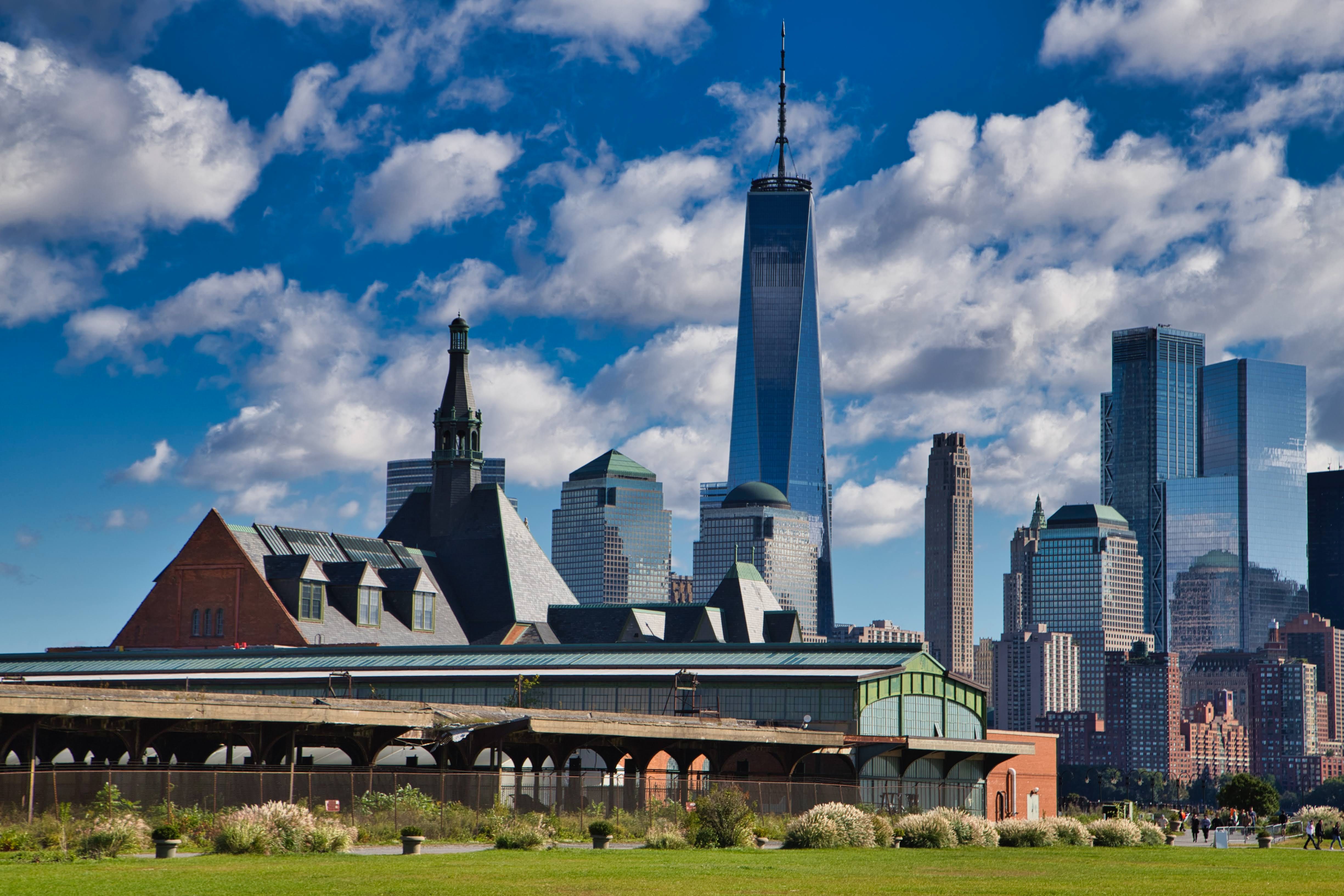
The PATH (The Port Authority Trans-Hudson) has been an important metro link between northern New Jersey and New York City for almost 120 years. It runs 24 hours a day, 7 days a week, 365 days a year. The idea behind it was simple: to get people across the Hudson River without having to use a ferry. And if you’ve ever waited on a cold, windy dock for a boat that’s running late, you know why subways are better. Ferries are slow, expensive, prone to weather conditions, and usually drop you off at a port nowhere near where you actually need to be.
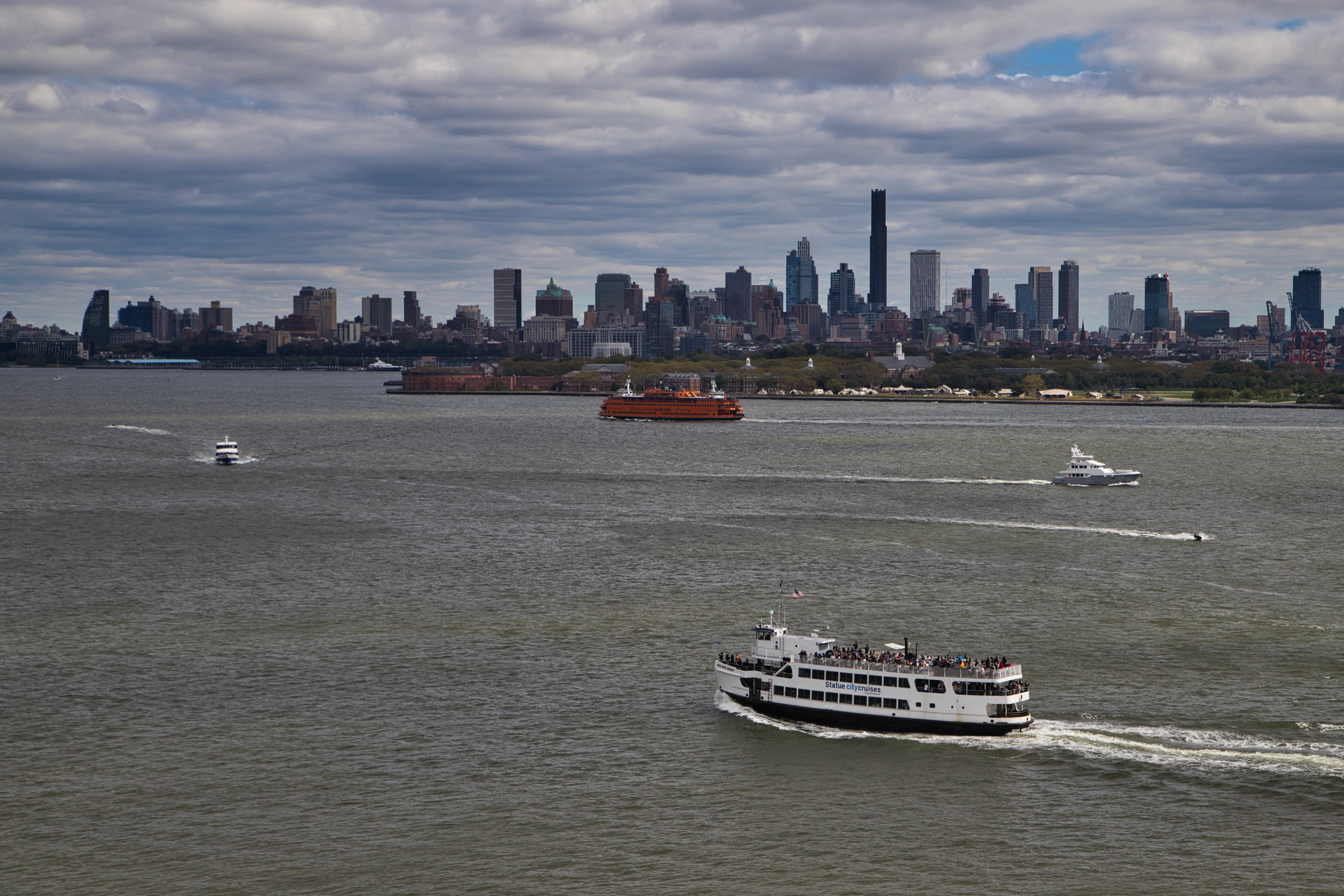
When PATH opened in 1908, it was an immediate success. For the first five decades, ridership was strong, and the system was doing well. Until the 1950s, when car ownership surged across the US, and two new tunnels and the George Washington Bridge gave New Jersey drivers a direct road access into Manhattan. As a result, the PATH, or Hudson and Manhattan Railroad as it was known back then, fell into decline.
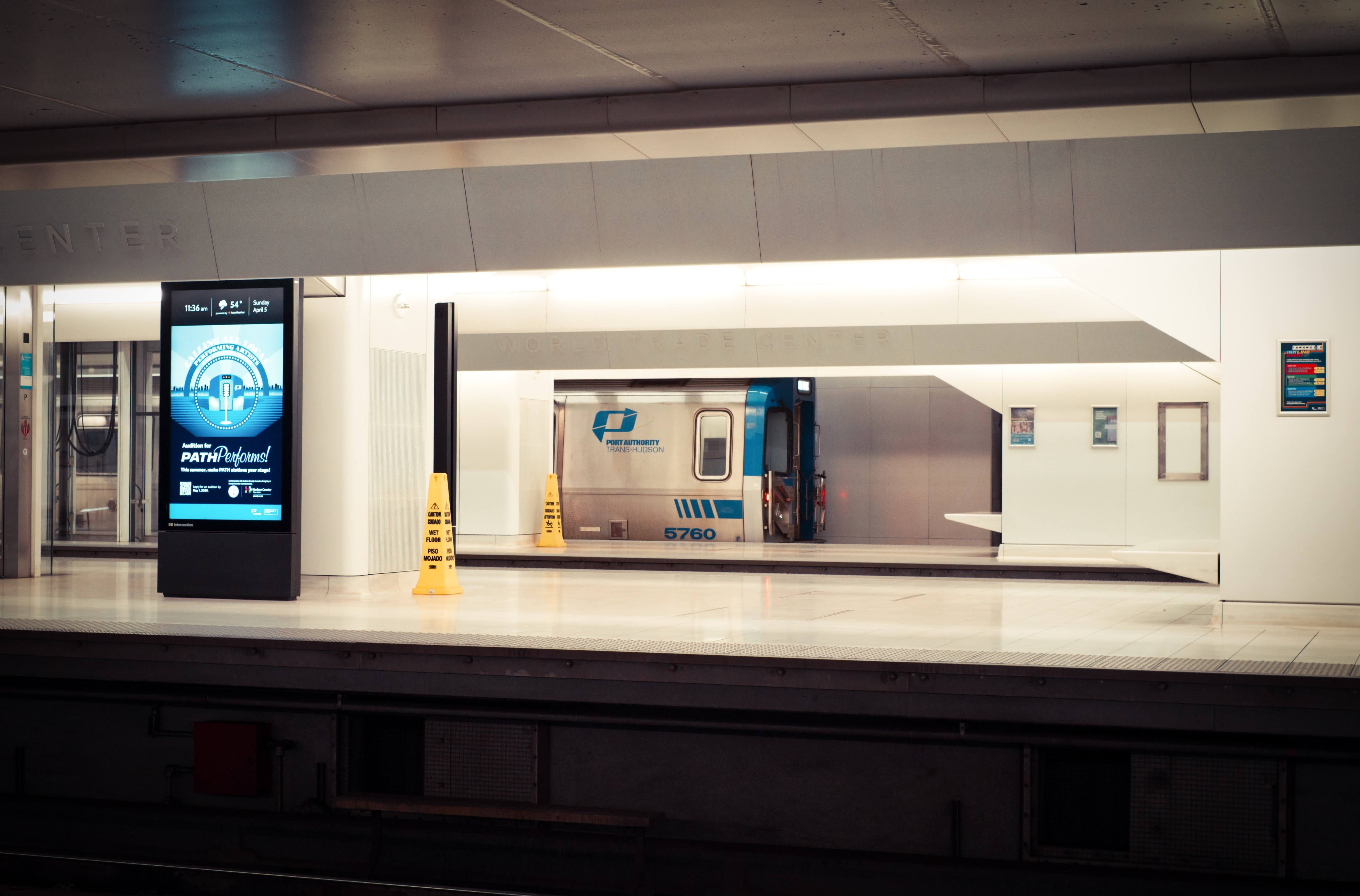
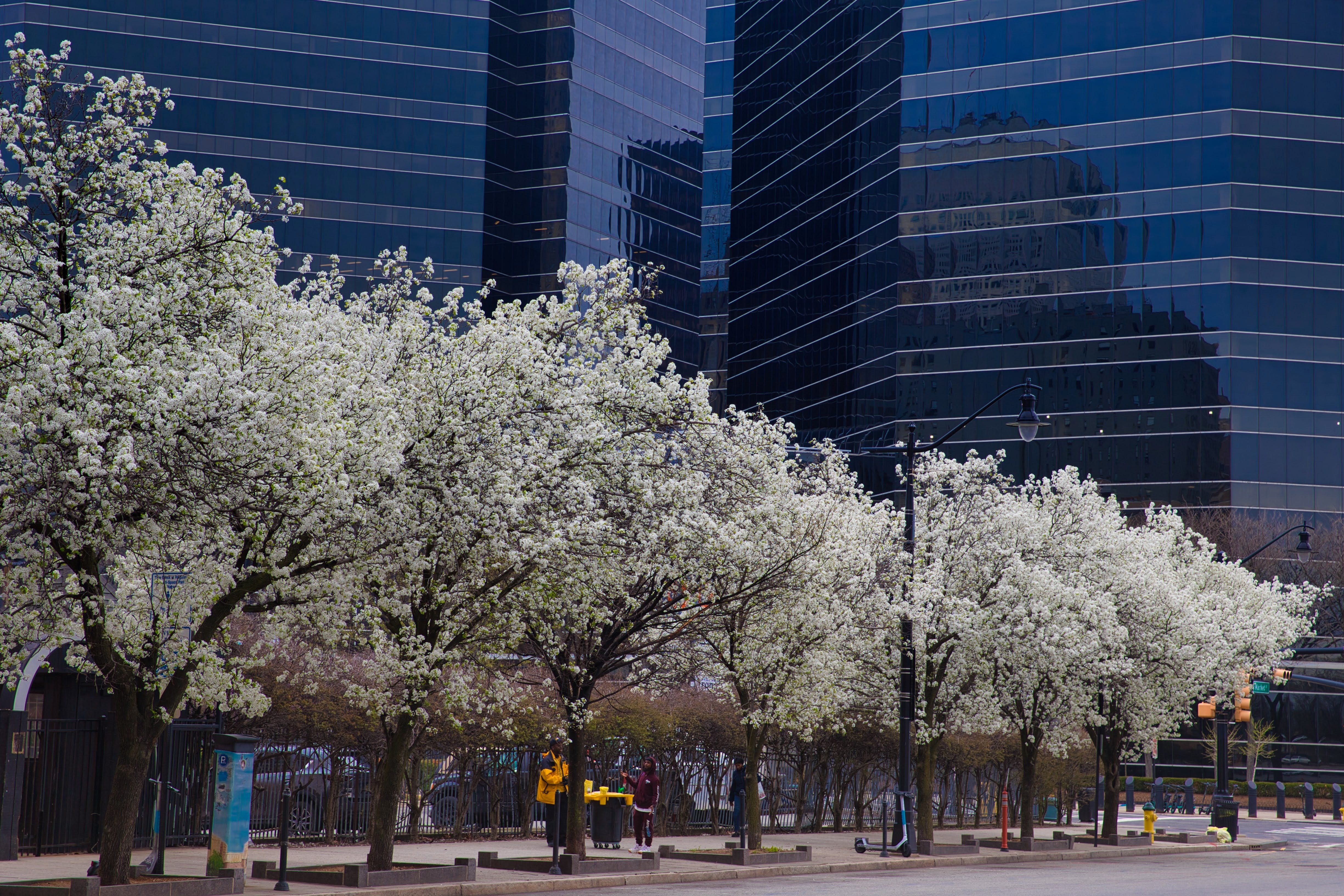
Fast forward to 2026, a one-way PATH fare is $3.00. Driving into Manhattan means paying $23 in bridge or tunnel tolls, and that’s even before Manhattan’s congestion pricing kicks in, which adds another $9 during peak hours if you’re heading below 60th Street. And I haven’t even mentioned having to sit in the traffic. The car, it turns out, was never quite the solution it promised to be: the more roads you build, the more people drive.
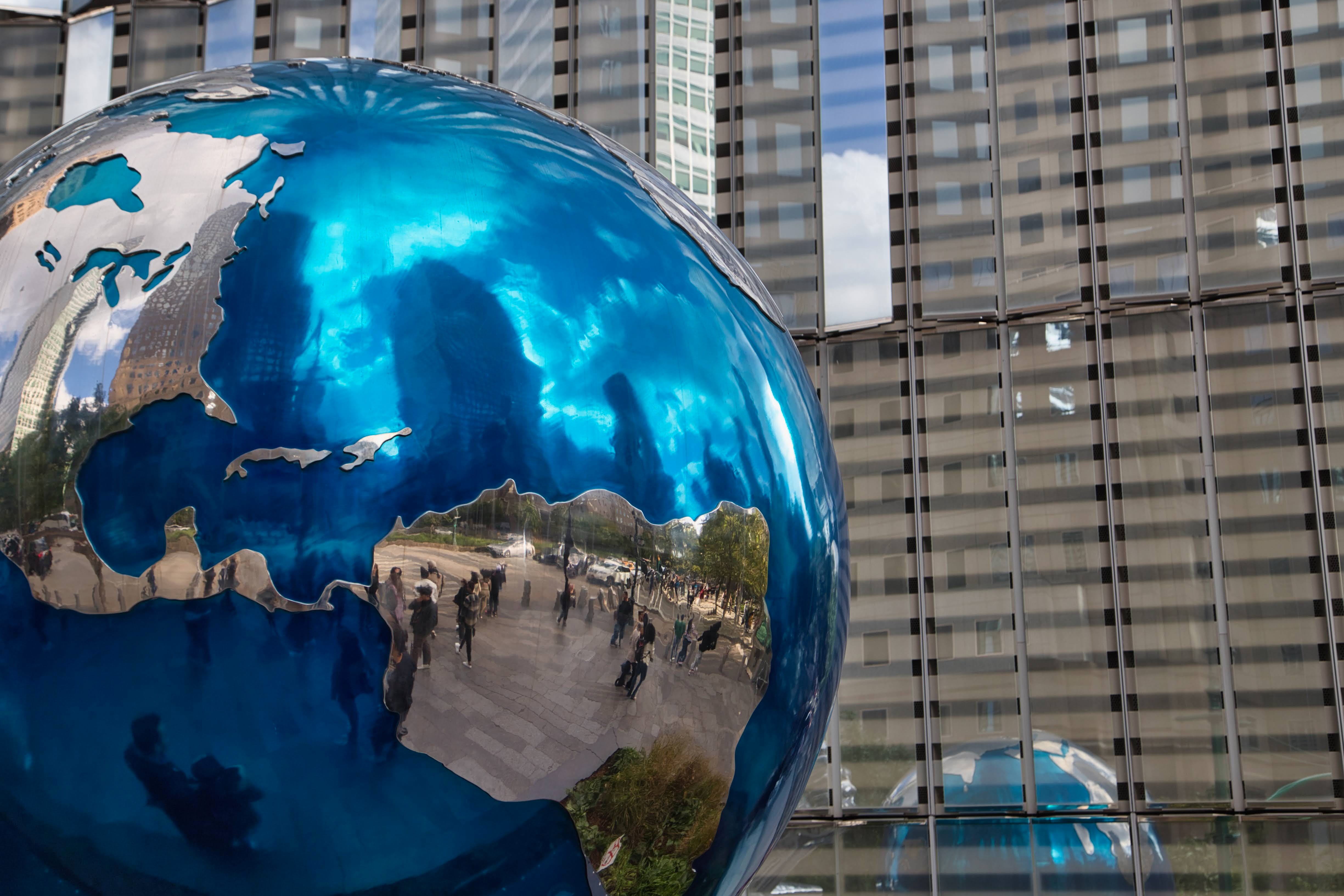
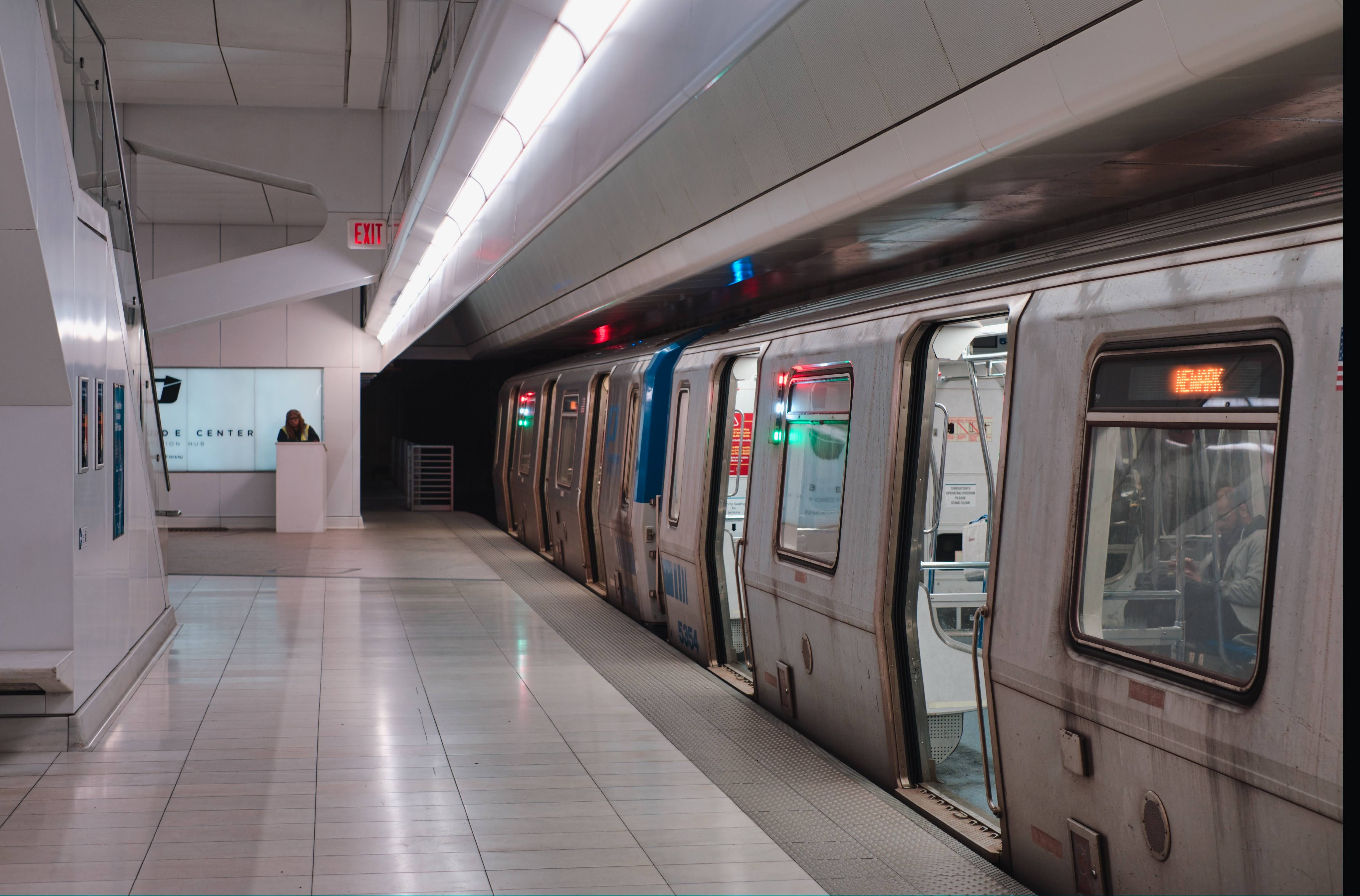
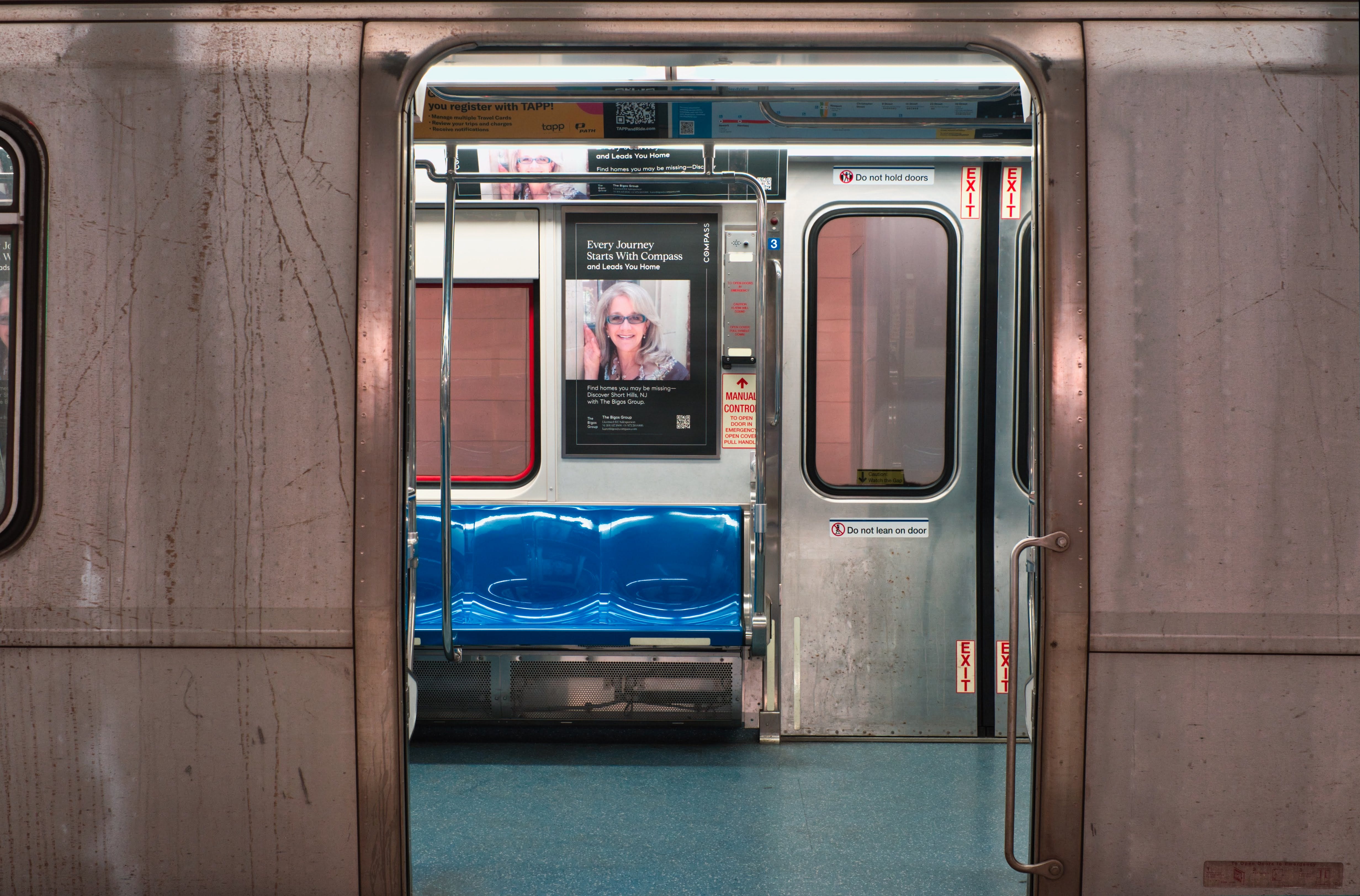
Today, PATH operates 13 stations across four lines: 7 in New Jersey, 6 in New York City. The system covers 14 miles in total and moves over 50 million passengers a year. Trains run in sets of up to nine PA-5 railcars built by Kawasaki Heavy Industries, similar to those on the New York City subway, with the entire fleet replaced between 2009 and 2011.
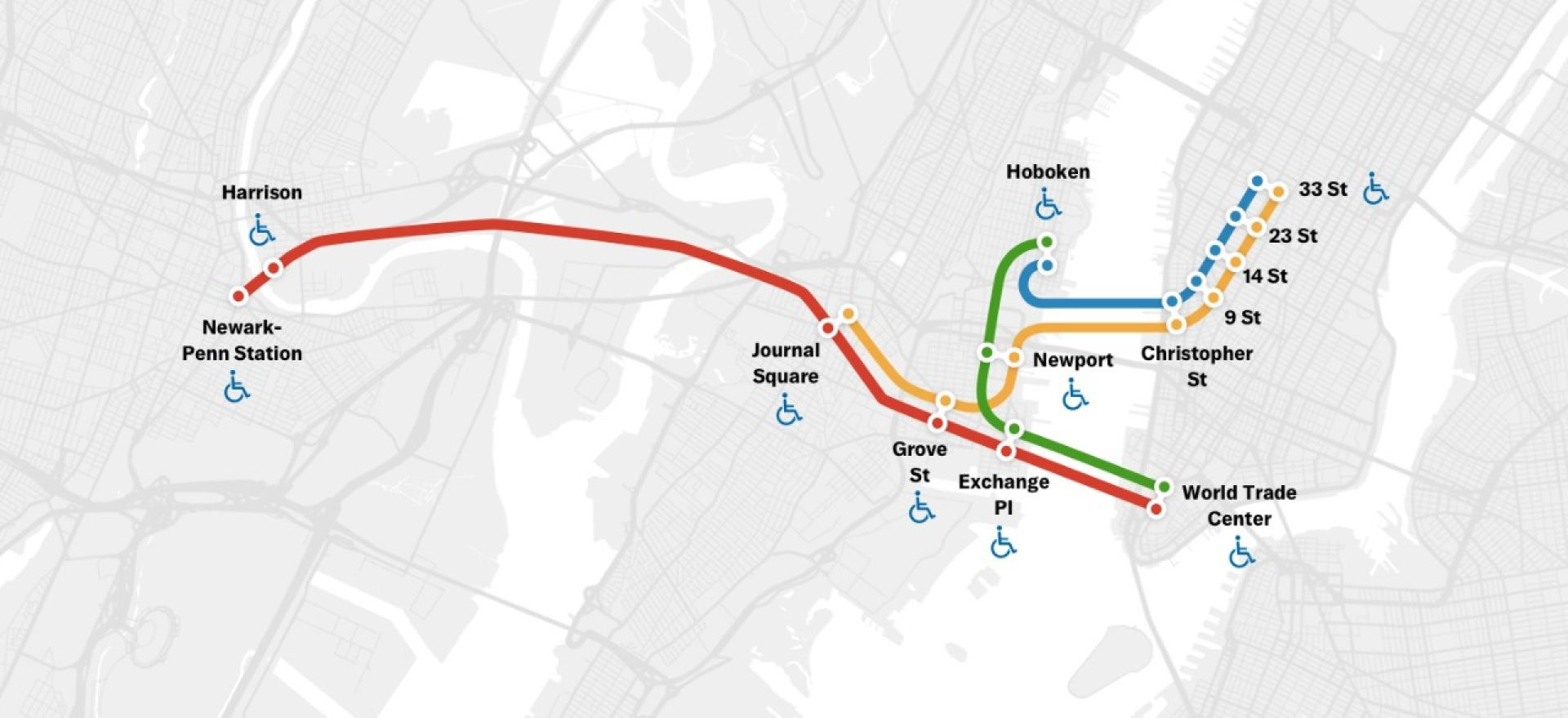
The system hasn’t physically expanded since 1937, when the Red Line reached Newark, but keeping 117-year-old infrastructure running smoothly takes a lot of money, which PATH has been notorious for not having enough of it. There is a complicated funding model due to its status as a commuter railroad, not a subway system, that prevents it from having more funding and lifting some rigorous requirements from the Federal Railroad Administration (FRA).
Is the NYC Subway Still the Lifeblood of the City, or a Relic in Decline?
·
Jan 4
There’s a sound New Yorkers know by heart: the screech of steel wheels echoing through century-old tunnels, scaring thousands of rats that live beneath the platforms. The NYC subway isn’t pretty. It’s not clean. It’s often loud - and sometimes a little creepy. But it’s also the sound of movement: millions commuting, dreaming, surviving. New York is a ci…
Having said that, PATH is currently investing $430 million into many improvements: track and bridge work, modernization of four key stations, new train cars, bypass capacity for out-of-service trains, and a new electric substation in Jersey City. A sea wall along the Passaic River is also being completed to protect the system from future flooding, a lesson learned from Hurricane Sandy the hard way.
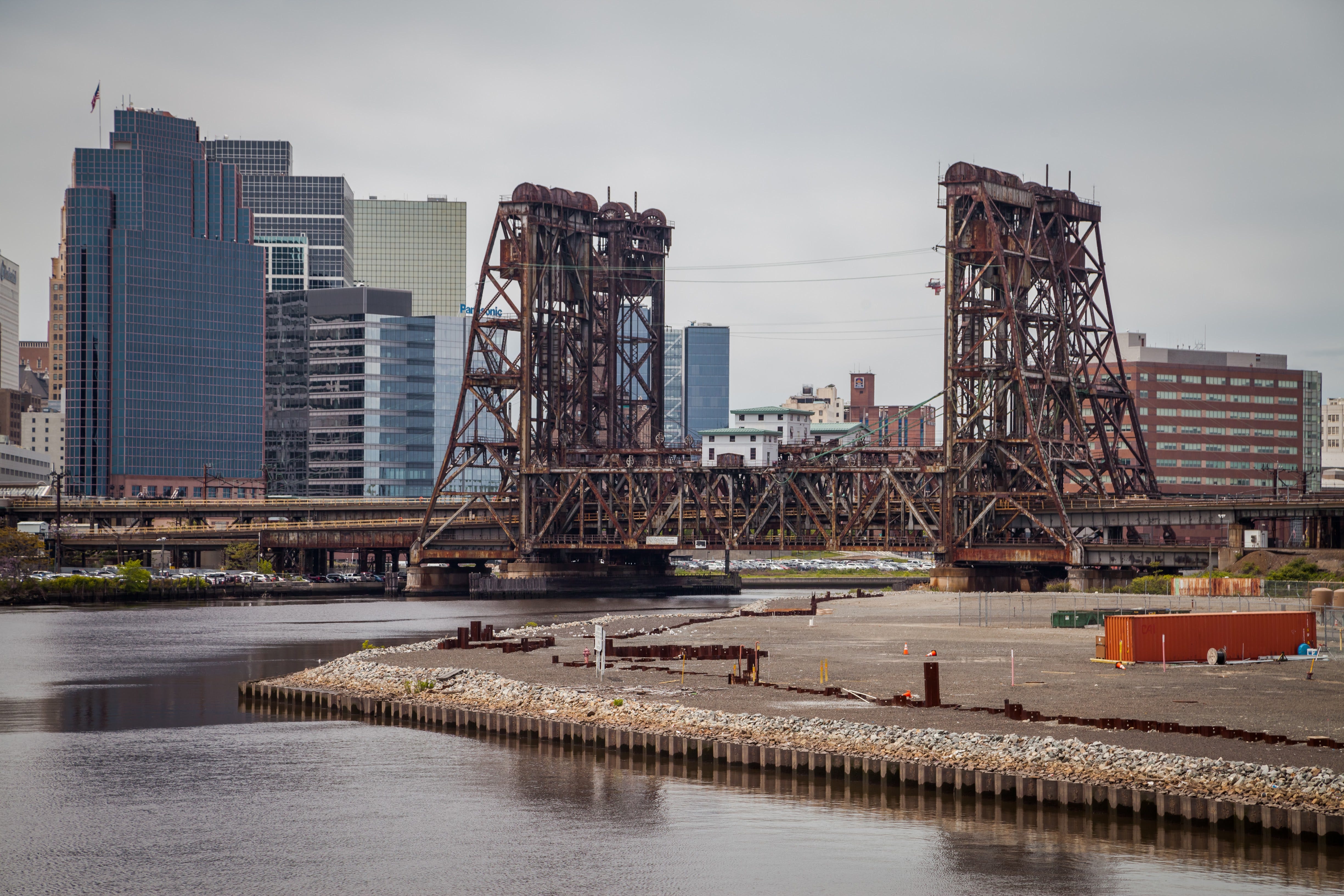
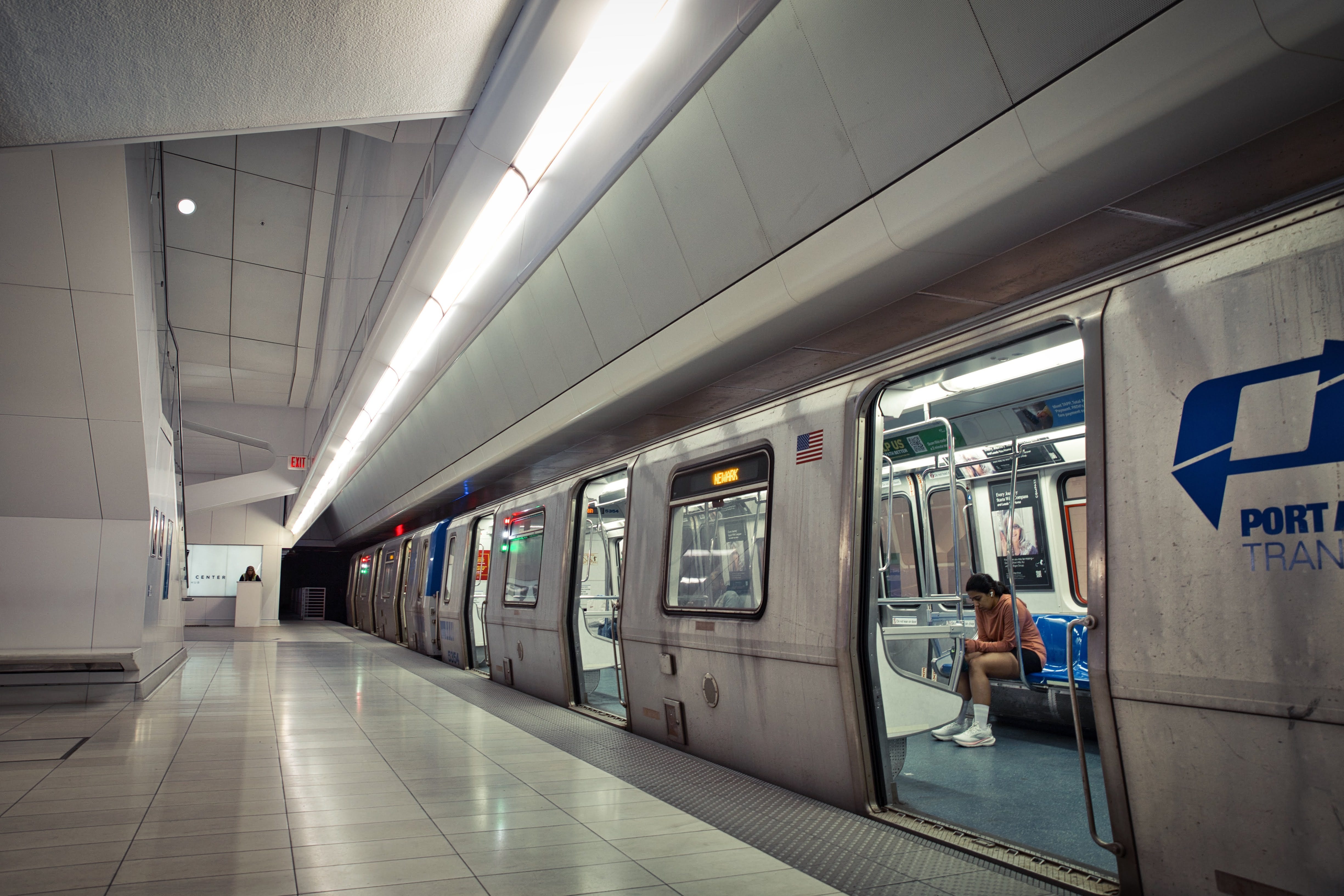
There’s more good news for riders: starting May 2026, PATH will run all four lines seven days a week for the first time in 25 years. No more transfers between Hoboken and the World Trade Center, no more adding 15 minutes to your midtown commute because your train had to loop through Jersey City. Train frequency is also increasing during both peak and off-peak hours to address overcrowding and improve service, accordingly.
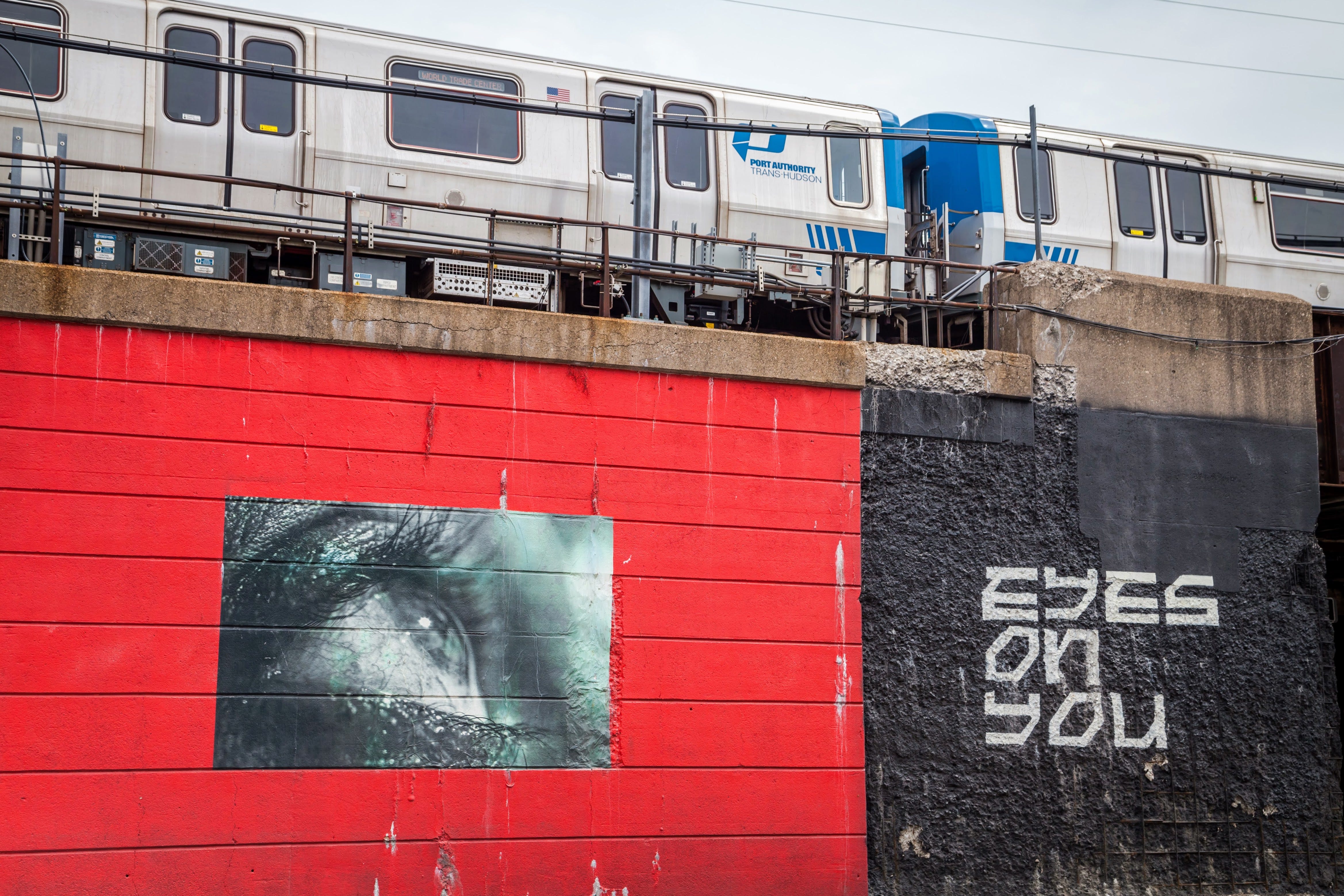
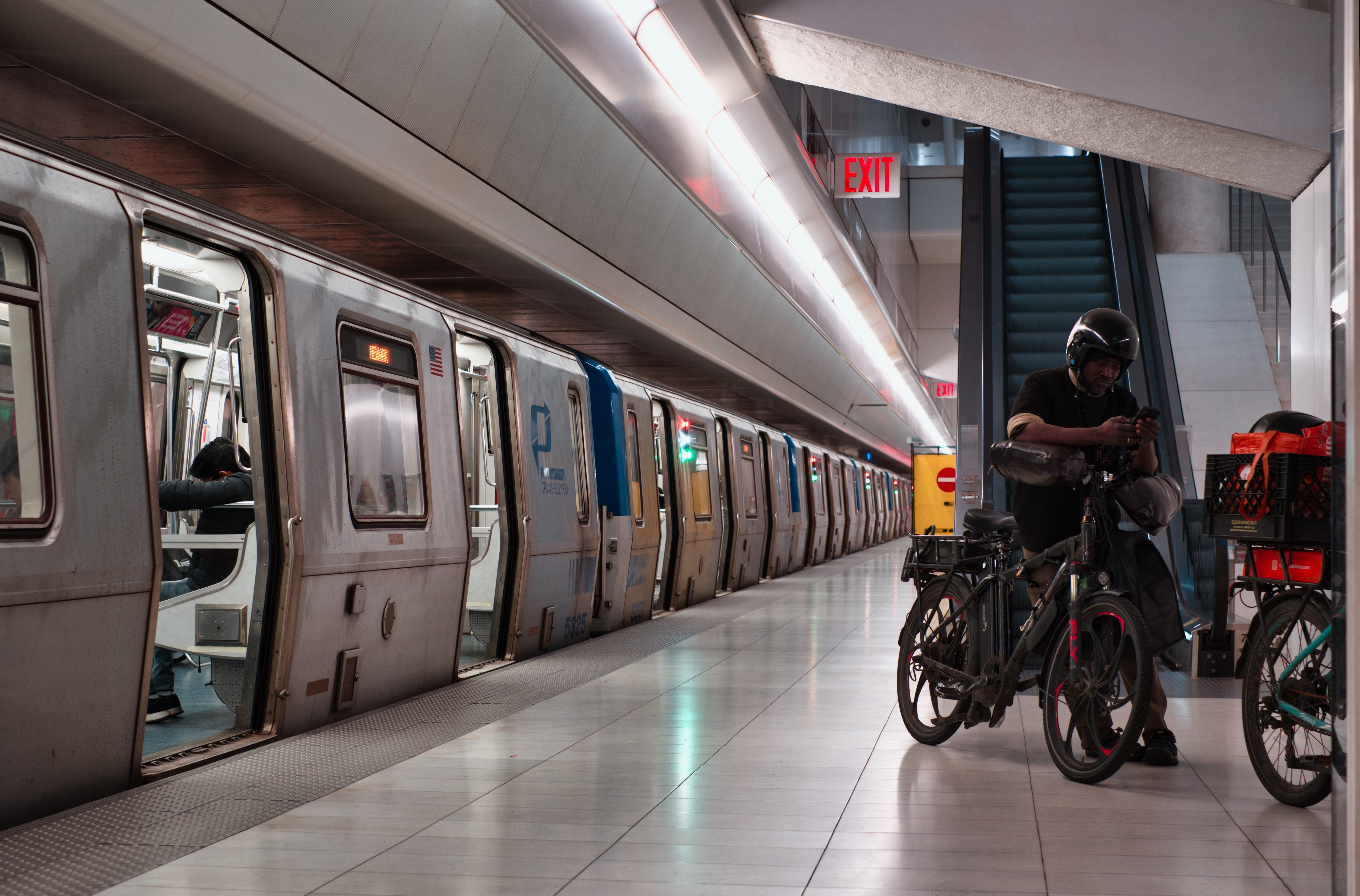
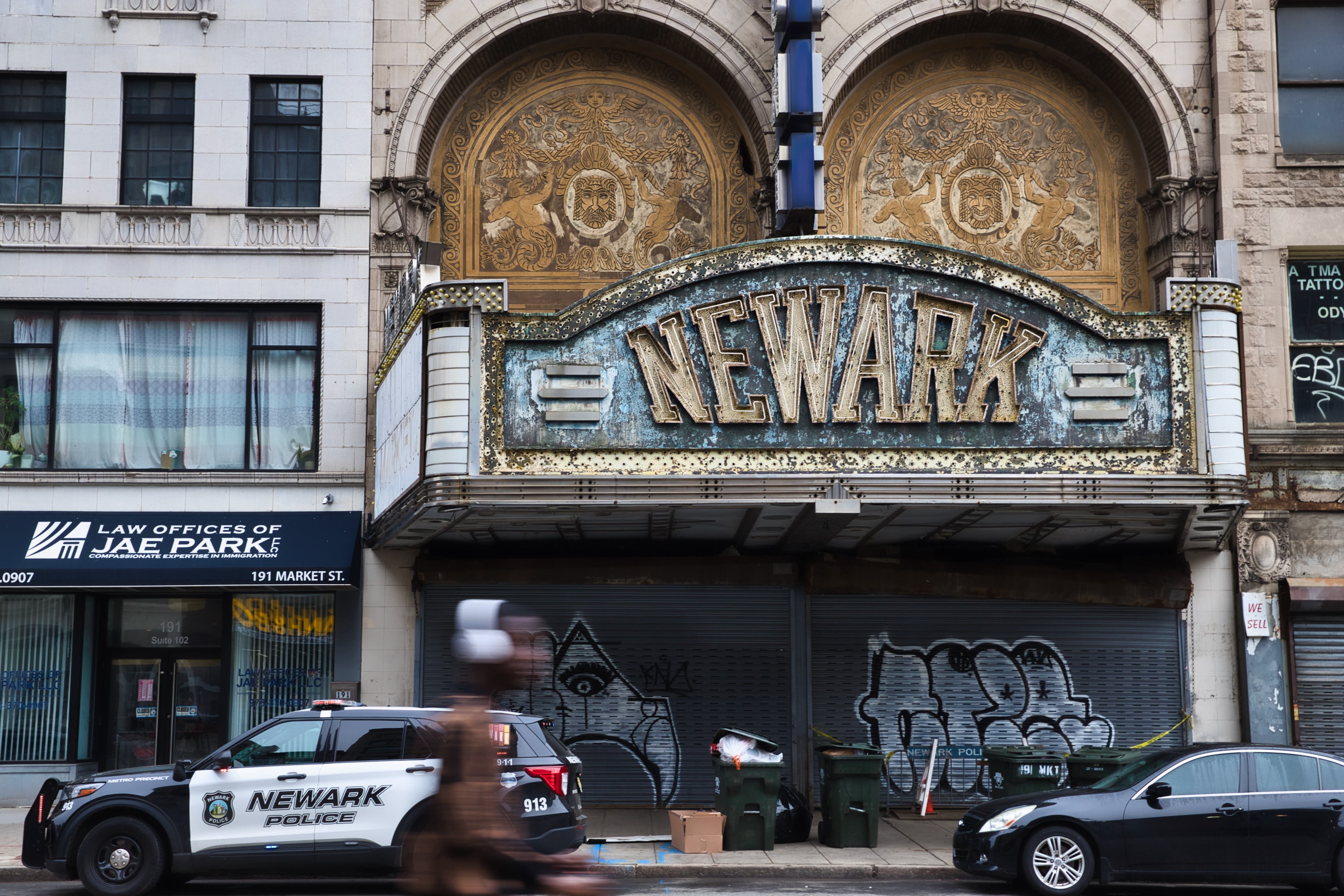
It’s also worth understanding where the PATH came from. Trust me: the story is more fascinating and dramatic than you might think.
The PATH tunnels, originally known as the Hudson Tubes, were designated a National Historic Civil Engineering Landmark in 1978 by the American Society of Civil Engineers. This is an honour that recognizes the “impossible“ technical achievement of boring through solid rock and challenging geology beneath a major river. The New York Times, writing at the time of the opening in 1908, called the tunnels one of the greatest engineering feats ever accomplished; greater, perhaps, than the Panama Canal. I’m not sure I’d go that far, but the comparison tells you something about the project.
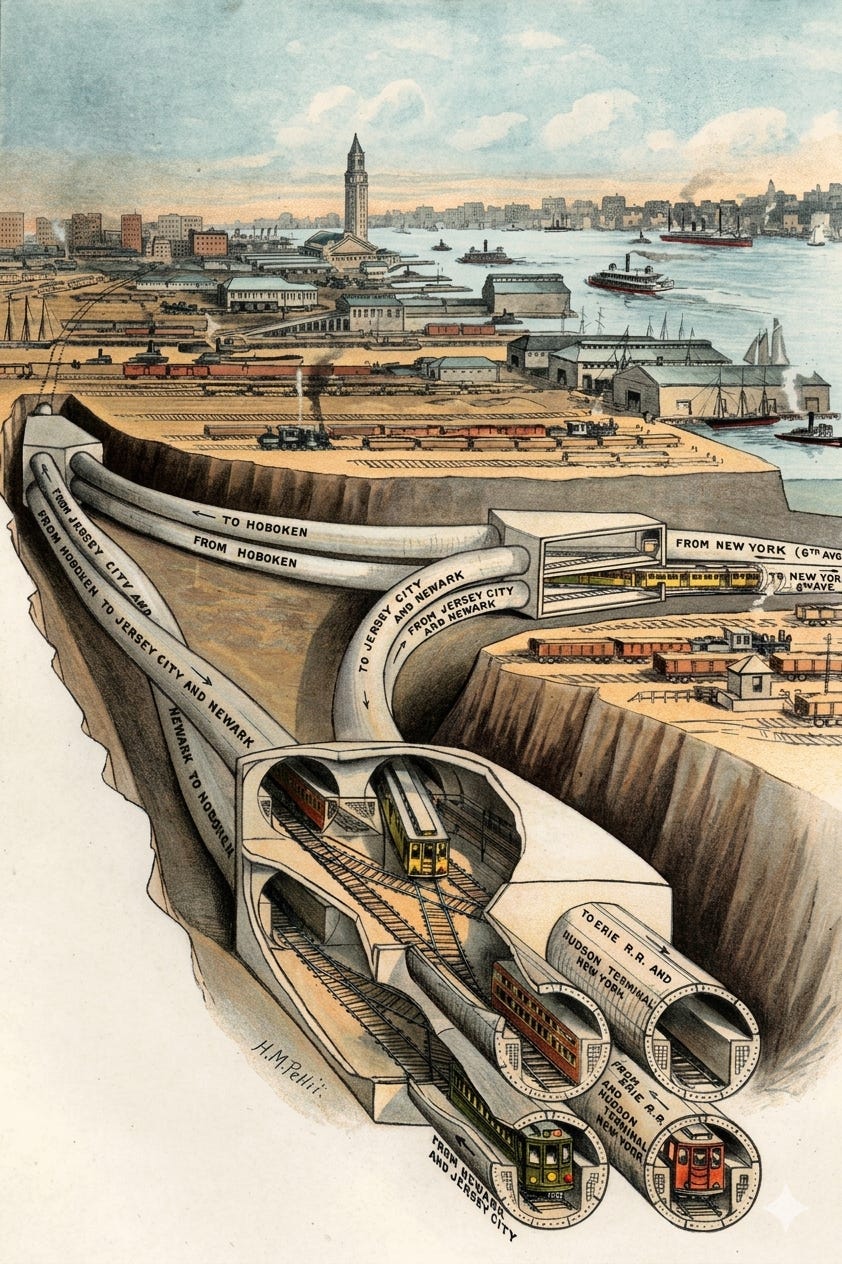
The first tunnel, between Hoboken and Midtown New York, took almost 30 years to complete, changed ownership several times, and survived two catastrophic worksite floodings along the way. It was the first railroad tunnel under any major river in the United States. After the success of the first tunnel, the second was built to connect Jersey City and Lower Manhattan, the future site of the World Trade Center. Both tunnels are still in use today, and, luckily, the one that goes to Lower Manhattan sustained very minimal structural damage during the 9/11 attacks, even though it was directly beneath the buildings when the Twin Towers fell.
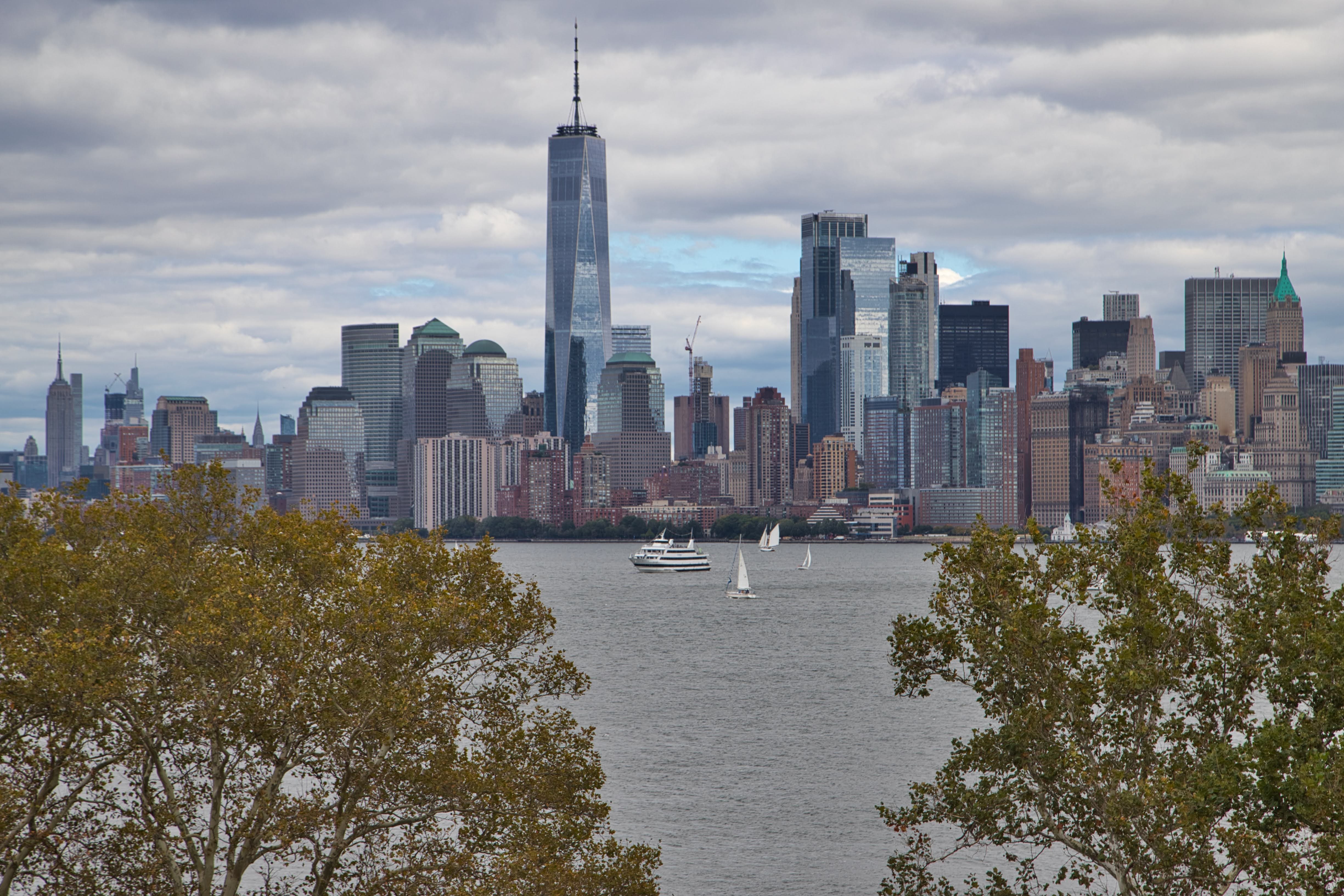
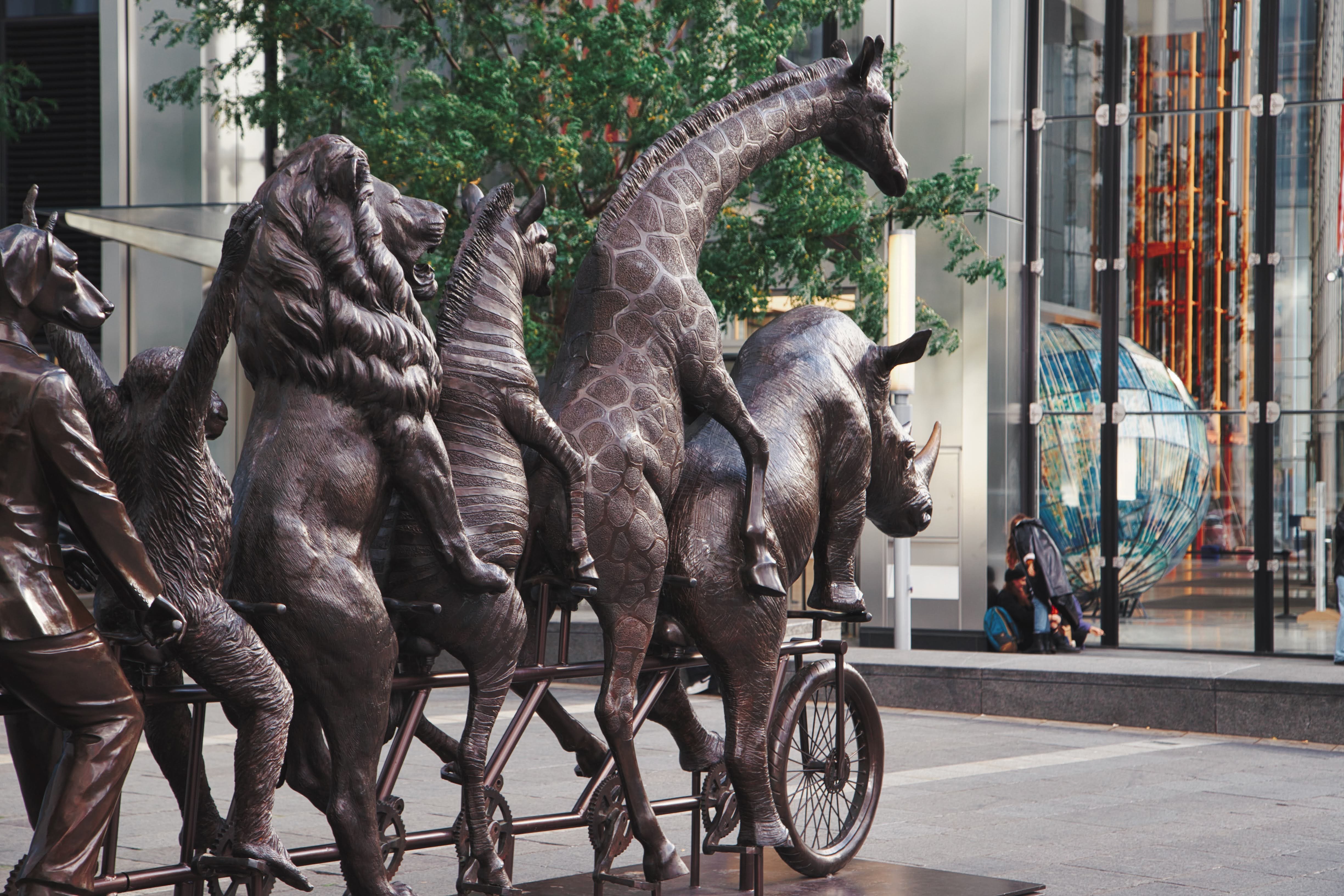
Behind all of that engineering history stands one man who tends to get less credit than he deserves: William Gibbs McAdoo. A lawyer, McAdoo was the one who finally brought the project to completion after more than three decades of failed attempts. He was also a little eccentric, if not weird. After visiting the construction site, he said that “the Fates had marked a day when I was to go under the riverbed and encounter this piece of dripping darkness, and it would rise from its grave and walk by my side. I was destined to give it color and movement and warmth, but it would change the course of my life and lead me into a new career.” (from the book “Subway: The Curiosities, Secrets, and Unofficial History of the New York City Transit System,” by John E. Morris).
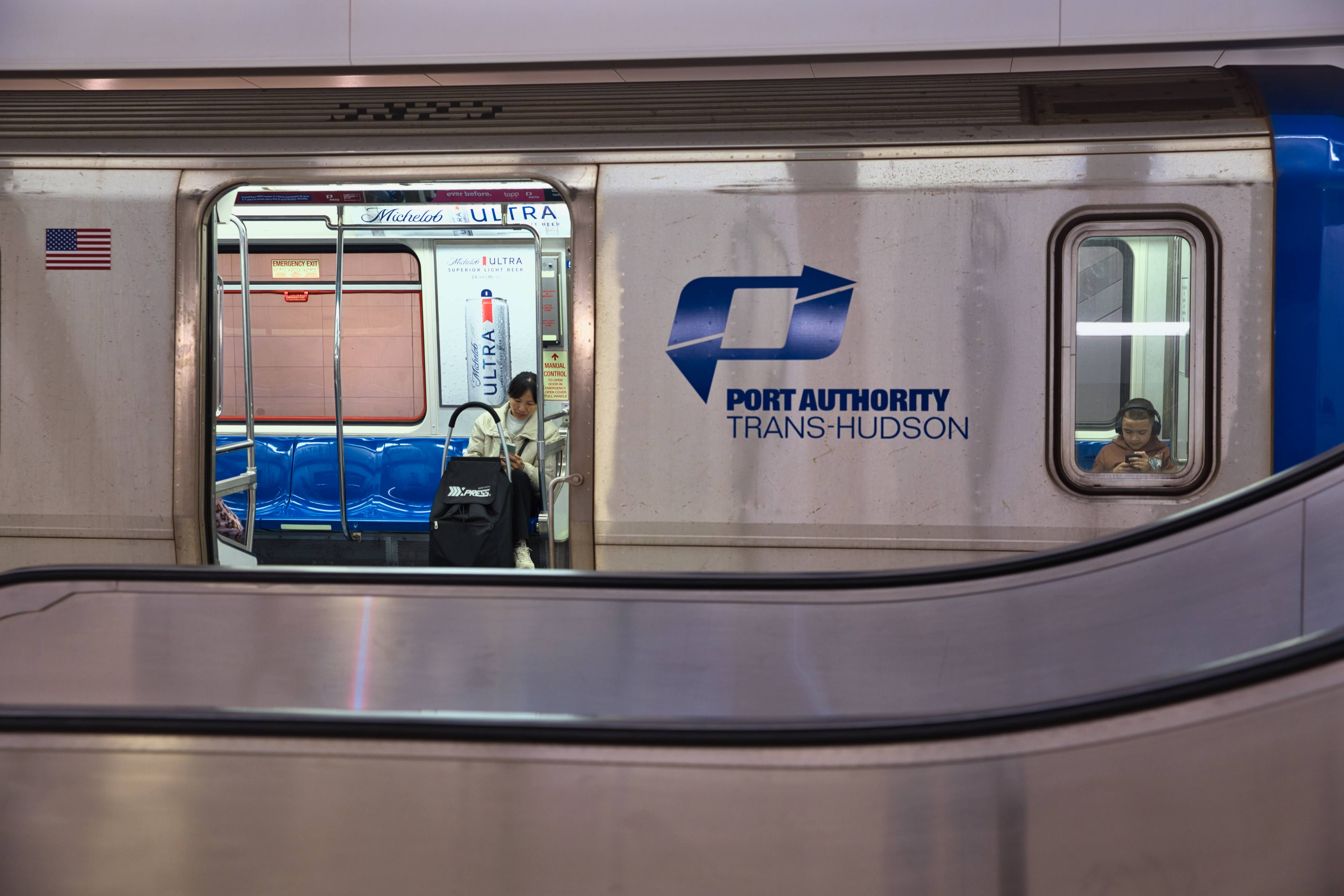
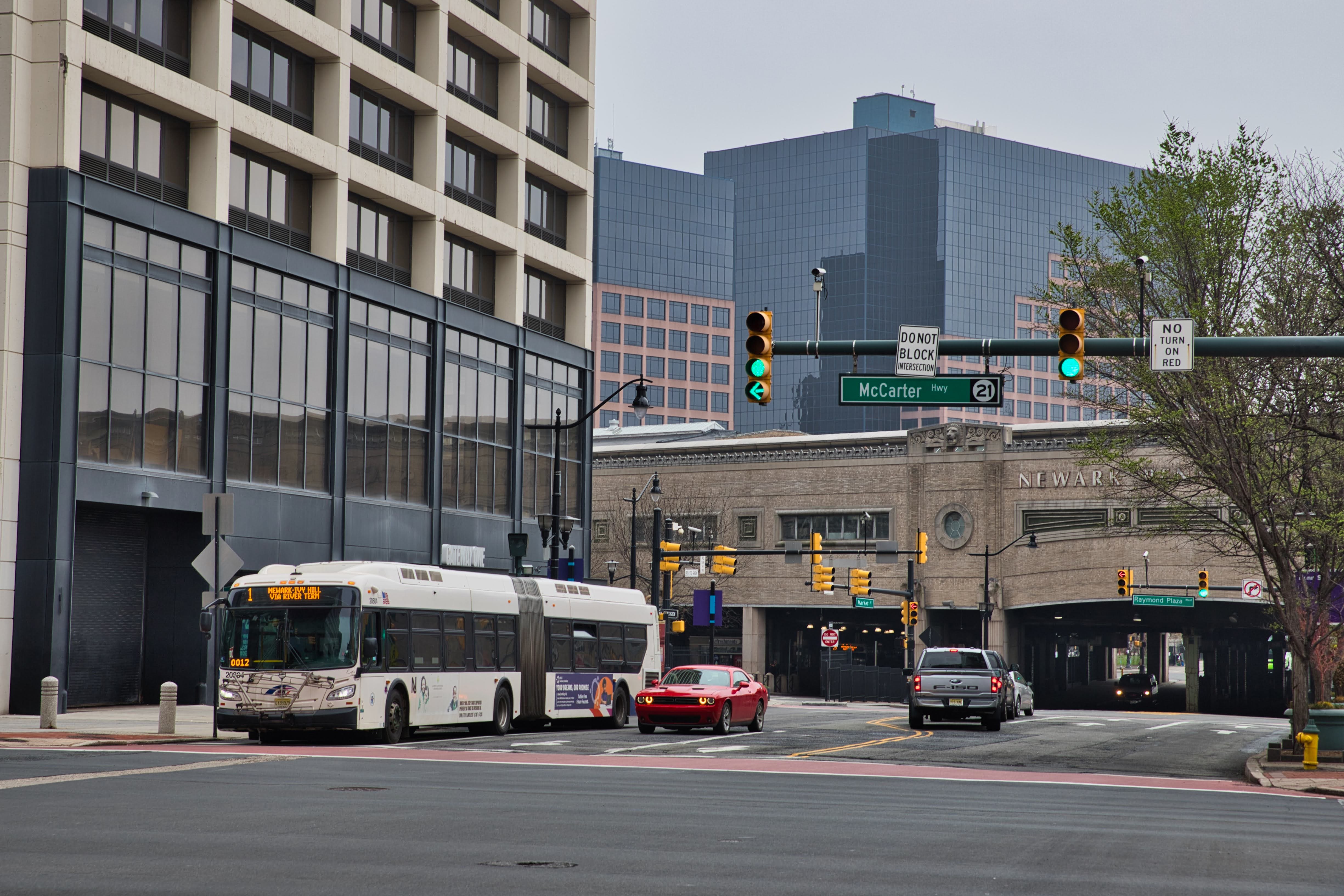
But McAdoo had vision, and more importantly, he had high values, which in the cruel world of early 20th-century American railroading made him something of a weirdo. He specifically studied the mistakes of the famous Interborough Rapid Transit (IRT), which had opened New York’s subway in 1904, and decided to build a better railroad. Where IRT stations were often dark and overcrowded, McAdoo’s Hudson Tubes terminals were well-lit, clean, and architecturally more sophisticated. He even designed his platforms in such a way so that departing and arriving passengers used opposite sides of the train. It’s a simple idea, but it improved traffic flow and is still considered good transit design by today’s standards.
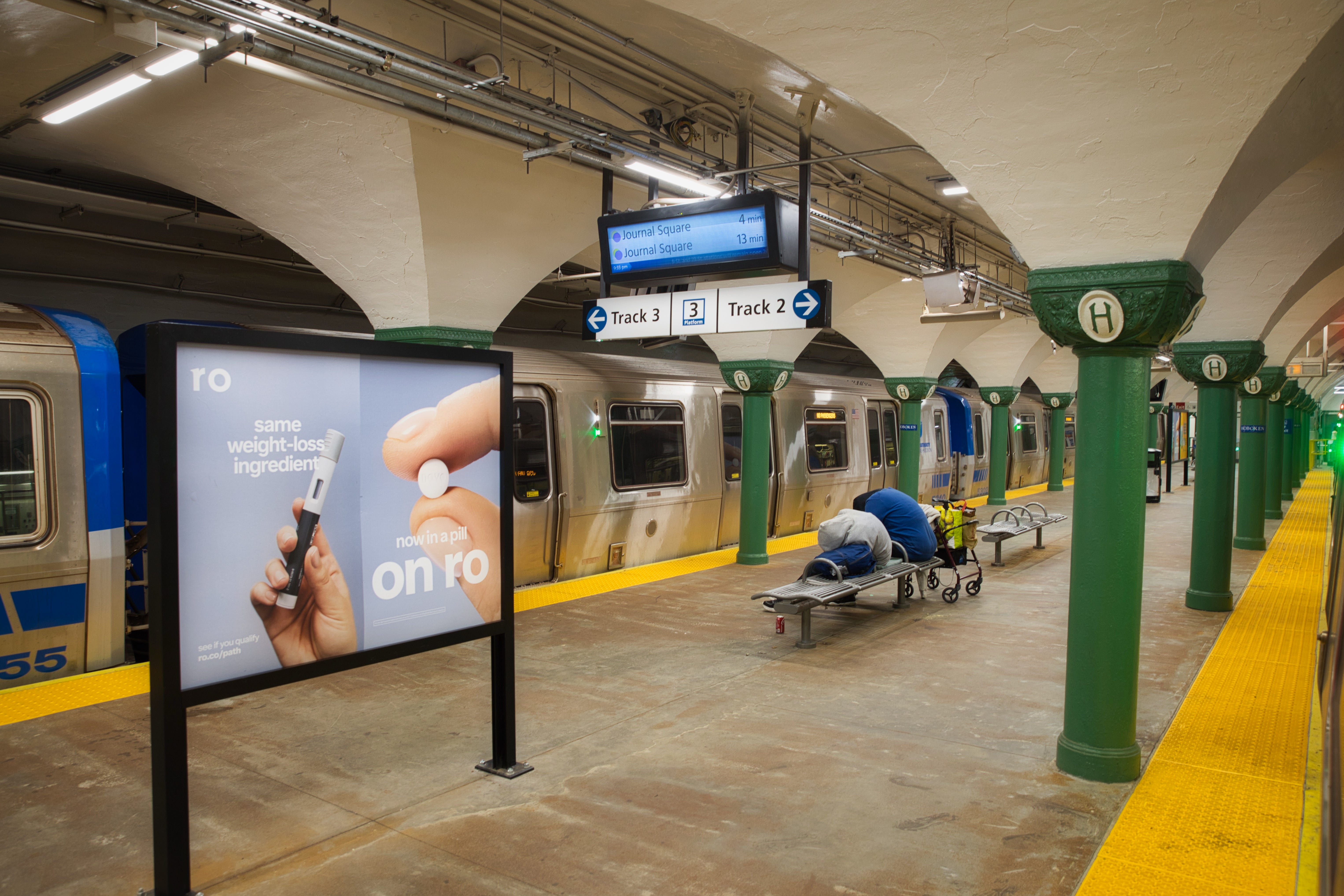
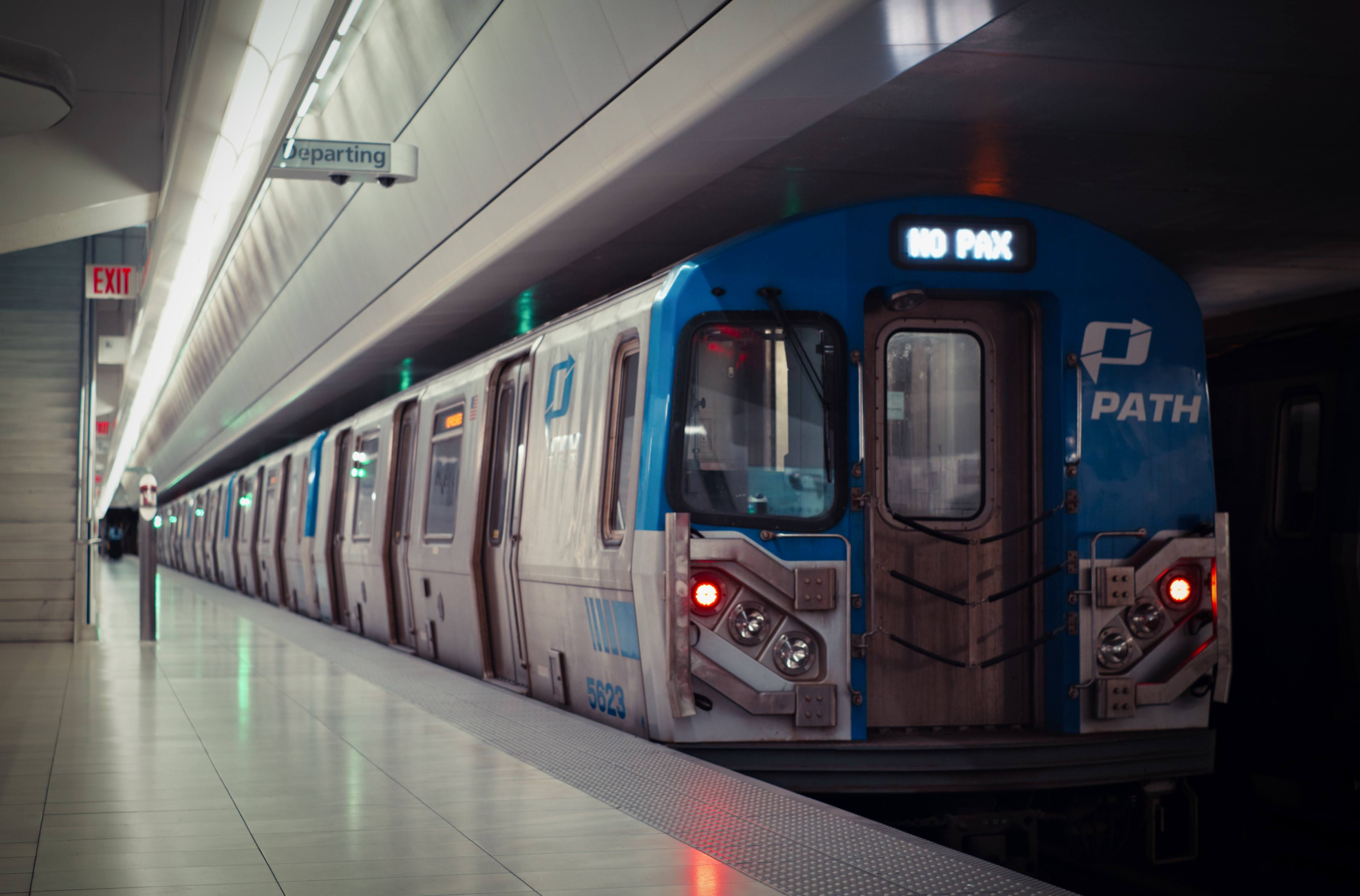
All of this is what McAdoo called “Public Be Pleased”. He believed that cleanliness, comfort, and safety weren’t luxuries, but necessities. And I think he was right, because the ridership grew peaking at 325,000 per day just before the Great Depression. He also treated his workers with unusually fair wages, had good relationships with unions, etc.
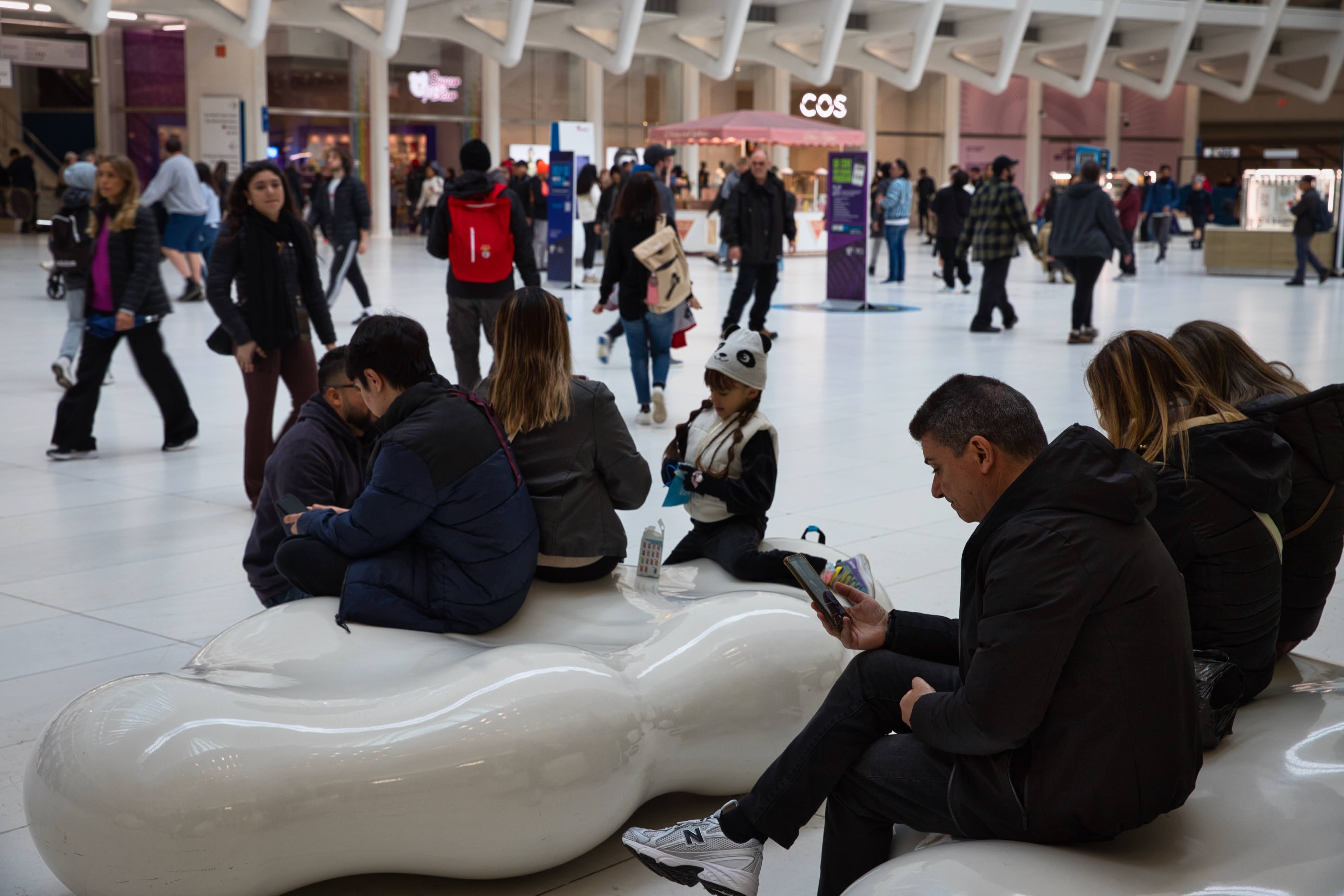
No story about PATH is complete without 9/11. When the Twin Towers collapsed on that clear Tuesday morning in 2001, they also destroyed the World Trade Center PATH station and flooded the tunnels. The train that happened to be in the station at the time of the attack was miraculously safe. A temporary station was built in 2003 to serve New Jersey riders.
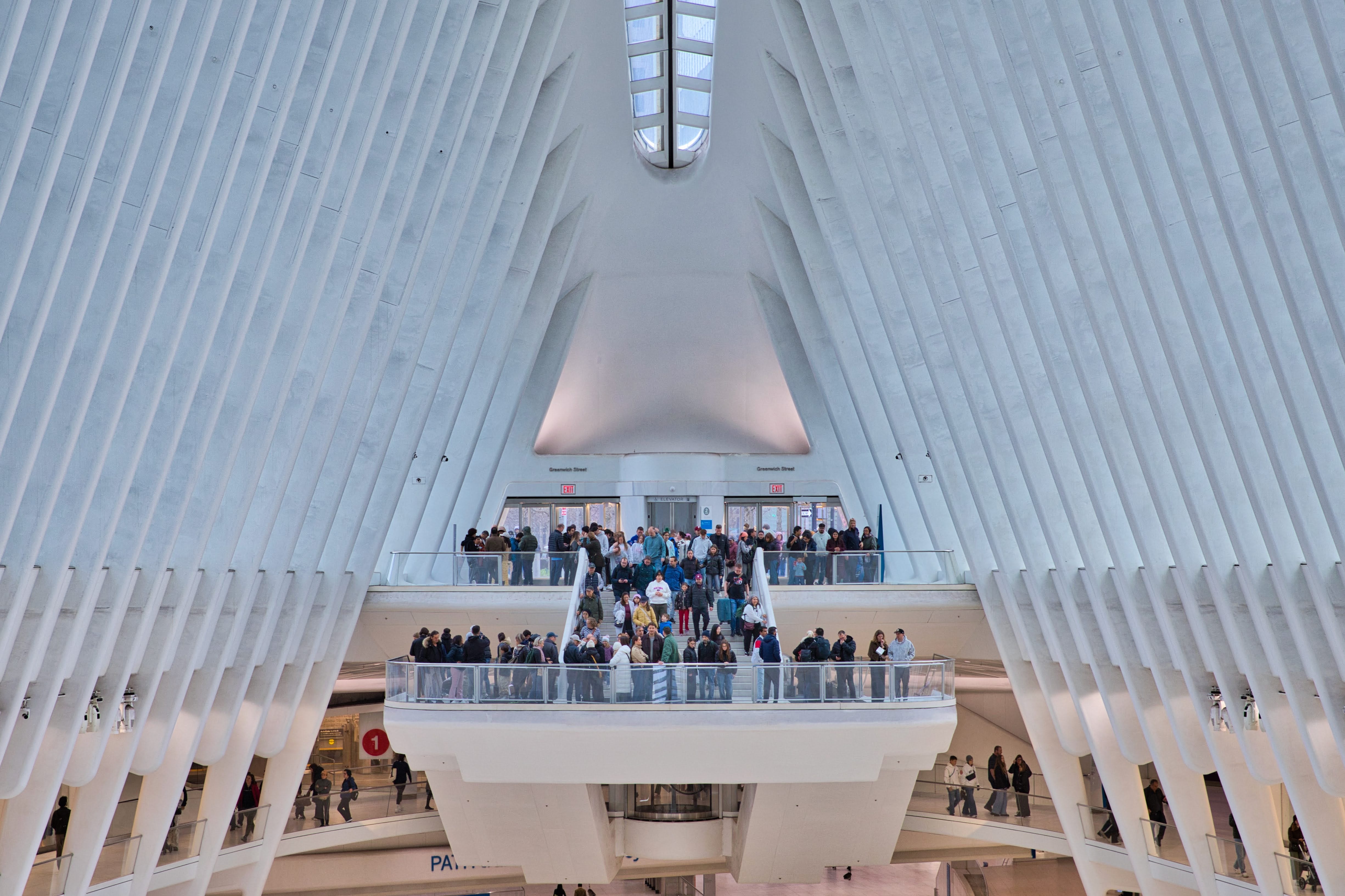
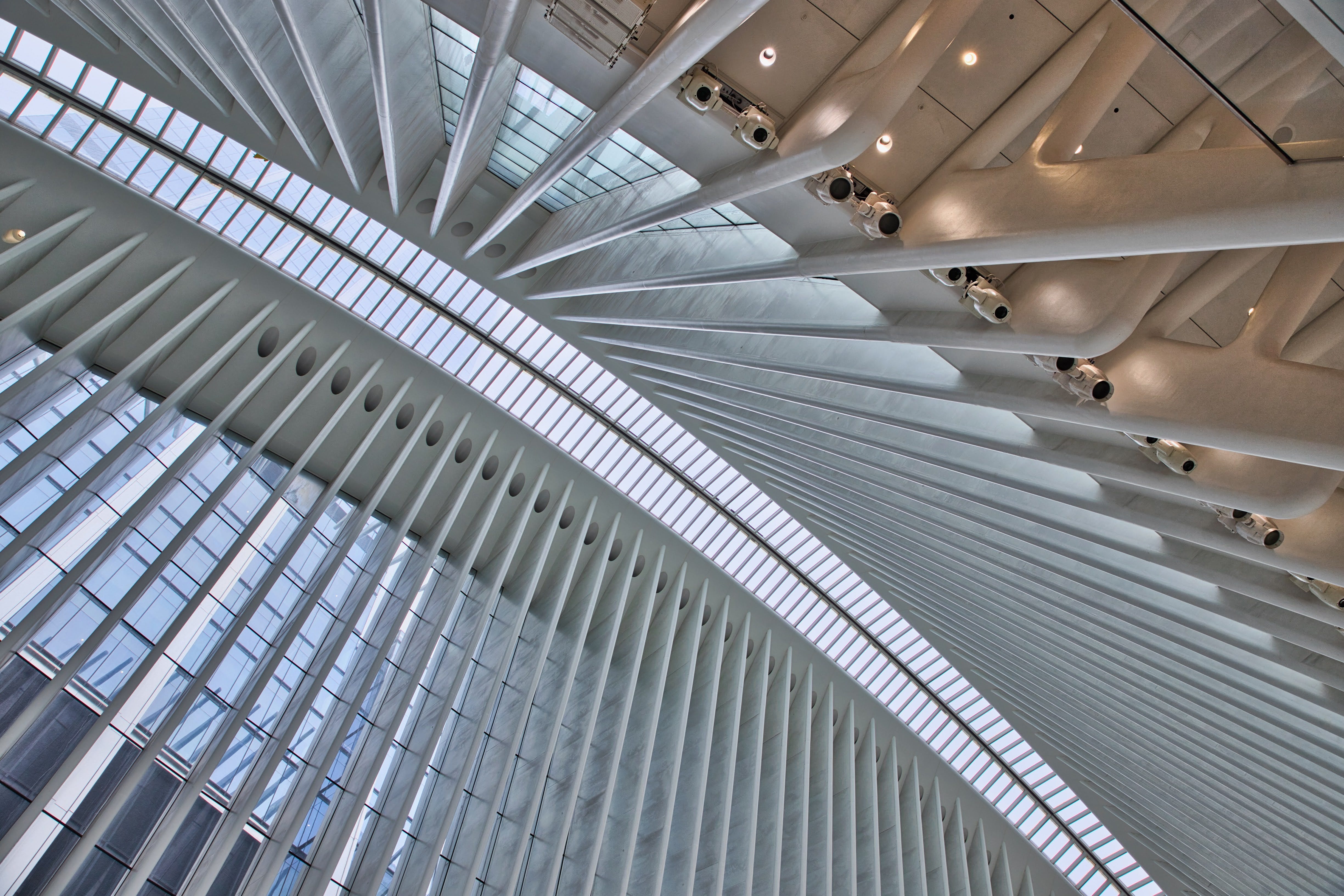
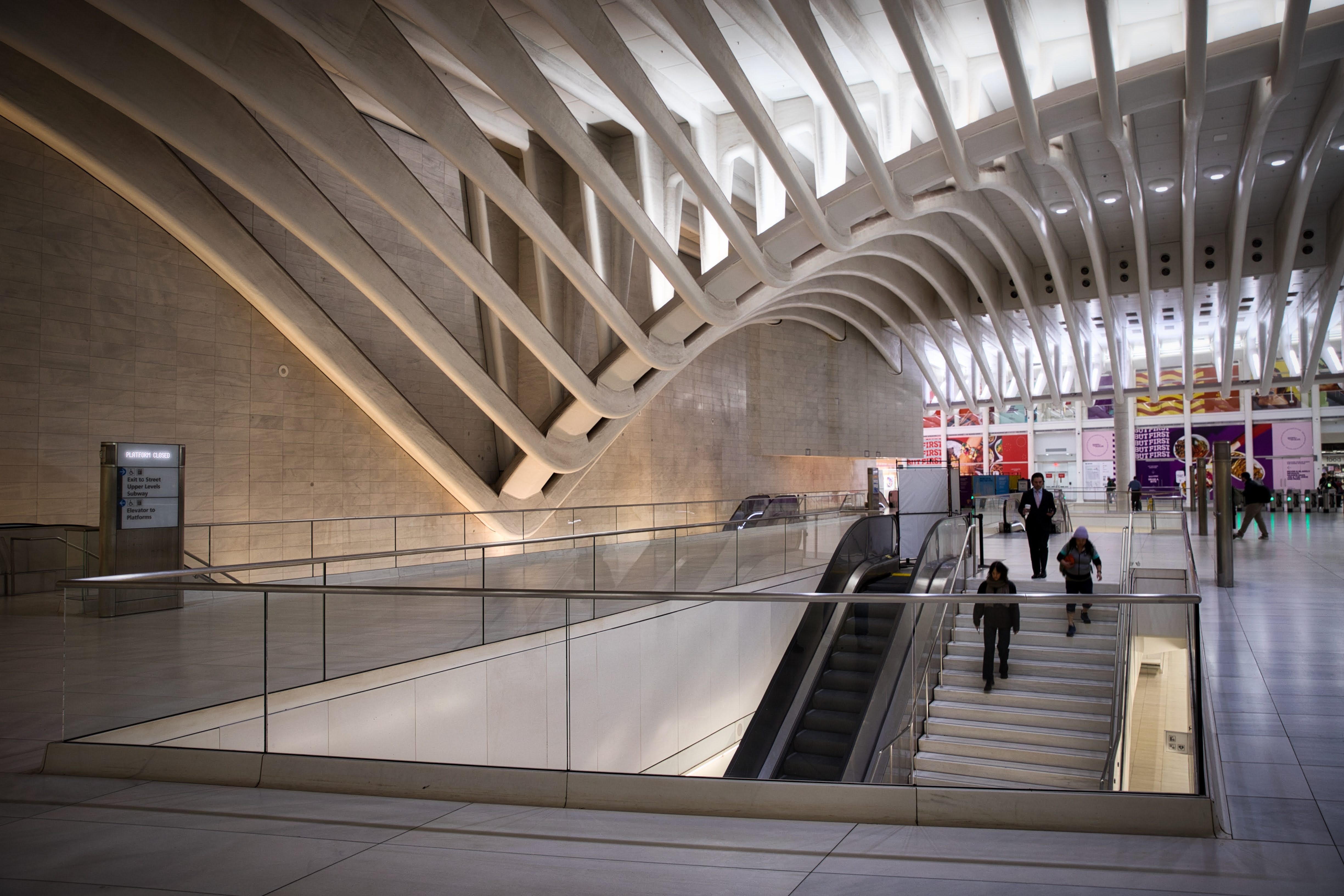
But PATH decided to build not just a new station, but a centrepiece, a symbol of resilience and hope. The task went to Spanish architect Santiago Calatrava, who designed what is now famously known as the Oculus.
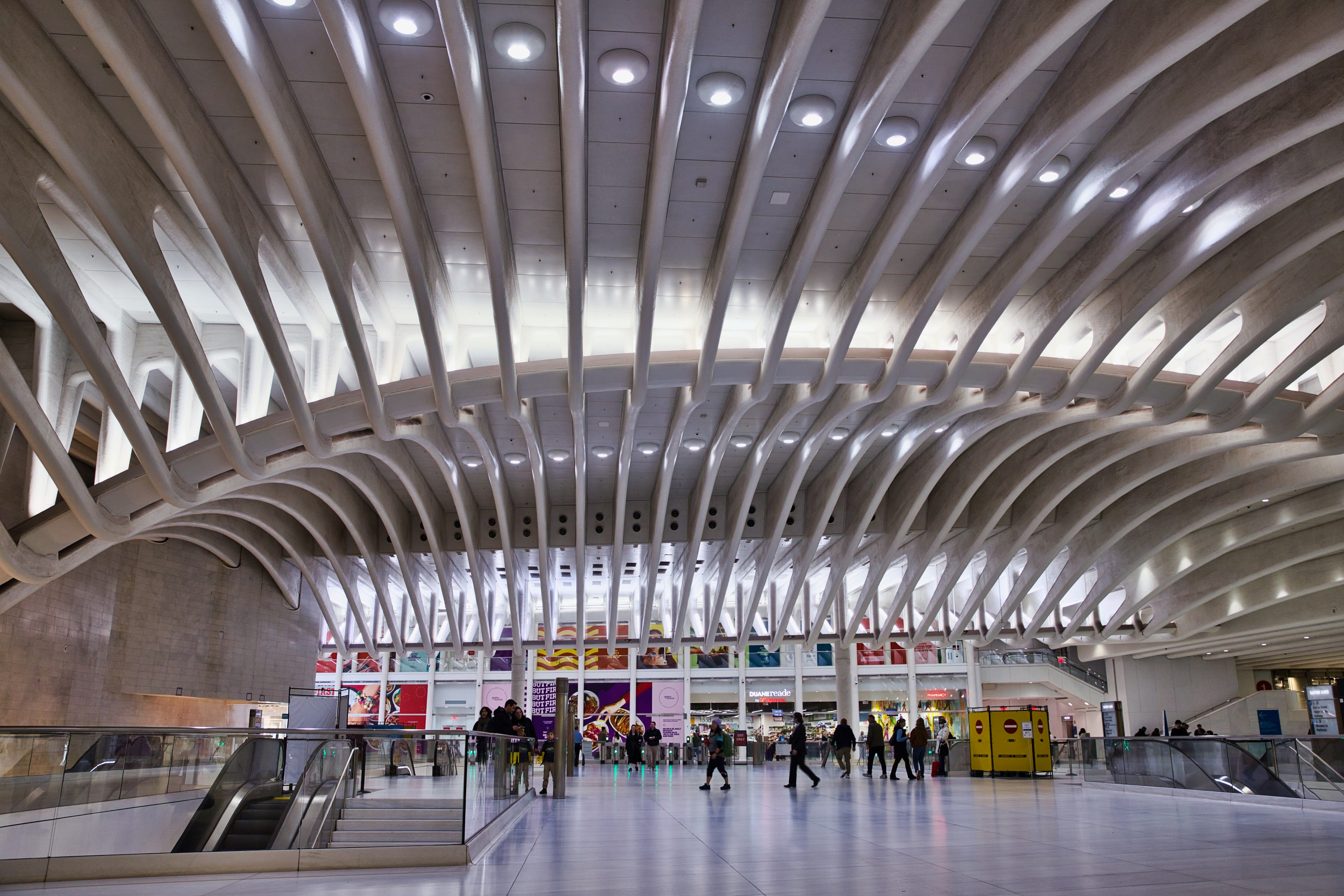
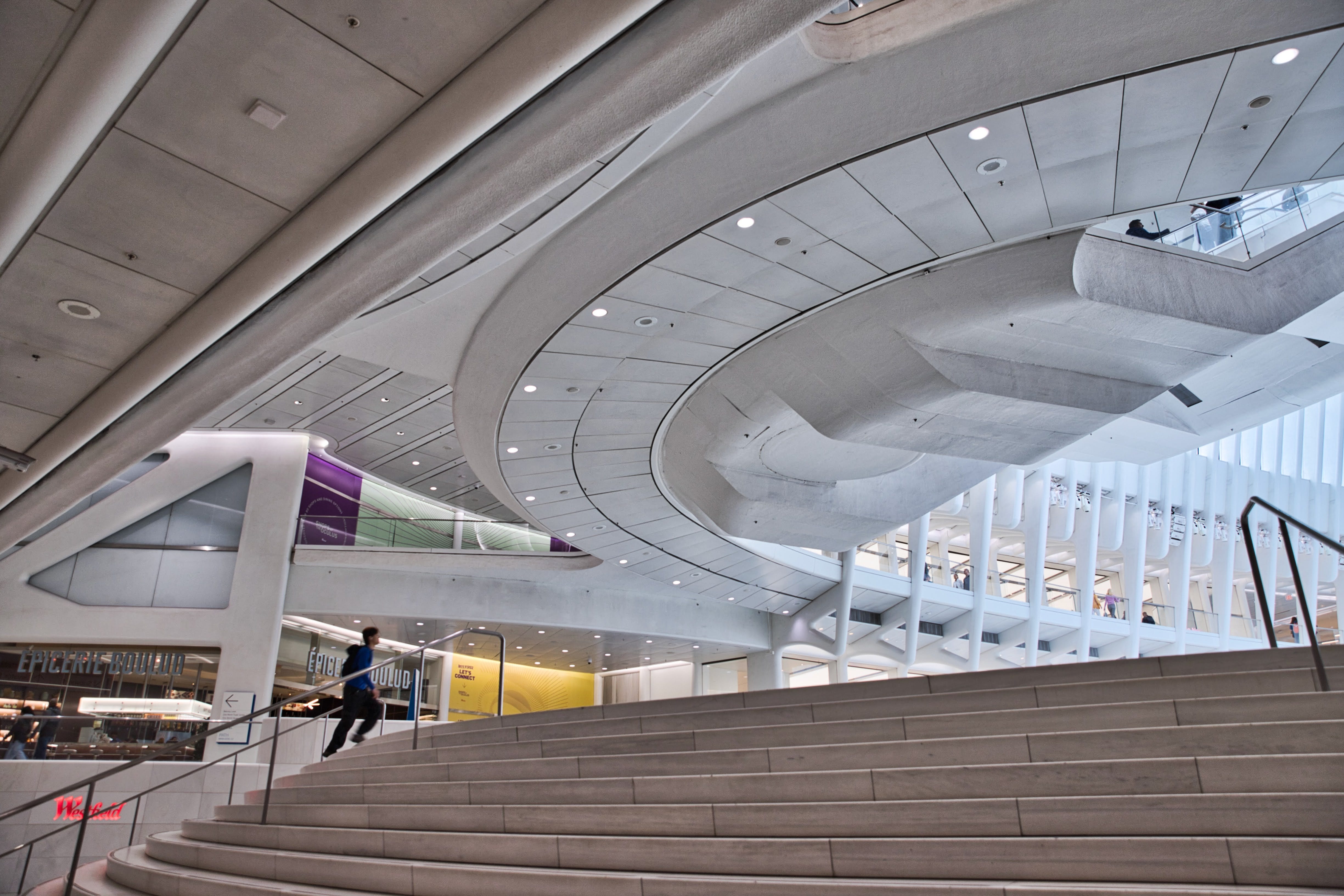
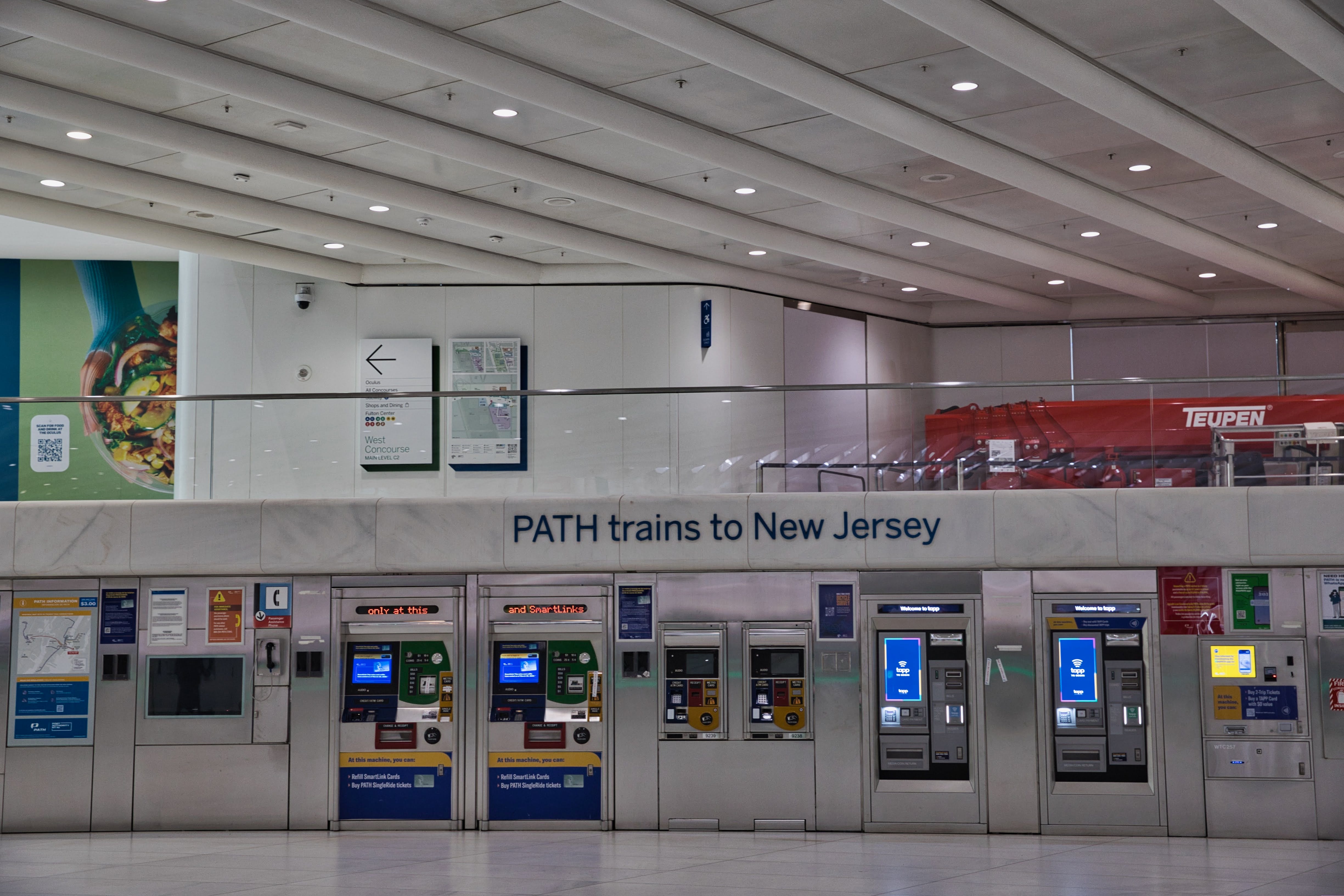
From the outside, the structure looks like a dove in flight with its white steel wings spread over the building. Inside, you find yourself beneath huge white ribs arch like the bones of some enormous animal. Some people see a cathedral, go figure. A narrow strip of windows that runs along the roof - the “oculus”, a Latin word for “eye” - brings natural light down through the main hall.
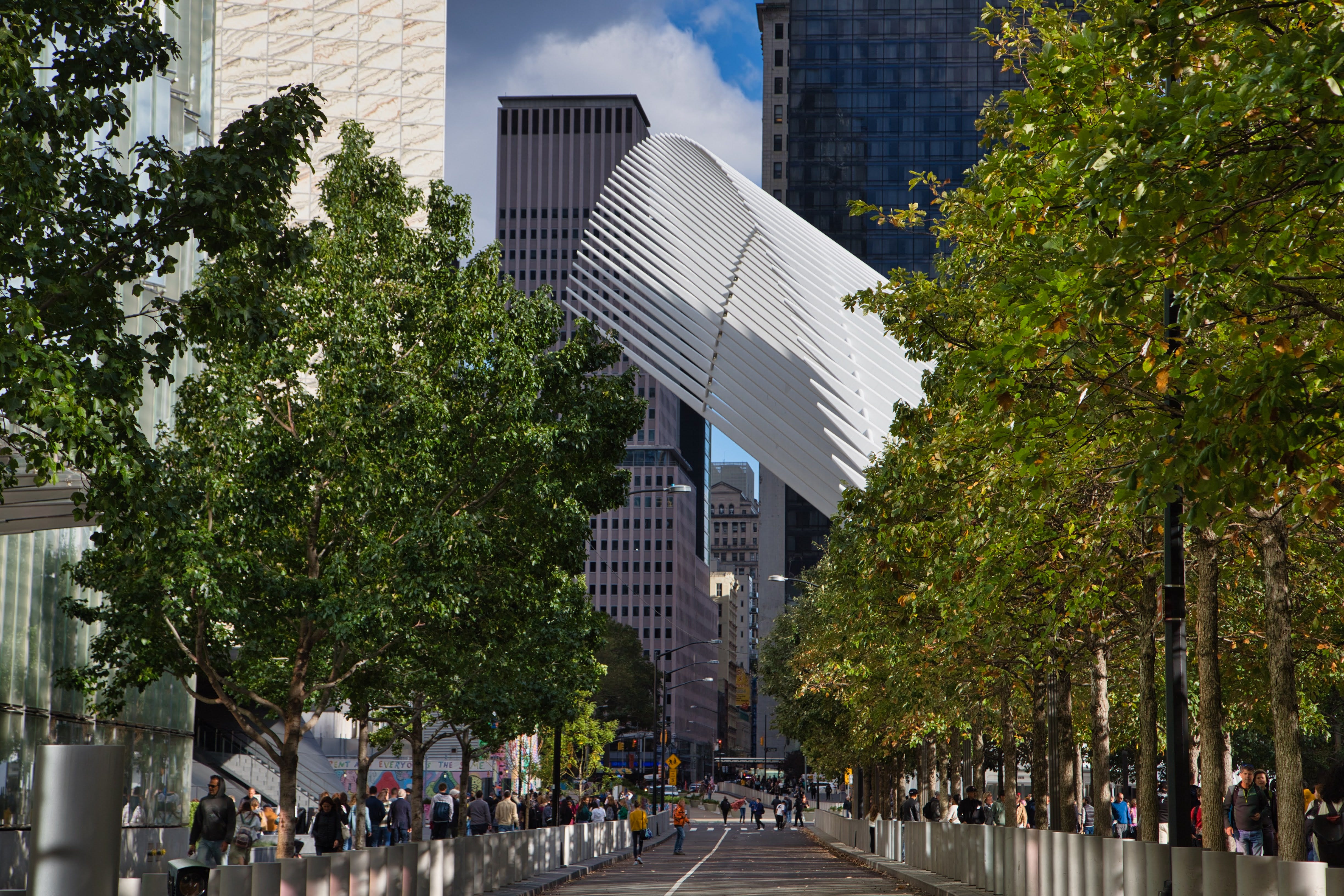
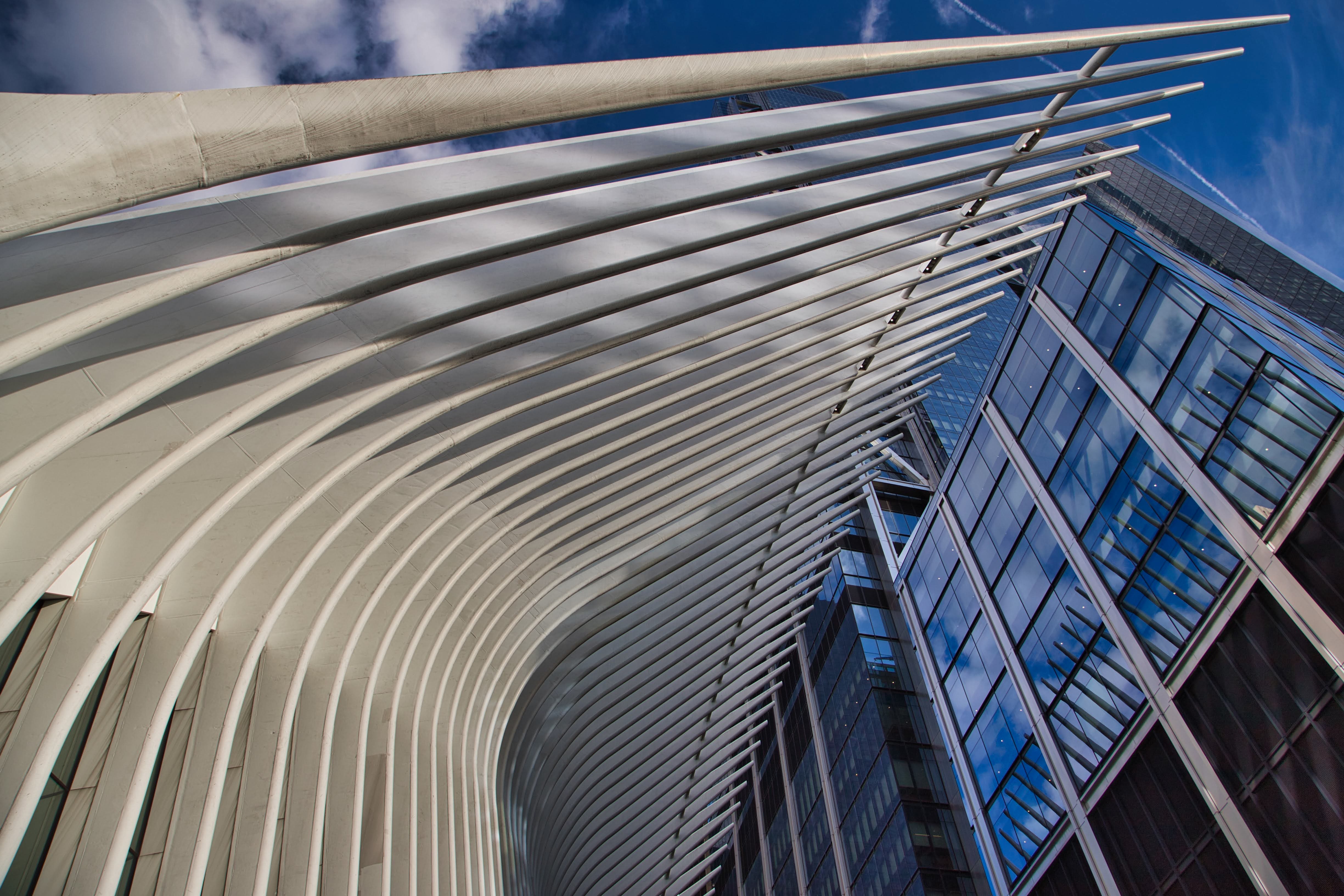
Calatrava says that his intention was to make people feel good and appreciated the moment they arrived at the station: that even someone with a modest job and a modest home deserves to enter a space that is beautiful, safe, and easy to move around. In other words, public space is a form of dignity. I really like this idea, and I think New York is one of the best places in the world to take such ideas seriously.
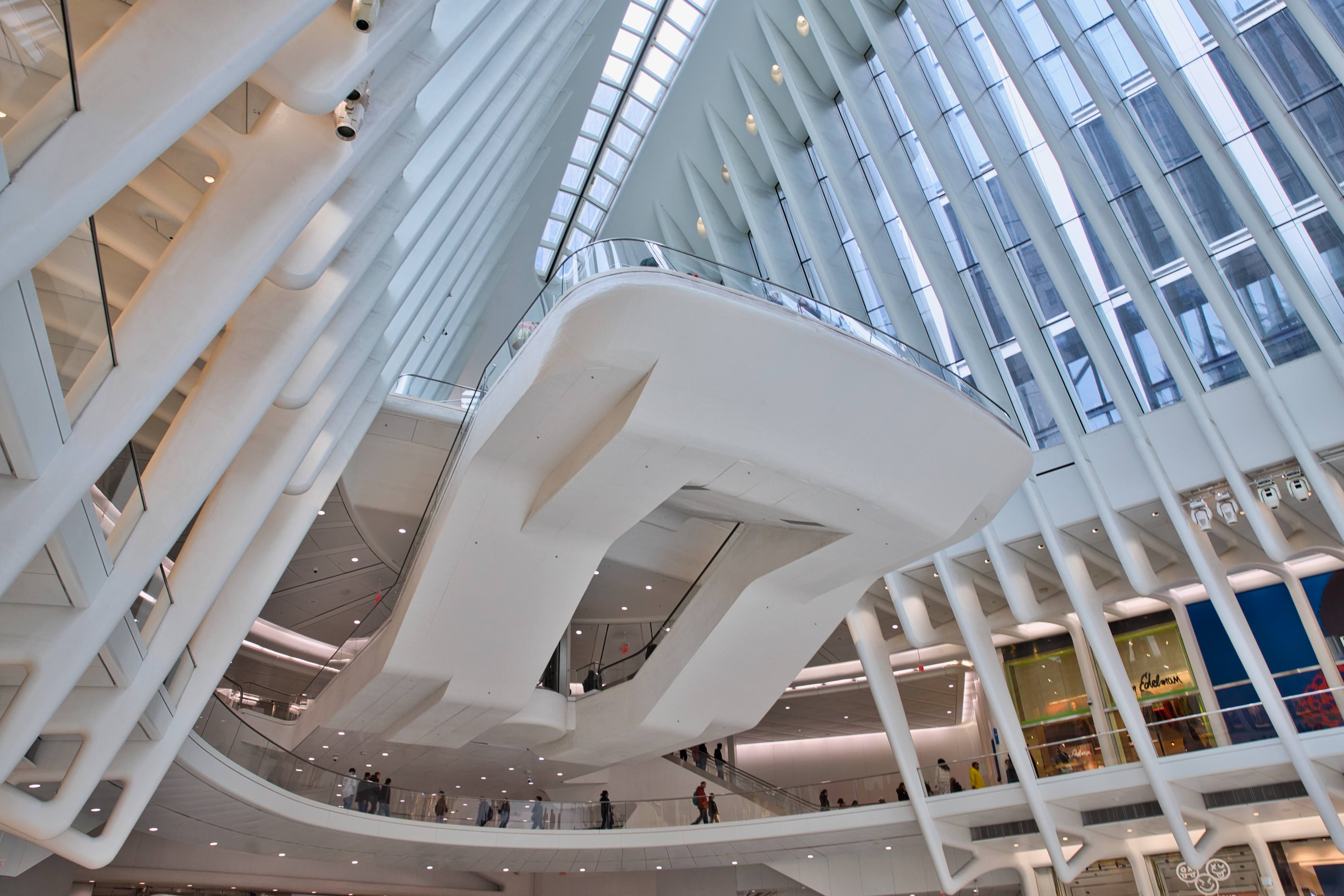
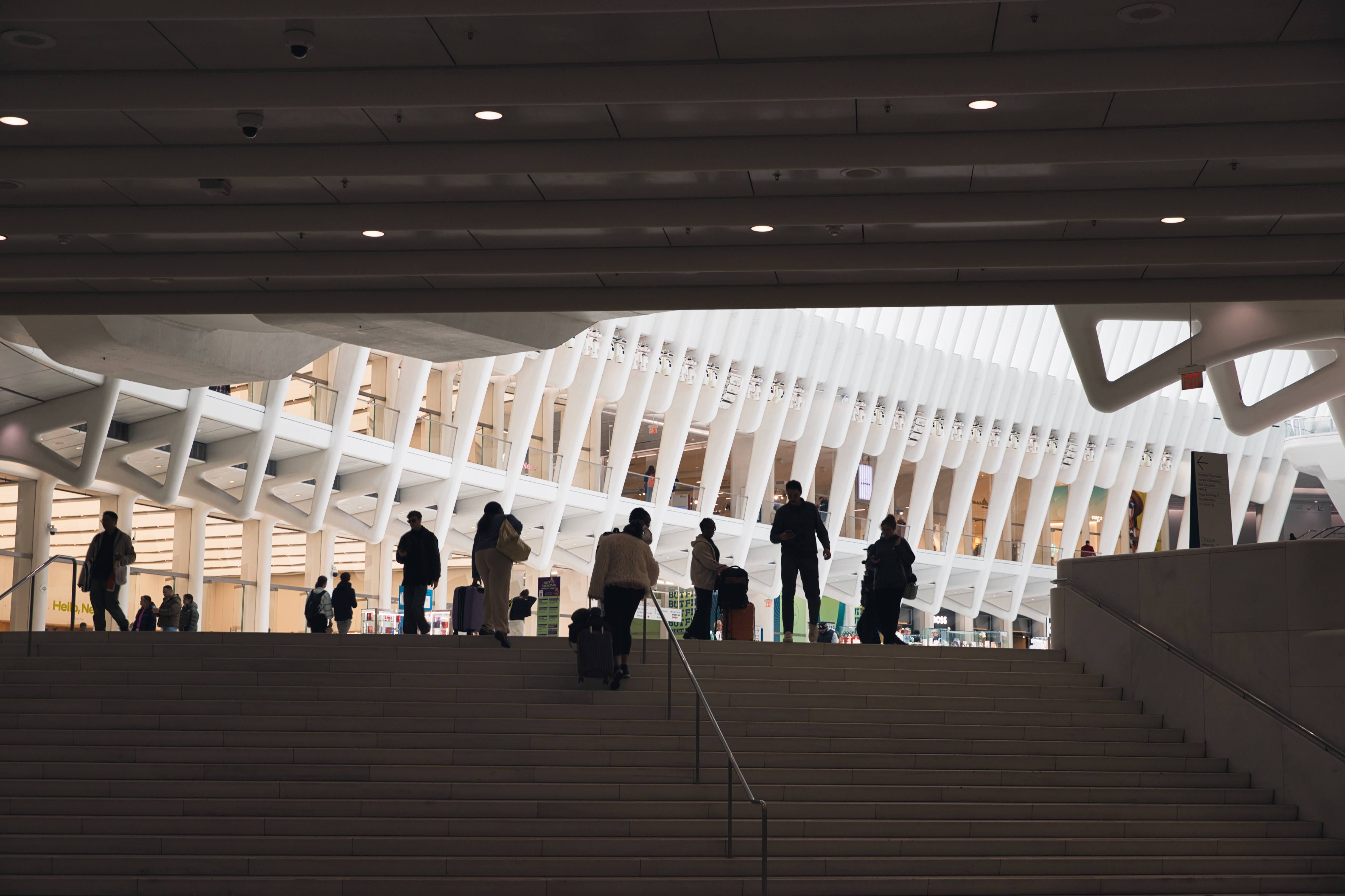
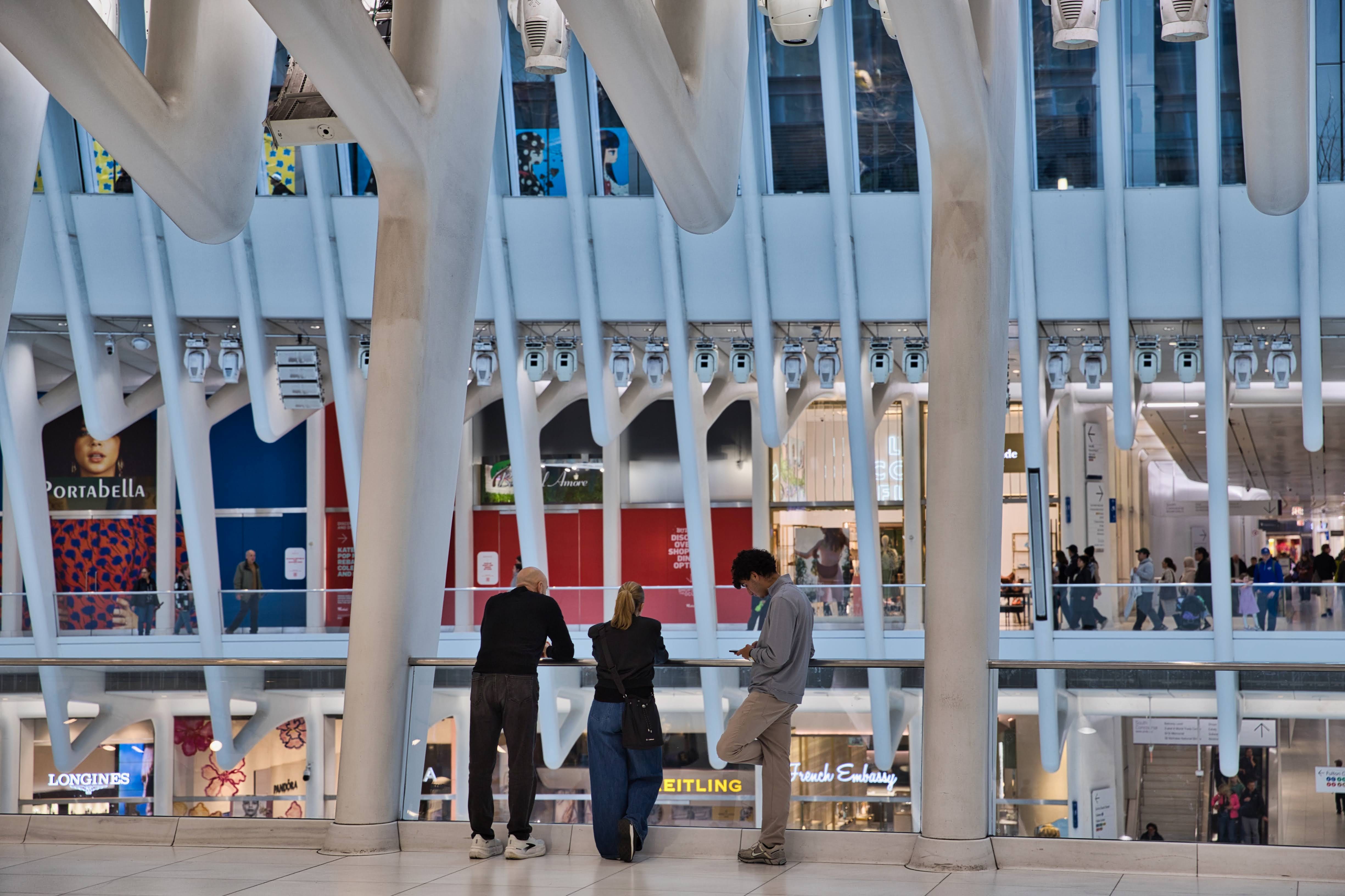
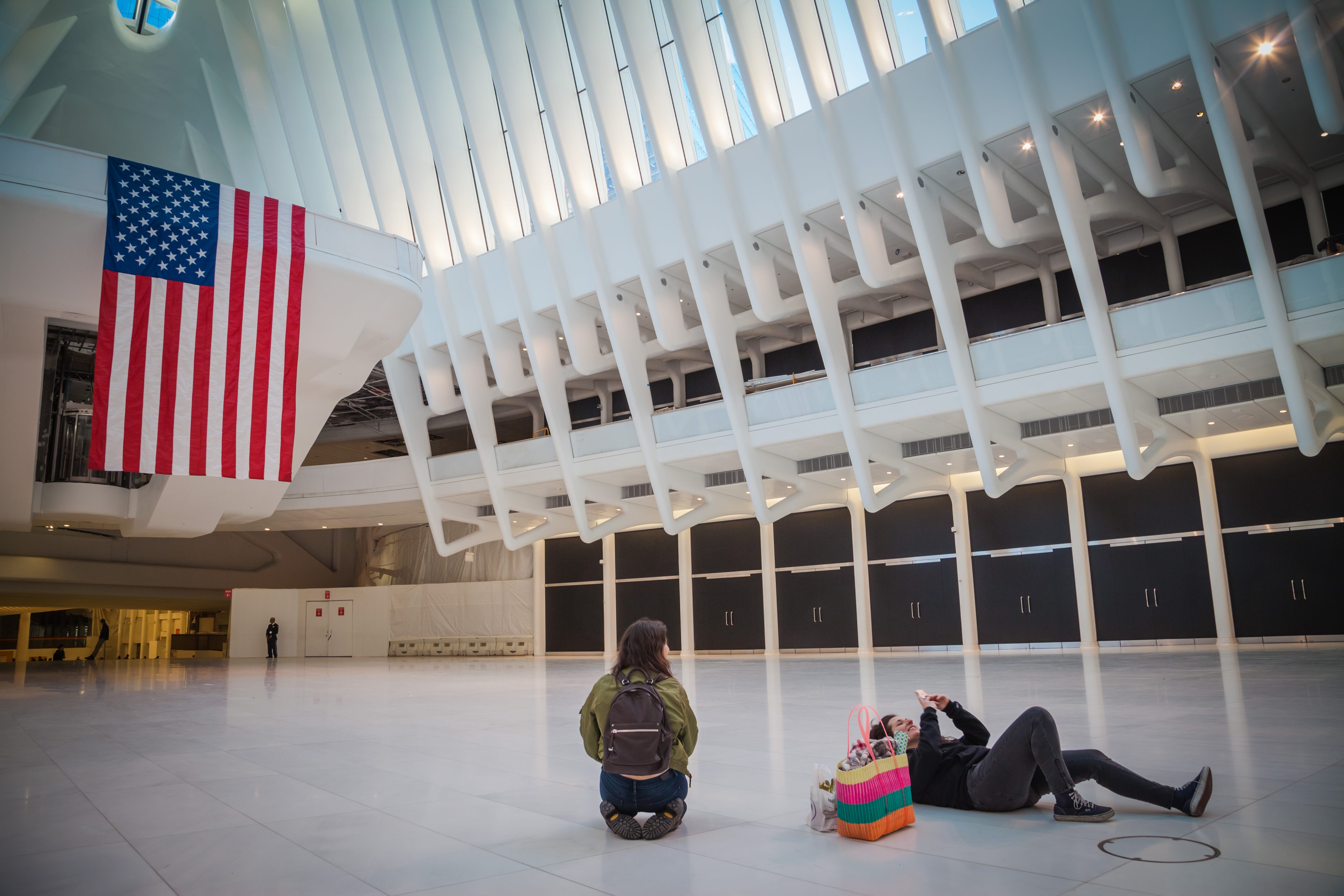
The station is officially called the World Trade Center Transportation Hub. Construction began in 2004, and the main structure opened in March 2016. I visited shortly after opening and remember standing in the concourse, completely in awe. An enormous American flag hung from the balcony above, and in that space it was difficult not to feel the weight of what had happened here.
The final price tag came in at almost $4 billion. This makes it the most expensive train station ever built. Some politicians called it a symbol of excess, but I think New York can afford it. It is a bold statement after all ∎.
No posts
Comments
Nothing yet. Say the first thing.
Sign in to join the conversation.