
The timing of this article is not a coincidence. The FDA has recently approved the use of upfront ^177Lu-PSMA for metastatic hormone-sensitive prostate cancer based on the PSMAddition trial. Yet, despite this important regulatory milestone, the full peer-reviewed manuscript has not been published.
This is not uncommon in oncology. Regulatory approvals frequently follow the presentation of positive phase III data before the complete manuscript becomes available. Nevertheless, I have always found this a difficult way of introducing new treatments into clinical practice. Physicians are expected to prescribe a new therapy based largely on conference presentations, while the detailed data required for careful critical appraisal remain unavailable.
The purpose of this article is therefore not to question the approval itself, but to discuss the concepts that deserve consideration while we await the complete publication.
The history of oncology is largely the history of bringing effective treatments to patients earlier. Chemotherapy, androgen receptor pathway inhibitors, PARP inhibitors and now radioligand therapy have all followed the same trajectory. The assumption is intuitive: if a treatment works late, it should work even better early.
But that assumption deserves scrutiny. Moving treatments to earlier stages means more patients are exposed to toxicity, and health-care systems have to carry a heavier financial burden.
The phase III PSMAddition trial evaluated the addition of 177Lu-PSMA to standard ADT (Androgen Deprivation Therapy) and an ARPI (Androgen Receptor Pathway Inhibitor) in men with metastatic hormone-sensitive prostate cancer. The study met its primary endpoint, demonstrating a significant improvement in radiographic progression-free survival (HR 0.72). However, the first interim overall survival analysis showed no statistically significant benefit (HR 0.84), leaving the most clinically relevant question unanswered.
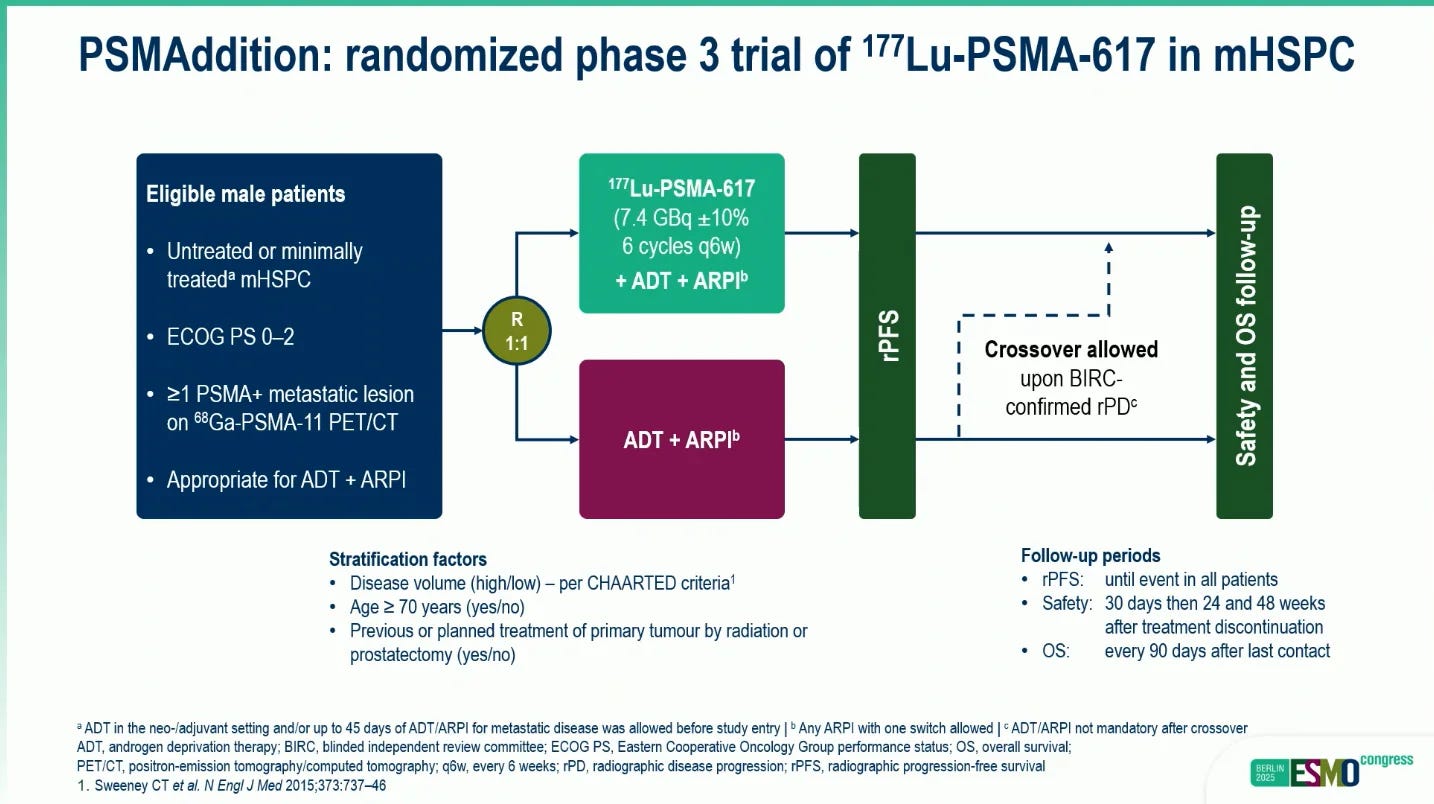
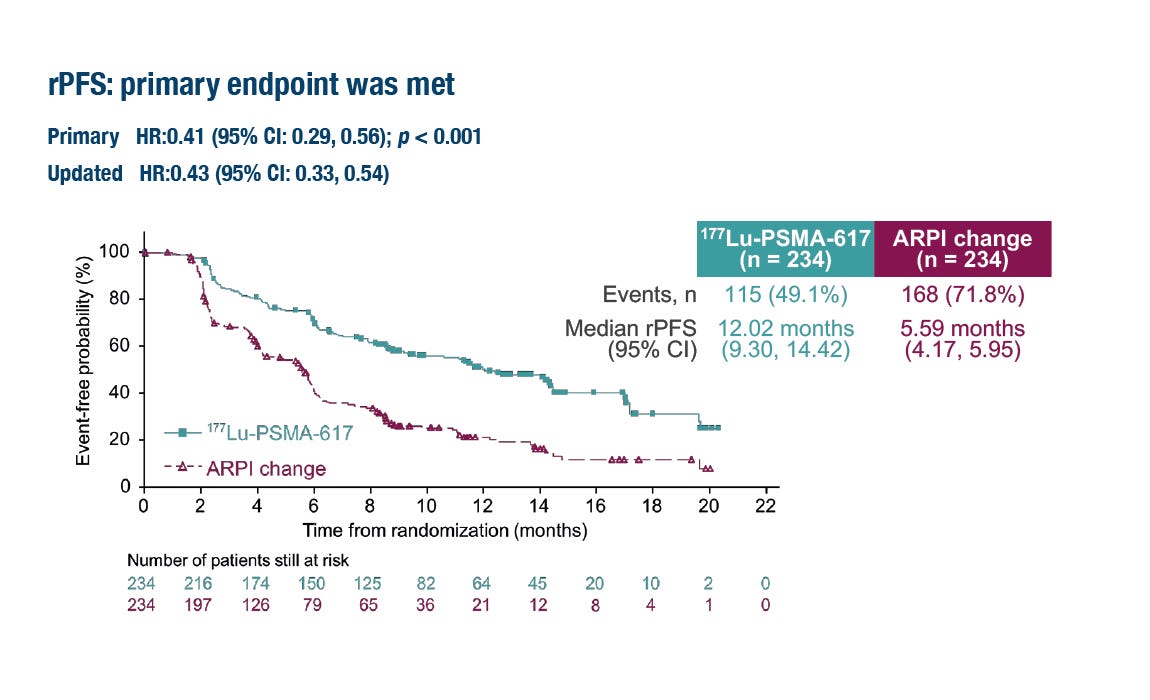
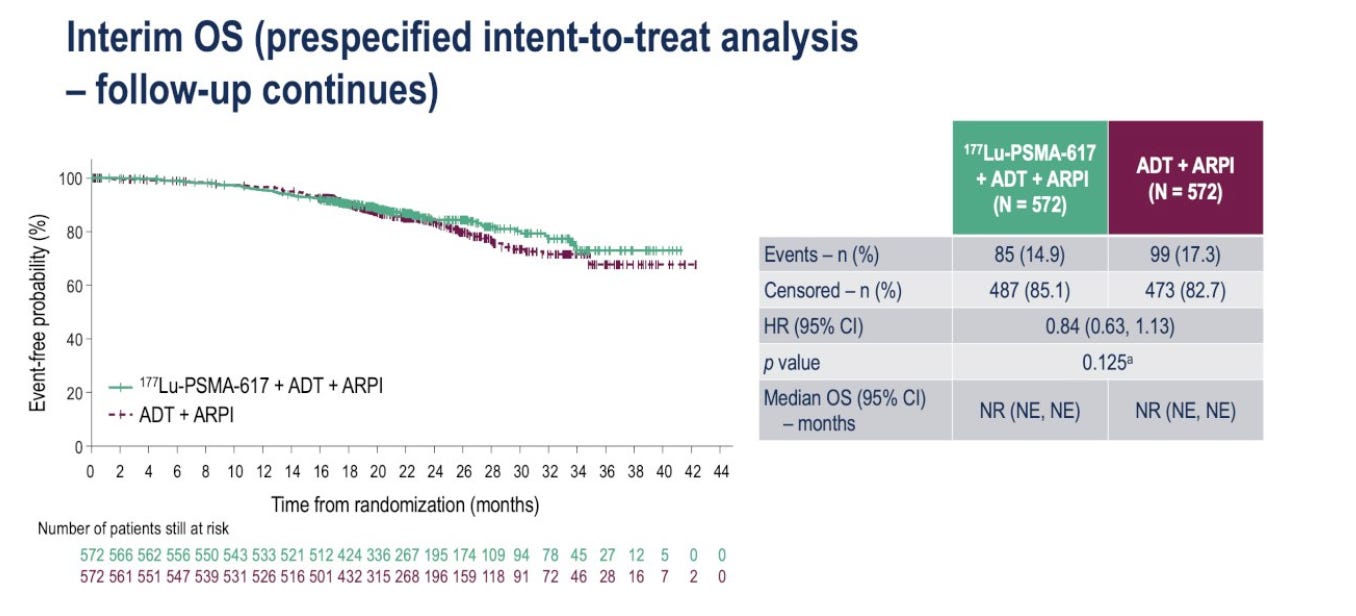
One of the most interesting aspects of PSMAddition is its crossover design, (falsely) justified by the “positive” results of the VISION trial. Sixty percent of patients who progressed in the control arm subsequently received LuPSMA. While crossover undoubtedly complicates the interpretation of overall survival, it also reflects everyday clinical practice, where patients progressing on ADT and ARPI can still receive LuPSMA later.
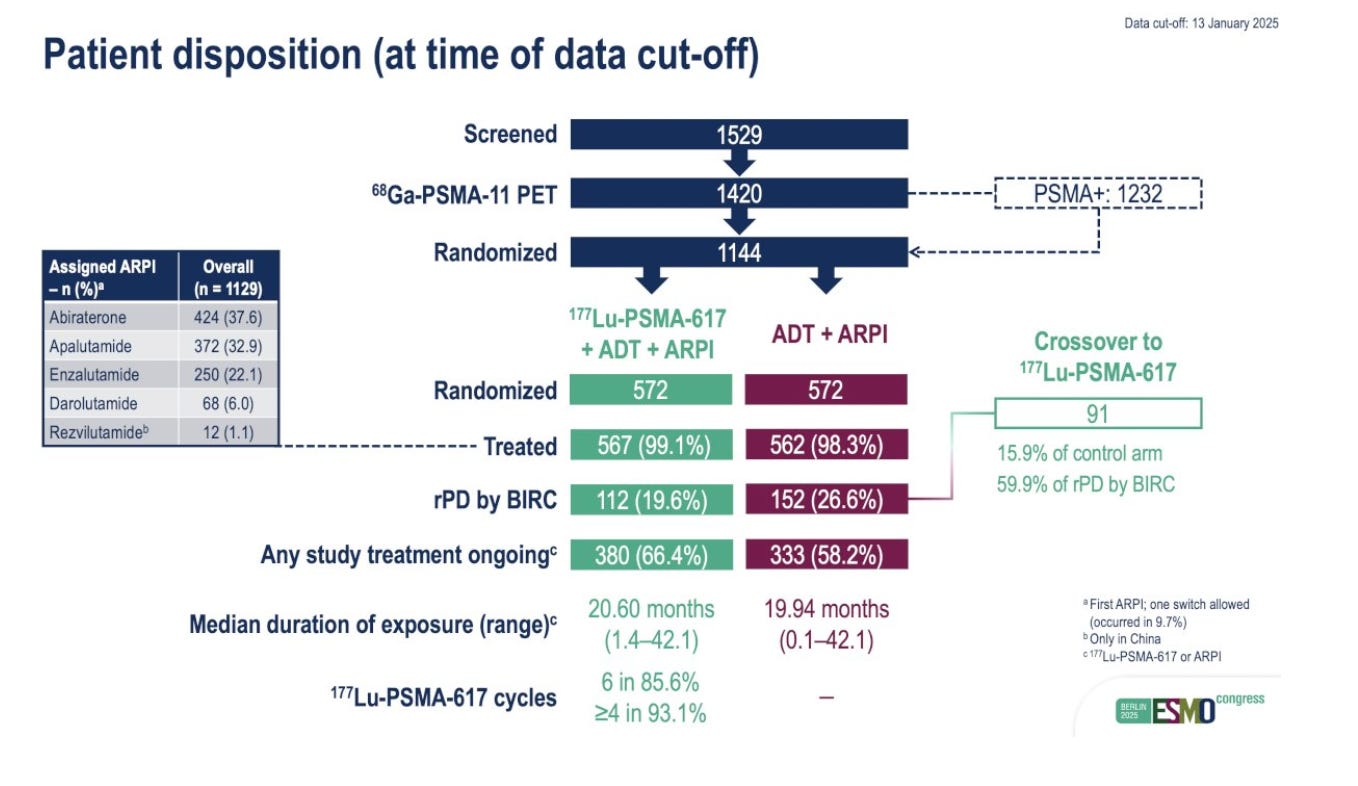
The trial therefore asks not only whether LuPSMA works, but whether every patient benefits from receiving it immediately rather than reserving it for progression.
That question becomes even more relevant when considering the patient experience.
Upfront LuPSMA was associated with more toxicity, including nausea, vomiting, dry mouth, and decreased appetite. More importantly, quality of life, as measured by the FACT-P, deteriorated after approximately 4 treatment cycles.
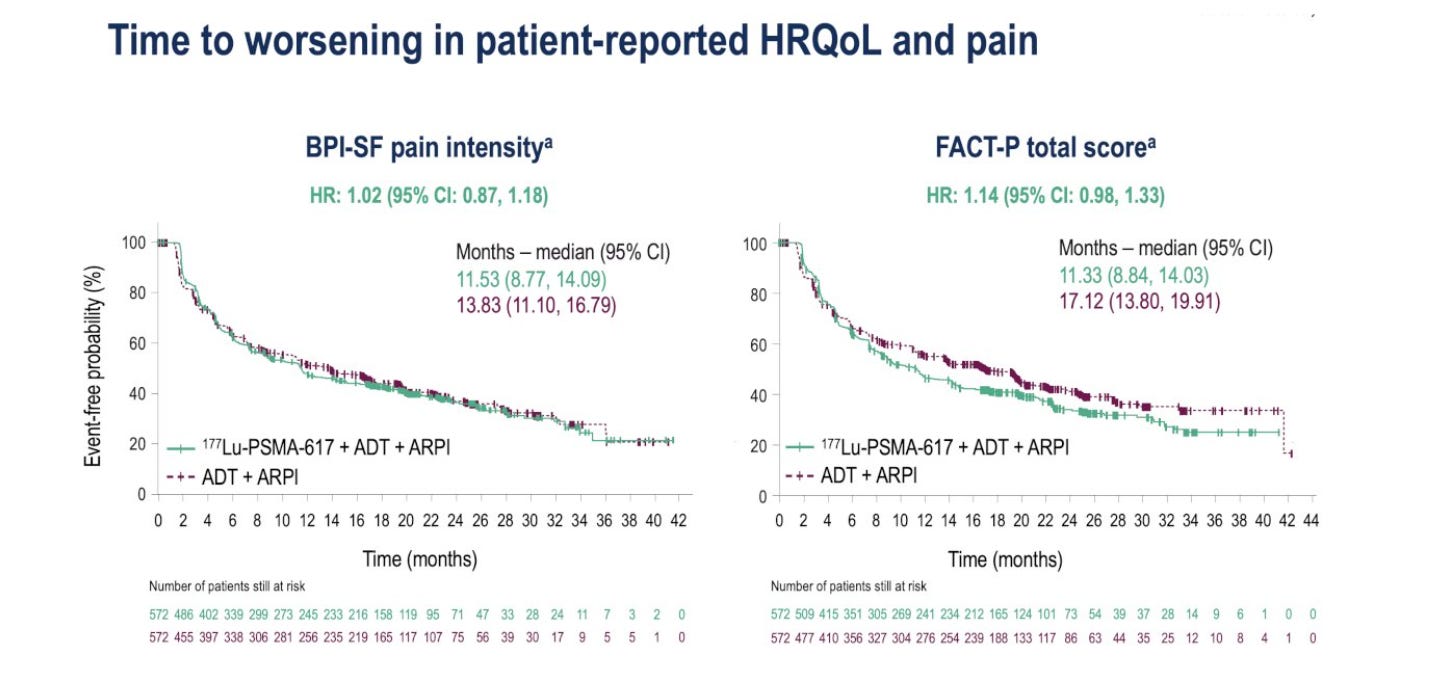
In other words, every patient in the experimental arm was exposed to additional treatment-related morbidity, whereas only a proportion of patients receiving standard treatment ultimately required LuPSMA.
This shifts the discussion beyond radiographic progression. Modern oncology increasingly faces the challenge of balancing treatment intensification against overtreatment. Delaying progression is valuable, but only if that benefit ultimately translates into outcomes that matter to patients.
A longer follow-up may still reveal an overall survival advantage, which would substantially change the discussion.
For now, however, PSMAddition should be viewed as more than a positive rPFS trial. It is also a trial about treatment sequencing. In an era of increasingly effective therapies, the challenge is no longer simply adding more treatment—it is identifying which patients truly need it, and when.
Hopefully, the full manuscript will soon provide the level of detail needed to answer that question. And while everybody waits, patients in the USA already have access to the $ 51,168-per-infusion drug :)
No posts
Comments
Nothing yet. Say the first thing.
Sign in to join the conversation.