
There is a building on Köthener Straße 38 in Berlin, three hundred metres from Potsdamer Platz, that concentrates more history in a single address than most cities accumulate in a century. In 1977, David Bowie stood at a studio window here and watched two lovers kiss against the Wall. The song he wrote became "Heroes."
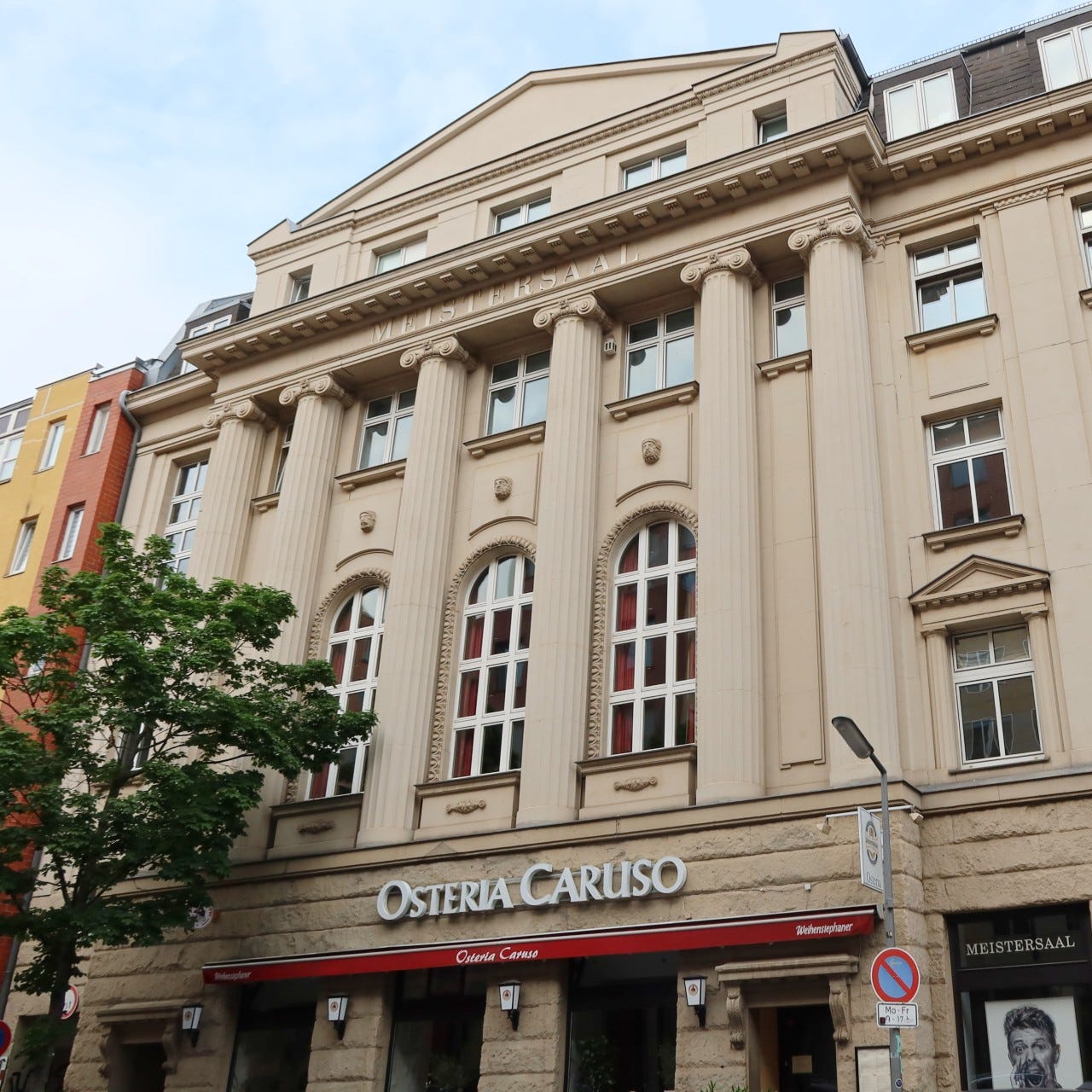
Fifty years earlier, in the same building, a publisher named Wieland Herzfelde was preparing a manuscript that would prove equally difficult to forget: Isaac Babel's “Red Cavalry” (Die Reiterarmee): thirty-five short stories about a Jewish intellectual riding with a Cossack cavalry army through the killing fields of Ukraine and Poland during the Soviet-Polish war of 1919-21.
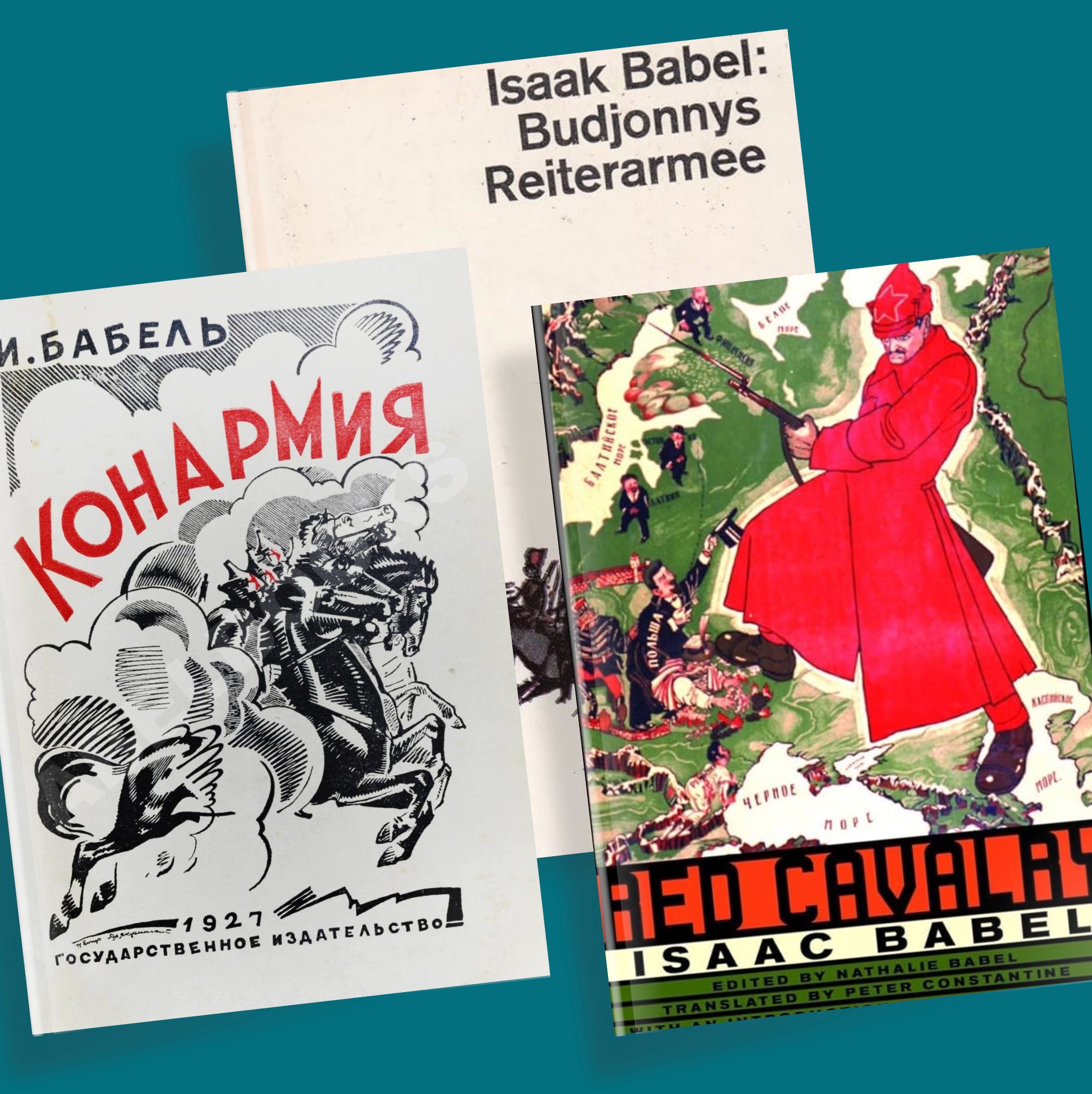
The first complete edition anywhere in the world was published from this building in 1926. The Wall that inspired Bowie lasted for another thirty-five years. Babel's barriers were different: language, religion, ideology, the violence that accompanied the collapse of empires. And empires that refuse to give up on their colonial power. Those barriers, in Ukraine, have not yet fallen.
In 1926, the Weimar Republic was in full swing: jazz, the Kurfürstendamm, and the first hints of what would become the most mythologized decade in German cultural history. Yet inflation still lingered in collective memory, political violence was becoming routine, and an emerging movement fed on resentment and scapegoating. Threaded through it all something official histories often underplay: Berlin was, for a few extraordinary years, a Russian city.
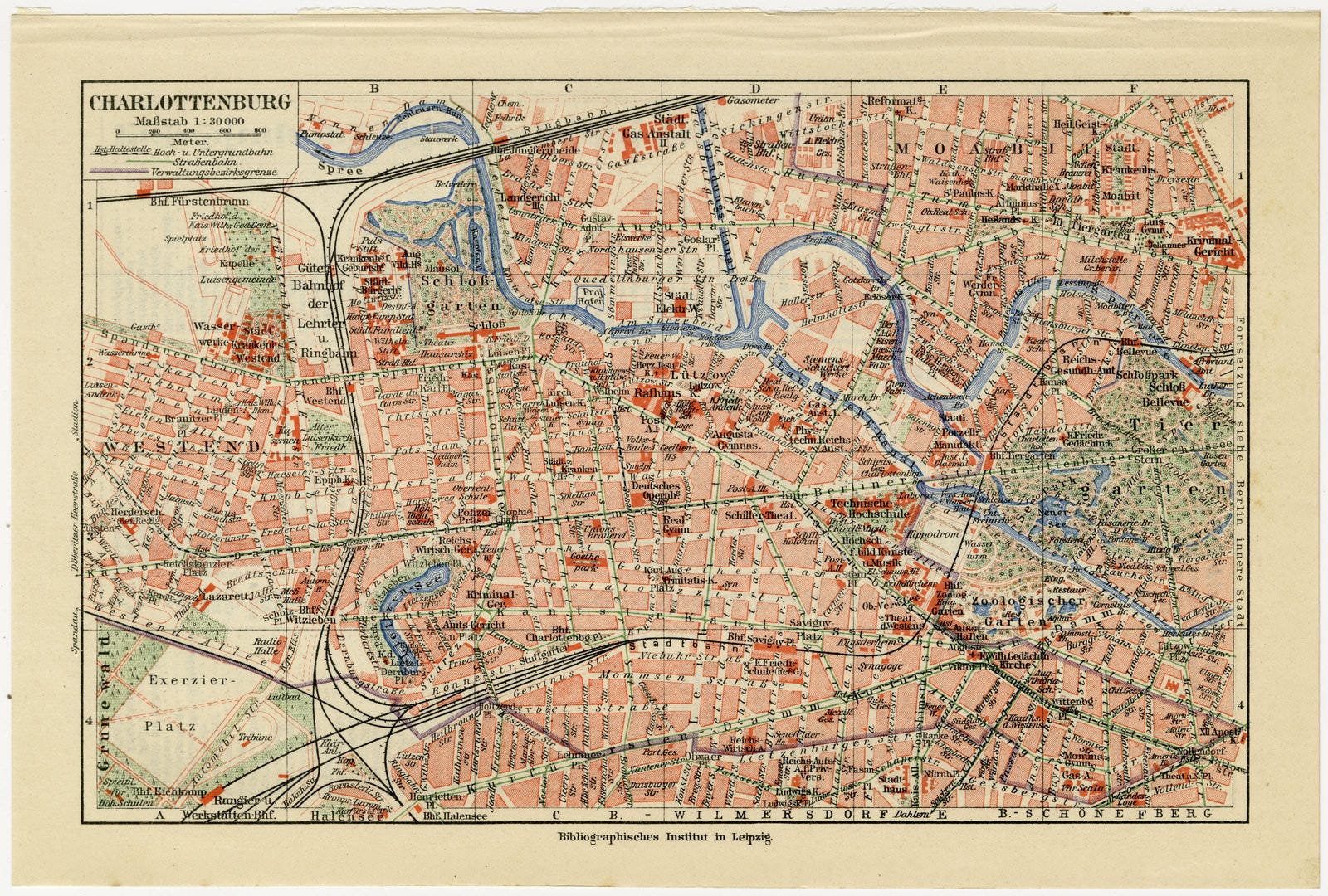
The Charlottenburg district in West Berlin became so saturated with Russian life that Berliners nicknamed it “Charlottengrad.”
The Russian émigrés themselves called it “Petersburg”. At its peak, around 1923, some 300,000 refugees and émigrés from the former Russian Empire lived here, concentrated in Charlottenburg and radiating outward along the Kantstraße, the lower Kurfürstendamm, the Joachimsthaler Straße.
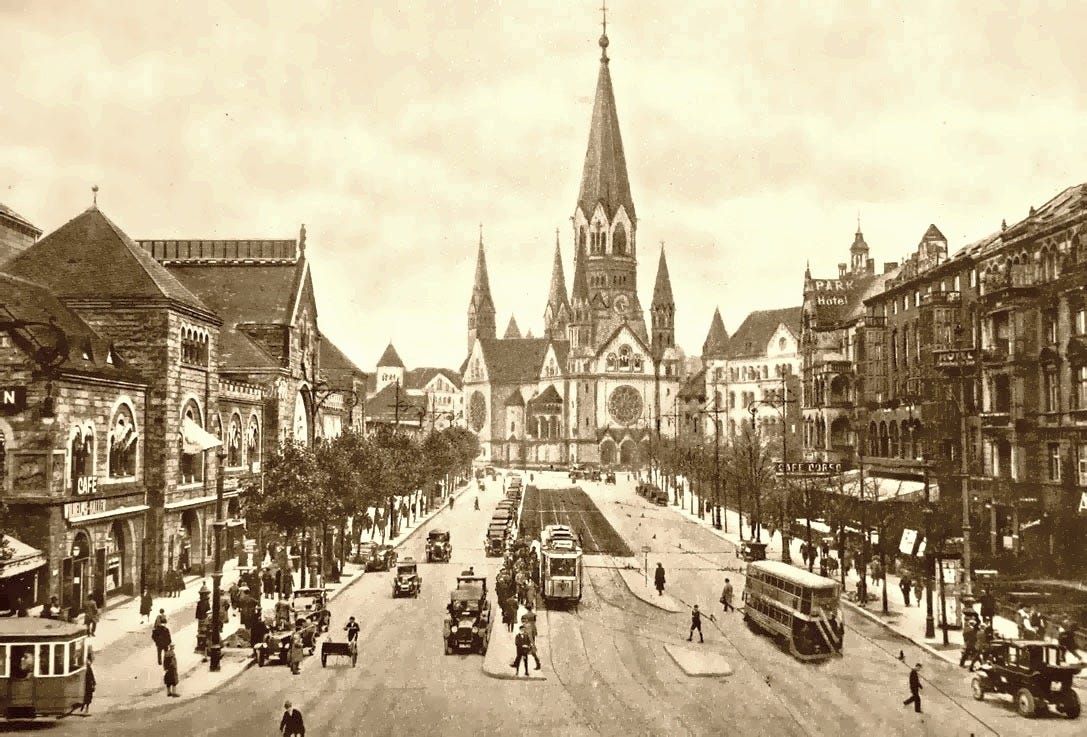
They were a mixed and often bitterly divided crowd: former tsarist officers waiting for better times, Jewish families with transit papers in their pockets hoping for a visa to America, socialist intellectuals who preferred to debate the revolution in a Berlin café rather than live it in Petrograd. Viktor Shklovsky, the literary critic and novelist who had fled the Bolsheviks, described them circling the Gedächtniskirche “like flies around a chandelier” („wie Fliegen um den Kronleuchter”).1
Ilya Ehrenburg, the journalist and writer who would later become the Soviet Union's most famous foreign correspondent, held literary court at the Prager Diele café near Prager Platz. Marina Tsvetaeva, the poet who would later return to the Soviet Union and take her own life there, was here. So were Nabokov, Bely, Pasternak, Mayakovsky.
Between 1918 and 1924, Berlin publishers produced more Russian-language titles than Moscow and Petrograd combined: 2,100 books, 86 publishing houses. The city had become, as the literary historian Fritz Mierau would later write, the place where Russian self-understanding found its sharpest focus outside Russia itself.2
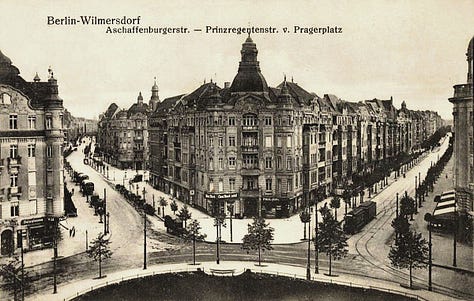
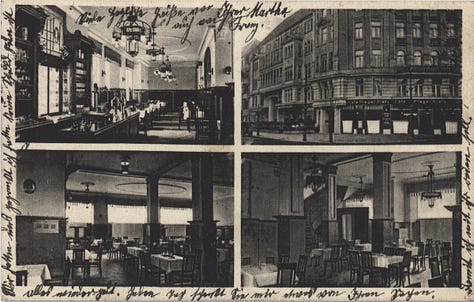
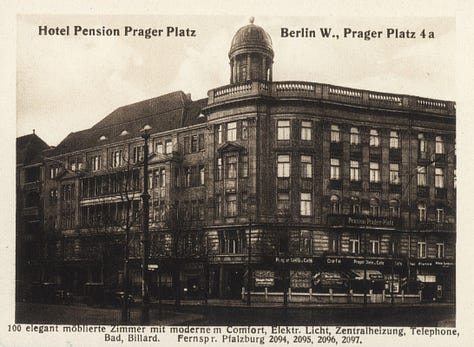
Malik-Verlag was not a Russian press. It was a German radical one, leftist, avant-garde, anti-fascist, with Heartfield's photomontage covers making each book a visual argument before you opened it. But it operated inside this Russian Berlin, breathed its air, published its writers. When Herzfelde released Die Reiterarmee in 1926, Berlin gave Babel to the world.
What Babel wrote - after riding with the Cossack Soviet Cavalry through Ukraine and Poland in 1920 - was literature, but it was also testimony:
“The chronicle of daily atrocities torments me like a heart condition” („Die Chronik der täglichen Untaten quält mich wie ein Herzleiden”)
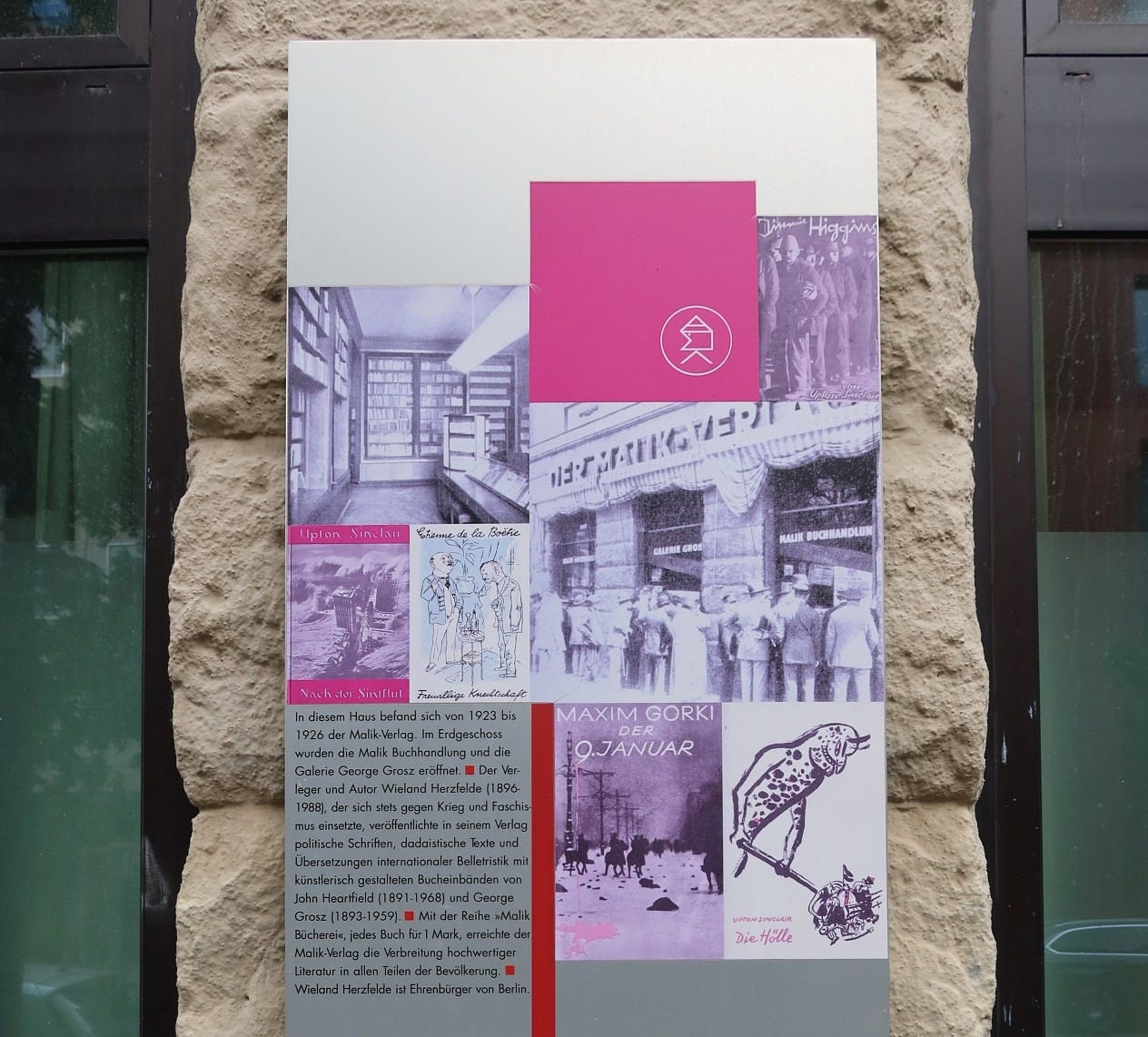
The building on Köthener Straße 38 still stands. The plaque on its wall mentions Herzfelde, Heartfield, Grosz. On the same facade, in a window belonging to the Hansa Studios, a giant animated screen displays Bowie's image. The only missing name? Babel. Yet this book is part of the building. Another piece of the Berlin mosaic: one that now, after one hundred years, reminds us of what binds Berlin to Odessa, to Kyiv, to Brody: the towns where Babel rode, and where the war has returned.

Isaac Babel was born in June 1894 in the Moldavanka, the roughest quarter of Odessa, to a lower-middle-class Jewish family. He was a slight boy with fine features and glasses: details that would follow him, literally, into his fiction.
His father was a merchant. His childhood was divided between the Talmud and Maupassant: between Hebrew lessons that lasted until his sixteenth year and the French classics he devoured. By fifteen, Babel was writing short stories in French. None of them survived. He later said they were colorless; only the dialogues worked.
Odessa in those years was a city unlike any other in the Russian Empire. One third of its population was Jewish. It was a port city, cosmopolitan by necessity, where Greeks, Ukrainians, Italians, and Jews had been trading, building, and colliding for a century.
By the 1880s, Jews constituted two thirds of the city's registered merchants and traders, almost three quarters of its innkeepers, two thirds of its veterinarians and pharmacists. They were concentrated in the city center, in commerce and the professions, while the surrounding countryside remained overwhelmingly Ukrainian and rural. The proximity was creative and volatile in equal measure.
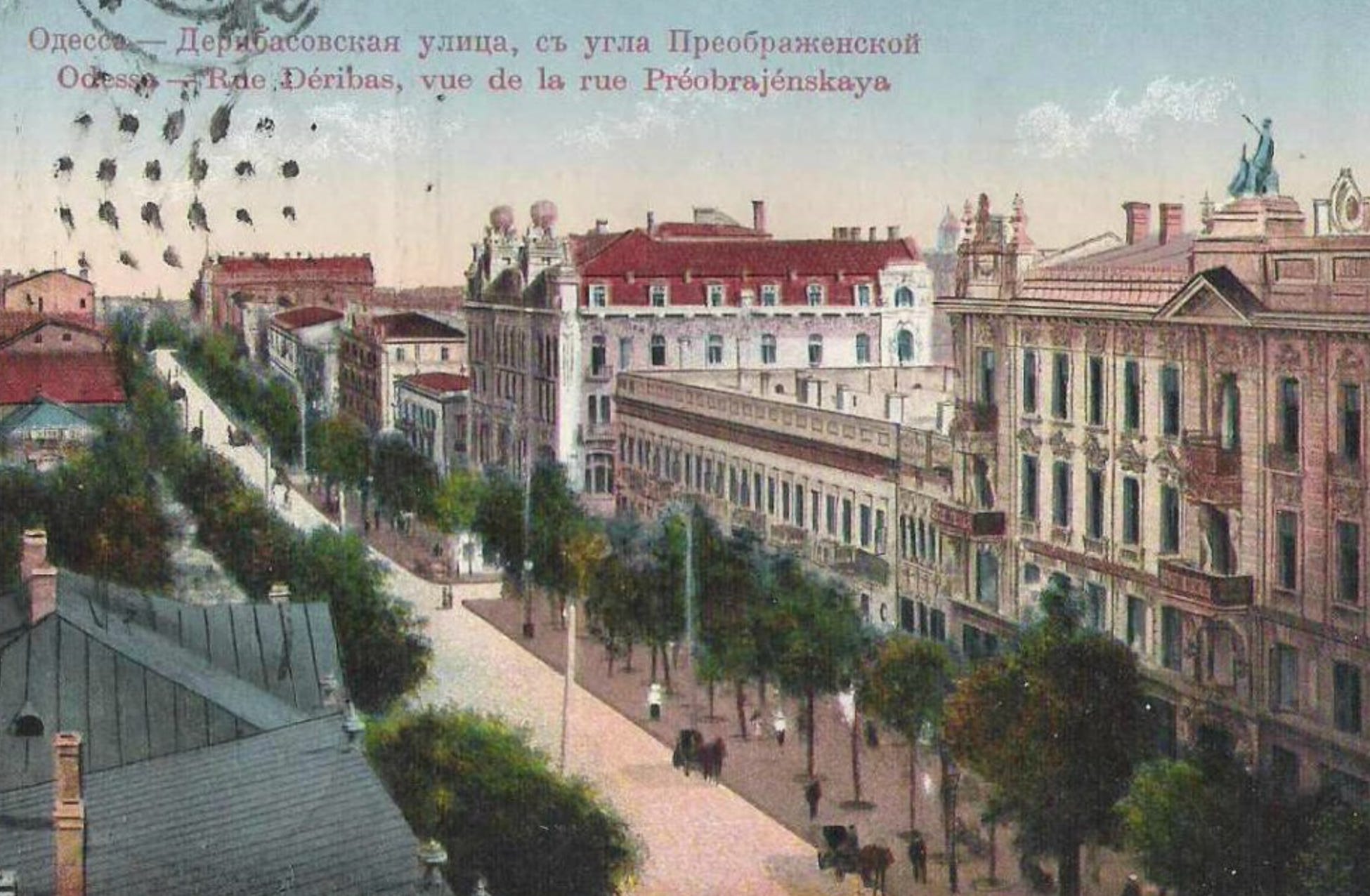
The violence came in waves. In 1871, Greek and Jewish communities clashed during Orthodox Easter. In 1881, after the assassination of Tsar Alexander II, a pogrom swept through the Jewish quarter: six dead, hundreds wounded, thousands of businesses looted and destroyed. The imperial government responded not with protection but with new restrictions, the notorious May Laws, which tightened limits on Jewish property, residence, and participation in civic life.
In 1905, during the revolutionary upheaval that shook the whole empire, Odessa descended into weeks of street fighting3. Ljubow Girs, the wife of a senior city official, noted in her diary: “the Jews have organized and armed themselves... on Deribasovskaya Street all Jewish shops were smashed and the goods looted” („Die Juden haben sich organisiert und bewaffnet... In der Deribasowskaja-Straße wurden alle jüdischen Geschäfte zertrümmert und die Waren geplündert”). By October, around three hundred Jews and a hundred non-Jews had been killed. The Babel family survived, sheltered by Christian neighbors. Babel’s grandfather did not.
Out of this city, violent, polyglot, commercially ferocious, intellectually alive, came a writer who carried its contradictions in his bones.
Isaac Babel described his own formation with characteristic economy in a brief autobiography written in 1924: "My father had me study Hebrew, the Bible and the Talmud until my sixteenth year. Life at home was hard" („Der Vater ließ mich bis zu meinem sechzehnten Jahr Hebräisch, die Bibel und den Talmud studieren. Das Leben zu Hause war schwer"). The harbor, the Greek cafés, the cheap Bessarabian wine drunk in the Moldavanka cellars: these were his education too, the counter-curriculum to the religious one.
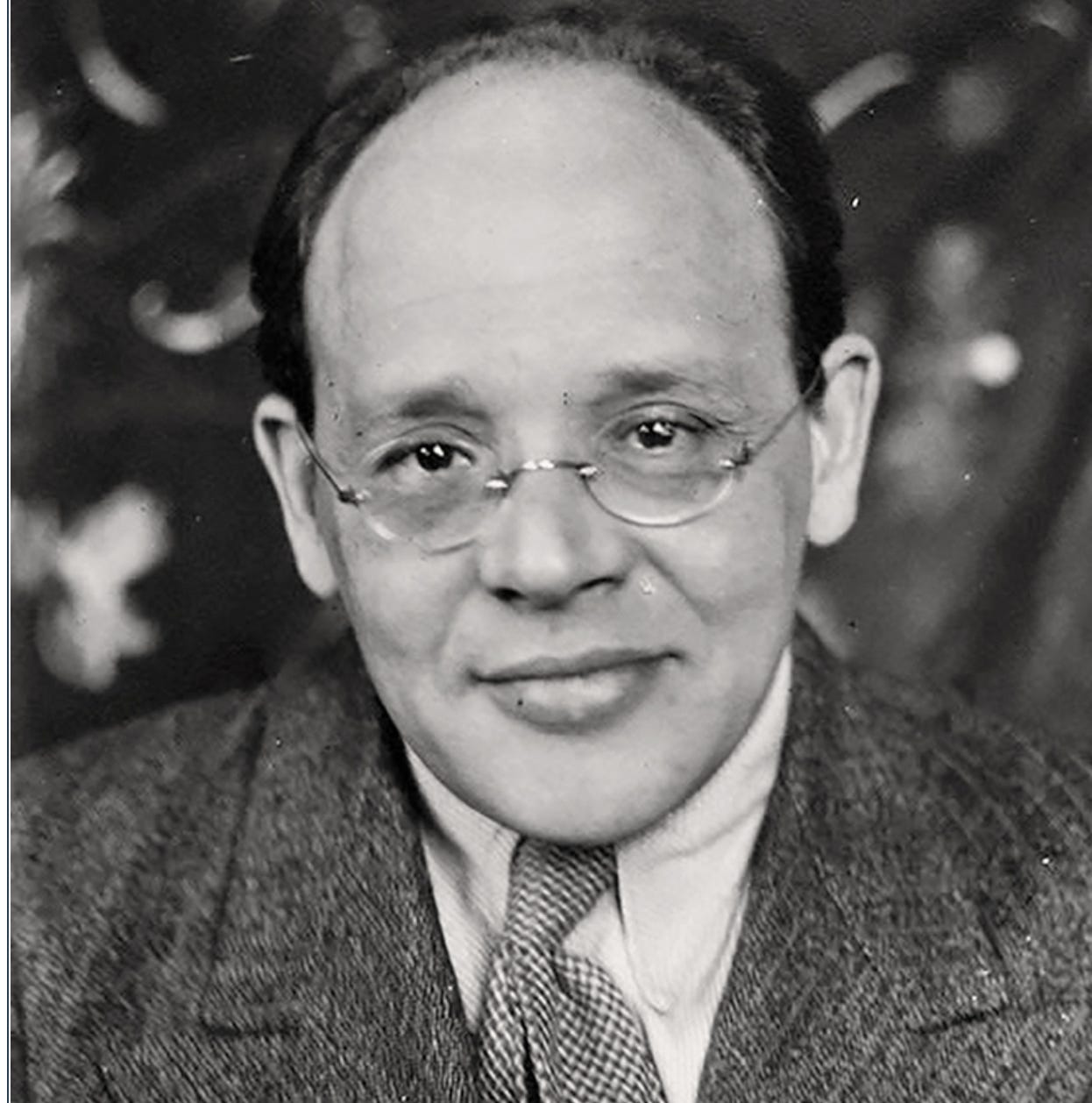
Jewish quotas barred him from the University of Odessa. He enrolled instead at a technical school in Kiev, then made his way to Petrograd without the required residence permit, evading the police on his wits alone. There, in 1916, he found Maxim Gorki, who published his first stories and then gave him the advice that shaped everything: go among the people.
For seven years Babel disappeared into the revolution. He served on the Romanian front, joined food requisition units, reported from Tiflis and Petrograd. In 1920 he was assigned as a correspondent to the First Cavalry Army, the elite Cossack force fighting for the Bolsheviks on the western front, riding through the same Ukrainian and Galician territories where, between 1918 and 1921, one hundred thousand Jews had been killed in the post-imperial collapse. His alter ego was called Kiril Ljutov, a Russian name with no trace of Odessa in it.
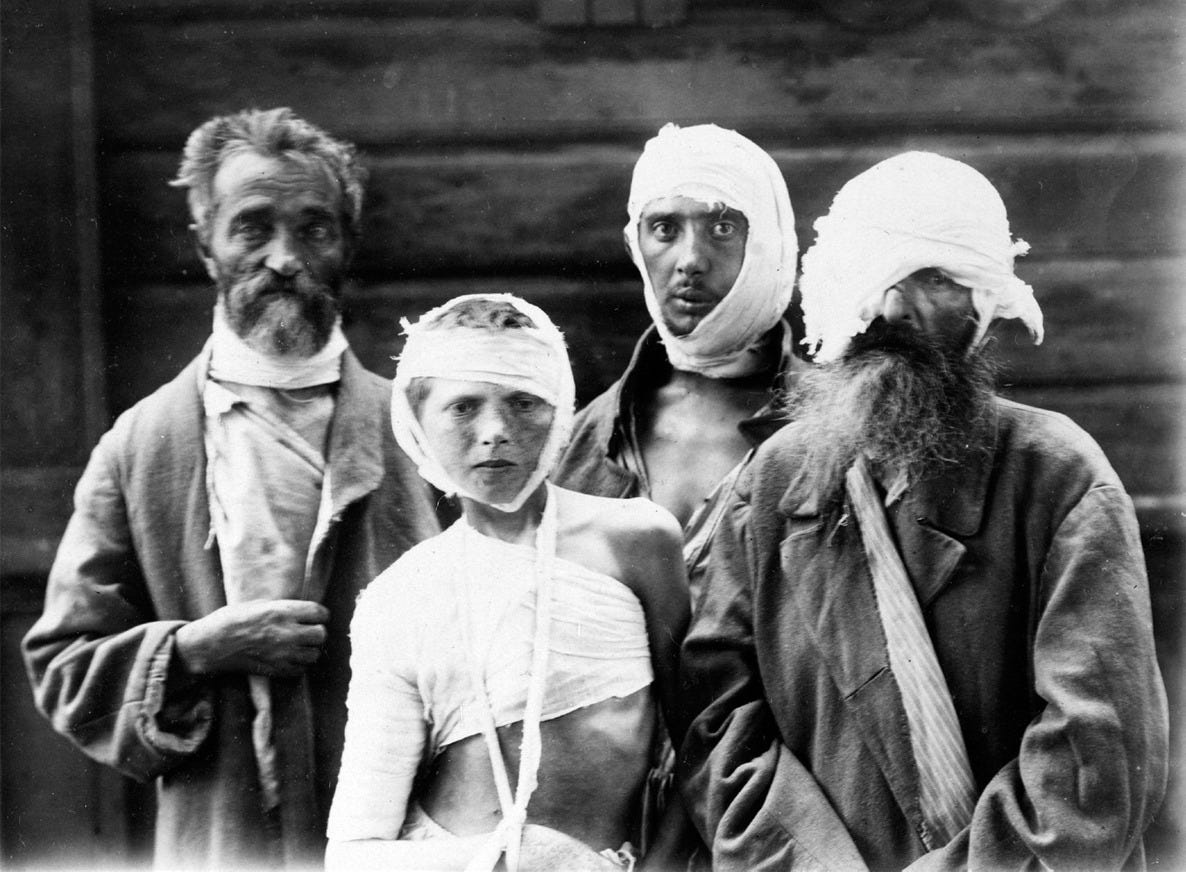
The historian Jeffrey Veidlinger has spent years reconstructing what happened in the towns and villages of Ukraine and Galicia between 1918 and 1921.4 Jews were killed by neighbors, by peasant militias, by passing armies, and by young men in their teens and early twenties whose fathers had died in the First World War: men who had inherited a landscape of total collapse. There were around one thousand separate pogrom incidents across five hundred localities. The perpetrators were mostly ordinary people. The victims were mostly people they knew.
Babel rode through this landscape in 1920, a few months after the killing peak, with a notebook and a false name. He wrote short stories, like polaroids, each tale rarely longer than two pages. But those two pages are often hard to read.
The first story in Die Reiterarmee ends in a bedroom. The narrator has been billeted in a Jewish household in Nowograd. He falls asleep next to what he assumes is an old man asleep. A pregnant woman wakes him in the night. Her father is lying next to him. “A dead old man lies beside me, his head thrown back, his throat torn out, his face hacked apart, in his beard hangs blue blood like a lump of lead.” („Ein toter Greis liegt neben mir, den Kopf nach hinten gebogen, die Kehle herausgerissen, das Gesicht zerhackt, in seinem Bart hängt wie ein Stück Blei blaues Blut“). The Poles had been there before the Red Army. The old man had begged them: “Please, kill me in the yard, so my daughter does not have to watch”. They killed him in the room because it was more convenient.
In the story “My First Goose”, the narrator arrives at a Cossack unit and is immediately marked as other. The divisional commander looks at him and laughs: And glasses on your nose! What a pathetic sight! („Dazu eine Brille auf der Nase! Die reine Jammergestalt!“) To survive, to be accepted, Babel’s alter ego, Ljutov, kills a goose with his boot, cooks it, reads Lenin aloud to the Cossacks by firelight, and is finally admitted to their circle. The price of belonging is a small, gratuitous act of cruelty. That night he dreams of women, but writes: “the deed had defiled my heart, my heart groaned and bled.” („die Untat hatte mein Herz besudelt, mein Herz stöhnte und blutete“). He has crossed a line. He knows it. The Cossacks know it too, and that is precisely why it worked.
In “The Road to Brody”, Babel mourns the bees of Volhynia. Both armies had destroyed them—smoking out the hives, blasting them with gunpowder, hacking out the honey with sabres—because there was no bread. In Volhynia, there are no more bees. Then, almost as an aside: “the chronicle of daily atrocities torments me like a heart condition.” („Die Chronik der täglichen Untaten quält mich wie ein Herzleiden“) This is the clearest statement Babel ever made about what he was doing. He was keeping a chronicle. And the chronicle was making him sick.
Other stories in the collection complete the picture.
In "Pristschepa," a young Cossack returns to his village after the White Army - the anti-Bolshevik forces fighting to restore the old order - has killed his parents, and after his neighbors have looted his family home. He goes from house to house, retrieving his mother's embroidered towels, his father's pipes, and his gramophone, killing the neighbors who had taken them. Then he burns the house to the ground, shoots his own cow, tears a fistful of hair from his head, throws it into the fire, and rides away. Revenge consumes everything, including the avenger.
In “Squadron commander Trunow,” Babel witnesses his commander execute prisoners in cold blood, protests, is ignored, and then helps bury the same man with full military honors. In “Samostje,” a peasant shares a cigarette with Babel in the dark, somewhere in no man’s land, while a Jewish throat is being cut nearby, audible but invisible. The peasant is not angry. He is simply certain: “The Jew is to blame for everything” („Der Jude ist an allem schuld”), he says, and then, almost as an afterthought, “how many Jews can there be in the world? About ten million. Only two hundred thousand will remain!” („Wieviel Juden mag’s auf der Welt geben? Etwa zehn Millionen. Es werden nur zweihunderttausend übrigbleiben!”). He says this while touching Babel’s hand so he will not leave before the thought is finished.
Babel corrects the number. Then he rides away and keeps recording what he sees, hears, and does. In another story, “Das Lied” (The Song), he finds the formula for what he was doing: “a bloody trail marked our path, but above our trail the song hovered.” („Eine blutige Spur zeichnete unseren Weg, aber über unserer Spur schwebte das Lied“.)5
The book is that song: it was published in Berlin in 1926, six years after the events it describes, in a city that was simultaneously absorbing the survivors of what the peasant in the dark had predicted. The Völkischer Beobachter, in its first issues after the Nazi Party purchased the newspaper in 1920, ran headlines against the Eastern European Jews flooding into Berlin, the very people fleeing the pogroms Babel had witnessed, accused now of importing the Bolshevism they had been fleeing.
The Bauer’s arithmetic was already in circulation. It would take another twenty years to become policy.

On 29 March 1927, Kurt Tucholsky6 published a review of Die Reiterarmee in Die Weltbühne, the weekly magazine that was the intellectual conscience of the German left. He wrote under his pseudonym Peter Panter, as he often did when he wanted to be playful. The review was rapturous. Tucholsky wrote that he and his cat had read the book three times and had done nothing but purr with admiration. It was the kind of review that makes a book’s reputation in a city.
Tucholsky and Babel never met. But Tucholsky understood immediately what Babel had done: he had written about war without glorifying it, about revolution without lying about it, about Jews without sentimentalizing them.
That same summer, Babel himself passed through Berlin, en route to Paris: his first time outside the Soviet Union in years. The visit was brief. But he had seen the city where his book lived its freest life. He returned to Moscow the following year, in October 1928. That summer, on Babel’s return journey, a young writer named Elias Canetti7 arrived in Berlin from Vienna. He was twenty-three, recently graduated, and in a state of intellectual excitement that bordered on fever. Canetti moved in the orbit of the Malik-Verlag circle, the same world that had produced and distributed Die Reiterarmee. It was there that he encountered Babel in person.
The meeting left a mark that Canetti would describe decades later in his autobiography, Die Fackel im Ohr (The Torch in My Ear). What struck him was not what Babel said but how he looked: a gaze that observed without judging, an attention so complete that it felt to the young Canetti almost hypnotic. Babel was calm, as if the seven years he had spent among soldiers, Cheka agents, and food-requisition units had burned away everything nonessential. Canetti found himself disarmed. Here was a writer who had witnessed atrocity and written it down without flinching or editorializing, and who stood in a Berlin drawing room looking at you as if you were the most interesting thing he had seen all week.
Berlin received Die Reiterarmee as literature; the Soviets received it as a provocation. Semyon Budënnyj, the cavalry commander who had given Babel his access and his false credentials, was furious. He accused Babel of slandering the Red Army, of inventing atrocities, of writing like a frightened old woman rummaging through dirty laundry. Maxim Gorki’s intervention kept the book from being suppressed, but the pressure did not stop. In Germany, Tucholsky was praised; in Moscow, the case against Babel was building.
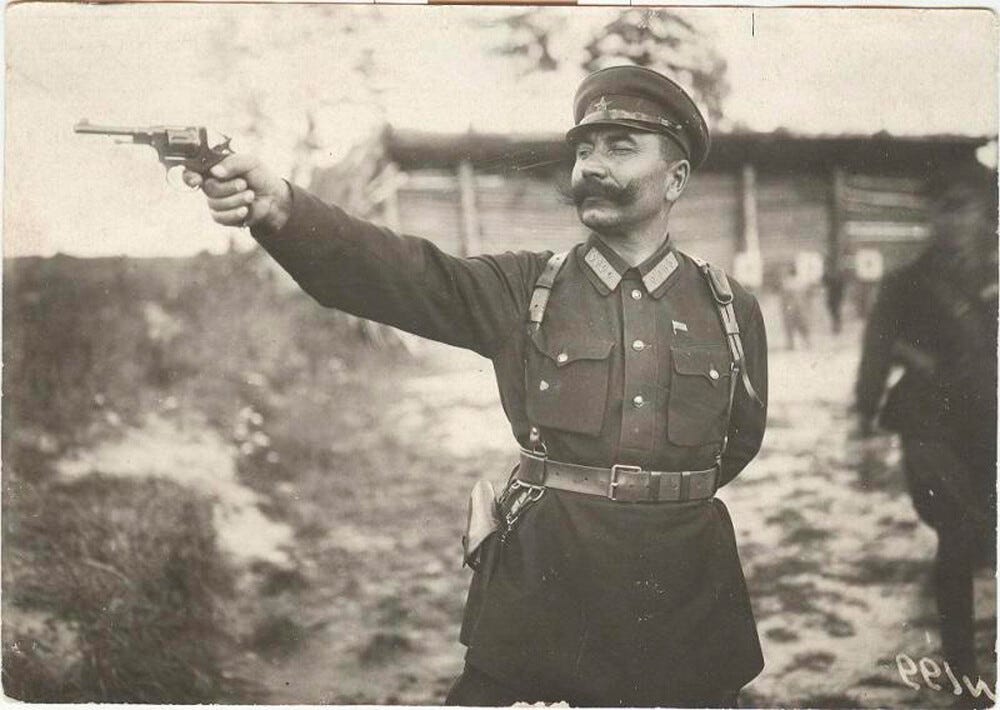
By the late 1930s, Stalin’s Great Terror had consumed the Soviet Union. Show trials, mass executions, and the systematic destruction of anyone deemed a threat, real or imagined, had turned the country into a landscape of fear. Writers, artists, and intellectuals were particularly vulnerable: their words were evidence, their contacts were conspiracies, their foreign travels were proof of treason. Maxim Gorky, who had been an important patron and protector of Babel, died in 1936. The official cause was illness, but the circumstances of his death have long been disputed and remain the subject of historical debate. Without him, Babel was exposed.
On 15 May 1939, at his dacha outside Moscow, Isaac Babel was arrested and taken to the Lubyanka prison. He was forty-four years old. The charge was espionage. The real reason was more banal and more lethal: he had been too close to Nikolai Ežov, the head of the NKVD, via an affair with Ežov’s wife. When Stalin moved against Ežov, everyone in his circle became a target.
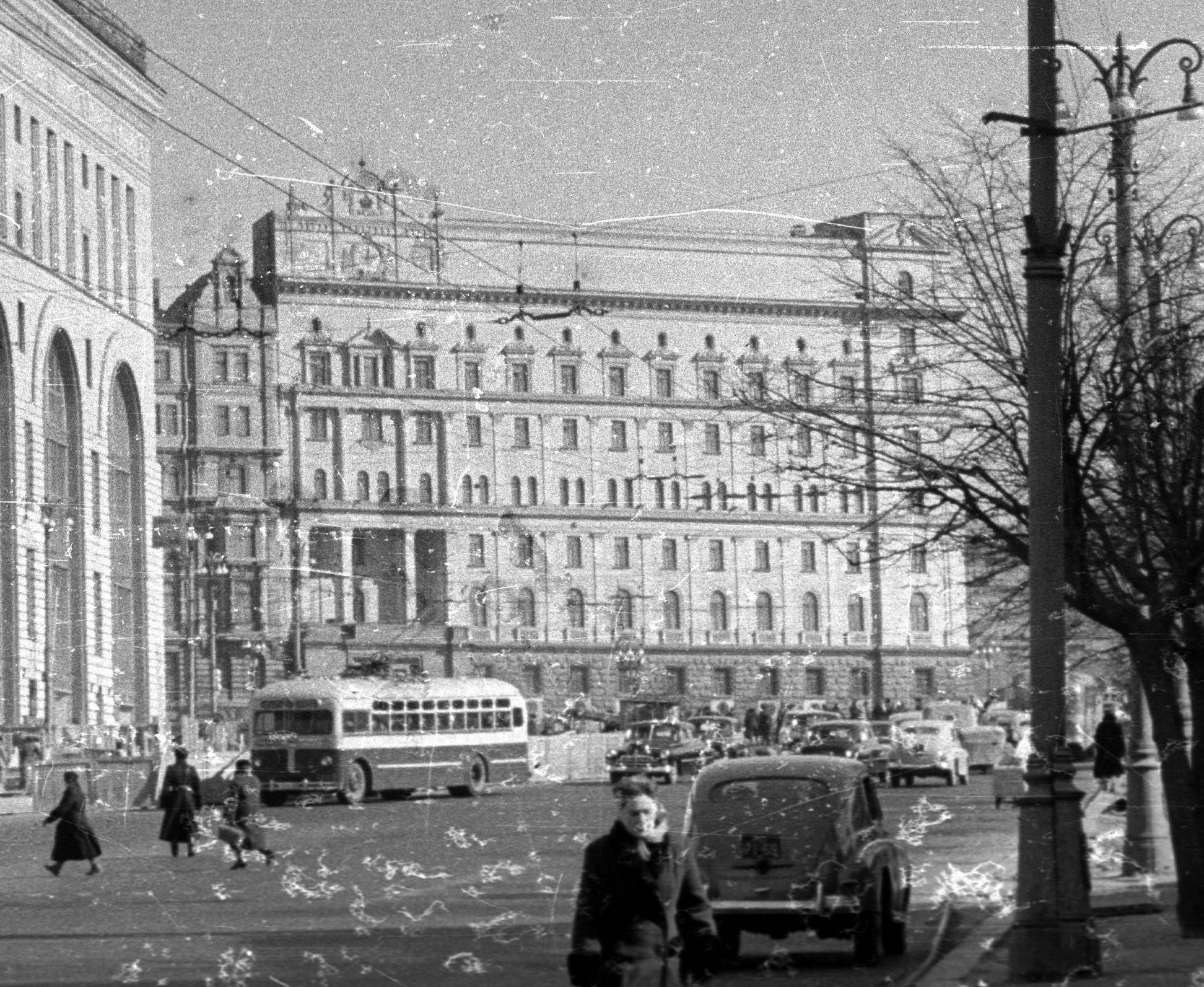
He was tortured. Under torture, he confessed to being a member of a Trotskyist conspiracy, to spying for France and Austria, to recruiting Ilya Ehrenburg and André Malraux during his Paris visit. He named Sergei Eisenstein. He named the theatre director Vsevolod Meyerhold. The confessions were false. On the day of his trial, 26 January 1940, he retracted everything. It made no difference. The trial lasted twenty minutes. Babel was found guilty and sentenced to death.
He was shot at 1:30 in the morning on 27 January 1940. Fifteen folders of Babel’s manuscripts, confiscated at the time of his arrest, were burned by the NKVD. His last recorded words were: “I am innocent. Let me finish my work.”
His wife Antonina Pirozhkova was told nothing. For fifteen years she was given false information: that he was alive, that he was in a camp, that he would return. She learned of his death in 1954, after Stalin’s death made a partial reckoning possible. The full truth did not reach her until 1988. She had waited forty-eight years.
In “The Red Cavalry” there is a story called “The Death of Dolgushov”. A telephone operator named Dolgushov has been mortally wounded in battle; his intestines are spilling out. He asks the narrator to shoot him rather than leave him to the mercy of the enemy. The narrator cannot do it and rides away. A comrade named Afonka does what the narrator could not, then turns on him in fury: “You men with glasses,” he says, “you pity us the way a cat pities a mouse.” („Ihr Bebrillten habt Mitleid mit uns wie die Katze mit der Maus.“) The narrator loses their best friend over this inability to act.
Babel could not pull the trigger for Dolgushov. He had killed the goose, but it had shamed him. He was a writer, not a killer - not even a benevolent one. He died, as many did in those years, for what he wrote, or for what he did not write, or for what others thought he should or should not have written. It does not matter when a sentence takes twenty minutes to be delivered.

In September 2011, a bronze Babel was unveiled in Odessa, close to the building where he once lived. He sits with a notebook in his hand, gazing into the distance. The funds were collected over five years, one donation at a time, by the World Odessit Club: a loose confederation of Odessa expatriates scattered across New York, Los Angeles, and Tel Aviv.
Six years later, in the summer of 2017, some five hundred people gathered for one of Odessa’s literary flashmobs of the series ”Odessa Reads. Odessa Is Read” and walked through the city reading passages from Red Cavalry aloud. In Japanese, in Mongolian, in Norwegian, in French, in Russian, and in Ukrainian. The cult of Babel, as one local editor put it, was a real religion.8
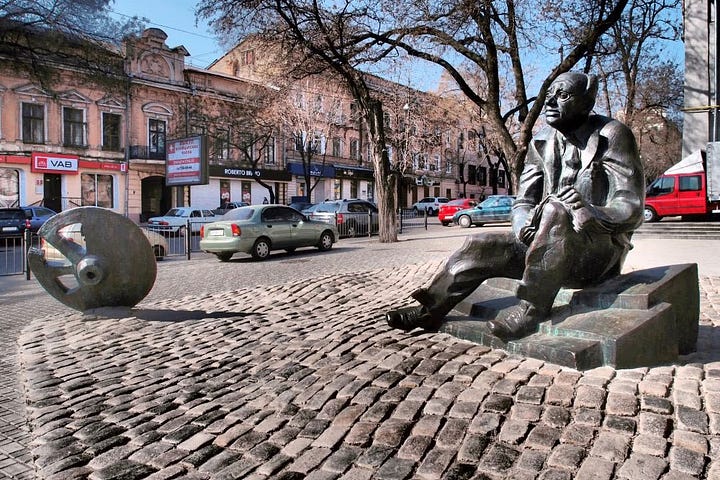
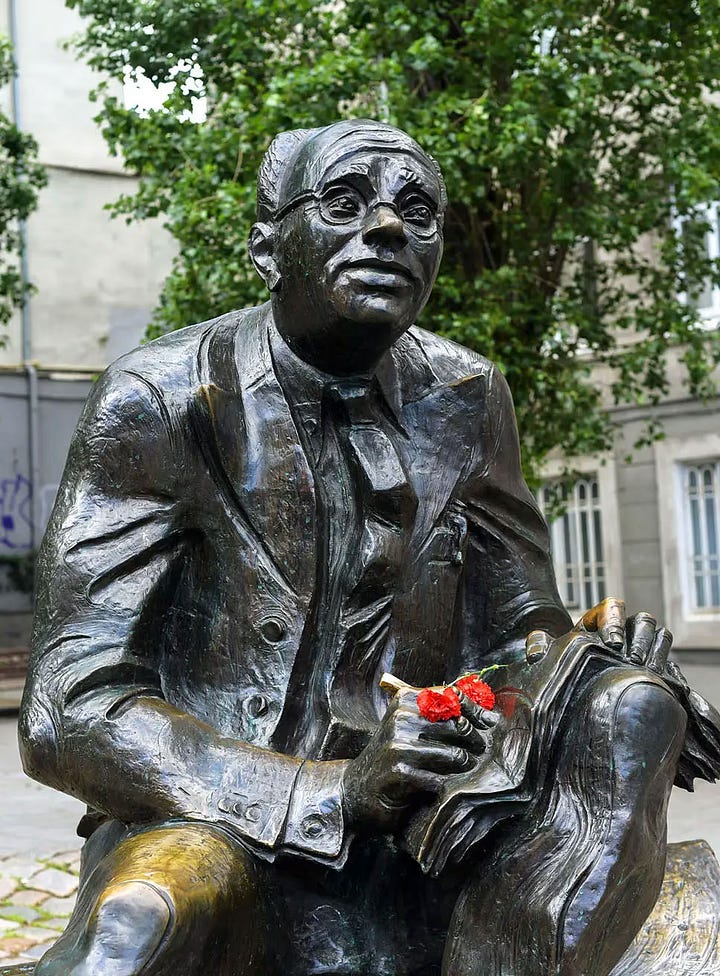
Then came 2022. And with the full-scale Russian invasion came a law, passed by Ukraine’s parliament in April 2023, requiring local authorities to remove symbols of Russian imperial policy from public spaces.9 Babel’s name appeared on the list of nineteen monuments in Odessa scheduled for dismantling. The charge: he had worked for the Cheka, the Bolshevik secret police, and had glorified Soviet power on Ukrainian territory.
The counterarguments came quickly. Princeton professor Ilya Kaminsky compiled a dossier demonstrating that Babel’s alleged ties to the Cheka remain unproven. Stanford’s Gregory Freidin pointed out that Babel had in fact criticized collectivization, and that the man Ukraine’s decolonization law now targets was himself shot by the regime that the law seeks to dismantle. “You can’t remove Babel,” said Antonina Poletti, editor of the Odessa Journal. “Remove him and you erase the soul of the city.”10
More than 150 cultural figures - professors, artists, and military personnel - signed an open letter to UNESCO asking that decolonization decisions be paused until the end of the war.
As of the time of writing this, I have no direct contacts in Odessa. My last confirmed information dates from early 2025. As of that date, the monument was still standing.
I sit in Berlin. And here, a twenty-minute walk from my East Berlin home, this 1926–2026 story closes its loop: at Woelckpromenade 5 in Berlin-Weißensee, in a residential complex built between 1925 and 1928, Wieland Herzfelde spent the last years of his life, from 1974 until his death in 1988.
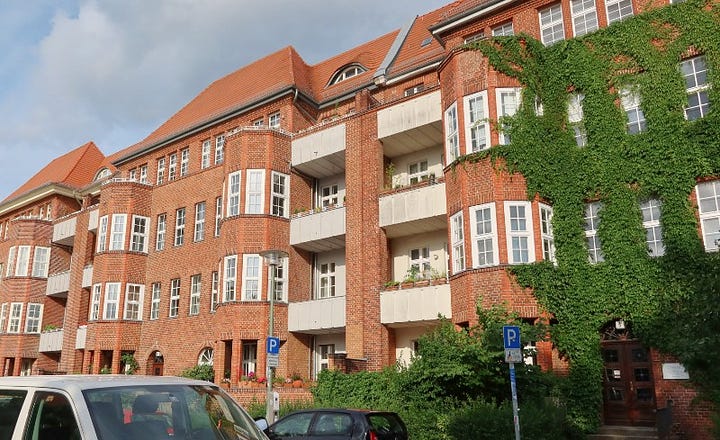
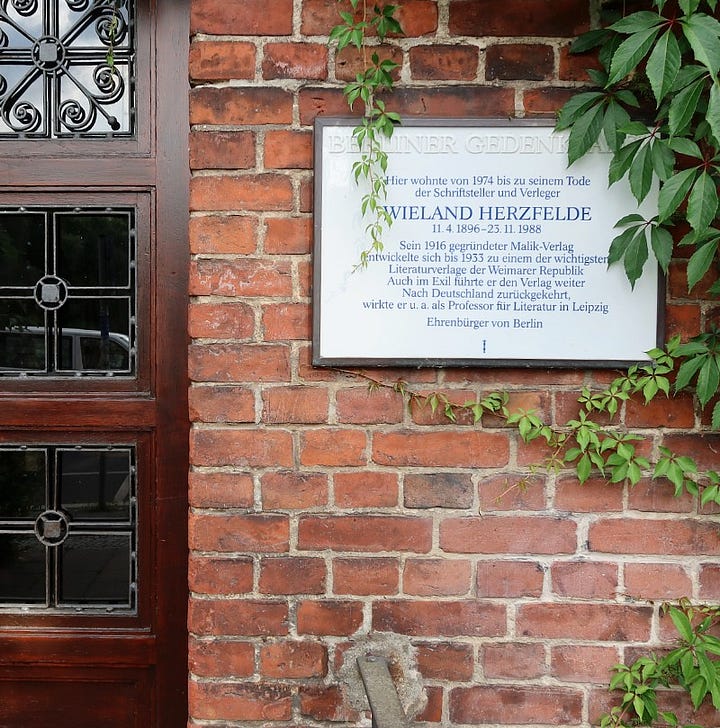
The building is listed now as a heritage site. Film crews have used it as a set for Babylon Berlin, a television series about the Weimar underworld that Herzfelde and Babel both inhabited. The chronicle of daily atrocities has not ended. It has changed languages, changed weapons, changed targets. But Berlin does not forget. Berlin reflects: like a mirror, oriented eastward.
There, where the future of Europe is written.
Karl Schlögel, Das russische Berlin (1998)
Fritz Mierau, cited in Anita Kugler, "Die Russen auf dem Kurfürstendamm," Berliner Zeitung, 2 January 1991
The Russian Revolution of 1905 was triggered by the massacre of peaceful demonstrators outside the Winter Palace in St. Petersburg on 22 January 1905, known as Bloody Sunday. The events that followed — strikes, mutinies, peasant uprisings, and nationalist revolts across the empire — forced Tsar Nicholas II to issue the October Manifesto, granting limited civil liberties and establishing a parliamentary assembly, the Duma. The revolution did not topple the regime but fatally weakened its legitimacy. In Odessa, the upheaval coincided with the mutiny on the battleship Potemkin in June 1905, later immortalized by Sergei Eisenstein's 1925 film, and with some of the most violent anti-Jewish pogroms in the city's history.
Jeffrey Veidlinger, In the Midst of Civilized Europe (2021); talk at UC San Diego / YIVO, 16 November 2023
Isaac Babel, Die Reiterarmee, Fritz Mierau ed., Verlag Autonomie und Chaos, 2024
Kurt Tucholsky (1890–1935) was one of the most important journalists and satirists of the Weimar Republic. A sharp critic of German nationalism, militarism, and antisemitism, he wrote for Die Weltbühne under several pseudonyms, including Peter Panter, Theobald Tiger, and Kaspar Hauser. Jewish by birth, he converted to Protestantism but never escaped the antisemitism of his time. He went into exile in 1924, first to Paris, then to Sweden, where he took his own life in 1935, a few months after the Nazis stripped him of his German citizenship.
Elias Canetti (1905–1994) was a Bulgarian-born, German-language writer who grew up in Vienna and became one of the most original European intellectuals of the twentieth century. His most important works include Masse und Macht [Crowds and Power] (1960), a monumental study of power and crowd psychology, and his three-volume autobiography, of which Die Fackel im Ohr [The Torch in My Ear] (1980) is the second volume. He was awarded the Nobel Prize in Literature in 1981.
Caroline Eden, The Guardian, 1 August 2017
Iryna Ukhina, Deutsche Welle, 23 February 2025; Glib Gusiev, Babel.ua, 16 January 2025
SFG Media, babel-premia.odessa.org.ua, 7 May 2025
Comments
Nothing yet. Say the first thing.
Sign in to join the conversation.