

Like millions of other teenagers, my younger sister is headed to college this Fall. To my great shame, she is not going to study philosophy. This is, apparently, because she hates me and wants to cause me to suffer,1 a problem of evil no philosopher can answer satisfactorily.
Although I have apparently failed my sister, I hope not to fail those of my readers who have a similar decision before them. And this is why they should major in philosophy in college.
First, I will admit, I have both a bachelor’s and master’s degree in philosophy. I had an amazing experience getting both, and found them to be both fulfilling and useful. But I am a bit biased, not least because I want my choices to have been good ones. Fortunately, having a philosophy degree means I have been trained to argue that my decision was good. So there is one reason to get the degree.
In all seriousness, though, you should study philosophy in college, and this is why. Make sure to read to the end; I think you will be surprised at the wealth of benefits philosophy has to offer.
I started Aquinas and Beyond to help everybody better understand Catholic philosophy. This is a free post, but premium subscribers are becoming thoughtful, well-formed Catholic intellectuals through:
A guided tour through the ENTIRETY of Thomas Aquinas’s Summa Theologiae. Don’t miss out on forming your mind according to the Universal Doctor of the Church!
Founding Members get a FREE copy of my Catholic Philosopher In A Year Reading Plan, my ultimate reading list to get up to speed in Catholic Philosophy.
Blogs on the philosophy of religion (God, evil, free will, etc.) like this one about art and the problem of evil.
Reader’s Guides on the great works of Catholic philosophy, like this guide on Jacques Maritain’s Art and Scholasticism.
Further reading recommendations on many posts, including free posts.
Stop feeling confused in deep Catholic conversations and start thinking like a Catholic philosopher.
Why We Learn
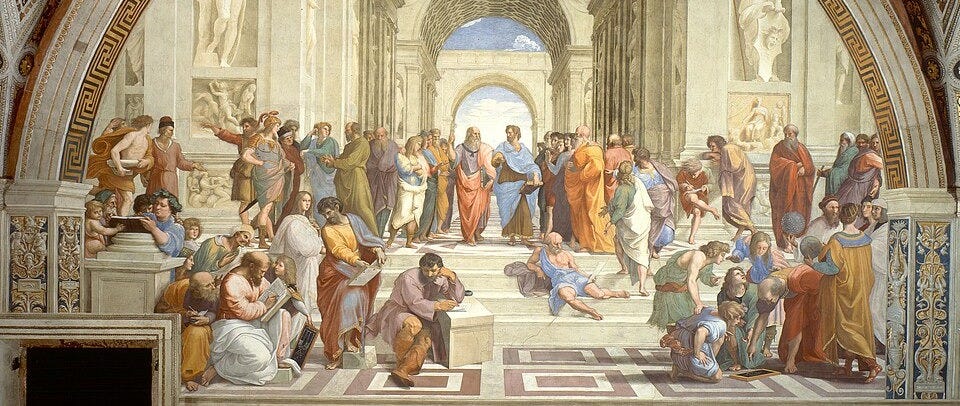
Any time you make a decision, you should take a page out of Aristotle’s Nicomachean Ethics2 and ask yourself what the goal of the decision is in the first place. If you do not why you are going to college, you can hardly make a good decision about how to go about doing college.
Education has two primary ends: moral and intellectual formation. You are, in other words, becoming a better and smarter person. Education is deliberately general in scope — think about your study of english, math, and history — because the human person is multi-faceted, and different skills will be useful in different instances. While training a student exclusively on mathematics would make him an excellent mathematician, he would be a lousy person, and he would be remarkably unhappy, too.
But if someone has a well-rounded mind, they will be good at making decisions in a variety of contexts: someone who has a sound understanding of history, ethics and civics will make better political decisions than someone who understands none of them. But if he also has a good grasp of literature, he will have a better view of human nature, making him a better friend and parent. And his analytic thinking, trained by studying algebra and geometry, will help him order his business affairs well.
This is why the rote question of countless students, “how will I use [whatever subject they currently do not like] in real life,” is both misguided and, frequently, poorly answered. Usually, they are told “it will help you get a job.” But not only is it frequently not explained how history will do so, but it implies that employment is the only sphere that education is designed to assist, which really would make education largely a waste of your time! After all, you really can learn all you need to to get a decent job in a few years. But even more poignantly: who wants a good job that funds a miserable life? Nobody for long.
Fortunately, education is not just about you getting a good job. It is about helping you to live a good life, which cannot be learned easily through sheer experience. Our curriculum was originally designed to make a student ready for anything, and capable of being happy anywhere, by being equipped with the wisdom, stories, analytical skills and reasoning capability of her entire past civilization. But since we do not believe in that any more, the best we have to offer is “because you need this to get a job.”
Why You Should Study Philosophy
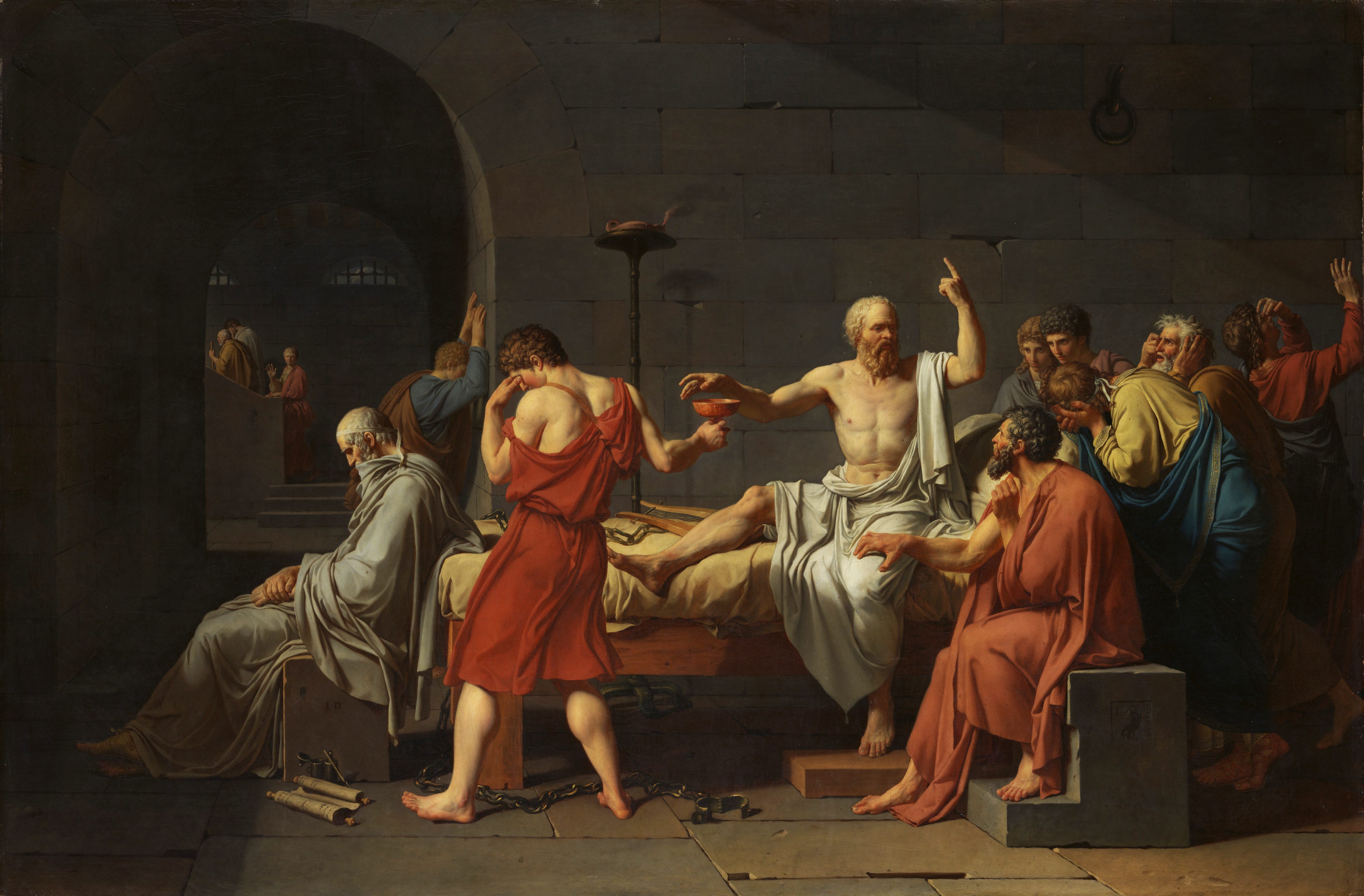
Okay, so education is important, but why does this imply that you should study philosophy?
Remember what I said were the twin ends of education: moral and intellectual formation. To those ends, philosophy does incredibly well. Studying philosophy will give you the ability to assess texts, judge arguments and dissect evidence, such that you will be better at actually discovering the truth in complicated cases. If that sounds like the sort of thing that everyone eventually figures out, I assure you that it is not, in fact, a thing easily learned or quickly grasped. In fact, logical thinking is rife with potholes and missteps that are easily fallen into and only unlearned with difficulty. Eradicating them is key to true intelligence and wisdom. Unfortunately, most non-philosophical disciplines struggle with this, even at the academic level.
Philosophy is also distinctly concerned with figuring out the best way to live morally. While many people live their lives basing all of their moral beliefs based on how they feel towards particular actions, philosophers are willing to do the actual work of figuring out what it is to live well. This is really important! Many of our society’s most treasured moral platitudes, like “live your truth” and “live and let live” actually have very little to recommend them! To study philosophy is to learn how to actually become happy rather than how to just fit in with other people’s ideas about happiness.
Philosophy will also prevent you from being tossed about from argument to argument with no ability to discern between them. In any debate, the vast majority of people derive little actual benefit because they are unable to understand how to think through arguments. But debates have the potential to do much good! A philosophy degree will give you the tools to understand them.
Now, many people will grant much of this. But the main reason people do not study philosophy has to do with a concern that goes something like this: sure, happiness and moral living are great. But do you really need to spend $40,000 to learn those things? To invest that heavily in something should, generally speaking, yield some financial benefit, as well.
The crazy thing is that philosophy is great there, too.
The Practical Concerns

There is no way around it: philosophy, on its own, is not going to get you a job at the philosophy factory. You could, in theory, try to get a job as a philosophy professor, but that is a career path fraught with pitfalls that ends in a not-very-high salary, anyway.
But remember what I said about education: it is deliberately general to prepare you, not for something, but anything. And if you are not going to become a specialist, like a biologist or doctor, philosophy is an excellent degree.
First, analytical thinking, creative solutions and the construction of a persuasive argument are valuable in literally any field. You will be a valuable worker in whatever field you choose, because you will have skills that actually tend not to be learned on the job.
Moreover, philosophy makes you a flexible worker; you will become capable of picking up anything quickly because philosophy teaches you good intellectual habits. These skills are highly valued by employers.
In fact, the data actually supports the idea that philosophy graduates have success in the workplace. Plus, if you do decide to get a graduate degree, philosophy majors do really well in the GRE, which is essentially the ACT for graduate programs.
I will say, this also aligns with my own experience of myself and my friends who studied philosophy. A grab-bag of philosophy graduates I know have jobs as diverse as university donor development, banking, teaching and theological research.
Finally, at least where I went to college, philosophy is a good program to double-major because it tends to be flexible. So you can study philosophy while still focusing on whatever field you think may actually be your eventual career.
While I am neither an AI doomer, nor an optimist, I would also point out that these are all attractive traits for an economic environment in which there is some uncertainty about which jobs will still be around in ten years.
Put it all together, and philosophy has both pragmatic and, well, philosophical benefits. It sets you up for a successful career, a happy life, and a mind that can handle a multitude of situations better than your average person. Take my word for it: study philosophy in college.
I am writing these blogs between teaching theology classes and playing with my kids. So, to put it bluntly, my time is not cheap. Please consider becoming a paid subscriber to help support my work and make it possible for more people to learn Catholic philosophy:
If you are looking to better understand philosophy outside of a philosophy major, I put a reader’s guide together to make you an amateur Catholic philosopher in just a year. Get it here:
It should be obvious that I am not an economic advisor, nor a lawyer.
To be clear, she has neither said this nor implied it through her words. But what other explanation is there?!?!
A text you will learn in a philosophy class. Just saying.
Comments
Nothing yet. Say the first thing.
Sign in to join the conversation.