
For months it was a verb—plan, order, start, harden off, transplant, stake, mulch, repeat.
February was a fever of catalogs, grow lights, and grand intentions. I ordered seeds like a woman placing bets, like more packets meant more certainty that any of it would work. By March I was staring at frozen ground as though my attention alone might speed time up. April was motion: clearing last year’s growth, hands in cold dirt, the long lower-back negotiation with the raised beds. May was triage.
And now it’s June and the planning is over, and I don’t quite know what to do with my hands.
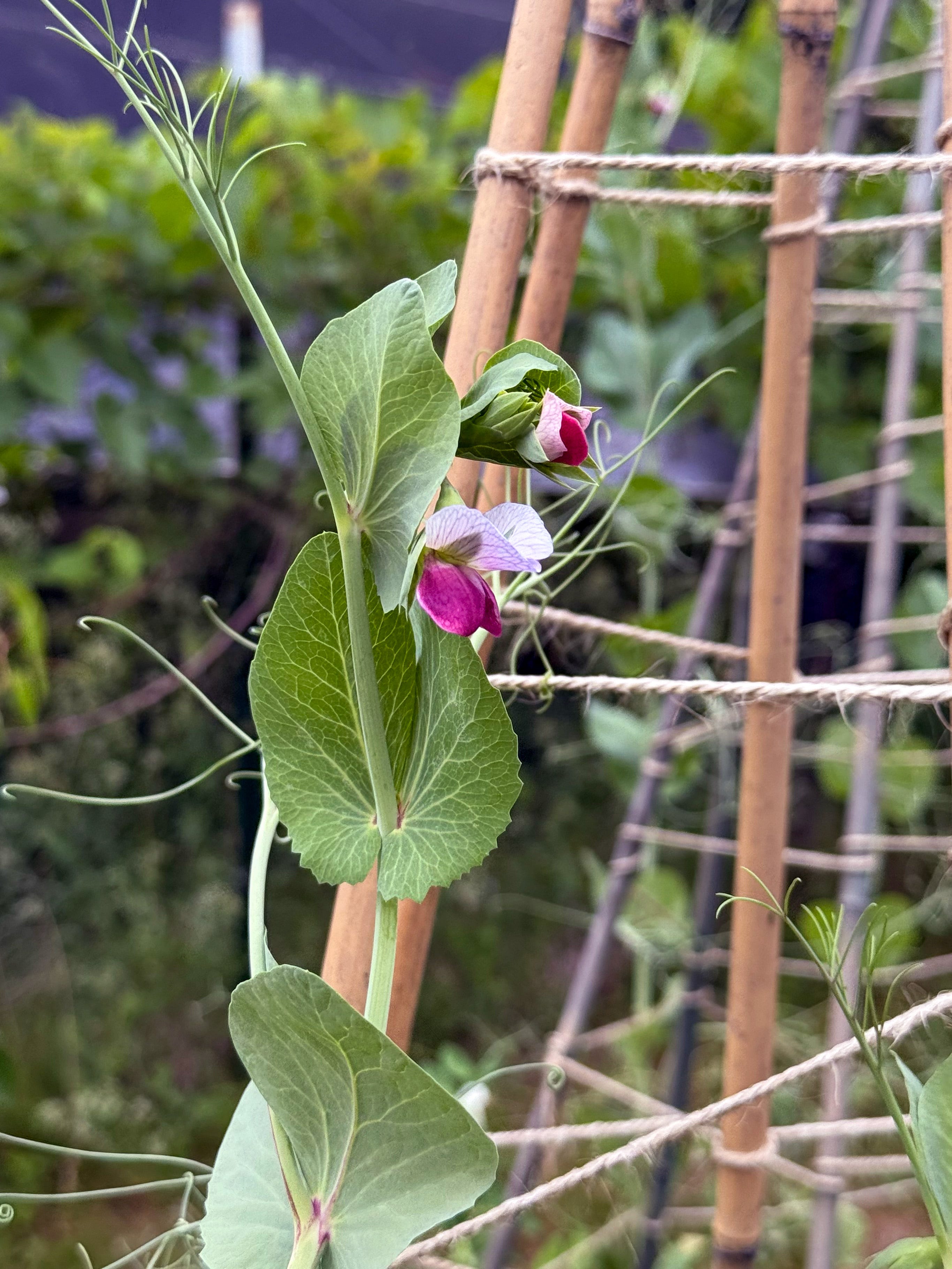
You spend months in the anxious, propulsive tense of making the garden, and then one day you look up and the garden is just—there. Doing its own thing. The peas are climbing whether I supervise them or not. I am, for the first time since February, not behind. I’m also not really in charge anymore.
I’m just a dirtbag gardener standing in the middle of consequences I set in motion months ago, watching them unfold at a pace I can’t speed up or slow down.
It’s a strange kind of idle. It’s not rest, exactly—there’s still plenty to do—but a different register of doing. Less decision, more attendance. Less “What should I plant?” and more “Huh, look at that.”
It doesn’t feel like crossing a finish line or anything triumphant. It’s quieter than that. Because the truth is that the reward was never really getting the garden—the reward is participation. It’s showing up after the excitement wears off. It’s tending, maintaining, and paying attention.
James has no use for any of this nuance, which is one of the best things about childhood. To him the garden was never a project with phases. It’s just a place that has sugar snap peas in it now, where before it had no peas, and that must be either deeply obvious or completely magical. He doesn’t know about the seed orders in February, the grief of the bolted lettuce, the three different times I almost gave up on one of the San Marzano plants. He just knows that today there’s a thing he can eat that’s warm from the sun—no plate, no ceremony, already moving on to whatever’s next.
Watching him eat a pea, I think: this is what I’m actually out here trying to get back. Adults spend months focused on arrival. Children care almost exclusively about what’s happening right now: a pea, a bee, a feather, a particularly excellent stick.
I used to think the satisfying part of gardening was the harvest. The big bloom. The payoff. But I think it actually might be this—the exhale. The week where you stop pushing the season forward and let it carry you instead. Where the question changes from “What do I need to do?” to “What is already happening, and can I just stand here and watch it?”
The seed catalog version of me was so certain about all of this. She had no idea what March would cost her. No idea how many things wouldn’t come back, or how much of gardening would be guesswork and luck dressed up as a plan. She just believed, fiercely and a little insanely, that if she ordered enough hope it would eventually turn into food and flowers.
She wasn’t wrong. It does turn into food and flowers. She just thought she was the one making that happen. I know better now, standing here with nothing left to decide—I was never in charge. I just showed up, and something else did the rest.
Be still and listen to the voices that belong to the stream banks and the trees and the open fields. Find your hope, then, on the ground under your feet.
—Wendell Berry
Emily Chickinson is the gentlest member of our flock. A small, thoughtful hen whose primary hobbies include laying eggs, standing by the fence, standing away from the fence, dirt bathing, and making sounds that suggest she’s apologizing for existing.
Like her namesake, she prefers the margins. The other hens bustle around conducting important chicken business. Emily lingers at the edges of things, tilting her head at a dandelion like it’s just said something devastating. If the flock is moving east, she can often be found quietly considering west, then deciding, after some thought, against it.
She heard a Worm — and then —
She heard it —Not again —
One evening I found her alone near the fence line during one of her standing-by-the-fence episodes. I crouched down beside her. The garden was glowing in that June way where everything looks briefly touched by divinity. A light breeze moved through the grass. This, I thought, is the moment—Emily and I, finally understanding one another, soul to soul, woman to hen.
Then Feather Locklear materialized.
One second I was alone with Emily, the next second Feather was between us, blocking my view of the fair hen entirely. I shifted three feet to the left. Feather shifted three feet to the left. I shifted three feet to the right, with what I felt was real subtlety. Feather, who apparently has more on the line here than I do, beat me there. I tried a low, gentle coo, the kind I’d use to summon a nervous cat or the smoke detector when it’s chirping somewhere I can’t locate. Feather drowned it out with a crow of unnecessary volume.
I was cockblocked.
By a cock.
I want to sit with that for a second, because I don’t think I’ll get a better sentence all year.
At one point Emily actually tried to circle back toward me—a small, tentative diagonal movement, very on-brand for a poet—and Feather cut her off with the efficiency of a man who has clearly done this before, to other hens, possibly to other women, in some previous unexamined life. He succeeded in escorting her away. I remained at the fence, a woman jilted by a rooster, reflecting on the particular humiliation of losing a love triangle to a bird with a four-second memory.
A few minutes later, however, Emily reappeared. Not dramatically. Not in defiance. She simply rounded the corner of the run, Feather nowhere in sight, and wandered over to where I was standing.
At last. The reunion. The understanding. The quiet, soulful encounter I had been pursuing all evening like a woman in a Brontë novel who really needs to get a hobby.
Emily stopped in front of me. I looked down. She looked up. For one full, glorious moment, I believed completely we had transcended language, species, and the fence between our worlds.
Then she clocked that my hands were empty, turned around, and walked off without so much as a backward glance—leaving me standing there, once again, the only party in this relationship operating on feelings rather than snacks.
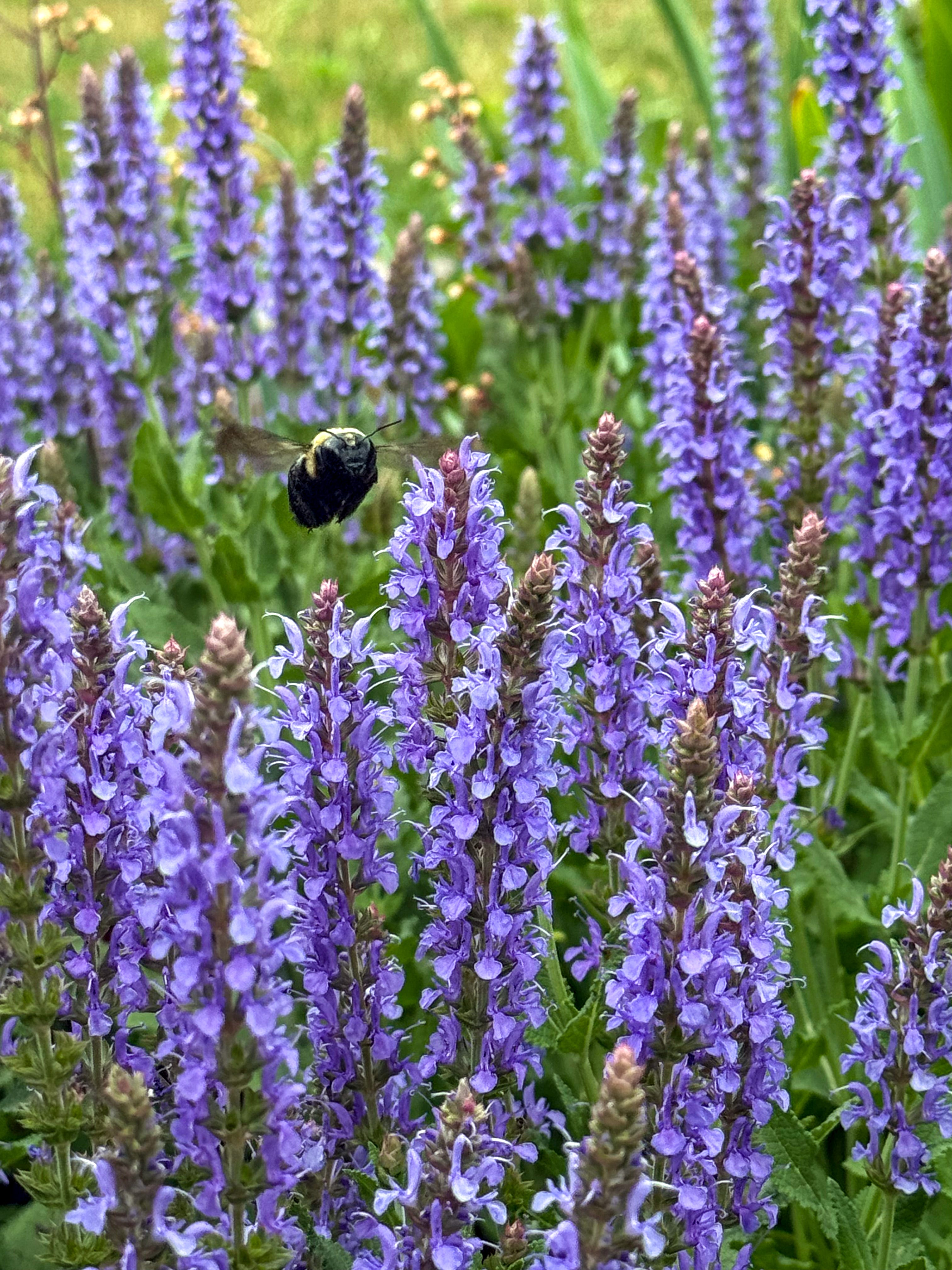
Salvia—Opened all at once this week in that specific shade of violet that looks slightly unreal in photographs and even more unreal in person. Catnip for bees.
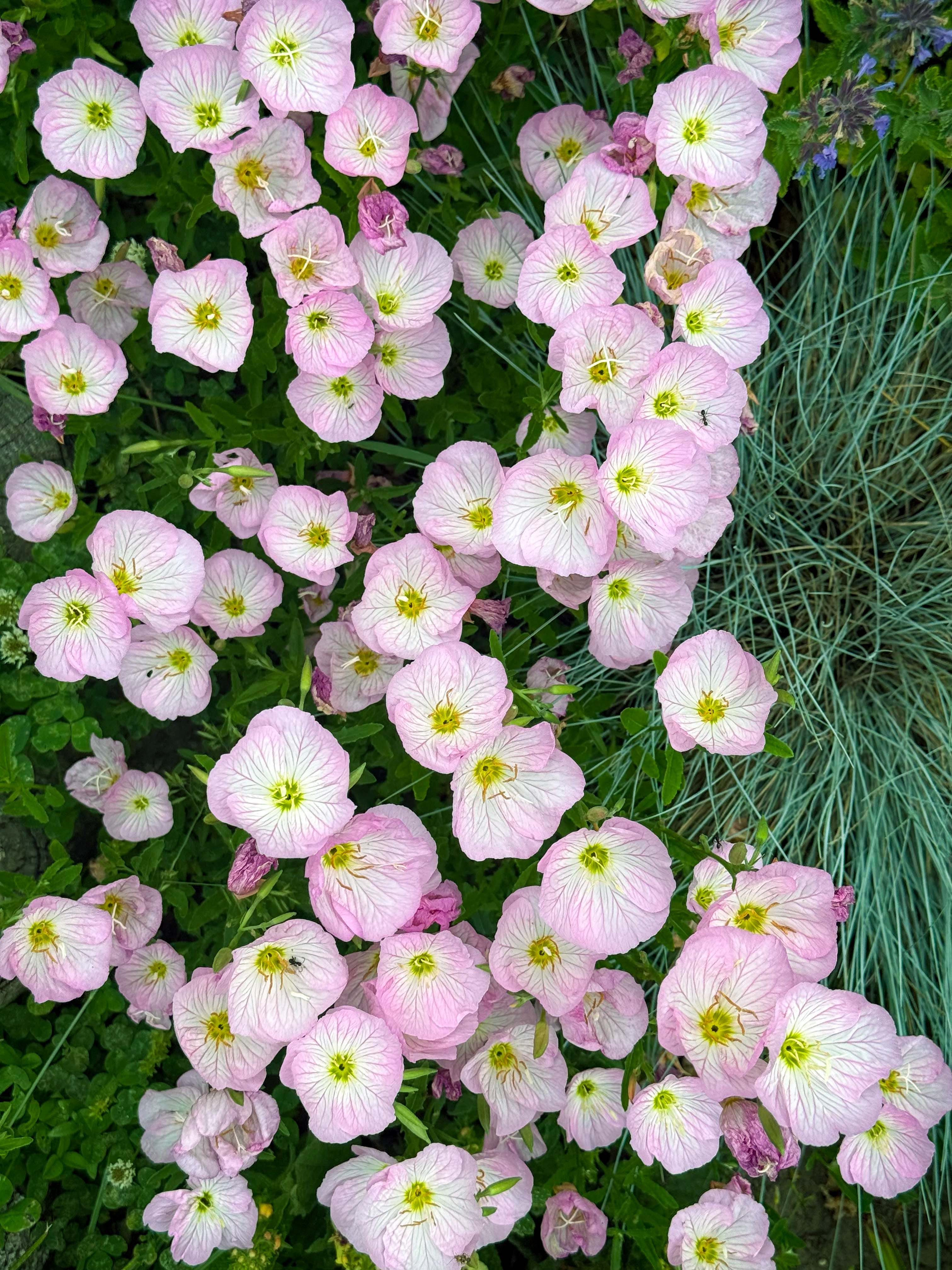
Pink evening primrose—individually, the flowers are delicate and almost translucent. Collectively, they appear to be attempting a floral coup.
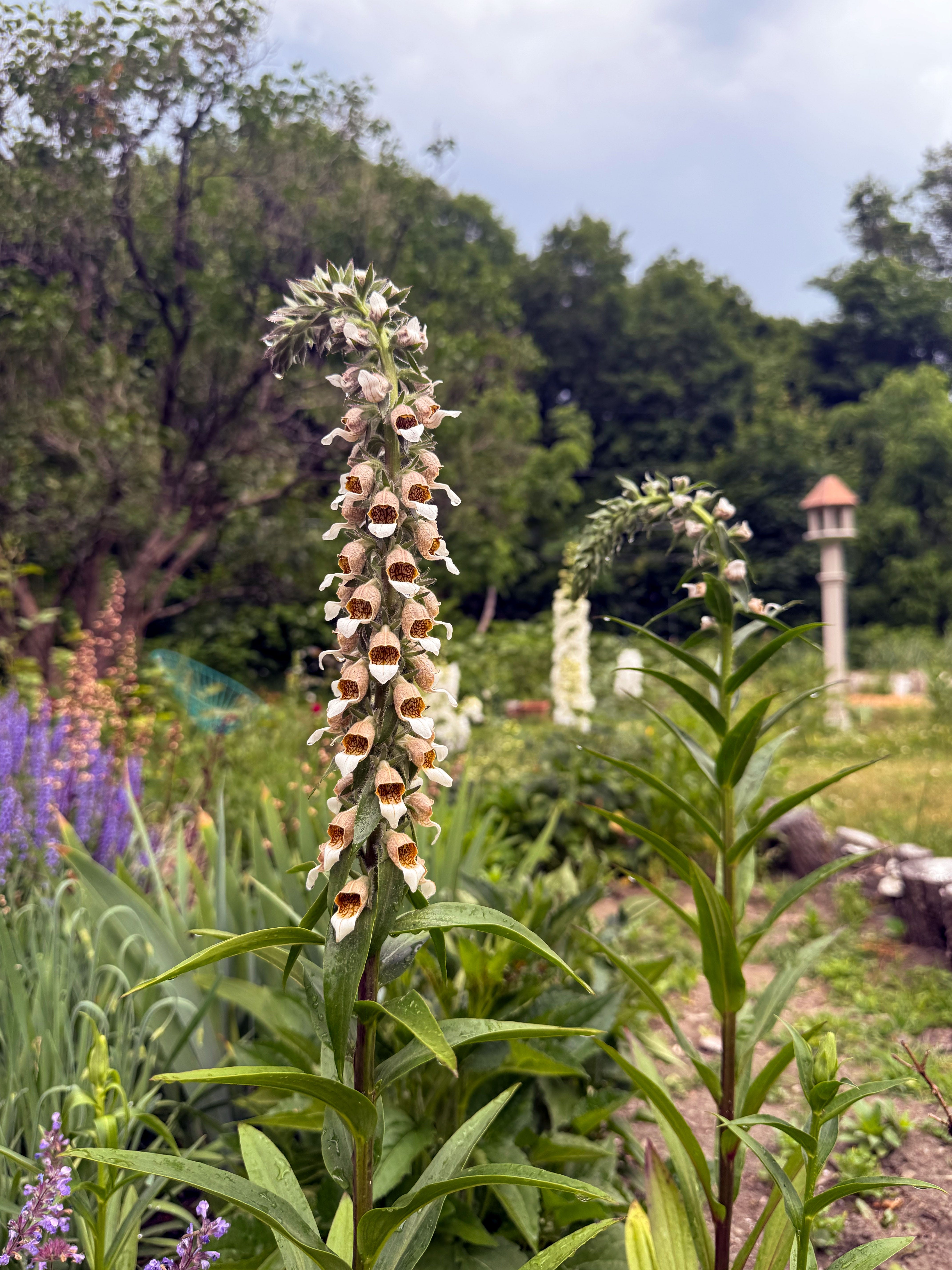
Foxglove—Tall, architectural, slightly sinister. Something you’d expect to find in the cottage garden of the witch who ate Hansel und Gretel. Still my favorite thing in the garden.
The garden produced its first harvest this week!
First, the sugar snap peas. One of the first real food crops of the season. Not lettuce, which appears almost immediately and tricks you into thinking you’re running a productive agricultural enterprise. Peas take commitment—the trellis, the climbing, the flowers. Then days of staring at tiny pods and convincing myself they were bigger than yesterday.
Worth it, though. In theory anyway.
What I needed was one pound of peas for a lemony ricotta pasta dish, with possibly enough left over to add to a salad. What I had was not a pound. Fine, I thought to myself. I’ll halve the recipe. Possibly quarter it.
Then I made the mistake of eating one.
Then another.
Then another—for quality control.
Then another—it was the humane thing to do.
By the time I left for the kitchen, this was the entire remaining harvest.
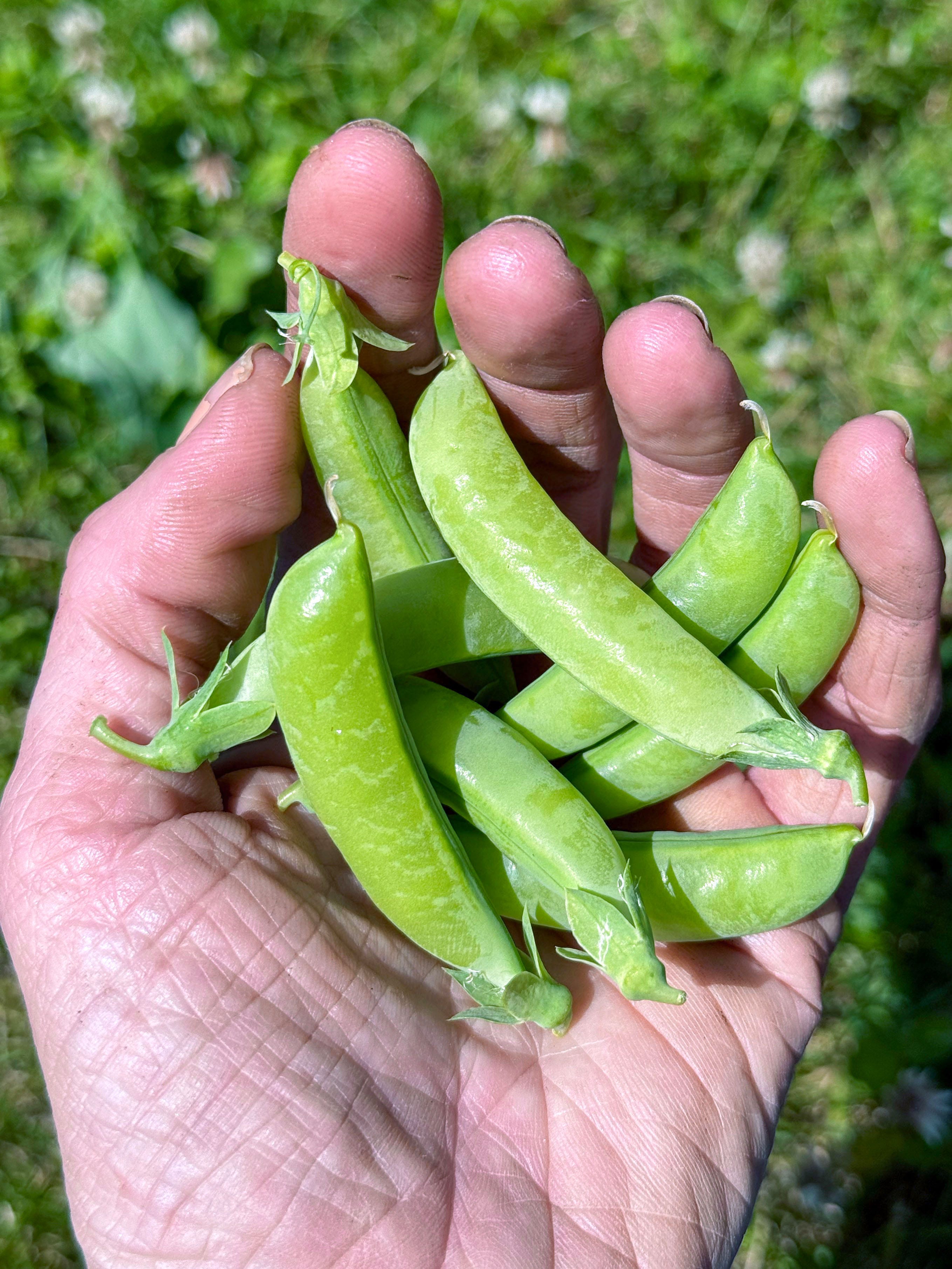
Unfortunately, this quantity fell into an agricultural category known as not enough to do anything with. Too few for a side dish or a salad. Too few for a stir-fry. Certainly too few for the pasta dish.
I considered their future briefly.
Their future was me.
They were delicious.
Then there’s the chamomile.
If you’ve never grown chamomile before, I’d like to save you some time: a chamomile flower is roughly the size of a shirt button and weighs approximately one thought.
Yesterday I set out with my harvesting basket, head filled with dreams of gifting people small sachets of homemade chamomile and being the kind of person who does that. What felt like several hours later, I returned with 43 chamomile flowers and a profound appreciation for the industrial tea supply chain.
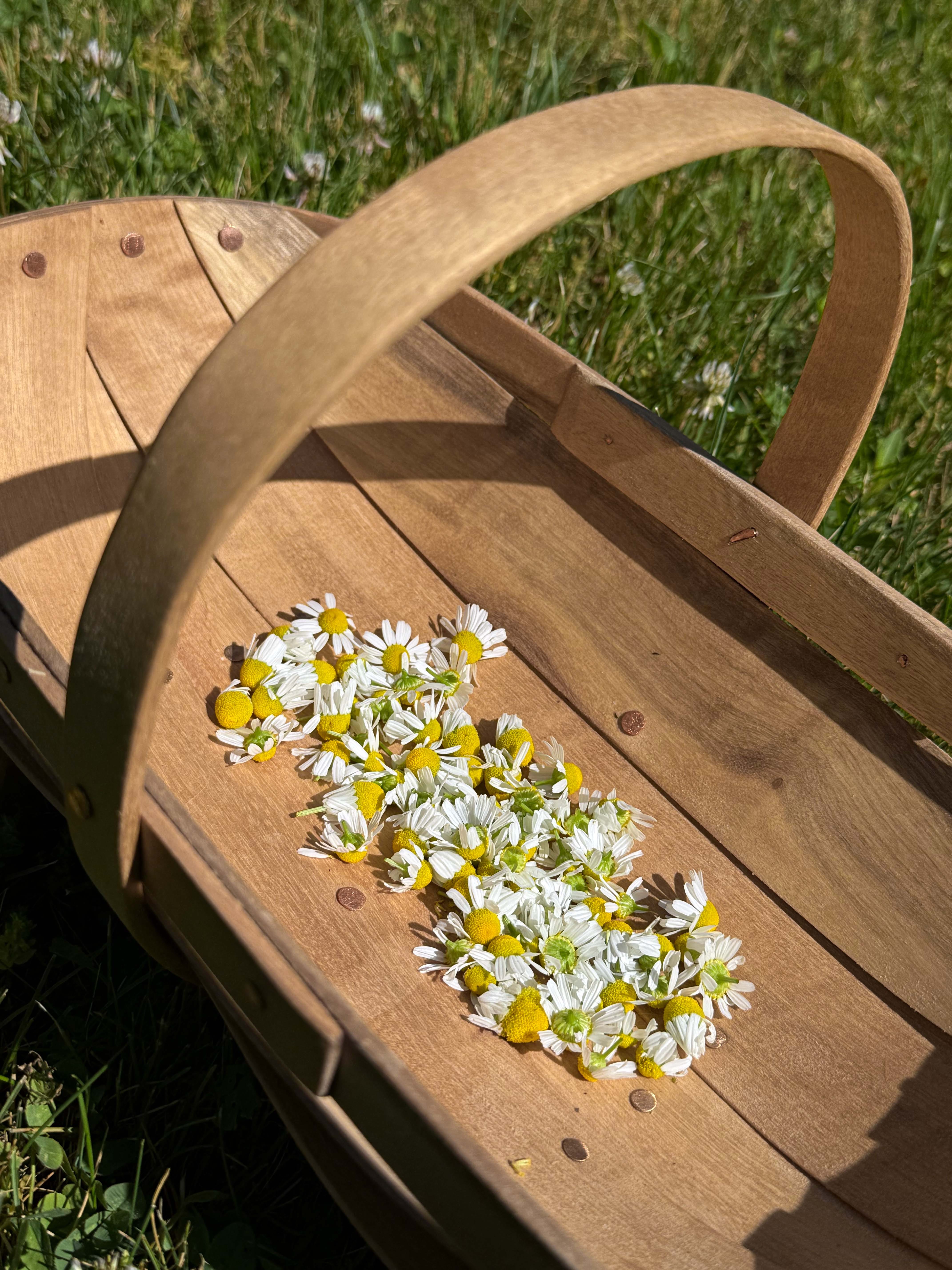
The basket suggested abundance. The yield suggested a hobby.
To make tea, you pick the flowers one at a time. Then you dry them. Then you store them. Then, after a surprising amount of labor for such a tiny pile of flowers, you place your entire harvest into a mug and produce exactly one cup of tea. One perfect, fragrant, delicious mug.
The tea was excellent, which is fortunate because at current production rates I expect my next cup sometime around Labor Day.
Last week, the Bald-Faced Hornet Queen began construction on a second unauthorized nest development project on the side of my house. The structure remains inaccessible and therefore enjoys a level of legal protection unavailable to the rest of us.
End of story, right?
Wrong.
Yesterday, I found this directly beneath the nest.
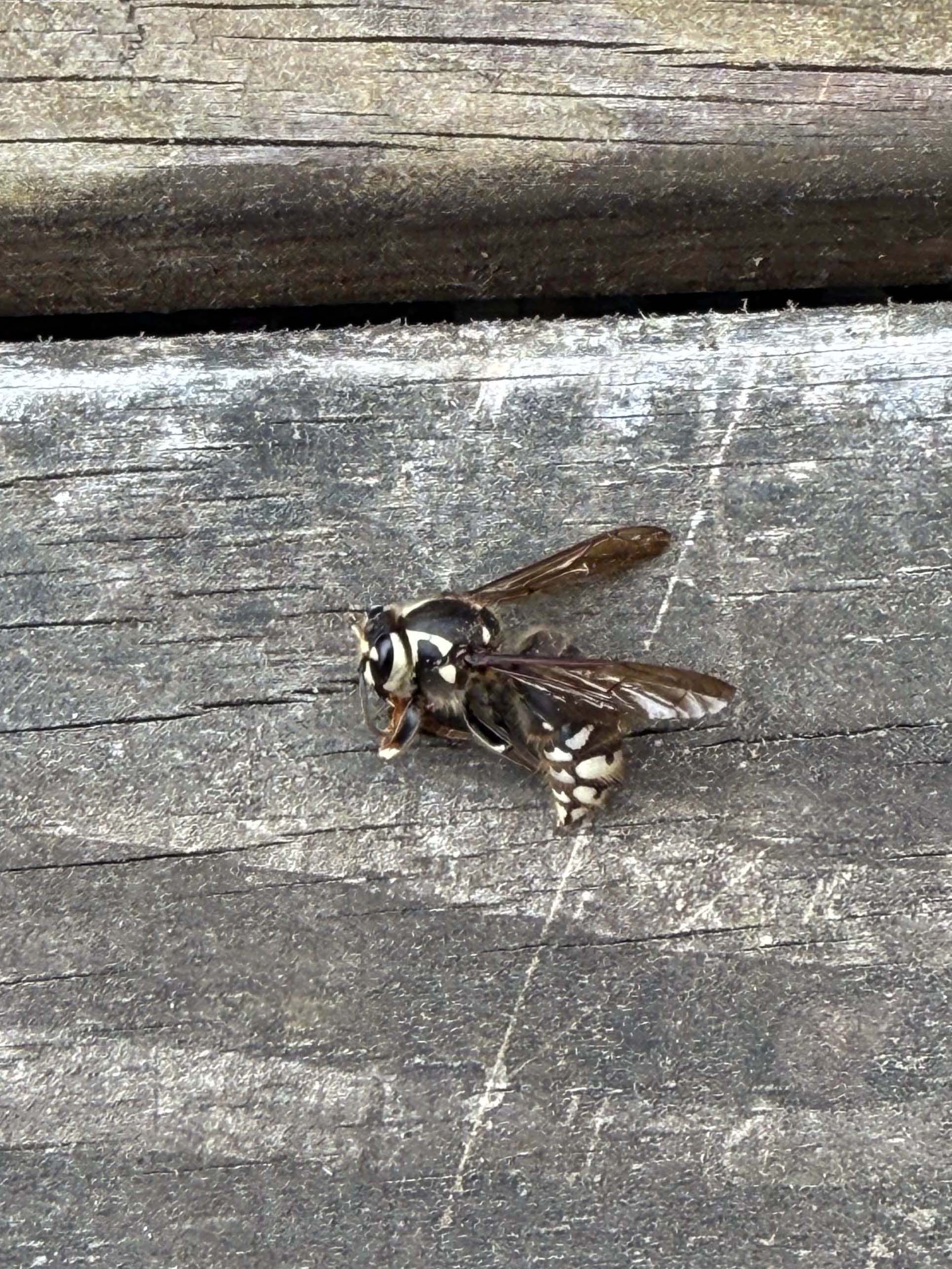
A dead bald-faced hornet.
Now, I am not an entomologist. Nor am I technically a detective. However.
Possible explanations:
Natural causes
Old age
Flying into something
Workplace accident
They knew too much
The timing is suspicious. The location is suspicious. The fact that it was found directly underneath the nest is extremely suspicious.
I have confirmed the nest remains active. I saw up to three fake hornets enter and exit the nest after the incident.
Am I saying this “hornet” was pushed? No. Am I prepared to draw any conclusions at this time? Also no. Mostly because there is now a second hornet standing at the entrance watching me write this. We made eye contact. I think.
The investigation has been terminated.
Roses are recruiters.
At first it’s just a flower. Then it’s the shape of a flower, and the way one variety opens into a perfect rosette while another stays cupped at the center like it’s keeping a secret. You start noticing petal count. Fragrance. Growth habit. Before long you’re standing in the garden comparing shades of pink with the focus of a woman who has lost the plot—and you have. You absolutely have.
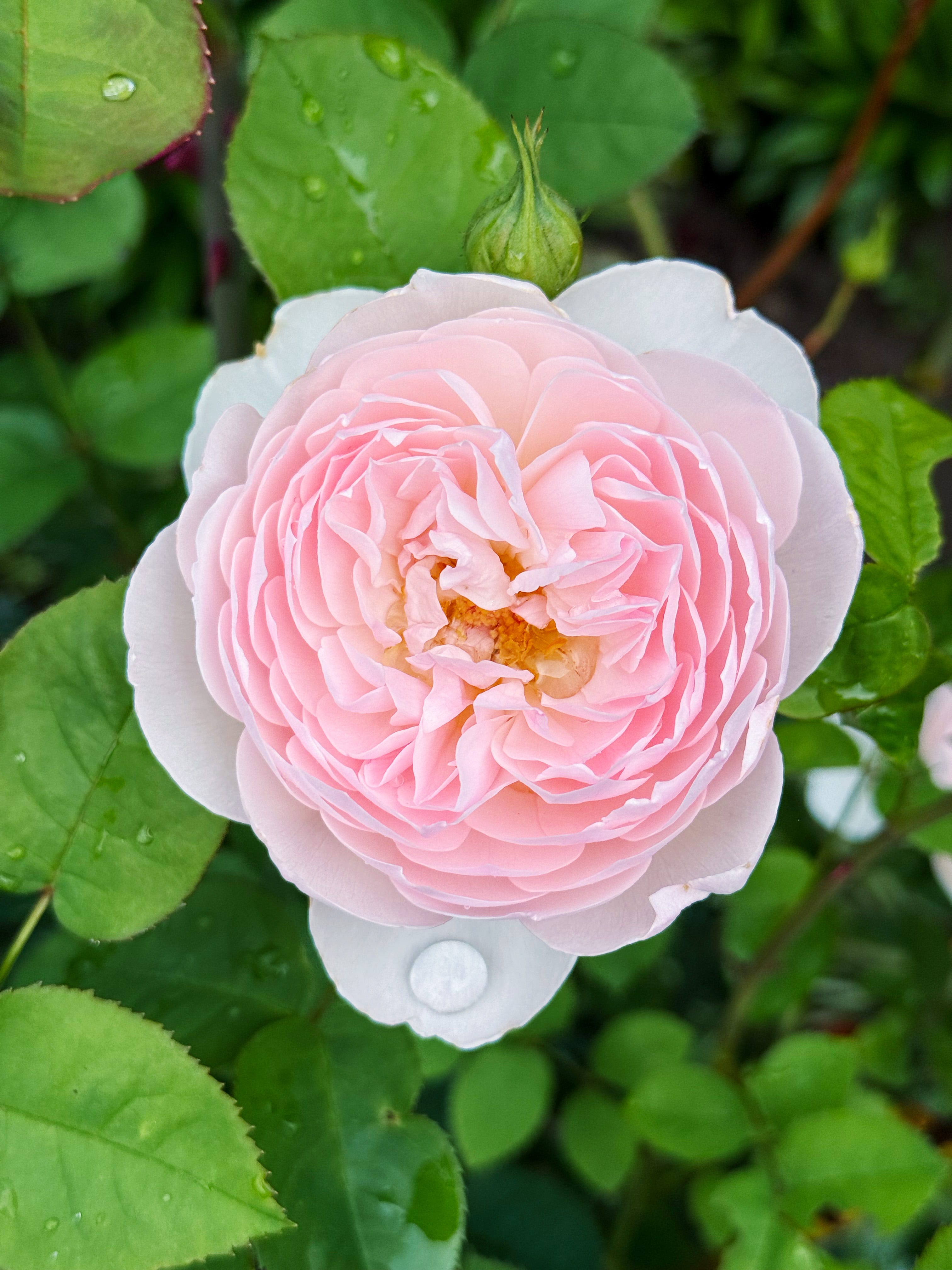
This week Emily Brontë opened. Soft blush petals folded so tightly around the center they look carved rather than grown. Like origami. After the rain, one bloom held a single perfect water droplet right at the petal’s edge, and I stood there admiring it, feeling vaguely like I’d wandered into a motivational poster about resilience or grace.
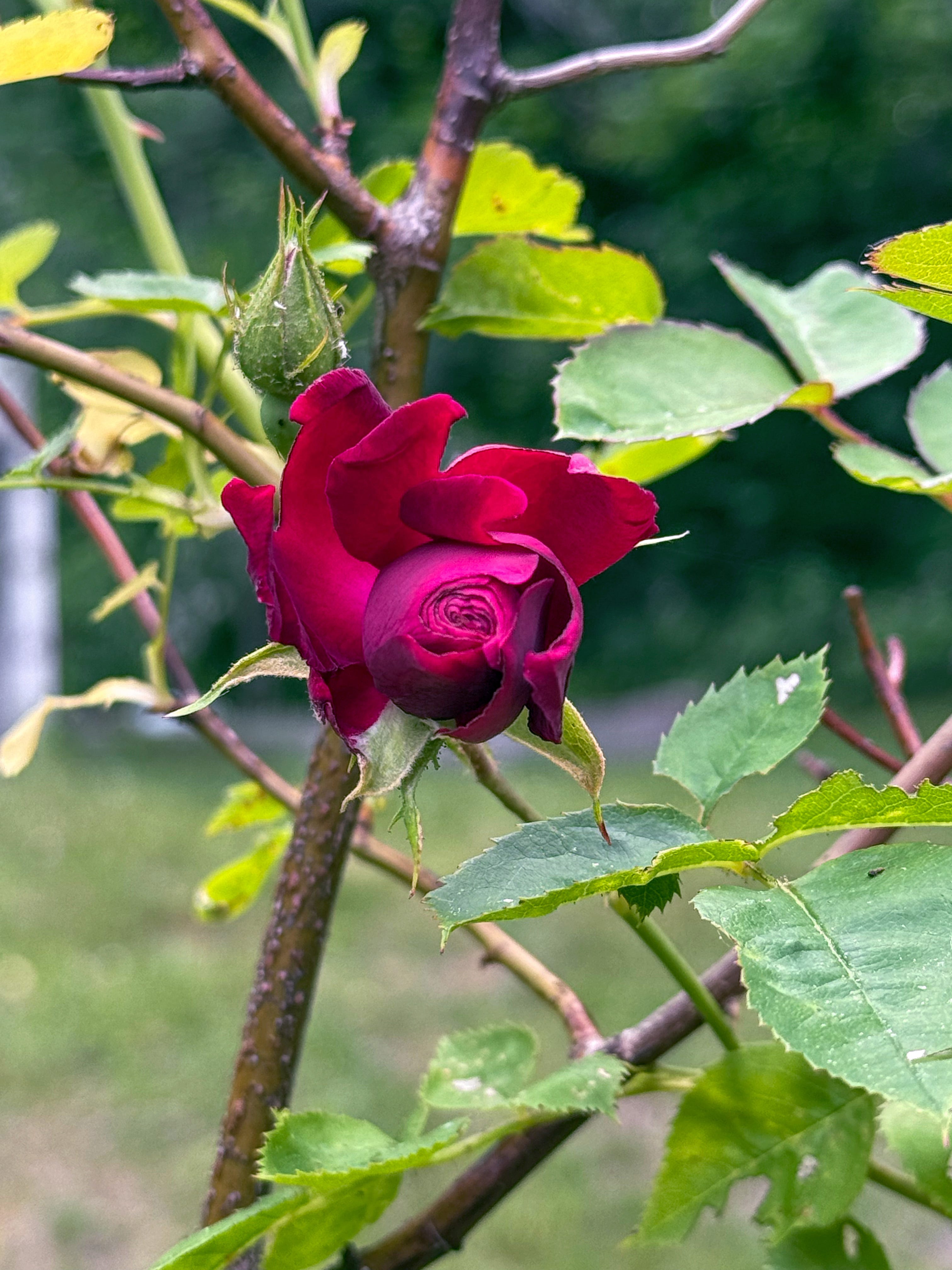
There’s a mystery climbing rose we inherited with the house. Every June it throws out long arching canes and covers itself in deep red, velvety flowers. I don’t know its real name. I don’t know who planted it, or why. I call it Kevin. Kevin has never needed anything from me. Kevin has thrived in total defiance of my involvement. Frankly, Kevin might be running this garden.
Last year I planted The Poet’s Wife as a bare root—basically a stick with aspirations, mailed to my house in a box, which is always a healthy way to start a relationship. This week it opened in soft shades of yellow, the buds deepening to orange right before they unfurl, glowing against the rest of the border. It’s only been a year, but it feels like it’s always been there.
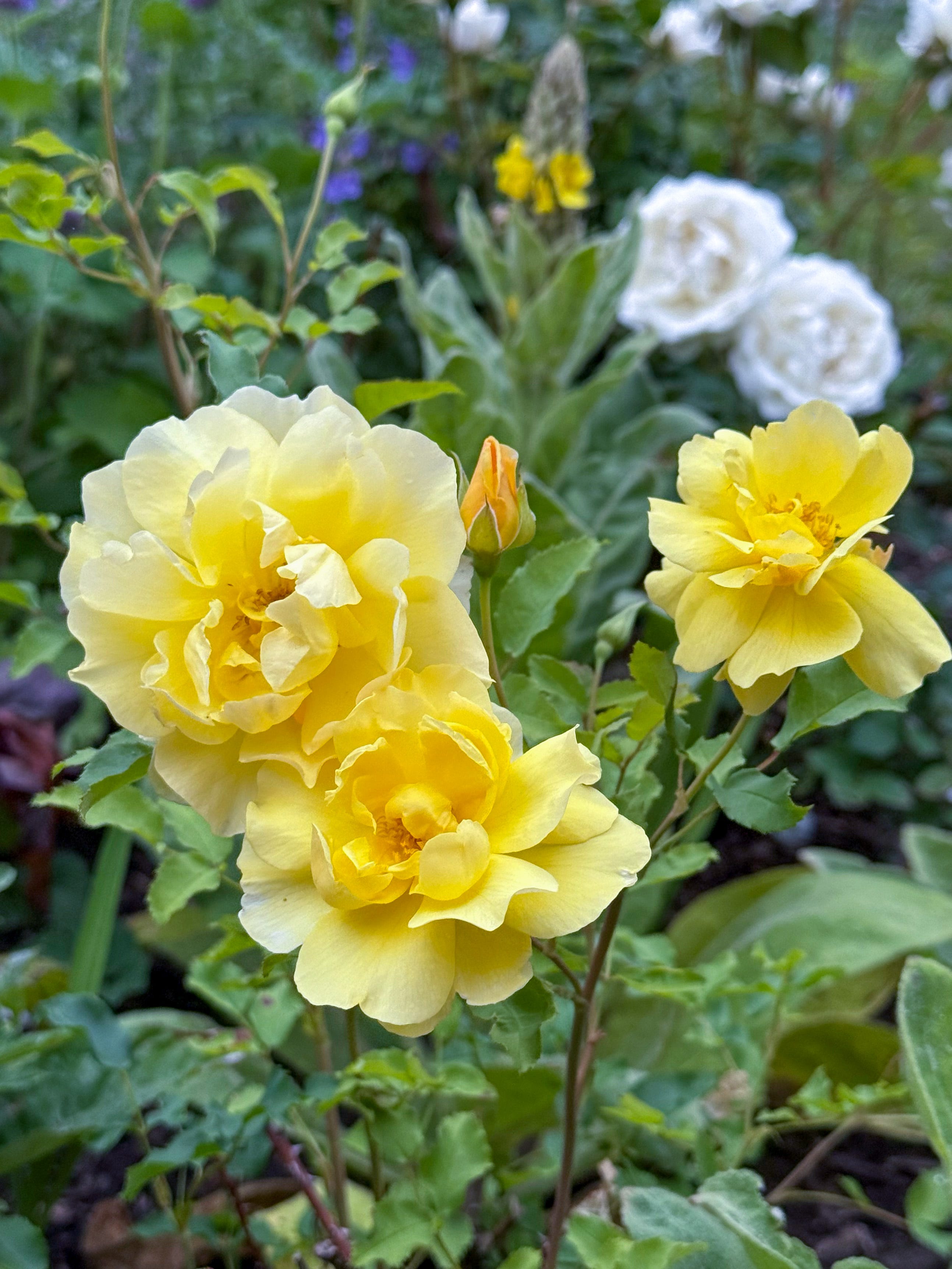
Then there are the others.White roses. Cream roses. Apricot roses. The ones that smell like fruit, the ones that smell like tea, the ones that smell of nothing at all but somehow make up for it by being completely beautiful.
You stop thinking of them as flowers and start thinking of them as individuals. I call my roses by their varietal names, which is normal behavior among rose people and increasingly difficult to defend to everyone else. Kevin, at least, sounds like a person.
I used to think gardeners collected roses because they loved flowers. Now I suspect they collect roses because roses are very good at convincing people they only need one more.
Grace Jones—“La Vie en rose”
Dedicated to Kevin. May you always bloom extravagantly and require absolutely nothing from me.
Comments
Nothing yet. Say the first thing.
Sign in to join the conversation.