
Time ripens in the spring. Fat-bellied light, a juiciness in the air. I wake to a triangle of sunlight on the back of my hand and feel it, the warmth of that sweet stranger, back from her hemispheric hiatus. And outside, the willows and the flowers are bursting into bud. The first dandelion of the year arrives like a firework against the winter-grey lawn.
I’ve never been much of a gardener—never felt I had the time nor the geographic permanence. But now I am a more settled creature, with a slower pace of life that allows for digging and pottering and noticing the ripening of the season, and I spend hours out here in the garden, sculpting beds, tending to the hostas my Mum gave me, to the fuchsia that we grew from a cutting last year, spreading wildflower seeds, planting poppies, speaking to the sparrows, the black-headed gulls, the ravens that grumble overhead.
During my first stint in the garden this spring, the orcadian wind still blowing hard but her breath a little kinder now, I found fifty snails, or thereabouts, gathered on the side of a plastic plant pot. The pot needed to be cut: a rootbound hosta lived within and for the life of me I couldn’t free it without scissors. And so, before I mutilated the pot to free the hosta, I unstuck the snails one by one and collected them in a little pile next to me. They were all different sizes, some big as a grape, some small as an eyelash, each fragile and astonishingly beautiful when examined up close.
When I was done, I collected this hoard of peculiar treasure in my palms and took the snails to a cool and sheltered spot beneath the willow. The sensation of their delicate bodies in my palms took me back, for a moment, to the forests of Gotland. As a research assistant ten years ago, I spent my days walking through dappled spring woodland in search of flycatcher nests. I remember holding an egg from one of those nests in my palm. I’d recently learnt about bird embryo communication—the way unhatched chicks speak to their mother through the thin barrier of the shell, the way they speak to one another too: unhatched beings in quiet communication—and what can I describe it as other than infinite wonder, what I felt with that egg in my palm. And then, in the garden, I felt it again: these thin-shelled beings in my hands, the small and infinitely complex mystery of their lives.
Inside, over a cup of tea, I tried to find research papers on snail communication, wanted to know whether they might be gossiping between their own thin-shelled worlds. There wasn’t a great deal of information about the species in my garden, but I did find out that they pick up information from one another’s slime trails (a snail passing over the slime trail of a stressed snail will also become stressed). But really, from a behavioural perspective, it seems we don’t know all that much about them. It would be an easy and unwise error to think this is because there is nothing to know.
These sorts of unexpected journeys—from the freeing of hosta roots, to snail-gathering, to Swedish forests, chick embryos, snail slime communication—are a particular delight of the warmer seasons, I find. In winter, in an environment where almost everything has been designed to be efficient, ergonomic (the fork handle, the toothbrush, the keyboard, the pen, the mug, the sofa, the floor), where we are surrounded by smooth and predictable things that hold little mystery and raise few questions, such journeys are harder to stumble upon. By spring, I am touch-starved, ready to bury my hands in the surprise of the earth.
I think we all know this innately, but research shows that touching complex, unpredictable, natural objects lights up our brains’ reward centres, brings them alive. Our bodies love to hold things that are not easily known. Spirals, snails, slime and swirl, soil, sand, rough bark, silk petal, the surprise of a grub in a handful of dirt, the sharp and the soft of a feather. We are built for exploration, for enquiry, for unexpected journeys that spring from our senses interacting with the complexity of the world.
Sometimes I worry we are forgetting this, that we are sleepwalking into a world where efficiency is king, slowly desiccating the sumptuousness of sensory experience with the aim of becoming nothing more than minds in jars watching the world get to work without us. LLMs writing our books, robots doing the gardening, cars driving themselves, AI painting our pictures. No need to waste time going out and putting your hands in the soil, no need to feel the silk of a petal or hold a snail in your palm. You can look at the snail on a screen, in VR, through the robot’s eyes, and AI will describe its shell to you perfectly—the angles of its spiral, its colour, its weight, how it would feel to hold—and AI will also tell you when to eat and when to speak and when to breathe and who to love and how to love; yes, there will be no need to waste time touching or seeing or pottering or laughing or tasting or dreaming or living.
But then I think of the way people spend their time when it is unconstrained—in childhood, in retirement, on holiday—and I think that, actually, we’ll be okay. Because when a human is given freedom, this is what we do: we potter, we garden, we watch birds, we paint, we read, we write, we get messy, we eat good food, we turn our faces to the sun and our hands to the earth. We come back to ourselves, back to being embodied animals who let time and sensation ripen around us, who let our senses lead us on unexpected journeys, who let our senses sing. We might forget this for a while, get swept up in the hype of a sleek and efficient world, but we’ll come back to ourselves.
And there is already a shift, isn’t there? A hum of discontent with efficiency, with smooth plastic surfaces, with tech stealing our pleasures, our joys. A shift to turning back to that which satisfies our curious animal souls.
Anyway, that’s enough from me.
The sun is out and I’m going back to the garden.
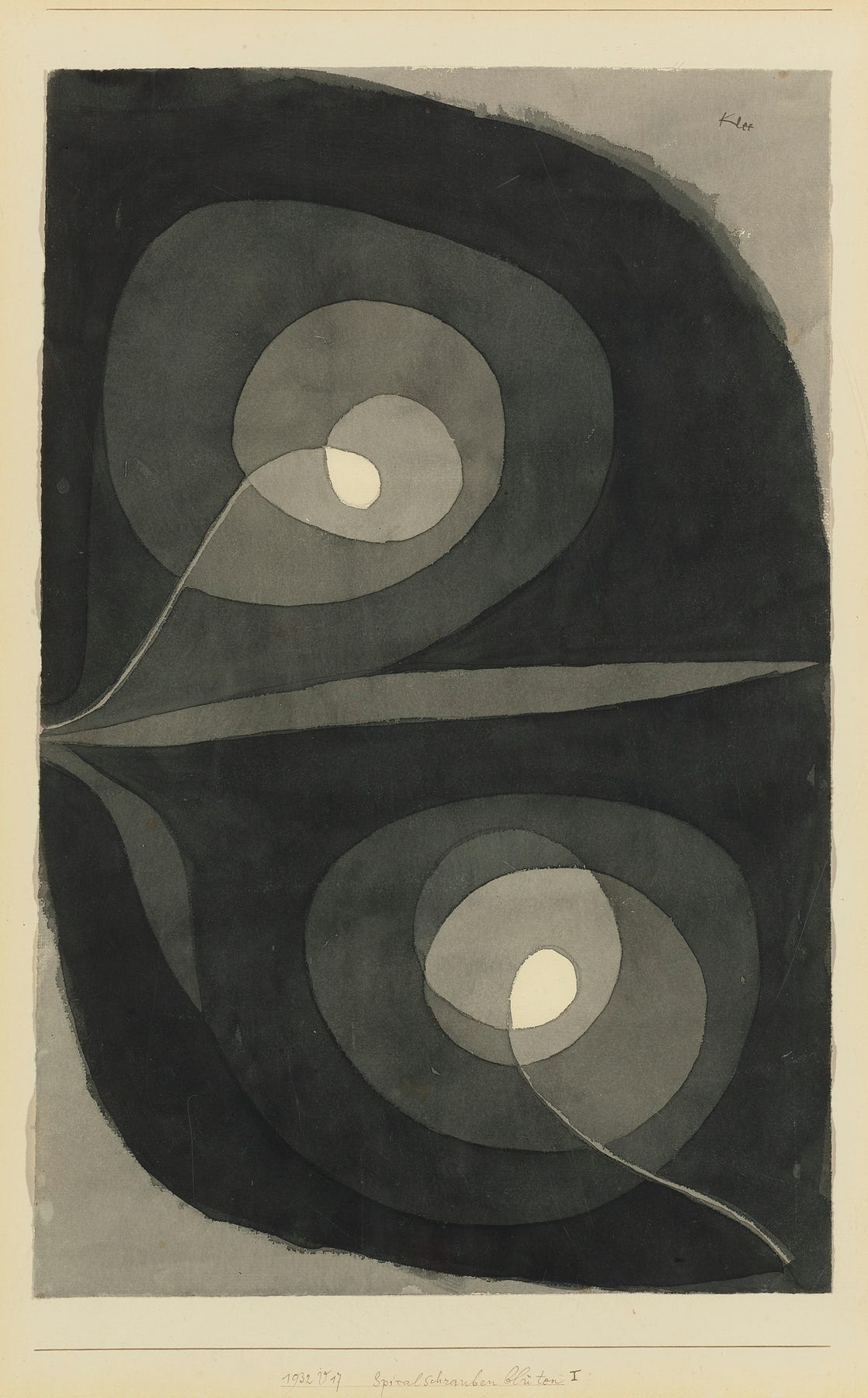
If you enjoy my work, you might like to pre-order my debut novel, These Glass Bodies, here (note some non-UK shipping options are not yet available).
You can also support my work by becoming a free or paid subscriber, or leaving a tip. All my posts are free, and paid subscribers (thank you thank you!) allow me to keep it this way.
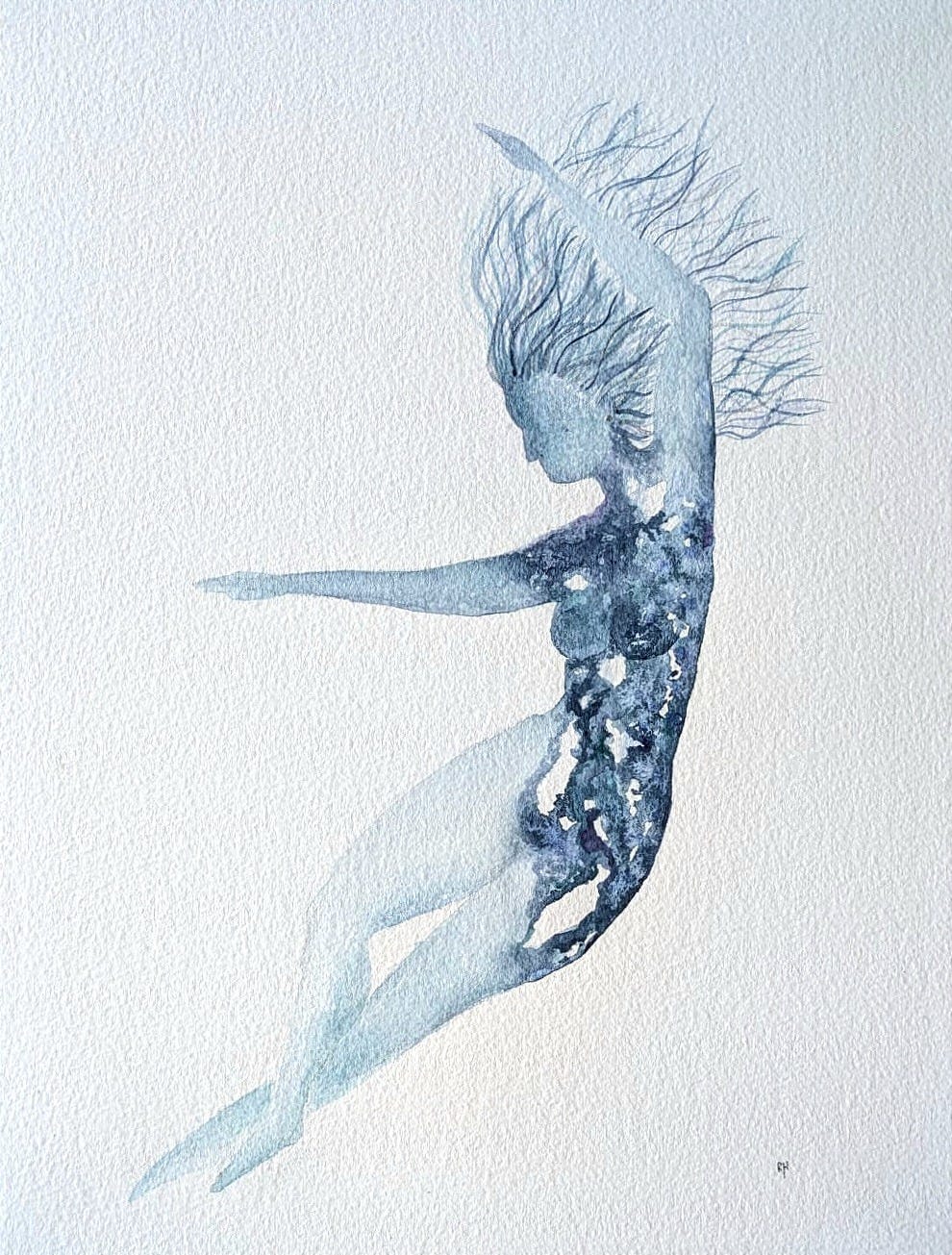
If you’d like to become a founding member, you’ll receive an original watercolour painting. Currently I’m working on sea-swimming selkie women, but the odd whale is springing into life, too.
Comments
Nothing yet. Say the first thing.
Sign in to join the conversation.