


What in the world is that green drink? If you’ve been to a coffee shop lately, you’ve most likely seen a bright green latte on the menu. It’s matcha!
For those who haven’t had matcha, the Japanese tea, it is a beautiful green tea made from special shade-grown tea leaves. The growing process causes the tea plant to produce extra chlorophyll. Think back to junior high science class, and you’ll remember that it is the element that makes things super duper green. The chlorophyll also adds more antioxidants to the tea.
Matcha drinks have become very popular in the last decade after folks discovered the potential health benefits and lower caffeine level of this tea. Today, we’re ditching the cafe line and making delicious matcha lattes at home!
Hello and welcome! If you like tacos, kimchi, seasonal produce, and bright flavors, you’re in the right place.
For those who are new, I’m Betty, a food writer, recipe developer, home cook, and Southern California gal. Every Friday in this newsletter, I share California Cuisine recipes to inspire you, no matter where you live in the world. California is the most diverse state in the U.S. and is home to many ethnicities, especially peeps from Asia, South America, and the Mediterranean. The cuisine here reflects that and is a beautiful mash-up!
Other places to find me: the food blog, podcast, YouTube, and Instagram.
Need to rest your eyes for a hot minute? I read the post to you in the Audio link above.
The new CookStack Collective brings together 12 talented Substack food writers and recipe developers (including myself!) for a year of lively, seasonal cooking classes.
Get inspired, learn a new dish or skill, and connect with your favorite foodies in an intimate setting.

Starting next Friday, paid subscribers get access to a live Zoom class hosted by a featured cook, plus receive fresh recipes, class materials, and the chance to cook along and ask questions in real time. This also includes access to all 12 class recordings, so you can watch or rewatch whenever it suits you.
If you are a paid subscriber, I truly thank you! Please enjoy this year of classes at no extra cost.
If you’re on the fence about a paid subscription, now is a good time to upgrade! It’s $5 per month or $50 per year (yes, you get 2 months free!). See the complete list of paid goodies in the Premium Content Library.
**Upgrade any time in July and also receive my newest book, Coffee Shop Iced Drinks, as a thank-you. There are 8 fancy iced drink recipes, plus recipes for simple syrup (regular and sugar-free) and vanilla cold foam.
After my eye-opening cash register experience a few weeks ago while ordering iced coffee drinks, I’m on a mission to craft specialty coffeehouse-style drinks at home, saving us all some time and money!
Today, it’s all about matcha, the Japanese green tea.
Have you had a harsh, overly bitter, dull-colored matcha drink? I have, too. And it was terrible, wasn’t it? I thought that was just what matcha tasted like, until I had a truly well-made matcha.
Your drink is only as good as your tea! Lower-quality matcha has telltale signs: dull yellow-green color, gritty texture, musty smell, astringent taste, and is packed in clear or see-through packaging, leaving the delicate tea exposed to light.
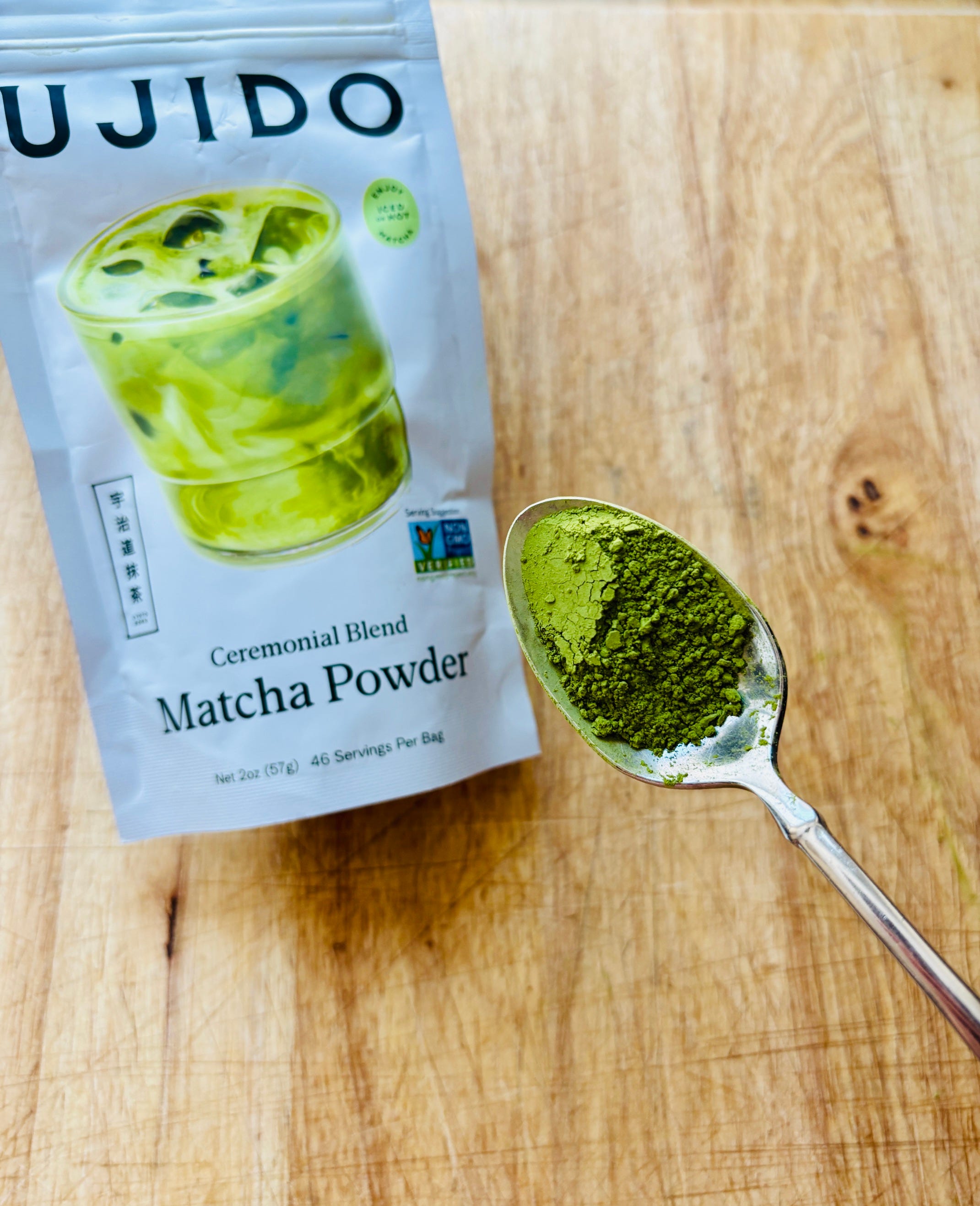
Higher-quality matcha (aka ceremonial-grade) is made from only the youngest leaves dried flat and finely ground into powder. It is vibrant green, with a smooth velvety texture, clean aroma, mellow taste, and is sold in opaque packaging to protect the tea. The ingredient list should read 100% pure green tea (or tencha). You’ll pay more for high-quality matcha powder, but it’s still cheaper than buying drinks at a coffee shop.
Boiling water (212 F/100 C) will scorch the delicate tea powder, causing it to lose color and turn bitter. For hot matcha drinks, the ideal water temp is between 160 and 175 F (71 to 80 C). Truthfully, I’m not one to use a probe thermometer before I’ve had my morning caffeine (LOL!), so I just let the water cool for a couple of minutes after boiling it.
For iced matcha drinks, use room temperature water! I was super excited to discover that matcha can be dissolved without warm water. This also means less time waiting for it to cool before adding to an iced drink.
It is worth the extra five seconds it takes to sift the matcha powder through a fine sieve before adding water. Sifting gets rid of any clumpiness or errant impurities. Make sure the sieve is completely dry before sifting.
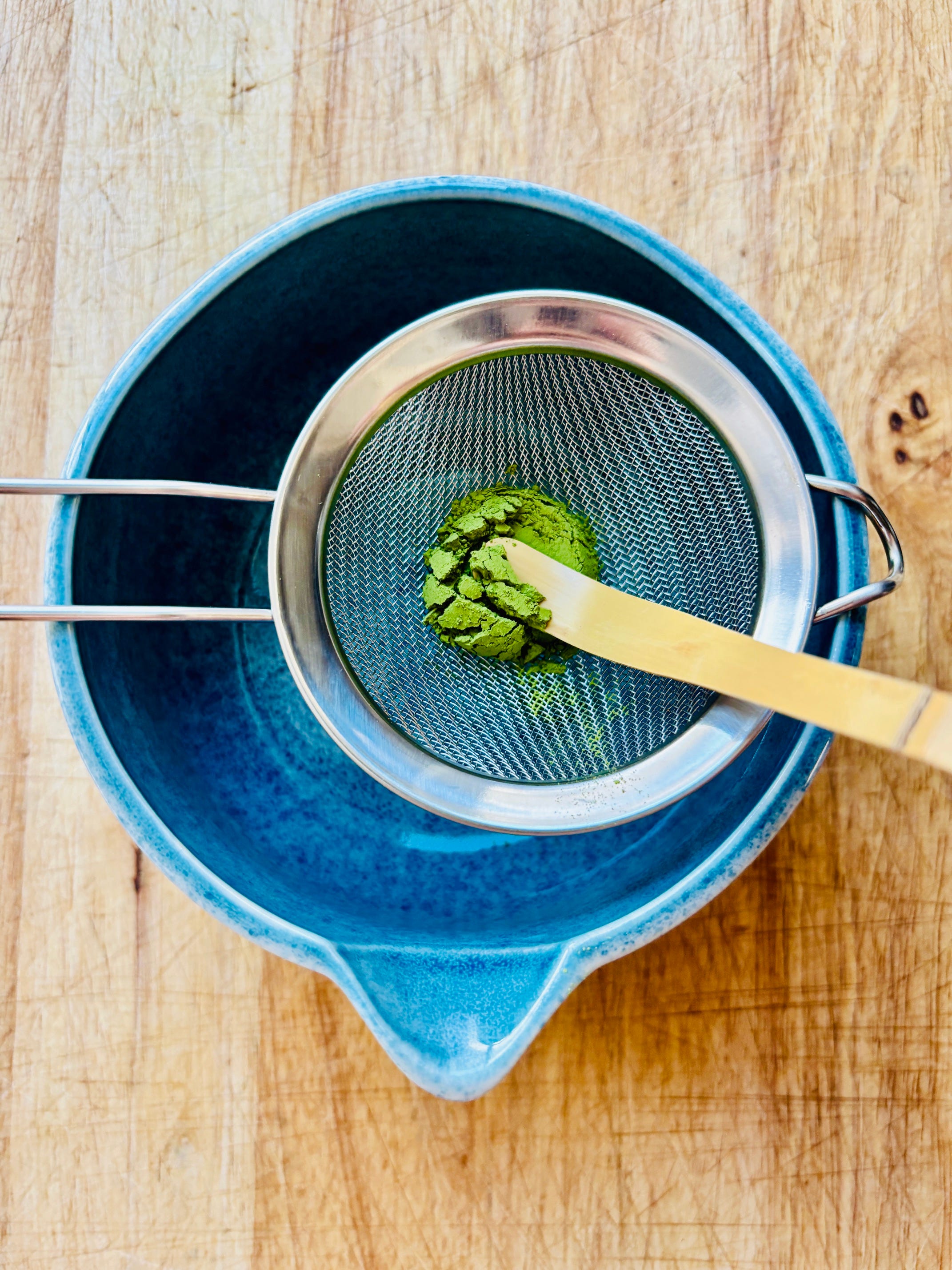
Can you skip this step? It’s controversial, but I say yes, with a few caveats.
If you are using a bamboo whisk, you will want to sift because matcha powder is very fine and clumps easily.
If you are using a handheld battery-powered frother, you can skip sifting because the frother will quickly eliminate any clumps.
Which leads us to the next step.


Purists will say that matcha needs to be made with a traditional bamboo whisk (aka chasen) in a wide, shallow bowl. And I would agree IF you are making a plain hot matcha to be enjoyed straight up, with no additions. The chasen produces a silkier texture, 100 percent. Be sure to soak the chasen tips in warm water before whisking.
However, if you are making a matcha latte (with milk and sweetener), I think using a handheld frother is fine. The results aren’t as smooth, but it’s easy and quick. You’ll need a tall, deep cup because the frother will cause some Rorschach inkblot-like splatters.
But you’re an adult, so you can do what you want.
To make the tea, sift the powder into a vessel, add a small amount of water, and whisk to combine. Add more water and whisk again for a full cup of plain tea. I find it makes for a vibrant tea that isn’t bitter but earthy and slightly nutty. It truly is delicious as is! Matcha is also good paired with any kind of milk, like in the two iced lattes this week.
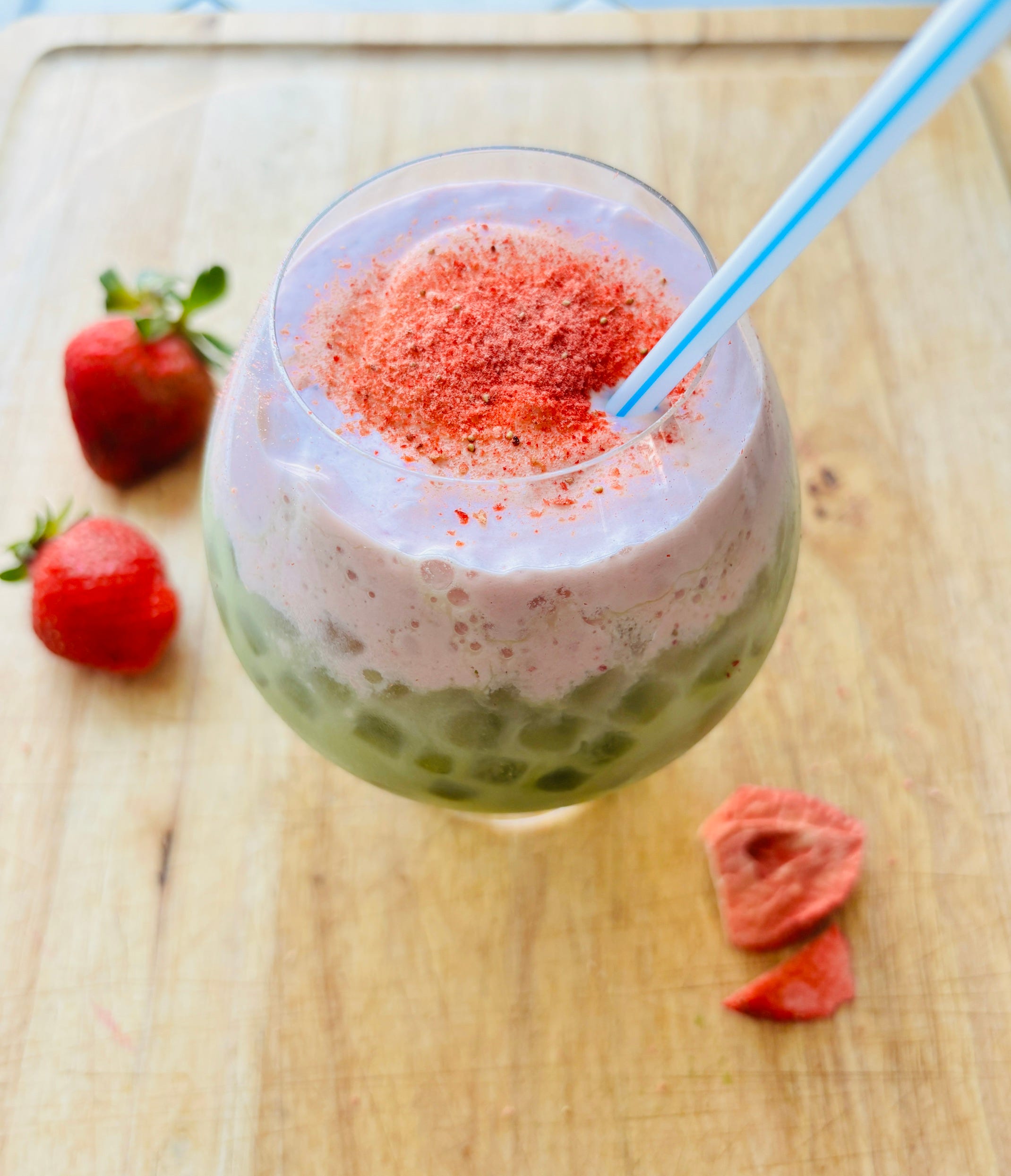
Bright and beautiful matcha tea is paired with sweet and fruity cold foam in this iced latte! It’s a deliciously cool combination perfect for a warm afternoon.

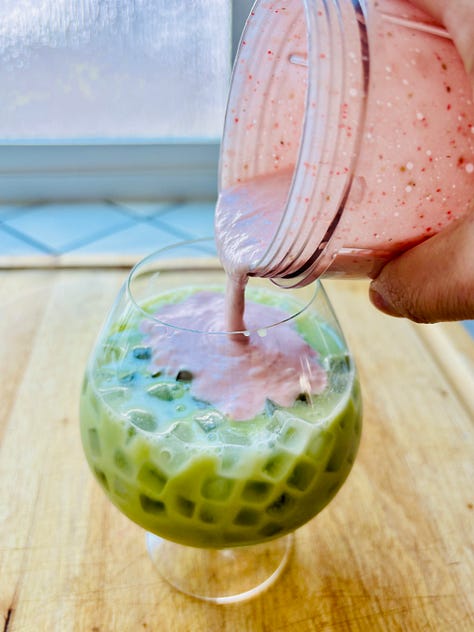
I’ve used fresh strawberries in the cold foam, but it is equally good with blueberries, raspberries, or blackberries. Garnish with fresh strawberries or grate freeze-dried strawberries as I did for some colorful fruit dust!
Iced Strawberry Matcha Latte recipe
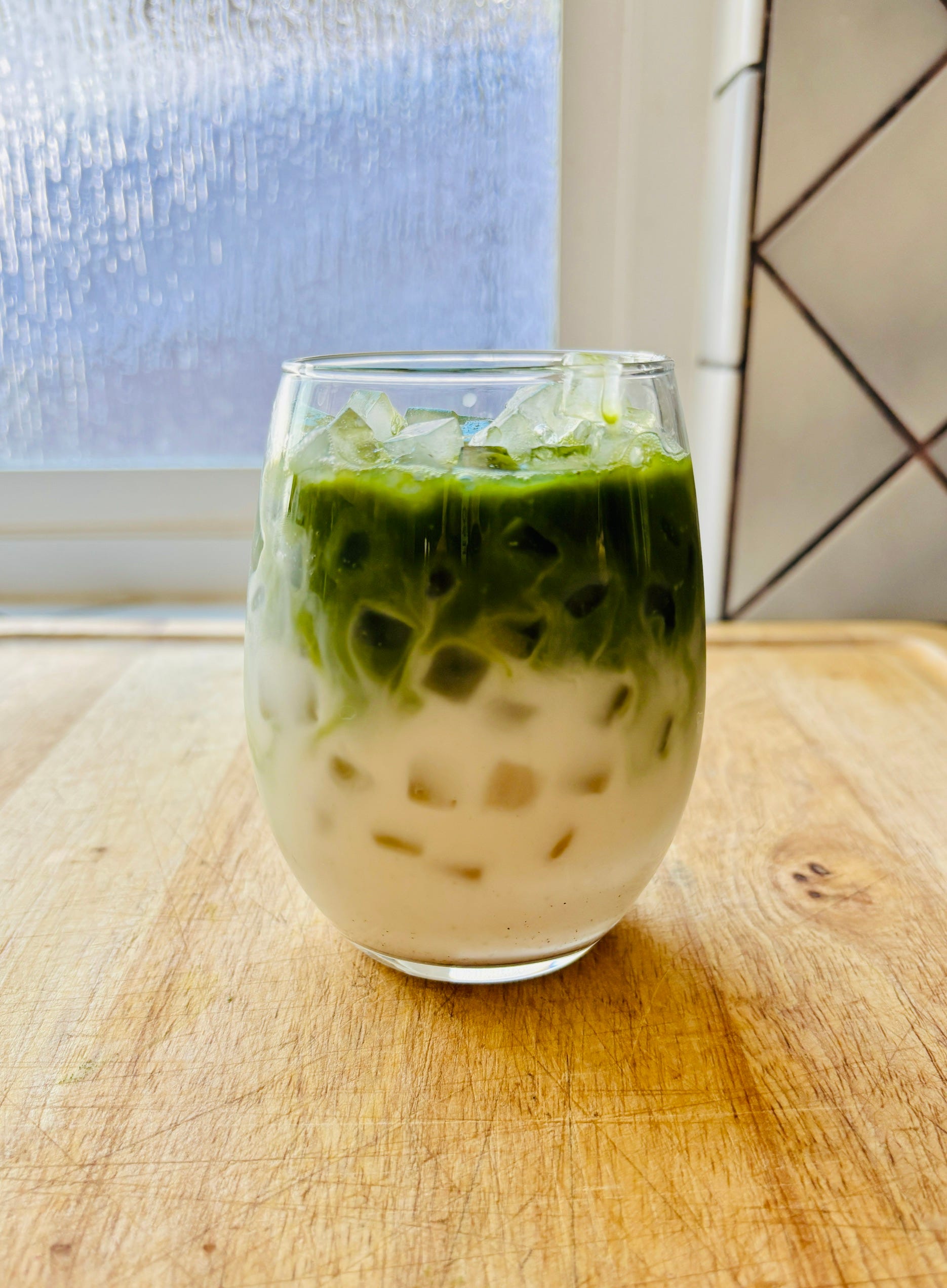
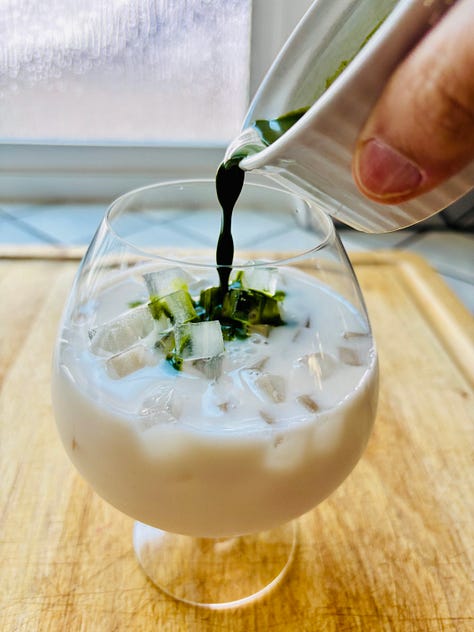
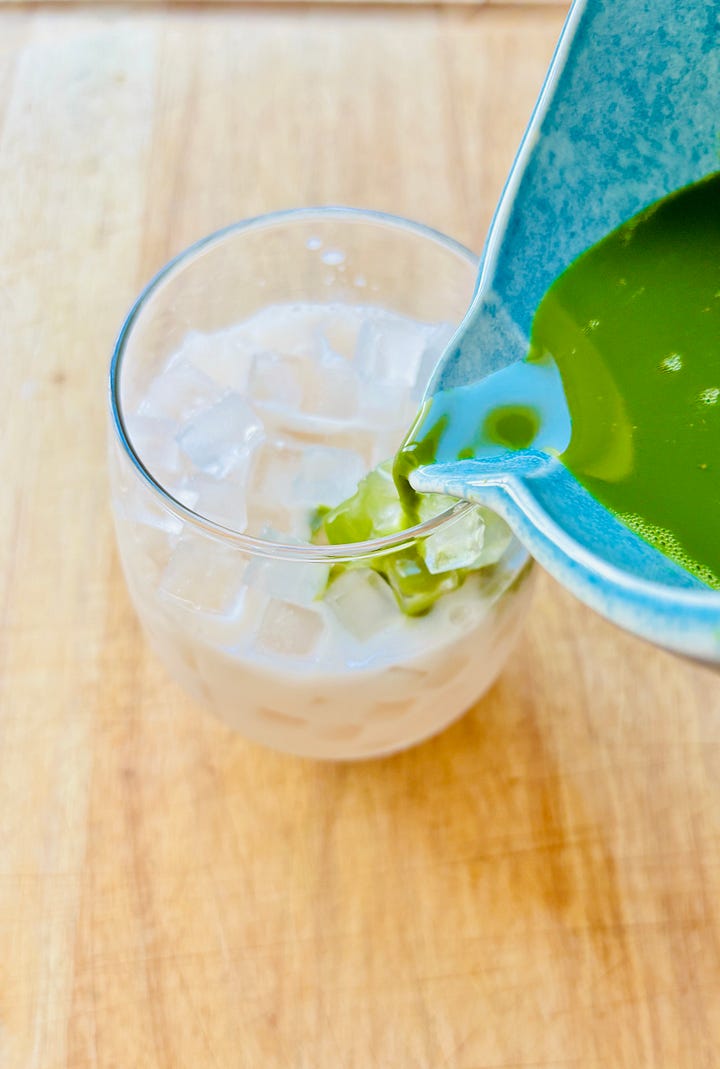
A popular drink in SoCal! Bright green matcha poured over cold and creamy horchata. For those who aren’t familiar with horchata, it is a dreamy Mexican drink made of rice, milk, vanilla, and cinnamon served over ice.
You might not be able to find horchata in your part of the world, so this drink uses a homemade horchata syrup that’s so easy to make and tastes delicious in both matcha and coffee drinks.

Ok friends, I want to know: have you had matcha? What is your favorite way to drink it? Spill the tea, as they say, in the comments.
Coming next week: the July dinner party playbook! I’m super excited to share this collaborative menu I did with the talented Rachel Ciordas of Next Level Gluten Free. See you next Friday!
Comments
Nothing yet. Say the first thing.
Sign in to join the conversation.