
If you think a speech is about you, your book, your coaching practice, or your thought leadership — you're wrong.
An on-point presentation is about something else entirely. And when you’re on stage, it is sitting right in front of you.
The talk is about the audience.
First, foremost, second, and last.
Always the audience.
Too many VIP-wannabes...
Forget it.
Or ignore it.
Or never knew it.
Or hope it doesn't apply to them.
Center stage moments are not about promoting your training, your consultancy, or your expertise.
Missing that is why 100K+ TEDx Talks (and countless “thought leader” speeches) are languishing, largely unwatched on YouTube.
The #1 reason for that?
Ego came first.
Serving the audience came last.
So it follows that the best way to begin prepping a great presentation is to keep SERVING THE AUDIENCE in the forefront.
After that's settled. Then you're best served by building your speech based my Message Temple blueprint. (Click here.) It will help ensure that you are audience-serving and your message will be more-readily remembered.
PS. What do you think is the #2 reason?
I am DEVIN D. MARKS. This newsletter shares what I’ve learned from deep dives into the world of TED Talks and idea spreading. Over the years, I’ve been privileged to serve 100s of authors, executives, and researchers — from million-view TEDsters to CEOs winning 9-figure funding rounds. My public speaking and story training firm, CONNECT to COMPEL helps leaders, just like you, to maximize your message. We can connect via 617.804.6020, or you can DM me here.
Brevity is rare and it take a LOT of work, as Franklin D. Roosevelt reminds us in this pithy insight.
“Be sincere; be brief; be seated.”
Valerie Young, Ed.D. takes on the topic of imposter syndrome in her 2011 book, The Secret Thoughts of Successful Women: Why Capable People Suffer From The Imposter Syndrome And How To Thrive In Spite Of It. While the title is a tad misleading (it is for men too!), the book is spot on. Believe it or not, self-defeating imposterism is a very common affliction among niche experts and high-achievers.
Brenden Kumarasamy of MasterTalk offers a fresh take on public speaking by weaving in a chess theme. Here’s a link to his 7-minute video, 3 Lessons from Chess for Presentations. It gets me thinking of an uber-familiar topic in a new way.
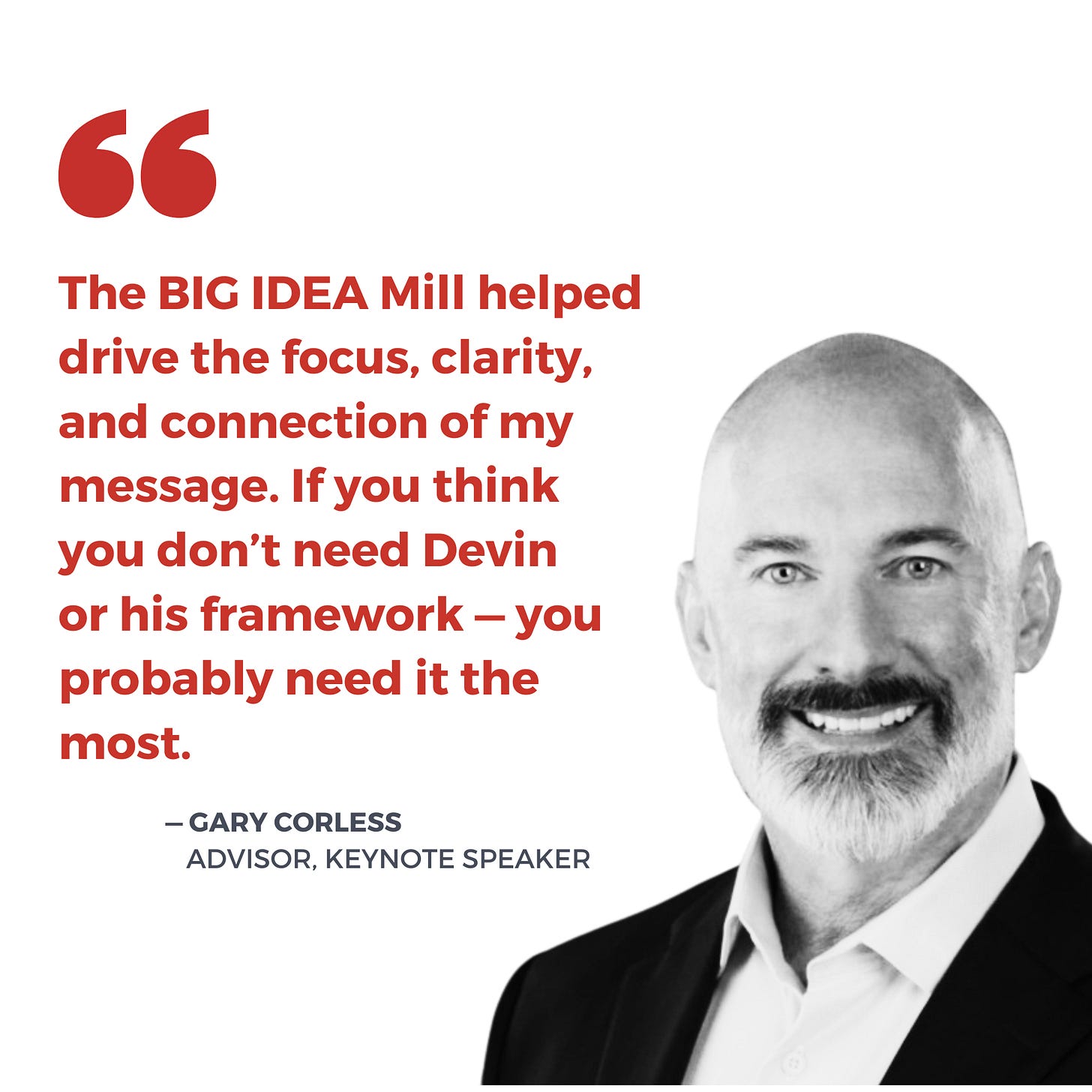
Three principles make the Marks Maximized Messaging (m3) framework so very, very connecting and compelling. Whether you're working on a keynote or a commencement address; an all-hands preso or a pitch, you will want to be:
[✔] 5Fold-Focused
(5 factors here)
[✔] Story-Wrapped
(3 factors here)
[✔] Action-Igniting
(6 factors here)
To begin a conversation about bringing the m3 framework to your next presentation, click here. After all, isn’t it time to…
Let the world LIVE your message!™
P.S. ARE YOU A HOPEFUL TED TALK 🔴 SPEAKER? Did you know the m3 framework is the basis for my award-winning, TED Talk coaching method? Many, many million-view TEDsters have benefitted from my coaching — including Harvard's Dr. Robert Waldinger in his 47M view, TOP 10 TED Talk. Let’s connect and consider your steps to center stage.
Comments
Nothing yet. Say the first thing.
Sign in to join the conversation.