
Last month, as a judge read her verdict in Paris Criminal Court, police officers arrested Bruno Lafont, the 69-year-old former CEO of Lafarge, the world’s largest cement manufacturer. He would begin serving a six-year prison sentence immediately, alongside his former deputy, who would serve five years.
We almost never see this level of accountability, where executives are directly held personally liable for corporate crimes. Usually, when corporations harm people in pursuit of profit – poisoning our rivers, flooding communities with deadly drugs, or, in this case, funding terrorism to keep a factory running – the typical outcome is a fine.
Almost never prison sentences for the executives who made the decisions… until now.

So what happened in Paris? And what does it mean for the future of corporate accountability?
Between 2013 and 2014, as Syria descended into civil war, Lafarge paid approximately $6.5 million to ISIS and two other terrorist organizations to keep its Syrian cement plant operational. In exchange, ISIS gave Lafarge safe passage through their checkpoints – and the ability to keep doing business.
Those funds helped ISIS carry out some of the worst atrocities of the 21st century. Nobel laureate Nadia Murad and more than 400 Yazidi survivors – all American citizens – later sued Lafarge directly, alleging that its payments helped finance the genocide of the Yazidi people: including mass executions, sexual slavery, the abduction of thousands of women and children. According to the lawsuit, ISIS also used Lafarge’s cement to construct the underground tunnels and bunkers where they held Yazidi hostages captive.
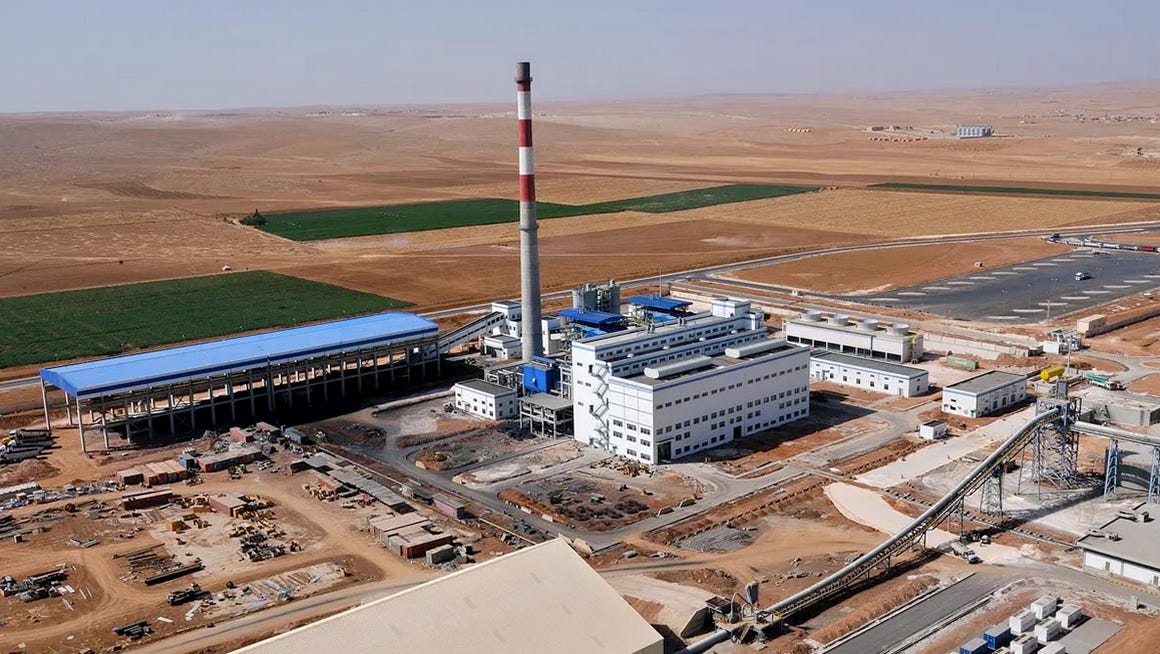
Lafarge’s Syrian workers were ordered to continue working – crossing checkpoints under sniper fire, risking being kidnapped, working in a war zone – while the European staff were evacuated to safety.
In November 2015, ISIS attacked the French capital Paris, killing 130 people at the Bataclan theater. “I am trying to make you understand,” the Paris judge said in her verdict, “how choices made in your offices, thousands of kilometers away, turned into Kalashnikov bullets, into blood.”
The defense strategy at trial was embarrassing. Lafont claimed he hadn’t read the emails documenting the payments. “I’m not a child of the internet,” he told the court. But the evidence showed that his former deputy wrote an email saying that the groups receiving Lafarge payments were “hard-core terrorists” – and then continued authorizing payments to them. When pressed, he told the judge: “We had a choice between two bad options.” The judge asked: “The worst one and the less bad one?” “Exactly,” he replied.
Essentially, Lafarge executives said they were stuck between losing profits and funding terrorism – and that they did what any good businesspeople would do: Put profits first.
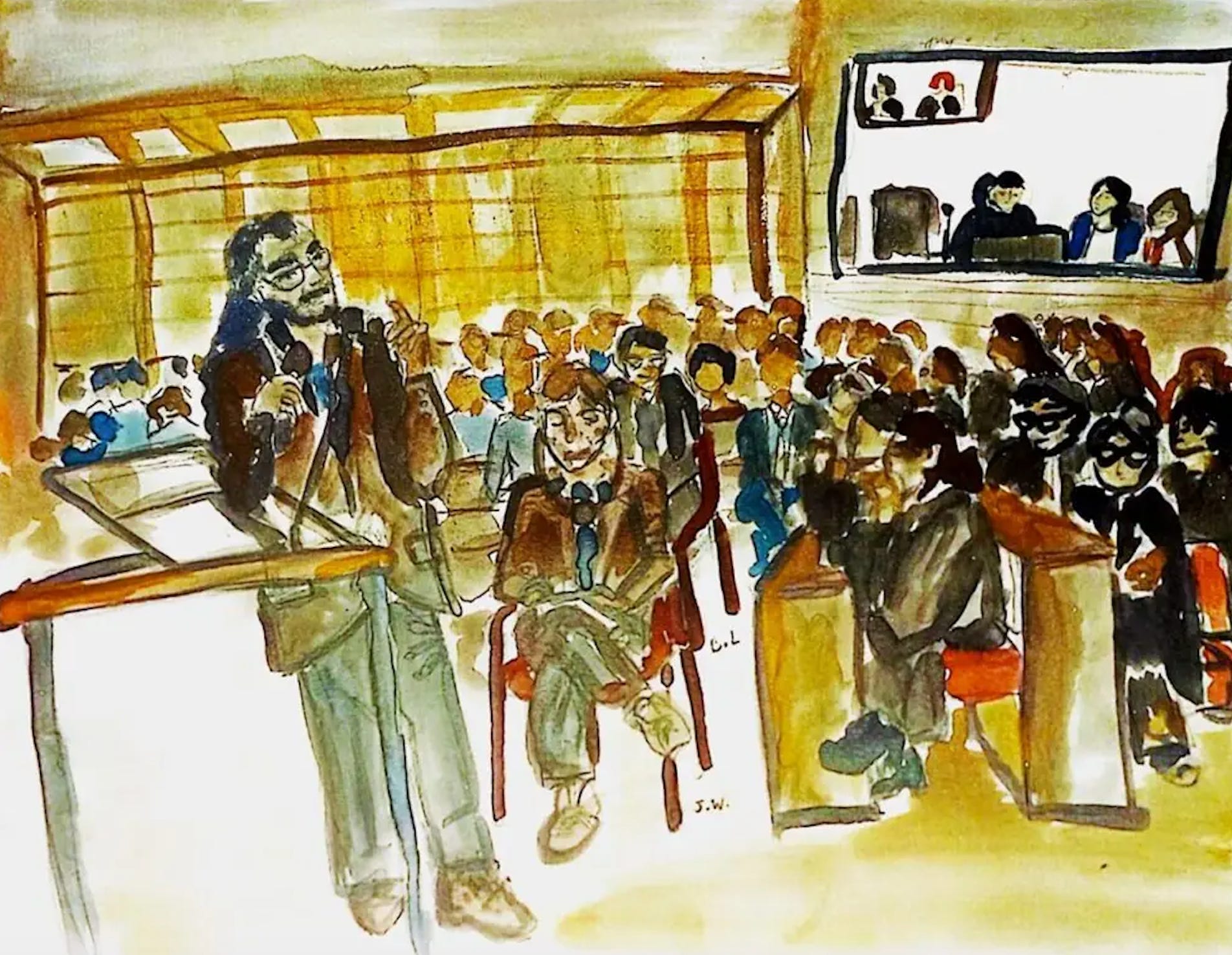
The court was not impressed; Judge Isabelle Prévost-Desprez called Lafarge’s conduct “stunningly cynical” and ordered a €1.12 million fine and the confiscation of €30 million in assets. Then she sent the Lafarge executives to jail.
This is an unprecedented legal ruling: for the first time in France (and possibly ever), a corporation has been found criminally liable for enabling terrorism, and its executives are being held personally accountable. The most comparable legal precedent dates back to 1947, when I.G. Farben executives, who supplied the pesticide gas used for mass murder in Nazi concentration camps, were tried at Nuremberg. Most were acquitted, and those convicted received light sentences that were soon commuted. But the legal precedent was established – and then effectively abandoned for 80 years.
During those 80 years, when corporations have been found guilty of harming the public, they have typically been forced to pay a fine. In many such cases, corporations pay up and move on, treating these fines as a “cost of doing business”– costs they are more than willing to pay to keep profits flowing. When the fines get high enough to put a business at risk, corporations have unleashed overwhelming resources to crush whoever is fighting for justice. (For example, Chevron spent $2 billion targeting the lawyer, Steven Donziger, who beat them in Ecuadorian court.)
Corporate executives going to prison, however, is completely different. And that’s exactly what makes this verdict look like a historic inflection point: If CEOs and board members suddenly think they could be personally at risk for the crimes their companies commit, their decision-making process could change drastically.
This type of seismic shift in accountability is necessary – because right now, our economic system is designed to protect profit above everything, even human rights and the long-term livability of the planet. But legal cases like these have the power to set a new precedent for corporate accountability worldwide – fundamentally shifting the risk calculation for boardrooms across the world.
That’s why precedents like this one are key to building a better future – one where social and planetary wellbeing are actually prioritized over profit.
Better Future is a reader-supported publication. Subscribe to help us share more stories of the better future that’s emerging as extractive systems break down.
While we celebrate this win, it’s worth asking: Why did this case end in prison sentences when Chevron in Ecuador didn’t; when Purdue Pharma’s executives walked; when decades of corporate harm to marginalized communities has produced nothing more than fines and settlements?
One honest part of the answer is that Lafarge funded ISIS – a direct, militaristic threat to Western governments and to French civilians on French soil. That made the politics of prosecution very different. The violence inflicted on Indigenous communities in the Ecuadorian Amazon, on opioid-addicted families in rural America, on Palestinians in Gaza – these harms have been prosecuted less aggressively, or not at all. The legal systems doing the prosecuting are the same ones that have historically protected capital’s right to extract from communities deemed “expendable.”
Lafarge crossed a line Western states could not ignore. That asymmetry tells us something important about where the lines for accountability are drawn. But despite these caveats, optimism is justified, because a new legal precedent now exists – and now we have something to build upon.

Starting July 2026, EU member states will for the first time require large companies to identify and address human rights and environmental harms across supply chains, with real consequences for failure. In October 2025, a federal jury in New York found BNP Paribas liable for aiding atrocities in Sudan. The Lundin Oil trial in Sweden, following a strikingly similar trajectory to Lafarge, is expected to deliver a verdict this year. The next Lafarge trial – on charges of complicity in crimes against humanity – will likely follow.
But a recent warning from criminal lawyer and professor Rebecca Hamilton is worth sitting with:
“As we see this flurry of wins, there is a real risk of backlash. Time and again, governments have traded away corporate accountability for perceived strategic, economic, and/or technological gain.”
That backlash is already visible. A US administration that sanctions a UN rapporteur documenting corporate complicity in Gaza, presides over a $660 million verdict against Greenpeace for opposing an oil pipeline, and dismantles the EPA’s regulatory powers – this is what resistance to accountability looks like when state and corporate power work in collusion.
So here’s what I take from all of this: The process of accountability isn’t fast, clean, or easy. But journalism, legal advocacy, and sustained public pressure are some of the most critical tools we have to force evidence into the open, build binding legal precedent, and shift the personal calculus for profit-seeking executives – all of which are essential to building the just, sustainable, and abundant future we deserve.
And this verdict is a meaningful step in the right direction. That’s worth celebrating.
Here’s to a better future,
Michael
Better Future covers the ideas and movements helping steer the world toward a more just & sustainable future. If you believe we need clearer thinking and more inspiration for how to make this vision a reality, please become a paid subscriber. Your support will go directly towards producing more stories like this one.
No posts
Comments
Nothing yet. Say the first thing.
Sign in to join the conversation.