
Something recently happened in a small Manchester constituency that didn’t make the US news cycle – but should have. The UK Green Party won the Gorton and Denton by-election – the Green party’s first-ever parliamentary by-election victory.
Their candidate Hannah Spencer, a 34-year-old plumber and local councillor, took more than 40% of the vote, flipping a seat that Labour had held for nearly a century. And Labour broke that 100-year streak by finishing third, behind the Greens – and Nigel Farage’s far-right Reform party.
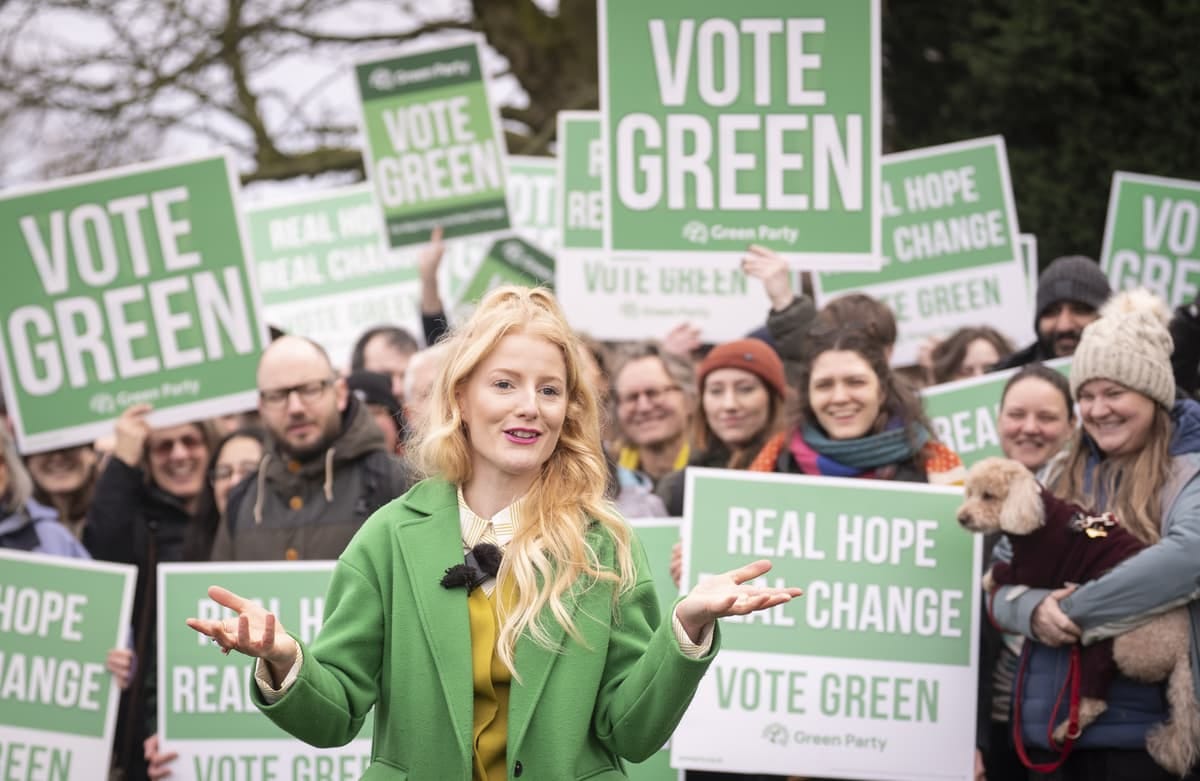
Read that again: a seat the center-left Labour Party had held for 100 years – a seat they won with 51% of the vote just 18 months ago – has been taken… not by the right, but by the left.
This is a big deal, and progressives worldwide should be taking notes.
Gorton and Denton is exactly the kind of constituency the UK’s traditional left was supposed to own: working class, post-industrial, Greater Manchester. Labour had a big majority there after the 2024 general election. They’d held the seat since 1931.
Then the Greens showed up with something Labour hasn’t been able to offer in a very long time: a bold, progressive vision.
Watch this ad and this one from Green Party leader Zack Polanski , and you’ll immediately understand why the Green Party’s message is landing. The ads are like mirrors – holding up the lived reality of working people and naming why things are the way they are: Because wealth isn’t coming back to communities. It’s going upward, to the pockets of the super rich. “This isn’t just an economic failure. It’s a failure of leadership,” says Polanski.
That’s the message. Clear, moral, and aimed squarely at the actual sources of the problem – not immigrants, not “woke ideology,” not the people next to you in line. The people above you. The ones the political class actually serves.
Enter Hannah Spencer, who built her campaign around grassroots organizing – knocking thousands of doors and hosting frequent conversations with constituents. Thanks to these grassroots tactics, Spencer more than tripled the Green vote from the 2024 election. The swing toward the Greens (+27.5%) was one of the largest ever recorded in a UK by-election.
The Greens gave people something real to vote for, not against – and it worked.
Since the election, the Green party has tripled over the last 6 months, growing to more than 200,000 members. The Guardian noted that the result “establishes the party as a serious political force and a credible anti-Reform alternative.” That’s a massive statement – and it’s worth unpacking what it means.
This win is huge because it was a replacement vote. Voters in Gorton and Denton didn’t just abandon Labour – they consciously switched to a party that’s willing to confront the actual sources of their problems. The Greens ran on ending Britain’s complicity in genocide, bringing down rent and bills, protecting the NHS (National Health Service), and holding corporations accountable. Their platform is anti-capitalist, anti-corruption, anti-inequality – and it feels like common sense for people who are tired of a system that leaves them behind.
That message is resonating, not despite being “too radical,” but because it’s radical.
British political commentator Grace Blakeley – who has been deeply involved with the Green movement – put it well in her post about the win, where she argues that the Green Party’s grassroots tactics “provide people with something remarkably scarce in daily life in a capitalist society: respect and recognition.” (For more brilliance from Grace, watch her episode on the Better Future podcast.)
The Greens won because they showed up, listened, and offered people a vision that actually spoke to the material reality of their lives. Not triangulated talking points or donor-friendly centrism, but a real, bold alternative.
What makes all this even more significant is that the Greens didn’t just beat Labour; they held off Reform.
The dominant political narrative right now – in the UK, in the US, across the Global North – is that the far-right is unstoppable. That Nigel Farage and his ilk represent some inevitable “tide of history.” That the only way to beat them is to move to the center, not challenge the conditions that make far-right populism appealing in the first place.
This Green Party win in Gorton and Denton blows that narrative up.
When voters had a genuine progressive choice – one that said I see you, I know you’re being squeezed, and I’m willing to fight the people actually responsible – they took it. They “chose hope over hate,” to borrow Hannah Spencer’s words from her victory speech.
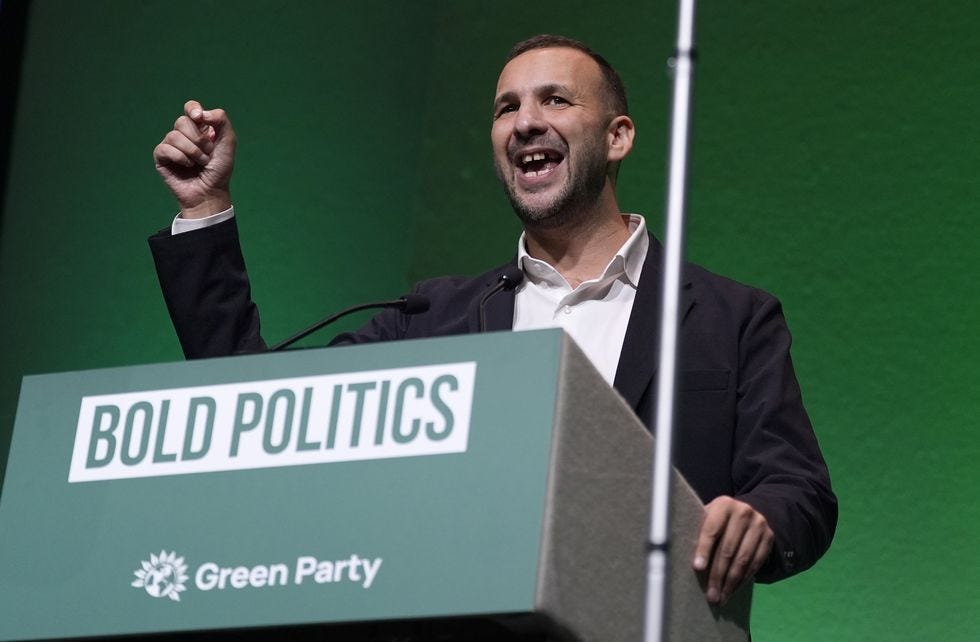
Green Party leader Zack Polanski said it plainly after the result: “People everywhere will now know that voting Green is the way to defeat Reform.”
In Britain and around the world, the far-right rises when the left abandons working people. The solution isn’t a more centrist left; it’s a bolder one.
The UK got here before the US because of how their political system works: Parliamentary systems allow new parties to break through faster. In a winner-take-all system like in the US, change from outside is harder.
But don’t be fooled into thinking it can’t happen here. The conditions are the same. The frustration is the same. And the appetite for a genuine progressive alternative – one that actually confronts power rather than accommodating it – is the same. Within the USA, that could look like a new wave of bold progressives rising up within the Democratic Party – or a 3rd party (like the Greens) starting to build real momentum.
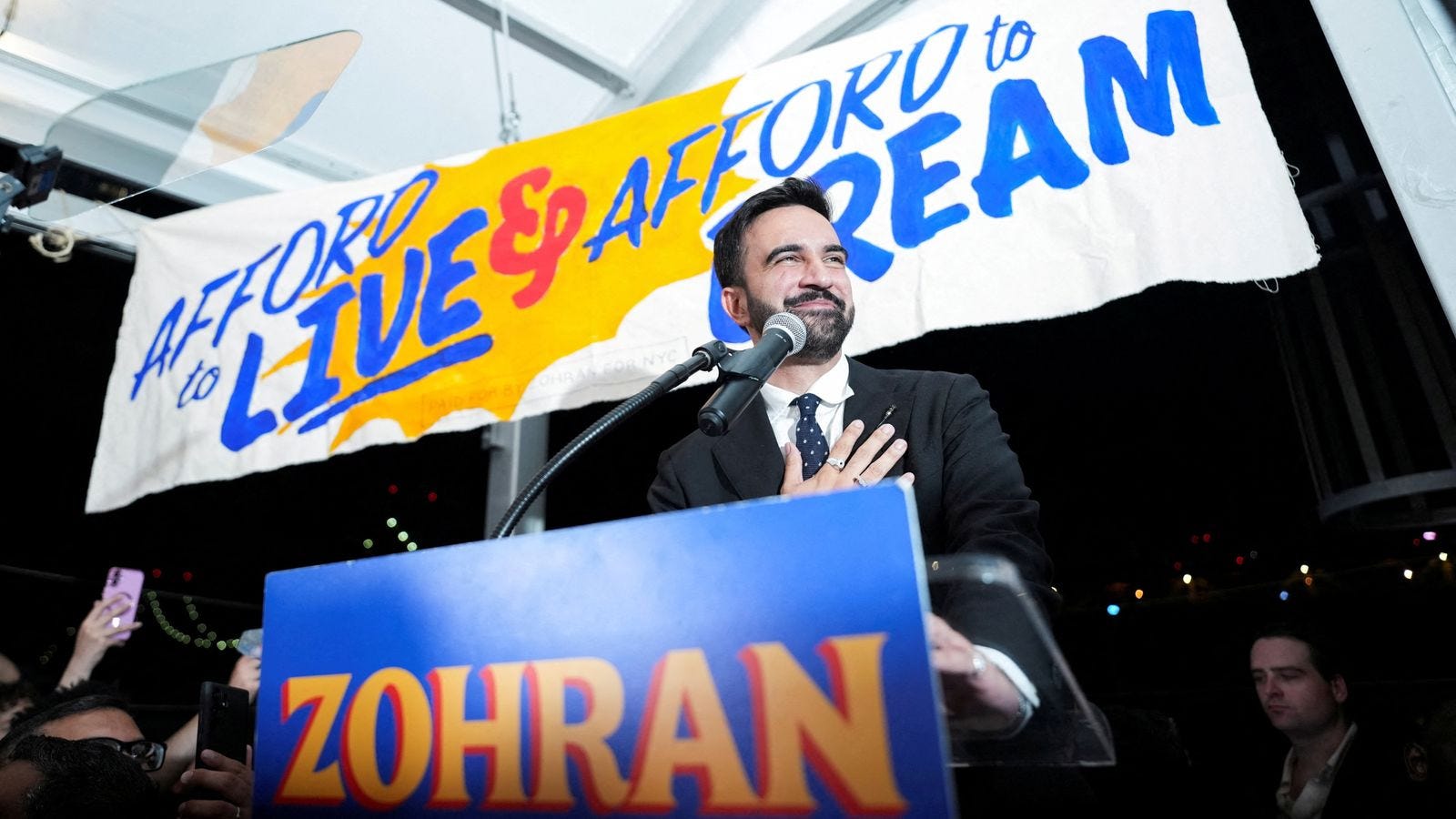
We’re already seeing it. Zohran Mamdani won the New York City mayoral election on a boldly progressive platform – rent freezes, public power, free buses – becoming arguably the most progressive mayor the city has ever had. And the Mamdani campaign is being followed by hundreds more across the country, as progressive candidates like Graham Platner and Saikat Chakrabarti make runs for Congress. (I recently talked to Chakrabarti on the Better Future podcast, where you can hear more about his detailed vision for an economy that works for everyone.)
The Democrats just lost another presidential election after running one of the most conservative campaigns in recent memory. The postmortem has still mostly been finger-pointing, because a genuine reckoning would mean confronting the wealthy donors and relationships that keep the party’s centrists in power.
What this UK Green Party win proved is that a bold, people-centered progressive platform – one willing to name the actual villains, challenge the actual power structures, and offer a real alternative – can indeed win elections, defeat the right, and inspire people who’ve given up on politics.
Change is happening – and in this moment, progressives around the world should find hope… and a playbook.
- Michael
Better Future covers the ideas and movements helping steer the world toward a more just & sustainable future. If you believe we need clearer thinking and more inspiration for how to make this vision a reality, please become a paid subscriber. Your support will go directly towards producing more stories like this one.
No posts
Comments
Nothing yet. Say the first thing.
Sign in to join the conversation.