
TW: mentions of self-harm
The youth of India are leading a revolution, and the speed and scale at which they’ve built power is something that will be studied for years to come. Over the last two months, hundreds of thousands of protesters have taken to the streets across India to demand accountability for government corruption, a failing education system, and youth unemployment.
A recent government investigation into a national exam leak forced millions of students to retake a grueling test that most had spent years preparing for, enraging families across class and political lines, and even led to the tragic deaths of 21 students by suicide. The government’s mismanagement of the scandal, followed by disparaging comments from India’s Chief Justice calling unemployed youth “cockroaches” and “parasites,” led to the creation of a satirical “Cockroach Janta Party” social media account.
Now the movement has evolved into a real political force.
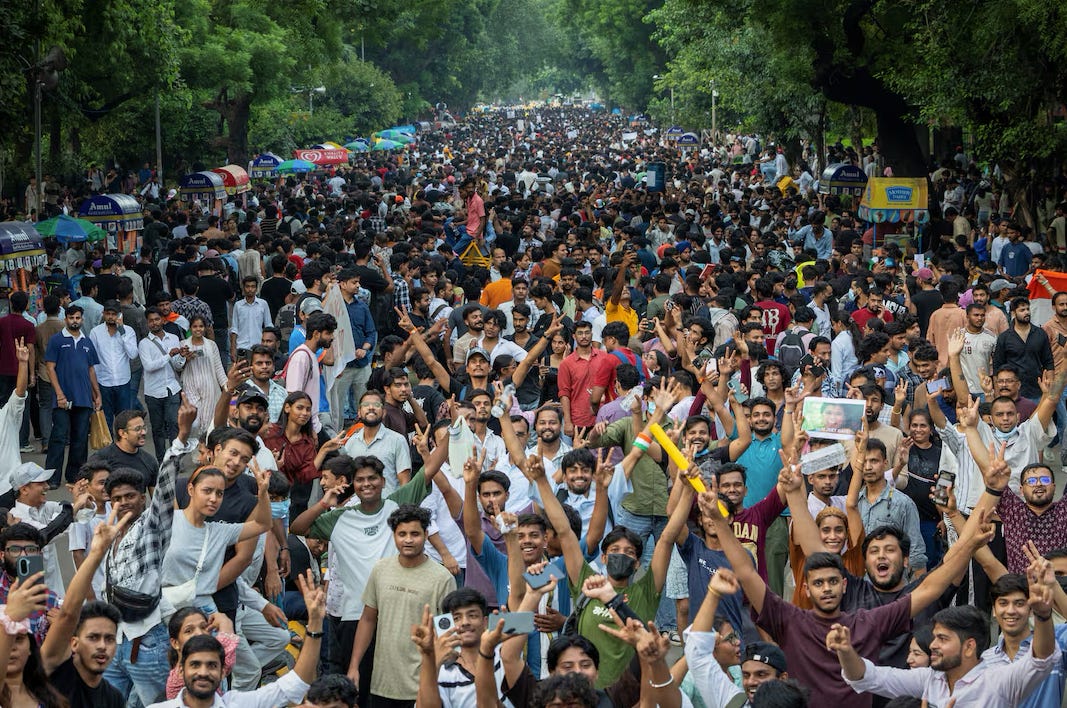
Here’s what you need to know about the rapid rise of this youth movement, how they share a common struggle with many social movements around the world, and what we can learn from their “satirical” tactics and their rapid success.
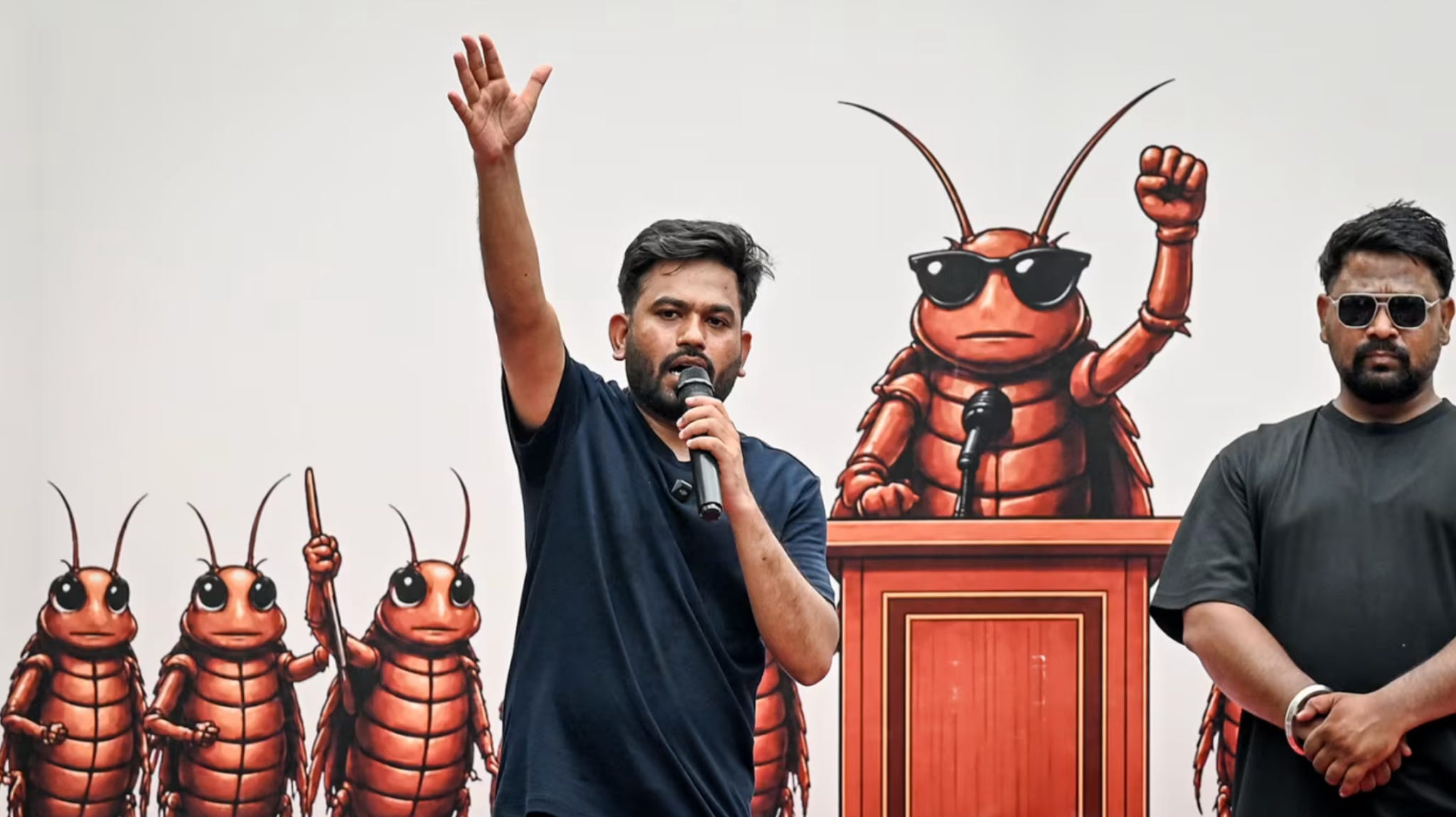
More than 40% of India’s 1.4 billion people are under 25. Almost 40% of college graduates under 25 are unemployed. Each year, millions of students sit for highly competitive medical exams, where a “pass” is a rare ticket to a stable career and financial stability. Students spend years — and in many cases, their families’ entire life savings — preparing for these highly competitive tests. And over the last decade, there have been more than 150 leaks, causing the government to cancel results and require millions of students to then retake the exam. Dozens of students have died by suicide in the wake of recent leaks, with no justice or accountability served.
The breaking point came this past May, when more than 2 million students sat for a national medical college entrance exam, vying for only 130,000 spots, only to find afterward that the exam had been leaked, and their results consequently canceled. They would have to retake the exam the following month.
Meanwhile, half a world away in Boston, Massachusetts, Abhijeet Dipke — a 30-year old Indian national and recent graduate of Boston University — woke up to news that the Chief Justice of India, Surya Kant, had publicly likened unemployed Indian youth to “parasites” and “cockroaches.”
Outraged, he took to the social media platform X to ask: “What if all cockroaches came together?”
Within two days, the Cockroach Janta Party (or CJP) emerged, calling itself a political home for the “lazy, unemployed, and chronically online.”

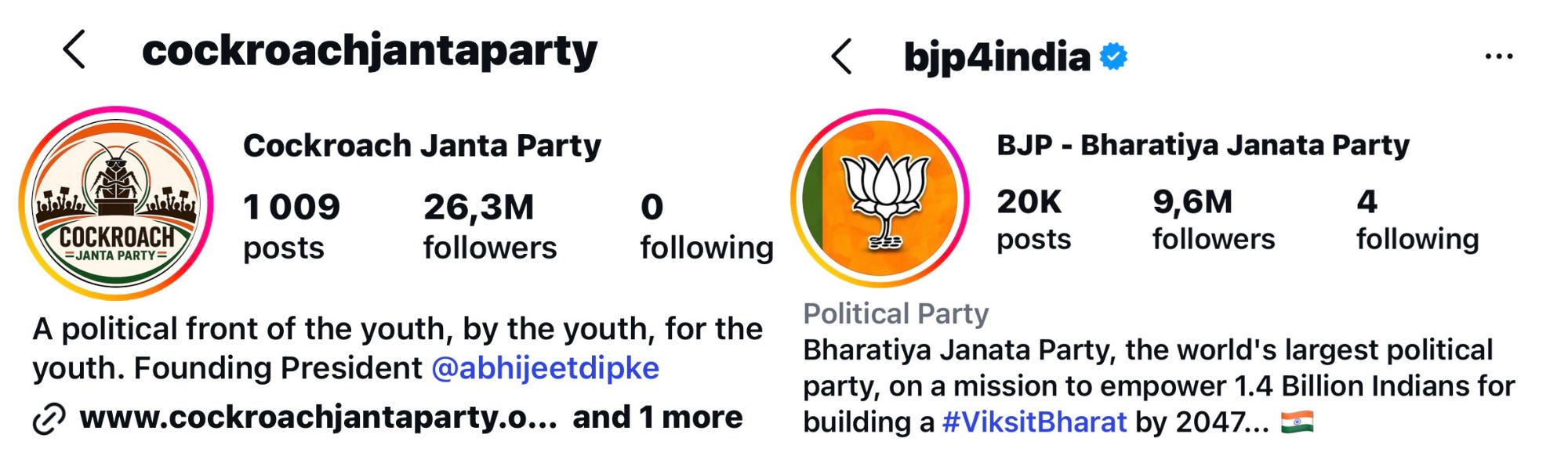
India’s youth, incensed by the medical-exam leak scandal and exasperated by the government’s failure to address youth unemployment, took up Dipke’s question as a rallying cry and mobilized a generational movement under the newly-formed CJP, its name a parody of the ruling Bharatiya Janata Party (BJP).
Within two weeks, the CJP had more than 22 million Instagram followers and hundreds of thousands of members. The Cockroach movement was born.
They began organizing protests, first in New Delhi, then across India’s largest cities, calling for the education minister to resign, financial compensation for the families of students who’d died, and government accountability for leaks. Joining their cause was renowned engineer and activist Sonam Wangchuk, whose hunger strike in support of CJP’s demands garnered mass attention and support for the movement.
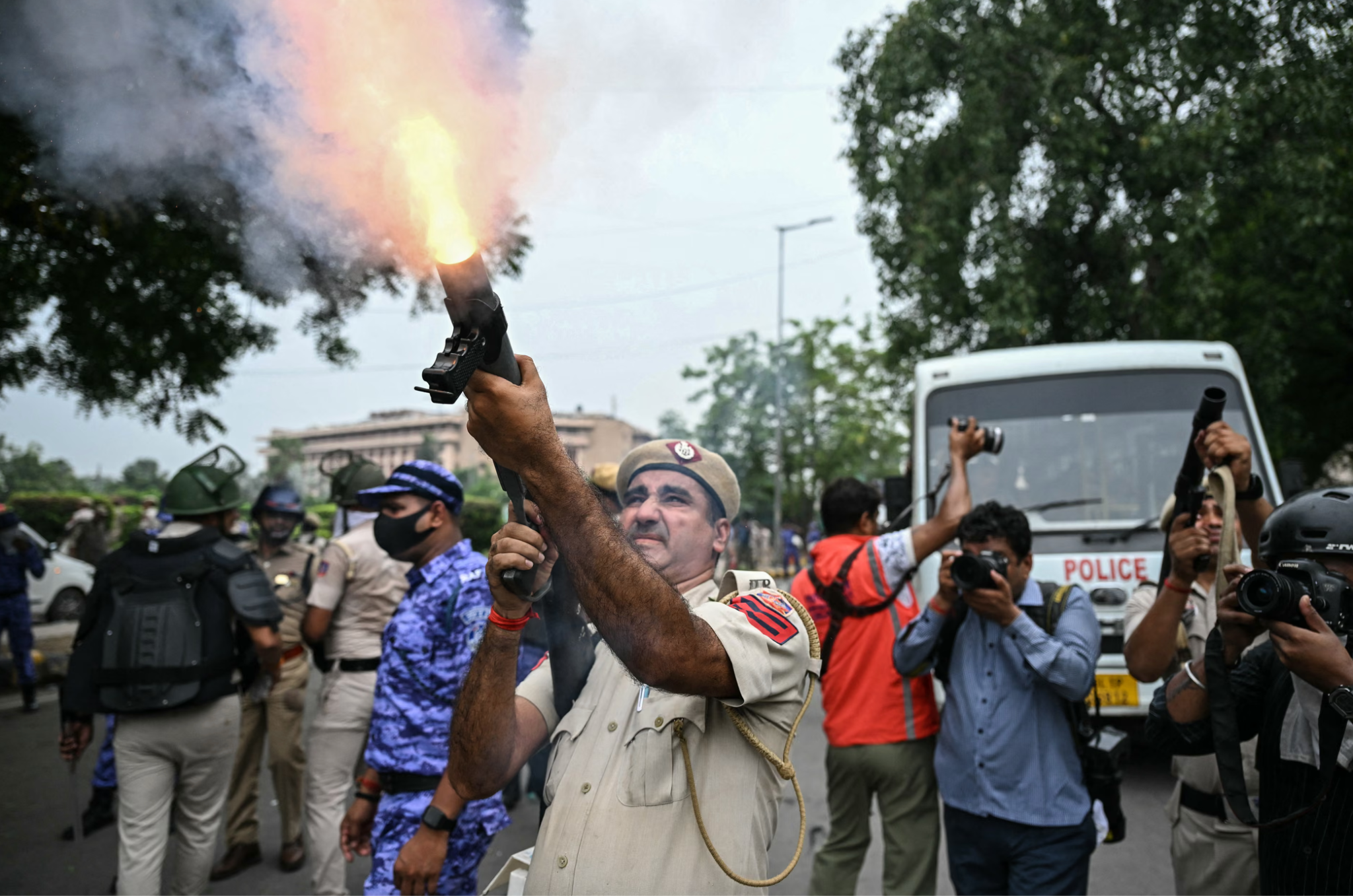
India’s government, led by Prime Minister Narendra Modi of the right-wing Hindu nationalist BJP, dismissed the protests for weeks – even as it actively worked to quash dissent through online censorship, disinformation campaigns, and mass arrest and police brutality against peaceful protesters. (Sound familiar?)
CJP’s X account was temporarily blocked, and the government attempted to shut down its Instagram on national security grounds. When those efforts ultimately failed, the government worked with the social media platforms to remove “offensive” or “sensitive” content coming out of the movement: Criticism of Modi, footage of police brutality, and interviews amplifying the resistance would not be tolerated.
For weeks, internet services were repeatedly suspended in protest areas, and police deployed facial recognition software to track and threaten protesters. Delhi police even dragged activist Wangchuk to the hospital against his will on the 20th day of his hunger strike, provoking national condemnation.
But the government’s heavy-handed repression backfired.
“The government gifted the protestors content gold,” said author Chetan Bhagat. “You cannot get more emotionally engaging content than a riot policeman chasing a 16-year-old girl with a lathi [law enforcement baton].”
Support for the movement flourished, as youth found creative ways to communicate through offline applications that could withstand the internet blackouts. They built archives of original content that were censored on social media — arming lawyers with records for upcoming legal battles. Meanwhile, they continued sharing memes and protest art on social media, hurling insults at Modi and denouncing the government crackdown. Celebrating the movement’s expletive-ridden Gen Z humor, famed author and activist Arundhati Roy called it “the most sophisticated distillation of politics.”
The protests became a place of solidarity for the youth to express their collective frustration toward a government that’s habitually failed them, and the memes provided a shared sense of community.
And finally a massive win for the Cockroach movement: After a 36-day-long protest in Delhi, the education minister succumbed to public pressure and resigned.
Over the last two years, there have been several mass youth protests in the region, specifically in Nepal and Bangladesh, and the similarities are obvious: a failing public education system, a brutal job market with rising youth unemployment, and younger generations growing increasingly resentful toward a government that seems to care little about them or their future.
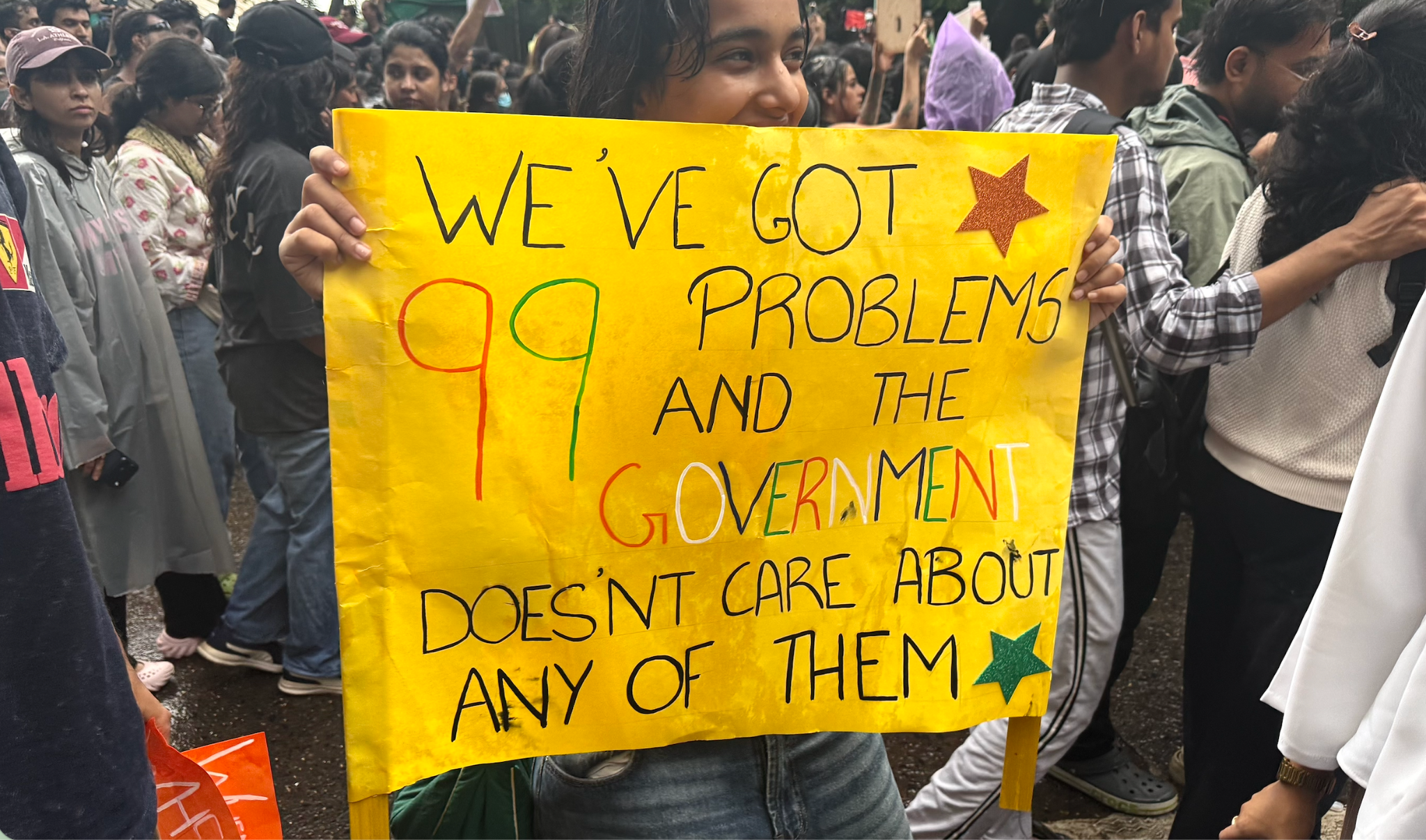
As a concerned U.S. citizen, it’s difficult to see the Indian government’s brutal crackdown on this movement and not draw parallels to what’s happening in the U.S., as Trump-aligned billionaires censor the media and ICE cracks down on communities protecting their neighbors.
We had Aru Shiney-Ajay of the Sunrise Movement on the podcast earlier this year, and our conversation about community organizing against ICE in Minneapolis feels eerily similar to what’s going on in India – not only in terms of what they’re up against, but also the movement’s creativity that arose out of those conditions.
It feels important to note what made this particular movement in India so resonant across political and class divides: the way they highlighted how these exams affect everyone. Even students from upper-class families — who aren’t going into debt to pay for exam prep — were enraged by the unchecked corruption driving persistent exam leaks. And while the circumstances behind these tests are unique to India’s education system, most young people around the world share the same pessimism about the “real world” that awaits them: Everything is getting harder to afford, jobs (even low-wage ones) are hard to come by, and the system is rigged for the ultra-rich.
What makes India’s movement a story we all should reflect on is how their youth were able to succeed so quickly — and force those in power to take them seriously.
Power is never voluntarily ceded; it must be taken. The primary way for young people to build power is through critical mass: getting enough people across political and ideological lines to come together in support of a common goal.
The conditions in India that led to the Cockroach movement catching fire had evolved over decades: years of pent-up frustration that — with the help of effective organizing by movement leaders — galvanized thousands of people to take to the streets day after day, even in the face of police brutality.
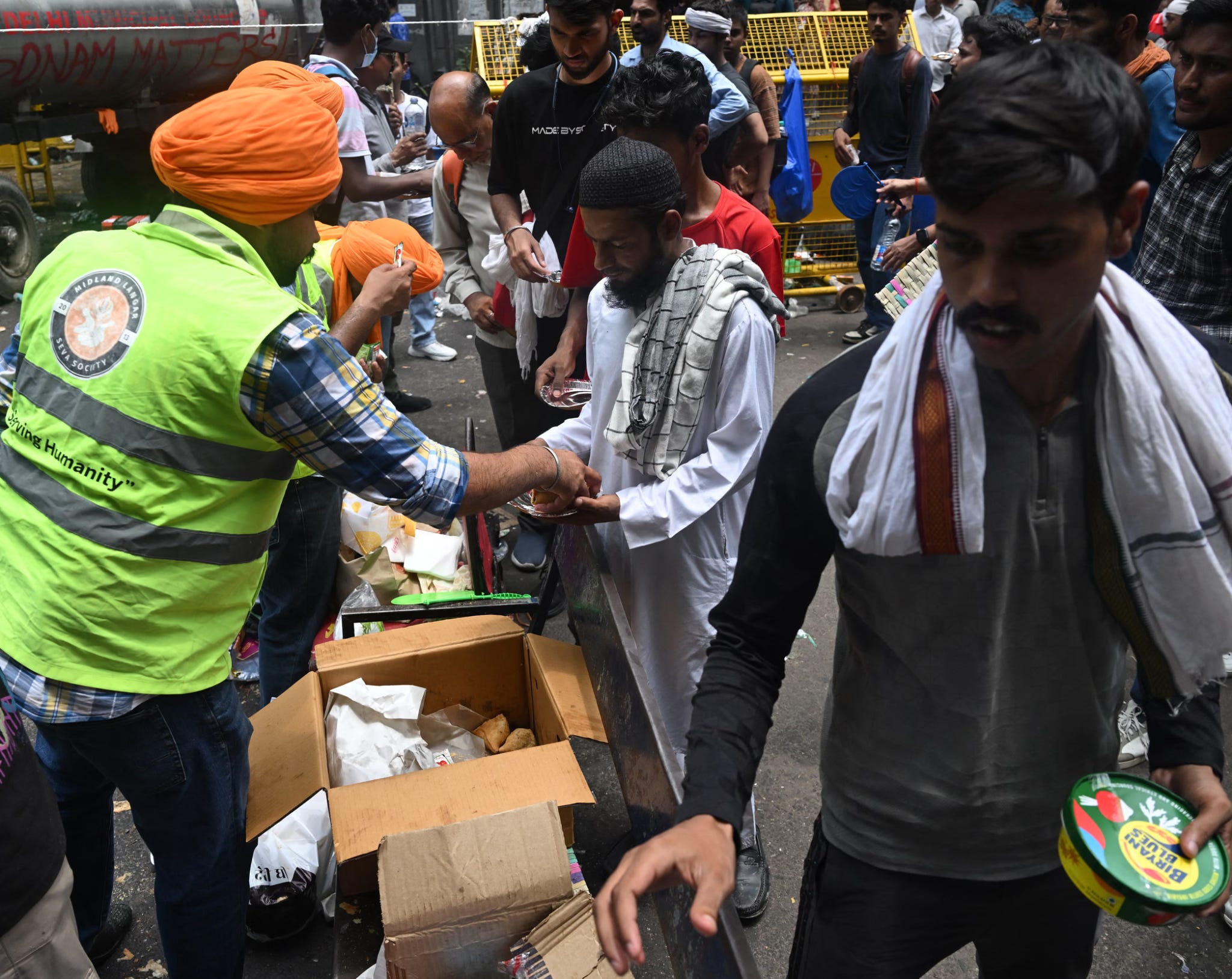
Mutual aid efforts sprung up spontaneously to feed, hydrate and protect the droves of protesters who spent hours out in dangerous heat.
Hunger strikes have deep roots in India, and Wangchuk putting his body on the line struck a chord, further garnering mass support for the cause.
Finally, the Cockroach Janta Party’s satirical, social media-first approach rapidly created a shared language for the movement’s grievances, dreams and demands. The memes, posters, chants, and conduct — despite being criticized for being unserious and inappropriate — helped create a welcoming political environment that all young people could easily connect to.
All modern social movements have something to learn from India’s “cockroaches.”
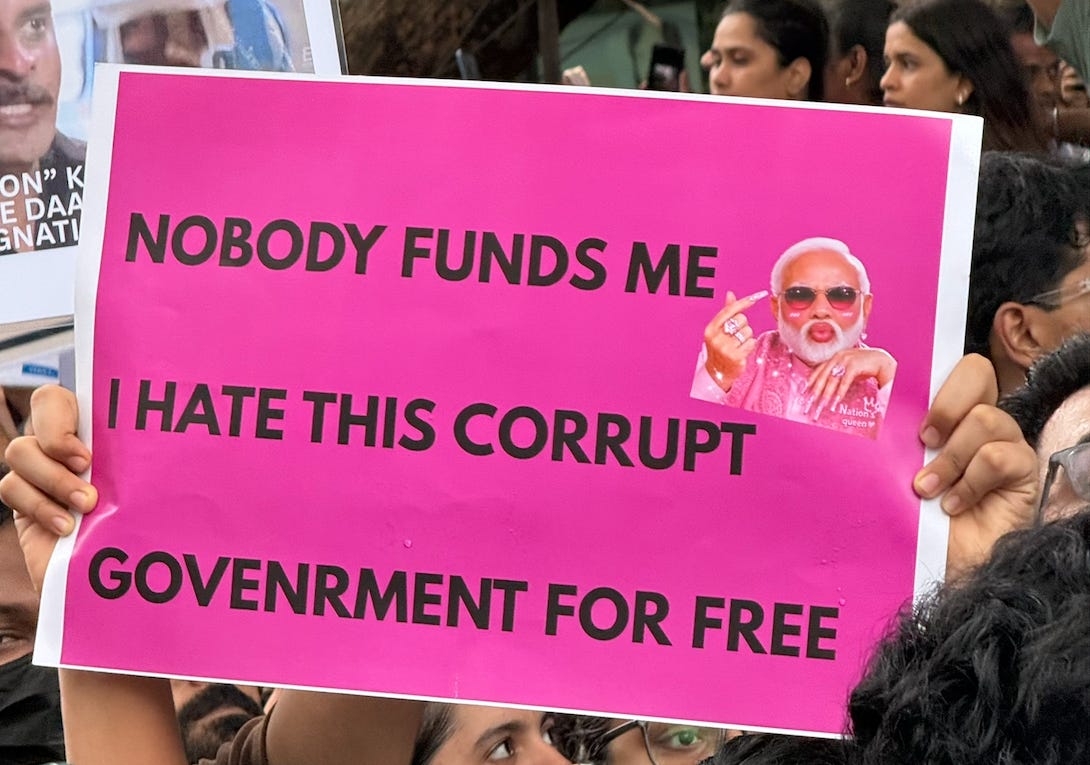
This generational movement has been dismissed and villainized for its vulgarity, humor and even celebration (especially the dancing) — these are all elements that make it resilient. What has kept people in this movement is precisely this shared culture that welcomes their joy as much as their righteous rage.
It’s a common theme behind many of the progressive political wins we’ve seen recently: Zohran Mamdani’s mayoral campaign was successful in part because of his ability to mobilize thousands of young people. And UK Green Party MP Hannah Spencer’s campaign took the same approach.
The key takeaway: A successful resistance movement can’t win on outrage alone. We need to take joy, community, and vibes just as seriously as we take the social progress we’re actually fighting for.
If you’re feeling inspired by India’s youth – as I am – here are a few ways to take action.
If you’re in India, join the Cockroach Janta Party. Their website outlines volunteer opportunities for local organizing, web development and social media content creation — with a special shoutout to students at college campuses. Or join their next action: a national listening tour. Meet CJP’s leadership and raise your voice about the education and youth reforms you want to see.
Also, learn more about and support the Internet Freedom Foundation, which is fighting for online freedom, privacy and digital rights in India. The internet blackouts over the last few months have highlighted the need to protect free expression without reprisal, both online and offline.
And if you’re based anywhere else, block out 30 minutes on your calendar this week to research the local organizations in your area working on an initiative you care about. It could be whatever resonates for you: tenant unions, food banks, mutual aid networks, community gardens, conservation groups, or progressive politics. Then learn how to get involved: Put their next meetup on your calendar, and invite a few friends to come along. Show up with an open mind.
You can also borrow from the Cockroach movement and learn more about how art and media intersect with activism at the Center for Artistic Activism website. I recommend trying your hand at tactical frivolity (which the Cockroaches had in spades!). Every movement could use a bit more “strategic spectacle,” if you ask me.
Leave a comment when you do this! I want to know what your experience is like finding and plugging into local movements. And please share the communities you’re involved in already, so everyone here can learn more about them.
-Danielle
Thank you for reading. If you believe we need clearer thinking and more examples of how to build a better world, support our independent media project by becoming a paid subscriber. Your support will go directly into producing more stories like this one.
No posts
Comments
Nothing yet. Say the first thing.
Sign in to join the conversation.