
Something big just happened in the Netherlands, and it’s news that the sustainability movement should celebrate. Amsterdam has banned ads for meat and fossil-fuel intensive products – like flights, cruises, burgers, and SUVs – from public spaces and city-owned properties.
They’re the world’s first capital city to make this consequential move, joining more than 50 cities across the world that have banned, or are in the process of banning, fossil fuel ads.
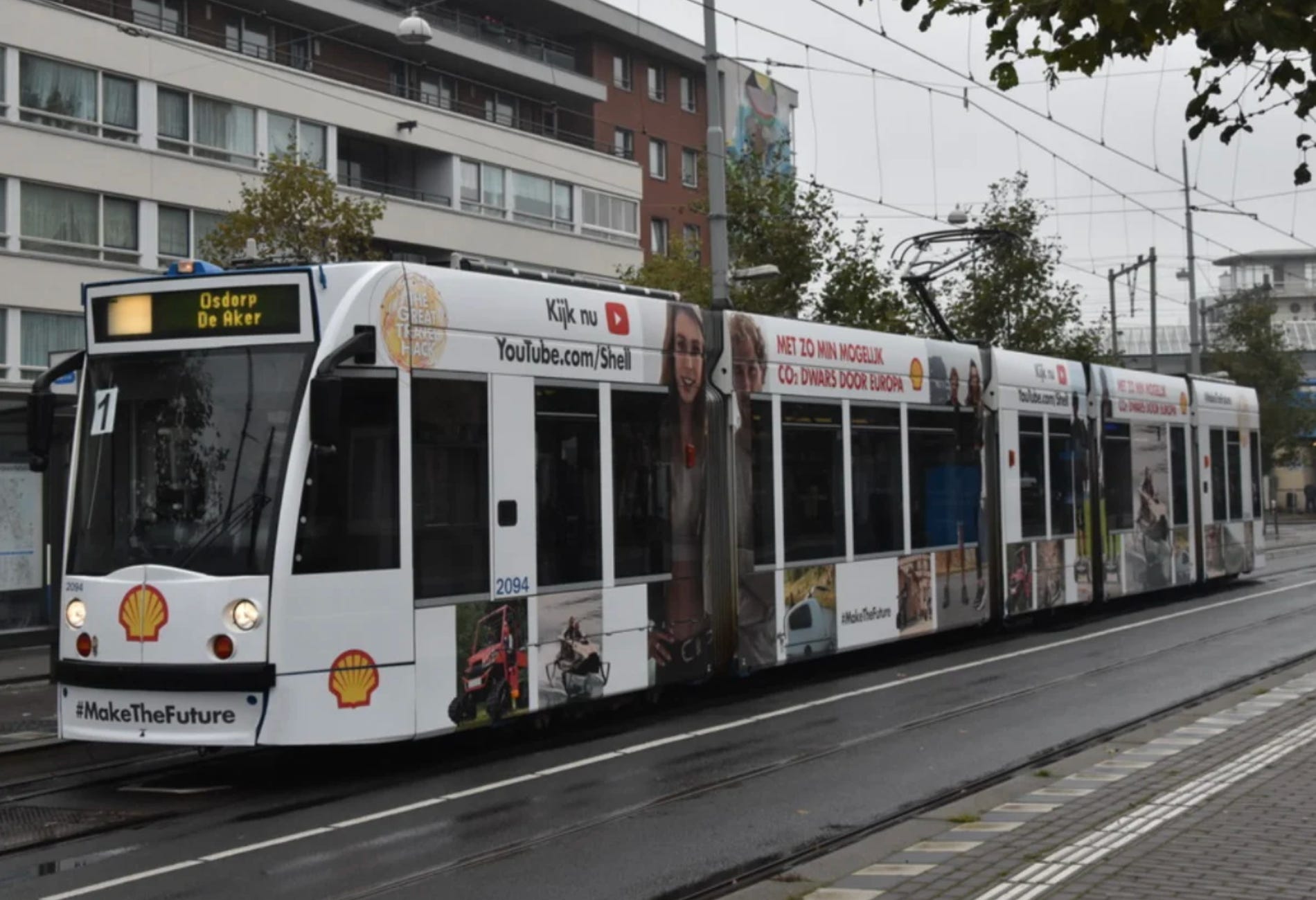
This ad ban means more than you might think. The latest IPCC report found that “demand-side strategies” – changes to what we consume, how we use infrastructure, and which technologies we adopt, could deliver up to 70% of the emissions cuts we need by 2050. We’ve largely developed the technology needed for the energy transition: cheap and abundant renewable energy, plant-based meat, and plastic alternatives. What we’ve continued to underestimate is how hard it is to shift the social norms that drive overconsumption in the first place – especially as entrenched interest groups continue spending sh*t tons of money to maintain the status quo.
So when cities like Amsterdam ban fossil fuel and meat ads from public spaces, it marks a real effort to shift social norms away from overconsumption and towards sustainable living. Notably, Amsterdam was also the first city to implement doughnut economics into its policymaking; the doughnut model is a framework that meets the social needs of its citizens while respecting the planet’s limits. (We recently discussed this at length with the creator of doughnut economics, Kate Raworth, on the Better Future podcast.)
This new advertising ban is doughnut economics in practice at the city level.
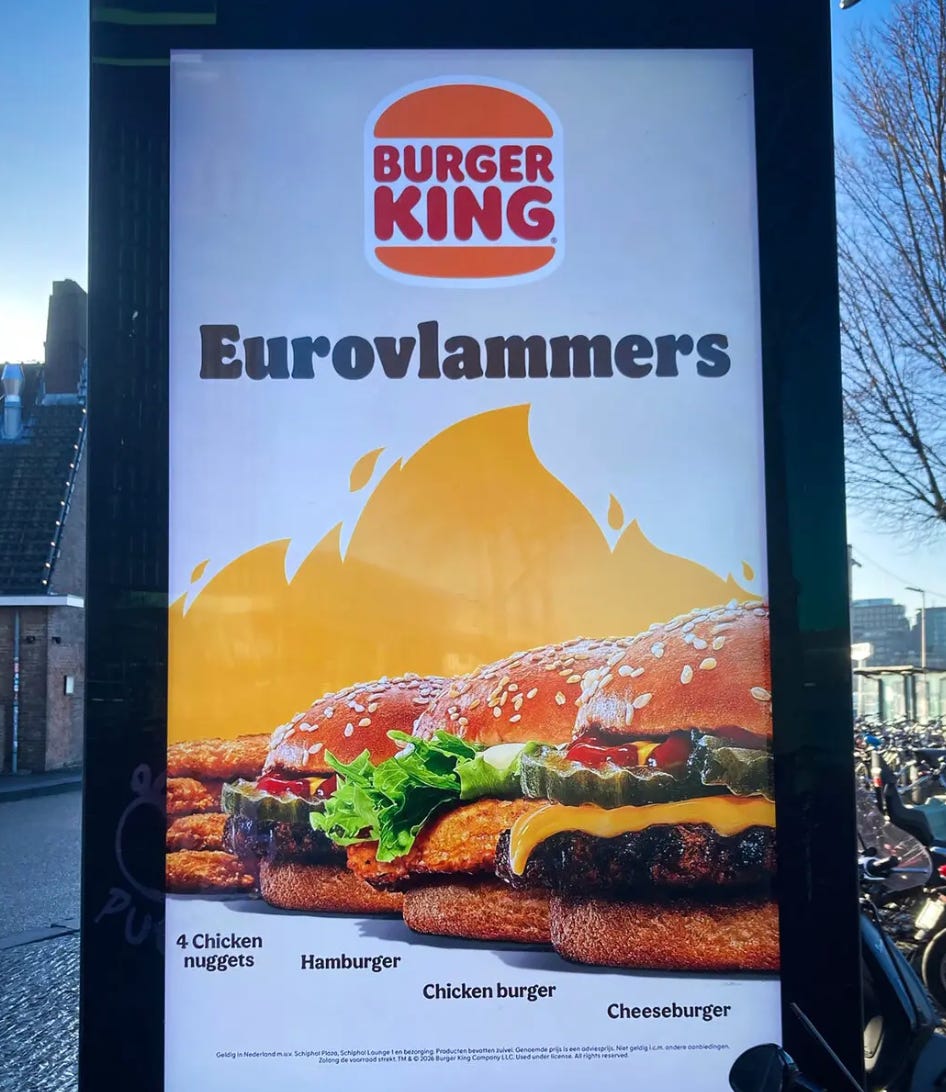
Amsterdam aims to reach carbon neutrality and halve its meat consumption by 2050. Local politicians and civil society groups saw the hypocrisy of encouraging the very behaviors that impede those goals, and decided to do something about it. As city councillor Anneke Veenhoff put it, “if you spend lots of tax money and have lots of policies trying to manage climate change in Amsterdam, why would you rent out your public walls to exactly the opposite?”
Some economists would argue that demand-side interventions – like this advertising ban – aren’t as effective as supply-side interventions. Consider a ban on the sale of private jets (supply) versus a tax on plane tickets (demand): one would force the ultra rich to downscale their high-impact consumption, while the other would reduce demand from everyone except for the 1% who could easily absorb those higher costs.
This is a fair critique, and one that this ban doesn’t resolve. Removing fossil fuel and meat ads from bus stops and billboards won’t stop private jets from being flown or burgers from being sold. And there’s concern that bans like these could encourage advertisers to get more creative, finding new ways to reach audiences. There is good reason to question if this law will amount to anything substantial in the long run.
But ads in public spaces play a uniquely insidious role in shifting our shared perception of reality – our belief that a “good life” is one filled with luxury travel, private jets, designer brands, and an endless pursuit of more material comforts.

The fossil fuel industry spends billions of dollars each year on advertising because they know maintaining their social license is what has allowed them to stick around as an institution. Banning fossil fuel and meat ads challenges the cultural norms that tell us our deepest aspirations are to be consumers of infinitely more products and services.
And frankly, it’s crazy that at some point, we decided that a corporation’s right to advertise harmful products supersedes a city’s ability to manage its own public health and climate goals. We can change that decision at any moment – and Amsterdam is leading the way.
Researchers studying The Hague’s earlier fossil fuel ad ban argue the primary value of these bans isn’t direct demand reduction, but rather the symbolism behind it: It signals a city’s commitment to its climate goals, regardless of the difficulties of standing up to corporate interests. And it’s the kind of change that could ripple outward to other cities and countries, driving real effectiveness in the long-term.
This movement is gaining momentum, both at the political level and in the private sector. Stockholm, Sydney, Florence, and Edinburgh have already instituted city-level bans on fossil fuel ads. Spain is on track to become the first country to impose a nationwide ban. In the private sector, a coalition of advertising agencies called Clean Creatives has pledged to cut ties with fossil fuels, an industry that spends +$7 billion annually on media, advertising, and PR to maintain its social license.

Another added benefit to Amsterdam’s ban is linking the meat industry to climate – something that hasn’t been done nearly as effectively as with fossil fuels, despite meat being a leading driver of carbon emissions, deforestation, and biodiversity loss. Policies like this make the social and environmental costs of the meat industry harder to ignore – while nudging citizens toward make more sustainable choices.
Finally, there are promising studies that signal real behavioral change as a result of ad bans. London’s 2019 ban on junk food ads in public spaces led to the prevention of nearly 100,000 obesity cases, thousands of fewer cases of diabetes and cardiovascular disease, and £200 million in healthcare cost savings. In Switzerland, a study tracking tobacco billboard bans across different regions from 1993 to 2017 found a 3% reduction in smoking rates – equivalent to a 6% increase in cigarette prices, an economic lever that’s been long-proven to reduce smoking. The full effects of Amsterdam’s advertising ban on citizens’ behavior will be studied in the years to come, and they’ll be worth watching closely.
In our podcast conversation with Kate Raworth, we spoke at length about the power of stories in shaping our perception of who we are and what we can do together. The dominant narrative of humanity has characterized people as greedy individuals who will always prioritize their comfort and interests over others. As Kate says in this clip, if eight billion of us are going to thrive on Earth this century, it’s imperative that we tell new stories, stories of our reciprocity, collectivism, and generosity.
Let Amsterdam’s move be a hopeful reminder that we have the power to tell one another better stories about the future, where humanity and nature can thrive together. And that local government can and should be part of how we get there.
- Danielle
Hi! I’m Danielle, team member at Better Future Media. I’m so excited to be contributing my first piece to our Substack, which covers the important ideas and movements helping steer the world toward a more just & sustainable future.
If you believe we need clearer thinking and more inspiration for how to make this vision a reality, please consider supporting our independent media project by becoming a paid subscriber. Our small and mighty team is fueled by this community, and your support will go directly towards producing more stories like this one.
No posts
Comments
Nothing yet. Say the first thing.
Sign in to join the conversation.