
There is almost nothing in modern life that rewards a nervous system for resting.
Everything rewards vigilance instead.
I notice it sometimes before I even get out of bed in the morning. The reach for the phone. The quick scan of headlines. The low-grade sense that somewhere, something is happening that requires attention immediately. Every platform seems designed to keep the body slightly mobilized, slightly alert, slightly prepared for impact. After a while you stop noticing the feeling altogether. You begin assuming this is simply what being an informed, caring, responsible person feels like.
I understand that impulse deeply because vigilance was already familiar territory to me long before smartphones and twenty-four-hour news cycles arrived.
I grew up in an environment where paying attention mattered. I learned early how to read a room before anyone spoke. I learned how to feel tension moving underneath conversation. I learned how to detect emotional weather before the storm actually arrived. Children adapt to the environments they are given, and eventually those adaptations stop feeling like adaptations at all. They simply become who you think you are.
Years later, I went to work in my family business, which turned out to be almost perfectly suited for someone whose body already knew how to live inside pressure.
I can still remember mornings sitting in the parking lot for one extra moment before opening the car door, already scanning internally before I even walked inside. You could feel when something was off almost immediately. A certain silence. A certain tone. The energy of people speaking too carefully. I used to know things were wrong before anyone actually said they were wrong.
There were always problems to solve. Fires to put out. Someone upset. Something unstable. Something requiring immediate attention.
I was very good at it.
At the time, I thought what I was feeling was competence.
Part of it was.
Still, I think some forms of competence are also forms of chronic vigilance that happen to be socially rewarded. People admire the person who can carry enormous pressure without falling apart. They praise the one who stays calm during chaos, who absorbs complexity, who anticipates problems before they happen. Nobody asks what it costs a body to remain internally braced for decades at a time.
About twenty years ago, right after I closed the business, I remember sitting down to have my blood pressure taken. I can still see the numbers in my mind. I remember staring at them feeling something close to disbelief move through me.
They were dangerously high, triple digits up and down.
What I remember most clearly was the strange feeling of my body finally saying out loud what my mind had spent years overriding.
At the same time, I was moving through menopause, which now feels almost symbolic looking back on it. Hormones shifting. Stress accumulating. A body that had spent decades adapting quietly finally losing its ability to compensate so gracefully.
The body keeps telling the truth eventually.
There were years where remaining vigilant was not dysfunction. It was love.
The long seasons of caring for aging parents. Medical scares. Surgeries. Recovery. Watching people you love move through vulnerability while trying to remain steady yourself. My body learned vigilance honestly.
That period changed me more than I understood at the time. It is part of what eventually led me toward becoming board certified as a health coach and functional medicine nutrition counselor. I wanted to understand what chronic stress actually does to a person over time. I wanted to understand inflammation, cortisol, adaptation, recovery. Not academically. Personally.
I suspect many of us are carrying far more physiological exhaustion than we realize.
The interesting thing is that my life now is actually very beautiful.
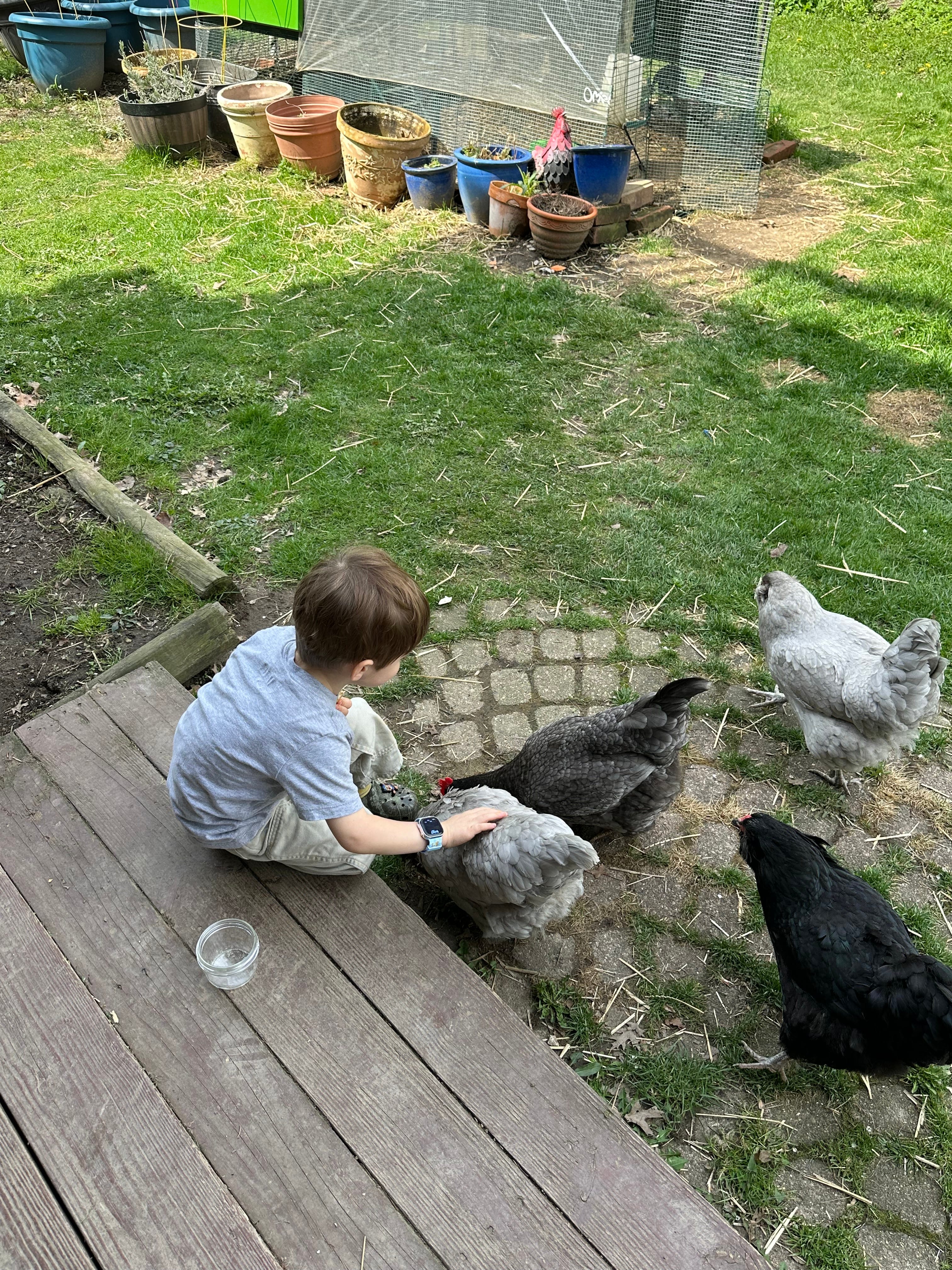
In the mornings I walk outside and feed the chickens. There are horses again. Gardens. Books stacked beside chairs with pages folded over from rereading passages I want to think about longer. There is usually dirt somewhere under my fingernails now. My grandson runs through the yard hunting for salamanders and caterpillars as though he has personally discovered them for the first time in human history.
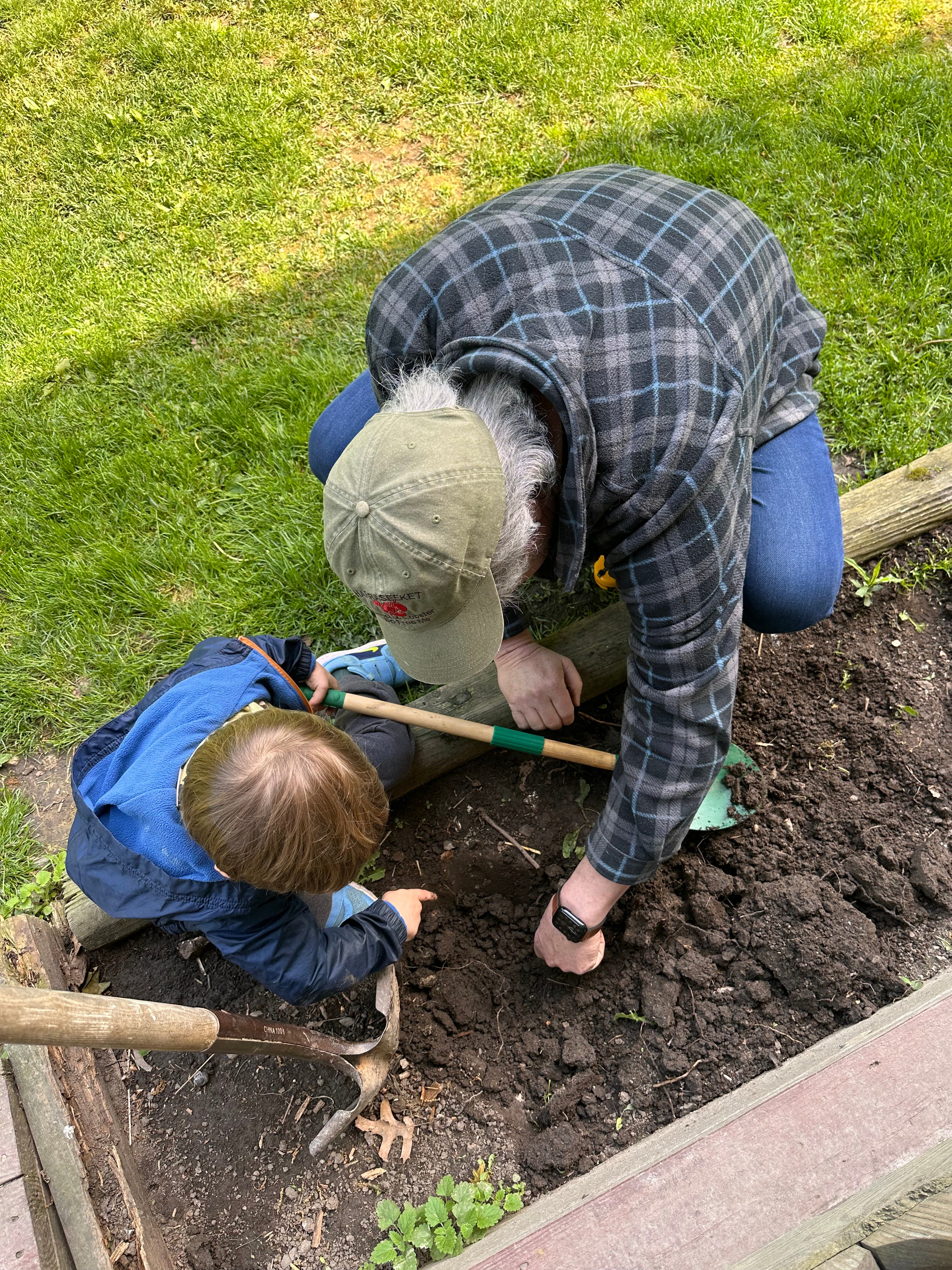
There is slowness here that did not exist in earlier decades of my life. There is enough here.
Jim is doing work now that feels deeply aligned with who he is, and there is something profoundly moving about watching someone you love build work that gives energy back instead of only consuming it. After years of pressure and responsibility and constant motion, there is softness in our life now that once would have felt almost unfamiliar to both of us.
Still, sometimes I notice my body behaving as though danger may arrive at any moment. A delayed text message. An unexpected phone call. A sudden shift in tone.
The reaction arrives before thought does.
I suspect I am not alone in this.
I think there are many people walking around with bodies trained for survival, adaptation, endurance, hyper-awareness, and emotional preparedness while trying to live inside lives that no longer fully require those settings.
The difficult thing about caring deeply is that eventually you can start confusing vigilance with moral goodness. You begin believing that staying emotionally mobilized proves you are paying attention. That remaining worried proves you have not become complacent. That if you soften too much, rest too deeply, or stop scanning constantly, perhaps you are abandoning something important.
The world certainly gives us endless reasons to remain activated right now. There is always another outrage. Another emergency. Another crisis demanding attention.
Still, lately I find myself wondering something I never would have allowed myself to wonder years ago.
What if remaining physiologically at war all the time is not actually helping as much as we think it is?
What if some of the deepest forms of contribution look quieter than we have been taught?
Not disengagement.
Not apathy.
Not pretending the world is simple or safe.
But steadiness. Presence. Groundedness. The ability to remain human without allowing fear and urgency to organize every internal response.
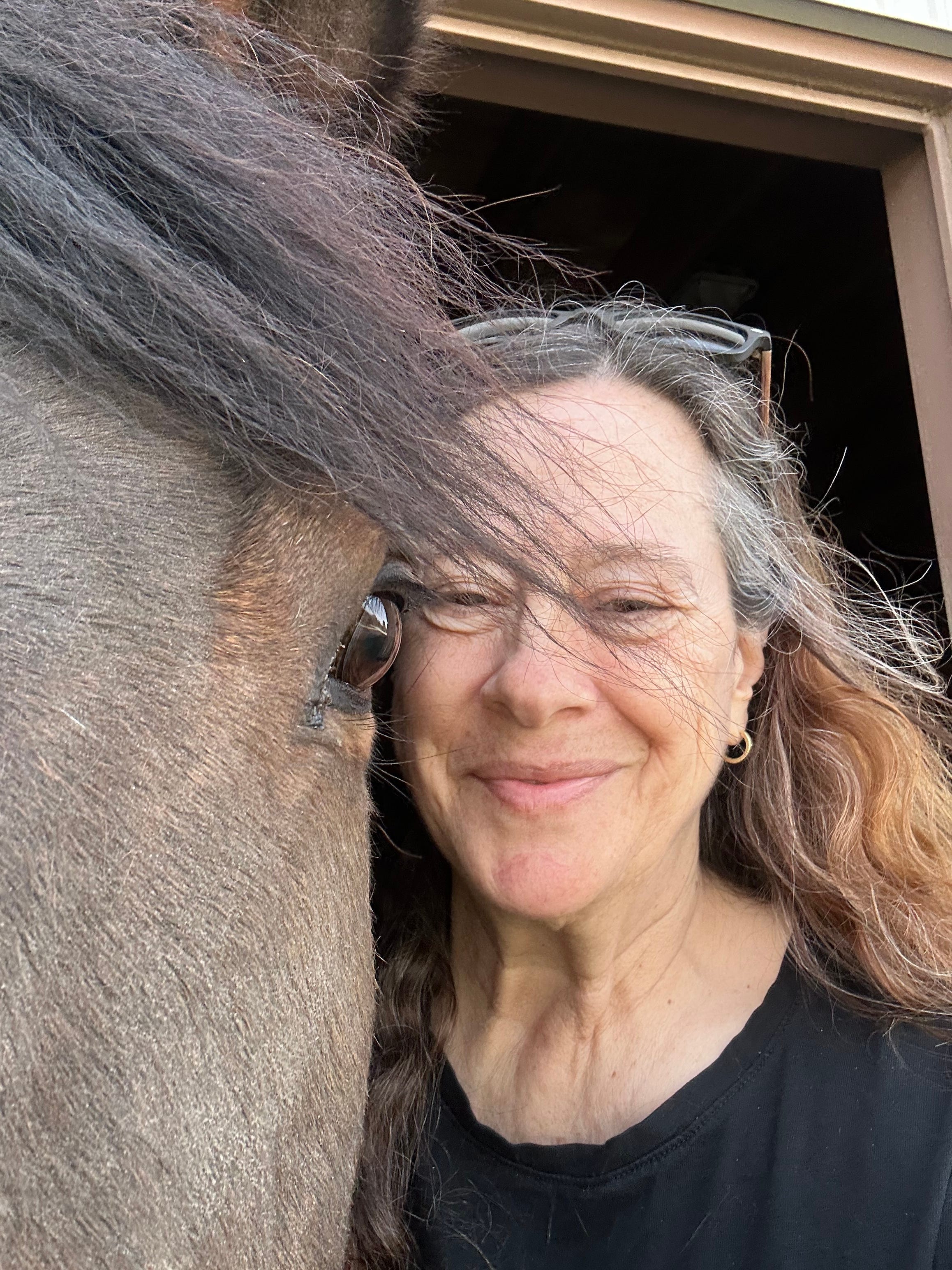
Lately I have found myself coming full circle back to horses again, which feels strangely fitting now that I think about it.
Horse people understand these things in ways that are difficult to explain unless you have lived around them. Horses notice tension before words. They respond to presence more than performance. You cannot fake steadiness around them. Your body tells the truth long before your mind does.
A horse knows when someone is internally braced even if they are smiling beautifully on the outside.
There is something deeply regulating about being around animals that require congruence instead of performance. Chickens still need feeding whether the news cycle is catastrophic or not. Horses still need water. Gardens still need tending. Living things pull you back toward rhythms that are older and far less interested in urgency.
Twenty years ago I might have dismissed this kind of life as too small.
Now I find myself standing at the kitchen sink early in the morning listening to the kettle heat while the house is still quiet, and I can actually feel something inside my body unclench before the day begins.
That feels important.
The older I get, the more I suspect these things are not distractions from meaningful life.
I think they ARE meaningful life.
Civilizations survive because somewhere, even during difficult times, people continue feeding living things. People continue gathering around tables. People continue loving children tenderly. People continue planting gardens, caring for animals, making soup, repairing fences, and creating spaces where another human being can finally exhale for a little while.
Maybe that matters more than we realize and maybe tenderness is not weakness at all.
Maybe tenderness is what allows human beings to remain human during difficult times.
The world is still noisy this morning. The headlines are still waiting. There are still endless reasons to brace.
Still, outside the kitchen window, the chickens are already moving through the grass waiting for breakfast, entirely unconcerned with the internet’s sense of urgency. I’ll be spending time with the horses this afternoon. The garden still needs tending. Wolfie will almost certainly come inside with muddy boots.
More and more, I am beginning to think these small rhythms are not distractions from life.
I think they may be the thing trying to save us from forgetting how to live it.
Thanks for reading Forage and Gather! This post is public so feel free to share it.
Comments
Nothing yet. Say the first thing.
Sign in to join the conversation.