
Dear Whole Stories Shortly Subscribers: This story has many photos, making it too long to read in email, so click the ‘view in browser’ link in the email or open in the Substack app!

Available for iOS and Android
I’m back in Copenhagen, a city of varied and famous walking opportunities. One of my favorites is a hidden gem close to where I stay when I’m here.
Vestre Kirkegård (which translates to ‘western churchyard’) is the largest cemetery in Denmark, several city blocks long and a couple wide. It was established in 1870, relatively recently in Danish history, on land outside the city that had little value. Immediately to the north was the prison and the Carlsberg brewery with its piles of discarded hops, and to the south was Sydhavn, a long-time dumping ground.
In its early days, only the very poor were buried in the new graveyard. The cemeteries in the city were filling up, but no one who could afford to choose wanted to be buried so far from their familiar neighborhoods. The distance was intentional as a matter of public health. At the time, epidemics of diseases like smallpox and cholera resulted in huge numbers of corpses and they needed to be disposed of safely to avoid cross-contamination.
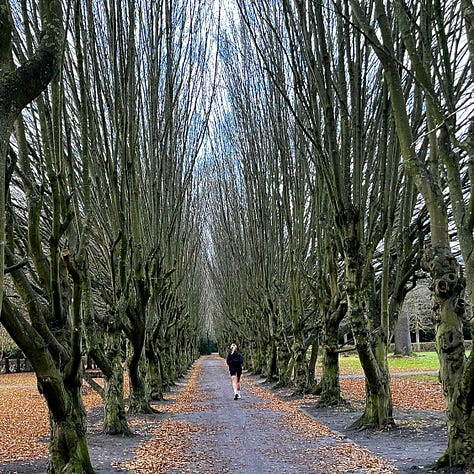
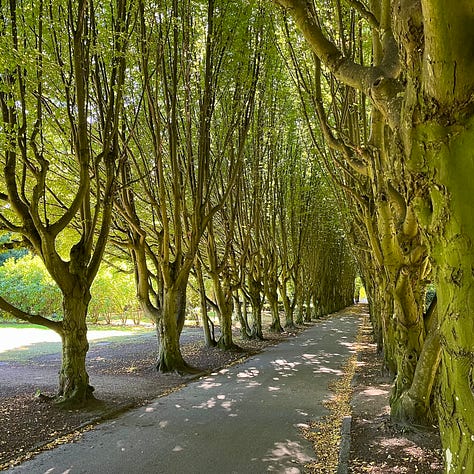
Over the years, Copenhagen expanded and, as rural Danes moved into the new apartment blocks of working-class Vesterbro, nearby Vestre Kirkegård provided some welcome green space.
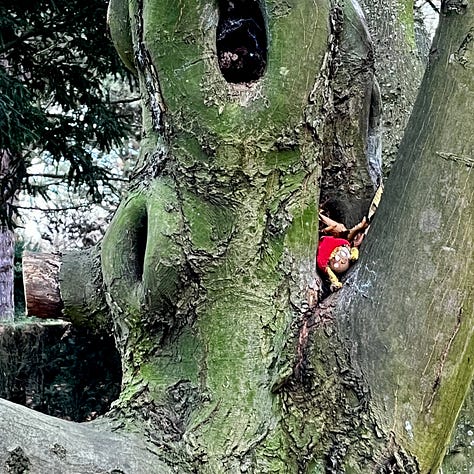
The churchyard is dotted with a lovely variety of rare and ornamental trees, and birds sing from thickets of native shrubs. Burial sections are divided by tidy beech hedges and linked by graceful, tree-lined thoroughfares. One of the longest, and my favorite, is a wide path of elderly beeches. Limbs that have been removed and fallen off have left large round holes that look like eyes, and in a certain light, the trees look like a line of petrified creatures with contorted arms—my Allée of the Trolls.
There are always people around the churchyard, commuters cycling through, and people spending time. Families and workers tend to graves while joggers and dogwalkers stretch their legs. Young parents push infants tucked into prams and guide toddlers as they practice riding their bikes. In summer, students gather with their books, and couples bring picnic baskets and lie on the grass to drink glasses of wine.
Autumn brings beautiful colors and there are conkers (horse chestnuts) to collect and brombær (brambles or blackberries) to pick. The graveyard is part of community life.
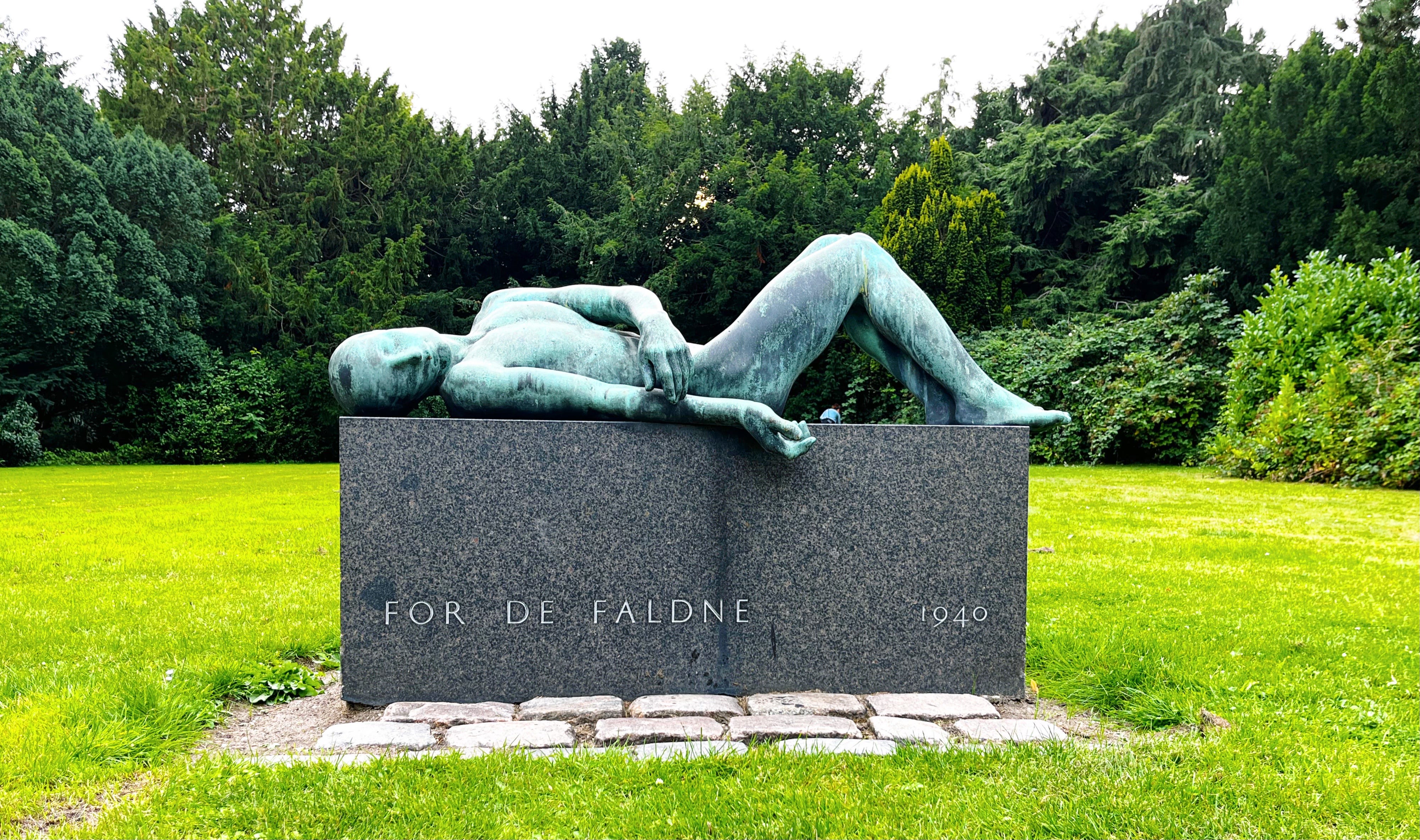
The southwest corner is defined by the rail line into central Copenhagen and a busy main road; it’s overlooked by apartment blocks and a high school.
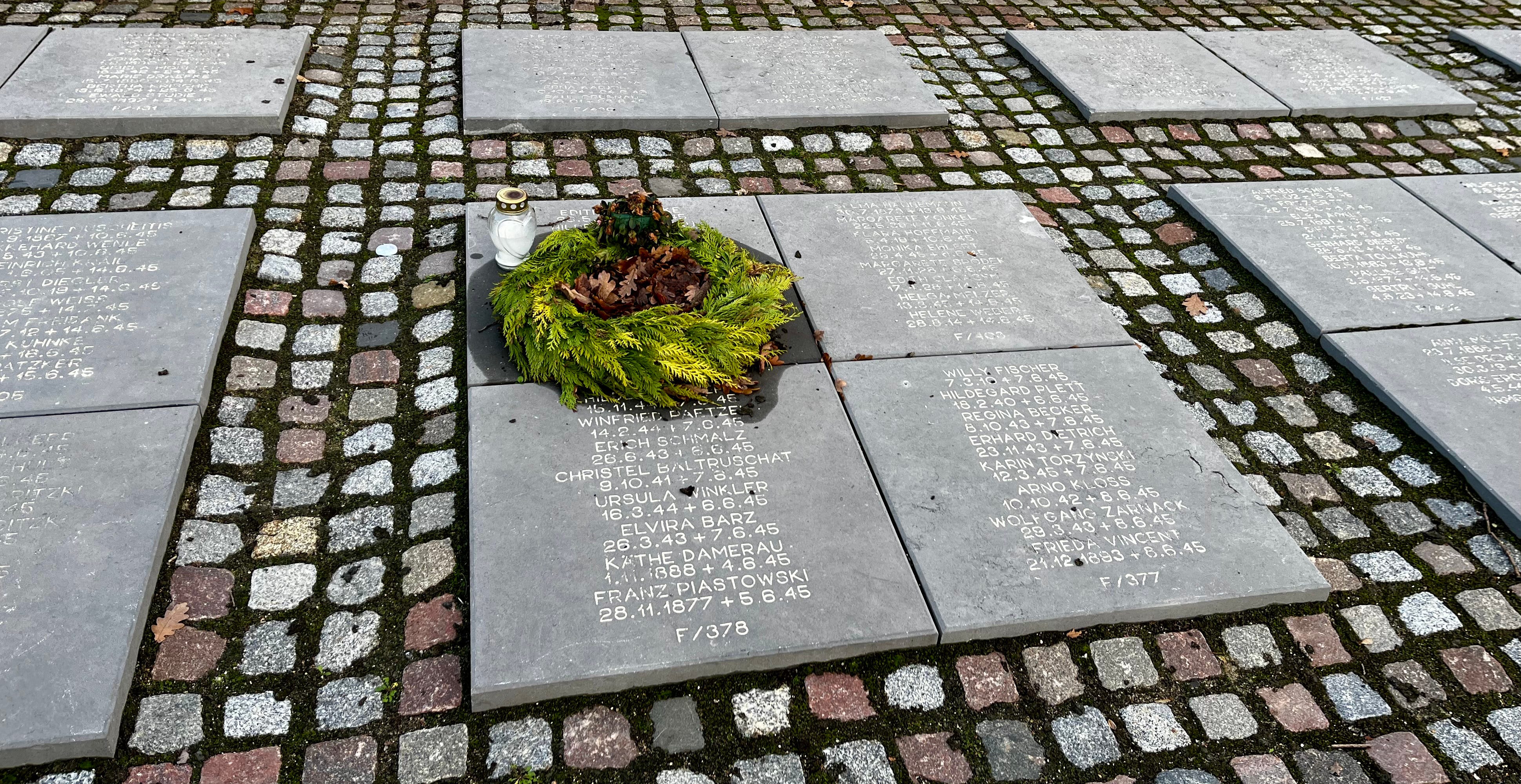
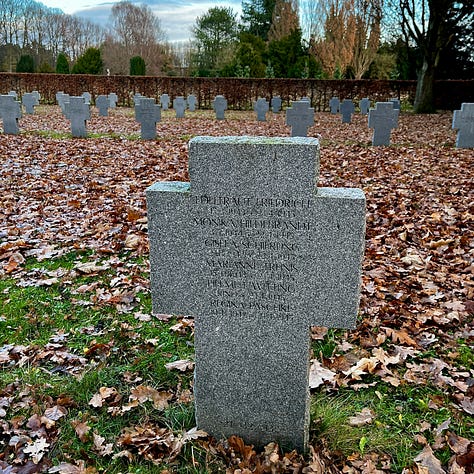
This section of the cemetery, closest to the old outskirts of town, is where the German dead from World War II are buried. There are rows upon rows of granite headstones, both sides marked with names and dates. These are mass graves, and markers at the entrance to each plot provide a morbid arithmetic: Here lie 438 refugees and 4 German soldiers. … Here lie 887 refugees and 2 German soldiers. … Here, 4019 refugees rest with 4636 German soldiers.
All told, an estimated 10,000 Germans are buried here; more than 6000 of them flygtninge - refugees. Many of these people arrived late in the war, fleeing the Russians, the destruction of the Allied forces advancing through Europe, and starvation. Some were expelled by the Nazis so that Germany would have fewer mouths to feed. Many of the dead are memorialized only as ‘Unknown’; many of the carved dates indicate babies and young children.
Each time I pass by, one or two of the graves have fresh wreaths, perhaps from the descendants of those who stayed. The scale of this war memorial remains intimate some how, its immediacy is deeply moving.
The cemetery also has some of the British war dead, including 19 prisoners of war from WWI who died on their way home of influenza, but most British troops are interred in cemeteries elsewhere in the city.
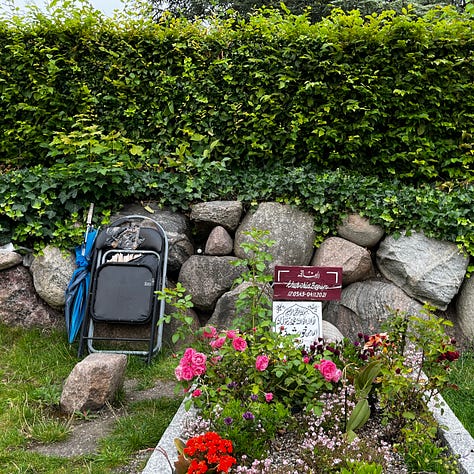
Other groups with dedicated sectors include the Salvation Army, and people from the Danish protectorates of Greenland, and the Faroe Islands. The Jewish and Catholic cemeteries are on the edge that borders the historic Carlsberg district to the north. The Muslim section lies next to the German, that long unfavored location, and I find it poignant because so many of the Muslim dead also arrived in Denmark as refugees, fleeing their homes to escape the horrors of war.
Closer to the center of the cemetery lie the Graves of Honor. Plots here are granted by Københavns Commune (the city council) to politicians, scientists, and artists of note.
Throvald Staunning (1873 - 1942), the first Social Democrat Prime Minister who led Denmark through the early years of WWII, is buried here. Also, Anker Jørgensen (1922 - 2016), a local boy orphaned by tuberculosis, who served in the Danish Resistance before rising through the trade union movement to become Prime Minister. He refused to move to the official residency of the office and remained at his apartment in Syhavn, a working-class neighborhood near the cemetery.
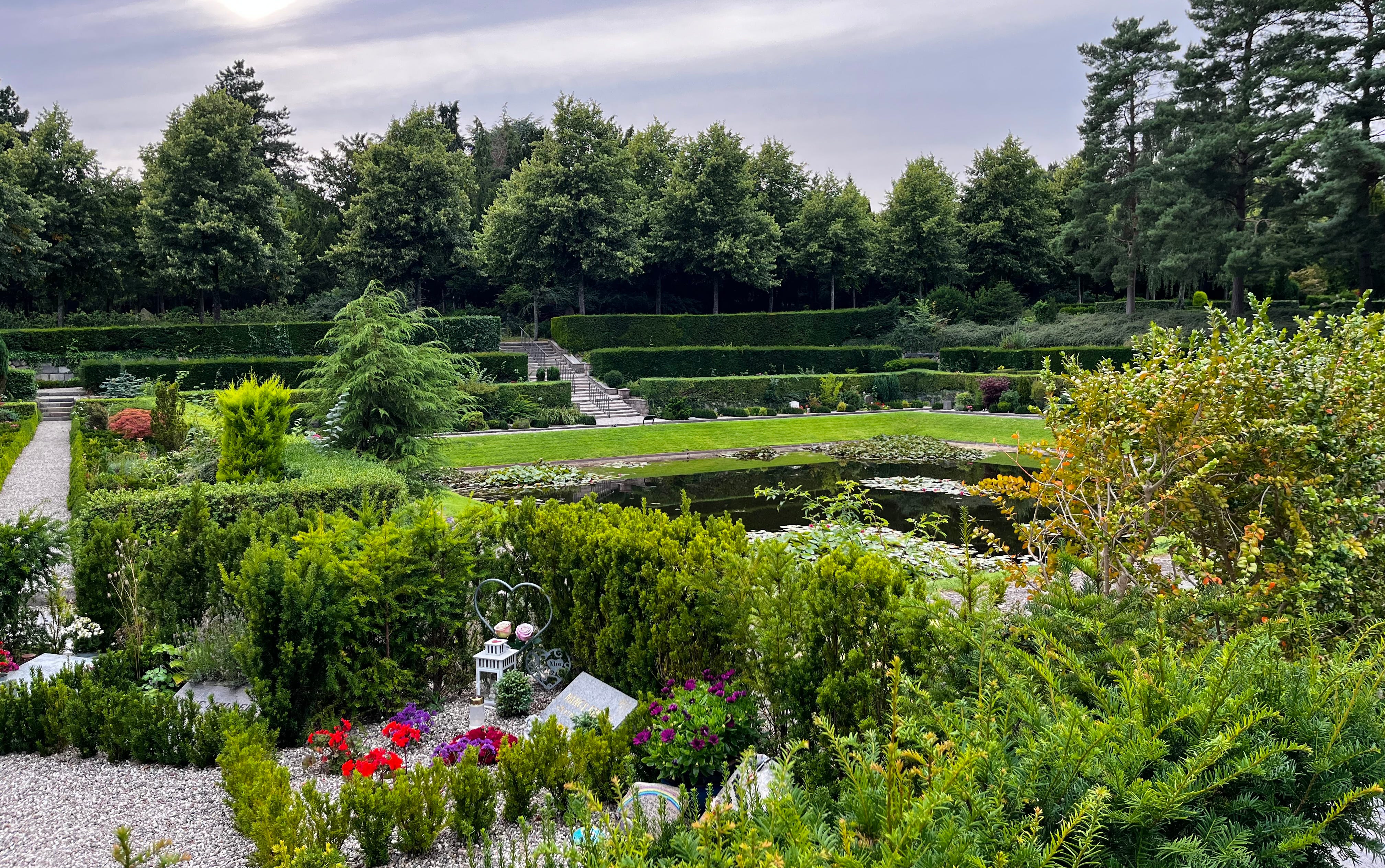
The Graves of Honor lie on a shady hill overlooking a small lake and, although there are also conservative politicains buried here, they are outnumbered by leftists, and the lake is nicknamed, the Red Sea.
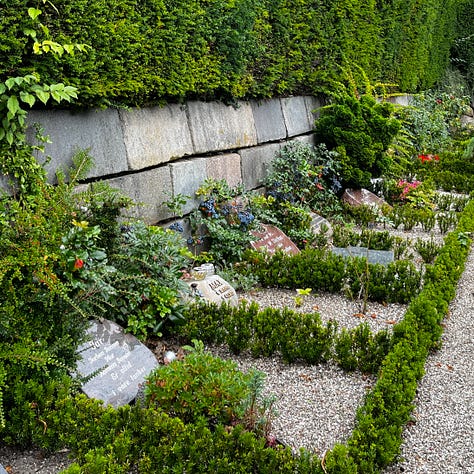
The more common graves of the rest of the cemetery are beautifully arranged. There are ‘rooms’ of columbariums with evergreen walls, a scuplture of a mother overlooks a lawn paved with markers commemorating children, and terraces of graves surround an ornamental pond filled with waterlilies.
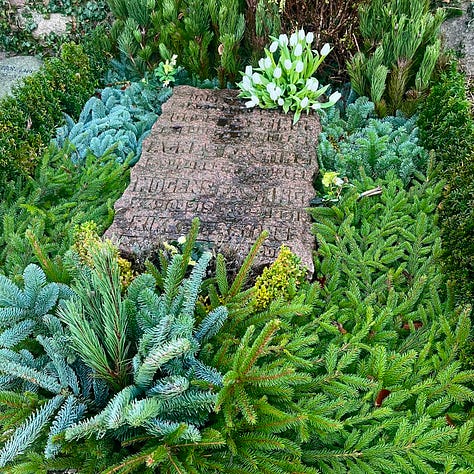
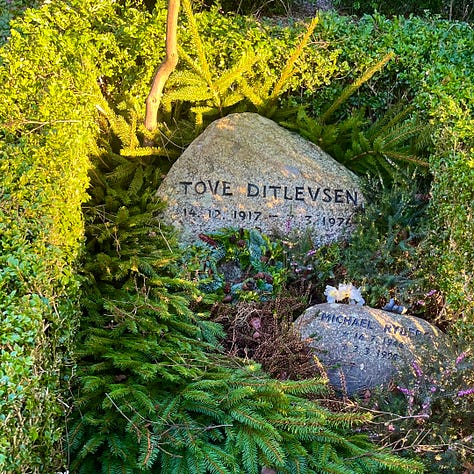
Many of the graves are miniature gardens; the individual plot defined by a tiny hedge and lined with gravel and perennial plantings. The headstone is often a simple, unpolished boulder etched with a name and dates and space below for a spouse. Loved ones add solar powered candles, seasonal decoarations, and flowers. Tulips are popular—colorful and robust. In the cool damp of Denmark, they don’t need a vase and can be woven in to the patterns of different colored evergreens that blanket the graves in winter.
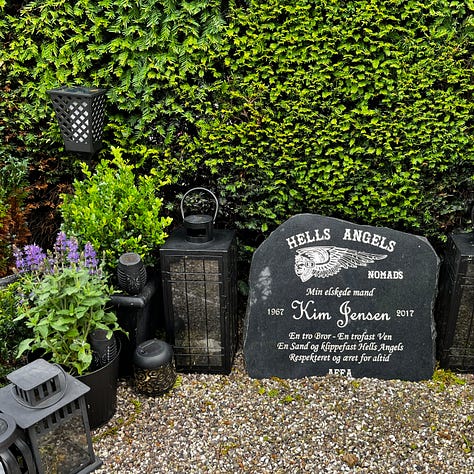
Watering cans are supplied at taps around the cemetery, and sometimes the plot includes a small bench for rest and reflection. The feeling is both personal and communal, there’s a sense of neighborliness. Near the ornamental pond, the final resting place of a Hells Angel lies among graves decorated with loving family photos and children’s artwork.
Vestre Kirkegård celebrated its 150th birthday with plans to deepen its place in community life. New traditions include memorial events during All Souls at the beginning of November. A Therapy Garden for meditative walking has been installed, with a small room for a group meetings.
The performing and visual arts are everywhere in Copenhagen. One of the churchyard chapels has been used a small theater for several years. Before closing for renovation recently, it hosted a production of Sydhavn Brænder - Sydhavn is Burning; where local residents of differing ages and backgrounds wrote and performed pieces that represented their experiences of living in the area.
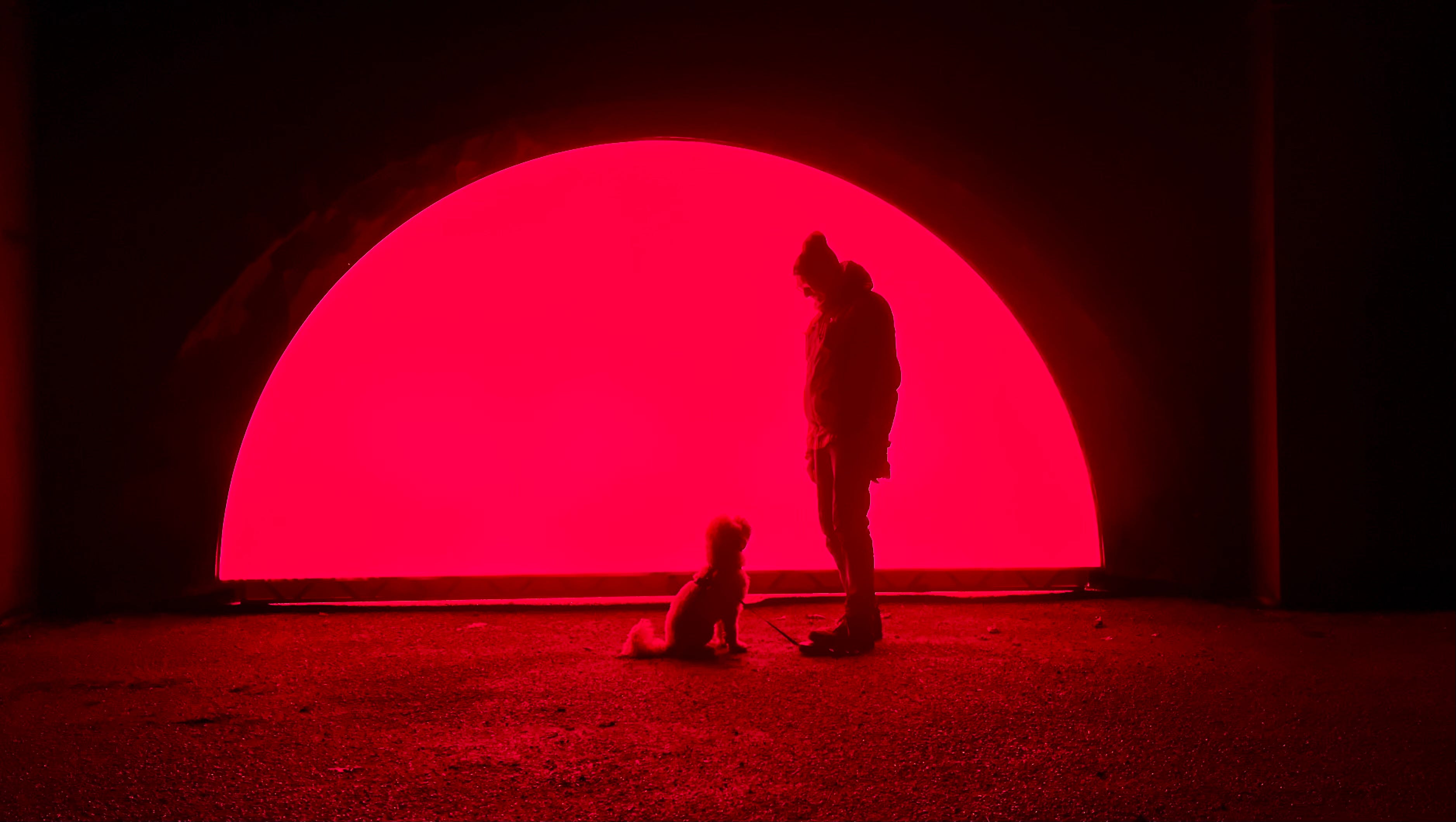
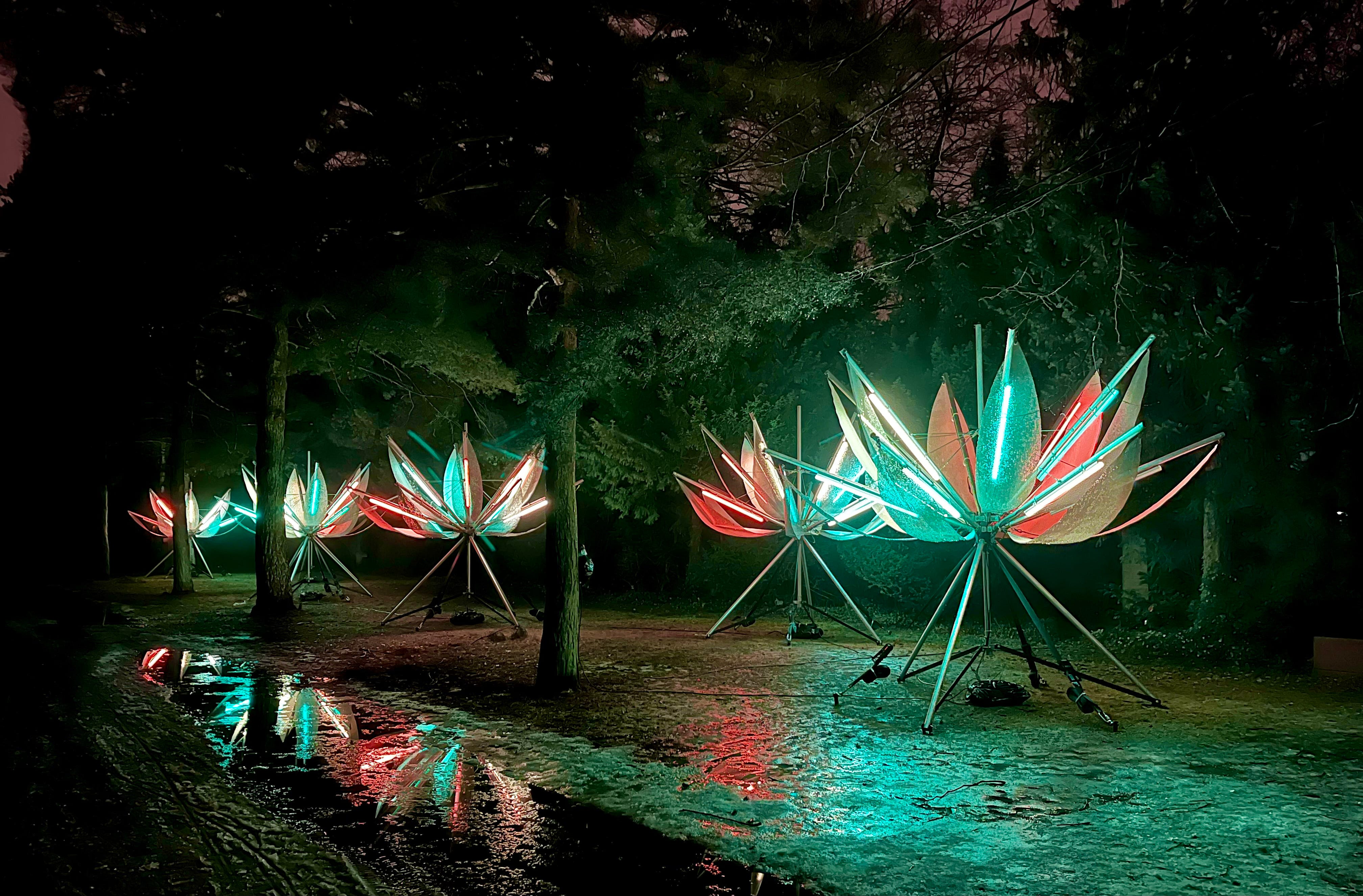
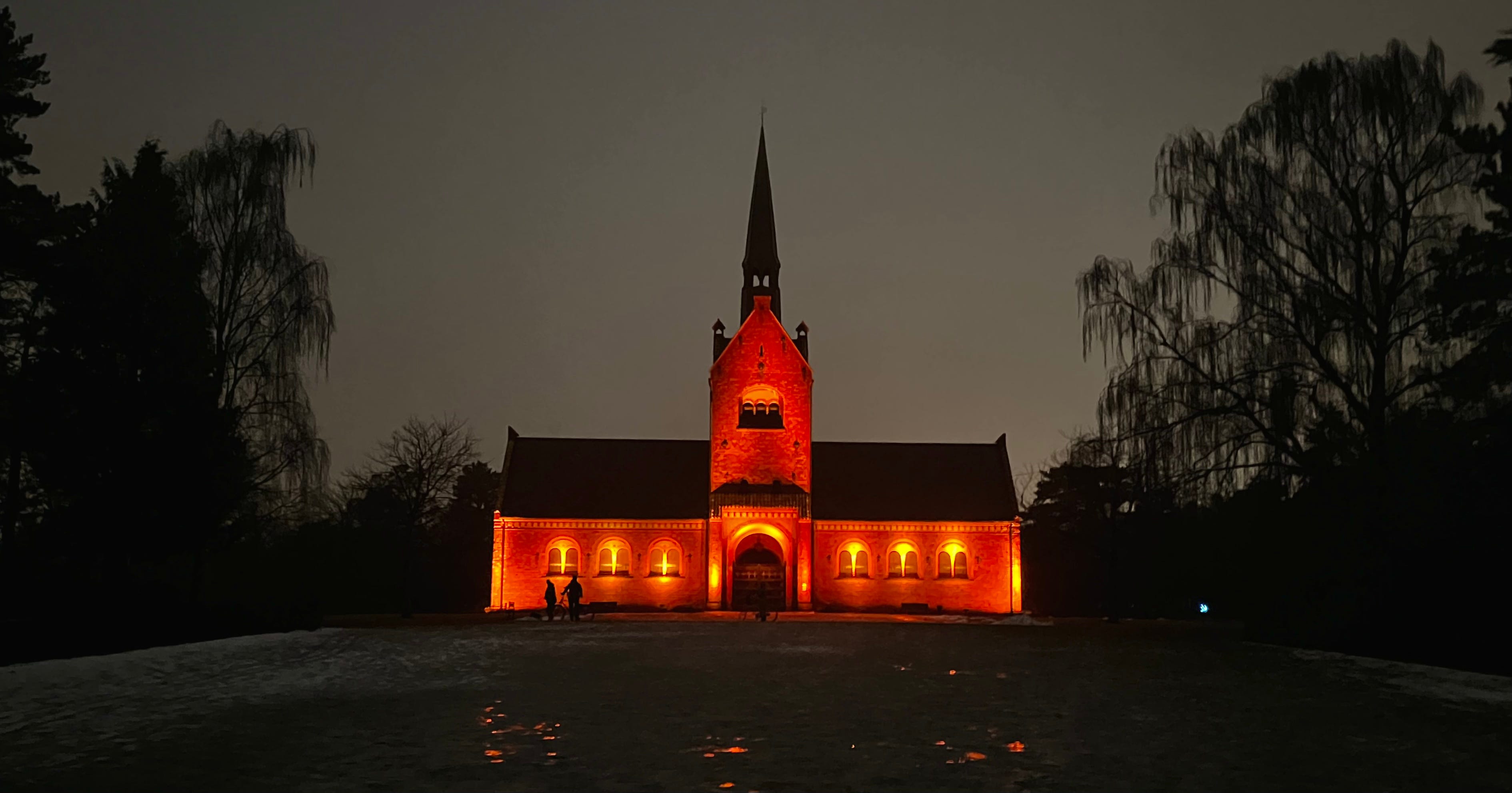
In late January, when the Christmas and New Year’s festivities have given way to the long dark nights, the churchyard comes alive with art installations created with light. Evening visitors are treated to hot chocolate and glügg, and guided walks around the exhibits.
One of the famous artists buried here is the author, Tove Ditlivsen. The brilliant compilation and English translation of her memoirs, Copenhagen Trilogy, is a New York Times ‘100 Best Books of the 21st Century’.
Tove (1917 - 1976) grew up in nearby Vesterbro and later moved to Musikbyen (Music Town), an area of post-war apartment blocks in Sydhavn on streets named for classical composers. Having spent much of her life in this quarter of the city, I suspected that Tove was buried here, but her grave isn’t grand or remarkable, and it took me some time to locate it.
Tove wrote a beloved column as an agony aunt in addition to her poetry, novels, and short stories. At a time when female writers were overlooked or dismissed by the literary establishment, Tove’s work became immensely popular. When she died, thousands of mourners filled the streets to follow her funeral cortege.
Tove died from an overdose of sleeping pills back when suicide was highly stigamtized as sinful and I wonder if that’s why she is not included in the Graves of Honor.
A stark contrast to the humble Ditlevsen grave marker is the huge mauseleum of Gerda Edel Jørgensen (1921 - 2010).
Completed in 2014, the mauseleum stands 3.5 meters tall and took 4 years and 1.5 million Danish kroner (more than $200k ) to build. Yet no one at the unveiling knew Frau Jørgensen, and very few people have any idea of who she was.
Born to a poor family, Frau Jørgensen lived at home and never married or had children. When her mother died in 1963, she drew up her will with plans for the mauseleum, and moved to a small apartment in Vesterbro where she lived a life of near anonymity. Neighbors reported that she was always tidily dressed, kept herself to herself and had no visitors. She was fiercely frugal, watching television with the lights off to save electricity.
When Frau Jørgensen moved out after 22 years, she said no goodbyes and kept in touch with no one. The only impression she seems to have made is her dislike of the smell of food cooking: complaints she took to court and lost—three times.
Frau Jørgensen’s will provided design specifics for the pale stone mauseleum. The towering edifice includes a vestibule for contempation, and the grave markers of her parents, an uncle, and her two brothers, one of whom died at 13 years, the other at 1 month.
The money for the mausoleum seems to have been saved from Frau Jørgensen’s salary as an office manager. In her will, she also set aside money for 40 years of upkeep and stipulated that any remaining money be donated to a Danish charity for the blind which came as a pleasant surprise—no one there having previously heard of her either.
Across the top of monument is inscribed: Memento Mori Carpe Diem—remember you will die and seize the day.
Words to live by, indeed.

Should you wish to visit Vestre Kirekgård, take the S-train from central Copenhagen toward Køge—the churchyard is opposite the Sjælor station. Mozarts Plads on the M4 line is the closest metro station, and there are also a number of buses that stop at different entrances. It’s worth the trip—bring a picnic.
Enjoying Whole Stories Shortly? Become a subscriber and show your support!
Become a paid or free subscriber today and never miss a story!
Comments
Nothing yet. Say the first thing.
Sign in to join the conversation.