
Half way into watching the HBO Max Jason Bateman, David Harbour, and Dead to Me alum Linda Cardellini’s 7 episode dramedy, DTF St. Louis, I was feeling frustrated and yet intrigued. Beyond the episode 1 opener (no spoiler here) where we find out Harbour’s character, Floyd dies in a shady scene at the Kevin Kline youth pools, and solving for the mystery, the show was opening up what felt like a bunch of red herrings as to the motive and my brain was going into active overdrive trying to deduce what was relevant and what wasn’t.
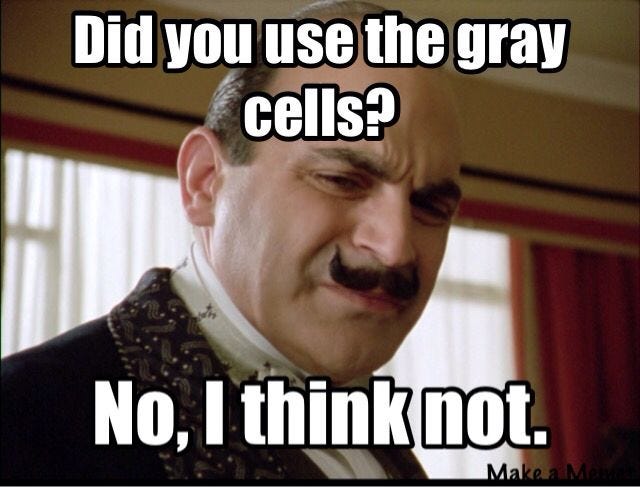
Speaking of deduction, all seasons of David Suchet’s Agatha Christie’s Poirot is out on Hulu (with Disney Plus).
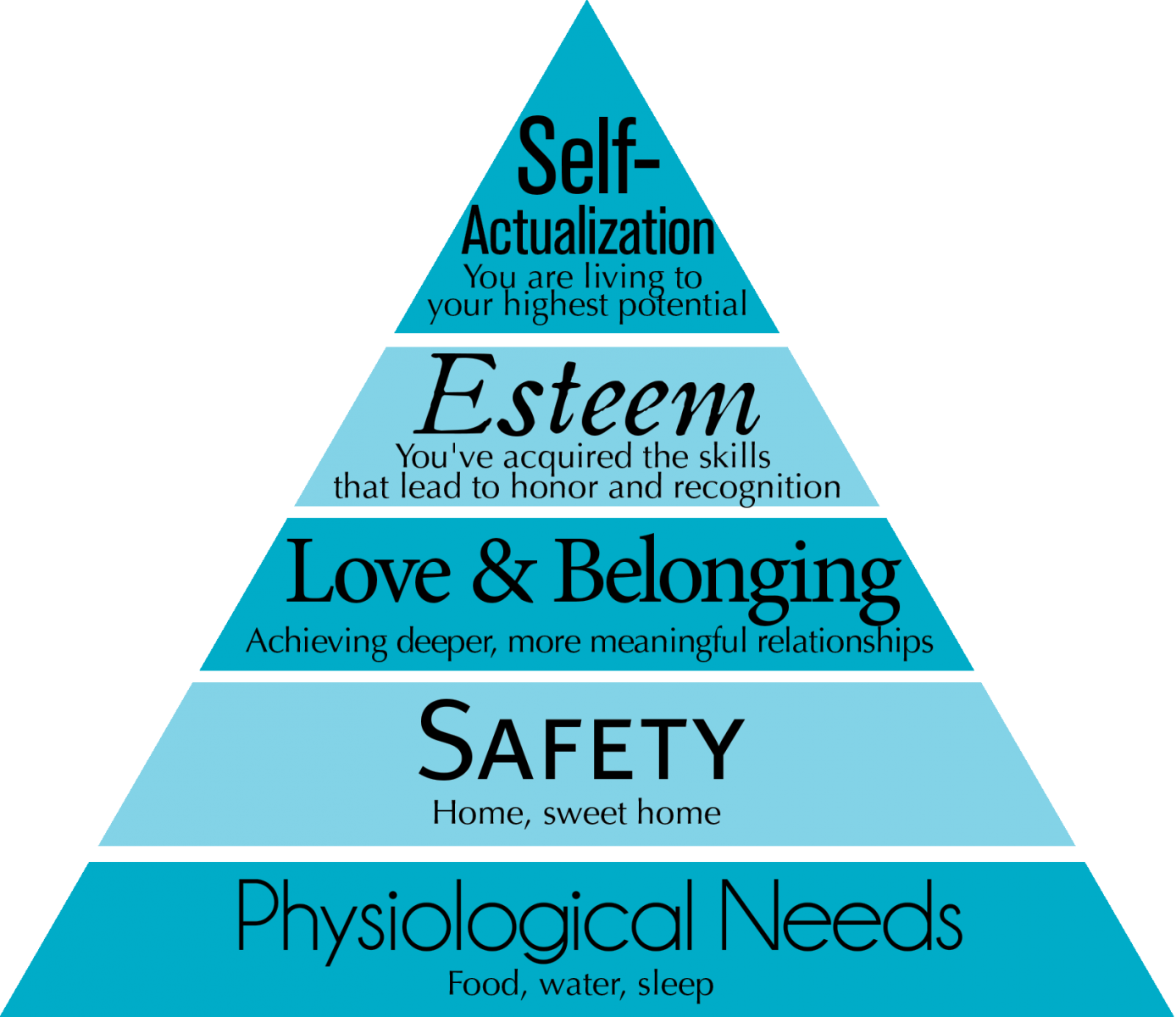
The mystery of Floyd’s death is, in some ways, a red herring as is, point of fact, this show’s premise. DTF St. Louis is really a profound examination of detachment and the search for fulfillment in your late 40s and early 50s. It challenges the long-sold idea that you can spend your entire career at one company and retire comfortably with a sizable 401(k). Even if that path were still possible, the notion that any company would remain loyal to you over a lifetime feels increasingly like a fallacy today. And expanding upon this idea, the fact that one relationship can do the same for you throughout your life, as is the case with marriage. And what constitutes fulfillment? Psychological safety is imperative as is love and belonging, which is where this show does the majority of its heavy lifting.
Warning: Spoilers for DTF. St Louis below
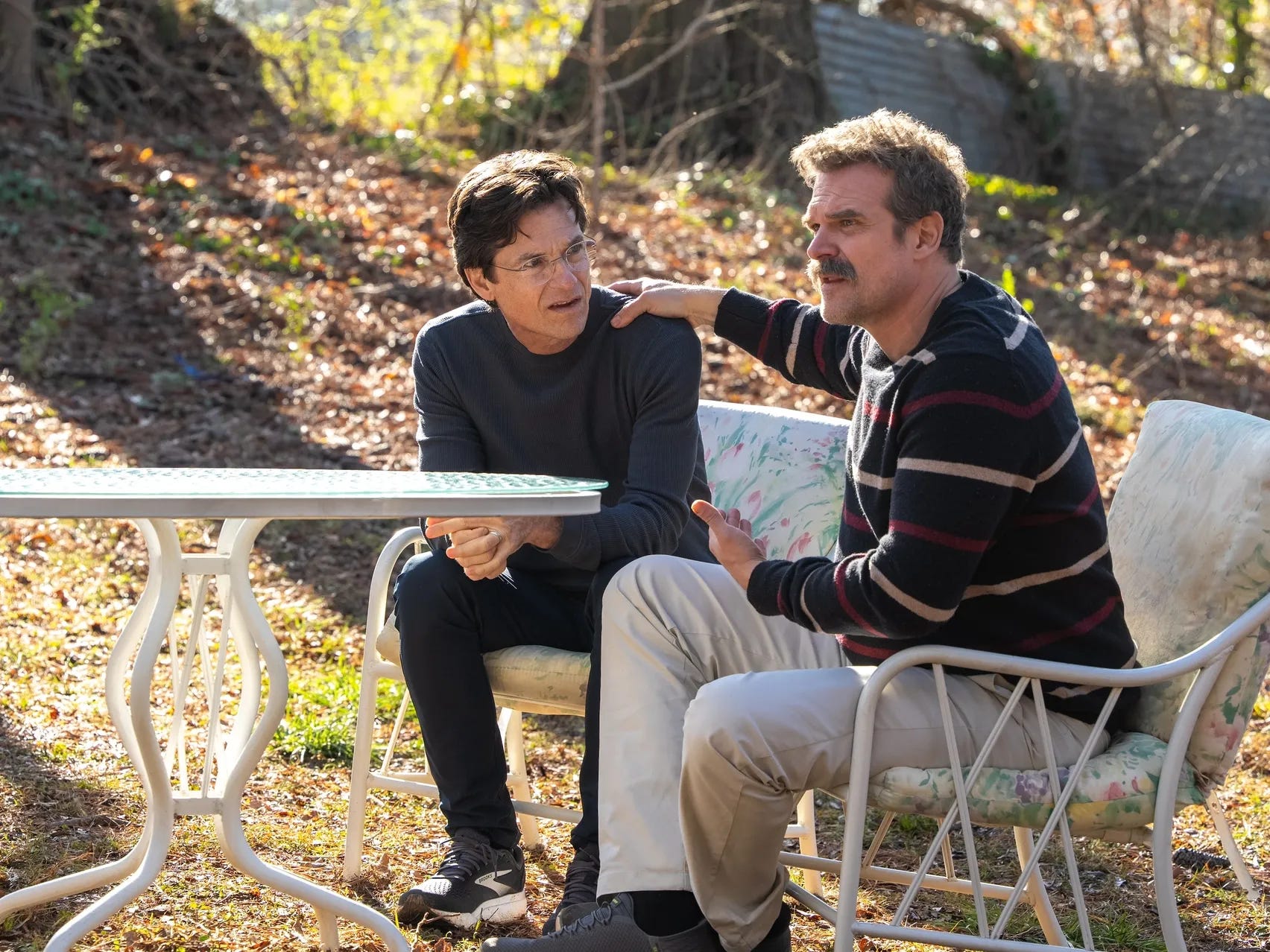
Both Clark and Floyd are operating from the same quiet deficit. Neither feels seen or valued in the place it should matter most, their own homes. Clark’s line in the finale, “I just want to matter to more than a few people,” lands because it’s so revealing. Those “few people” are his wife and kids, the very relationships that should anchor him, yet they don’t feel like enough.
That longing points to something larger the show is getting at and that is the distortion of value in a world shaped by social media. We’re conditioned to equate visibility with worth, to believe that being liked, followed, and amplified by strangers somehow carries more weight than being known and needed by the people right in front of us, because the prospect of that, is untenable - it’s harder. Validation becomes scalable, almost transactional, and deeply impersonal
And yet, the show undercuts that idea in a really meaningful way. For all the characters’ grasping for something bigger, broader, more affirming, it’s the small, intimate moments that actually carry weight. The quiet acts of showing up, the hard conversations, the forgiveness extended when it’s least deserved. That’s where meaning lives. That’s the hard stuff and the fast track up the Maslow ladder.
There’s an irony at the center of it all. The thing Clark thinks he wants, to matter to more people, is exactly what pulls him further from the kind of connection that might actually make him feel like he matters. Meanwhile, Floyd, despite all his perceived failures, embodies that truth. In the end, it’s not the size of the audience, but the depth of the connection, that saves and redeems us.
The lack of external validation is why both make the decision to go on an app called “Down to Fuck.” For Clark, while we don’t have all the details, he hasn’t had sex with his wife in a while and she barely has any onscreen time. They play board games with the kids and Clark seems to be a loving father, but he’s a ghost in his own home, in some ways.
As an aside, in an updated Bechdel-Wallace test, where I added “or kids,” it would seem that Eimy, Clark’s wife wouldn’t pass.

Bechdel-Wallace Test Criteria:
There must at least have two named female characters.
They must talk to each other.
Their conversation must be about something other than a man. (or kids)
For Floyd, the strain at home runs even deeper. He and Carol haven’t been intimate in a long time, but more than that, there’s a palpable distance between them. Carol seems to view him as a disappointment. He isn’t the go-getter she hoped for, and his inability to earn more pushes her to take on a part-time job as an umpire, despite having no real experience, just to help cover their debts and support their teenage son, Richard.
Richard, who is dealing with serious mental health challenges, lashes out in ways that are both shocking and difficult to process. The show doesn’t sensationalize it so much as use it to underline the volatility and pain within the family. Yet what stands out most is Floyd’s response. From the opening scene of them in therapy together, it’s clear that Floyd meets Richard with patience, empathy, and a kind of unconditional love that feels almost radical.
In a world where Floyd is constantly made to feel like he’s falling short, as a husband, a provider, even in his own body, he still shows up. And in that, the show makes a quiet but powerful argument: his worth isn’t defined by Carol’s disappointment or society’s expectations, but by his capacity for forgiveness, compassion, and presence when it matters most.
As we grow older and (ideally) a bit more self-aware, our bodies shift in ways we can’t ignore. Lines deepen across our faces, worry creases settle in beside laugh lines, necks soften, and weight gathers in places it never used to. That’s just the quiet, inevitable work of time. What the show captures so well is how personal that evolution feels for Floyd and also how lonely and isolating it is to feel unloved as your body and mind move through time.
I appreciated how it explores his grappling with those physical changes without reducing them to a punchline. Floyd’s weight, his penile insecurities, and his attempts to take better care of himself become a throughline, especially as Clark nudges him toward healthier choices. But it’s not just about diet or discipline. It’s about identity, control, and the uneasy realization that your body is no longer something you fully recognize or command. The show resists letting that shift define Floyd’s worth.
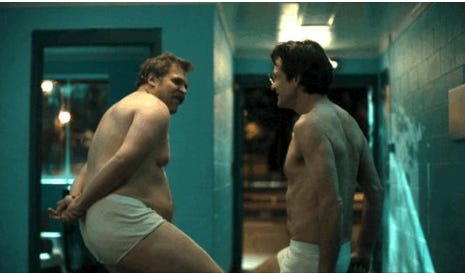
The idea of watching two middle straight aged men dance to music stripped down to their tighty whities and one dancing in a more suggestive way while trying to arouse the other just to make him feel good, is not how I saw this show ending, and it wasn’t remotely sexual either. But it does say something how this show challenges our sense of norms, in the best ways, and what passes for happiness - laying out your authenticity for all to see. Let these men dance! And let me eat a pint of ice cream in the first five minutes of Poirot while also side tasking and reading a book. This is WHO I AM. Accept me, Godamnit. Don’t ask me how I have time to watch everything I watch. I’m an ADHD grown ass women wunderkind. But enough about me.
Carol’s arc is perhaps the most revealing, which is saying a lot given everything else the show takes on. Early on, she’s framed almost as an archetype, a kind of femme fatale figure in Clark’s narrative, someone seductive, duplicitous, possibly even dangerous with her perky, plump tits on full display at a lawn party which she meets Clark. There’s the insinuation of an affair, the whisper of a life insurance plot, the easy slide into imagining her as a “Black Widow” who might be capable of killing her husband.
But the show methodically dismantles that projection. Carol isn’t a villain, she’s exhausted. AMEN! Her sealed juvenile record isn’t some dark, violent past, it’s rooted in survival, stealing food for her family. And when Floyd dies, there’s no grand conspiracy unfolding. She’s passed out on the couch, depleted after taking Richard to the hospital following another one of his episodes. And the teenage manager of her umpire gig wants to give her an award, not because she’s sleeping with him too or used her feminine wiles on him, but rather because she is really good at what she does and cares about the kids’ success.
What looked like mystery or malice is revealed to be something far more ordinary and, in many ways, more devastating. Carol is a woman stretched beyond her limits, carrying more than anyone can reasonably hold, and quietly unraveling under the weight of it all. If that doesn’t earn her at least $1 Million in Floyd’s life insurance, I don’t know what should.
In the same way that Heated Rivalry was super popular amongst mid-life women, I wonder if this is a show that resonates more with women than with men, because it’s an idealized interpretation of how men can be vulnerable with one another without any societal norms dominating the dynamic. In the case of DTF, we’re talking about two straight men (with one being a bit more fluid) and in the case of Heated Rivalry, two gay guys. Either way, as I mentioned in a prior post:
What lingers isn’t the murder, but the platonic love between Clark and Floyd. In a show that frames Floyd’s death in a public locker room at the Kevin Kline pool (cause yeah, Kline is from St. Louis), surrounded by gay paraphernalia, choosing tenderness over suspicion feels almost subversive.
That’s the lasting element of the show: its insistence on radical vulnerability and a deeper kind of friendship where men are actually permitted to speak honestly about their feelings, the good, the bad, and the ugly. They name their insecurities, sit in their inadequacies (something women have long been socialized to do), and still find acceptance in one another - and can even develop their own unspoken language to do that, in Clark’s case it was learning ASL so he could communicate with Floyd, an ASL interpreter, on a different level altogether.
There’s physical affection, a growing self-awareness, and a genuine desire to be better, not just individually, but for each other. It’s tender without being sentimental, and raw without feeling performative.
And yet, the show doesn’t let that vulnerability exist without consequence. In a powerful, sobering ending, it suggests that even this kind of openness, this reaching for connection and understanding, doesn’t guarantee fulfillment or stability. In fact, it can strip everything down, leaving them exposed, and in some ways, with nothing.
Oddly, this show must have been brought to us by Jamba Juice, which made its way into the first half of the season everywhere:

Comments
Nothing yet. Say the first thing.
Sign in to join the conversation.