
          gazing at the moon
          face reflected in the glass
          a blank page awaits
                                                                         - by me
A short while ago I was asked to review a poetry book by , an awardwinning Romanian-American poet who is also the Poetry Reviews Editor of Publishing Weekly, teaches at NYU and has been described by Ocean Vuong as ‘one of the finest poets of my generation’. Maya probably had no idea how unlikely this request would have seemed to me for many years, given that some time way back someone made me believe that the reading and writing of poetry was something for other people, not me. I thought I’d share a little of that story (including what changed), in case you have been led to believe the same, and also share a round up of recommended poetry resources in case you would like to enter this doorway to beauty.
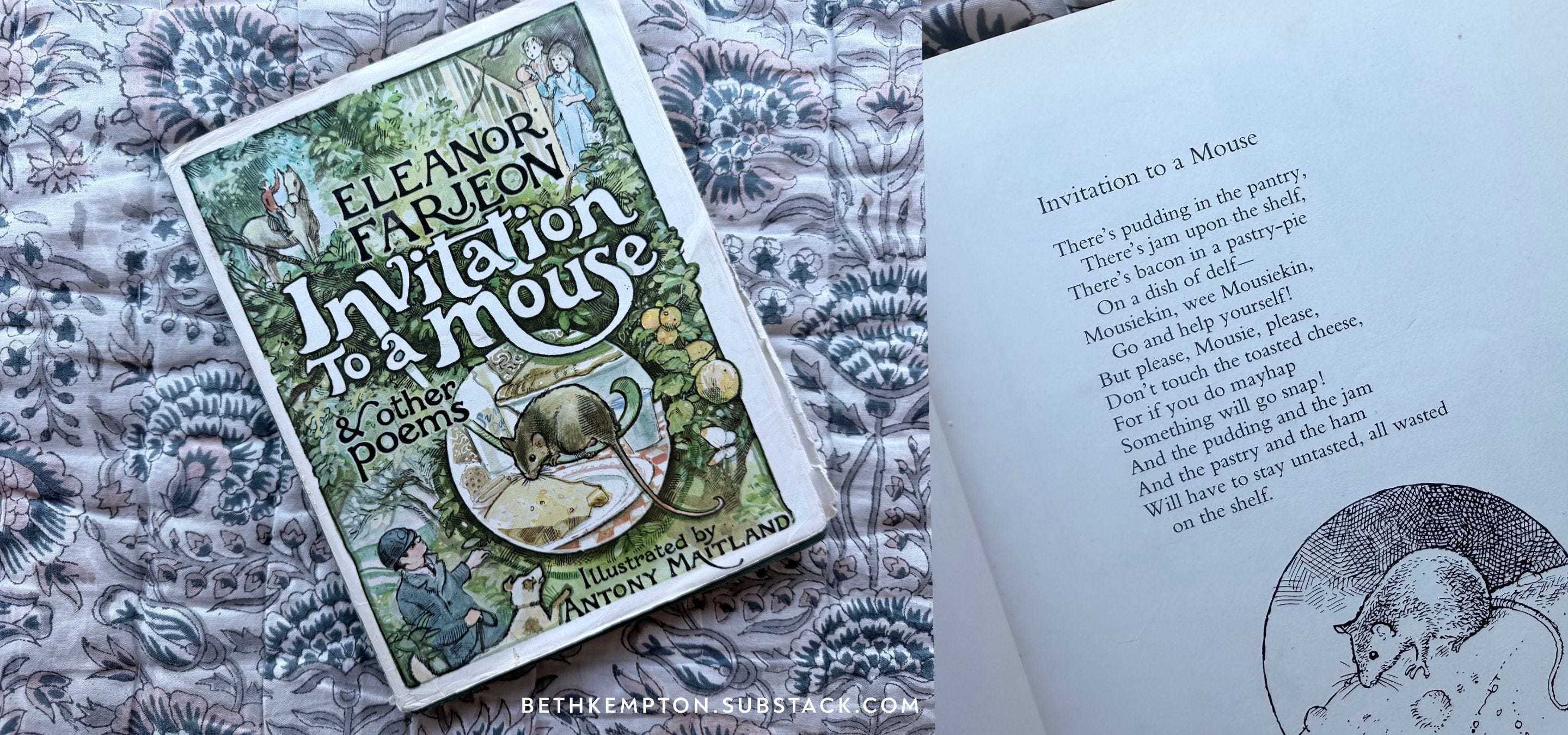
The inside front cover has my name in my mum’s handwriting in pencil, carefully traced in ink over the top by a little me. Next to that is a scrawl from an earlier time, where I had misspelt my own name as ‘Beeth’ in inch-high looping shapes, clearly keen to state that Invitation to a Mouse belonged to me. The poet, Eleanor Farjeon, who was born in 1881 and apparently typed poems on her father’s typewriter before she reached the age of seven, explained her creations as being ‘born of a tune in the poet’s ear’1.
Invitation to a Mouse was my first ever poetry book, and my mum used to pay my older brother and I a few pennies to memorise the poems for pocket money. Four decades later I still remember the opening lines, There’s pudding in the pantry, / There’s jam upon the shelf, / There’s bacon in a pastry-pie / On a dish of delf -. As an aside, it was many years before I discovered ‘delf’ was not a foodstuff sitting beneath the pie, but actually a word originating in the Dutch town of Delft but used widely in Ireland and Scotland to mean earthenware and crockery2.
Anyway, I loved the rhythm and rhyme of Farjeon’s poems, and tried writing a few myself. But then somewhere along the way I picked up on the idea that poetry was something that other people read, and poems were things that other people wrote. I abandoned English language and literature at the age of sixteen in favour of Maths, Physics and Economics, and then turned away from them at university to study Japanese. It was actually through haiku that I would find my way back to poetry a few years later. My collection of poetry books grew quietly and steadily until it filled a whole shelf, and then a bookcase.
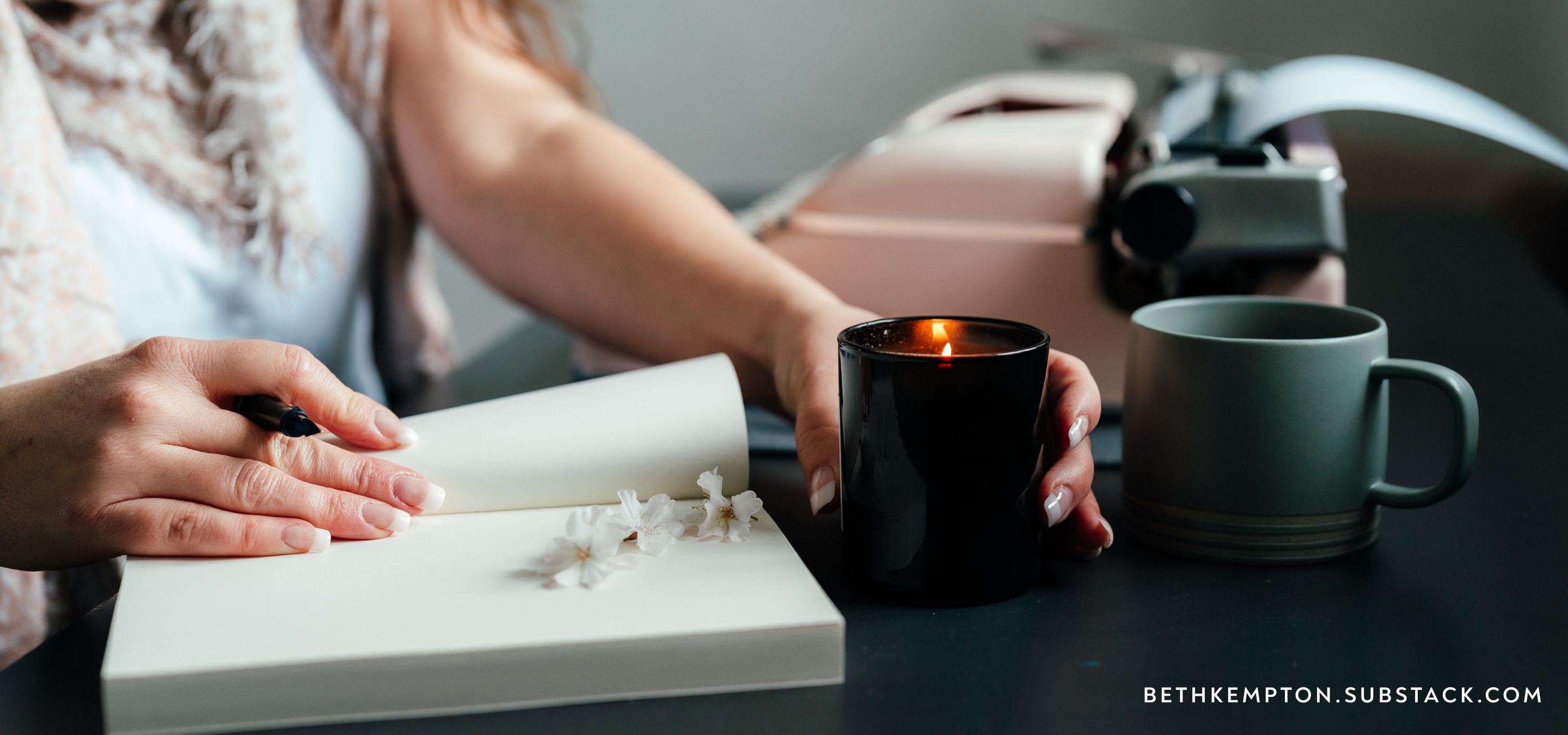
Each morning, when I lit a candle at 5am to write, I would pull down a book, open it at random, read a poem aloud and then write whatever came to me. Often those words were nothing to do with the poem at all, but somehow reading it had opened a door.
By the time I had two books out in the world, I felt brave enough to sneak some poems into my third non-fiction manuscript, Calm Christmas and a Happy New Year, to see if anyone noticed. Not only did my editors not question the poems being there, but they commented on how lovely they were. A few years after that book came out, I wrote a poem inspired by it, The Keepers of Christmas, which to my astonishment went viral on Instagram with more than a million views.
I have tucked tiny poems into my books ever since, as a kind of rebellion against whoever it was who made me think that poems weren’t for me.
          Sky drifts to nothing
          Twitching on the lowest branch
          Sparrow knows it’s time
                                                                         - by me
These days I introduce my SoulCircle private writing community to two new poets every single week. In order to do this I have built up a huge collection of poetry, which I have studied at length, not in any kind of technical, analytical way, but to explore how they make me feel, and how they encourage me to see the world slightly differently.
In fact, my poetry collection has grown so much that when we started planning our house renovation, an idea started to form: What if we made a poetry library?
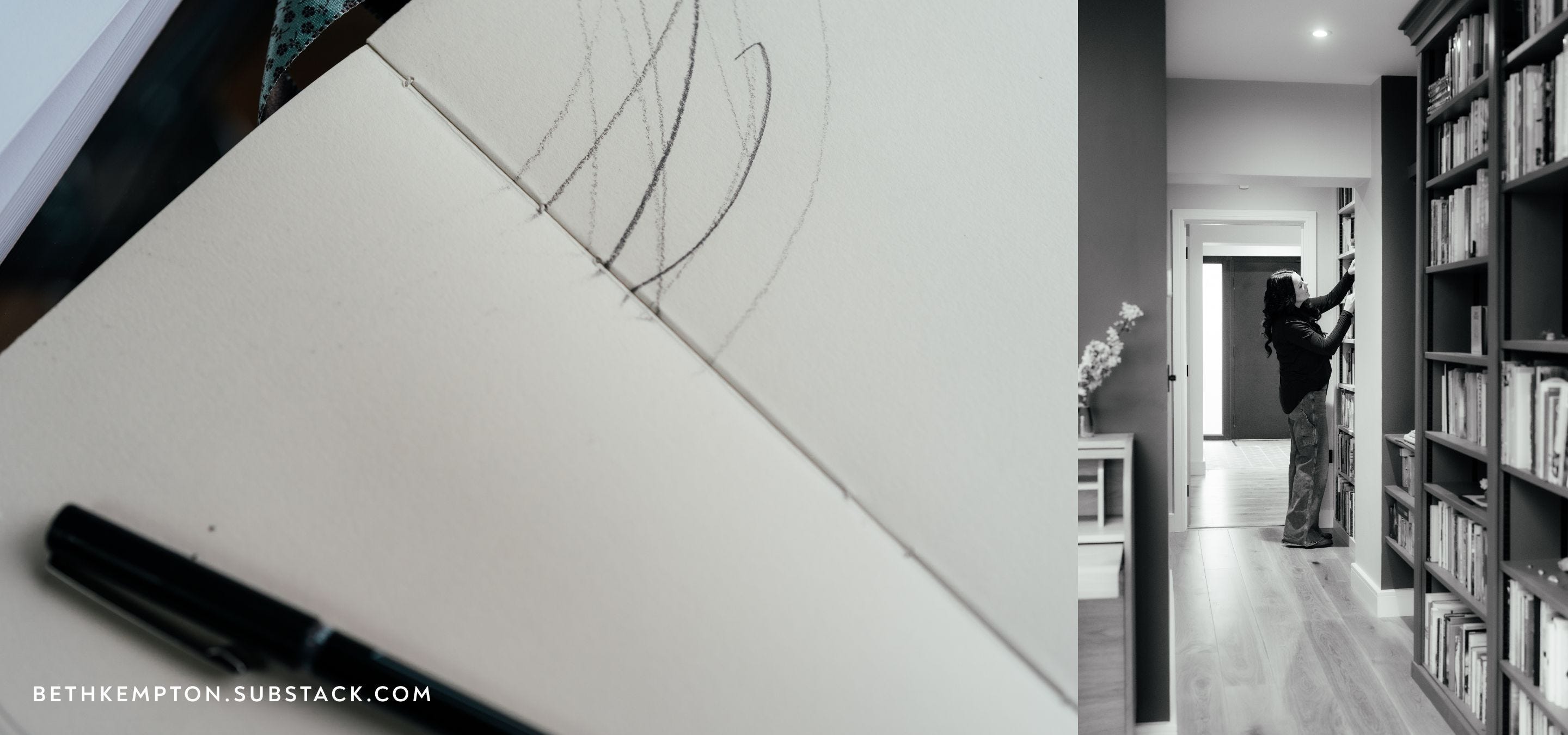
The front door used to open into a closed-off porch, and into a dark hallway, with a manky old downstairs toilet across from the entrance. Beyond that was an awkward square of terrace, not accessible from any room, with weeds growing up through the broken paving slabs. We decided to square that off, and turn the bathroom into a pale pink poetry library. We also knocked down the wall in the hallway, so now when we come home, the first thing that greets you from across the hallway is an enticing expanded corridor of poetry books, and then an airy room beyond with a window seat perfect for reading.
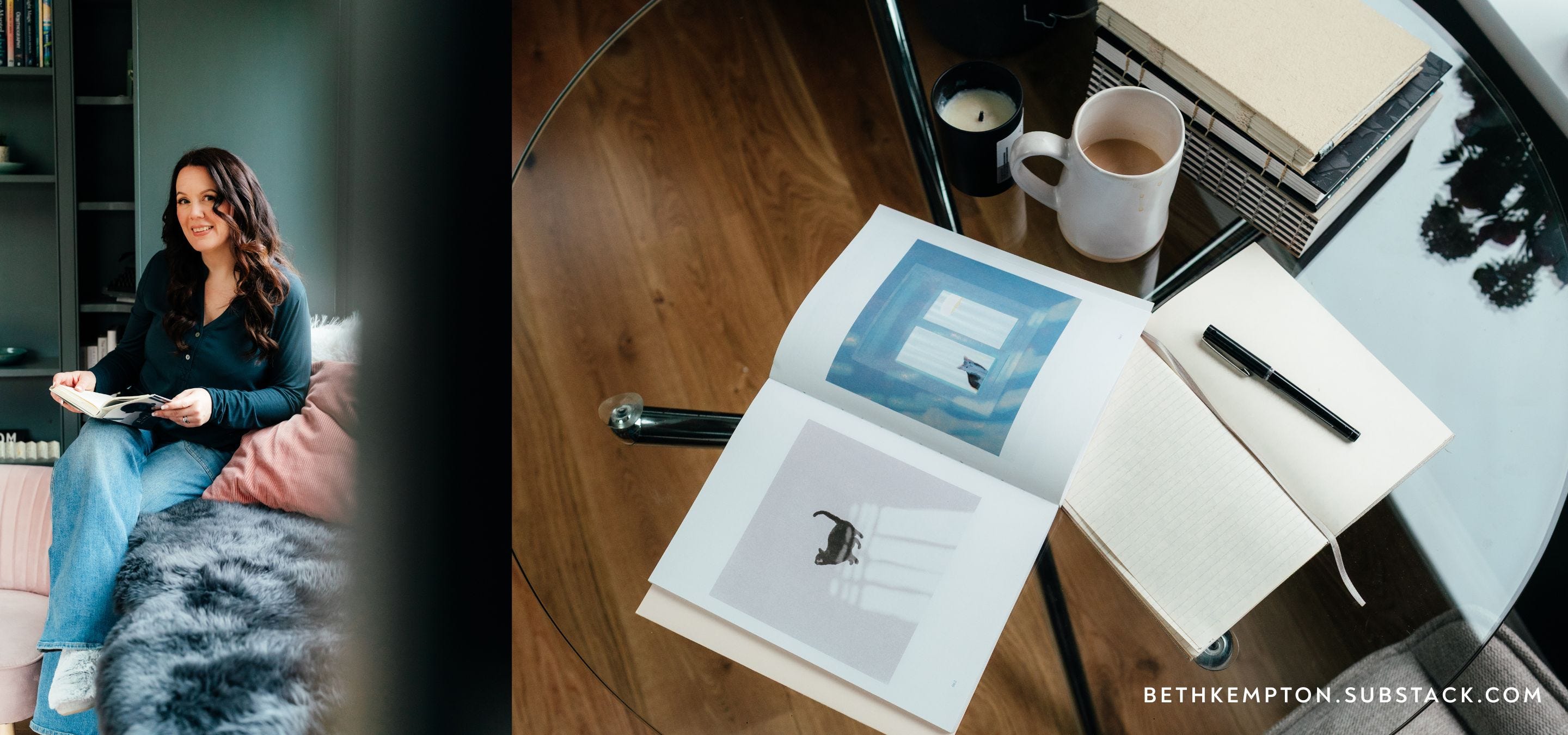
It is on that window seat that I sit reading ’s extraordinary collection If You Love That Lady, which was published last month. Here’s a favourite from it, called Dark Matter (p.61):
No one knows what it is,
no one you’d count on
knowing has a clue, which is true
mystery, not obfuscation,
a question contending
with the topsoil of time.
Desire’s what’s the matter
with our lives, a sea parting
to reveal another sea.
Its command renews,
swells and beckons:
you’d be a fool not to love
until the last second.
                                - by Maya C. Popa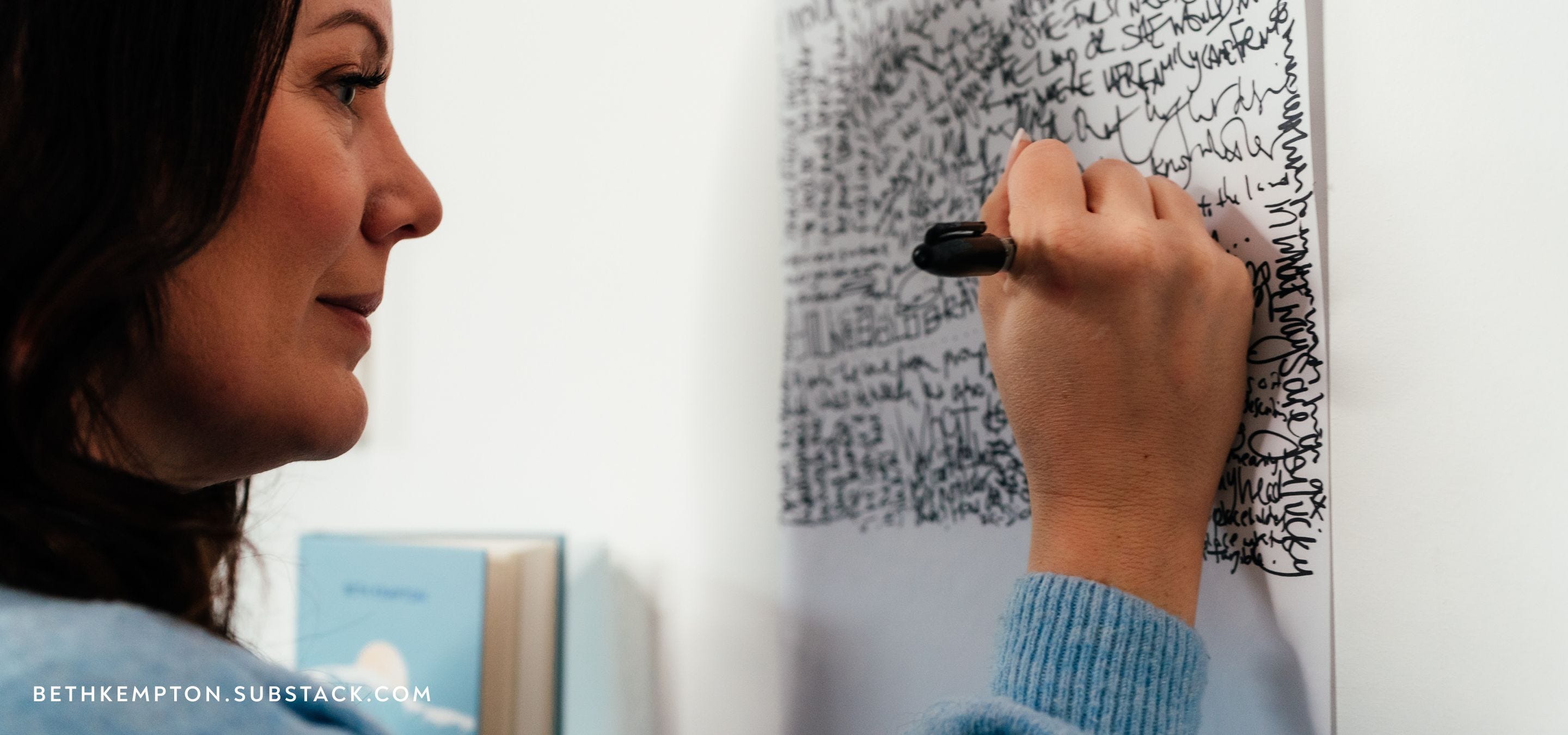
WHAT KIND OF POET ARE YOU?
Without diminishing the talent and efforts of people who make their living as professional poets, or suggesting that there isn’t value in studying the grammar of poems (of course there is, if you are interested in that), I believe that everyone has the capacity for poetry.
In school many of us are taught that poems have to be written a certain way in order to be ‘good’, but personally I think a good poem is mostly a poem that makes you feel something, or think differently about the world.
It’s interesting to begin by asking yourself ‘What kind of a poet are you?’ even if you aren’t yet the kind of poet that writes their poems down. How do you see the world? What do you consider to be beautiful? Heartbreaking? Devastating? Worth pinning to the page?
How about considering one of these definitions of poetry, instead of thinking about it as something to do ‘right’?
Poetry is the clarification and magnification of being. - Jane Hirshfield
Poetry is a soul inaugurating a form. - Pierre-Jean Jouve
Poetry puts language in a state of emergence, in which life becomes manifest through its vivacity - Gaston Bachelard
A poem is a space you can spend time in. - Morgan Harper Nichols
Poetry is language against which we have no defences. - David Whyte
What is poetry to you, I wonder?
HAVE A GO
The best way to write good poems is to write lots of poems, and to read lots of poems, ideally aloud. There are also a number of excellent books written specifically to help you write poetry - I have shared some of my favourites below.
Getting involved in community poetry challenges is a great way to practise without too much risk. For example, four times a year I do a fun, free poetry seasonal poetry challenge on Instagram, Facebook and Substack Notes, offering a one word prompt with only two rules: Ten minutes max, and no (or little) editing. To be honest this challenge was born out of me finding poetry intimidating, and I found that these restrictions helped me loosen up and just go with whatever arrived. #tinysummerpoem is in full swing right now (see my Notes feed here or Instagram here), and we have had some real delights shared in the community. By my very unscientific estimates tens of thousands of poems have been penned in response to this challenge since we started it back in 2021. Some full collections have even emerged from them, including beautiful handmade books by and .
I also recommend a wide variety of poets and poems in my Summer Writing Sanctuary (which starts next week and is free to everyone - you can register here), and recommend two poems/poets every week in my private writing community SoulCircle to expand our sphere of inspiration and give us a window into all kinds of lives and ways of thinking and being in the world.
Which is all to say that I believe poetry is for everyone, and that any of us can walk through that doorway to discover a world of beauty and inspiration on the other side, whether by reading or writing poems.
I thought I would recommend a few books about how to encounter poetry, along with a round up of some of my favourite poets on Substack, and the publishers who publish some of my favourite poets and their works. You might like to save/bookmark this as a resource for anytime you are feeling stuck in your own writing, or a little uninspired in your life, or forward it to anyone who might like a little poetic inspiration.
Poetry has the power to bring light to the darkness, or cosy up next to us in the dark and remind us we are not alone.
BOOKS ABOUT POETRY
Some books I recommend for developing skills of encountering, writing and appreciating poetry:
The Dharma of Poetry by (Wisdom)
“This is a book about poetry as a source of wisdom. It argues… that poems embody and implicitly endorse ways of being in the world that anyone engaged in spiritual practice, or anyone wanting to live a more mindful life, might want to emulate.” (p.vii)
Nine Gates: Entering the Mind of Poetry by (Harper Perennial)
“What a good poem hears, sees, and speaks is what can only become perceptible when inner and outer intertwine. The poet’s circuitous collaboration with words is a tool for discovering how best to let those two worlds come forward and realize themselves; it is part of the ancient, ongoing game of hide and seek the universe plays. Within its silence, exile, and cunning, poetry holds both the hiding and the seeking, for both are the point.” (p.126)
Ten Windows: How Great Poems Transform the World by (Knopf)
“A mysterious quickening inhabits the depths of any good poem - protean, elusive, alive in its own right. The word “creative” shares its etymology with the word “creature,” and carries a similar sense of breathing aliveness, of an active, fine-grained, and multi-cellular making. What is creative is rooted in growth and rising, in the bringing into existence of new and autonomous being. We feel something stir, shiver, swim its way into the world when a good poem opens its eyes. Poetry’s work is not simply the recording of inner or outer perception; it makes by words and music new possibilities of perceiving. Distinctive realms appear to us when we look and hear by poem-light.” (p.3)
About Poems and How Poems are Not About by Anne Stevenson (Bloodaxe)
“You say them as your undertonge declares / Then let them knock about your upper mind / Until the shape of what they mean appears.” (p.9)
How Poetry can Change Your Heart by and (Chronicle)
“Poetry makes the universe reachable by telling a story. We can travel continents in a single stanza. Feel lifetimes in a lone page. Poetry is the passport that proves we are, all of us, citizens of the world, and through poetry we can even heal that world.” (p.8)
A Poetry Handbook by Mary Oliver (Mariner)
“To make a poem, we must make sounds. Not random sounds, but chosen sounds.” (p.19)
Poetry in the Making by Ted Hughes (Faber)
“Poetry is not made out of thoughts or casual fancies. It is made out of experiences which change our bodies, and spirits, whether momentarily or for good.” (p.32)
Quantum Poetics by Gwyneth Lewis (Bloodaxe)
“Every poem is a possible world.” (p.53)
Poems in Progress by Alexandra Ault & Laura Walker (British Library)
“There is something quite special, almost magical, about manuscript poems. Messy, complicated and sometimes illegible, these handwritten or typescript drafts hold a unique connection to their creator. These are the very pages which embody the spark of an idea, the flourish of a pen and the creation of a verse.” (p.7)
Writing and Enjoying Haiku by Jane Reichhold (Kodansha)
“Toss out the memory of the teacher who told you never to mark in your books and tell your inner critic, who might be insisting you know nothing about haiku, just to back off and be quiet. Think only that you have decided to enjoy seeing where these haiku lead you, and to explore what they find within you.” (p.8)
The Haiku Handbook by William J Higginson and Penny Harter (Kodansha)
“Haiku happen all the time, wherever there are people who are “in touch” with the world of their senses, and with their own feeling response to it.” (p.4)
A Vertical Art by Simon Armitage (Faber)
“Poetry is shaded language. On many examples of terrain cartography, hills and mountains are shown with shade to their south-eastern slopes, as if light were emanating from the top left-hand corner of the map - perhaps taking its bearings from printed matter, given that in reading, north west to south east is the direction of travel. Forgetting for now that light rarely originates from that direction in the Northern Hemisphere, the shading exists as a visual subtext indicative of perspective. Similarly, in a poem, the shadows of chosen words fall in a particular direction, suggesting an angle or view.” (p.310)
The Way of the Fearless Writer by Beth Kempton (Piatkus)
Although not strictly about poetry, this book (by me) helps writers get past the fear that stops many of us writing, and access the gold within.
“When you wake in the night and the world is still, pay attention. When the wind shows its presence by rustling leaves, pay attention. When you take a slow deep breath and feel the beating of your own heart, pay attention. These quiet moments are secret ways in.” (p.31)
And if you are interested in having your poems published, you might find some useful advice in Poet’s Market (Writer’s Digest Books).

PUBLISHERS OF POETRY
I have a secret dream of curating my own anthology of poems some day, but until then, I spend a lot of time with other people’s creations! Here are some of my favourite publishers of poetry anthologies (featuring multiple poets in a single book):
Bloodaxe | White Pine Press | Copper Canyon Press | Penguin Classics | Wisdom | Batsford | Pan Macmillan | The Forward Arts Foundation | Shambala
Some of my favourite publishers of poetry collections (featuring a single poet per book):
Cape Poetry | Carcanet | Canongate | Trapeze | Andrews McMeel | Bloodaxe (also does great anthologies) | Black & White | Picador Poetry | Corsair | W&N | Nine Arches Press | Ignition Press | Zondervan.
You can find many of these publishers’ books stocked at the wonderful walk-in Poetry Pharmacy (in London and York)

WHERE TO FIND POETRY ONLINE
There are incredible archives of poetry online, including:
There is also good advice and support for young poets available via The Poetry Society. You can also find out more about haiku in my essay The Life-Changing Magic of Writing Haiku and you might enjoy The American Poetry Review Podcast.
POETS HERE ON SUBSTACK
Some of the many wonderful poets here on Substack include:
| | | | | | | | the late | | | | | |
Please feel free to recommend any others (or yourself!) in the comments.
Handy tip: Did you know Substack has special functionality for maintaining the shape and layout of poems upon publication? Just go to More > Poetry in the navigation bar when editing your piece, and pop your poem in the block it opens up. You’re welcome.
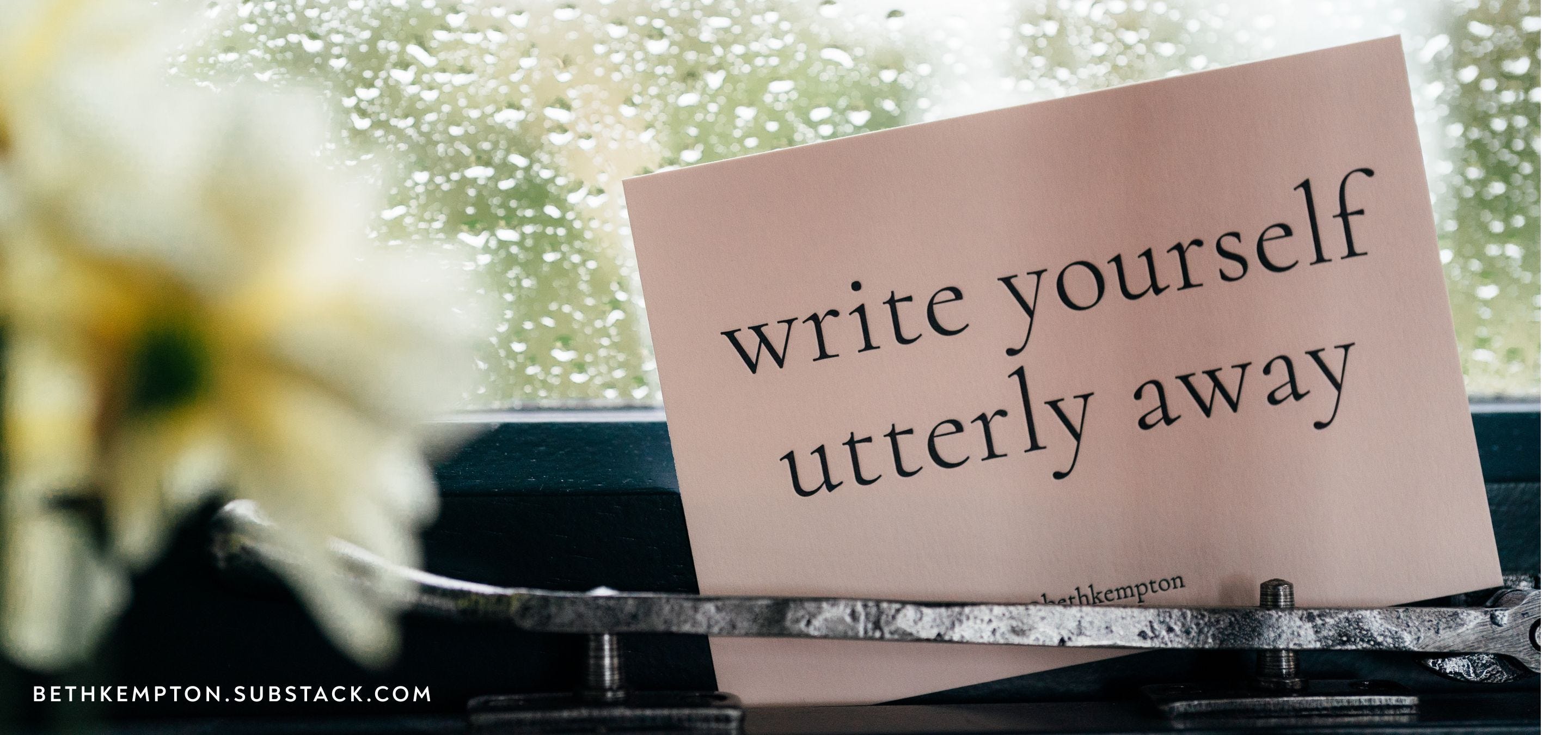
There is a beautiful 400-year-old haiku by Matsuo Bashō that captures how I want my writing life to be. It speaks of a cicada shell, and the cicada that sang itself utterly away. I want to write myself utterly away, not just once like the cicada but over and over. When we dissolve our edges and limitations, we are free to wander wherever we please, exploring all words can do, and all we can be. We can travel in any direction, inward or outward, into the past or future, or deeply into the present, and we can bring back what we find there, often surprising ourselves with its beauty, vitality and resonance. This is how poems are born.
I hope you will remember this, and stay open, surrendering to the creations that want to emerge through you.
Tell me, what do you love about poetry? And whose poetry do you love? Feel free to share one of your own in the comments today. I’d love to read it.
Beth Xx
PS If you found this helpful please share it so others can find new ways into poetry, and their own writing practice, too! Thank you in advance.
PPS Come and have a play with poems and other kinds of writing in my FREE Summer Writing Sanctuary. It starts next Monday and runs online for a week. More than nine thousand writers from 67 countries have already registered. Write alone, together, with us! Click here to register for FREE.

From the inside jacket of Invitation to a Mouse by Eleanor Farjeon (Pelham Books)
Read more about ‘delf’ here in The Irish Times
Photos:
Comments
Nothing yet. Say the first thing.
Sign in to join the conversation.