
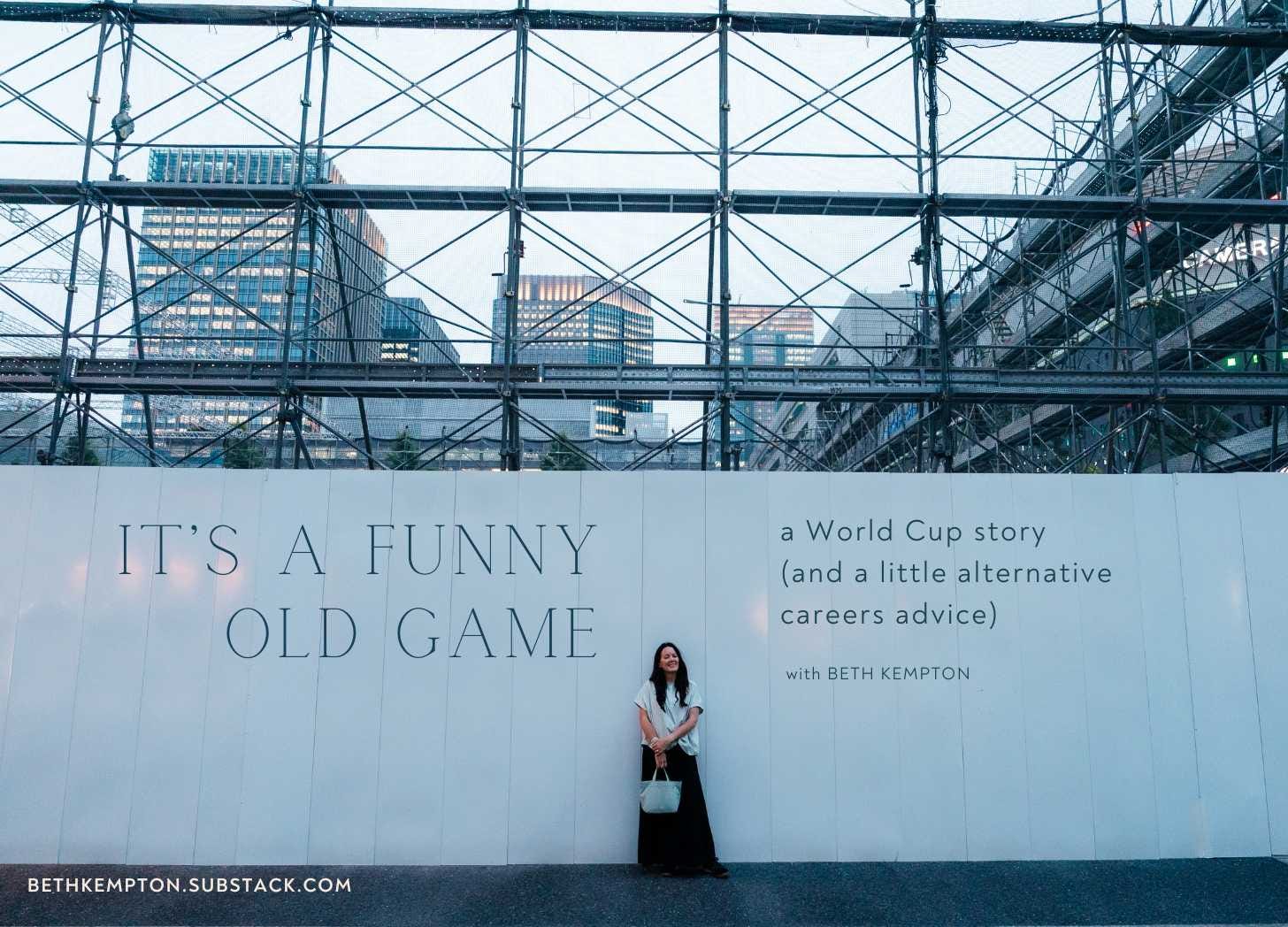
I have a confession to make. I love the World Cup. I mean obviously not the historical corruption and politicking and VAR and all that. But I love the drama and the effort and the fans and the emotion. Perhaps it’s because long ago I had a job on the inside, as a naive twenty-something in a role I was totally under qualified for but did anyway.
Later this month my football-obsessed youngest daughter will turn eleven. I cannot wait for her birthday, because I get to give her something I have carried with me from house to house for nearly a quarter of a century – the match ball which Emile Heskey scored with in England’s 3-0 defeat of Denmark in the 2002 FIFA World Cup which was jointly hosted by Korea and Japan. I was given it as a thank you for my services at that tournament, when I was doing a job which now feels like it belongs to another person, in another life. Finding the match ball in the attic led me to a box full of memorabilia from that time – accreditation cards, diaries, photographs, tickets, match programmes, and even invitations to fancy football dinners with royalty in attendance.
With England’s big game coming up tonight, I thought I’d go a little off-piste and share about the experience of working at one of the world’s greatest sporting events. Even if you don’t care about football, I hope it will be interesting (because it’s not really about football), and also that it might offer a little unconventional careers advice for anyone you know who is worried about the future or unsure of their direction.
This is a long one, with lots of detail, because it is those tiny pieces stitched together which make the trail true. Bear with me.
First we have to backtrack to five years before the 2002 tournament, when I was a student in Kyoto in the second year of my Japanese degree. One of my classmates had been gone for a few days and returned to class with tales of an amazing experience interpreting for the US Bobsleigh team at a tournament in Nagano. Her dad had somehow wangled the opportunity for her, and she had had a blast with the team in the snow.
I listened carefully and oohed and aahed along with everyone else but inside all I could think was ‘I want to do that.’ And then with a boldness which has definitely retreated in my older years: ‘My Japanese is about the same level as hers. If she can do it maybe I can too.’
Then my classmate said, ‘It’s a shame I’ll be back in the US when the Winter Olympics happens here next year.’
In that moment I decided I would be there. My next question was, ‘How do you get to do that?’
My logic was that if the 1998 Winter Olympic Games was happening in Nagano the following year, then a British team must be coming out and they wouldn’t speak any Japanese, but I spoke a bit, so maybe I could help them.
This was back in the early days of the internet. We barely knew how to Google. There was one computer in our school, shared by all the students. People didn’t really send emails, they still sent letters. So I asked my mum to go to Southampton City Library and look up the address for the British Olympic Association. She sent it to me, and I wrote a letter to the Chief Executive Simon Clegg in London, offering my services. To my shock and delight I got a letter back, inviting me to come and meet him during an upcoming business trip. He would be in Nagano, four hundred kilometers away. I was on such a tight budget that I used to sellotape three Y100 coins together to make sure I had money for lunch each day, but I couldn’t miss the opportunity so I took my entire emergency fund and bought a bullet train ticket.
It was worth the journey - Mr Clegg offered me a job supporting the Bobsleigh team and their support staff (who would spend the tournament near the Bobsleigh track instead of at the Olympic village). I am not sure if there had been a position available, or whether he just agreed that it would be useful to have someone there, but either way, I was in!
By the time the Olympics came round I had returned to England for the third year of my degree, so I was grateful that the East Asian Studies Department made the surprise move of giving me permission to take a month off for the Olympics job.
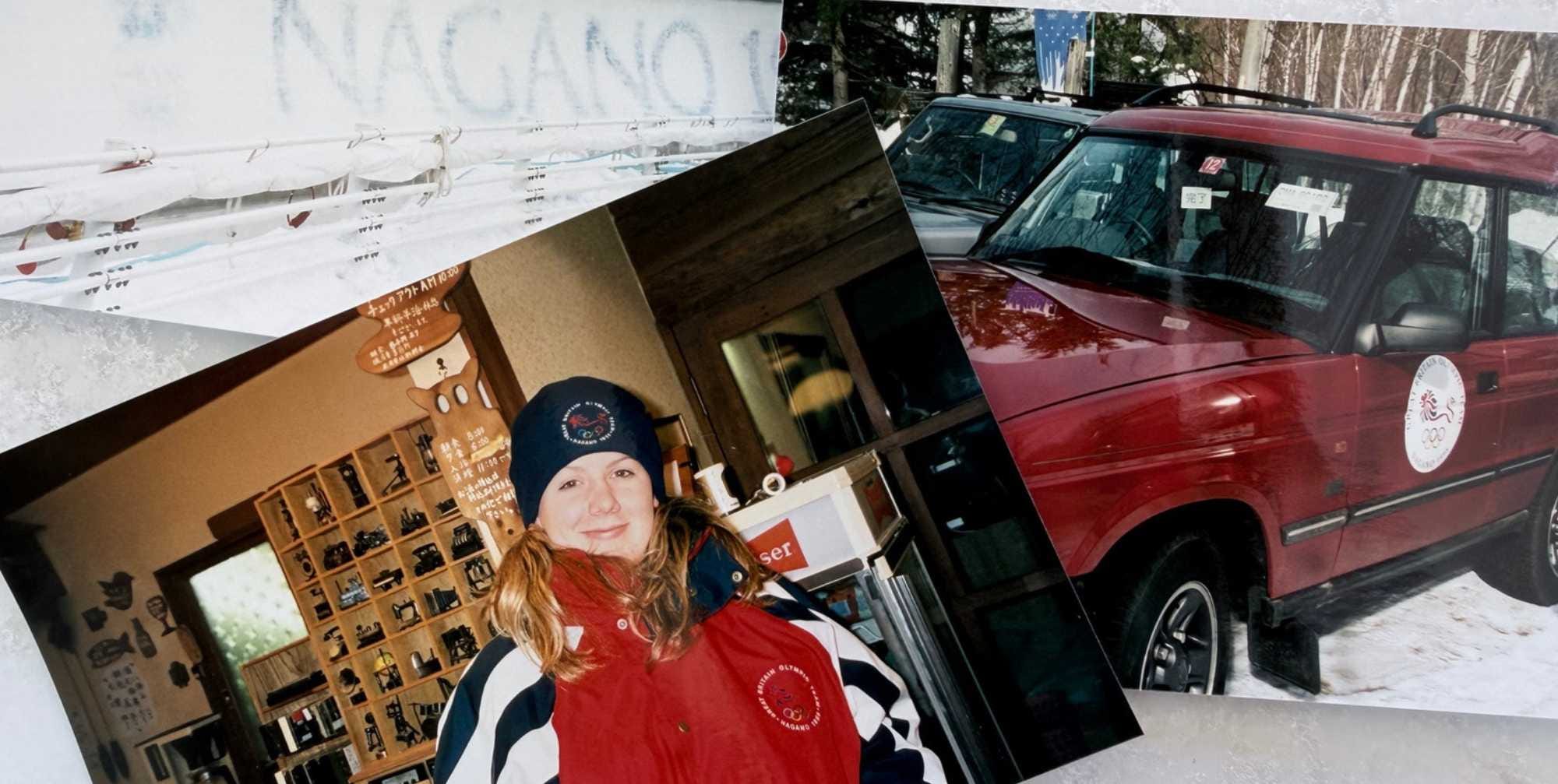
My tasks ranged from getting one of the bobsleighs resprayed in a local garage to doing some ad-hoc interpreting for the BBC, from helping the private chef read the labels on ingredients at the supermarket to joining Princess Anne for lunch. I basically just did whatever anyone asked and the BOA staff were a joy to support.
It was such an honour (as well as being really fun) to support elite athletes at such a crucial moment of their career that in the years since I have interpreted at lots of different major sports events including the World Games, World Athletics Championships and FINA World Swimming Championships, sometimes for British teams, sometimes for Japanese teams. Sometimes I got paid, sometimes I did it for free. Every time I did it because it was interesting, and felt like I was making a useful contribution.
After graduating from university I went to work as a ‘Coordinator for International Relations’ for the Yamagata Prefectural Government under the JET Programme. This involved all kinds of interpreting, translating and cultural exchange, and I had my own TV show on Yamagata Cable TV (thankfully in a time before Youtube!)
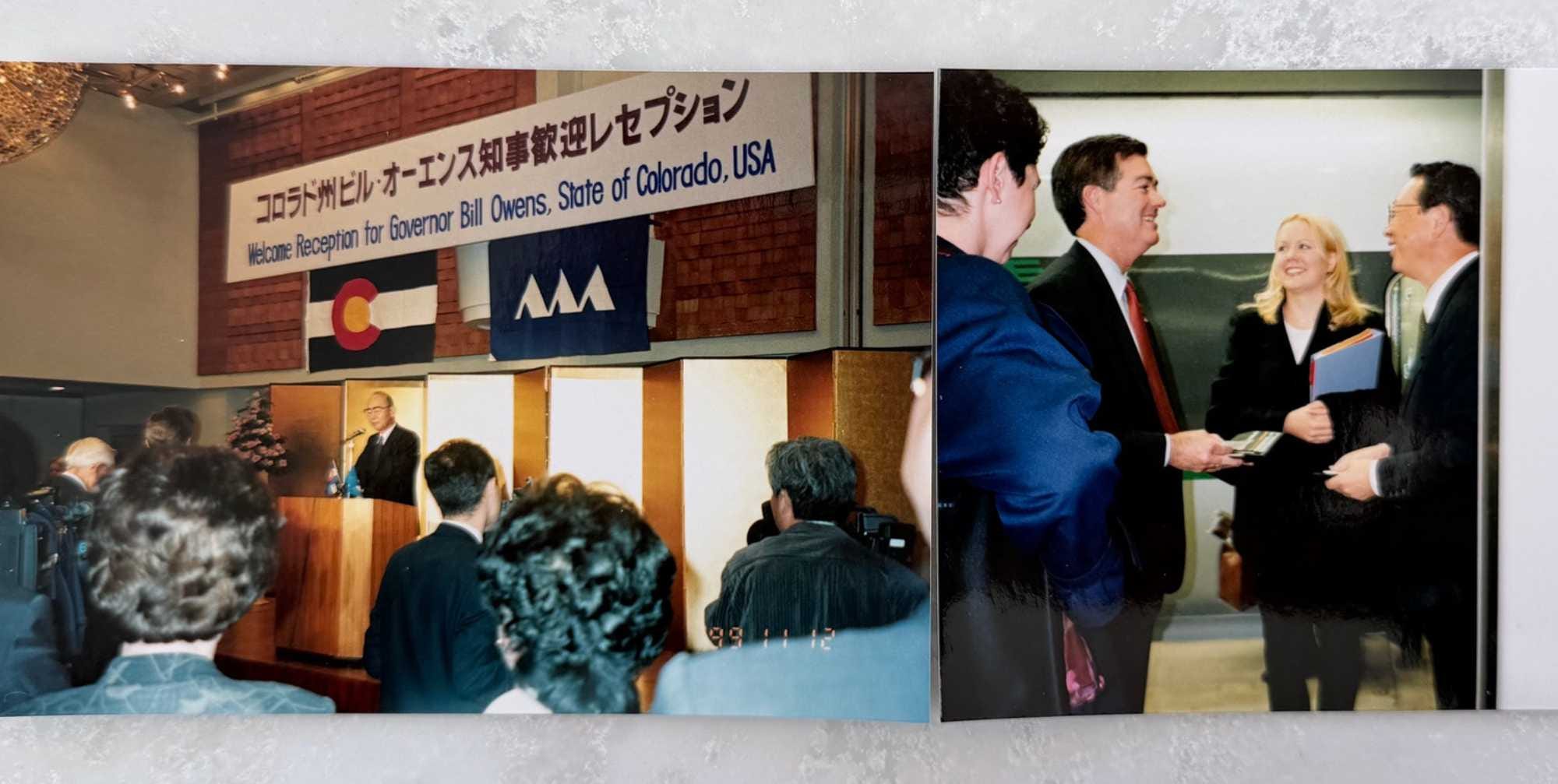
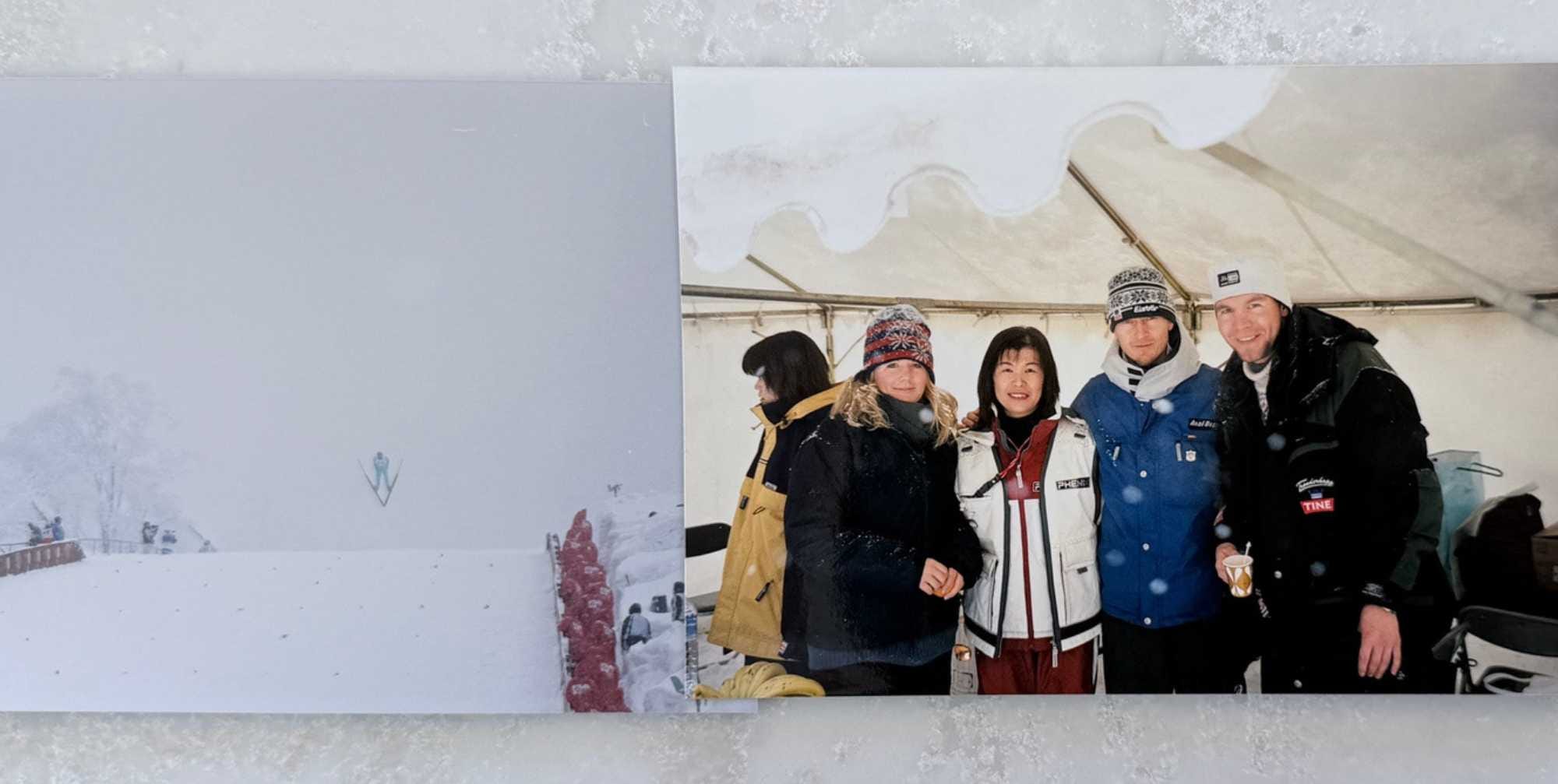
While back in Japan I jumped at any opportunities to work with athletes, including at Sail Osaka (a Hong Kong to Osaka tall ships’ sailing event), and accompanying a long distance swimmer from Japan to swim the Dover Channel. During that year, I found out that the Skeleton World Cup was going to be hosted on the Nagano Olympic track so I wrote to the British Skeleton Team (by email this time!) offering my services and became their liaison for that event.
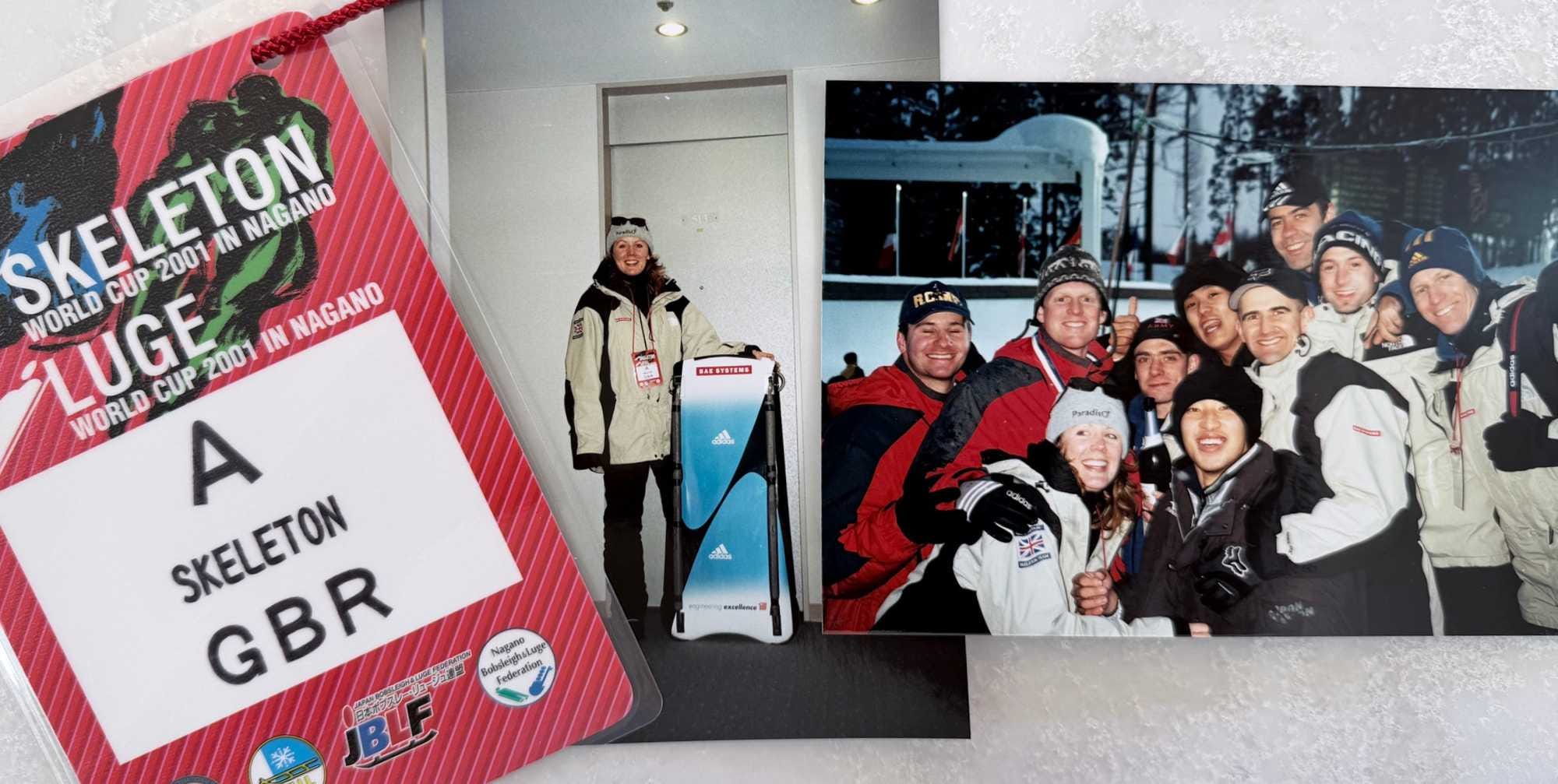
While back in Nagano at the Skeleton World Cup, I got chatting with one of the other volunteers who had also worked at the Winter Olympics. We were excited about all the upcoming sports events in Japan including the 2002 FIFA World Cup Korea/Japan. I talked about how I had loved football as a child and would love to work on that event, and the lady said someone she knew was working for the Organising Committee. She put me in touch and that person agreed to meet me even though there were no jobs available at that time. Again I used my savings to buy a bullet train ticket and went to Tokyo to meet her on the offchance something might come of it.
We ate bagels on a park bench in Hibiya and became instant friends. Hilary introduced me to the person who would become my boss, and even lent me her spare room when I eventually got a World Cup job and moved to Tokyo aged 23 knowing no-one. A quarter of a century later we are still friends and her eldest daughter is my goddaughter. In terms of the job, I expect the unusual combination of some major event experience and language skills plus a lot of enthusiasm and recommendation from my new friend all helped.
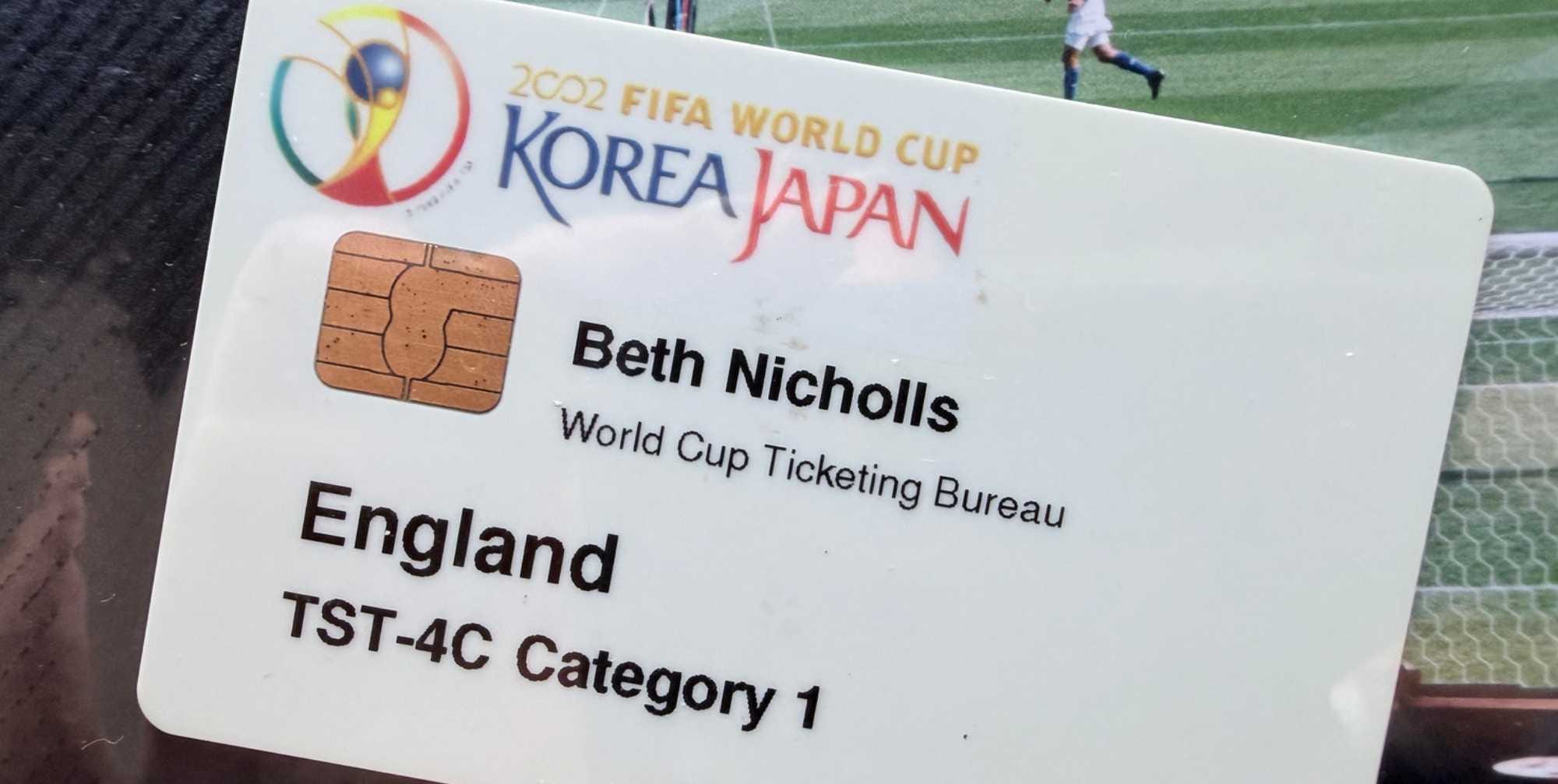
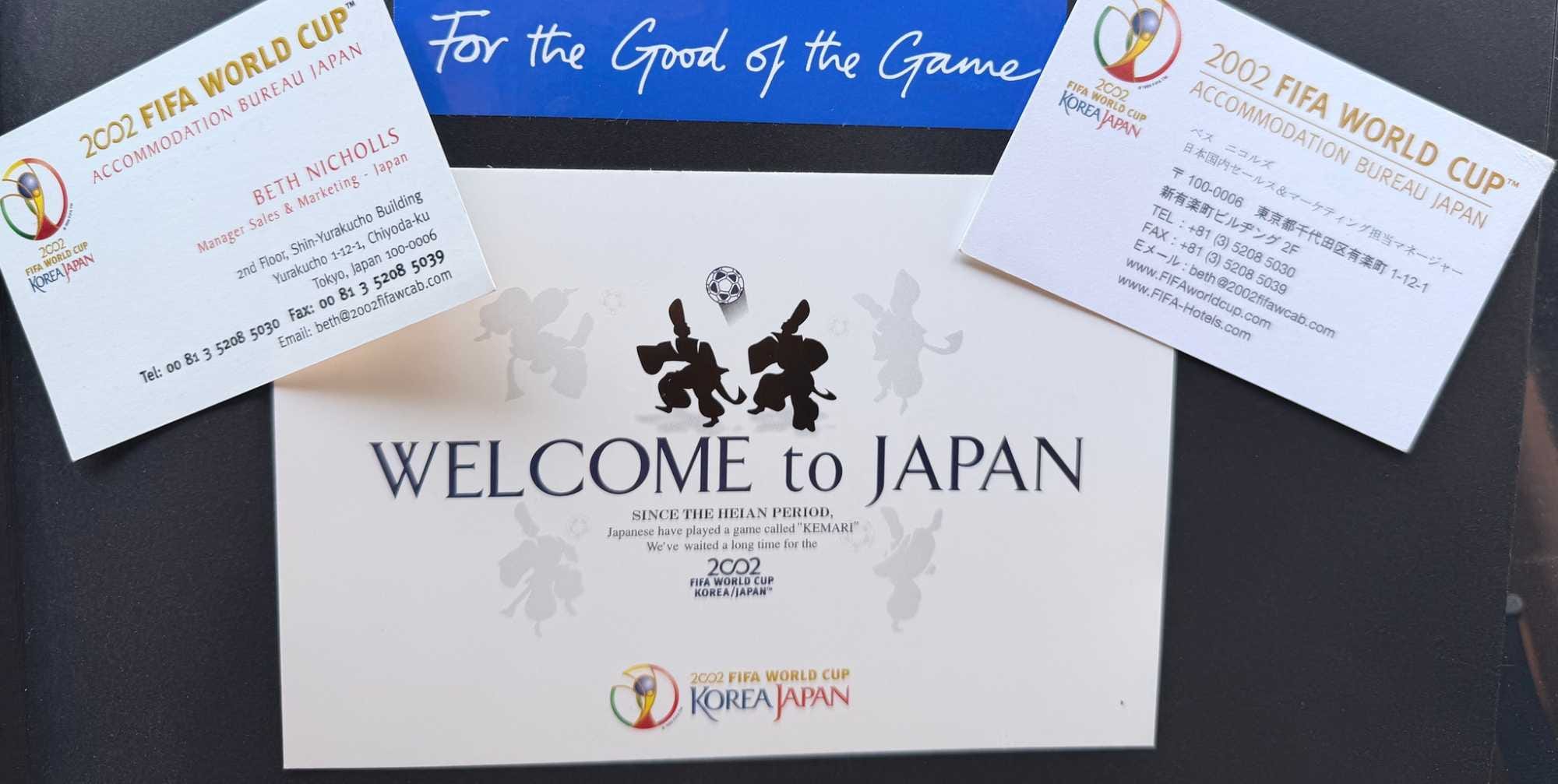
At the 2002 FIFA World Cup Korea/Japan I didn’t work for FIFA directly, but rather I was employed by a company which had the rights (and responsibility) to secure all the official accommodation for the tournament on behalf of FIFA, and which was also responsible for delivering the ticketing infrastructure in partnership with the Organising Committee. It was complicated, and political, and no doubt some things would be done differently these days, but personally, as an experience of the working world, it was phenomenal.
We had a Japanese boss running our office, and the big bosses would fly in from Europe every few weeks for a flurry of meetings and then deal with everything else by email (which was fairly new then – many people still corresponded by fax).
In the beginning there were just five of us in the Japan office – three were Japanese, one was half-Japanese, half-English, and me.
I have no idea how it all works these days, but back then we had to work with a contract which made sense for the tournament but was difficult for hotels, and was written in very convoluted language, so negotiations were tricky. Any time I had to go for a contract meeting with a hotel, I went together with a Japanese staff member from JAWOC, the local organising committee. In the beginning I took my portable minidisc player (anyone remember them?) and recorded every meeting, letting my colleague lead. Then I went home and transcribed entire conversations, learning all kinds of honorific phrasing that I had not yet come across in my studies or work in Japanese local government. In time I got better at the ritual conversations, and the art of negotiation, and took meetings on my own.
The team grew steadily, moved to a bigger office, and the workload exploded. Late nights were normal. I often stopped off for midnight ramen on my way home. It was exhausting, but I was young and full of energy. One evening the office phone rang. Our boss was calling to say he had to confirm to FIFA who among the Tokyo office staff was going to be the lead person for national team accommodation in Japan. There was no-one else in so I said, ‘I’ll do it.’
My role included overseeing the contracting of all team preparation camps, and all team hotels in all venues across Japan and then checking on the teams during the event. Other staff members took on similar responsibilities for referee hotels, FIFA hotels and so on. Each of us also had responsibility for all the official hotels in a particular venue. Mine was Miyagi, in the north of Japan.
I spent many months accompanying members of various national football associations including The FA (who are responsible for the England team) to remote parts of rural Japan to find their home bases for the tournament, away from the venues. That is when I first realised how beautiful the Japanese countryside is.
When the event kicked off, I spent a lot of time visiting the team hotels, and my photo album from back then has pictures of legends like Del Pierro, Totti and Batistuta (I was way too professional to take photos of the England team, obviously.)
Here are some fun things I found in my archives from that time:
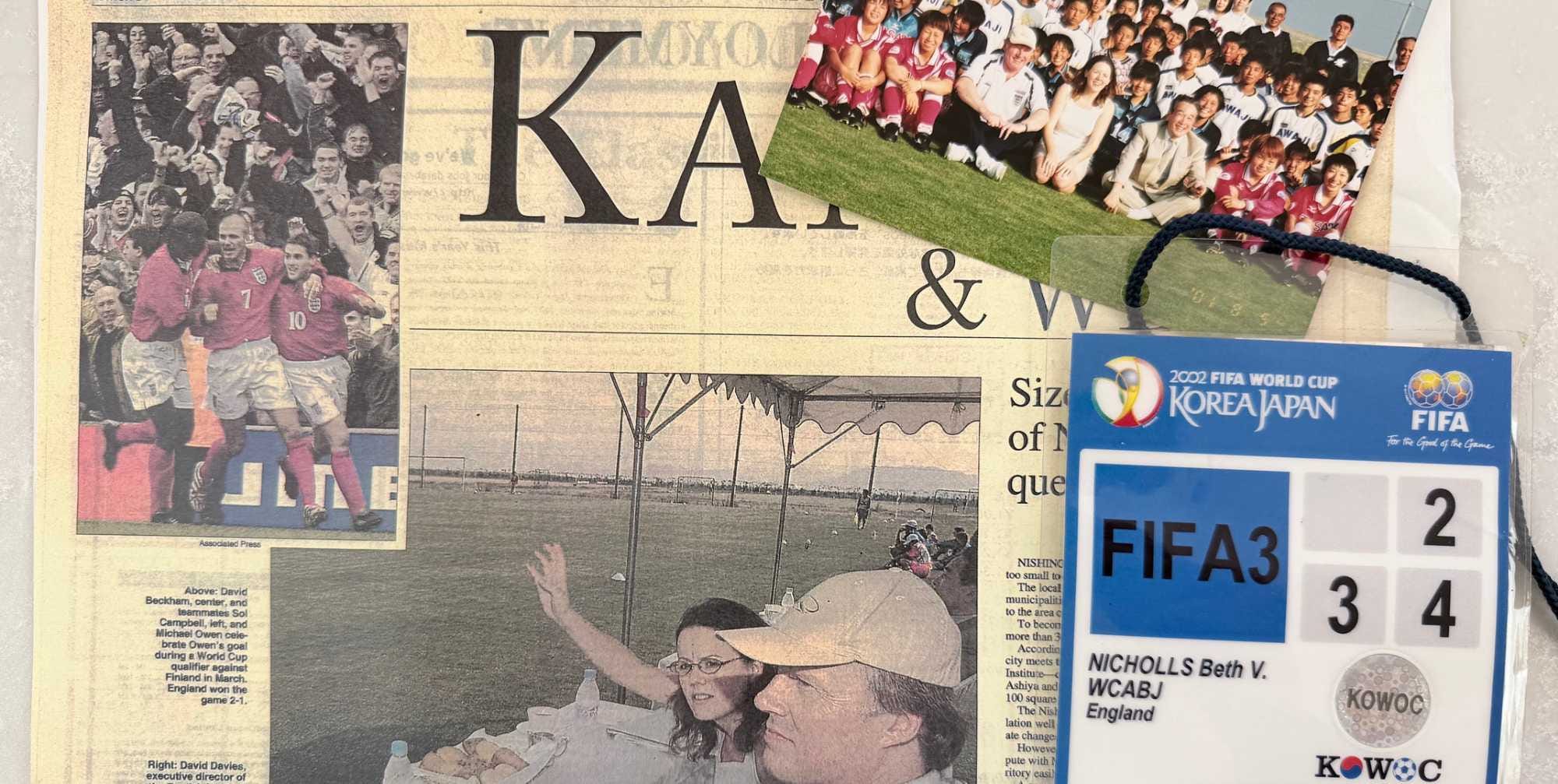
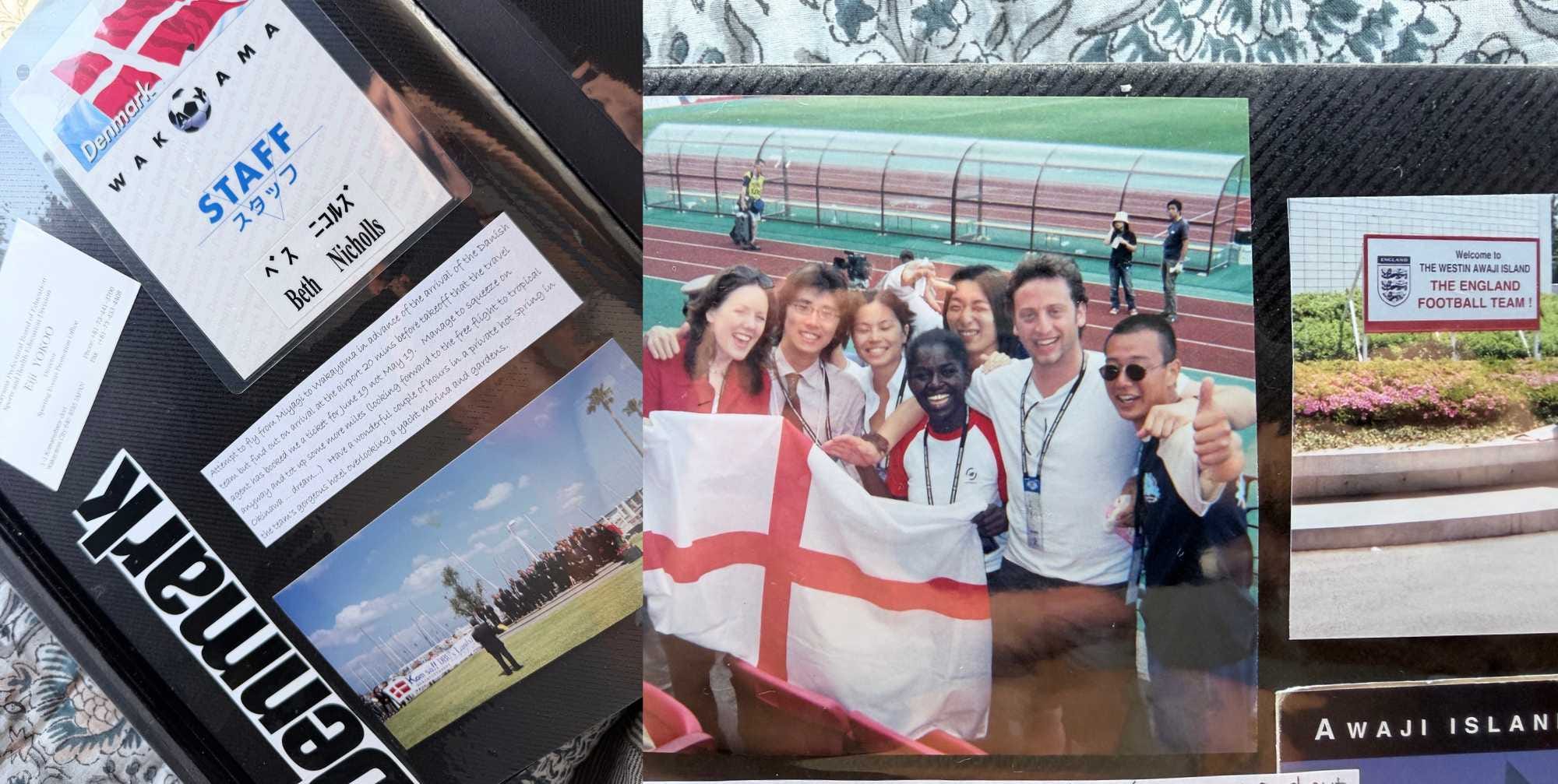
As the tournament got closer, it became obvious that the company we worked for was going to have to put in place ticketing centres across the host countries of Korea and Japan, where fans could come with their credit cards and release their match tickets from physical machines instead of having them sent out in the post. The decision on this came quite late, and one day we were called into a meeting and told that each of us who had responsibility for the hotels in a particular venue also had to go and secure a location for the ticketing centre in that venue. It was a tall order: City centre location, reasonable short term rent, easily accessible for foreign fans, available at short notice. Oh, and we had to staff it too. The tournament was just a few months away, with no time for a formal recruitment process so I just pulled in a bunch of my Japanese-speaking friends, and some native Japanese friends, and we had the most fun as a team.
Looking back at my diary yesterday I was staggered to see that on May 17 I was told I would be Match Day Ticket Centre Manager for the three World Cup games held in Miyagi, on top of my other responsibilities. The tournament kicked off on May 31, so this was just two weeks’ notice. It was like that though. There was so much to be done, and an immoveable deadline, and we all just powered through. It probably helped that we all loved the World Cup and had the energy of youth. There are many wild stories I could tell you about that time, but I might get sued, so I’ll keep them a mystery.
During that tournament I had three mobile phones on me at all times, and I slept for an average of four hours a night non-stop for three months. I am not recommending this as a working situation, but it was absolutely worth it for that one-off experience, which opened many other doors in the years to come.
Thinking about it now, it is quite staggering what the FIFA and JAWOC staff and all the people working in related organisations pulled off without smart phones or complex web technology.
That World Cup role led to some other unusual and fulfilling jobs in the world of sport, including working at the 2004 Athens Olympic Youth Camp, managing UNICEF’s relationship with Manchester United FC, and leading UNICEF’s role in delivering the international social legacy of London 2012. My final job in sport was developing the global legacy plans for the England 2018 World Cup bid, which ended in disaster when we only got two votes (a whole other dark story). But the upside of that huge disappointment was my realisation that I no longer wanted to spend my energy (and my life) working in the power and money-driven world of sport (even though many of the athletes and individuals doing the day-to-day work are wonderful humans) and instead I wanted to work with individual people, helping them to follow unconventional career paths based on doing what they love. That’s what prompted me to set up Do What You Love, and here we are sixteen years later, writing books and living a different kind of life.

For many years I was an outlier, suggesting that doing what you love was a valid career choice and teaching online when almost no-one else was doing it, but these days, especially with the rapid development of AI, it is becoming more and more relevant as traditional paths are under question and life skills and smart thinking become increasingly important.
My life now is different in so many ways. I am married with children and travel a lot less. I don’t go to glamorous parties very often. I no longer have easy access to tickets for the Olympic Games and the World Cup. I have hardly any meetings, and there is almost no politics in my life. I rarely work the same crazy hours as I did back then, and I get to choose exactly how I spend each day. I am not saying one thing is better than another. I absolutely loved the mad whirlwind of those days working in sport, living in Tokyo and other cities like Geneva, Athens and Manchester, and my time at UNICEF taught me so much about the world. But I also love my quiet life now, cycling along country lanes pondering deep questions, writing books, supporting other writers and bringing up two girls.
If we are lucky we are blessed with a long and healthy life, which offers plenty of time for multiple careers. Even if we make a complete shift to something new, nothing from before is wasted, just reused in a new context. Your unique combination of skills, experience, background, attitude, life stage and quirks will make you absolutely perfect for something at a given moment, and for something else at another moment.
This particular moment in time, right here, right now, with the people in our orbit, offers a set of opportunities.
The particular life stage we are in, with its particular circumstances, and our particular vault of wisdom and experience gathered up to this point, offer a set of opportunities.
And the particular state of the world right now similarly offers a set of opportunities, perhaps related to the challenges of humanity, or the opportunities of emerging technology, or something else that until this particular moment we were not even aware of.
There are opportunities everywhere, and it is even more exciting when you consider that the constellation of these opportunities is always changing, with each arising ‘now’.
‘Now’ is this moment in time and space.
‘Now’ is this life stage.
‘Now’ is this point in history.
Every moment offers a new combination of these three levels of ‘now’, and births a new opportunity.
All of that is to say that if asked for careers advice based on my experiences of that time, I would say:
Take a risk. Ask for an opportunity. The worst thing that will happen is you won’t get it, and you can look for another.
Personal connections are hugely important. I don’t mean in a nepotistic way – I certainly never got any boosts from family connections. Rather I mean take care of the connections you build, and nurture, and nourish over a lifetime. As AI moves deeper into recruitment processes, both on the application side and the selection side, I believe that personal connections will become increasingly important for people wanting to land the most interesting and meaningful jobs, or build their own human-centred businesses.
If someone gives you a chance, show up fully.
Be prepared to do things for free in order to get experience if you have none, but then be prepared to walk away if you aren’t paid fairly once you have the experience. If you need to earn money, just volunteer for a few hours here and there, or use some of your holiday to do it. (There is obviously a fine line between volunteering and being taken advantage of, but many incredible opportunities are offered by not-for-profits who simply don’t have any money, so choose carefully and consider your skills as a gift as well as the opportunity being good for you)
There are many ways to offer your medicine to the world. First you have to find out what your medicine is, and the easiest way to do that is to be curious and do things which are interesting to you. Have a go, see what happens.
Don’t just do something because it will be good for your CV/resume later. Do it because it’s interesting now.
Be prepared to learn every step of the way. Don’t wait until you know it all to begin, or you will never begin.
Create your own opportunities. Think about what is needed in the world (perhaps in a big way, but also perhaps in a very small and specific way) and propose a solution which you are well placed to provide.
Know that money spent on travel and books (and notebooks) is rarely wasted.
Career guidance is often given in a linear fashion as if everything stretches forward from this moment in a tidy straight line but life - and its opportunities and challenges - are not tidy, nor do they come a straight line. Take a moment every now and then to look back and notice the patterns. What are you drawn to over and over? What do you keep returning to? What do you daydream about in spare moments? Pay attention to those things. Even though I have worked in vastly different industries there has always been a motivation thread of wanting to help people to fulfil their potential and a skills thread of thoughtful language usage (whether that is Japanese, or my own native English)
If you see someone doing something interesting that you might like to do, ask ‘How do you get to do that?’
Your time and your attention are your most precious assets. Use them well.
Be an optimist. It makes everything better.
Do what you love. Then whatever happens, you will have had a good time along the way.
Life, it’s a funny old game.*
Now it’s your turn. What’s the most unusual job you have ever done, and what did you learn from it? I would LOVE to know!
Beth Xx
PS Go England!
*’It’s a funny old game’ was a famous football catchphrase coined by footballer and broadcaster Jimmy Greaves.
*SoulCircle is my private writing community here on Substack
THIS SUNDAY July 12 is our one-day virtual summer writing retreat, THE SEA, THE SEA. Find our more below. This is free for all members of SoulCircle. If you aren’t yet a member yet just join here before tomorrow to enjoy the retreat - choose Monthly to try it out or Annual to get a lovely discount.
Images (top and bottom): Holly Bobbins Photography. All other images my own.
Comments
Nothing yet. Say the first thing.
Sign in to join the conversation.