
Where’s the Barbed Wire Capital of the World? You guessed it! Kansas!
Every year, the good souls in La Crosse host the Barbed Wire Festival on the first weekend in May. Collectors from across the country come to see, sell and swap barbed wire, with side activities that include a world champion barbed-wire splicing contest (!), a cookout with karaoke (!!) and a masquerade banquet (!!!).
This all sounds like great fun, but let’s not forget that barbed wire has a thorny history.
You see, there’s no real agreement on who invented it. In 1867, both Lucien B. Smith of Kent, Ohio, and William D. Hunt of Scott, N.Y., applied for and were granted U.S. patents for concepts of barbed-wire fencing, according to American Heritage magazine. In 1868 Michael D. Kelly, of New York City, patented the idea of holding the barb in place by another wire twisted around it.
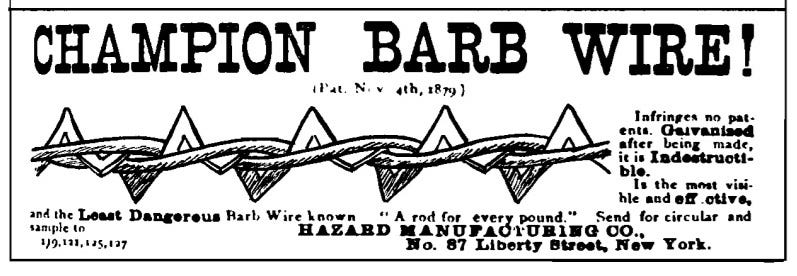
Henry Rose got a patent in 1873 for a design that he went on to display at the Dekalb County Fair in Illinois. Touting his solution for livestock containment, Rose showed wooden rails with metal spikes that were affixed to fencing. A local farmer, Joseph Glidden, saw the display and was inspired to create a similar type of spiky wire—minus the wood rails. In 1874, Glidden patented his creation, a barbed wire that was commercially viable to manufacture. For the first time, the wire was cheap and easy to mass produce. He must have known he was onto something because Glidden called his product “The Winner.”
Glidden was certainly prescient. Years later, Lucian Smith sued Glidden and “The Winner” for patent infringement. But Smith’s case, which made its way to the Supreme Court, ended in Glidden’s favor. In a ruling that would establish precedent for future patent law, the high court upheld Glidden’s patent, saying that his design was novel enough to be deemed a new invention.
So who is the father of barbed wire? Is the inventor the first person with the idea or the first person with a viable idea? To Glidden, it didn’t matter. He still came out with The Winner.
You can read about this and other “forgotten inventors” in my latest article in The Wall Street Journal. (That link should bypass the paywall.) In it, you’ll find out that Alexander Graham Bell wasn’t the first innovator to come up with a telephone, nor was Elias Howe the first with the lock-stitch sewing machine. And avid readers of Mom & Pop Hardware already know that John Thompson was screwed out of naming rights for his invention, the Phillips-head screw and screwdriver.
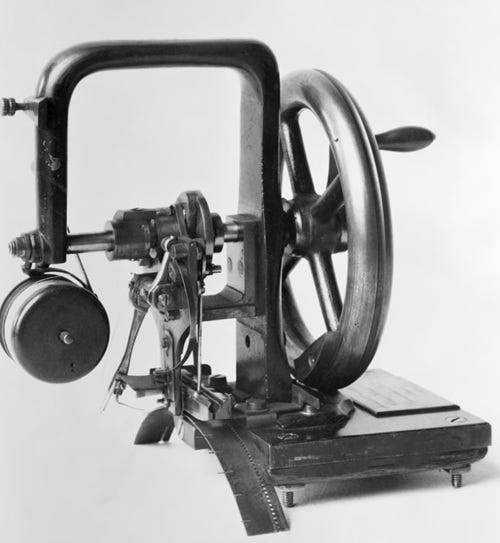
There’s a lesson in here somewhere—that you better get to the patent office before your rivals, or that you should secure financing along the way. I’ll leave the bigger takeaways for you to decide.
No posts
Comments
Nothing yet. Say the first thing.
Sign in to join the conversation.