
“It’s probably better to have him inside the tent pissing out, than outside the tent pissing in.”
― Lyndon B. Johnson, on J. Edgar Hoover
AS ROBERT CARO has so deftly shown us, no American politician has known how to acquire and use power better than Lyndon Johnson. He learned at least part of it from his daddy, Sam Ealy Johnson Jr., who once said, “You can’t be in politics unless you can walk in a room and know in a minute who’s for you and who’s against you.”
Caro and others have noted that the lesson was about mastering human psychology and situational awareness. In Papa Johnson’s view, politics was less about reading legislation and more about instantly reading a room. He taught his son that a true politician must scan a crowd, look into people’s eyes, and immediately calculate the political math of who was an ally and who was a threat. A fine lesson indeed.
Johnson had been studying politics almost from the cradle, tagging along with his state-legislator father to the Capitol in Austin, where he watched Sam politic with politicians. By the time Lyndon got to college, he was ready to stop watching power and start figuring out how to get some of his own—and he was very good at it.
When Johnson arrived at Southwest Texas State Teachers College in 1927, rural Texas was desperately poor—and America was skidding toward the Great Depression. Most of his classmates came from hardscrabble farm families and needed campus jobs simply to stay in school. Johnson quickly figured out that the key source of power on that poor campus was control over student jobs. So he created a political organization and engineered the election of a candidate who then allowed Johnson to administer the jobs. Suddenly, Johnson—although personally unpopular—controlled something his classmates desperately needed.
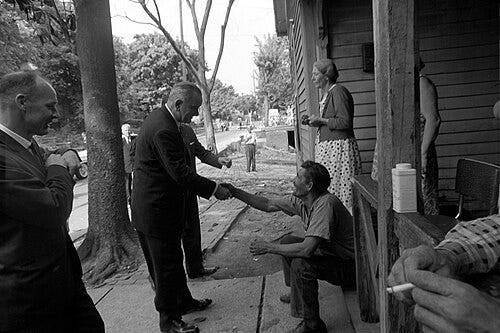
Later in life, Johnson could blow with the political wind as a candidate and legislator. But he never lost the lesson he learned on that poor Texas campus: find where the power is, get hold of it, and use it. That was how Lyndon Johnson operated for the rest of his political life.
And that brings us to Annie Andrews and Darline Graham.
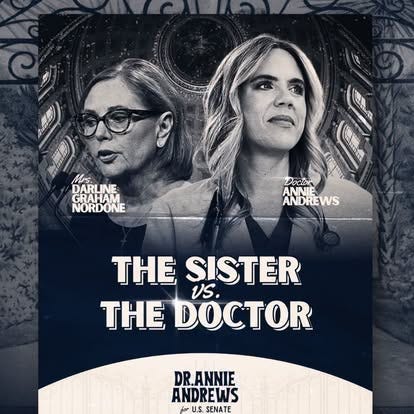
Darline certainly grew up knowing what political power looked like. Her brother, Lindsey, spent decades acquiring it, using it, and loudly throwing it around. Then Donald Trump came along, and Lindsey made a different calculation: He stuffed his integrity into the garbage and made his own power subservient to Trump’s. Darline had a front-row seat to all of it.
Which makes me wonder how Darline felt after the debacle of a debate at Newberry, SC, last week—which might’ve given pause to some people who thought their vote for her was a slam dunk—or, three days later, when she had to face a big crowd at the rally Trump threw for her in Myrtle Beach.
But first, let’s drill down further into the political landscape of Myrtle Beach. Have you ever been there? Dancing the shag may be fun, but this tourist town is overflowing with tacky. Myrtle Beach and the Grand Strand have exploded over the past few decades, as retirees and families have poured south from North Carolina, the Northeast, and the Midwest—places like New York, New Jersey, Pennsylvania, and Ohio—trading brutal winters, high taxes, and housing costs for sunshine and a cheaper life. Horry County has grown by nearly 40 percent in just the last decade, much of it from people moving in from elsewhere in the country.
But all those newcomers haven’t turned Horry County purple. Quite the opposite. In 2024, Trump took nearly 69 percent of the vote there, beating Kamala Harris by almost 80,000 votes. Horry has become one of the great Republican vote machines in South Carolina. That’s why Trump went to Myrtle Beach for Darline’s rally—to drum up votes for his protégée.

Did you watch any of the speech? Darline tried, she really did. But she had no energy, no charisma, no authority. No power. Since she has no political power of her own and is leaning on Lindsey’s, Trump called in two more of his flunkies, South Carolina’s other senator, Tim Scott, and one of Darline’s failed Senate competitors, Congressman Russell Fry, to lend her theirs. As Sam Ealy Johnson Jr. might’ve asked, could she read that convention center room? At all?
Frankly, I wonder if Darline even wants to be in this race. In her speech, she smartly pointed out that she’s not a politician (a sympathy move, a plea of “I’m-a-real-person”), which accentuates the writing on the wall that she’d be a Trump puppet.
I can imagine that going through a political campaign could be excruciating for her, although she had many years to see what Lindsey went through in his. As I understand it, Darline had a long career working with people with disabilities, which is admirable. But after that traumatic debate, there was this:
“Trump’s speech lasted nearly an hour and a half. Reporters on the ground and live news footage noted that as the speech crossed the one-hour mark, a noticeable stream of attendees began heading for the exits early. By the end of the night, while the front sections near the stage remained crowded, visible empty patches opened up in the rear rows and seating.”
Which didn’t seem like voters were revved up and chomping at the bit to vote for Darline Graham.
On Monday, a New York Times article started with… “President Trump has stuck his neck out for Senator Darline Graham.” I’d say just the opposite. Trump was counting on Darline to shore up the Senate’s Republican majority with the South Carolina sympathy vote. Poor Lindsey is daid. Poor Lindsey Graham is daid…Why did such a feller have to die?
Trump also wanted to secure another Graham lap dog to be at his beck and call. I feel safe in saying that Darline’s inexperience—and clear lack of knowledge about subjects a candidate running for the U.S. Senate should have at least a rudimentary understanding of—shocked listeners. At the rally, Trump said to the assembled crowd, “What I really want you to do is pretend, please, that I’m on the ballot. Just come and vote. It’s so important.”
Trump doesn’t simply demand loyalty from other Republicans. He demands a kind of political self-erasure. They become extensions of him—Stepford Republicans programmed to fall in line. And on Friday, he said the quiet part out loud: Don’t vote for Darline. Pretend you’re voting for me.
***
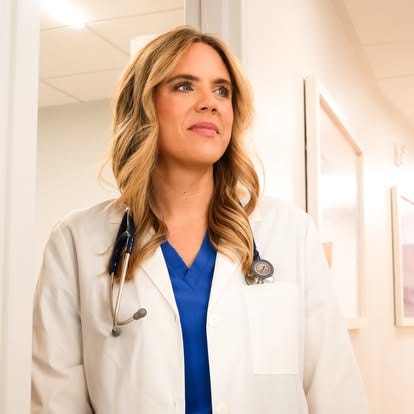
THE REAL POWER in this upcoming Senate race is Darline’s dynamic opponent, Democrat Annie Andrews, M.D., whom I’ve met twice. I can tell you that she’s been building her own formidable political base, as well as a huge network of donors who believe in her. Even better, she knows how to accomplish the churlish job of raising money. In a February 20th press release from her campaign, she had 189,628 donors with the average donation under $27. No PAC money. That’s impressive. What must those numbers be now?
As I’ve written before, she understands the issues and can speak with conviction, and, yes, speak powerfully about them. In fact, I repeatedly describe her as a powerful candidate. She glows with confidence and knows how to captivate a room. And like a very good politician, she knows how to shower all her attention on whomever she’s speaking with—she listens—and she also gives a damn good stump speech.
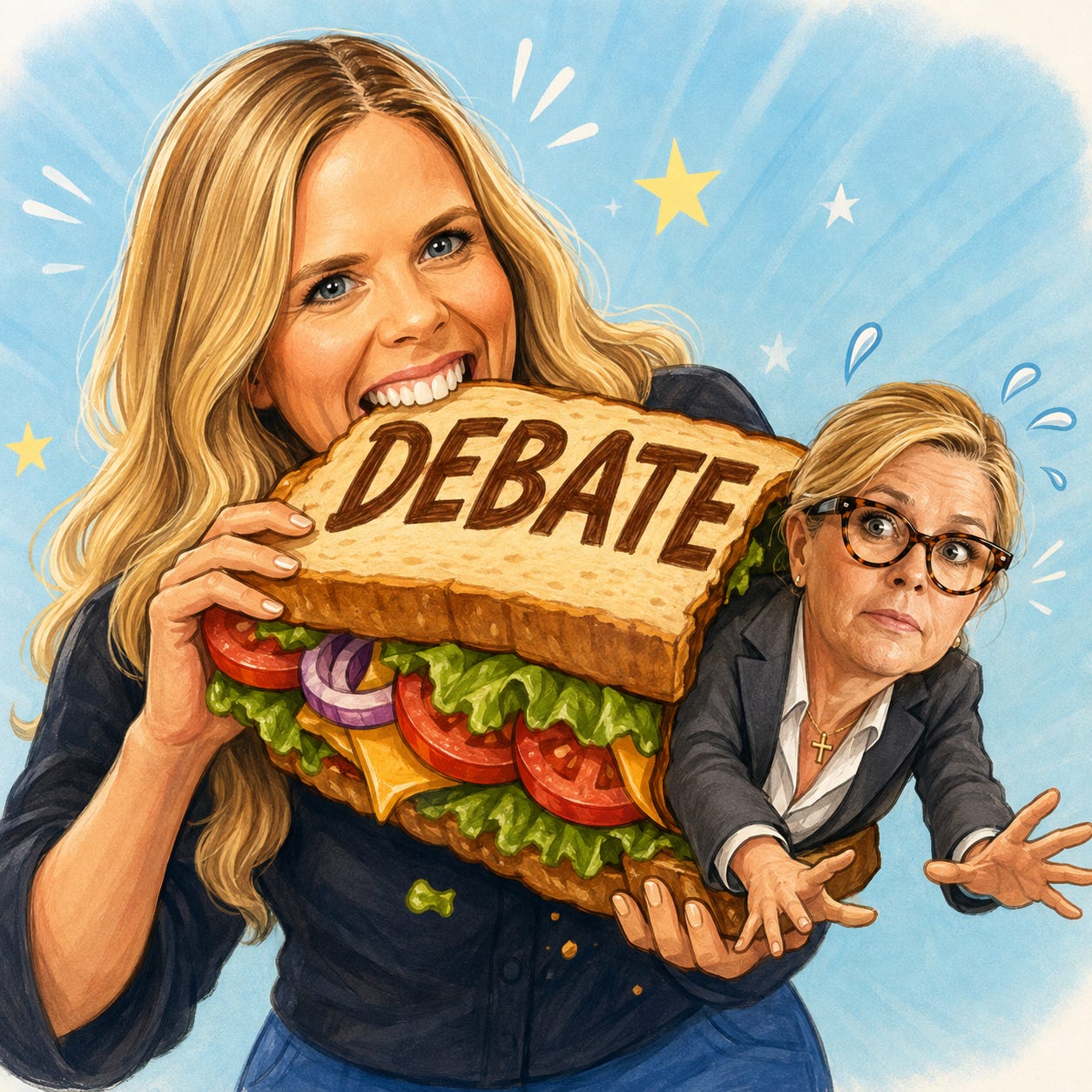
I don’t intimately know her big fundraising events, although I’m aware of a high-profile fundraiser in California. Democrats in other parts of the country see Andrews’ powerful appeal. And now that Darline is locked in, oh, how I hope the money will flow to Andrews. Not only is this a chance for a Democrat to capture a Senate seat in South Carolina—the deeply Red South—but it’s woman-to-woman. Yeehaw! I want to see a debate. A debate would clarify this race irrevocably. Trump and all the cowardly men probably won’t allow it, because Annie would eat Darline alive.
To be totally transparent, I’ve been to one fundraiser for Andrews already and am attending another on Friday. Before Lindsey Graham died, when I spoke to some Democrats about her, they told me they’d invested heavily in Democratic candidate Jamie Harrison, whose loss sorely disappointed them. I suggested they get over it and jump on board with Annie. Of course, they will. But they need to put their hearts and souls and pocket books into it. My hopes were high as soon as I met Andrews—I could see a charismatic and successful politician in front of me. Lindsey’s kicking the bucket has exponentially upped the ante. We can smell a victory.
Pete Buttigieg endorsed Andrews on August 13th, but we only started seeing national press about this race because of Tuesday’s runoff between Darline and Radical Right vice chairman of the House Freedom Caucus Ralph Norman. Another one of those. Annie had only popped up in one poll I’ve seen.
Inside Elections currently rates South Carolina “Likely Republican,” not Solid Republican, and explicitly has an Annie Andrews candidate page and recent South Carolina analysis. They see the race. They still don’t believe enough in its competitiveness.
G. Elliott Morris of Strength in Numbers is the pollster I respect and follow closely, and he has calculated which states could gain a Democrat senator to flip the Senate blue. But he hasn’t covered Andrews or this race. Is that about writing off a Democratic win in the South, or just not enough data to support it?
So let’s talk about where the South stands in political power, and how it feels to us Southerners. It’s like our gumption and power are covered up by a Huge Red Cloud, obscuring the possibility that we might actually elect a Democrat who could help flip the Senate in the mid-terms. As always, the South is Flyover Land. We’re not only disregarded and ignored, we’re also underestimated and looked down upon. We native Arkansans have all found ourselves at this very spot at one time or another with haughty “people from off” who don’t realize how ignorant, narrow, and provincial they are.
This, I recall, was more or less the point of view of most U.S. voters when Bill Clinton began running for president and no one knew who he was. Even worse, this Nobody was from Arkansas, which on its face defined him as a hillbilly, like L’il Abner. Even with the South’s history of eminent politicians—from George Washington and Thomas Jefferson to Huey Long, Lyndon Johnson, and Bill Clinton himself—we can count on this kind of attitude from the East Coast political world of Washington and New York.
The Contrarian interviewed Andrews this week. That’s a start to the national attention that will follow—because of dead Lindsey and Trump’s darling Darline. Will the Democratic establishment step up to help?
But Annie Andrews has already persuaded people to vote, give money, volunteer, pay attention, endorse her, organize around her, and treat a female Democratic Senate candidate in South Carolina as consequential. More than 183,000 people voted for her in the Democratic primary; her campaign reported more than $10.8 million raised through June 30, overwhelmingly from individual contributions; and after her primary victory, she raised another $200,000 in 24 hours, with the campaign saying 95% came from first-time donors.
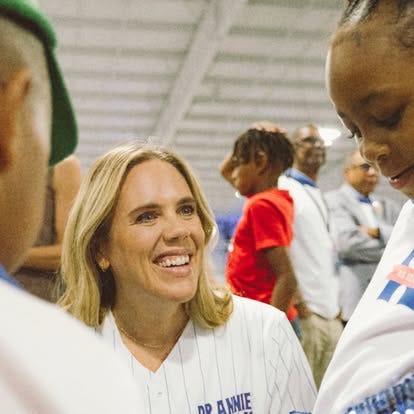
I haven’t given much countenance to polls in the past. I knew Hillary would lose in 2016, and she did. People vote like they do everything else—from emotion—and I don’t believe polls can always pick that up. But I’m personally paying more attention to polls now to see how and what they’re focusing on. I quite enjoy being optimistic about the prospect of having a Democratic senator—and, even better, a female Democratic senator who knows how to acquire and use her own power, even if the pollsters are still behind the curve.
One thing is certain: Nobody handed Annie Andrews her political power. She has worked for it the way Lyndon Johnson did: by figuring out what we the people need (not billionaires), persuading them to come with her, building an organization around them, and then putting that organization to work.
“What convinces is conviction. You simply have to believe in the argument you’re advancing; if you don’t, you’re as good as dead. The other person will sense that something isn’t there.”
--Lyndon B. Johnson
I like to think about what Johnson, if he were still here, might say to Annie in his Texas drawl: “Little lady, expect fierce resistance, public criticism, and betrayal, but view those attacks merely as proof that your power is working and threatening the established order. Hitch up your trousers and keep plowing the field.”
The lesson? Darline has the most powerful Republican in America telling voters to pretend they’re voting for him. Annie, confident in her own power, is asking them to vote for her.
To donate to Annie, click here.
Thank you for reading.
If you value independent writing that calls things as it sees them—especially from a part of the country too often written off or misunderstood—I hope you’ll consider becoming a paid subscriber.
Paid subscriptions are what make FROM THE INSIDE OUT possible. They give me the freedom to keep reporting, interviewing, digging, arguing, and writing without waiting for an editor, an institution, or anyone else to decide which stories are worth telling.
And right now, I want to do much more of it.
If you’re already a subscriber—free or paid—thank you for being here and for reading my work. I mean that.
And if you’re reading for free and find yourself coming back, this is the moment I’d love for you to become a paid subscriber. Paid subscriptions are what allow me to keep doing this work independently—and to do more of it.
If a paid subscription isn’t for you, you can also leave a tip in the coffee jar. Every contribution helps keep this work going.
yes, please tip me a cup of coffee
And whether you subscribe free or paid, please share this piece. Good writing travels because readers carry it.
Become a paid subscriber—or join us free—here:
SECRET ENDING…with love and reverence for Queen Dolly Parton who followed her dreams and stayed true to herself, who lived a most wonderful and full authentic life.
Comments
Nothing yet. Say the first thing.
Sign in to join the conversation.