
One of the most difficult moments in the Gospels happens quietly.
A young man approaches Jesus with a sincere question: “Teacher, what good deed must I do to have eternal life?” He is earnest. He is moral. He is seeking.
Jesus welcomes him into conversation. He listens to his question. He challenges his assumptions. And then, according to Mark’s account of the story, Jesus looks at him and loves him.
That detail matters.
Before Jesus challenges him, before the difficult conversation, before the young man walks away, Jesus loves him.
Then Jesus tells him the truth. The man must let go of the wealth that has captured his heart and follow Him.
But the young man cannot do it.
Scripture tells us that he went away grieving because he had many possessions.
And Jesus lets him go.
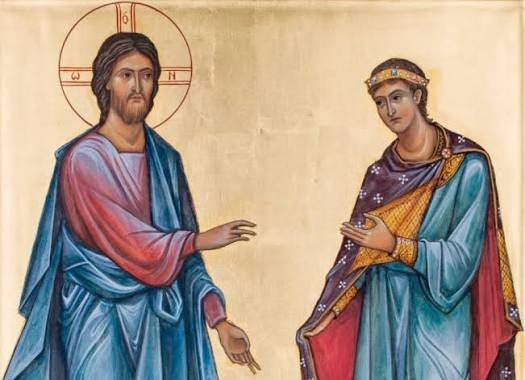
The story ends without a dramatic conversion. There is no celebration. No visible transformation. No happy ending.
Just a faithful Savior who loved well and a man who walked away.
Many of us know what that feels like.
Parents know what it is like to pour years of love, prayer, sacrifice, and guidance into a child only to watch them make choices that break their hearts.
Grandparents know what it feels like to pray faithfully for children and grandchildren who seem distant from the faith.
Friends know the pain of reaching out, extending grace, offering support, and watching relationships drift apart anyway.
Church members know what it is like to serve faithfully, teach Sunday School, mentor younger believers, share their faith, and wonder whether any of it is making a difference.
In those moments, we often ask ourselves the same question:
Did any of it matter?
For us Methodists, this story reminds us of an important truth about God’s grace.
John Wesley taught that God’s grace is always at work before we ever recognize it. Wesley called this prevenient grace, the grace that goes before us. God’s Spirit is constantly drawing, inviting, convicting, and awakening hearts.
Yet God does not force Himself upon us.
One of my all-time favorite Wesleyan Scholars, Thomas Oden, observed that grace prepares and enables our response, but it does not compel it. Love invites; it does not coerce.
The rich young ruler experienced the love of Christ firsthand. He heard the invitation. He was offered a genuine opportunity to follow.
Yet he chose to walk away.
In this encounter, Jesus demonstrates both the persistence of grace and the dignity of human freedom.
The young man says no.
Jesus lets him go.
Not because Jesus stops loving him, but because love itself cannot be forced.
This truth can be painful, but it can also be freeing.
Many of us carry burdens for people we love. We pray. We encourage. We teach. We invite. We hope.
But every person must ultimately decide how they will respond to God’s grace.
Wesleyan scholar Randy Maddox reminds us that God’s grace is relational and transformative rather than coercive. God works powerfully in our lives, but He does not override our humanity to do so.
That means there may be moments when those we love choose a different path.
Their decision is not necessarily a reflection of our faithfulness.
The rich young ruler walked away, but Jesus did not fail.
Jesus loved him.
Jesus spoke truth to him.
Jesus gave him an invitation.
The response belonged to the young man.
That is a lesson many of us need to hear.
We are called to love.
We are called to pray.
We are called to speak truth with grace.
We are called to remain faithful.
But we are not called to control outcomes.
Sometimes faithfulness looks like planting seeds you may never see grow.
A conversation you had years ago may bear fruit long after you are gone.
A prayer whispered over a child may be answered decades later.
A lesson taught in a Sunday School classroom may shape a life in ways you never witness.
A word of encouragement offered during a difficult season may return to someone’s memory at exactly the moment they need it most.
The Holy Spirit is always working in ways we cannot see.

The rich young ruler walked away from Jesus that day. Yet Scripture never tells us the rest of his story. We do not know what happened later. We do not know whether the seeds Jesus planted eventually took root.
And perhaps that silence is intentional.
Perhaps God is reminding us that our task is not to write the ending.
Our task is simply to be faithful.
When love isn’t returned, keep loving.
When prayers seem unanswered, keep praying.
When the harvest is delayed, keep planting.
In the Wesleyan tradition, we trust that God’s prevenient grace continues working long after a conversation ends, a child leaves home, a friendship grows distant, or a loved one turns away.
The seeds we plant may disappear from our sight, but they never disappear from God’s care.
And not one act of faithful love is ever wasted.
Lord Jesus, thank You for loving us with patience, grace, and truth. When we become discouraged because we cannot see the results of our efforts, remind us that faithfulness matters more than success. Give us the courage to keep loving, keep praying, and keep trusting You with the outcomes. Help us remember that Your grace is always at work, even when we cannot see it. Help us to be faithful seed-planters and leave the harvest in Your hands. Amen.
Comments
Nothing yet. Say the first thing.
Sign in to join the conversation.