
Work and Prayer, Work as Prayer
Christianity has a long tradition of seeing work as a form of prayer: the ancient Benedictine motto “ora et labora” does more than uphold the separate values of “prayer and work.” Rather, it announces that prayer is a Christian’s most powerful work, and that the humble work of daily life can itself be a form of prayer.
Bethany Joy's Substack is a reader-supported publication. To receive new posts and support my work, consider becoming a free or paid subscriber.
One way to test this ancient claim is by exploring how certain kinds of work might expand our capacity for hospitality. Hospitality is a holy work, one we are specifically exhorted to remember (Hebrews 13:2; Matthew 25:35), and yet we are unlikely to do it if it feels like “one more thing” we must add to our already-packed agendas.
As I wrote in my last post, we can counter overwhelm by practicing “slow hospitality” weaving our practices of welcome into things we are already doing. And for most of us, most of the time “the thing we are already doing” is work of some kind: whether professional or domestic, paid or volunteer, mandatory or elective.
Admittedly, the work I love best in the world—reading deeply, thinking and writing about what I read—is not particularly hospitable. In college, my friends would have to come looking for me in the library at supper time, rolling their eyes when I protested I needed to skip the communal meal to continue working. (They never accepted this protest, and at least once physically carried me off to the cafeteria, bless them). It’s really difficult to welcome someone into hard work of reading a difficult text for the first time, and even more challenging to write an academic essay while actively welcoming a stranger. When I’m reading and writing, I don’t want to be interrupted.
I was aware of the tension between my academic instincts and connection as early as high school. Reading is an objectively good thing, yet in social settings I used books as a shield to protect me from the awkward potential of actually talking to to my peers. When I learned how to knit, however, something wonderful happened. My anxiety around people vanished: my body was at peace, my intellectual restlessness appeased, and a large portion of my attention was free to engage with the people around me. Confidence that I was doing something beautiful and useful freed me from self-consciousness, and I began to feel real curiosity about the people around me. My orientation moved from worry (“what do they think about me?”) to hospitality. By feeling more at home in my body and my work, I was able to make room for others, asking them questions, noticing them.
Work for Essential Hospitality
Knitting and work like it I call work for essential hospitality. This work tends to be
manual
repetitive
low skill
low stakes
This is the work of shelling peas on the front porch, washing dishes by hand, folding laundry, weeding a garden bed, knitting a simple scarf, mending by hand. It’s safe, it must be done, but nothing is going to catch on fire if your attention slips while doing this work. And, crucially, you can invite almost anyone to join you. Sure, they might fold the towel oddly or fumble with the peas, but that’s not worth fretting over. The important thing is that these types of work slow you down while leaving most of your attention free to listen, ask questions, or simply sit with someone else.
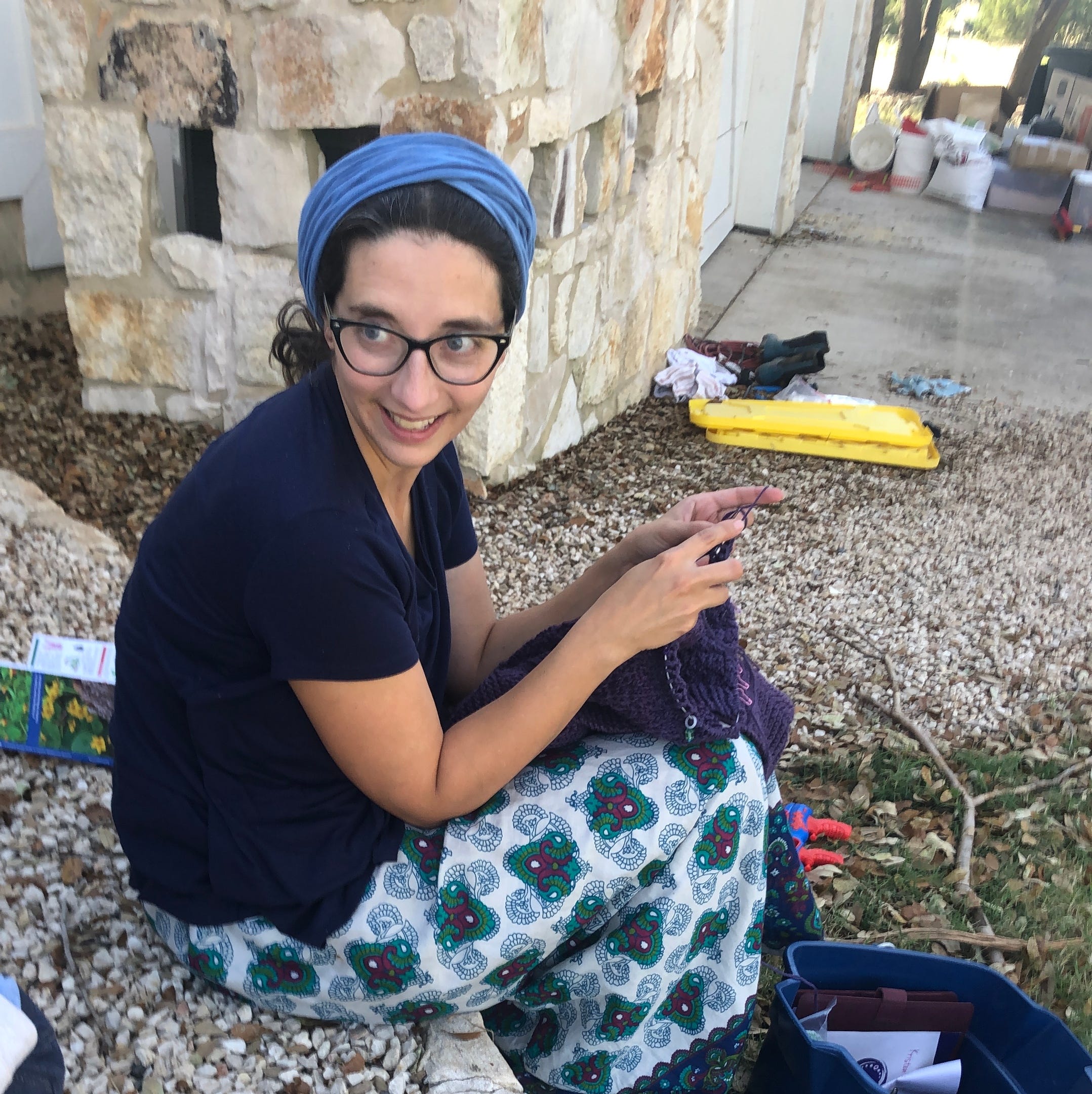
If you are curious to know if a work might be hospitable, ask yourself, “Could I welcome a four-year-old child into this work with me?” If the answer is yes, then you have almost certainly found a good work for cultivating hospitality. If I can keep knitting while telling my kindergartner a story, then I can almost certainly keep knitting while I get to know a new neighbor, or listen to a friend’s sorrows.
If you are curious to know if a work might be hospitable, ask yourself, “Could I welcome a four-year-old child into this work with me?” If the answer is yes, then you have almost certainly found a good work for cultivating hospitality. If I can keep knitting while telling my kindergartner a story, then I can almost certainly keep knitting while I get to know a new neighbor, or listen to a friend’s sorrows.
If this work takes you outside, where you can wave to passing neighbors, and invite them to help you pick tomatoes or strip basil leaves for pesto, all the better. And even if no one joins you for this work, I consider it a spiritual discipline to keep work like this in my day, offering the time I spend as a prayer to God that He will keep my heart open to hospitality, taking my hour in the garden as an invitation.
Work for Membership
The very basic work is valuable for first steps in hospitality, but hospitality is more than initial encounters; for some guests, hospitality is the first step towards membership. The Didache, a first-century manual on Christian community and church order, was my first clue to this wisdom. The treatise explains that guests should be welcomed and cared for for a few days without question, but after that, the guest should consider whether he wishes to travel on, or to remain there. If the latter, then he must find some productive work within the community. And if he has no trade, he is to welcomed into some skilled work, so that he might contribute to the good of everyone.
Over the last decade, I have had many experiences of living in communities of people from very different cultural and socio-economic backgrounds, and I have found that the invitation into meaningful work, more than any other practice, has laid the groundwork for mutual support and membership.
Over the last decade, I have had many experiences of living in communities of people from very different cultural and socio-economic backgrounds, and I have found that the invitation into meaningful work, more than any other practice, has laid the groundwork for mutual support and membership.
In 2015, my husband and began our marriage as some of the first “missional” residents in a community for the chronically homeless. I was a thirty-one-year-old woman with a PhD and zero childhood trauma. My new neighbors were mostly over 50, mostly men, and all had lived on the streets for at least a year (although a decade or more was most common). The stories of what they had endured as children and young adults were heartbreaking, and all were living with some sort of disabling condition: physically disability, mental illness, or addiction.
Needless to say, there was no obvious common ground for welcoming my neighbors into friendship. But there was plenty of good work to do. My husband had already worked with the village’s founding organization for several years, founding a beautiful garden program that provided dignified income for the formerly homeless, and connecting them with thousands of volunteers from around the city. My first friendships at the Village—with Mike, with Ellis, with Dennis—grew as they welcomed me into the work of the garden, as they taught me how to pinch the flowerheads off the basil.
Within my first year at the Village I had started a soapmaking micro-enterprise using milk from the Village’s goats. Following the example of the garden, I built the program to be profitable enough to pay formerly-homeless artisans, while also making space for outside volunteers. Because—and this was often hard to communicate to outsiders—the point of work at the Village was to welcome Village neighbors and outside volunteers into genuine friendships with one another. We knew that most of our residents would never “get back on their feet” in the sense that they could maintain a conventional job outside the Village. But they could do work, and they could do it all the better with friendships formed while doing it. The jobs we created had to strike a tricky balance between profitability and loving inefficiency.
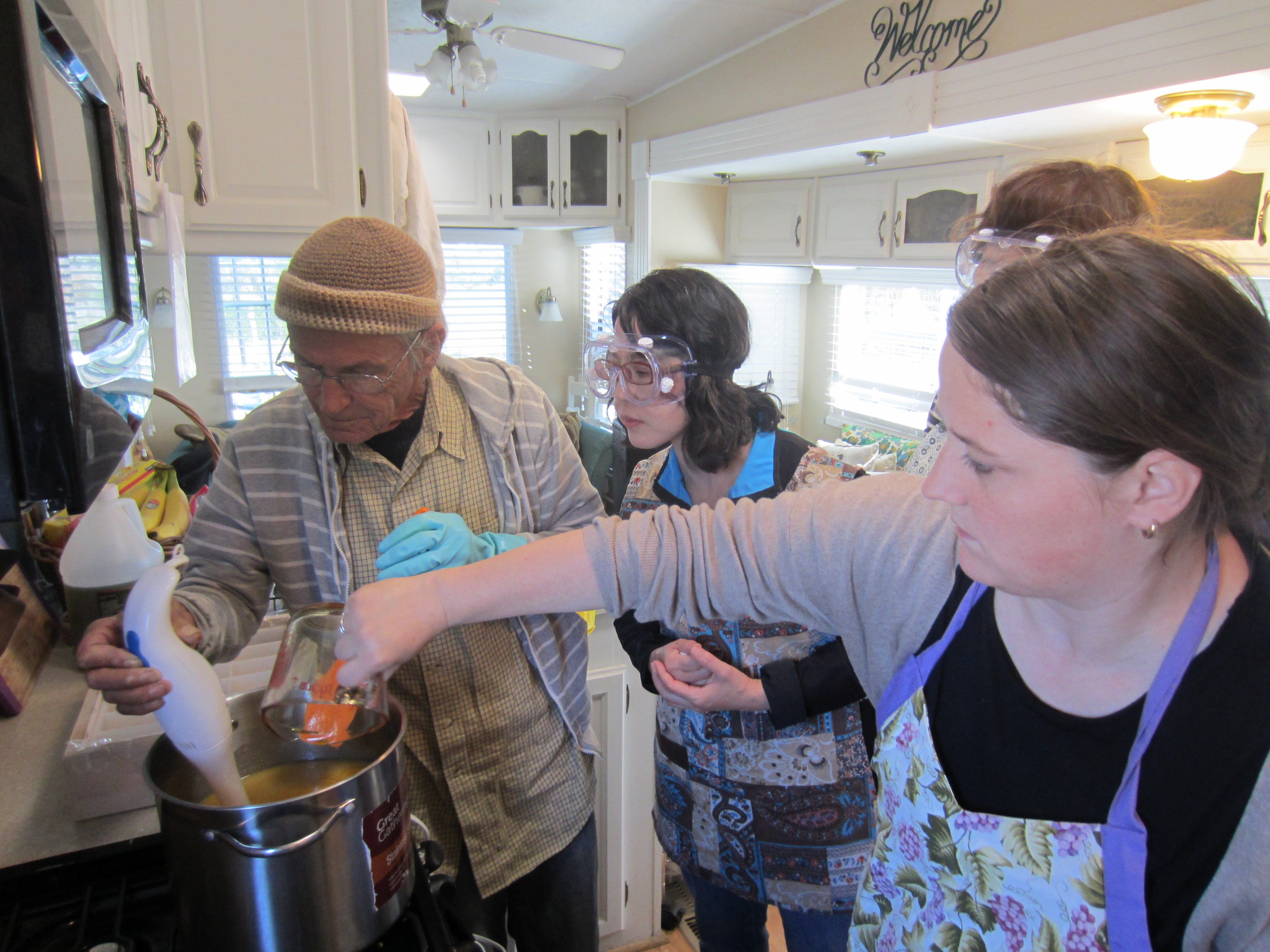
In practice, this meant that we made a lot of really good goat-milk soap, and along the way, I became true friends with Debbie and with Earth Drum, my primary soapmakers. And they become skilled in welcoming volunteers—usually rich teens and their parents from the other side of town—and were so good at this hospitality that families would come week after week, building friendships over time.
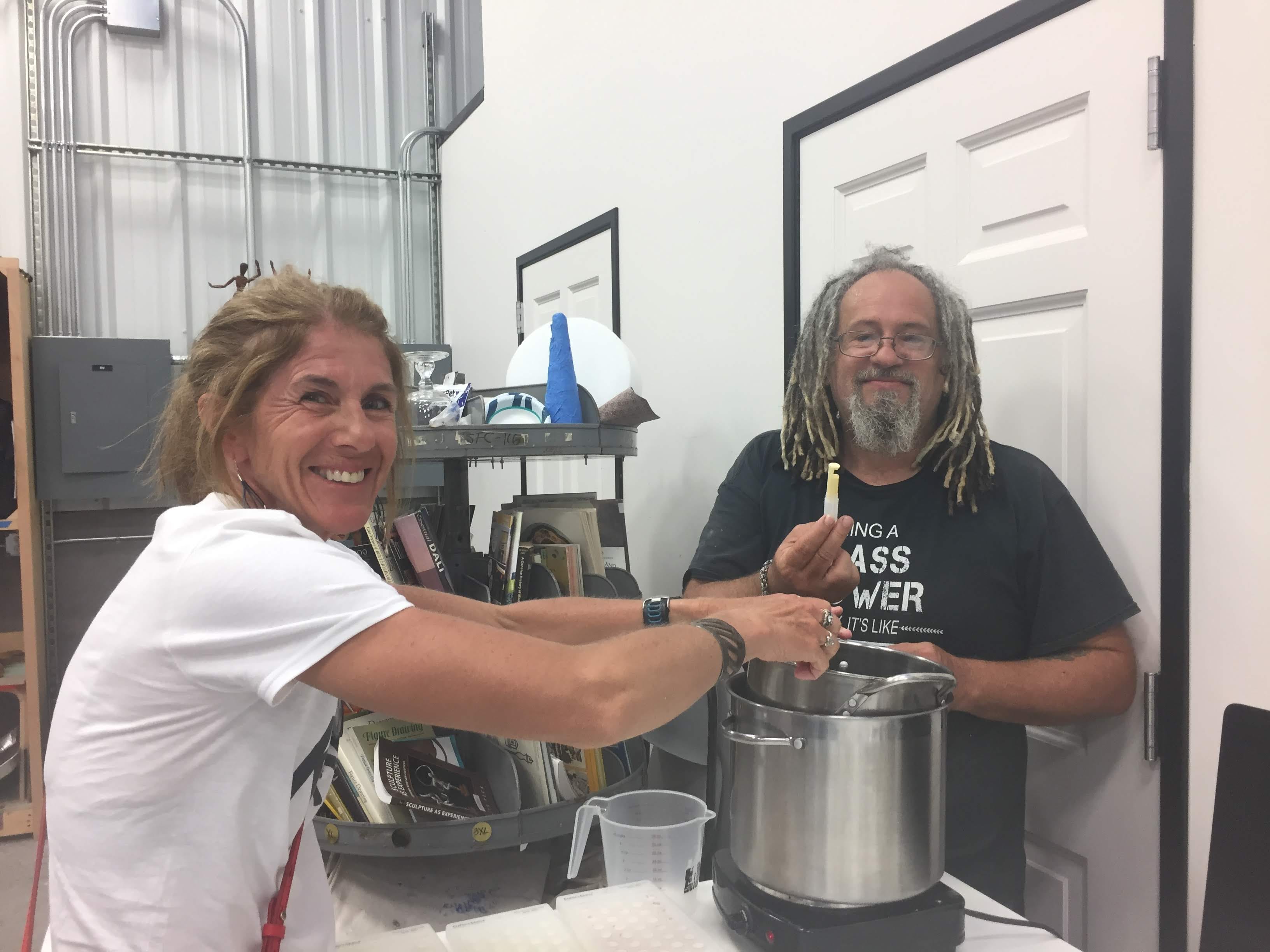
Why did making soap help these very different sorts of people come together? As work for membership, it
was interesting work that engaged the skill and curiosity of the participants
required attention and care, but not expert or professional training
had potential for growth that kept both practiced hands and novices interested in continuing
provided a good (soap, and the money from selling the soap) that supported the larger community
created a “third thing” for host and guest to pursue together, a dynamic which C.S. Lewis identifies as the basis for true friendship
We left the Village in 2020, but alongside my husband and church, I’m currently in the process of trying to establish similar work with the teens in a farm-based ministry. These teens come primarily from our city’s refugee and immigrant communities, and most have some connection to our church’s east-African congregation.
For many reasons, it has been hard to find ways to really connect our predominately-white and American-born morning services with the families in the afternoon east-African service. But on Saturday mornings we are finding new ways to welcome one another in the context of meaningful work: running a small market-farm, using herbs from the farm to make lip balms, growing dye plants and exploring how to use those botanical dyes to make beautiful and useful textiles. For several weeks in a row volunteers from the morning services have joined us, and this week I had a neighbor, who doesn’t even go to our church, ask if she could come along.
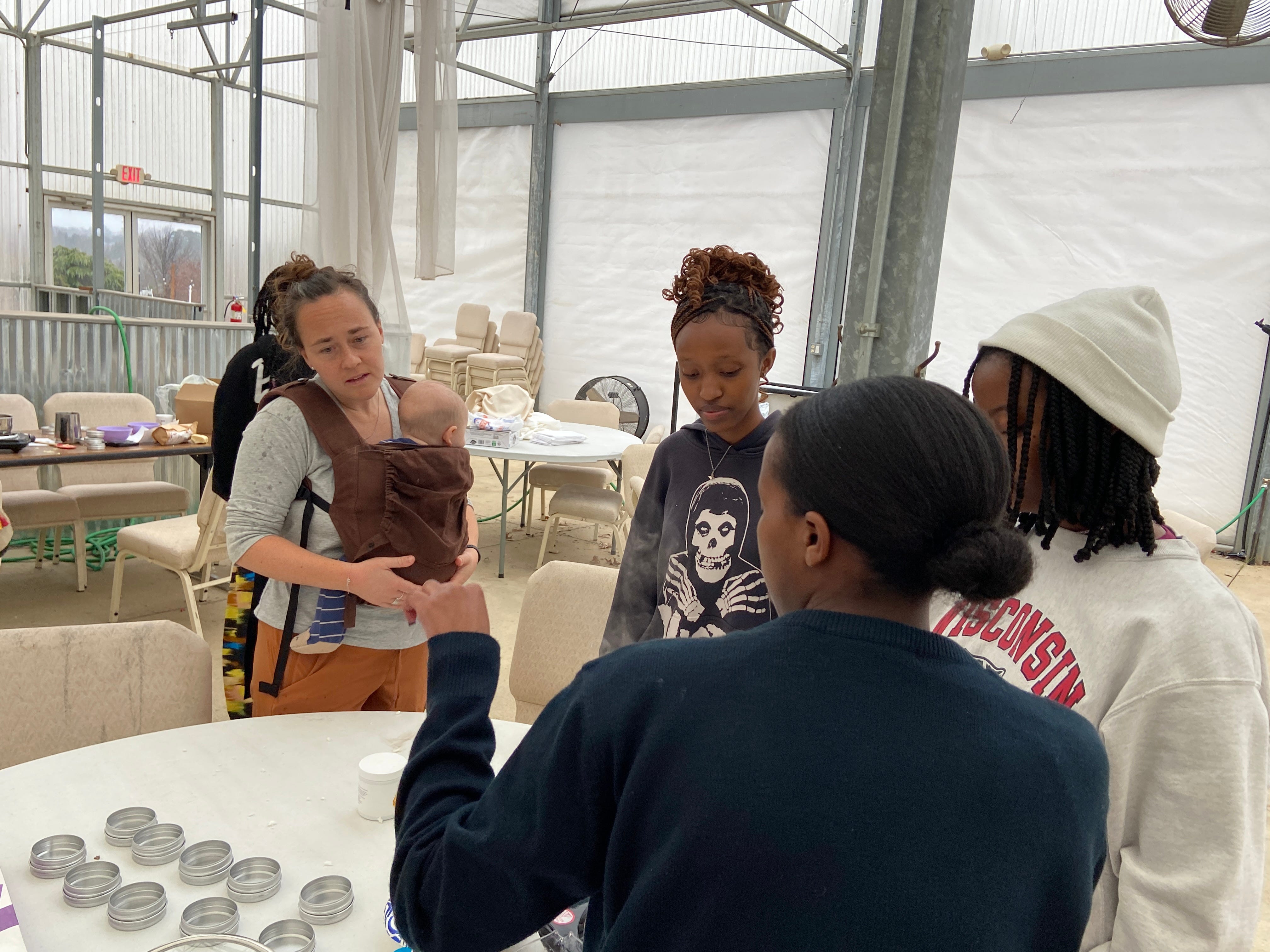
Most of us have realms of work that require deep concentration or solitude, and that is fine. But almost all of us have the opportunity to use other forms of work as structures for hospitality. Work is no guarantee of welcome, no magic charm to overcome difference. But as a form of prayer, it is something powerful we can offer up to God for the sake of others.
Work is no guarantee of welcome, no magic charm to overcome difference. But as a form of prayer, it is something powerful we can offer up to God for the sake of others.
Have you ever been welcomed into the kinds of work I’ve described here? What domestic or skilled work in your life might become a gateway for welcoming others? I’d love to hear your thoughts!
Bethany Joy's Substack is a reader-supported publication. To receive new posts and support my work, consider becoming a free or paid subscriber.
Comments
Nothing yet. Say the first thing.
Sign in to join the conversation.