
I am going to start with something not Southern Baptist. So just hang on.
Last year I read Ian Forrest’s Gender and Authority in the Late Medieval Church. It helped me sort out a tension I face between the reality of male dominance in church leadership and the reality of women’s recognized leadership & authority in church history.
If you look at what male ecclesiastical leaders said at church councils, in creeds, etc., you will see a consistent pattern of women barred from leadership roles. If you look at what women were actually doing from social and cultural documents, local and regional church records, literary sources, archaeology, and the negative evidence of church councils, etc., you will see a consistent pattern of women serving in leadership roles and being recognized as authoritative leaders by their male peers. Both happened.
Put another way, you can’t argue that there was a time in church history when women were allowed—unilaterally—to lead freely like men. There isn’t one. You also can’t argue that women have consistently been banned from church leadership. Because they haven’t. There are times and places in church history when women in leadership have served more freely than at other times. There are times and places when more restrictions have been placed on women than at other times.
Does this make sense?
Ian Forrest gave me better language to think about this tension. Indeed, he helped transform my thinking about it, which is exciting for me as my third book is going to be the most powerful of all :) (not to mention introduce you to amazing medieval women).
Forrest describes the “official transcript” of male power, which is what both medieval men and modern men like Al Mohler and John Piper have drawn from to argue for male-only ecclesiastical leadership. But this official transcript of power (created by male leaders to promote male leadership), exists side by side with a “hidden transcript of power” wielded by women. As Forrest writes, “women were everywhere active in shadowing, pressurizing, usurping, or adopting positions of influence and authority within the church, demonstrating their capacity to undertake roles that were gendered masculine…Priests knew they relied on women and that women could do what priests did, but the male agents of governance could not admit their dependence on that which was not supposed to exist” (248-49). The reality of church leadership, Forrest argues, was a precarious male monopoly haunted by women “everywhere [they] were excluded or denied” (2-3).
Think about it.
What if the story isn’t the continuity of male leadership? What if the story is how the male sex has managed to hang on to their hegemony while knowing that the female sex could easily lead with them? What if the story isn’t that men should be in charge, but rather how some men are afraid of capable women called by God?
Now, before you think I am arguing for women to take over as leaders in the church, I am not. I believe men are called to spiritually authoritative roles just as I believe women are called. Heck, I’m married to an extremely good pastor. The problem is some men (like those in charge of the Southern Baptist Convention) who claim men are the only ones who can wield authority and unilaterally disqualify women by telling a historical half-truth that only emphasizes men who claim they are the ones who should wield authority (again like the Southern Baptist Convention). Read that sentence again.
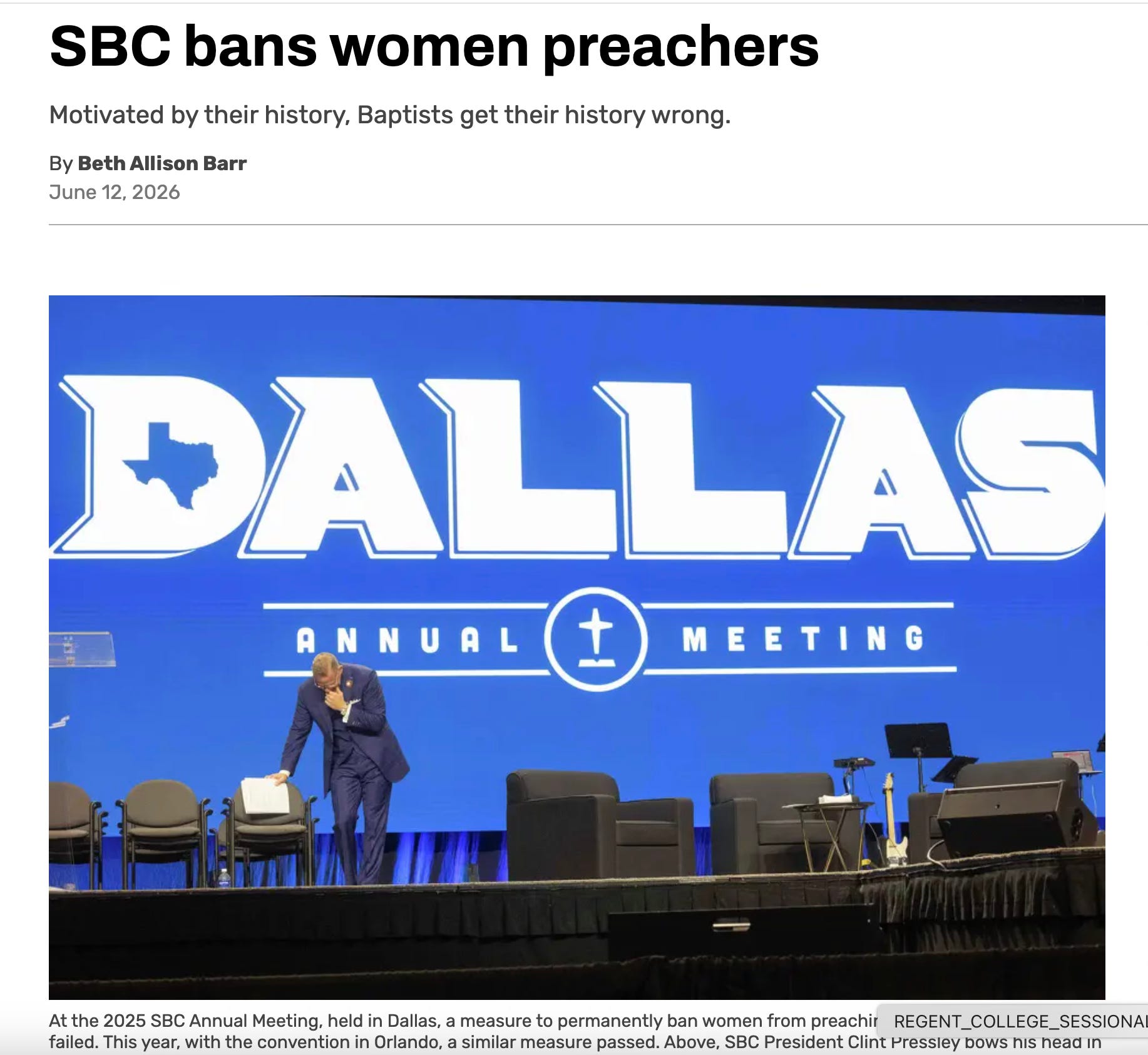
Which brings me to the sub title of my Dallas Morning News op-ed: “Motivated by their history, Baptists get their history wrong.” It is perfect. I didn’t write the title, so I can praise it. It captures exactly what I did write in the op-ed, which I wrote with the help of Ian Forrest’s historical theory.
So read my op-ed for yourself. Here is a gift link that will work for a few people (also it will be in print next week which is exciting). For those who can’t access it, here is my conclusion:
“Mohler convinced this year’s Southern Baptist convention that banning women from preaching is a Baptist distinctive, as 75% of the convention messengers voted in support of his amendment.
But Mohler has only told a partial truth. Neither he, nor the Southern Baptist Convention, can escape the preaching women who will never stop haunting their past.”
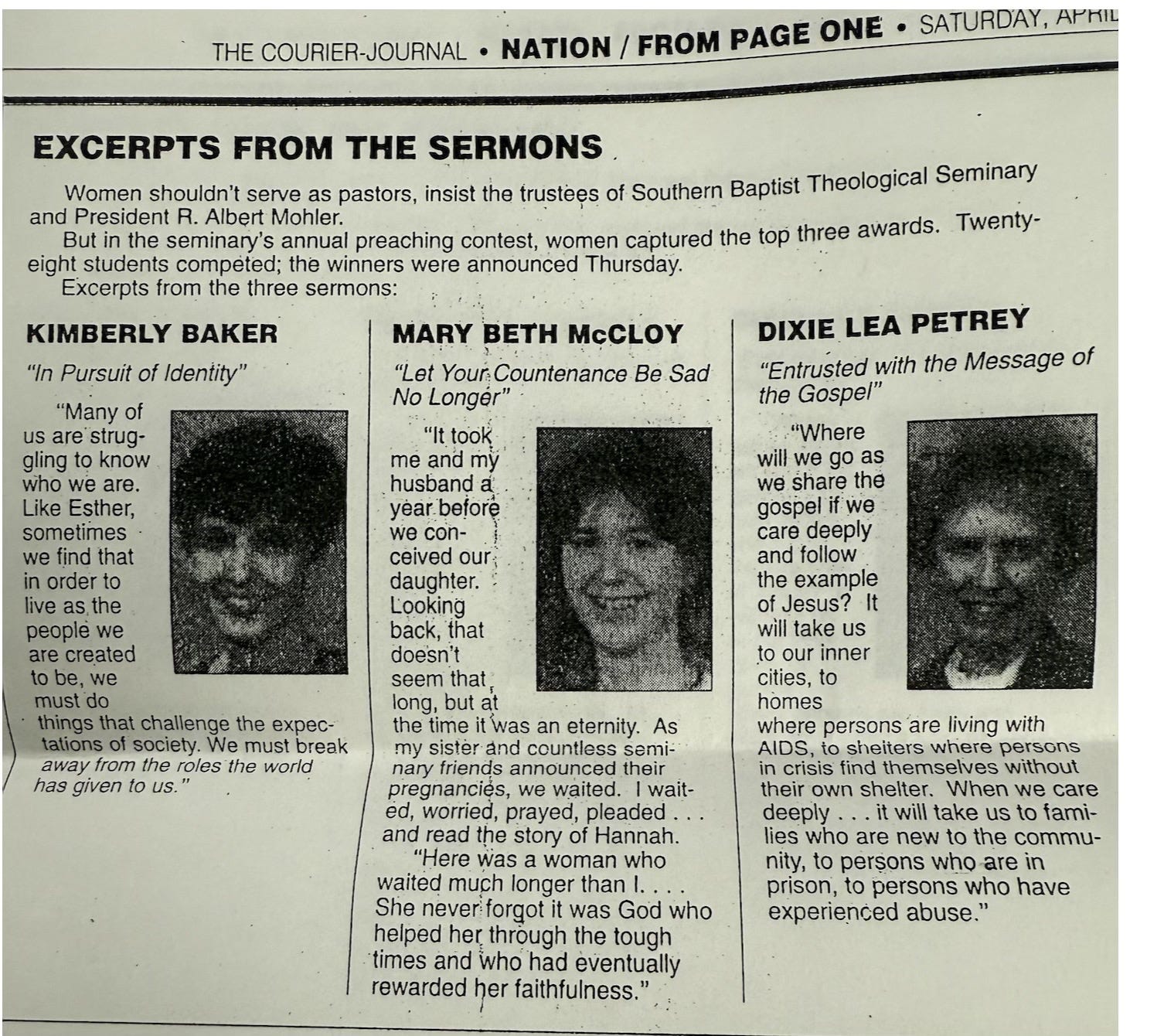
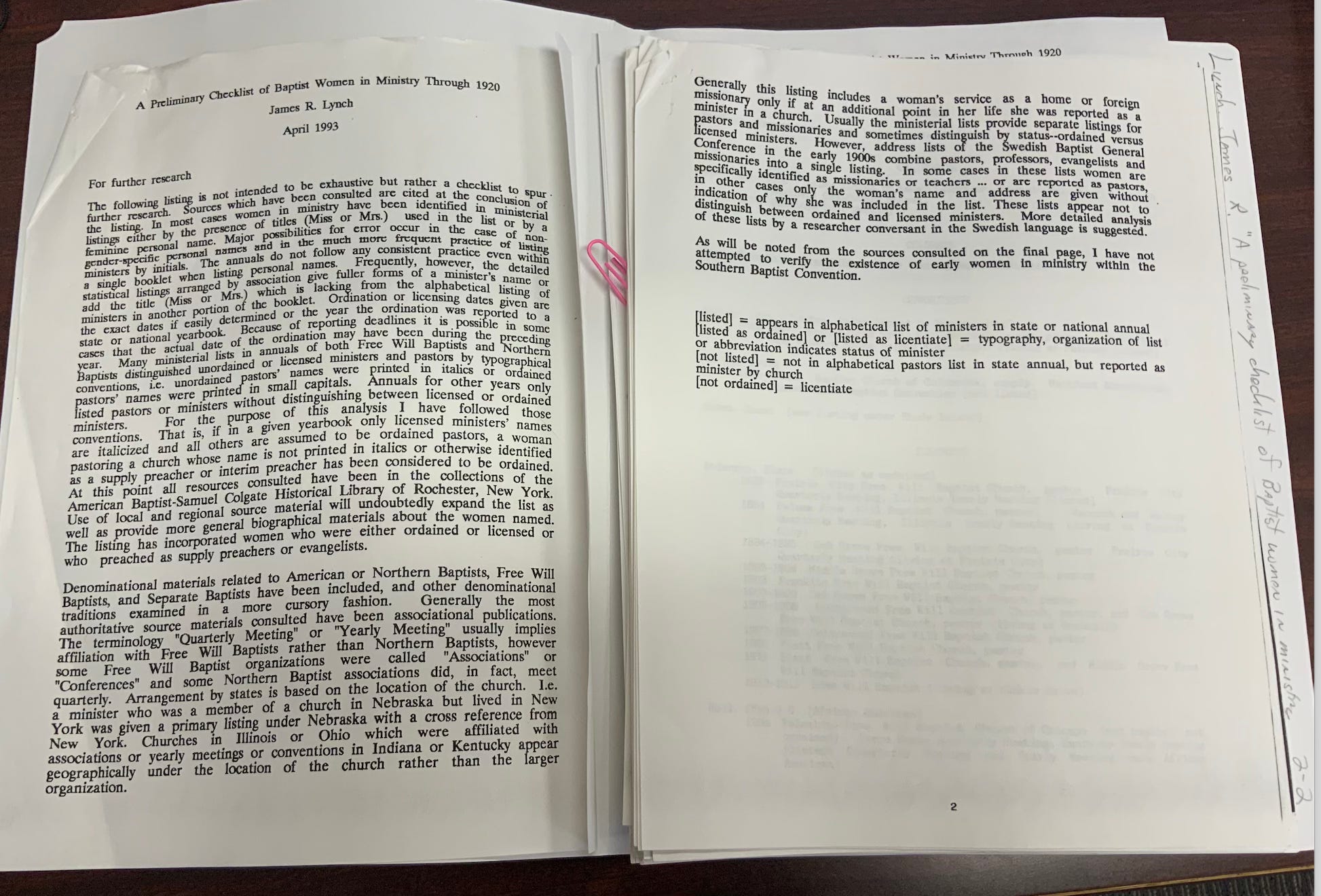
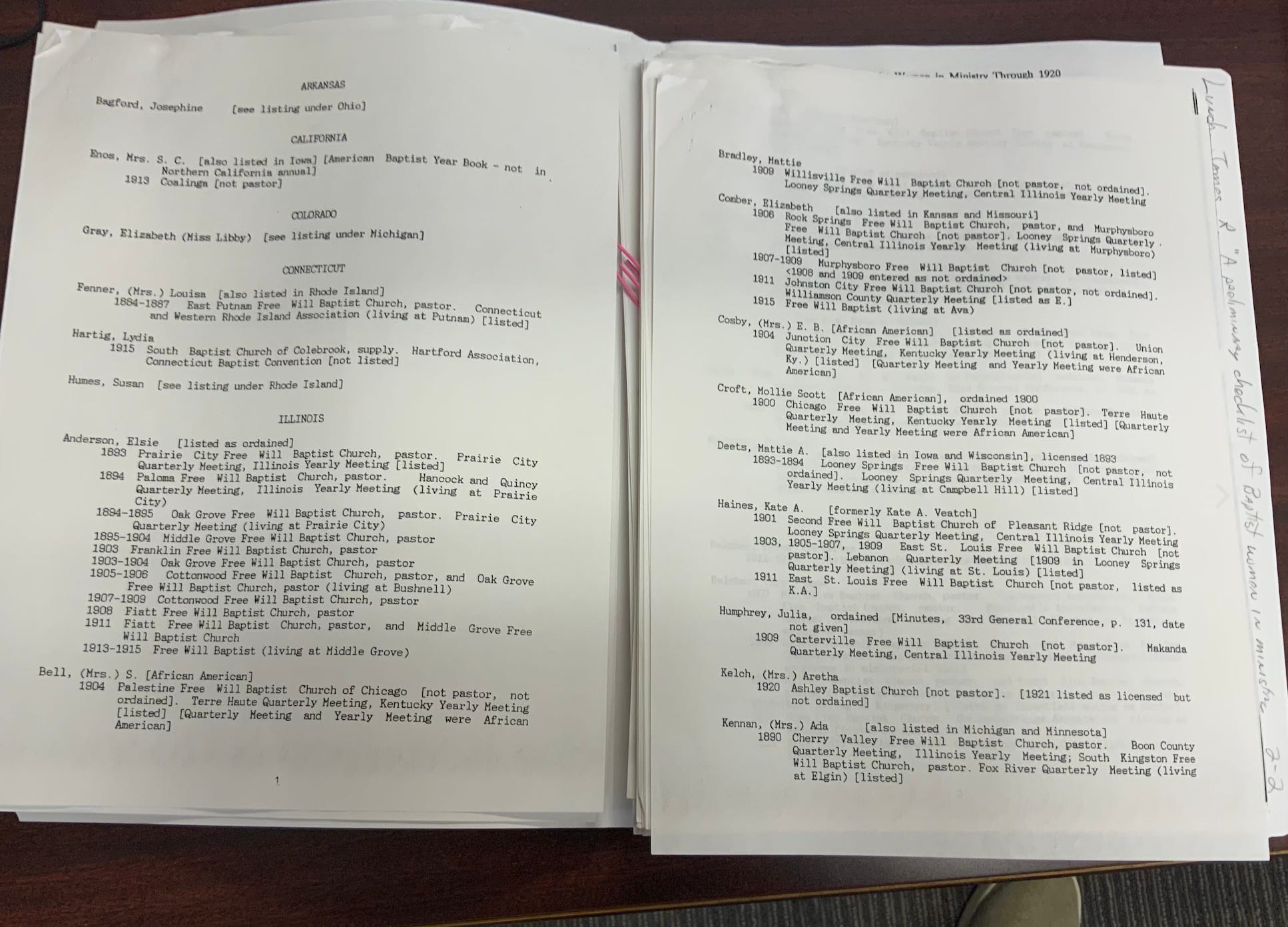
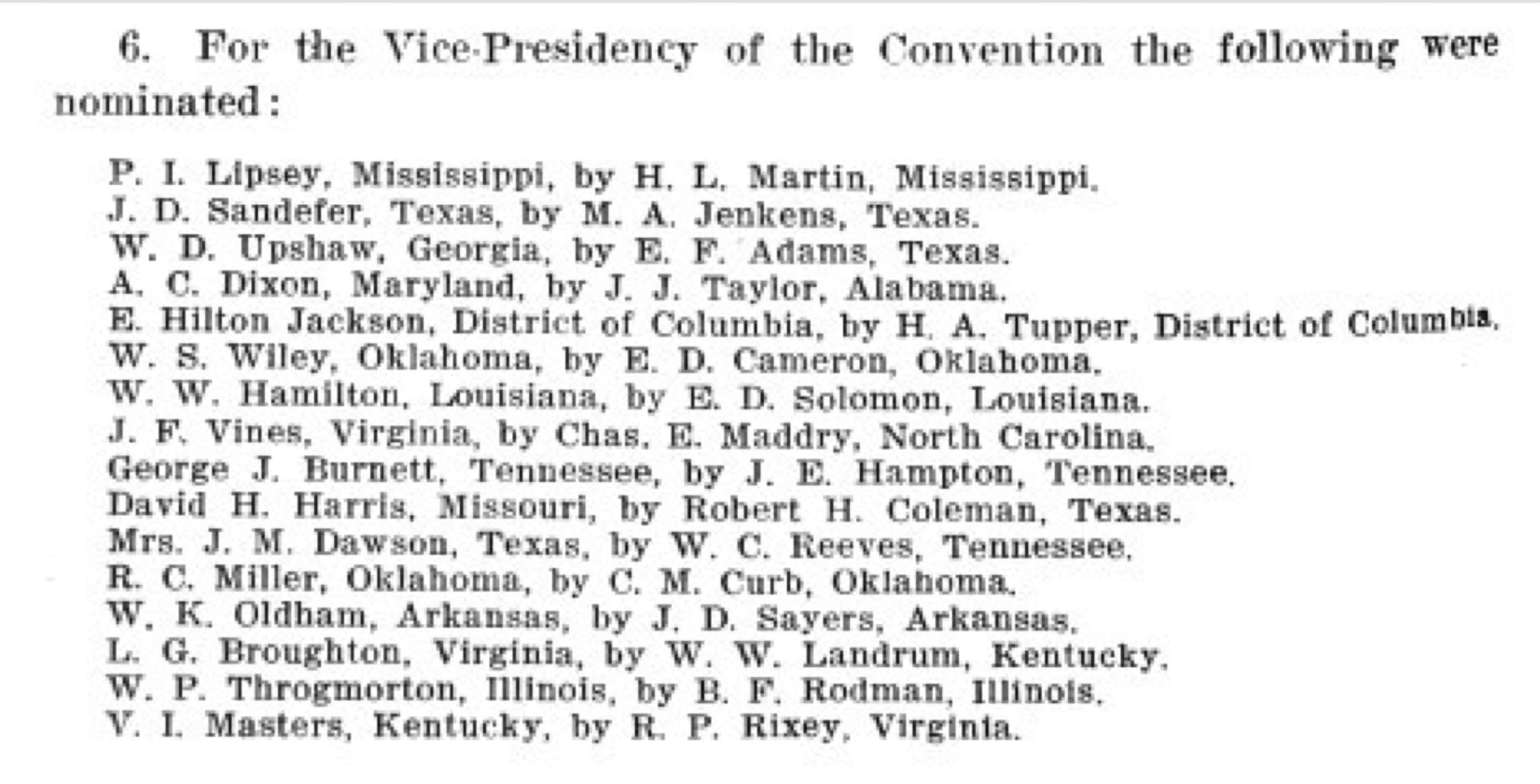
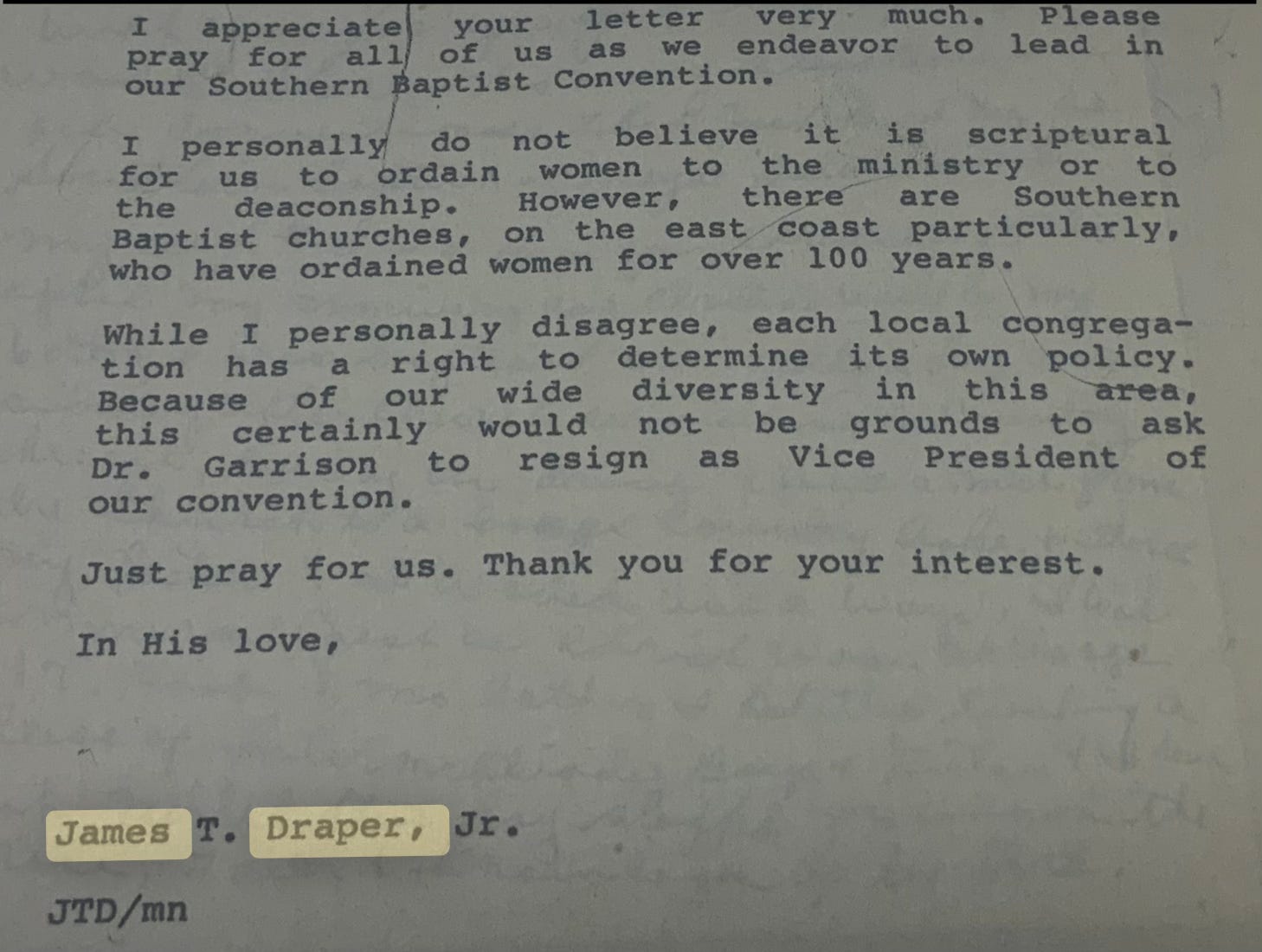
I used Mohler’s own words as well as his own denominational archives to expose his lie (a lie because a half-truth is deceptive). Below are the sources, with short explanations and citations, I used for the article. As always, I am grateful to Dr. Taffey Hall, the director of the Southern Baptist Historical Library and Archives.
As you look through the sources, consider why we unquestioningly accept a history of leadership that we know is written by some men who want to make sure they stay in charge. Is Al Mohler citing a document written by men outlining male authority proof of God’s will? Or is it simply proof of some men centering themselves to maintain patriarchy?
Three guesses what I think.
Comments
Nothing yet. Say the first thing.
Sign in to join the conversation.