
A post is going around your WhatsApp right now with a tidy explanation for the “new UPI fee.” It goes like this: the US Trade Representative flagged UPI as a trade barrier, Brazil got hit with a 25% tariff for defending its own payment system Pix, and so India quietly caved and put a fee on UPI to keep Visa and Mastercard happy.
I went looking for the holes in that story, because the honest version is more useful than the viral one.
The USTR did flag UPI. Its annual trade-barriers report classified the National Payments Corporation of India’s policies as a “service barrier,” singling out the 30% cap on any single third-party app’s share of UPI volume, plus data localisation rules it said favour domestic players. That happened.
Brazil did get tariffed. On 22 July 2026 the US imposed a 25% Section 301 tariff on most Brazilian imports, and Pix was named in the file. That happened too.
So the post isn’t inventing events. It’s inventing the wiring between them.
Pix was one of six grounds in the Brazil case, not the reason. The others: preferential tariffs, ethanol market access, intellectual property, anti-corruption enforcement, and Amazon deforestation. Anyone who followed the Bolsonaro politics of the past year knows that tariff was never really about a payment app. Reducing it to “they defended Pix and got punished” is the kind of clean story that survives on WhatsApp and nowhere else.
Then the load-bearing claim: “thus the fee on UPI.” There is no fee. On 6 August the Lok Sabha passed the Taxation and Other Laws (Amendment) Bill, which amends Section 10A of the Payment and Settlement Systems Act. Until now that section legally banned anyone from charging on UPI. The bill removes the ban and hands the government the option to allow a merchant fee later. It sets no rate, no date, no threshold. Two days later the Finance Ministry clarified that person-to-person UPI stays free. An enabling law is not a fee.
And here is the tell that gives the whole theory away: a fee on UPI does nothing for Visa and Mastercard. They do not run on UPI rails. A merchant discount rate on UPI is money that flows to Indian banks and Indian payment service providers, not to a card network in San Francisco. The USTR’s actual complaint was about market-share caps and where the data sits. That is a completely different fight from who funds the rails. The viral post stapled two unrelated grievances together and bet nobody would check.
Look at the number in the first line again. ₹29.9 lakh crore across 2,366 crore transactions in a single month. 55 crore users. 6.5 crore merchants. The largest real-time payment system on earth, live in 11 countries. And it earns nothing.
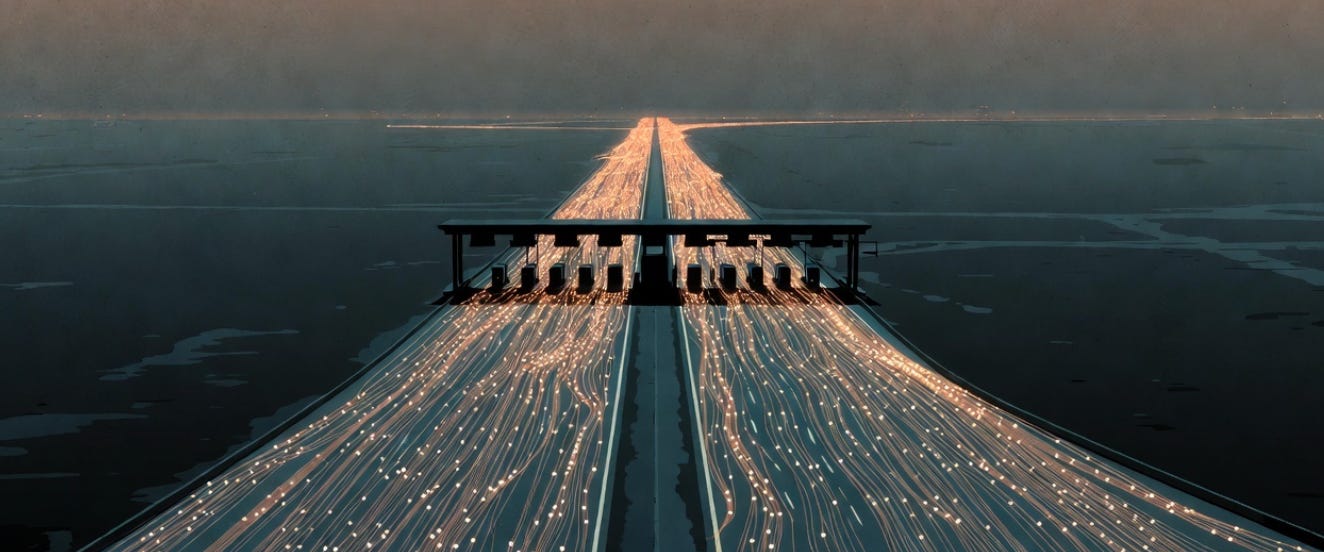
UPI was never built as a business. It was built as public infrastructure. A road, deliberately toll-free to drive adoption. It worked better than anyone forecast. But roads still cost money to run: fraud systems, uptime, settlement, the constant upgrades a system at this scale demands. That bill has been paid by a government subsidy that shrinks every year while volumes explode.
That squeeze is what the bill is answering. Not a phone call from Washington. A basic question that was always coming: when a public utility turns systemically critical and processes a third of the country’s payments, who pays to keep the lights on? The answer being floated is a small MDR, roughly 0.3 to 0.5%, only on large merchants above a turnover line, on transactions above ₹2,000. Small shops and ordinary users stay free. That is not a surrender to Visa. It is India confronting the P&L of its own success.
Every “free” utility has a payer hiding somewhere. For a decade, UPI’s payer was the taxpayer, and that was a policy choice, not a law of nature. The question that actually matters for anyone who invests in Indian financial infrastructure is not whether the US forced a fee. It is who ends up funding the most important payment rails in the country, and what they earn for it once they do. That question has been sitting there the whole time. It took a viral conspiracy theory for people to finally ask it.
The UPI story was never America versus India. It was free versus funded. That reckoning was always on the calendar.
If this helped you see past the WhatsApp version, forward it to the person who sent you the WhatsApp version.
To know more, read further:
Session 2 is gearing up well, get access to both the sessions.
No posts
Comments
Nothing yet. Say the first thing.
Sign in to join the conversation.