
Hey welcome back.
In this issue:
Kirkland’s $500m bet on building its own AI, not buying it
Fried Frank turns its precedent bank into a product
The rise of the lawyer “digital twin”
Anthropic ships Opus 4.8
And much more, let’s dig in.

Kirkland’s half-billion-dollar bet on building, not buying

Kirkland & Ellis, the highest-grossing law firm in the world, has told the Financial Times it will spend $500m building its own artificial-intelligence platform. More than $100m goes out this year, with the rest following over three or four. The firm will keep paying for third-party licences on top. This is one of the largest technology commitment a law firm has ever announced.
Speaking to the FT, Ballis, their Chairman, says the platform is built to run on the firm’s “collective intelligence”, ie, take what Kirkland’s lawyers already know and make it usable across the firm. It’s clear that Kirkland wants to move towards an asset they can own and others cannot rent.
Kirkland are’’t new to this tech business. Almost decade ago the firm built CTRAN, a private database of M&A deal terms that let it spot market patterns rivals couldn’t; more recently it built SideTrack for funds work.
Why it matters
One of the most pressing questions facing law firms today is whether you can bottle senior expertise and institutional knowledge. That is the true promise of “collective intelligence.” If successful, the value historically locked inside employees’ heads becomes a permanent, scalable asset.
Over the next few years, a distinct divide will likely emerge between well-capitalized firms building proprietary technology and those relying entirely on off-the-shelf tools. This gap will inevitably ignite a new talent war, with major firms poaching engineers and product experts directly from the legal-AI vendors they used to buy from.

Fried Frank turns precedent into a product. Fried Frank has launched FundAssist, an internally built tool that produces first drafts of long-form fund-formation documents at the click of a button. It runs on OpenAI’s latest models and mines the firm’s own back catalogue for client-preferred language and the closest precedents; clients can query their own documents directly. Becky Zelenka, co-head of the private funds group, told Bloomberg Law the aim is not to cut associate numbers but to let juniors “ramp up” faster.
Meet your AI twin. Reuters reported this week on a growing trend inside firms: the “digital twin”, a model trained on an individual senior lawyer’s past work, drafting style and judgement, so a version of your best people can run around the clock and coach the juniors. However, it does raise some questions - who owns a twin when the lawyer walks out the door, and will a junior trained by a machine ever ever be as good as someone traditionally trained?
Anthropic ships Opus 4.8. The headline for this model is its ability to be more honest, where it is supposedly better at acknowledging when it does’t know something rather than confidently asserting incorrect information, which has historically been a weakness of many AI models. If Opus 4.8 proves to be more honest and hallucinates less, that could make it particularly valuable for legal workflows.

Crimson raised an oversubscribed $2.5m (£1.8m) seed round and opened a New York office. The London-based litigation and arbitration platform — a Y Combinator spring 2025 graduate and a tenant in A&O Shearman’s Fuse incubator — was co-founded by former Willkie Farr associate Mark Feldner. Crimson says revenue is growing more than 30% month on month this year and that its platform is now used on disputes worth over $40bn, with clients said to include Magic Circle and Am Law 10 firms — names this readership will recognise.
Enjoying Best Practice? Subscribe for free to receive the latest on Legal AI.

A High Court judge has criticised Pinsent Masons after a junior lawyer used AI to research a case and the AI invented the law. The AI made up a rule that doesn’t exist and even produced fake wording to go with it. When the judge questioned it, the firm sent a second letter — also written with AI — that didn’t fix the problem. The firm has since reported itself to the regulator.
This is the third time in recent months a UK firm has been pulled up for the same thing, and US firms have made the same mistake. The moral of the story is that AI can change how the work gets done, but the lawyer still answers for it.

What a table tennis robot can teach us about AI
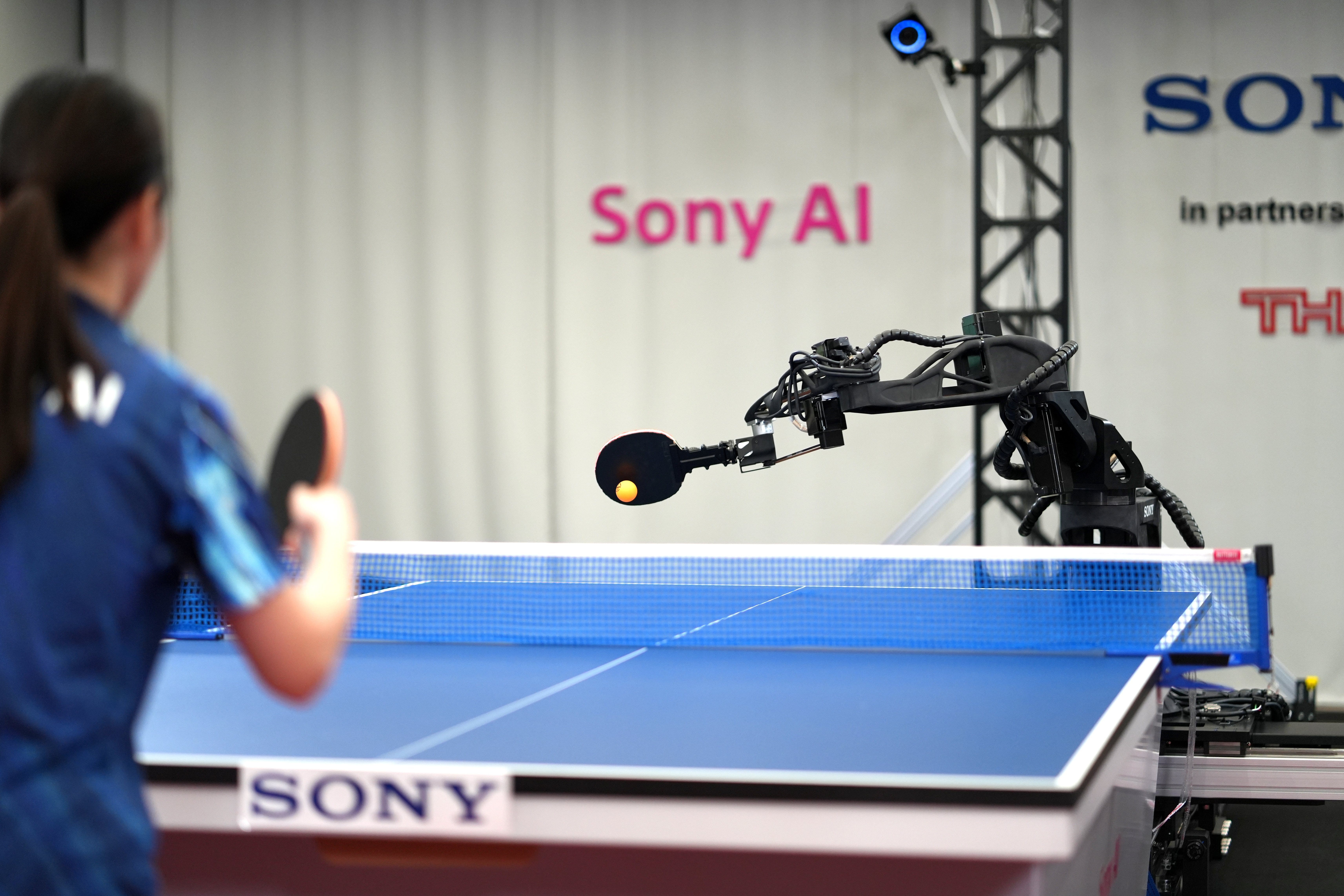
Table tennis is a deceptively hard problem for a machine. The ball moves fast, it spins, and you have a few hundredths of a second to read it and respond. Sony AI has built a robot that beats people who are very good at it, called Ace.
Ace kind of out-specs the standard player. It reads the ball with nine cameras and tracks the spin by following the logo printed on its surface; it learned the game not from a rulebook but by playing, over and over, through reinforcement learning. The team has even capped its speed and reach on purpose so the matches stayed fair.
The Olympian Kinjiro Nakamura said he hadn’t believed the some of the shots were possible — and that seeing the robot pull it off meant a person might manage it too. That’s the quiet promise buried in all this. Sometimes the most useful thing a machine does isn’t beating us at our own game. It’s showing us a move we didn’t know was there.
That’s everything for this week.
If you have any feedback, hit reply to this email and let me know.
Until next week,
George
Comments
Nothing yet. Say the first thing.
Sign in to join the conversation.