
Hey, happy Sunday
Both Harvey and Legora both unveiled agentic platforms, marking what feels like the end of the “AI chat assistant” era and the start of a more ambitious agentic one.
Big things are coming from Best Practice, including a new snazzy website. Stay tuned 👀 .
Want to get your brand seen by thousands of lawyers in the Best Practice Newsletter? Get in touch here
THIS WEEK IN LEGAL AI
Agentic AI (at it’s basic level) has been here for a while now. Both Claude or ChatGPT now have the feature to dispatch agents to do work in the background while you get on with something else. Fire off a research task in the Claude app, close the laptop, walk away, and come back twenty minutes later to find the work sitting there. None of this has been especially loud, but the underlying architecture of how these tools are used has shifted steadily all year. Legal AI (and most B2B AI), for the most part, has been a few months behind consumer AI.
Harvey launched a library of more than 500 pre-built agents alongside an upgraded Agent Builder, designed to handle multi-step legal work end-to-end and produce client-ready Word, PowerPoint and Excel outputs in a single click. Later came Legora’s CEO Max Junestrand opened the company’s London conference with the line “Legal AI is dead” and unveiled aOS - Legora’s agentic operating system, which he billed as the dawn of “Agentic Law.”
Both companies have stopped describing themselves as AI tools and started describing themselves as infrastructure. Harvey now calls itself “the operating system for legal and professional services.” Legora’s pitch is that aOS is not a feature but the surface on which legal work is executed: intake, research, drafting, review, client delivery. The agents do the work; the lawyer reviews and judges.
Harvey’s 500+ agents were built and tested by lawyers and benchmarked against the firm’s new open-source Legal Agent Bench, which spans 1,200 tasks across 24 practice areas and was published in collaboration with Nvidia, OpenAI, Anthropic, Mistral and DeepMind. The company says its platform now handles 400,000 agentic queries a day across 100,000 lawyers in 1,500 organisations. Legora, meanwhile, says customers are saving an average of 4.3 non-billable hours per lawyer per week, and that 42% of surveyed firms have won new work directly attributable to the platform.
Both are now also competing from below with Microsoft, which embedded its own Legal Agent inside Word.
I think we are seeing two things are happening at once here.
First, the economic story. Both Harvey and Legora are now being priced as platforms, not necessarily products - which means they need to compound institutional knowledge, become hard to unplug, and capture more of the workflow. That is the logic behind Harvey’s Agent Builder and behind Legora’s small army of “legal engineers” embedded inside customer firms.
Second, is trust. Agentic AI only earns its keep if lawyers actually let agents do the work, rather than demo them and then forget about them. This is going to be culturally hard. Lawyers are trained (and will still need to) verify, caveat, and trust our own judgment over a black box that produces an output.
One last thing I would like to see. The most useful feature of consumer agentic AI right now is the “dispatch” feature - fire off a task, walk away, come back to a finished output. Neither Harvey nor Legora has built this in quite the same way yet. If either of them lets me leave my laptop open with a brief queued up, crack on with other bits (or go to lunch early haha), and come back to a finished draft genuinely ready to review, then that would be really cool. However, as discussed in previous posts, the bottleneck is always the human.
We discussed:
→ Why Wexler went deep on litigation when every other legal AI startup was going broad
→ The “verification tax” and where fully agentic legal AI actually breaks down
→ Why consumption pricing beats per-seat for litigation work (and how they structure it)
→ How his 67-year-old father is now vibe-coding apps for his tennis club
→ What it takes to close a Big Law deal in a week
I absolutely loved recording this episode and I hope you enjoy listening to it just as much as I did.
Know someone that might want to come on the Best Practice Podcast? Email me at george@georgehannah.com
Legora goes on the acquisition trail again. A day before launching aOS, Legora announced its acquisition of Graceview, a Melbourne-based regulatory horizon-scanning platform that monitors tens of thousands of sources across more than 100 jurisdictions. It is Legora’s third acquisition in two months, after Walter AI and Qura, and signals that the well-capitalised platform companies are now buying smaller startups for capability rather than scale. White & Case advised Legora on the deal.
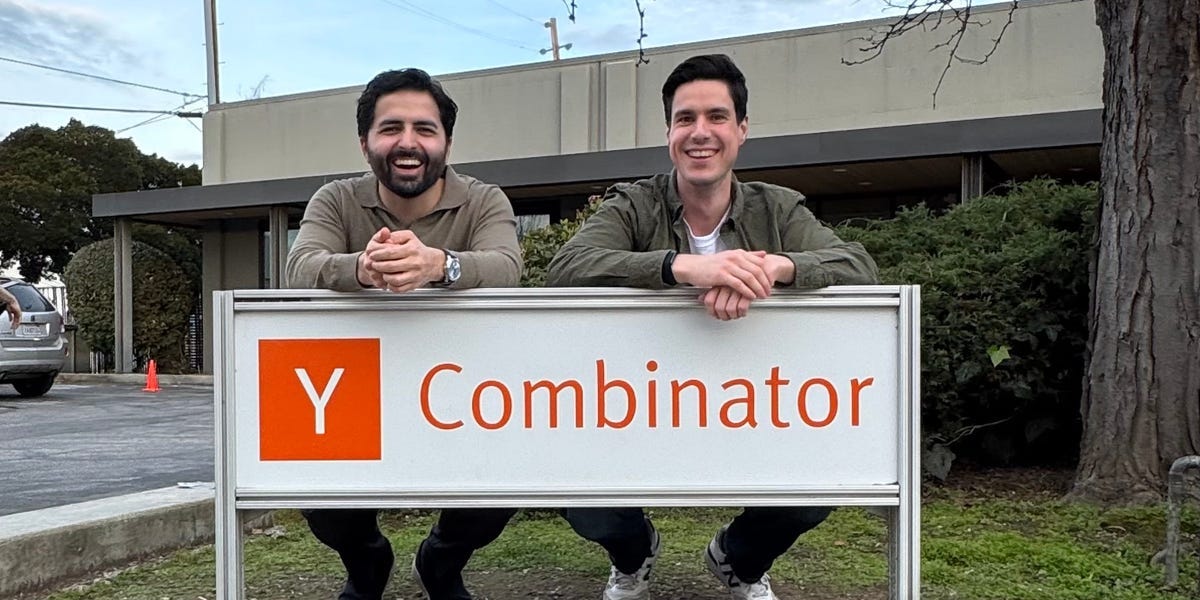
Moritz raised $9 million in a seed round that closed in just four days after Y Combinator’s spring demo day. Y Combinator and 20VC co-led, with founders from Reddit, Dropbox, Instacart, Hugging Face, Cruise and roughly twenty other unicorns participating as angels. Formerly known as Arcline, Moritz is positioning itself as an AI-native law firm rather than a vendor selling to existing firms — its lawyers, drawn from Cooley, Orrick and Clifford Chance, sit alongside an AI stack handling around 80% of routine commercial, corporate and employment work. Co-founder Pamir Ehsas, previously outside counsel to OpenAI, has told Artificial Lawyer his ambition is to build the biggest law firm in the world by deal value. The bar has been set.
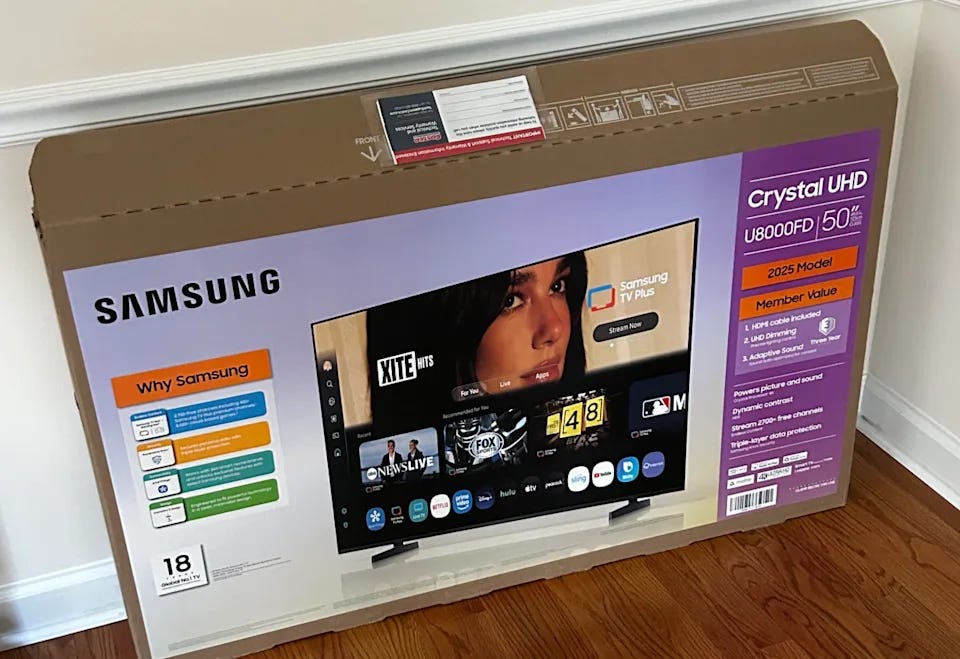
Dua Lipa’s legal team filed suit against Samsung Electronics in the Central District of California, claiming the company has been printing her photograph on the front of its TV boxes without permission. The image — a backstage shot from Austin City Limits in 2024 — is owned and copyrighted by Lipa. The complaint says Samsung was asked to stop in June 2025, refused, and has kept on selling the same boxes. She is seeking at least $15 million plus a share of Samsung’s profits.
It is not, on its face, an AI case — Samsung is accused of using a real photograph, not a generated one. How this case is fought, and what Samsung ends up paying, will matter well beyond the music industry.
Think a colleague mind find Best Practice useful? Share it below :)

In San Francisco, two 22-year-old Stanford dropouts have raised $10 million for an AI dating app called Known, which launched in February and reports that around half of its matches now turn into actual real-life dates. There are no profiles, no photos to swipe through, and no in-app messaging. Instead, users sit through a voice interview with the AI — covering background, values, what they want from a partner — and the model proposes one compatible match at a time, handles the introductions, and helps schedule the date. Backers include Forerunner Ventures, NFX and Pair VC. The app is currently limited to San Francisco; LA is next.
The pitch, predictably, is the loneliness epidemic — but the structural move underneath is more interesting. For fifteen years, dating apps have been engineered to keep you in the app, because the longer you scroll, the more they earn. Known is doing the opposite: using AI to push you off the app and into a restaurant. It is the same shift agentic AI is making everywhere else — less screen, more action — but applied to romance. Whether that ends in thousands of marriages or thousands of awkward Tuesday nights in San Francisco wine bars, we will all find out in due course.
Thank you for reading this weeks edition.
If there’s anything you’d like to see me cover or feature on the podcast, please let me know by hitting reply to this email.
Until next Sunday,
George
Comments
Nothing yet. Say the first thing.
Sign in to join the conversation.