This week, we’ve got something a bit different, with a special edition on Anthropic’s new suite of Legal AI tools.
Let’s dig in.
Partner Content::
This edition is brought to you by Aline.
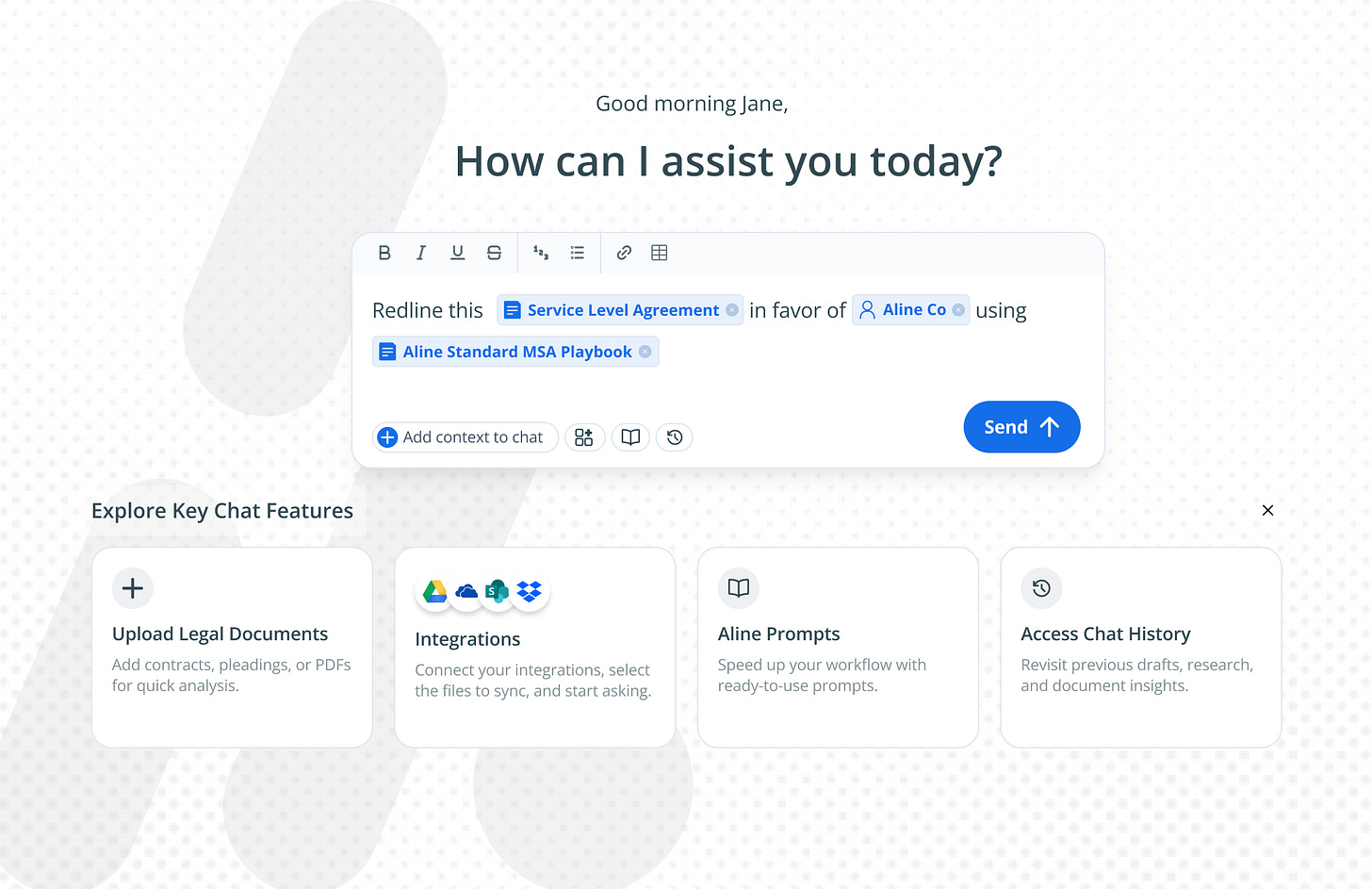
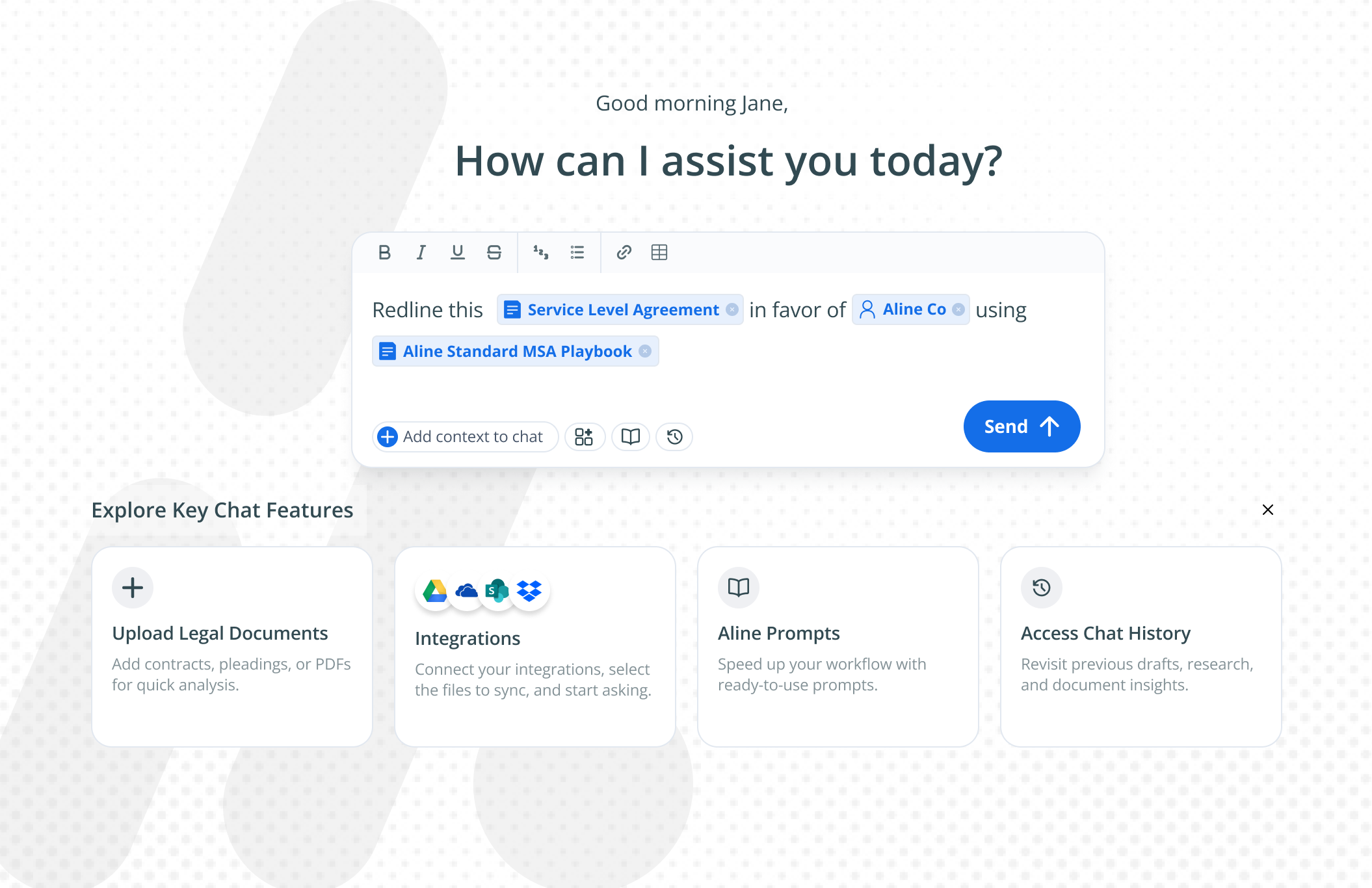
AI that redlines like a human lawyer. Aline suggests fallback clauses, flags risky language, and applies your playbooks automatically. Routine edits happen instantly.
Big news this week. Anthropic, a San Francisco-based artificial intelligence laboratory, is best known for its high-minded obsession with ensuring its models are safe and well-behaved, have made their latest move aimed at corporate law.
For the past three years, the legal-AI market has maintained a division of labor:
+--------------------------------------------+
|                 Law Firms                  |
+--------------------------------------------+
                      ▲
                      │ (Disrupted by Claude)
+--------------------------------------------+
|  Vertical Wrappers (Harvey, Legora, etc.)  |
+--------------------------------------------+
                      ▲
                      │
+--------------------------------------------+
|     Foundation Models (Anthropic, OpenAI)  |
+--------------------------------------------+
The foundation-model laboratories - Anthropic, OpenAI, and Google - focused on building massive, horizontal consumer chatbots and developer tools.
Meanwhile, a crop of well-funded vertical startups, such as Harvey, Legora, and Spellbook, turned this technology into something useable for the legal world. They took these raw models, built specific workflows around them, integrated them into lawyers’ daily routines, and sold the finished product to law firms.
Claude for Legal promises to almost bypass this middle layer entirely. Out of the box, it features more than twenty direct connectors into the data infrastructure that large law firms already rent, including Thomson Reuters (Westlaw and Practical Law), Ironclad, DocuSign, and Datasite. Sitting atop this plumbing are twelve “practice-area plugins”-preconfigured workflows designed for everyone from litigation associates to AI governance counsel.
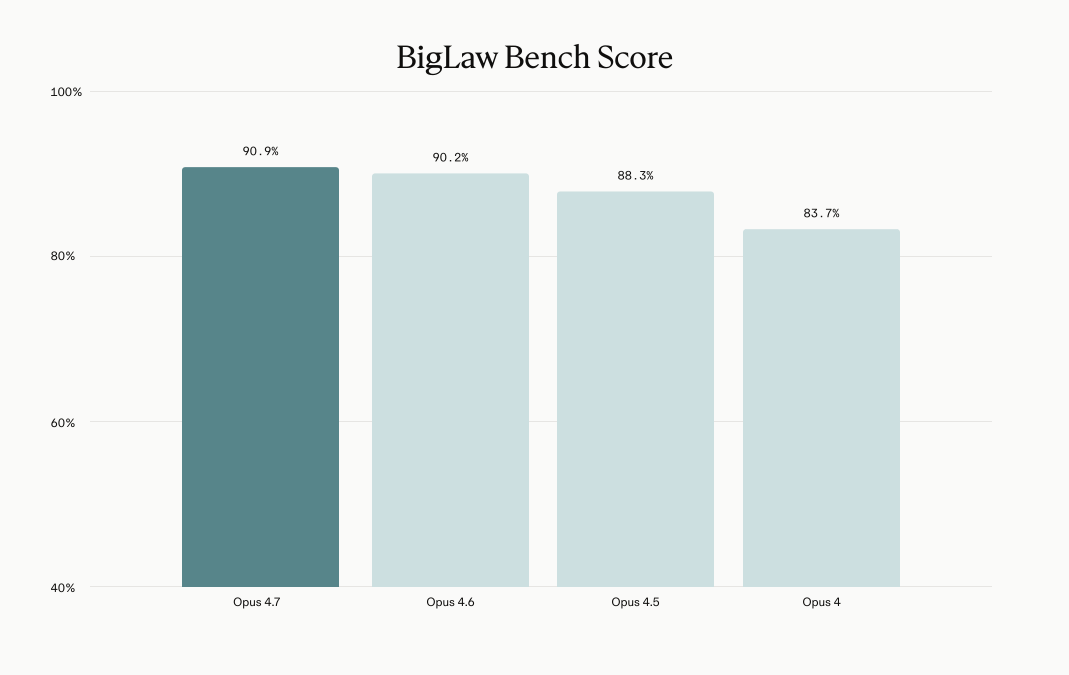
Crucially, the assistant operates across Microsoft Word, Outlook, Excel, and PowerPoint, carrying context between them. This means that lawyer reviewing a term sheet in Word no longer needs to re-explain the deal context that was established moments earlier in an Outlook email thread. Underneath it all sits Claude Opus 4.7, which recently scored 90.9% on Harvey’s own “BigLaw Bench” test.
Credit: Harvey
The technology sector has seen this before. In 2006, Amazon Web Services (AWS) launched with basic tools like S3 for storage and EC2 for compute. The conventional wisdom held that Amazon would remain in the “plumbing” layer, leaving others to build profitable applications on top.
That assumption died in 2009 when AWS launched RDS, its own managed database service. It was not the most sophisticated product on the market, but it was simple, cheap, and integrated seamlessly with existing AWS accounts.
Three lessons from the cloud wars now apply to legal AI:
The specialists did not vanish, instead the market actually expanded. Companies like Snowflake, MongoDB, and Databricks found ways to thrive alongside Amazon and are now worth billions.
Survival requires unique depth, with the companies that endured offered superior developer experiences or deep workflow tools that AWS did not care to mimic. The losers were the thin wrappers that Amazon could duplicate in a fraction of the time and at a fraction of the price.
Platforms move slowly enough to allow a reaction - but fast enough to kill the stagnant.
Claude for Legal is Anthropic’s “RDS moment.” It does not mean the immediate demise of independent legal tech startups, but it ends the era in which those startups could raise venture capital on the assumption that the big AI platforms would stay out of their lane.
(Article continues below)
This week I was delighted to have on Andrew Thompson, the Chief Technology Officer at Orbital.
We discussed:
→ How Orbital mix both generalist LLM’s and their own classical ML into one product.
→ Why legal is roughly 12-18 months behind software engineering, and how to use that lag.
→ What “ship early and often” actually looks like inside a regulated industry.
→ Andrew’s tips and advice for Junior Lawyers
Andrew is an absolute genius in everything LLM’s and how to make the most of it in the physical space around us.
(Article continued)
The consequences of Anthropic’s entry will divide the legal-technology sector into two distinct camps.
(1) Highly specialized boutique startups - those handling intricate, “last mile” workflows. As Anthropic commoditizes the underlying AI engine, the premium shifts to this custom workflow layer.
(2) Conversely, generalist tools face an aggressive squeeze. To avoid being underpriced from below by Claude’s enterprise plans or outmatched from above by the boutiques, they need to transition from broad “ChatGPT for law” assistants into indispensable infrastructure.
This means pivoting their focus toward:
Fully deconstructive workflows, by moving past simple text boxes to build multi-step, automated workflows - such as handling an entire due diligence review or litigation discovery process from start to finish.
Deep product integration, by embedding natively into the legacy software lawyers use all day, ensuring their tool is an irreplaceable part of the firm’s daily operational habits rather than an optional browser tab.
Proprietary data mooats, by eveloping and utilizing specialized datasets, fine-tuning methodologies, or anonymized cross-firm insights that a horizontal giant like Anthropic cannot legally or technically access.
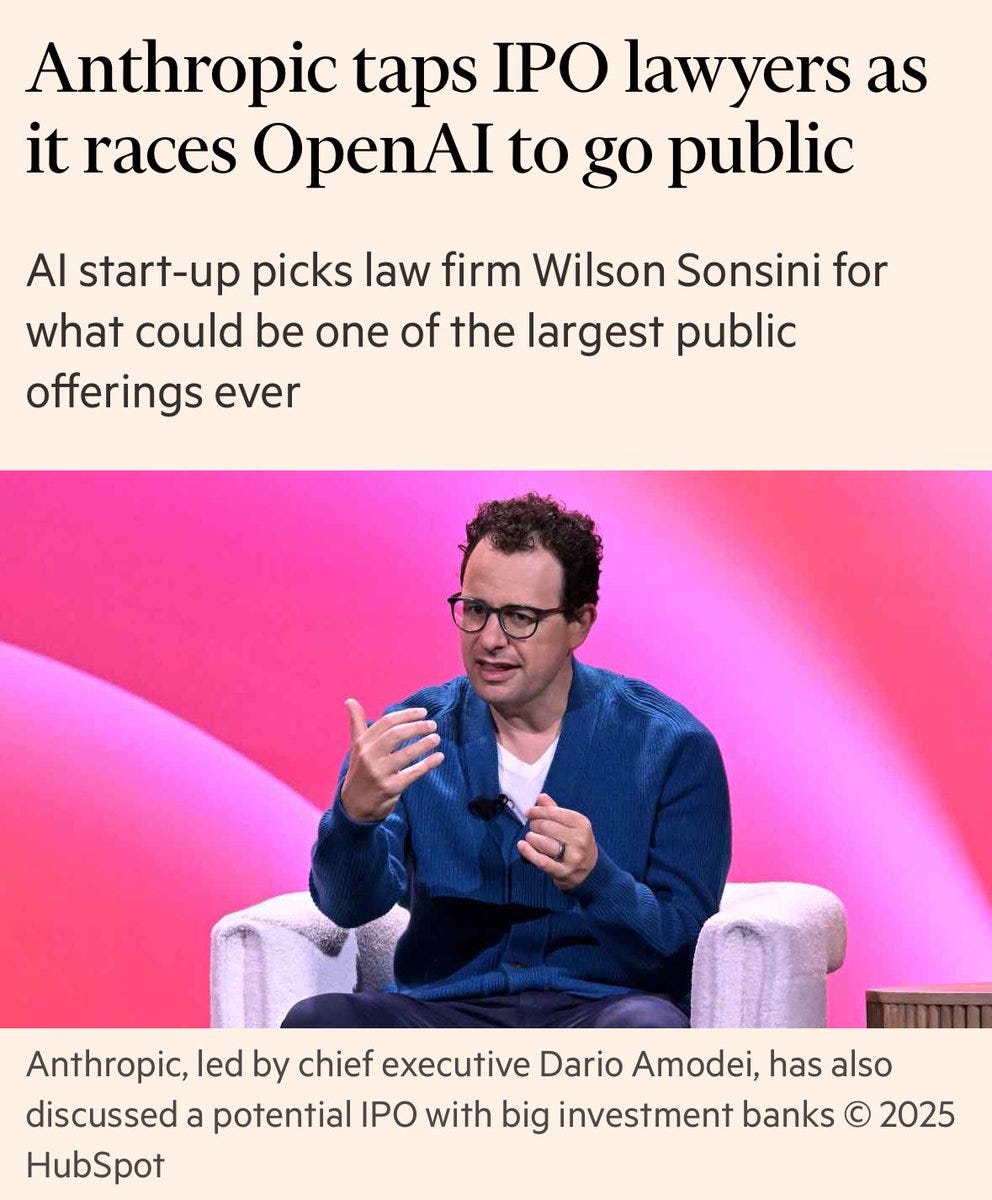
Anthropic is widely reported to be preparing for an initial public offering (IPO), potentially before the end of the year.
Public market valuations thrive on predictable enterprise revenue, corporate logos, and a defensible product category.
A successful listing would provide Anthropic with the massive capital required to fund the next, exponentially more expensive generations of compute. It would also offer liquidity to patient employees and early investors, while granting the firm credibility with conservative enterprise buyers who prefer the transparency of a public company.
Crucially, this evolution highlights a more nuanced future for the profession; as the mechanics of legal research and document processing become entirely commoditized, the true premium shifts to the mastery of deep, hyper-specific workflows.
Over the next year or so, we are going to see a frantic race among legal tech startups to weave themselves permanently into the tools that lawyers already use every day. The industry will move away from marketing standalone chatbots and pivot hard toward creating invisible, friction-free processes. Success will no longer be about having the smartest model, but about becoming an irreplaceable part of a lawyer's daily operational routine. Ultimately, the future belongs to the platforms that can build these incredibly sticky habits, turning raw intelligence into a permanent fixture of daily legal practice.


Comments
Nothing yet. Say the first thing.
Sign in to join the conversation.