
I love Nick Busselman’s Substack Home Leavings for many reasons: because the title plays both on the concept of “home leave,” a phrase that makes little sense on its face, and on “leaving home,” something we’ve all had to do, some of us again and again. Nick’s work is deep and thoughtful; I appreciate the steady way he explores his chosen territory, for the example it offers. I sometimes feel chaotic and scattered with what I write here; No Half-Measures is often a place for me to siphon off and meander through whatever is insistently demanding attention in my head rather than a medium for the reflective study Nick does. Writers need other writers to set examples, to inspire, to encourage, model, and so on. It’s why the first three rules of being a writer are 1. Read 2. Read 3. Read. It helps us remember, and remember to remember, why we write, why we can’t do without it.
As with last week’s “Blocked,” I’ve also been mulling “following distance.” This phrase filtered through, I think, because of the many ways that grammar can drive, and skew, interpretation: here, it’s both a gerund phrase and “following” can, in my mind, be a present-tense verb taking “distance” as its direct object (I will happily fight you on this one! Meaning, I will laugh while we argue…).
“Following distance,” in the context in which I heard it recently, refers to situational awareness on the road, taking in all kinds of information, internal, external, all at once. You’re in motion, looking around while looking ahead. So it resonates right now, because before long, I’ll be back in Maine, temporarily, anyway, a place where the light changes every day, not as dramatically as in Alaska, but I will be sensitive to it, I imagine, the way I have become hyper-sensitive to even the slightest shifts in temperature here in Gabon, because they are rare.
One of the reasons I started this Substack was to interrogate a former therapist’s insistence that “wherever you go, there you are.” The idea annoyed me; it felt dismissive of and in conflict with Heraclitus’s “No man ever steps in the same river twice, for it’s not the same river and he’s not the same man.” (Irony: Heraclitus’s work influenced Stoicism, vestiges of which may be found in some cognitive therapies). I majored in Philosophy and English in college; the former drove me crazy, but it’s where I did my best work. The English major countered my agonies, like eating dessert after a long meal of bitter but nutritious greens. I needed both.
You can’t grow up where I did, in an Alaska Native village alongside the Yukon River, and not believe in constant change. Daylight increased or decreased, depending on the time of year, by minutes each day, so that as a child I told time by how the sunlight came through the trees, or didn’t. You had to attune to what was happening inside your body, inside your mind, as a counterweight to the speed of the season change in any of the seasons that weren’t winter. Winters were so long and dark that the change felt internal, quiet, but insistently there, whether you searched for it or not. It looked like my arms being too long, in May, for the jacket I’d worn in falltime, like a cabin sagging a little more in spring from the winter’s weight of snow and ice.
Arguably, and maybe oddly, similar things are true here in Central Africa but for the opposite reason: because the days begin and end at the same time in every season on the equator, you have to tell time in other ways. Trees and shrubs grow thick and tall and are aggressively cut back; they re-emerge within weeks, vigorous again. Babies are born and strapped to women’s backs. A old man who sits cross-legged in the hot sun day after day, month after month, is suddenly not there anymore. Fruit swells, weighing branches down, sometimes breaking them; all the while, the tide rolls in and back out again, steadily, endlessly. I have struggled, living here, to remember what month it is.
But we’re in the “dry” season now, and I no longer feel like I’m being microwaved the moment I step outside. The cool Benguela current is moving northward, pushing against the warm Guinea current; their convergence off the coast of Gabon from February to May is what causes the heavy atmospheric instability of the rainy season, the soaking rains night after night, the bone-rattling thunder, the energy in a flash of lightning that makes the cells in your body feel, for a scant instant, like they’re somehow aligning with metals miles below the earth’s crust.
Where the Tanana River meets the Yukon River, in Alaska, the force of the collision sends waves of energy up into the air, creating turbulence that would rock my dad’s airplane from side to side, the wings dipping one way and then the other.
“Bidden or not bidden, God is present.” Carl Jung had the Latin, Vocatus atque non vocatus Deus aderit, carved above his doorway and on his tombstone.
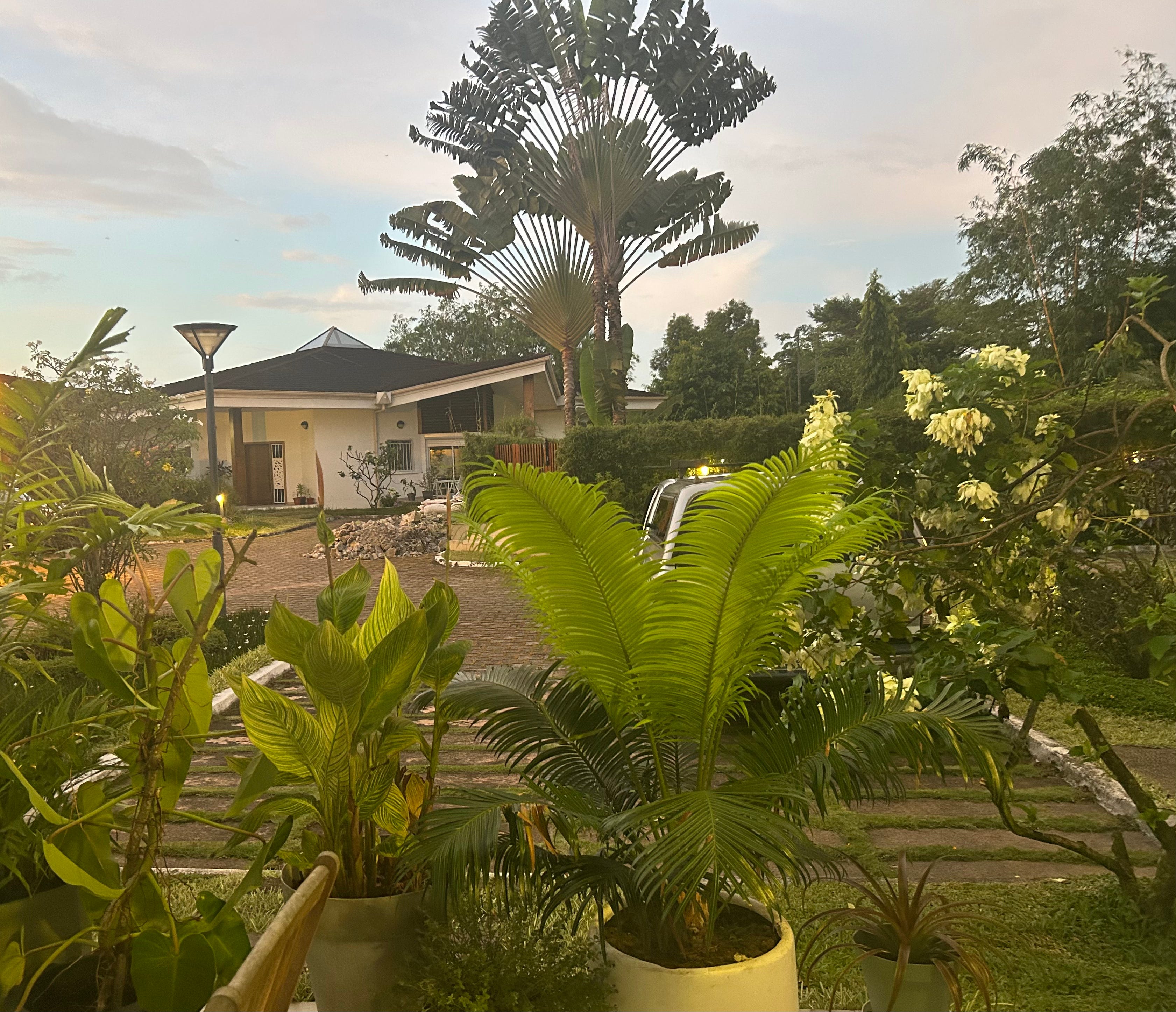
How do you “follow distance”? When we came here, I thought a certain part of my life might be over, and it was, because even though I’m going back to Maine, for part of each year, anyway, it’s under very different circumstances than when I left. I have distinct, oft-repeated memories from the before time, of driving into sunrises on early winter mornings, taking the girls to school and then driving to campus to teach. Sometimes I listened to audiobooks, but often, I just drove in silence, the same roads, the same houses, the same cemetery, the same lake on the right on the way up, on my left on the way back.
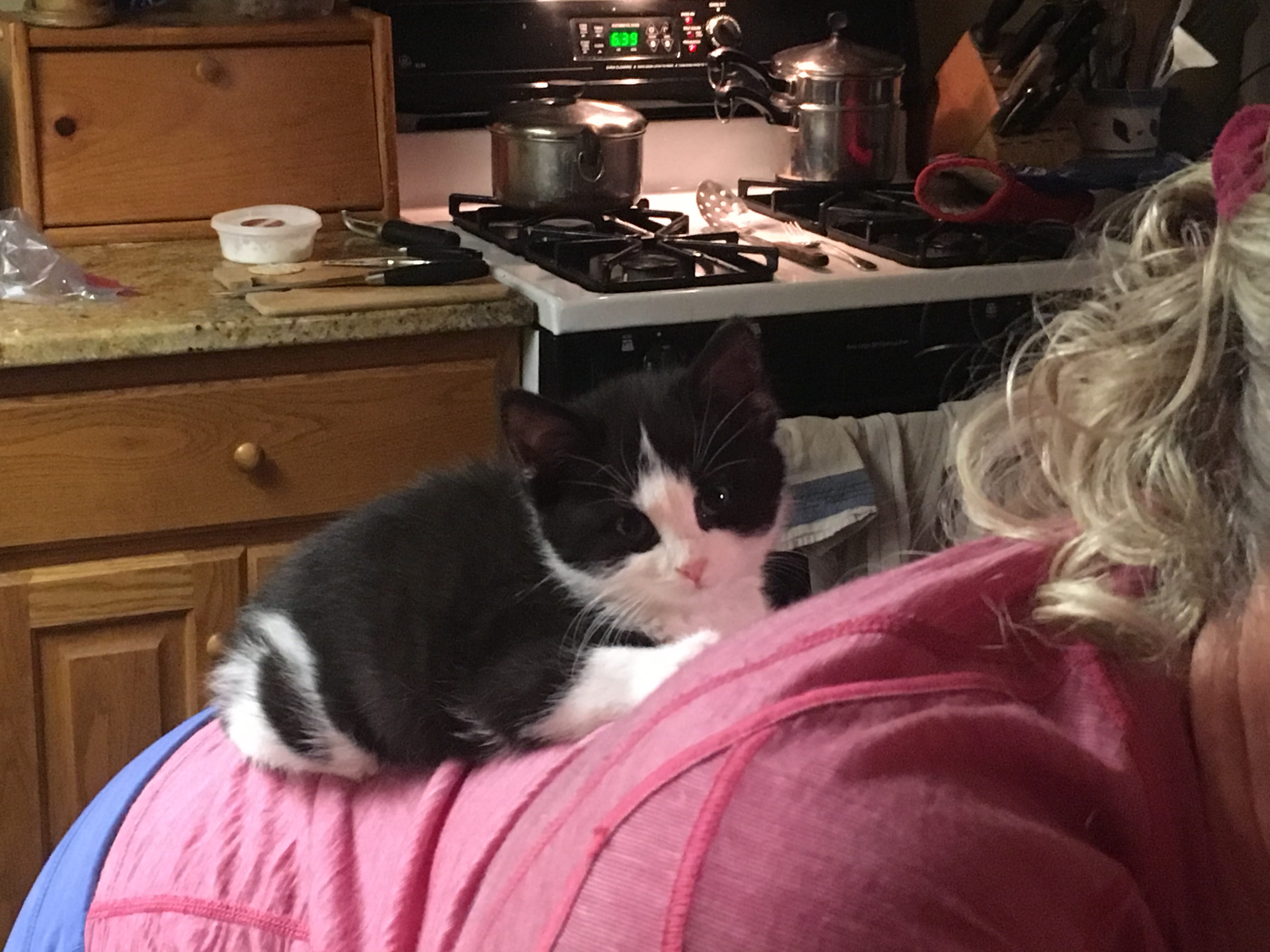
I would come into the house at the end of the day, in the dark again, with bags of groceries, after picking the girls up from ski practice, and start dinner without taking my teaching clothes off. When we got our little kitten, BabyCat, who was found with several of her siblings in the woods by the college, she would climb up my whole body to sit on my shoulder while I cooked, hooking her claws into my tights and then my dress and settling in with loud purrs when she reached her perch.
I didn’t look around at my life then; my gaze was directed at the girls. I just pressed forward: another class to teach, another meal to prepare, laundry to do, moods to assess, foreheads to kiss.
When you’re following at a safe distance, you’re also supposed to be checking your mirrors constantly, staying aware of not just what’s in front of and around you, but behind you as well. The past itself does not change, but the way we understand it, the way we perceive it, the way we remember it, does. That’s why I’m always searching it; memories present themselves again and again, demanding to be considered, re-considered, questioned, milked for information about what’s happening now, and why.
I am not unusual in that my hyper-vigilant brain struggles to distinguish real threats from perceived ones. It also, oddly, resists understanding threats in certain situations that seem like they should be safe. Many people like me experience the desire to deliberately put themselves in danger because it feels like a choice they can control. I don’t; my struggles are with stubbornly refusing to accept painful, sometimes obvious, truths, hence my mantra from Marcus Aurelius: “the first rule is to keep an untroubled spirit; the second rule is to look things in the face and know them for what they are.” I struggle with these rules, but I need them.
My dad once told me that how we want to be is also how we are: I want to be clear-sighted. I want to be free. In a post from early in this newsletter, I wrote about why I am drawn to both reading and writing memoir:
“Good memoir is not simply the revelation of one’s deepest secrets and shames; those things are like junk food, perhaps satisfying in the moment but ultimately, without the necessary reflection and indication of progress and growth, leave the reader feeling vaguely hollow, unsettled, underfed. Thoughtful, worthwhile memoir, in my opinion, requires some exposure of the private self, mediated through time and a sense of purpose, questions asked and answers explored, wisdom gained in order to be shared. Definitiveness, for me, is not the goal, though I understand the yearning. (Also, anyone who proudly refers to themselves as a “truthteller” should probably not be trusted).”
and
“We are ultimately unreliable narrators of our own stories because if we are willing to admit our faults and failings and we want to learn and apologize and grow, we learn to see the past and our past selves and other people differently, with more wisdom, we hope, and more grace. To write of the past with any sort of authenticity, we have to accept that we are learning things in the present, particularly if we are writing to understand instead of to perform.
Writing to understand will change how we feel, what we see, and even what we think we know.”
Hence, “following distance”: we’re constantly taking in new information, moving forward while checking the mirrors, leaving ourselves escape routes, never overcommitting. That’s the goal, anyway.
Recently, I took a speed bump too fast; I tried to muscle my way into a lane in a rotary that I didn’t need to be in; I brushed against some branches that were hanging down, heavy with ripe mangoes, in the roadway. I was learning how to think about where I was going while looking around at where I was and where I’d been, and I was trying to narrate the whole experience, all at once.
It wasn’t easy; being a student isn’t easy. I hope everything I’ve learned in the last two years will help me be a better teacher.
Nate listened to me read an early draft of this post and then remarked, “it’s interesting that you don’t mention blind spots.” I stared at him, and then burst out laughing. How deliciously perfect that I forgot to talk about blind spots while writing an essay that explores driving as a metaphor.
Blind spots. They are why I read; they are why I write. I want to see, and I want to understand. I want to know what I’m not getting. It’s why I like argumentation, trying to see things from all sides and working a problem over so the answer eventually reveals itself. If I’m not right about something, I want to know why.
I’ve learned to stop asking for what people can’t give, and I’ve learned how to drive at a safe following distance. I’ve learned to look around while looking ahead, remembering to check my blind spots, remembering that I have blind spots. And I’m learning how to tell the story of what happened, and what’s happening, to me and around me, all at the same time.
And, you can listen to me read this post here:
0:00
-10:23
No posts
Comments
Nothing yet. Say the first thing.
Sign in to join the conversation.